
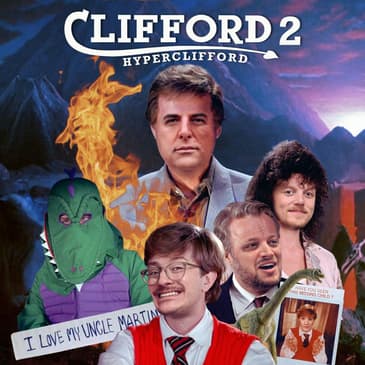




[00:00:00] Blank Check with Griffin and David Blank Check with Griffin and David Check
[00:07:08] When we first met, our friendship grew from it and it has been something that has just meant a lot over the years. I have pulled multiple quotes from it for Best Show John and I have run with Mason.
[00:07:34] It's just a very meaningful movie because it's also just so weird and it's such a turnoff to so many people too when they're just like, wait that movie? And they're just like, that seems like it's terrible, right? And you're just like, well, you could say it's terrible.
[00:07:52] Like if somebody was just like, I hate it, it's terrible. I'd be like, I kind of can't argue with you about, I can't, I can't. It's not like when somebody doesn't like a Paul Thomas Anderson movie and they're just like, that movie sucked.
[00:08:07] And it's just like, well, maybe the movie didn't suck, maybe you didn't like it, but it's like it's not garbage, but like this, somebody could go make a case against it, but I can make a case for it.
[00:08:18] I mean, I think that's so much of this movie's legacy is that people either love it or it kind of like upsets them on a cellular level. People are just kind of like immediately revolts by it from the word go.
[00:08:34] I think a lot of that is just the odd oncanny nature of Martin Short being a little boy and no one treating him any differently than any other child in the movie, which weirdly has now come back around and is like a very prevalent thing.
[00:08:50] Like you have two critically adored TV shows in which adult women play young children alongside a cast of other children. Wait, what's the 10 15? What's the other one? And the Nassim Pedrat one Chad. Oh, that's right. Yes. Yeah.
[00:09:06] It's just funny that like Clifford Onnens face people were like, nope, absolutely not, cannot put an adult next to kids dressed up like a little kid makes me uncomfortable. And you know, there might be a difference between male actors and female actors doing that and what have you.
[00:09:23] But it is interesting that both of those shows are very well liked now. Chris Gether and I years ago were pitching and we had IFC. We were working on an adaptation of his book to a series, and that was going to be the device of that.
[00:09:39] And that we were doing that like seven years ago. He would play himself at every Chris has a teen or whatever. Right. And Chris would. Yes, he would have acted against whatever age group the story took place in.
[00:09:52] And it would have been like Chris and I and other Chris and a bunch of eight year olds running from a 10 year old would have been the funniest like a 10 year old bully. And it haunts me that that never got filmed.
[00:10:05] That would have been the funniest thing I've ever seen. Chris getting bullied by an actual child. He's ideal for that. I feel like there is not like like Groton couldn't do this, right? Obviously like, you know, Martin Short is one of the few.
[00:10:21] Look, we did this episode four years ago. Ben picked this movie. This is a movie that I had never seen. I had a roommate who is a huge fan of the movie to the extent that they named
[00:10:31] their family named their dog Clifford out of their shared love for the movie and then had to deal with the fact that then there was a famous dog, fictional dog named Clifford that emerged later.
[00:10:44] And I think I don't remember the episode very well, Griff, but you can probably I think I was incredibly unsettled by Martin Short. Well, I had a chance to quickly review it and I just called a couple of quotes here that David had said in the last episode.
[00:11:01] Well, this movie is sick. Sure. OK. Also said, I'm rooting for Groton. I'm sorry, I'm rooting for Groton. I want him to kill this kid and get away with it. That's what I want to happen. It's because I want to I want him to build that transit system.
[00:11:19] Right. I think I was kind of weirdly, especially at the time, I do. I do love transit infrastructure. I think I was very sad for his dream being imploded trains. You love infrastructure. You hate chaos and you don't like parks. Don't like theme parks.
[00:11:36] Don't like. But I do think I had this general. I was so unsettled by the movie and I was impressed by how it's settling the movie was for me. Like, it's not like I was like, well, that sucked. I was like, well, there's nothing like this.
[00:11:48] But now on this rewatch, I guess because maybe just I knew what I was in for and I knew what Martin Short was doing. I was more prepared for that. I've I've I've been with it in a very different way, but also have four years.
[00:12:01] Like, has the world become so like like as well right? That you're sort of like Clifford's chaos. You're like, yeah, I mean, dude, you know, come on, fuck Charles Groton. This guy, what he wants to like be good at his job.
[00:12:14] Like, come on, who cares about that anymore? Right. Like is that is that one reason that maybe my I sided with Clifford a little more on this rewatch? I don't know. I got to say David Clifford hasn't changed. He's always been there. David has changed. David's changed.
[00:12:32] You're a father now. I mean, that might be part of it, David. Well, I was trying to reckon with that because this is not a movie that would make you right. You shouldn't want to have children after seeing Clifford. This is not I don't know.
[00:12:46] I think I would want to. Yeah, I would want to have a kid like Clifford. He seems fun. Well, Ben wants a Clifford. If you're cool with Clifford, Clifford's going to be cool with you. You just don't lie to him. Yeah, don't don't break promises.
[00:12:59] That's all. Look at his family. Richard kind is an uptight douche and his mom is drunk the whole time, like when they're on the plane in the beginning. This kid's in a horrible, has a horrible home life. Maybe the mom drinks because of Clifford. Well, that's right.
[00:13:17] It's 10 years of Clifford. That's what I imagine is going on there, right? They're they're 10 years in with Clifford and they just can't do it anymore. But but David, you're saying like watching Clifford doesn't make you want to have a child in your opinion.
[00:13:30] But does having a child make you want to enjoy Clifford? And even though you're dealing with an infant now, you are you very quickly gotten into a more beleaguered dad state. I think as your friend, you are beleaguered. You're we went to dinner the other night
[00:13:48] with friends of ours who have children and you were complaining about the sleep and the staying up in the car. I was not not not a crabby way. But right, just trying to talk it out because.
[00:13:58] But I'm saying does this movie now work for you as like a comedic exaggeration? Yes, I do. Maybe that's part of it, too. Where where I sympathize more with Clifford, like where I'm like, yeah, that's what you know, Groton is so flabbergasted by this
[00:14:14] this evil creature that's been unleashed on him. And I'm like, well, you know, you got to roll with it, Groton. Like I think maybe that's one way in which my my loyalty shifted. Where I'm like, yeah, you know, having a kid is very chaotic. That's OK.
[00:14:27] He is using Clifford. Don't forget that. Right. He has no interest in Clifford. He's using Clifford and it all starts. The problem starts is when they're back at home and Clifford is watching television and Charles Groton says, let's shut the TV off. It's time for bed.
[00:14:49] A two in the morning. It is a two in the morning. He's watching like a National Geographic Special. He's watching. He's watching nudity basically on a National Geographic program. And but Clifford, to be fair, he says he's very transparent.
[00:15:08] He says I don't sleep as much as one might think. It's a little big because he's up at five in the morning eating like just pure sugar. Yes. Just just to recap the plot of Clifford for anyone who has not
[00:15:24] watched the movie either time we've covered it on this podcast. He's a we should say we should say at the moment that this episode is coming out, it is on HBO Max and not only is it on HBO Max,
[00:15:35] it is on HBO Max as part of like a curated Turner Classic Movies Festival. Yeah, as it should be. That includes a Martin Short tribute. So HBO Max also has like a half hour sit down interview with Ben Mankiewicz and Martin Short. Talk about this movie in part.
[00:15:52] But the thing I really appreciate is before you watch this movie on HBO Max, there's like a five minute Dave Karger introduction. There's like a modern version of a Robert Osborn shot in Son of Son virtual
[00:16:04] background where he is like giving you I would say I think does a good job giving you a sort of framing context for this movie. What we're talking about what just, you know, it's sat on the shelf. It's sort of unusual development, like things like that.
[00:16:21] But also I think a proper context through which to view this movie. It's not that people don't know this, but I think it's the way you have to go into this because you're like, well, Martin Short was a sketch comedian, right?
[00:16:33] He was like one of the best sketch actors who ever lived. And then he transitioned to movies and he found a way to turn his sort of like disingenuous smug, you know, kind of show busy type into different parts and movies.
[00:16:45] But as Tom said, it would it would get kind of like slivered, right? He'd play one slice of what he used to be able to play in one character on SCTV, where he played these very dense sort of specific, but multifaceted
[00:17:00] characters with their four or five games going on inside of them at the same time. And Carter was like, you have to view this as an extension of his sketch work. You have to view this as the kind of thing where if this happened
[00:17:12] in the context of a sketch, you would not question it. You would not be unnerved by the fact that an adult is playing a boy with a wig and a double shaved face because you're used to seeing that happen.
[00:17:22] But something changes when it's framed in a movie where people just get like upset and unnerved. I feel like there's an aspect to audiences where there are certain movies that people flag because they think they know better than the movie.
[00:17:40] And it's like, you know, Cabin Boy is a movie that people go, oh, that's dumb, but it's just movies. People say they're dumb all the time. But there's certain ones that they say, that's dumb and I'm smarter than that.
[00:17:53] Not realizing the people that made it know how dumb it is. And they're smarter than you'll ever be. And they're embracing stupid stuff and having fun with stupid stuff. But there's a but that's that kind of there's that next level of vitriol
[00:18:08] that you get from certain from the public with a thing when they feel that they've been insulted by something. Well, this is another aspect, Tom. You know, one of the reasons you want to do this episode is you felt like we were not.
[00:18:24] We did not fully grapple with Clifford in the correct way in our first episode. Ben, obviously very effusive on the movie. David, pretty revolved by the movie. I was somewhere in the middle in the four years since then.
[00:18:35] We have covered a handful of other comedies that I feel had similar reputations where they were not just flops, but they were like hated, made people angry, like Ishtar is another key one, obviously. But we also did Lucky Numbers, the Efron movie, which falls into the
[00:18:55] Adam Resnick catalog with Cabin Boy and Death to Smoochie, where people are like, fuck this, absolutely not. Please stop it. I work on Lucky Numbers to a very tiny degree. Please do share. Because I was working with someone who did a rewrite on Lucky Numbers,
[00:19:15] and I was their assistant at that point. And I pitched ideas for trying to solve what they saw as plot problems. And I pitched one thing that did get filmed, but did not make it into the into the movie.
[00:19:31] I think it might be on a bonus thing like a dream sequence where he's hanging where John Travolta is with like a game show host visits him when he's in a dream state. So like that was something I pitched.
[00:19:48] And I think it did get filmed, but it did not make the final cut. And I do know Adam's original script for Lucky Numbers was very gritty and very crime, just straight up crime, funny crime stuff. Kind of in the more Leonard spirit of that.
[00:20:11] Like and he his movie kind of got effort and that was not the movie he saw. He saw a very just a very down and dirty, realistic, unglamorous telling of that story. I mean, that makes I mean, we talked about this with Efron where she was always,
[00:20:34] it felt like she was often drawn to very dark material, but would struggle to reconcile that with her right with her storytelling style. But like Griffin, all the movies you're talking about ish tar, especially this movie, just like what it's what Tom Tom's absolutely right.
[00:20:49] People think they're like that the movie they're smarter than the movie or whatever. Like they're smarter than the filmmakers or something like, you know, where it's like, well, I can see what a disaster this is and they messed up.
[00:21:01] And I mean, in criticism, I think that is like the ultimate mistake you can make is think that you're thinking that you're smarter than the thing you just saw because then you're not a critic anymore. You're like, you know, you're like an executive.
[00:21:13] You're like giving notes or whatever. And like, you know, like I feel like you can get lost in instead of criticizing the art, you're criticizing the process of making the art and like, you know, anyway, this is, I guess a classic example of that.
[00:21:27] But then there's just also the that it's creepy, but that's good. I mean, the creepiness is good. I don't it's a horror movie. Here's my it's a horror movie. It's psychological thriller. It's an intense thriller. And and it's and it's an intense.
[00:21:45] I mean, Ben, what was the thing you texted us today where it's like basic, it sort of starts fairly gently. Obviously it has the sort of bizarre future opening presented as a story, is kind of a fairy tale. Also bizarre opening credit sequence where you're seeing
[00:21:59] the most like these medial tableaus, right? And this very sort of like whimsical music that still sounds a little haunted. Ben, Ben, what was the thing you said? Was it a sign or I can't remember exactly where it's like suddenly you realize like you start to sweat.
[00:22:14] You realize like, oh no, yeah, like the pressure is on. The horror is about to begin. It's when you see him sleeping and he's made the sign. I love Uncle Marin. You know, that is the beginning of him having a nervous breakdown.
[00:22:27] That is the point at which that begins. But to your point, Tom, that's sort of like the moment where you could argue Clifford is calling his bluff, right? Like as you point out, and I think that makes this movie very
[00:22:40] unique and a reason people find it so unpleasant is I was thinking as two counterpoints, right? Of like just within the grode in filmography and we obviously covered so much Groton this year with Elaine May. But you look at midnight run on one side of this movie
[00:23:00] and Beethoven on the other side of this movie, right? And these movies that are like a menacing a character menacing a beleaguered man, right? Yeah. And midnight run, he's the dilemma and in Beethoven, he's the straight man and Groton innately sardonic, right?
[00:23:25] Innately just sort of like a curdled man. Midnight run gives him like a soul. Like the key to that movie is the more time you spend with him, the more you sort of start to understand the humanity of this guy. He's not just a nuisance.
[00:23:41] There is kind of an ethos to him. Beethoven, you're going full, not full, Groton grouch. As you said, Tom, they're sort of cutting it and putting it in a family friendly box. But it also helps that Beethoven is an innocent, right? Beethoven knows not what he does.
[00:24:00] He is a dog. This is just his behavior. You can kind of root for Beethoven and laugh at the fact that Beethoven is making Groton go crazy. And then you think of other movies of this. It's like, what about Bob and what have you?
[00:24:15] It's like these formulas are usually either if the menace is truly evil, the straight man has to be likable. Or if the straight man is really bitter, like Steve Martin in Plain's Trains, what have you, then the menace has to have a good heart. And Clifford is like,
[00:24:36] what if a man who has chosen to be cynical comes face to face with an elemental chaos? Because you also don't see like, I was thinking of like Man of the House and getting even with dad and that run of movies
[00:24:54] that come a little after this problem child. There's a little bit of an element where you see the kids like planning their attacks, right? That's the thing. Those those are part of the kid liberation of the 90s where suddenly that we're being directly marketed to on our cartoons
[00:25:10] and our comic books. And it's kind of like, hey kid, don't you want to have long blonde hair and torment a sitcom star who can't book an Oscar movie anymore? Like Groton doesn't really care about like, but dancing or whatever.
[00:25:23] It's like, don't you want to see this kid just put dancing through the ringer for 90 minutes? Like that's what we're like now. We're kids. We we we slime people. We, you know, parents suck. Homework is the worst. Boogers are cool. Right.
[00:25:38] And they're about a certain kind of agency and objective that they're trying to follow through on. Yeah. Yeah. And there really is. I think it comes down to ultimately, if you like the scene in any movie when a kid kicks an adult,
[00:25:55] then you might like this might be for you. If you if those scenes make you uncomfortable, what are you just like? Why that kid kick? I've always loved when a kid just hauls off and kicks an adult in something has never ceases to be funny to me.
[00:26:12] The idea of a kid just because the kid can just get that low, that low to the ground momentum to kick an adult where they are not ready energy, like just like the shin. Like the idea of like a shin is such a vulnerable spot.
[00:26:28] You're not protecting your shins. You're usually protecting your like your crotch is where you're just like, oh, I don't want to get hit or kick there. And then a kid just gets you where you don't even think about it.
[00:26:39] Like devil's backbone when it's like, let's stab somebody in the armpit where it just you're just like, yeah, that I never thought about getting stabbed in the armpit. That would be the worst thing that could ever happen.
[00:26:51] But there is that thing when a kid gets strength and power over an adult. And I've always found it funny and it will always be satisfying to me. And watching Martin Short, because like you said, Griffin, he is an elemental force.
[00:27:12] Charles Gordon does has yet to realize the extent of what he's up against because then he would have been like, you know what? I'm going to just hire someone to take you to dinosaur world. I got to work on the plans for the sea.
[00:27:27] Why didn't he do that? Why didn't he say we can solve this? I'll find somebody to take you to dinosaur world because Clifford didn't care who took him to dinosaur world. He wanted to go to dinosaur world. Clifford is pure it.
[00:27:44] I do think you are correct that the key to reading this movie is recognizing that no one is dealing with Clifford appropriately, that everyone is always has their own agenda they're trying to push. They're not actually trying to meet him on his own level.
[00:28:01] You know, everyone who gets the wrath of Clifford is also to some degree trying to change Clifford. Yes, I keep tossing his hair. He says he doesn't like that. Right. They can't they think they can control him. Clifford is like the weather and unlike these other movies
[00:28:20] are talking about the kid liberation movies, I feel like those movies have scenes that are very didactic where like the kid goes like, huh? So my mom likes his hair. Well, she still want to date him if he doesn't have hair anymore.
[00:28:33] And then you see them like putting super glue on the inside of a hat. And then you see the hat and then you see them getting caught and apologizing like Clifford doesn't have those sort of internal mechanizations.
[00:28:45] Like he's like a shark and his only goal is to get to Dinoland, right? And anything that gets in his way, he will like find a way to weave around. But whereas Groton is like strategizing, you know, and getting things wrong. Clifford is just being Clifford.
[00:29:03] Yeah. And he does explain. Before certain scenes, he says like because he's like, well, we can't go to the dinosaur world, but I'm we're going to go to the dinner party for Sarah's and her parents anniversary. And then he just says to Stefan, his plastic dinosaur,
[00:29:23] he just says, isn't it funny that that he doesn't have time to for a little boy's dream but has time to go to dinner? Like the idea like he's and he's that's fair. Yes, because he still is a ten year old.
[00:29:40] But he just has this high level of processing. It's still a ten year old's brain that has this mutated high high functioning adult sense of justice and retribution. But with a ten year old's like code, there is an odd integrity to Clifford
[00:30:02] that he says exactly what he's thinking at every moment and does not understand the games that adults play that obfuscate and complicate things. Yeah. One of the most troubling moments is when he goes when he like recreates, he's he steals a walkman at the airport
[00:30:20] that he says he kindly priest gave it to him. He steals a walkman so he can record and he's like editing together a tape to make it sound like his uncle is calling in a bomb threat. And but while he's editing it, he says to Stefan, he goes,
[00:30:37] do you like Uncle Martin? And he's like, I did, I do too. Like while he's destroying him, he says like I like him. So to you, Tom, this is sort of a cautionary tail type harm movie where it's like there was a way through this
[00:30:56] that Groton does not identify. You know, like he could have gotten away with it. He could have, you know, shown off Clifford to his fiance and, you know, impress her and satisfied Clifford and Clifford and and get everything done for his body.
[00:31:12] He could have done it, but because he has the the ego to be like, well, this is just a kid I can boss him around like, you know, that's that's his hubris. That's that's what the movie is about.
[00:31:24] He's he's, you know, he that is many a horror movie. You know, people think they can do it. They can open the tomb or whatever. And they'll get, you know, they'll be fine. That is the undoing of of Uncle Martin.
[00:31:35] Yes, that he he thought he could just shove a little kid. He thought he could just that an adult's priorities take precedent over a kid's prior priorities, but not to the degree that it's just like, well, no,
[00:31:49] I got to do this, the city planning and we'll figure your thing out. He's just like, he's slamming the door on Clifford's dream saying like, Hey man, bad bad news. I got to focus on this thing.
[00:32:01] We can't go to dinosaur world rather than find a solution to it. Right. Where's like Beethoven or whatever? Like the only mistake Groton makes in Beethoven is his kids want a dog. The dog shows up, the puppy shows up on their front door and they're like,
[00:32:17] come on. And he's like, OK, I mean, I don't want a dog, but OK, that's his only mistake. So Beethoven is more that's that's just a metaphor for parenthood where it's like, look, it's just a nightmare. You're just going to there's always something.
[00:32:29] Yeah, there's always going to be something. But this is it's a little. It's like a fable or something. Like, I guess that's why that opening credits sequence kind of makes sense. Like there's this fable element for everybody. We could have we could have figured this out.
[00:32:44] Now, do you feel like all the priests stuff that all feels like reshoot? It was. That was all right. Yes. Right. So this movie was made by Ryan. Ryan goes under it sits on his shelf for three years. And this was all shot.
[00:32:58] The the wrap around stuff in the future. The future with the priest Clifford mentoring a young boy. Play this is Ben Savage, right? Yes, it's been sandwich. Boy Meets World Savage. That was all shot like two, three full years later. I think to try to at least make.
[00:33:21] Yeah, it is. It's a softening to just be like, oh, some day Clifford gains a conscience. There is funny material in this because Martin Short is funny. It is very telling that Martin Short is like very beloved
[00:33:37] at the time this movie is made and in the time that it's on the shelf, like father of the pride, father of the bride, not father of the pride. The Dreamworks, Sigfried and Roy Sikham, but father of the bride and Captain Ron and some other popular
[00:33:51] Martin Short movies come out. So his like star only increases arguably at least as like a family comedy star. And this is a movie that does not let you see Martin Short play his own age once. He's either upsettingly old man, comically old or frighteningly young. Yes, right.
[00:34:11] And there are parts when Clifford looks older than Uncle Martin. Yes, absolutely. In the movie, there are parts where you watch when when the lady swings the bag back to like hit. Uncle Martin, when she thinks her kid
[00:34:27] got that he paid him to take his clothes off in the gas station bathroom, which is maybe a joke that I don't know if anybody would run with. Right now, a funny, funny, misunderstanding moment of lady,
[00:34:42] I did not pay your child money to disrobe in a gas station men's room. Like what a fun miscommunication. It's like she swings the handbag back and hits Clifford. And he like he looks like the adult,
[00:35:02] like he looks like the 40 40 year old that he was at that point. Yes, when he's getting whacked. There's so there's so many odd things like that where he's either, like you said, he's 80 or he's 10. And he's obviously neither. He's 40, which is also.
[00:35:27] Do you do you feel that this movie makes sense? If you think about the career of the previous generation of comedians like Jerry Lewis? Yes. Yeah. Right. That is the only context in which it makes sense
[00:35:43] because Jerry Lewis could have done this movie at the peak of his career or rather, let's say a movie with this pitch, right? He plays a little boy who causes chaos for his uncle.
[00:35:55] And no one would have batted an eyelid if he did that in the 50s or 60s. That would have people would have loved it. Yes, they would have. They would have loved it too much. The French would have given it a medal of honor.
[00:36:06] It would have been lauded up and down the boulevard. I do think at the moment this movie comes out. The room, it would have been. Oh, I'm sorry. Yes. Don Lu ru. The moment this movie comes out, I don't think there's really
[00:36:24] that much of a context for this other than this is a thing I was kind of stewing on while rewatching it because also just talking about the movies of this ilk that we have covered or talked about adjacent to movies. We've covered that had such an angry response.
[00:36:42] Comedies that had such an angry response. It's very odd that like Pee Wee's Big Adventure totally works. It's very odd. That's the only movie I would argue of like the 80s, 90s into early 2000s that has this kind of vibe.
[00:37:01] And there are other movies we haven't covered on the podcast, but I feel like had similar anger. But Pee Wee's Big Adventure is set in Tim Burton's universe. Like it's not set in the real world. Right. You know, my point. My point is it's so incredibly heightened.
[00:37:16] Yeah. Why just talking in terms of the court of public opinion. Why was Tim Burton able to pull this off and no one else was? Because I think Beetlejuice is a mild move. It also falls into this where he was the one guy
[00:37:29] who figured out a way to package these types of premises, this type of chaos, this type of sort of surreal imagery into a box that like people liked that made them happy. I think part of what makes Pee Wee work
[00:37:49] is that when that movie came out in what, 85? He Paul Rubens never did anything other than being like everybody. There was such a mystery around it. It was a closed circle. It was a closed circle. Yes.
[00:38:02] And you were entering the you didn't know Paul Rubens from other things. And now he's doing this character. He had fully created his own context for you to understand the movie. And when he promoted the movie, watch,
[00:38:14] he went on, he would only go on Letterman as Pee Wee. And everything was him. It was like a self contained world that you could enter and not feel like a movie star was playing this weird kid.
[00:38:30] You were it was just Pee Wee was Pee Wee all the time. Right. To where it was like shocking when you'd see like Cheech and Chong movies and suddenly be like, Oh, Paul Rubens is in this movie as a different character. That was like legitimately surprising to me
[00:38:46] to see him that early doing other things. I mean, I knew he was not Pee Wee Herman. Like I like but but it was still enough of a mystery that that you could hand yourself over to that world completely.
[00:39:01] But I feel like the Dinosaur World sequence in this has a real early Tim Burton vibe to it. And Cabin Boy is another analog is a movie that was written for Tim Burton. And then he decides to just produce instead.
[00:39:14] And I think Adam Resnick directs that movie very well and visually does a lot of the types of things you imagine Tim Burton would have done. And people were like absolutely not. And David Letterman spent two fucking decades plus making fun of his own involvement in that movie.
[00:39:31] Yes, that's Letterman's. That's how Letterman was like emotionally processing. But like, Griff, you say the Dinosaur World thing is Burtony, but it comes at the end of a movie that is not always it's not even a complaint for me that this movie isn't heightened enough
[00:39:47] because I think that adds to the tension and the horror of Clifford. But this is a movie about regular people like he is he is. I mean, I guess Pee Wee has that a little bit. Pee Wee is odd, right?
[00:40:02] You know, other people are less odd than Pee Wee. Pee Wee is a strange interloper. It's still a weird world though. Pee Wee is a weird world. It's a much weirder world. Right. Right. And so it all just like logic is just kind of out the window.
[00:40:15] Clifford, like Charles Groton has very mundane problems. He's trying to, you know, get a relationship nailed down and get a contract signed and get a, you know, get his butt. Like these are this is just any any moviegoers sort of like, yeah,
[00:40:29] this guy's like a middle class guy who's trying to buy a house and shit. And Clifford is is like a genie that or what? You know, it's like he opened a bottle in this horrible like creature came out. There's no amazing Larry and Clifford.
[00:40:44] And Clifford doesn't start with like five minutes of Danny Elfman music over Rube Goldberg machines, all these things that just sort of like. He lost his bike. That's it. That's what happened. He lost his someone stole his bike. He's got to get his bike. That's it.
[00:40:59] Clifford, you've got you've got Clifford wants to go to dinosaur world. Sure. But also Groton's got all this bullshit that is just regular human existence. You know, movie I feel like has a a spiritual connection to Clifford that is a cable guy.
[00:41:16] Yes, yes. In a lot of ways. Yeah, another right. Like we're like, who is this guy? Why is he behaving outside of society's norm? Right. Like yeah, like you should not have touched this guy now. He's in your life and whatever.
[00:41:30] That's so merely stylized comedy with a performance that is in an entirely different pitch than every other performance in the movie. Another thing that I think just kind of upsets people. Yeah. And ironically, Cable Guy. Evokes a movie that Charles Groton did early in his career,
[00:41:53] Rosemary's Baby. Yes, I feel. Yes, I feel that there's this strange connection between these three movies that that sense of just of just dread running under beneath real seemingly real life. That that there's horror there. Right. There's demonic forces.
[00:42:15] Well, and like the exact thing I like about Cable Guy is that Ben Stiller directs the shit out of it and treats it like it's like an Adrian Line movie or something. But I think that's another thing that threw people off about it.
[00:42:29] Like that's that's another movie where people were angry when it came out. Not just that it wasn't like I'm interested in this sub category of comedies that made people furious and also seemed to like unnerve them. Obviously with Cable Guy, there was all the discourse about Carrie's paycheck,
[00:42:45] but also wasn't it kind of just like this is not the movie star I signed up for? I was all about Jim Carrey. When he emerged, like his movies were fun and madcap. And this is not like the Jim Carrey I've been promised.
[00:42:59] I want one Jim Carrey movie a year that is fun. Because it was at that point, it was Ace Ventura, Dumb and Dumber and the mass were everything that every and then was did he do was Batman right after Cable Guy? I think Batman. Same year, right?
[00:43:16] Yeah, I think Batman and Ace Ventura two are the same year the year before Cable Guy. So that was like his whole oof at that point. Yeah, for Ace Ventura two is that quick. It is one year later. Right. Right.
[00:43:28] But that's no, but that is a good point because that's another thing is that like Carrie movies at that point in time were completely unconcerned with real world consequences, right? Like those are movies that all kind of met at the level and the energy of Carrie's
[00:43:45] performances, everything was only taken as seriously as Carrie would take it. Whereas Cable Guy is like here is like a Matthew Broderick movie that is being invaded by this other force. And the pitch of the movie is closer to Broderick and the Carrie element is
[00:44:03] like the disruptive force, much like Clifford. You could argue where it's like this is maybe pitch for most of its runtime more like a Charles Groton movie that has this one sinister element. You keep saying sinister. I like think Clifford is just like he's like inventive.
[00:44:25] He he you know, he is inventive. I looked up to Clifford. I was like, I should really try and up my game here. You've talked about the fact that you feel like this movie is the closest you've ever come to seeing your relationship with your father represented on
[00:44:40] stroke. That's true. You're really as a young boy, as like a preteen. Yes. This was like you were very good at getting under your father's skin in a very particular way. Yeah. Yeah, for sure.
[00:44:51] Like trying to figure out some way to get my dad mad enough at the toy store that he would just buy me the thing I wanted. You know, like, yeah, yeah. So this movie was influential and I mean,
[00:45:05] I really feel like we've covered this and it's just it's like hearing it. It's really reinforcing it for me in that the movies perspective is like kind of from the adults, right? But really, if you look at it from Clifford's point of view, he's getting screwed around.
[00:45:23] And so he's standing up for himself and sure he calls in a fake bomb threat, you know, and he throws a party at his uncle's house, a rager. OK, you might be softening some of the edges on Clifford. I got to just say
[00:45:40] he's he just look at his dynamic when he's on the plane with his family. He almost brings down a plane. They know him well. He's he makes jokes to his father's face about him having a stroke.
[00:45:56] And he's just like, then daddy, the stroke is coming and you're going to talk. Like he's he's that's the meanest thing you can say to somebody. You know, they cut in the plane is one of the few times where they cut to old
[00:46:10] Clifford again. Do you think that's because they're like, Jesus, he's coming on so strong. We need to cut back to old Clifford for him to say like, I think they was I was a little bit jerky.
[00:46:22] Right, because he also will go down the aisle of the plane, holding his arms out like a plane, hitting strangers in the head just because he's not. He's not always a victim. He's he is a monster, but he's a monster that you can placate if you just
[00:46:41] respect the monster. I think there are two independent truths going on in this movie, which is no one really listens to Clifford or tries to earnestly engage on his level. Also, he is a figure of pure chaos. Yes. Right.
[00:46:56] Yes, just because there's a way to satisfy Clifford doesn't mean that Clifford is a good kid, Clifford is definitely not a good kid. He's not he's not misunderstood. Don't forget, Ben, that he looks out when he's at the airport waiting for Uncle Martin to pick up.
[00:47:11] He looks through the crack of the door and sees him before he does that whole. I love my uncle Martin routine. It's the most you see him calculate that moment. Sure, of course. And, you know, at the same time, I don't know if any of us would have
[00:47:31] the ability to actually go through with getting a pilot to have to land a plane. I mean, that's impressive. Come on. Oh, it's very impressive. Yeah, Ben is just so overwhelmed by the scale of what Clifford is able to execute.
[00:47:46] Yeah, I mean, he's just operating at a high level. If I'm a shoplifter, he's a bank robber. Yes. Yeah. And the part that makes Clifford scary to me is when you realize that he's he can do show tunes and he has full awareness of like adult things
[00:48:11] that no child on the planet for him to just like trick his uncle to get on a train to San Francisco, and which we don't even know how he did that also because we see him in the distance, but it's not like I don't know.
[00:48:28] Like it's a mastermind to get him to get on that train and leave so that he can go see that his uncle can go see his fiance get hit on by Dabney Coleman. Like it's like he's he's playing four dimensional chess. If anybody that gets thrown around now,
[00:48:51] Clifford truly was playing for the chess. He was thinking several moves ahead. We should also point out this is before the internet. OK, yes. I mean, he's doing this all analog. He's making calls. He's grabbing a phone book. He's figuring shit out. He's ready. He's cutting up tape.
[00:49:10] He met a bunch of dumb teens and told them you guys can party at my house like he's saying it's my house if you take me to dinosaur world tomorrow. The lack of process is good.
[00:49:25] The fact that we don't see so much of this only makes Clifford feel more powerful. You don't see the planning, but also that you don't always understand the motivation of what he's doing like you understand his objective is just to get to dinosaur world eventually, right?
[00:49:44] But something like the party. What does that do in the short term? Clifford is really he's just kind of jazzing, you know? He's just kind of like feeling it out and going with the flow of what he thinks cosmically should happen.
[00:49:58] Because you could argue some of it is like, you know, reciprocation for the fact that Uncle Martin is not listening to him. But like a lot of these sort of like menace versus beleaguered man movies we're talking about, you know, there's a specific point for the embarrassment.
[00:50:19] It's a distraction so they can get the upper hand, you know? Something like him repeating the rug comment to Dabney Coleman does not help Clifford. It does not help his cause. Right. But he's playing by Bugs Bunny rules. He's playing by Bugs Bunny rules. Yes, yes, exactly.
[00:50:37] If you cross me, I will use every tool in my toolbox to to hurt you. Right. Tenfold. Like he's going to leave. There's no moderation from him either. Yeah, you started it. I finish it. It's symbolic.
[00:50:53] It's symbolic because that does not help him get to dinosaur world any quicker. Liza talk about it's literally like the priority is take this guy down a peg. And for Clifford, that's irrelevant. It's just you've gotten in the way of the hurricane. Here's the question.
[00:51:11] Could Clifford just get to dinosaur world himself? He's so capable. He has so many tools in his toolbox. Why doesn't he just get to dinosaur world by himself? Like, why does he absolutely need a chaperone? Yeah, he could steal a car, I'm pretty sure.
[00:51:25] Right. This is the thing. Can't he just do it himself? Well, to be fair, Uncle Martin has some pull at dinosaur world because he helped design the place. He would probably get a pretty sweet, sweet tour of dinosaur world.
[00:51:39] But I don't know why he just doesn't say Sarah. You seem to like Clifford. Clifford definitely likes you. Would you take her? Would you take him to dinosaur world today? It would help me out so much.
[00:51:51] I mean, that's kind of the codex of the movie is how well Clifford and Sarah get along is the fact that Sarah seems to be the only person who isn't trying. She kind of gets it. She kind of gets it. She doesn't try to change it.
[00:52:05] She hasn't tried to get in the way of it. She's she's sort of supportive of it because like kind in his wife just feel so past it. Right. And then as we've said, Groton is like using Clifford.
[00:52:21] He has a very cynical, transactional relationship to Clifford that he is not being honest with Clifford about to a certain degree. He's not respecting Clifford's intelligence even enough to say, look, I just need you to act normal for five days. So my girlfriend says yes. Right.
[00:52:40] Yeah. Like in another movie, they would negotiate the terms of that out. They'd be like, look, here's the deal. You want to go here? Right. I need a kid. So I look good. Let's shake on it. It would be very transactional.
[00:52:54] But that's sort of key to the grim fairytale nature of this is that Groton is sort of done in by his hubris of not ever wanting to meet Clifford on his level and communicate directly about what he's looking for.
[00:53:09] And the Mason moment, which is obviously one of the best line readings ever, is so key to that character because it's like here he is bullshitting five seconds after his marriage proposal, you know, this like pitch of a future life together isn't getting the response he wants.
[00:53:26] Here he is bullshitting and suddenly invoking a nephew that he's never talked about before. She calls him out on what's his name, not even testing him, but earnestly asking and he cannot even like confidently bluff like in his bluff.
[00:53:43] He has to admit that he doesn't really know it's I want to say, Mason. Yeah. You know, he can't even keep up the illusion that he cares about this kid for one life. Yes. And he he does. And I mean, I know it's obvious to say this, but
[00:54:05] there are scenes that are just the it's like it's like a play. It really is like it's like a play. It's like the two of them when when he's just like saying I would he said he is choice of words, grown choice of words.
[00:54:22] He says I was made to be naked or like I was made like like that. The police strip searched him. And this is because of Clifford conceiving the idea that like I'm going to have my uncle arrested in front of his future in laws.
[00:54:42] Like like it's just like but the way Groton plays it plays it like it's just like he believes all he is so committed to the reality of the suffering with this. And it's just I mean, that's what makes the whole thing.
[00:54:59] It builds to this to this these scenes between the two of them that are to me at the highest level of any comedy I've ever seen. Yeah, my favorite moments are when it's it's Groton and short. And it's just them kind of like like one on one.
[00:55:21] And Groton is just yelling at him. You know, like those are the funniest, funniest moments. Yeah. When he has the plastic dinosaur and he's explaining to him at the table and then Clifford can't help but put the make the dinosaurs head rest on Charles
[00:55:42] Groton's forearm, just there's nothing to be like you said, there's nothing to be gained by that. Like he's finally he's literally at the table negotiating with you right now. And you're irritating him while you're about to get a breakthrough. But he can't stop just prodding him.
[00:56:05] And it's like and then to take the when he takes the the Tabasco sauce and pours it in for his Bloody Mary. And but it just like exposes the hypocrisy of Uncle Martin to do some toast
[00:56:24] for for this guy that doesn't like him, who he never really has met. And just to be like, we love you. Well, he's he's such a disingenuous schmuck. Yeah, even to the extent to go back to it,
[00:56:39] like how quickly he starts constructing a lie to try to seal the deal on a marriage proposal. Mm hmm. You know, like this is the woman he loves that he wants to spend the rest of his life with and she hesitates for a moment.
[00:56:57] And he immediately goes to creating this fake narrative of him and a nephew. Everything this guy does is transactional, right? It's trying to talk his way into the outcome he wants, the relationship he wants with whoever he's face to face with at that moment.
[00:57:13] And Clifford is the first thing he has ever come face to face with that he cannot be reasoned that he cannot reason with. Well, what if this movie would people have a different feel for this movie if it was retitled Heartbreak Kid 2?
[00:57:30] I mean, I here's a genuine thought. Like this is him grown up and then he has come up and now by this other like he's the manipulator getting manipulated now. I even think if it was called Problem Child, just because that's
[00:57:44] a movie that comes out around this same time. And that's the dilemma. Right. It's there's a problem child. Yes. Right. Right. I also feel like it's to this movie's credit that it doesn't do this.
[00:57:55] But I feel like if the pitch was, oh, it's a parody of the omen. He's literally supposed to be like Satan and you give it some title like Devil Jr. or whatever. I think this movie, like for mainstream audiences, was lacking a very
[00:58:13] like obvious blunt hook in its title to explain how kind of like figuratively you need to interpret this kid. So this is my question. Martin Short as a movie star, generally his biggest hits, he's with other like three amigos would write he's part of a trio.
[00:58:34] Obviously, he does a lot of famous supporting roles. Is this his only movie where he is the title character? Uh, title character. I want to say yes, there's that other movie around this time that he was the lead in that I'm forgetting what is called. Which one?
[00:58:55] What's it about? Pure luck. Pure luck is the buddy comedy with Danny Glover. Danny Glover. Where he's unlucky. He was paired with so many things like interspace. He's paired. Right. Three amigos. He's paired. Captain Ron. He's paired. Right. Cross my heart.
[00:59:11] I like the one with the netto tool that's like that's sort of like a rom-com where they're like that's kind of like a farce to being his pure lead movie. Maybe that's what I was thinking of. Yeah. But you're right. You're right.
[00:59:24] One of the only times that they're really selling you like Martin Short is X. Yes. Could America just not handle that? Like, is that part of like that as Tom was saying, like this is kind of the most pure Martin Short, Martin Short star persona, like, you know,
[00:59:40] as a sketch actor and so on, like in a movie. Like, is it just too intense? Like, I mean, obviously there's like the Jiminy Glick movie or, you know, like there's things like that, but that doesn't that doesn't really count
[00:59:49] in the same way that's not like a big movie. But I do think like I feel like most people agree that Martin Short is one of the funniest people alive, right? You rarely meet people who go like, I don't get it. I don't like it.
[01:00:03] Like he feels like a guy that crosses all kind of boundaries, but he needs to sort of be functioning as the counterpoint to something else to like a relatable normal. I think part of it is maybe that like his fastball is this kind of like disingenuous,
[01:00:20] schmoozy, bullshitty kind of thing, right? Like he's always playing with this level of arrogance. I mean, I was thinking because he and Steve Martin do so much stuff together, right, and still do to this day. And Steve Martin started out as this very heightened kind of showbiz,
[01:00:37] phony, idiot character. And then over the years was able to, for better or worse, evolve or devolve into playing like Mr. America, Mr. Dad, Mr. Straight Guy. He's the normal one. Everyone else is kind of like wacky, right? And he's the one who's rolling his eyes.
[01:00:56] Like he went from playing the jerk to being the guy who plays the guy that the jerk menaces. I don't think Martin Short has that in his repertoire. And I'm not even saying that he couldn't do it, but I think he is so disinterested in that.
[01:01:15] And I think even like from my limited experience working with him and everything, this is like how he operates at all times. I think nothing amuses him more than people arrogantly, confidently, blithely hurting other people conversationally. His thing is so interesting because
[01:01:36] he is ultimately, I guess you categorize him as an entertainer. He's never been consumed with the thing as like, well, this is going to be the role that finally people take me seriously as an actor outside of a couple things here
[01:01:52] and there, he'll do inherent vice or he'll do the same. But he was not going to win any awards within his role in inherent vice. It was just an insane injection of Martin Short into it. He's interested in entertaining people and using any
[01:02:08] any skill set he has that will make that the result he will use. The thing he does not have that Steve Martin has or did not maybe did not always have because he was also an entertainer at one point where he was
[01:02:24] to do magic if that worked and he would play banjo if that made you have a good time or do stand up within a point. Steve Martin became clearly interested in being serious and being an artist.
[01:02:38] Martin Short seemed like he has always been interested in being an entertainer and I don't it does not seem like that changed at any point. No, it also there's there's something so like vaudevillian about Martin Short.
[01:02:51] I mean, even just watching like his his physical comedy in this obviously is dancing, you know, but but even just the way he takes hits and stuff. And the book ends the beginning end of the movie as the old man and all that sort of shit, it's like
[01:03:09] there's a certain degree, I think especially with comedy stars where like these people pop because their goodness sitcom or TV show or supporting part in a movie where they get to just be the color, right? Where they don't have to handle story weight.
[01:03:21] They don't have to be an emotional anchor for anything. They can just be pure funny. And then whatever point people go, maybe you're a leading man. They start to like cut some of the edges off and simplify it and go like,
[01:03:33] here's the normal guy version of your persona. And then here are the couple moves will let you do on top of that. Steve, you can still throw in a couple excuse me's. But the rest of the time, you're supposed to be this sort of like
[01:03:46] milk toast avatar of suburban dad. And you could argue that, as you said, like he gets, Steve Martin gets to a point where he gets more serious in his interest. And then I think because of that, movies for him literally just
[01:04:00] become a vehicle to make money to buy more paintings, right? Yes. So he just does the calculation of like, if I take these four things off of my persona, I will be acceptable as a father in a movie and I'll take my twenty million dollars
[01:04:13] and go home and write my play and sit in my study. And that's what I care about. And that's fine to me. I don't care. But Martin Short even now into like his like near 70s is a guy who is
[01:04:26] like a vaudevillian who's like, I'm going to use every single thing in the trunk every time I go out there. You know, he's a maximalist in terms of I'll do anything to make them laugh. And I think that works when you're putting someone in the third or fourth
[01:04:42] position in a movie and then any audience can go like, well, that guy is just funny. When you're asking the guy to kind of anchor the thing and carry it along, I think for some people, it just turns them off because it's too much.
[01:04:53] Yeah. And he it's very telling that when Martin Short reached a certain point in his career, what he did was create Jiminy Glick where he was like, I'm going all the way back to where I started, which was with insane
[01:05:09] character work and and to just have an opportunity to do that and to just be a character repeatedly in shorter bursts and not just in movies. That that made sense to him and that he also tried a talk show at one point.
[01:05:28] Like that that's where Jiminy Glick started was that that that 10 a.m. talk show he had, which was trying to be him bringing his sensibility to a place that might be a vehicle for it. But turned out, I guess it wasn't.
[01:05:45] He has those he just likes doing that. And it's clearly that's what drives him is making people laugh. But also like Jiminy Glick had this Clifford energy where it's like him sitting down with genuine gigantic superstars and just trying to say the most harmful things to them.
[01:06:05] Right. And also the sort of sweetness, the weird kind of like what? What? You know, which is so funny. He's acting like an innocent sycophant, but everything he says is the most kind of like laser focused like sniper shot
[01:06:20] to their ego, like it was such specific hits to whatever that person's complex would be and then he tried to do it as a movie and it like didn't work for people. But something about prime time Glick or it was just like
[01:06:34] that show is like criminally impossible to watch now. But I went down a rabbit hole a month or two ago of watching whatever clips I could find on YouTube and they're just so goddamn good.
[01:06:45] But it's like, is that like the best format he will ever find is like just playing the biggest character with like the most accoutrements, you know, the most like ticks and everything and just for six minutes,
[01:06:59] figuring out how to turn like every single word into a blade against these people. OK, so wait, we are calling this episode Clifford to hypercliff. Yeah. And we're talking about Martin Shore's career, what about if we right here right now try to like put into the
[01:07:16] world a sequel to Clifford, Old Clifford? I look, I do want to throw out, I said near 70s he is in fact 71. He looks incredible. But then what you were asking is what would we pitch for Clifford to star 71 year old Martin Shore?
[01:07:35] Because we're at the halfway point. The seat, the future sequence in Clifford is 2050. Right. This movie was made at the start of the 90s. It's now the start of the 20s. We're pretty much halfway into Clifford's life. So he doesn't have to be reformed
[01:07:49] in 2020 if you if you made a movie set in this decade. Maybe maybe it's a prison break movie. I mean, because I'm assuming he's going to end up in prison at one point. Although I can now be spoiler where he ends up a priest.
[01:08:05] Well, I understand that, but I'm still thinking like he doesn't have to owe like immediately become a good kid. That is a fucking wild thing to think about, though, that the the amount of grotesque old age makeup on Martin Shore at the beginning
[01:08:19] and end of this movie is to sell him being 70 years old, one year younger than he is current. And you see him now and he looks great and he looks like me. He looks like he's melting in in the movie.
[01:08:34] He looks like a waxed me figure came to life and is in the heat. Yeah, it's a very interesting thing to think what the you want to know what the middle years are like. Yes. You want to fill in the gap? Right. Yeah.
[01:08:50] What is he like in college? You know, did he go to college? Does he become essentially a professional criminal? Did he become a professional criminal? All of these things. Maybe he steals dinosaur bones, you know what I mean?
[01:09:06] He's like you get involved in like the black market of dino bones. Well, I guess the question is like knowing that the the priest wrap around was reshoots done later demanded by the studio, right? To try to make this movie more palatable.
[01:09:23] Is there is there a thought that you approach Clifford to and say, that's not canon? Like the priest wrap arounds are equivalent to the voiceover in Blade Runner. Well, let's get back to the purity of the original vision. Let's not accept that as Clifford's future.
[01:09:40] Yes, that's exactly what I'm saying. You can just cut that out. And then we can or I don't know. We'll do a you know, maybe it's like the spirit of Clifford affects somebody else, right? That's kind of fun, like sort of a like body switch kind of thing.
[01:09:59] Like it follows. Exactly. Like an it follows Clifford. Yeah, yeah, yeah, yeah. His spirit possesses someone. Well, I have a treat. I have a treat for for the three of you, especially you Ben. This is a boy. Garment bag. Oh wait, no. A menswear house garment bag.
[01:10:27] This is not for men's wear house. The garment bag has nothing to do with what's inside the garment bag. Wow, wait. OK. Is that Clifford's jacket? It's the dinner jacket. Yeah, I own the red dinner jacket. Wow. That he's wearing on the poster.
[01:10:57] He's wearing that on the poster, right? I own it. I own the entire that from that scene. I own the his wardrobe for that scene, including the shoes. How did you acquire this? Was this an auction situation? It was an auction auction situation and I got it.
[01:11:22] Martin Short has seen it and and verified that that was it. He said, that's real. Wow, wow. Wow. Yes. So. What is Martin Short's like? How does he feel about because obviously it's like it's different for us and for
[01:11:39] these cult movies that develop like obviously the movie wasn't successful. Does he dwell on that or is he just kind of like, no, it's good that it's found its following later in like I don't know what Martin Short's take away from Clifford is.
[01:11:53] He seems to be pleasantly surprised by it, but also cannot indulge it past a point either because the reality is that it did not hit and it did not go well career like in a box office way. It went terribly.
[01:12:12] So but I think it seems like it might be a cold comfort to some degree, but he's happy. It's better than nothing. I mean, he keeps working with Paul Flaherty after this, right? I think Paul Flaherty is the head writer on his morning talk show,
[01:12:26] but then also was one of the main writers on on Glick. Yes, it never felt like he kind of like distanced himself from the movie and sold it out in a way I feel like a lot of
[01:12:40] these guys like comedians who have a big flop movie are then first in line to shit on the movie like they're immediately trying to. I mean, I know I get ahead of it. But right, it's just like, yeah, I'm self aware about this. Right.
[01:12:54] Now, I've always heard that with the Letterman thing in Cabin Boy that there was that and I don't know if it's true or not, that there was a prerequisite that if you were going to host the Oscars, you had to be in.
[01:13:04] You had to have a presence in movies at some point for sure in your career because Letterman did not. He had been in zero movies and Johnny Carson had like a couple small things pre tonight show that
[01:13:20] that he did before he was just the straight up host of the tonight show. Right. I wonder how true that is, that that's why Letterman did that or if it was just a fun thing to throw a bone to Chris Elliott and Adam Restack.
[01:13:36] I mean, that is Letterman's only performance as someone who is not David Letterman in a movie. Like when he's in like private parts or whatever, he's David Letterman. Like those are the only other and I'm looking at his and his filmography now. Yeah.
[01:13:52] What if David Letterman just like showed up in a Noah Bombeck movie? It'd be amazing. You know, I mean, like who is going to take that swing where they put him in the Albert Brooks Rowland Drive or whatever? You know, he's got his big beard now, right?
[01:14:07] You just make him play some kind of weird villain or something or like a, you know, an old guy in prison or something. You know, some weird thing. Yeah, exactly. Like he absolutely it's all just about finding the right thing and getting him interested in it, right?
[01:14:24] Well, Martin Short in Inherent Vice, that's an incredible performance. But that is certainly, you know, the movies like like you said, to come in and give us some energy. But like it's also funny that no one, maybe Martin Short has no interest
[01:14:37] in this, but no one's used Martin Short that way either. Like the sort of the surprise dramatic performance. I wonder how much of that is people not thinking to ask him versus him not valuing that over comedy. Do you know what I'm saying? Like he wouldn't inherently
[01:14:55] prioritize that over something funny. And I just remember there's the video of after the Inherent Vice screening at the New York Film Festival when someone like from the crowd during the Q&A says like, Martin Short, this isn't a question, but just like we miss you.
[01:15:15] Where have you been? We want more of you. Right. And people are like losing their mind and then you look at his IMDB and it's like the guy never disappeared. You know, and even if you go off of IMDB and you look at things he was doing
[01:15:27] live or on stage or anything else in TV, I mean, the guy never stopped working. I feel like once a year or two, he does something that gets a little more mainstream attention and then people treat it like a Martin Short comeback.
[01:15:44] But there is no comeback and there was no fallow period, really. No, he's he's that's and that's what makes him an entertainer. Yeah. Yes. Like the Malini sitcom had that hit, right? That's sort of his Alec Baldwin in 30 Rock type.
[01:16:01] But he hosted SNL like a year before that and people were like, Martin Short, where's he been? You know, when he does Maya and Marty, which is after Malini people were like, Martin Short, why hasn't he been doing a variety show this whole time? You know what?
[01:16:15] I haven't watched The Morning Show, but I forgot that he was like Emmy nominated for the he had some role in The Morning Show that was maybe, you know, he's playing like an old talk host or something. And he played dramatic on damages as well.
[01:16:29] Did he not think he did? Yes. Yeah. Yes. 13 episodes of damages. Damages was was very into his dance and damages to, you know, they damages was very into plucking the comic actor. Yeah. Yes. Sadly unrelated note. I have to go back to work.
[01:16:45] Yeah, I was going to ask, should we play the box office game? Griffin, we already did it. That's our only other feature. I know it's time to wrap up. It's been four years.
[01:16:58] I mean, I feel like in lieu of a better idea, we should do the red dog one. It hasn't come out yet. Well, no, but well, but there was an original like movie you want to do the box office game for Clifford's big movie. Yeah.
[01:17:15] I probably can pull that up actually here. Give me a second, Tom. I have a stupid brain where I remember the box office for most weekends and David tries to quiz me on it. But because we've covered this movie before, Ben is now suggesting
[01:17:28] that we do the opening weekend of Clifford's big movie. Yeah, it's called Clifford's really big movie and it came out. Wow. That's a really fucking great joke of a title because he's a big. He's really big. He's really big. Right. It came out April 23rd.
[01:17:47] It came out a day before my 18th birthday, April 23rd, 2004. Congratulations. Opened number 19 at the box office, a million dollars. So it's not featuring at the top. But Griffin, can you tell me that? Is that John Ritter's last credit? I don't know.
[01:18:04] That sounds like a depressing question that I don't want to know the answer to. That comes out a year after Ritter dies. I think it might he had a lot of, you know, he like he would show up in movies after you know, he had weirdly like.
[01:18:15] Remember, yeah, you know, he pops up in a few things. I can't remember. OK, it's his second to last credit. He's in something called Stanley's dinosaur roundup, which is a Disney channel original movie. All right. Well, thank God that that was his final credit.
[01:18:30] But in number one, Griffin, it's a it's a thriller and R rated crime thriller starring one of the great movie stars. It's a movie we'll cover on this podcast one day. It's from a big director, but it's sort of a vulgar or tour type director.
[01:18:45] A director who works with a lot. Great movie star. The star works with that director a lot. A lot, a lot. It's like a revenge movie kind of like a rampage movie. It's like, yeah, he's this guy is going to go crazy. Oh, oh, it's Man on Fire.
[01:19:04] It's Denzel Washington and Man on Fire. Yes. Yeah. Yeah. OK. Which is two hours and two and a half hours long that you had more time. It takes two of the longest pauses in film history in that one line. Number two box office Griffin was a comedy
[01:19:26] that I feel like has a bit of a cult following. Now it's an absolute ripoff of an of an age old concept. Gender swapped 13 going on. Thirty, thirteen going on. Thirty I feel like people like that movie now.
[01:19:38] Like it was sort of kind of came and went at the time and now it has this cult following. Well, it was like everyone thought that was the movie that would make Jennifer Garner, Julia Roberts, and then it didn't happen. I mean, it didn't do terribly.
[01:19:51] It did OK to opening number two twenty one million dollars. Like get ready. Here's America's new sweetheart. We're all going to be doing fucking laps over there for Garner. Right. Yeah. Number three Griff, it's a sequel to into a two.
[01:20:04] It's a two part. It's part two of a two part movie. It's part two of a two part movie. You know, film volume to release. It's killed by two. Yeah. The Tarantino movie I've only seen once. So it's the only one I've only seen once.
[01:20:21] How do you feel about kill bill to I love it. Yeah, it's good. All right. Big fan. Yeah. Number four box office this bizarre weekend is a comic book movie, the kind that would never exist anymore. It's a Marvel comic book movie rated R. Blade.
[01:20:36] Not played, but in that in that realm, more of us. It's The Punisher with Tom Jane. Punisher. Man. Why wasn't blade? This picture of blade was running through the end game. Right. He could have helped. Oh yeah. He's got swords. He's got a sword.
[01:20:54] And the Punisher might have been sure he got guns. No, he could have shot people. Do you think like you'd have to have a seed race? Like I'm into the Thanos's committed crimes, right? Like he's got his weird code he's got to live by.
[01:21:07] They have to explain to him why Thanos fits into it. He's like, does Thanos kill any wives? It's like, yeah, 50 percent of them. OK, I can work with that. That number five is oh no, I was just going to say that.
[01:21:19] Punisher movie is garbage and it's got like a weirdly stacked supporting cast. Where like Travolta, who else? But also like isn't like Laura San Jacomo. Not no, I'm sorry. The one from Mulholland Drive. Samantha Massis in it. Laura Herring is who you're talking about.
[01:21:36] Right. Right. That's about it though. Ben Foster is in it apparently. I mean, that's a high class. It's just a Punisher move. Tom Jane was just the tough beat for that one. That that's who they settled on to play the Punisher.
[01:21:49] Tom Jane does not feel like a Punisher. There's something inherently depressing about the fact that Travolta was doing that in 2004, it was like Roy Scheider is in it, plays the Punisher's dad, Will Patton. OK, so I'm wrong. And John Panette, Comedian, Funny Man, Lakegate, Funny Man, John Panette.
[01:22:08] Yeah, you go now. You go now. You go now. The guys at the buffet were really mad. You go now. He was starving. Is it is a Disney movie? Griffin is number five at the box office. Is it Home on the Range?
[01:22:26] It's Home on the Range, the cow movie. Rip. That's the end of Disney animation for five years. Right. The movie that actually buried Disney. It is a snapshot of a different time in the like Marvel is like putting out cheap R rated thrillers.
[01:22:40] Disney is like a dead brand. You know, this is April and the top movies are like a gross. Not gross, but really grisly crime thriller and like a body swap comedy. Just, you know, wouldn't be that way anymore.
[01:22:55] Yeah, also like Travolta doing Punisher was like a nail in his coffin rather than like, oh, look, Marvel's like bringing back like Marvel is now Quentin Tarantino where it's like, oh, it's taken like 70 actors, 70s actors off the shelf and giving them a career boost. But that's it.
[01:23:11] So thank you, Ben, for suggesting that we did not have to do the Clifford box office again. Clifford, of course, did terribly at the box office. But we got to let Tom go. So let's, you know, let's wrap it up with playing the plane.
[01:23:24] Tom, any final thoughts you want to leave us with? Um, thank you for letting me pay my way onto your show. I appreciate it. Next time just come on next time. You know, you'll do a movie. Come on. I'll say this, Tom,
[01:23:38] I have multiple times in the past told you that you opened our policy. You were invited to come on. I would say here's a list of things we're doing or say is there anything else you want to do and your response would always be something.
[01:23:49] The one I remember in particular is I would like to do an episode that is both movies called the birth of a nation. The name Parker and the DW Griffith. Yeah, Clifford was the first time you suggested something viable. Yes, that's OK.
[01:24:04] I will be more I'll cast a wider net in the future. And I appreciate you having me on. Seriously, I do appreciate it so much. Of course. You're a legend of of podcasting and of movie opinions and comedy and all of it.
[01:24:20] And I appreciate all the support you gave the George Lucas talk show last year and and and have given this show over. Yes, you had. I will get the name right going forward. I will not call it black chunk.
[01:24:37] I will show some respect and get the name right. But now I have to go get yelled at now. You have to go yell that it all ends. It never ends. It never ends. Well, this ends this episode ends.
[01:24:53] This never ends is the book which is now available wherever you buy books. Yes. Thank you for having me on. I truly do appreciate it. Of course. Thank you. Yeah, thank you, Tom. OK, thanks. I'll talk to you guys later. Bye bye. Bye.
[01:25:10] OK, so now we start talking about Clifford, the bedrock dog, right? So the thing is really, really he's he's huge. Huge. OK, Griff, I haven't I, you know, we should know David. I haven't even watched the trailer. But everyone was back on this trailer, right? They're mad.
[01:25:27] Yeah, they're mad that it just kind of looks like a regular dog or something. What's the beef with the tree? It does look weird. I mean, I can't deny it looks weird. David, we need a way to end this episode. Should we live watch the trailer?
[01:25:39] Yeah, I just heard you want to watch it with me? Yeah, hold on. Hold on. Right. OK, fine. People got very excited thinking we were doing an episode on this movie. You wanted to be in this movie. Is we allowed to talk about that?
[01:25:52] Yes. Obviously, it's a wall. Right. And wall Becker falls into look old dogs is to me what Clifford is to Ben and sharpling, arguably. Right. Yes. It's your sort of bizarre object that you know. Yeah, right. And I have so many questions about Walt
[01:26:12] Becker as a man and how much he knows what he's doing. And I tried very, very, very hard to get cast in this movie and thought I had gotten the part they had sort of spoken to me as if I had gotten the part.
[01:26:29] They did the things that in Hollywood, they do where they're like, please keep these dates open. Please don't get a haircut. We want to make sure that this is cleared and whatever. And then it turned out I will not say what part because I don't want to embarrass
[01:26:43] anybody. Sure. Sure. I'll tell you off, Mike, and I'm sure you've told me before. I just forgot it was like it was like a good one scene or two scene part. Right. And I think there are a lot of comedic actors who have roles like
[01:26:55] this in this movie like kind of ringers coming in for one scene or two scenes. Yeah, I'm seeing like Russell Peters, Horatio Sands, Tony Hale, a lot of these big guys. Look, the audition waiting room I went to was stacked. It really felt like it brought everyone in.
[01:27:10] It's got a very overqualified cast. I really felt like I killed this audition, really wanted to do it. They kind of said like we have a pin in you, please don't book any other jobs this and that. And then it turned out that an actor who is inorbitably
[01:27:25] bigger than me, but is not a superstar, was their choice, but was absolutely adamant that he would not do the movie unless they gave him billing in the opening credits. Oh, wow.
[01:27:39] And it was one of those things where I was like, I will pay you to let me be in this movie. You don't have to put me in the credits period. And they just kept holding out with this guy until the last second.
[01:27:51] And then I think either they folded or his agents folded or whatever. I was a negotiating tactic. I wish I was in it. That having been said, let's watch the trailer for Clifford. All right. So OK, let's count it down so people at home can sync.
[01:28:07] All right. Not the teaser, the trailer, the trailer, the official trailer, the teaser was just CGI Clifford. Right. OK. And we will begin watching the trailer for Clifford, the big red dot. We're watching on the Paramount Pictures page. You should watch there. There's no chuff at the beginning.
[01:28:23] OK, in three, two, one. Mace. I mean, I believe it. Is that Cleese? Oh, yes. Cleese is narrating John Cleese. Right. You have this sort of like Planet Earth, Kojana Scott's style slow motion New Yorker footage. Right.
[01:28:46] I think Cleese is on the Pets Camera in this movie as well. In addition to being the narrator. He's in this movie. Right. Wait, who's this? Who's playing Uncle Casey? This is Jack Whitehall. OK, David. This is Jack Whitehall, British comedian, star of his own sitcom.
[01:29:03] Now Hollywood is trying to make him a leading man. He also plays Emily Blunt's brother in Jungle Cruise, who is apparently the first openly gay character in a Disney movie. They keep saying oh my god. OK, wait. Our tears made him big.
[01:29:17] And now and then he grows big overnight. Oh, so it's basically just Beethoven. Yeah, because it's what they get a poppy in. But this is hilarious because there's a thing he's huge guys. Look how big he is. I mean, look, here's my first complaint about this movie.
[01:29:36] It takes place in New York City. This premise doesn't work in New York City. There is no space big enough for this dog. Right. But that's you know, but that's the whole isn't the whole. Oh, Keenan, the whole thing is like.
[01:29:50] He broke the weight because he's so heavy, guys. These are jokes. Come on. Big city. It's like, you know, we all know Clifford lives in an anonymous suburban town, but what if, you know, for the movie we level up? Why is someone in a in a ball?
[01:30:09] Oh, well, you know, people do that. That's working out. Yeah. I don't know. I feel like it's a thing. This just looks like shit. And he's not big enough. Oh, he just ate a dog. OK, that was that's that's the wall. Hey, touch. That was good.
[01:30:25] Now, when the when the first teaser came out, people were complaining about the color of Clifford, right? That he was sort of like muddy red. Saturated. And now I feel like he's he's more saturated, but it's a dark red. It's like a blood red.
[01:30:42] You know, I feel like Clifford in this movie appears to be like maybe the size of a SUV or what he's not big enough. How big do you want him to be? He's supposed to be like the child. You I don't know.
[01:30:58] It's like riding on him and it's barely noticeable. Like he's supposed to be huge. Well, this is just the first movie. They have to go somewhere in the sequels. Maybe still a puppy. I'm with David. I think they fucked up. They fucked up big time.
[01:31:11] I mean, here are a couple of things I want to say about it. One, I understand what you're saying, David, that the premise is Clifford, big dog, big city, right? As I remember it from the original Clifford book and perhaps I am wrong.
[01:31:22] But my memory is that they live in the city and then once he gets so big, they move to the suburbs because they can't fit him in anymore. Right? Where this trailer loses me in credibility is the moment that they wake up
[01:31:35] and he's suddenly big and he hasn't destroyed their entire New York City apartment that the ceilings are high enough to fit him, that he can walk from room to room, that they live in like this apartment in New York, I mean, with high ceilings no less. Come on.
[01:31:50] I think the only place in New York City that Clifford could fit into is Jeffrey Epstein's mansion and I'm sorry for invoking it, but it really does feel like that's the only space big enough for him.
[01:32:01] And I watch this trailer and I see that Clifford is fitting under the roof and I ask how did they afford this place? Where did they work and what did they know? You know, you don't make this kind of money, honestly, to have a Clifford size apartment.
[01:32:19] That's all I'm saying. Yeah, my problem is that that movie looks poor. I just the nothing interesting happened except Clifford was running around except right at the end he ate a dog. So that was sort of interesting. He spat the dog out, but still little tension there.
[01:32:33] Now, let me say this. I hope this isn't breaking any NDA. I forget that I signed fucking four years ago or whatever. From my memory of the audition sides that I read, the conflict of this movie is that geneticists want to use Clifford
[01:32:51] to grow other animals to be this size to solve world hunger. That's part of the log line for this movie. So it's definitely they're they're leading with that that there's like an okja element to this where where the girl doesn't want Clifford to be turned into food.
[01:33:06] I think that's what Tony. He doesn't want to be like a science experiment or whatever. Right? I think Tony Hale might be the villain. She doesn't want Clifford to be fed to the gaping mob capitalism. OK, whatever.
[01:33:18] Now, I'm not I know no, I'm not going to truck with this. You fucked up. I don't care. Don't try and sell me on. Oh, well Clifford, you know, yeah, it's about. No, it's not. You should just had a big red dog who causes trouble for 90 minutes
[01:33:33] and then got out of there. You honestly doesn't Beethoven have a science part like someone wants to kidnap Beethoven too, right? Try to remember he's like what? Wait a second. They want to they want to capture Beethoven to comma TOO or they want to capture
[01:33:48] Beethoven's second. No, no, no. That was really great. Hold hold hold. David holds. Thank you. I guess for applause. David, David hold. I mean, they're still going there. I mean, that was a standing O right there. I have to go. I have to go.
[01:34:04] I think the maybe Beethoven, they're just trying to euthanize him. I just remember at Beethoven at the end, he's like captured by a vet and they have to free Beethoven. It's a drool scientist, actually. But I think it's just like kind of a classic dog catcher thing.
[01:34:18] Like I don't think they want to do like a science experiment on Beethoven. So Clifford has more energy. What? Do you know Rosie Perez and David Elngar here in this movie? I believe David Elngar is the voice of Clifford, the big red dog. Wow.
[01:34:33] I can't speak to Rosie. That David Elngar is the vocal effects for Clifford is how he is credited. Why Clifford talks? I don't think so. I think you just barks in the books. He didn't talk and then they did the fucking cartoon show that turned into
[01:34:51] Clifford's really big movie, and that was John Ritter as Clifford could talk, but only to other dogs. Cool. Sure. Right. Love to be a fly on that wall. You know what I mean? I don't know what you mean at all.
[01:35:06] Here dogs talk to each other, especially a big dog talking to a small dog. Like, I mean, what would it be like? That's a podcast right there. Big dog, big dog, small dog. All right, Griffin, end the episode now. I'm begging you. I have a Clifford question.
[01:35:24] No, end the episode. It's over. I got to go. So, Siobhan Fallon's in it. Yeah, she's great. Paul Rodriguez plays Alonzo, a bodega owner. Sounds good. Love Paul Rodriguez. All right, I'll close it out. So this is been a blank check with Griffin and David.
[01:35:44] Oh, I forgot all of it. So actually no, Griffin has to do it. David, you can do it maybe. I don't know for listening. Please remember to rate, review and subscribe. Thank you to Marie Barty for our social media, Joe Bowen and Pat Rounds for our artwork.
[01:35:58] Thank you to Lee Montgomery, the great American novel for our theme song. No research was done for this episode. What's so ever true? You can go to blankies dot red dot com for some real nerdy shit and go to our
[01:36:15] Shopify page for some real nerdy merch next week. Are we getting old? Not next week. Space Jam. Yeah, a movie that David is going to be your. I mean, look, David, I know it was frustrating for you to have to talk through
[01:36:31] these logic questions of Clifford at the end of this episode. So it must be a relief to know that next week will be a warm bath of you just watching a very comforting, honestly made. Yeah, right. Straight forward. No notes. No one had any notes on this movie.
[01:36:49] Space Jam and New Legacy. Yes. Well, you'll say what? I went to my local comic book store the other day. Sure. DC recently published a Space Jam graphic novel adaptation, which I believe sums up the plot of the movie, right? Or at least some of it.
[01:37:04] Yeah, I leafed through that. I have a lot of questions. Great. Cool. I did. I did like a flip book just to try to get a sense of some of the things that are happening and I'm more confused now. But that's what we're doing next week.
[01:37:15] My brother Jamesy Newman's Tramphant Return to the podcast Space Jam to a new legacy week after that old week after that. We're talking Dark Star going into John Carpenter. That's all we need to say. Stay tuned for Clifford three, Tomb of the Dragon Emperor, which I think
[01:37:38] we currently have scheduled for 2025. And as always, want to say