
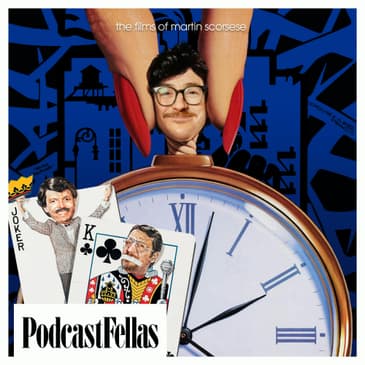



Start spreadin' the news, we're podding today...
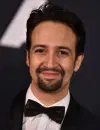
Broadway icon (and newly minted Disney Legend!) Lin-Manuel Miranda joins us to talk about what is possibly Scorsese's biggest bounce - 1977's New York, New York.
Cocaine, unchecked ambition, and a misguided attempt to try and get Liza Minnelli to do improv led Marty to some dark places. But hey - at least Robert De Niro learned how to play the saxophone! Expect lots of Broadway talk on this episode - with, of course, much props to the "Homie John Kander."
Check out the Disney Legends alongside Lin
Read Gmorning, Gnight!: Little Pep Talks for Me & You
Watch The Songwriters: An Evening with The Homie John Kander & Fred Ebb
Theme from Blank Check, Blank Check Produced and mixed by “Synth Horn Savant" Kyle Joseph
Sign up for Check Book, the Blank Check newsletter featuring even more “real nerdy shit” to feed your pop culture obsession. Dossier excerpts, film biz AND burger reports, and even more exclusive content you won’t want to miss out on.
Join our Patreon for franchise commentaries and bonus episodes.
Follow us @blankcheckpod on Twitter, Instagram, Threads and Facebook!
Connect with other Blankies on our Reddit or Discord
For anything else, check out BlankCheckPod.com
Learn more about your ad choices. Visit megaphone.fm/adchoices
[00:00:21] [SPEAKER_04] A love story is like a podcast. It's beautiful while it lasts. Is that the tagline? It's one of two taglines. Okay, alright, that's fine. A love story is like a song. It's beautiful while it lasts. Quite a good tagline, I would say. Yes, that's an apt and good tagline. Pretty nail on the head for this movie. That's the best way you could sell this movie accurately.
[00:00:42] [SPEAKER_07] The war was over and the world was falling in love again. That's a classic tagline for this movie as well. I remember that one.
[00:00:47] [SPEAKER_04] Yes. Now, I don't think that represents the film very well because that makes you think that you're gonna see a sweeping love story about a functional relationship. A post-war romance.
[00:00:56] [SPEAKER_07] A kind of war. The war was not over. The war doesn't end. That is so true. The war ain't over.
[00:01:01] [SPEAKER_04] I think it's arguable if these characters ever fall in love.
[00:01:05] [SPEAKER_07] Well, uh, okay, fair enough. Sure.
[00:01:08] [SPEAKER_04] I think that's part of what makes the movie interesting. I think they do. And also gets to the fundamental brokenness of this movie, what makes it such a thorny text credit. I think they do in a bad way. Wrestle with.
[00:01:18] [SPEAKER_05] Yes. But I don't, I don't think they do. You don't think they fall in love? I mean, they fall in love is maybe too nice. I think they always meant to improv their way to the scene where they fall in love and they never got it. Yes.
[00:01:27] [SPEAKER_07] Yeah. They, they fall into an intense connection, I guess is the best way to put it, right? Like, it's like, when, when he's screaming at her in the cab and then she goes into labor, he does react, maybe not with the, you know, the sort of, not romantically, but like there, and she, you know, they, there's something there, right? Like there is, there's an understanding between them that is deeper than they just don't like each other.
[00:01:57] [SPEAKER_07] But I, but I don't know if I could call it love.
[00:02:00] [SPEAKER_04] Yes. Yes. Part of what's interesting about this movie conceptually, but is dramatically almost impossible to execute, which leads to why this movie can be such a trying watch is that I think it's two people who know how lonely they are and know how much chemistry they have together performing. And they convince themselves that the other stuff works sometimes.
[00:02:23] [SPEAKER_07] I look, we will talk about it. This movie is about, you know, putting a, a, a modern and complex relationship into a vintage setting. Can I throw out? And everyone was like, ah, you know, everyone's reaction at the time was like, ah, I hate it. I hate this. Oh no. These epics should never have met. Right. Why are they yelling at each other?
[00:02:43] [SPEAKER_04] May I throw out my hottest take right off the bat? Go ahead. And I'm, I'm really, I was running through my head. I'm like, I think I stand by this in the pantheon of Martin Scorsese, Robert De Niro collaborations. Is this the bottom of the list? Last De Niro character you want to date? Yes. Oh, not only date, honestly, fucking me.
[00:03:04] [SPEAKER_05] I don't want to be on a subway car with this. Much less watch him. And I'm aware that he did Cape Fear.
[00:03:10] [SPEAKER_07] Like I know that there's Cape Fear.
[00:03:12] [SPEAKER_04] This is the least criminal character out of all of them. And yet all the other guys undeniably are rizzing Jimmy Doyle off the stage.
[00:03:21] [SPEAKER_05] It's like if the guy from Cape Fear wandered into the bandwagon.
[00:03:24] [SPEAKER_07] Yes. Yes. I mean, like my friend Caitlin, who's an, who loves this movie, said this calls him the scariest man on two legs. That's her letterboxd review. It's crazy. Yes. And I mean, yeah. Fake limping, maybe never even served legs. Yes. This is very true. Where'd he get that Hawaiian shirt?
[00:03:41] [SPEAKER_04] But you're like every other Scorsese De Niro character is on paper, the scariest man who ever walked on two legs. And yet in the execution, you're like, I think I could fix him though. And this guy is broke. Or you're like, he's charming. There's something.
[00:03:57] [SPEAKER_05] My hottest take is that I think two thirds of the way through this podcast, you should interrupt it with the last waltz podcast. Cause that's basically what happened. He was like, I didn't, I didn't get it on this one. Let me go make the last waltz. Like it actually, it's actually crashed in to like wherever you're interviewing.
[00:04:14] [SPEAKER_04] You know what's wild too? That is exactly what happened. Basically like direct one-to-one with Jonathan Demme making stop making sense in the middle of swing shift.
[00:04:25] [SPEAKER_07] Really?
[00:04:25] [SPEAKER_04] Which is like the movie that almost broke him. Right.
[00:04:28] [SPEAKER_07] And then he just like fights for the stars in the studio. Can I go make a, I need to get something out of my fucking system. Can I do something fun? Right. Exactly.
[00:04:36] [SPEAKER_04] And then they rebound hard.
[00:04:37] [SPEAKER_07] I don't know how, I think there was more drugs for the New York, New York and last waltz is my guess.
[00:04:44] [SPEAKER_04] There is an, than for swing shift and stopping. I noticed at the end credits that cocaine has an executive producer.
[00:04:50] [SPEAKER_07] Absolutely.
[00:04:51] [SPEAKER_04] Title on this one. Cocaine, executive produced by cocaine. Catering by. Right. Associate producer affairs. Everyone's just having like four affairs. Cocaine pictures presents an adultery production.
[00:05:02] [SPEAKER_06] Columbia shouted out in the credits. Well, that's Columbia.
[00:05:06] [SPEAKER_04] Oh, I see.
[00:05:08] [SPEAKER_07] Oh, right. You were, you thought it was just the comp, the country. They wanted to give a little. No, no. Ben, that is good. Thank you guys.
[00:05:15] [SPEAKER_04] This of course is United artists picture. I don't want people thinking I don't know my stuff. Of course.
[00:05:18] [SPEAKER_07] Yeah. No. Cause there's right. Johnny boy, mean streets, Travis Bickle. I mean, that's a tough cookie. Travis Bickle. I will say we talked about Travis Bickle. The early scenes.
[00:05:29] [SPEAKER_04] You kind of see it. You see why simple shepherd falls for it and misses the red lights.
[00:05:34] [SPEAKER_07] Jake LaMotta. I am also just remembering the very obvious fact that Robert De Niro played a lot of tough cookies. Then Rupert pumpkin. Who's a dreamboat compared to a lot of these guys. Those were rehearsed scenes. Yes, that helps to rehearse. No, wait, no, wait. You know, you think rehearsing is helpful? What do you know about this? You don't have any experience with that kind of thing. You love to wing it.
[00:05:59] [SPEAKER_05] I, I, I love to, I love to move it, move it. And I love to wing it. I, um, I, I was reading a bit of Liza's autobiography on the train down here guys. And she has, she talks about these scenes and being like, you know, Marty and, and, and Bob were very into, uh, improvising and. Which she had never done. In my first scene, I just said no. And then they were like, try it again. I just said no in lots of different ways. And that is the first scene of this movie. It's just her saying no in as many ways as possible.
[00:06:29] [SPEAKER_05] As he keeps trying it. And then they forgot to write the part where they fall in love.
[00:06:32] [SPEAKER_07] Yeah. So wild. It is crazy what they, yes, that they threw that at Liza. Uh, Jimmy Conway, good fellas. Just going through the other scary guys. Obviously Max Cady and Cape Fear. Uh. Bad grandpa, war with grandpa. Ace Rothstein in Casino.
[00:06:50] [SPEAKER_04] When's he gonna finish his grandpa trilogy?
[00:06:52] Yeah.
[00:06:53] [SPEAKER_07] De Niro?
[00:06:54] [SPEAKER_04] Yeah.
[00:06:54] [SPEAKER_07] So there's bad and dirty? Uh. No, sorry. No.
[00:06:57] [SPEAKER_04] Bad is jackass. Dirty is De Niro. Oh yeah, bad is jackass.
[00:07:02] [SPEAKER_07] Dirty and war with grandpa. Right. So should there be like a serious grandpa movie? Like, or should grandpa, maybe a Christmas movie? Yeah. An autumn with grandpa. Grandpa Claus. Grandpa Claus. That's fun. Grandpa Claus. And it's just like, you know, kids sit on his lap. He's like, oh, what's going on with you? Yeah.
[00:07:19] [SPEAKER_04] I like the idea of kids sitting on De Niro Santa Claus's lap and him treating it like any late night talk show interview he's ever done. Yeah. I don't know. What do you want from me? Yeah.
[00:07:29] [SPEAKER_07] Yeah. I try my best. What do you want? Bring the presents. I think there's a bad guy in the White House right now though. And then he pumps his fists.
[00:07:39] [SPEAKER_04] Born in the USA place. What's this podcast, Griffin? This podcast is called Blank Check with Griffin and David. That's so true. Blank Check, Blank Check.
[00:07:47] [SPEAKER_07] Yes. With Griffin and David, Griffin and David. Yes.
[00:07:51] [SPEAKER_04] Griffin, Griffin. David, David. It's a podcast. I'm Griffin. Yeah, I'm David. Yep. I'm Griffin. Yep. David, stop it. That's the end of it. That's the last time I want to do it. Okay. It's a podcast about filmographies, directors who have massive success early on in their career and are given a series of blank checks to make whatever crazy passion products they want. And sometimes those checks clear and sometimes they bounce baby. We are talking about the films of Martin Scorsese. This miniseries is uncontroversially called Podcast Fellas.
[00:08:18] [SPEAKER_04] I've never felt more confident about the naming of a series ever. Yeah, Podcast Fellas. People think we didn't consider the other options. Podcast, podcast. Sure. We can consider everything. That might have been funny. Podcast Fellas brings me so much joy to say. Me too. I love it. I was talking to our producer, Ben Hosley, right before you guys came in and I argued. I said, this is like the only true bounce of his career. This is the only movie of his that did not work on any level when it came out. Sure.
[00:08:47] [SPEAKER_04] And has not been fully reclaimed.
[00:08:49] [SPEAKER_07] He has other financial failures that were well regarded. He has other commercial, the okay movies that were not maybe. But have become canonized. And it's like rude to call like Kunduna bounce. Totally. Because it's like, oh, your Dalai Lama movie wasn't a huge hit. Like it's a kind of a mean thing to say.
[00:09:07] [SPEAKER_04] But this is a classic bounce.
[00:09:09] [SPEAKER_07] And it is the classic bounce of like they were high on themselves. They were like, we can do anything. This movie can be as long as we want it to be. We can improvise every scene. We can do as much coke as possible. Like I can have multiple affairs. His wife was having a kid. He was getting divorced. He's having an affair with Liza Minnelli. She's having an affair with someone else as well, I think. Baryshnikov. Baryshnikov.
[00:09:36] [SPEAKER_07] Everyone's just being insane basically at all times. And that's one of those things where you watch the movie and you're like, kind of feels like everyone's going crazy while they're making this. Like it's just right on the surface of it.
[00:09:47] [SPEAKER_04] It is so fascinating to like study the other films that came out in 1977. Star Wars? Well, that's the thing. It's other than Star Wars. Do you guys have experience in the Star Wars universe? A touch. A little touch. A pinch. You know a little bit about that era. But you just read the stories about the making of this movie and you just imagine across town the returns on Star Wars and the people at United Artists going like, cool, so we'll never make something like this again. Yeah. Yeah. Let's close the door on this.
[00:10:16] [SPEAKER_04] This entire like school of thinking is dying. Who's our guest? Our guest. Okay. Today. And this is the first time I'm saying it a little prematurely. You're about to be coined a Disney legend, correct? Yes, I am. You are. By the time this airs, I will. You're a Disney legend?
[00:10:35] [SPEAKER_05] I will have the parking in Burbank that befitting a Disney legend. Yes. What is that? It's basically, I think it's sort of- If you wish upon a star, you get your dreams come true. In perpetuity.
[00:10:45] [SPEAKER_04] Boy did I wish.
[00:10:47] [SPEAKER_05] As memorialized in the Disney animation feature, wish.
[00:10:49] [SPEAKER_04] Yes, yes. People don't know that movie's about you.
[00:10:52] [SPEAKER_05] Still haven't seen that one. Yeah, it's about me. Ariana DeBose played me. The, yeah, no. This Sunday, D23, they like, they give- It's kind of the like silver watch. It's like a hall of fame. They give folks who've done a lot of Disney stuff. Right, yes. I mean, I thought I banked it with Odd Life of Timothy Green, but- Damn right. I forgot. I had to write a lot more to get that Disney legend status.
[00:11:13] [SPEAKER_07] You want to be one and done.
[00:11:14] [SPEAKER_05] Who is the leaves?
[00:11:16] [SPEAKER_07] The weirdest Disney legend.
[00:11:17] [SPEAKER_05] I know all four Golden Girls are Disney legends. Okay, I will tell you the weirdest substrata of Disney legends is that Disney owns a lot of things that aren't associated with Disney. Sure. So there's lots of like ESPN folks.
[00:11:29] [SPEAKER_07] Right, I guess that makes sense. Where you're like, oh, whoa. Right, of course.
[00:11:32] [SPEAKER_05] Bob Costas, Disney legend or whatever.
[00:11:33] [SPEAKER_07] Oh man. I saw Bob Costas at the West Side Diner on Broadway and 69th Street just holding court. Yeah. That is just a guy I think that anyone wants to talk to if he's just sitting at a diner. You know what I mean? Yeah. Everyone was just like bothering him and he was just like, yeah, no, I remember the 96 World Series. You know, he's immediately getting into it with them.
[00:11:53] [SPEAKER_04] Our guest today is Lin-Manuel Miranda. Oh, thank you. Referring to the show. Have I shared this story before that I saw Al Gore at a Delta Sky Lounge and he was working that buffet. And I said, this man would have won the president. If they had, if they had, if he would have won the presidency and he would have won over the president. He would have won as a prize, like at a claw machine. No, I just watched him work this room.
[00:12:20] [SPEAKER_04] And I was like, this guy was never allowed on the public stage. And I don't know.
[00:12:26] [SPEAKER_07] Right. He was too boring on stage.
[00:12:29] [SPEAKER_04] If he hadn't uncorked it yet or they were like, this is a little too loose. And it wasn't like he was doing anything wild, but he was like walking through the buffet line and he was like mashed potatoes. I want to, but my stomach is going to kill me on this one.
[00:12:45] [SPEAKER_05] And I was like, this guy is too private to telegraph in that.
[00:12:48] [SPEAKER_04] Everyone was like laughing.
[00:12:50] [SPEAKER_05] Like you're telling tales out of school. I feel like Sky Lounge. I don't know.
[00:12:53] [SPEAKER_04] It didn't even feel.
[00:12:54] [SPEAKER_07] It's like there's a cone of silence. A little cone of silence.
[00:12:56] [SPEAKER_05] Like Susan Lucci is a Disney watch. That's like publishing the DM. Yeah. A little bit. A little bit. I mean, I feel weird knowing that.
[00:13:06] [SPEAKER_04] Although it's a very funny story. It was, he was just incredible. Yeah. But I imagine Bob Costas was a similar kind of.
[00:13:13] [SPEAKER_07] You know, I got to shout out the Disney legend process. I'm really not seeing any like odd names on this. This is all people where I'm either like, well, this is an animator. I probably never heard of. I'm excited to meet Susan Egan. Or a Parks legend. Yeah.
[00:13:25] [SPEAKER_05] Bell and Meg.
[00:13:26] [SPEAKER_07] Oh, that's right. Well, for one, Bruckheimer is on your list, which rocks. That's pretty dope. That's pretty cool. As is Dwayne Johnson. Uh-huh. The rock. They call him sometimes. Of course, you wrote music for it with Moana. I did. Did he thank you for that?
[00:13:40] Yes.
[00:13:40] [SPEAKER_07] And you know what I said. And what did you say? I said, of course. He said that's what I said. Alan Tudyk, who is a true Disney legend. Yes. This is true. Alan Tudyk, who sort of became the John Ratzenberger of like Disney animation, right? Yes. Where it's like, let's throw him into every movie. A deserving quantity play. He has certainly put in the work. And indeed, Susan Egan, who is Belle, and Megan Hercules, and is the best. And my daughter's had a big Beauty and the Beast phase lately. So I've been hearing a lot of her voice.
[00:14:09] [SPEAKER_07] Her beautiful, perfect voice. I still think it's crazy that in Beauty and the Beast, though, that the book she's so proud that she read is Jack and the Beanstalk. And then the guy's like, yeah, yeah, whatever. And she's like, oh, no one understands anything in this town. And I'm like, I think they just don't want to hear the plot of Jack and the Beanstalk. It's just not that interesting. They're grown-ups. A tale. You know? Yeah. This is a man. He owns like a bakery or whatever. Yeah. He's got to make bread. And she's like trying to tell him about Jack and the Beanstalk.
[00:14:33] [SPEAKER_04] That's all. Apparently, is that one of the only like real canonical public domain fairy tales that Disney hasn't adapted to a feature length film, but they like announced it 10 years ago. Yeah, they've tried. And canceled it. They've tried. There's the Mickey short that I think is part of Fun and Fancy Free. But like they themselves know there's not that much juice in the Beanstalk. Yeah. It can't fill 90 minutes.
[00:14:58] [SPEAKER_07] No. I mean, that's true.
[00:15:01] [SPEAKER_05] I mean, they did into the woods.
[00:15:01] [SPEAKER_04] Went to the woods. They do.
[00:15:02] [SPEAKER_07] It does really good stuff with it, but obviously builds a lot around it. Yeah. But it is the into the woods is funny. And there's the cow, you know. We love into the woods. Yeah. Have we said his name? We did. Okay. He's here.
[00:15:17] [SPEAKER_04] He's here for the third time. For my writer. Thank you. So you're two away from becoming a blank check legend, which is an esteemed class. Oh, boy. Oh, yeah. Five times. You gotta do five. Yeah. Susan Egan hasn't even gotten that. Yeah. Jeez, please.
[00:15:31] [SPEAKER_07] Um, but uh, welcome to the show. Thank you. Welcome back to the show. Always a pleasure. Uh, that's really nice of you to say. You're quite busy, I feel.
[00:15:38] [SPEAKER_04] You're a very busy man. Now, the first time you did this podcast was for all that jazz. I was over prepared. Sure. No, no, no. I would say-
[00:15:46] [SPEAKER_07] You weren't over prepared, but you- Yeah. You brought the juice.
[00:15:48] [SPEAKER_04] Yeah. It is often thrown out. Our, our, our listeners, protective as they are, once a month, wring their hands and go, is the show becoming too big? Is it just gonna be a press stop? No. And then there will always be the argument of, I think when very famous people have come on the show, they have been good. They have been well curated. And people will always say, remember when Lynn came on so prepared for all that jazz as a positive. Oh, okay.
[00:16:18] [SPEAKER_04] As a, he knew the show he was on, he came correct. Indeed. Indeed. But we finished recording that and off mic, you told us that you were about to start working on New York, New York. That's right. Yeah. So when we commit to doing this, email you and go, hey, no, you're crazy busy. Any chance you'd want to do this? You make a big confession.
[00:16:38] [SPEAKER_05] I have not seen the movie New York, New York. And this is my, and again, I'm nervous because first time I came in guns blazing with research and books, this is the first time I said yes to you guys without having seen the movie, I have agreed to do. Right. You've seen it now. I've seen it now.
[00:16:52] [SPEAKER_07] Now at this point. Yeah. Your other appearance was Hook, a childhood favorite.
[00:16:55] [SPEAKER_05] Yeah, Hook, I was here to defend Rufio in little else.
[00:16:58] [SPEAKER_07] Yes, of course. I love Rufio. But you did of course work in some capacity, not in, not in a huge capacity, right? But I don't actually know what capacity. Yeah, yeah.
[00:17:07] [SPEAKER_05] On the musical New York, New York. And I was instructed by the homie John Kander, as we refer to him. Yes. 99 and thriving. Mm-hmm. Um, don't watch the movie. I told him I haven't seen the movie. Uh, and he said, Oh, don't watch it. It has very little to do with what we're making. It was a real- And it was not a knock on the, he was like, he wasn't knocking the film. Sure. He was just like, we're doing a different thing. Their goal with the stage adaptation was to sort of tell a lot of New York stories through the lens.
[00:17:34] [SPEAKER_05] And Jimmy and Francine were like one subplot, but the horn player had his own subplot. And it was sort of like a, well, if we, if we had one more workshop, it's one of those things. Like it would have become the story of the making of the band in the major chord. And, um, and like lots of different slices of different strata of New York life. And then there was also kind of becoming a home for orphaned Kander and Ebb tunes and just Kander tunes. Right.
[00:18:03] [SPEAKER_05] Because of course, Fred Ebb had, had left this mortal coil. Yes.
[00:18:06] [SPEAKER_07] But, uh, there was, there was stuff. Yeah.
[00:18:08] [SPEAKER_05] But there was, there was stuff that found a home in that show. Uh, a song I'd written with John called cheering for me now. Yes. Um, that's how I got involved. Actually, John kind of sheepishly asked me, Hey, I think the song would work as the opening number. I remember. I said, great. This is a show tune without a show. Like go with my blessing. Uh, and then I said, and if you need any more lyrics, it would be a joy to write with you. You know, like I got to write a lot of more songs on that thing with him, including
[00:18:34] [SPEAKER_05] like kind of just adding tiny touches to like some Kander and Ebb tunes that had never found a home. My favorite one in the show, which is not in the movie is a song called light. That's about Manhattan.
[00:18:46] [SPEAKER_07] That's the Manhattan Hinge moment. That was a very cool part of the show. I saw this show to be clear. I saw it. It was a very cool part of the show. You know, cause the show was like incredibly big. Like it had this crazy set. Yeah. And then right.
[00:18:59] [SPEAKER_04] It won the Tony for production design? It won a Tony.
[00:19:03] [SPEAKER_07] It won a set design, scenic design. Right. And it had like, what? Didn't Susan Stroman do the choreography? Yeah, yeah. Crazy big dance numbers.
[00:19:11] [SPEAKER_05] Yeah, Stroman with the helm of the thing. Yeah, amazing dance numbers.
[00:19:12] [SPEAKER_07] There was like a whole thing where they were all dancing on the girders, you know? You know, like the guys up on the girders building the skyscrapers. And they all did a dance.
[00:19:18] [SPEAKER_05] And just like this movie, I think there's a great show in there somewhere.
[00:19:22] [SPEAKER_07] It had its defenders.
[00:19:23] [SPEAKER_05] There were too many stories and we didn't want to go endless workshops because our composer was 97 years old. And so like, we kind of rushed to Broadway for the right reasons, like out of love. Like we want to make this and we want to make it with John. I think there's a world in which some of those subplots are thinned out and the essence of the show is in there. But the same issue with the show is the issue with this movie, which I just recently saw, which is, God, Jimmy's an asshole. Right. And even in the show.
[00:19:52] [SPEAKER_05] Even though you chilled him out a little bit. Yes. He's still an asshole. And everyone who sees the show
[00:19:59] [SPEAKER_07] and sees the movie goes,
[00:20:00] [SPEAKER_05] why is she with him?
[00:20:01] [SPEAKER_07] Yeah. And it's tough to shake it. And like, I remember when the show was announced, I was like, they can't be adapting that movie because like, what the fuck? That movie can't be on Broadway.
[00:20:09] [SPEAKER_05] Yeah, they were adapting like a quarter of a movie.
[00:20:11] [SPEAKER_07] Right. You know, because like, he like yells at her, induces labor. She has a baby and he's like, no, thank you. And I'm like, you can't be ending Broadway shows that way. Like, that's not really how you send the tourists, you know, onto 46th street, you know? And right. Obviously the show didn't really do that, but right. It does fundamentally have the thing of like, this guy can't get out of his own way. Right. Like the main character can't get out of his own way. And, but in the Scorsese movie,
[00:20:42] [SPEAKER_07] it's more hostile even than that. You are like, I wish he'd stop fighting with everyone, but you're also just kind of like, does he have a personality disorder?
[00:20:50] [SPEAKER_04] Yeah. I also, I was, I was thinking about, um, inside Llewyn Davis while rewatching this. Cause we covered that fairly recently. We did. Do you like that movie? I do. The Coen brothers movie? Yes. That is a movie where a guy fundamentally cannot get out of his own way. It keeps fucking shit up. And he's talented. And he's talented.
[00:21:08] [SPEAKER_07] Yeah.
[00:21:08] [SPEAKER_05] But they show that talent pretty early. They do. It's 40 minutes before we see this man hold a saxophone.
[00:21:15] [SPEAKER_07] They show his flirting talent, Lynn, right away. Right away. They show how good he is at hollering at people. No doesn't exist is his philosophy. Yeah. Uh, yeah. Okay. But you're thinking about inside Llewyn Davis.
[00:21:27] [SPEAKER_04] I think that movie as maddening as it is to watch this guy fuck up, there's something in the way, not just the performance, but I think the way that film is written and the way the character is presented, where you feel bad for him against your better judgment. It's like the way the Carey Mulligan character views him, where it's just like, I fucking hate that you have any hold on me, that you have such a sad sack quality, that you make people worry about you.
[00:21:52] [SPEAKER_04] And Jimmy Doyle is so high functioning that you're not worried about him ever. No. So then you're just like, just worried about anyone in his or anyone near him. Chill the fuck out and don't talk to anybody. I do need to call out Marika Brownlee, who works on the podcast or operations manager. Yes. A legend saw the Broadway production three times. Whoa. Which is impressive given that it did not run for even one year. Yes. Right? Like, yeah. No, no, we, yeah. Referred to Jimmy Doyle as quote,
[00:22:22] [SPEAKER_04] my husband.
[00:22:23] [SPEAKER_07] Yeah. She, she loved Colton's performance.
[00:22:25] [SPEAKER_04] Yes.
[00:22:26] [SPEAKER_07] Tony nominated Colton Ryan. Very talented guy. Yeah. I thought so.
[00:22:30] Yeah.
[00:22:30] [SPEAKER_04] But it is one of those things like, Scorsese's main thought is the dynamite idea at the center of this movie, as he described it to Liza Minnelli was, I grew up in New York city, seeing Hollywood make films about New York city. And those two realities couldn't have been more different. What was outside my window and what I saw on the screen. And I wanted to put the real New York inside the fake New York. And you're like, holy shit, that should be the greatest movie of all.
[00:22:57] [SPEAKER_04] You're telling me Martin Scorsese made that with De Niro and Liza Minnelli. At their peak.
[00:23:03] [SPEAKER_07] At their peak. Yes. I mean, and he made it in between Taxi Driver and Raging Bull. So he was at his, and Last Waltz is, you know, sprinkled in there too. Like, so isn't this good? I, and, and, and guess what the title song is?
[00:23:19] [SPEAKER_04] You've heard it. It's a good song. We talked about on our fucking loser episode, Amy Heckerling's loser about how that is a movie where it spawning teenage dirtbag by Weedis is the weird example of a song. So largely outshadowing the movie that it came from. I don't know if we failed to mention in that discussion. New York.
[00:23:41] [SPEAKER_05] At its best, this movie exists as a seed for that song to exist.
[00:23:46] [SPEAKER_04] A song that it's impossible to like, consider had to be created. A song that feels like it was placed on this earth like water. And you know, the story that like,
[00:23:55] [SPEAKER_05] out of spite. It's a spite song. It's a spite song? Because they, so, and Kander's told this story many times. I'm not telling tales out of school. Kander, Neb, Fred, and John play the songs they've written for the movie. And the world goes round, happy endings, banger, banger, banger. And they wrote another song called New York, New York. That was like given to them. It had to be called New York, New York. Um, they were threatened with legal action from the, on the town team. Um, and so it's actually,
[00:24:25] [SPEAKER_05] it's actually called theme for New York, New York.
[00:24:28] [SPEAKER_03] Yes.
[00:24:29] [SPEAKER_05] and they play it and, um, De Niro doesn't like it. And again, have you heard? The only one De Niro cares about because it's the one his character supposedly wrote. Right. Right. So he's like smart. Not good enough.
[00:24:43] [SPEAKER_07] Um, does this song, like, do we know this song? Like, does it exist? And by the way,
[00:24:46] [SPEAKER_05] John's like, I don't even remember. Like, whatever. But it was sort of like, they basically left the room. Marty, very apologetically, apologetically asking them to try again on the theme. Uh, and then be like, fucking actor telling us how to write a song. And they banged out New York, New York in 45 minutes.
[00:25:05] [SPEAKER_07] And he's just like, fine. He's like,
[00:25:08] [SPEAKER_05] he's just at the piano. It's just the first four notes of the melody of the song. Right. Dun, dun, dun, dun, dun, it's ragtime, right? It's just him playing the first four notes until he starts the melody. And they just bang the shit out. And it's, and that's why it's a New York anthem is it's made to say, fuck you. It's got an, I'm walking. Oh, you want a good song? Oh, you want a good song? Oh, you want a New York anthem? And they write the anthem. The anthem. That like,
[00:25:37] [SPEAKER_05] they play Liza's version when they lose and Frank's version when the Yankees win. Right. The Yankees. It's both.
[00:25:41] [SPEAKER_04] Can you have an anthem that can do both?
[00:25:43] [SPEAKER_07] I think it's rude that they do that. I will say. Why? I think they should play Liza's when they win and Frank's when they win. I 100% agree. Yes. But that speaks to the cultural memory of, of course,
[00:25:52] [SPEAKER_05] Frank took control of the song. Yes.
[00:25:55] [SPEAKER_07] You know, sort of unavoidably.
[00:25:56] [SPEAKER_05] And if you ask Fred and John, they're like, we're very grateful that he recorded it and made it a hit. But like, he changed all the lyrics. He railroaded the lyrics. A number one. They didn't write that shit. He did it his way.
[00:26:06] [SPEAKER_07] He just likes Seek Sauce. He just wanted to get some,
[00:26:10] [SPEAKER_05] some A1 in there. Yeah. A little bit. I think he says top of the heap twice. Yeah. I mean, it's just kind of top of the heap. He's just kind of going. And that's the classic.
[00:26:19] [SPEAKER_07] But look, I mean, Sinatra, we've talked about Sinatra and we, we even watched Ocean's Eleven. We did. The Sinatra version, which is a bit of a snooze. Had a great nap. A bit of a snooze. Yes. Sleepiest movie ever made. You know, he's one of those guys where you're like, well, this guy's sort of, you know, sort of an asshole. But then you're also like, he's kind of the fucking best. Jesus Christ. He's so good at this. Like, you know, you can't really deny it. But I love Liza's version. Oh, it's incredible.
[00:26:43] [SPEAKER_04] Even more. Right. I mean, I defend this movie and I've seen it three times now. Okay. And. Congratulations. The first, thank you very much. I appreciate that. The first 90 minutes, I'm like, I, I like this movie. Am I sure I like this movie? And then the last hour just like pays off so greatly.
[00:27:02] [SPEAKER_05] The last hour is the reason it's a movie.
[00:27:04] [SPEAKER_04] It's the reason it's a movie. And by the way, they shot that first.
[00:27:07] [SPEAKER_05] Yes. I think they were a little more together. They were shooting the musical sequence. Vincent Minnelli is visiting his daughter on set. Right. And like, fucking Marty's like, I've never been so happy in my life.
[00:27:18] [SPEAKER_07] And I'm sure Marty also was like, I want to impress my like icon that I worship. Like, and I, right.
[00:27:24] [SPEAKER_05] And also, yeah. And then they just forgot to write the part where they fall in love. So they fump for their, their way there for a fucking hour.
[00:27:32] [SPEAKER_04] In a super perverse way. The fact that the first 90 minutes are such a slog makes the last hour even more like redemptive. But I don't think the movie couldn't be more functional up until that point and still work.
[00:27:48] [SPEAKER_05] But I find amazing that they, they cut, you know, turned in like a four hour version. Sniffing and being like, it's perfect. Yeah. And, and what I find amazing is that what they cut for theatrical release was happy ending. This is what's crazy. I was like, there's the whole first third. Yes. Like start with the audition. Like literally make a meet cute at the audition where he's got to go to the audition. Yes. He begrudgingly accompanies him there and they fall in love because of their talent.
[00:28:17] [SPEAKER_07] It is amazing. That's something. How much of this long movie is Jimmy fucking up a meeting? There's like eight different scenes. That's like, let's meet with this guy. And Jimmy's just being a pig. You won't believe how much he's going to fuck this up. They're like, I think we could have lost like three of these meetings.
[00:28:35] [SPEAKER_04] Yes. Ben was asking me about the differences, right? Yeah. It was released. It was released around two and a half hours. Yes. Yeah. It was released right after star Wars and they were panicking and they were like, you got to just cleave 30, 40 minutes off of this thing. So they release it a little over two. And the two, it's basically the only difference are two sequences, happy endings, which is like the reason this movie is so gorgeous. It exists to get to happy endings and her singing, New York, New York.
[00:29:05] [SPEAKER_04] That's why you make this movie. And to cut one of those two things out is absurd. And then the whole extended sequence at the, the very red nightclub where they kick him out in the tunnel of the light bulbs and everything, which I would argue if you're going to include one sequence of Jimmy fucking up a deal, that's the one to keep. They cut out two of the best things in the movie, which are both like 15 minutes long. And they just, because they were like,
[00:29:32] [SPEAKER_07] it's slowing the movie down, which sure. But as you're saying, right, the slowness that actually already happened, but no, they released it at one 55 Griff. Then they cut it to one 35. That's the European cut,
[00:29:44] [SPEAKER_04] which circulates now because the one 55 cut was, was only out there very briefly.
[00:29:48] [SPEAKER_07] Right. It was thrown away when the thing basically immediately bombed that had the fight scene,
[00:29:51] [SPEAKER_04] but it didn't have happy. Right.
[00:29:53] [SPEAKER_07] And then they re-release it in 1981. I guess sort of post raging bull of like, okay, okay. Marty and Bobby like did a good one again. Can we redeem this one a little bit? And, you know, by the eighties or what people are sort of like, I get what you were going for, becomes the kind of happy endings for a second though,
[00:30:13] [SPEAKER_05] because that last sequence is such a perfect dream ballet in the style of Vincent Minnelli's great movies in American in Paris. That fucking dream ballet is the reason the movie exists. Totally.
[00:30:25] [SPEAKER_04] It's why that movie won best picture. Yeah.
[00:30:27] [SPEAKER_05] The bandwagon where like they put on their quote unquote show. Yes. And it's eight musical numbers that have nothing to do with each other. But then there's the incredible, like basis for Michael Jackson, smooth criminal, like that whole unbelievable detective sequence. That is the most stunning thing you will ever see in your life. And is also what's amazing about those dream ballets is they're the movie in musical miniature. And what's incredible about the happy ending sequence is it is an incredible
[00:30:56] [SPEAKER_05] movie in miniature for a movie that doesn't exist.
[00:30:59] [SPEAKER_04] Exactly.
[00:30:59] [SPEAKER_05] It's because that's not what we've seen advertised. Yes. It's the more interesting movie. Oh my God. If, if, if De Niro and her had met cute at a movie theater, like the beginning of happy end, like I'd watch anything that happy endings alluded to.
[00:31:13] [SPEAKER_07] Uh, something, you know, it costs an incredible amount of money to make it, the happy ending sequence. And it is, you're right. Like it was one of the first things to done. It is.
[00:31:22] [SPEAKER_05] If you're listening at home, you didn't see this, just start the movie at whatever that time. Can we get them the time code to just start it at the musical sequence?
[00:31:31] [SPEAKER_07] There's the huge issue, of course, that this movie is not really streamable.
[00:31:34] [SPEAKER_06] Like you have to watch a disc about a three and a half hours ago. When I sat down to watch this movie that it's just nowhere. It's nowhere to be found. I had to watch some weird bootleg Russian streaming version. And I was very unclear of even what version I was watching. I guess I,
[00:31:51] [SPEAKER_05] I had a limited, I had a special edition Blu-ray that I had never watched, but I bought it back when I was. I, I,
[00:31:58] [SPEAKER_07] you know, like your assistant being like, probably he's got a disc, right? Cause like that shit ain't on fucking iTunes. It's like, yeah. And I,
[00:32:04] [SPEAKER_04] like that Blu-ray came out like 15 plus years ago. It's out of print. It just got reissued on 4k, which came out like a week ago. Does that have his video introduction?
[00:32:14] [SPEAKER_05] He's basically like, we were trying something. Yes.
[00:32:16] Sorry.
[00:32:17] [SPEAKER_05] We were trying something. Sorry.
[00:32:19] David.
[00:32:28] [SPEAKER_04] Yes. Did you know there's a new place where you, you specifically can let your nerdy freak flag fly?
[00:32:34] [SPEAKER_07] I did know that because it's a real digital town, video game town. And it's populated by some of the best freelance writers on the internet, where you can read compelling editorials, reviews on the latest pop culture releases, get exclusive interviews with tastemakers, even get rankings of sexy mascots.
[00:32:49] [SPEAKER_04] If you're into that video game town covers all things geek related. We've got coverage on mean culture, film reviews from Sadant Al-Laka, articles, dissecting television, both new and old and a weekly podcast with some stellar guests.
[00:33:03] [SPEAKER_07] They deliver the kind of analysis, editorials, podcast videos, rankings, nerdy ephemera that you can't find elsewhere. So check them out at video game dot town. And if you want to support the return of fully independent web media, you can directly support them on Patreon at patreon.com slash video game town for exclusive articles and podcasts,
[00:33:19] [SPEAKER_04] video game dot town for new stuff every single day. I mean, that's absolutely how I was introduced to this movie was in like documentaries about Scorsese or the history of film or TV specials or like biographies or whatever. I just remember watching some TV doc thing where they go like, and then of course in 1977 came New York, New York.
[00:33:48] [SPEAKER_04] And I don't know if it was anything about Scorsese, De Niro or Minnelli, but just all three of them in talking heads going like we were trying something and people got angry.
[00:33:58] [SPEAKER_05] Because it also has become part of the narrative of we gave the filmmakers too much power. Uh huh. That was a mistake. Yes, it's like in the heavens gate.
[00:34:07] [SPEAKER_07] It's very much right. Sorcerer, like those movies of like, okay, new Hollywood's over guys. Time for you all to have some guardrails. I can tell you, I'm going to open the dossier here that, uh, Martin Scorsese one day opened the Hollywood reporter, I guess after he's made taxi driver. No, and it's before he's made taxi driver, but he's made mean streets. And I guess he's maybe made Alice doesn't live here anymore. Uh, just reads that Irvin Winkler, the Hollywood mega producer, like, you know,
[00:34:35] [SPEAKER_07] big name wants to make a movie about like the big band era called New York, New York. And he's just like, I want to do that. I did like, I love big band music. I grew up with it. I loved, you know, uh, jazz. And like my parents were obsessed with Django Reinhardt and Stephanie Grappelli or whatever. And like I, my parents, like, you know, like pictures of my family members, like in world war two uniforms, like having come right. Like this is all in the soup for me.
[00:35:03] [SPEAKER_07] And I fucking love old Hollywood musicals. Like I love Vincenti Minnelli. Like I love all this shit.
[00:35:08] [SPEAKER_04] It's what's awesome is he basically, despite being the king of new Hollywood, right? Really? Big nerd. No, but beyond that, he's also like, I got to Hollywood too late. I grew up wanting to make a big old artificial, special Hollywood show movie. And I got here and I got stuck being the fucking figurehead of the lousy new Hollywood moment. Like, it's so funny to think about that now when we all idolize what he represented. Well,
[00:35:36] [SPEAKER_07] but that's like what is what's happening right now with Christopher Nolan, where he's like stroking his chin, being like Crimson Tide is one of the great films of all time. And I'm like, I agree with you, Chris, but clearly you just wish it was the nineties. Like, you know, it's my, and I love the movies you're making right now, but he's like, that was a good era. Right. You know, Scorsese shows up in the seventies. Yes. He's like, I wish it was the forties. He says the movies he's thinking about the man I love, which is like a Raul Walsh forties film noir, which has all these Gershwin songs in it.
[00:36:05] [SPEAKER_07] Roadhouse, which is like a Richard Widmark movie. And then obviously the Minnelli Technicolor films like that. A Valentine to Hollywood is this idea. It is so funny to hear him say that in these interviews. This movie is a Valentine to nobody. Like, I mean, that's, I mean, I guess it's like, like you're saying stuff like happy endings. Yeah. A little bit, but mostly.
[00:36:25] [SPEAKER_05] It reminds me of that one line in Xanadu and don't come for me. Xanadu lovers. They're out there.
[00:36:31] [SPEAKER_07] On roller skates.
[00:36:32] [SPEAKER_05] It's like the forties meet the eighties. And it's like, I don't think those were meant to meet my guy. Like, I don't think those are two great tastes that don't taste great together. And that's Xanadu. But like, they say it with such pride in the text of Xanadu. And that's sort of what happens here is like, I'll do my, my kind of thing, but I'll use old school Hollywood sets. And I'll use the daughter of Judy Garland, star of these Minnelli movies as like a proxy for that era.
[00:37:01] [SPEAKER_05] And frankly, when you have like De Niro, like making shit up on an old set with Liza Minnelli there, the deck stacked against De Niro. Like he's the one who looks like he's in the wrong movie.
[00:37:15] [SPEAKER_07] He does. Yeah. He's, he's the weirdest fit for this movie. Yeah. It doesn't really work as, as, as much as he had spent like this early part of his career, I feel like kind of being able to do anything.
[00:37:25] [SPEAKER_04] Well, it's like sandwiched in between these two guys together, creating two of the greatest performances in the history of cinema. The leading man roles that will be studied by everyone forever. And that go against all the rules of the kind of character you want to place at the center of the movie, a character that no one would root for all of that. And this is the one where they just clearly think they're untouchable. And it is bizarre because watching these early films, we just keep being like, God,
[00:37:54] [SPEAKER_04] De Niro was so fucking hot. He was so handsome. Yeah. He's so charming. Sure. It's hard to like place yourself back in that headspace where you were like, he was like exciting and dangerous and full of life, you know? And so like we were saying in the taxi driver episode, you're like, you kind of see it at moments. You kind of see why Sybil Shepard is tricked by him. Yeah. You kind of see how Ripper Pumpkin could maybe get a good five minutes together. He says like 20 words in Godfather 2. And you're like, that's fucking young Brando.
[00:38:24] [SPEAKER_07] Coolest guy in the world. Absolutely.
[00:38:27] [SPEAKER_04] There he is. The Rizzler. Fascinating thing about this movie to me. He's the Rizzler. He was the Rizzler. He is the Rizzler. He's the original Rizzler. Don Rizzler. Can someone please make a poster? Rob De Niro is Don Rizzler. Put it by rod.
[00:38:41] [SPEAKER_07] Yes.
[00:38:42] [SPEAKER_04] Right. Or put the Rizzler in his outfit. Yes. Anyway, he's great. Also, Grandpa Claus. No, I was going to say the fact that this movie is developed basically concurrently with Taxi Driver and Scorsese even said that he thought he was going to make this first and that because Taxi Driver was lower budget, suddenly the money came together quickly. I think after De Niro's Oscar win and that got fast tracked. Can you imagine the reality in which the order of these two films is flipped? Because if he makes this before Taxi Driver,
[00:39:11] [SPEAKER_04] there are rails. There's no way they let him go.
[00:39:14] [SPEAKER_07] Or does Taxi Driver even happen? Or does it happen the way it did?
[00:39:18] [SPEAKER_04] Does it fuck it up so badly that no one ever, right?
[00:39:20] [SPEAKER_07] Do you like the films of Martin Scorsese? I am a big fan of the film. Major admirer. And you like, you like Taxi Driver, say. Yes, I'm a fan of him.
[00:39:28] [SPEAKER_05] I celebrate his entire catalog. Well, directed films. Right, right.
[00:39:32] [SPEAKER_07] Um, well, his, yes, as we sort of said, his, his pitch here is like, it'll look like a film. The 40s meets the 80s. From the 40s. Right. But it will have, the sets will be fake, but we'll approach the characters in the foreground like a documentary. We'll combine the two techniques. Uh, so we're kind of like, you know, we're bringing in like Italian neorealism into like a, you know, phony looking Hollywood movie. Brilliant, right? And I can imagine the producers being like, yeah, yeah, that'll work. Okay. I mean, sure.
[00:40:01] [SPEAKER_07] And that's going to be expensive, huh? And he's like, yeah, it's going to be expensive. They're like, okay, well, Robert Tadier and Liza Minnelli though, they're famous. Like, that's good. Right. And she can sing. And, and he's learned, he's method. So he'll learn the saxophone or whatever.
[00:40:15] [SPEAKER_04] Those two stars on paper, you go, it has to work. You have the two people who most embody the two sides of what you're trying to do.
[00:40:23] [SPEAKER_05] James Franco and Hathaway.
[00:40:25] [SPEAKER_04] Hey,
[00:40:27] [SPEAKER_05] chocolate and peanut butter, baby.
[00:40:28] [SPEAKER_07] I really felt for five minutes that that was working. I remember when it kicked off and they had like the video where they were, I was like, yeah, this is all right. And then like, they are the ones that I want. Five minutes later, you're like, huh, it's kind of fucked up. Huh? Oh, what's going on here? That is one of those things that I don't remember. No, like generally, like you saying it, I'm like, right, of course they did that, but it's just gone.
[00:40:52] [SPEAKER_05] But it's a similar mindset of like, it's, they're just so different.
[00:40:56] [SPEAKER_04] Yes.
[00:40:56] [SPEAKER_05] Yeah.
[00:40:57] [SPEAKER_07] But everyone loves both of them. So, right.
[00:41:00] [SPEAKER_04] It's nice that our generation had a Rob Lowe sings with Snow White, you know, that growing up as Oscar nerds, you're like, Oh, and the worst stuff happened before. We've had so many. We've had the crash dance.
[00:41:11] [SPEAKER_07] Yeah. We had, we had the racism dance. Seth McFarlane singing, We Saw Your Boots. Yes. Remember that? That was quite an opener.
[00:41:19] [SPEAKER_04] How do you feel about him singing a Muppets album?
[00:41:21] [SPEAKER_07] Okay.
[00:41:22] [SPEAKER_04] Bad. Someone on the Reddit today was saying, David's going to make fun of this and Griffin's going to argue it's a great idea. I just think it's weird.
[00:41:30] [SPEAKER_07] But I mean, clearly he loves the Muppets. I assume that's why he's doing it. So it's an homage.
[00:41:35] [SPEAKER_04] He's got a beautiful singing voice.
[00:41:36] [SPEAKER_07] Seth McFarlane is releasing like a Muppets album, like where he sings like Muppets standards, I guess.
[00:41:41] [SPEAKER_04] Cause you know,
[00:41:41] [SPEAKER_05] he does like old school cream. He does like Sinatra.
[00:41:43] [SPEAKER_07] Right.
[00:41:44] [SPEAKER_05] Right. He's, he's, he's, he's got a good creator family guy and he's a buble. He's a buble.
[00:41:48] [SPEAKER_07] He does.
[00:41:49] [SPEAKER_04] He does kind of like. He's a bit of a buble. He's a bit of a buble. He's a man buble. Buble. Yeah. But I just like, I don't, I've never wanted to hear the songs of the Muppets. Listen, I released a book of tweets. I can't bash anyone's side projects.
[00:42:04] [SPEAKER_05] You do what sounds good at the time. I don't.
[00:42:07] [SPEAKER_04] I was releasing a book of tweets back then. That is true. That was the thing to do. Scorsese, even beyond the like 40s meets the 80s thing was like, I'm, this film is going to catalog like these two characters across decades. I want the style of the movie to evolve.
[00:42:25] [SPEAKER_07] He had that notion. It'll be a 40s movie.
[00:42:28] [SPEAKER_04] Then it'll be a 50s movie. Insane. We're going to study the styles of how sets were built, how makeup was done, camera movements and whatever, and, and do all of that. And then the whole idea of like, how do you place a documentary inside of this is very strange because he would cite Italian neorealism, but this is not what neorealist films feel like. No, this is not what they feel like at all. Like that's them. No. Yeah. I would argue this feels a lot like an attempt at doing Cassavetes, who was obviously one of his mentors. Sure.
[00:42:57] [SPEAKER_04] But Cassavetes, it's always the, the fallacy that his movies were improvised. When in fact, there was a lot of improv kind of Mike Lee style used in the development. Right. And then the script was really, really locked down.
[00:43:11] [SPEAKER_07] Yes. Instead, Marty, as you say, makes Taxi Driver before this, because the funding comes together quickly, wins the Palm Door at the Cannes Film Festival. And so he says, he crashes into this movie with just like the biggest ego. There's a script by Earl Mack Rauch, the guy who eventually wrote Buckaroo Banzai, right?
[00:43:31] [SPEAKER_04] Just the wildest two films for one person to have written.
[00:43:35] [SPEAKER_07] Right. They hate the script. Obviously, Marty Martin, who is a Marty collaborator, comes in and works on it later. But the true answer is that there's no script. There's just not a script.
[00:43:45] [SPEAKER_04] Like five different people work on it.
[00:43:47] [SPEAKER_07] Five different people work on scripts. Yes. That Marty and De Niro keep going like, not good enough. Yes. You know, Not funny. I think about that all the time.
[00:43:56] [SPEAKER_04] That's Mulaney doing Jagger. Yeah. I love that he had to defend that. I think about that all the time. Do you see that? He also talks about how. He was asked in an interview, Jagger, about that. No. What'd he say? He was like, well, you know, you want things to be at a certain level.
[00:44:09] [SPEAKER_05] Good. I love, I love they didn't deny it. Good for him. Ten toes down. Not funny.
[00:44:13] [SPEAKER_07] He also says during that bit that Mick Jagger also at one point went, Diet Coke. And someone just like brought one to his hand. He's like, it's just another plane of existence. Yeah. Yes.
[00:44:24] [SPEAKER_05] Shine a light coming to this miniseries. We're going to do something. I want to talk about Mick Jagger.
[00:44:28] [SPEAKER_07] I want to talk about Mick Jagger. Yes. This is a good excuse to talk about Mick Jagger. But my,
[00:44:32] [SPEAKER_05] who famously. Planting seeds for you guys out there. Yeah.
[00:44:34] [SPEAKER_07] That's some real Patreon shit. My father went to like a Stones gig when they were brand new. This is a story he used to tell. Liked it. When they're whatever. When they're nobodies. He snuck into like, what did the green room? Like to try and like hang out with them. And Mick Jagger just went, fuck off. And he was like, okay. So it was always, he was always on that plane of existence. He always had it. So a month before the film was going to shoot, Earl Mack Rock, Roush, sorry. I think it's Roush. Yeah.
[00:45:04] [SPEAKER_07] He's like, I quit. I got to do other shit. I'm sorry. I can't deal with this anymore.
[00:45:07] [SPEAKER_05] So I got a bonsai calling my name.
[00:45:10] [SPEAKER_07] Yeah. So then Marty says, Bobby and I had some ideas about improvisation and we felt like we'd known Liza for about a year. Those are deadly words. Maybe she'd be comfortable doing it. Marty comes in to basically structure the scenes, I guess. But he said, Marty Martin says, everyone was just trying to improve it by improvisation all the time. The film never really had an ending. We came up with like a dozen endings
[00:45:39] [SPEAKER_07] and never like found one that worked. Or when, you know, Winkler helps, Jay Cox, who's a big Marty collaborator, helps. Helps.
[00:45:50] [SPEAKER_05] Can I interject for one second with Eliza Minnelli's story? Please. Again, also still with us.
[00:45:56] [SPEAKER_07] A lot of these people are still with us.
[00:45:57] [SPEAKER_05] Liza's still with us. And again, I was reading her autobiography on the way down here, the salient chapters. And you have to understand how much Liza was not an improviser. Like she, there's an amazing video. I'm sure it's YouTube-able of, um, Kander and Eb singing their own songs. It was like a songwriters on songwriting series. It had like eight people. And then everyone realized no one cares about songwriters singing their own stuff.
[00:46:23] [SPEAKER_05] But it's Fred singing like some of Liza's standards. Liza with a Z, ring them bells. And when you watch it, you'll be like, holy shit. Fred Eb's every mannerism are Liza's mannerisms. Like he taught her how to sing. He taught her how to use her hands. Like they were really like instrumental in helping her find her own persona distinct from her mother, which was a huge shadow. So it's amazing to watch Fred Ed perform because you're just watching like
[00:46:53] [SPEAKER_05] a man performing as Liza Minnelli, but it was him first. I tell you that story to like, imagine then being thrown into, to a situation where it's just like, we're going to make it up. When like, she has been so, like, she is a, like an eight shows a week. Yeah. She's like a Broadway.
[00:47:11] [SPEAKER_04] You're going to work it out rigorously until it's perfect. Yeah.
[00:47:14] [SPEAKER_05] You work with Bob Fosse.
[00:47:15] [SPEAKER_04] Like these people,
[00:47:16] [SPEAKER_05] we heard. Like theater people fucking rehearse. And, and all that to say, I think she holds her own beautifully.
[00:47:25] [SPEAKER_07] She's extremely good in the movie because she's a good actor. Because I think she's such a sympathetic actor. Yeah. That because she's under siege in this movie, you're just so with her.
[00:47:35] [SPEAKER_05] The only strike against her is that like, the character Francine would ever fall for this guy's bullshit. And you never really buy it. You never really buy it. It has to happen because the movie has to happen.
[00:47:45] [SPEAKER_04] I mean, you saying that, that when they ran the first scene and she said no, and they were like, you can't just shut him down immediately. So the scene keeps going. It's like, no, but she had the right improv instinct, which is play it real, play to the top of your intelligence. Correct. You know, I know you want a yes and, but maybe the way this scene moves forward is you reject him and the guy has to get more creative. Exactly. And instead, the guy is just grabbing a wrist and hammer.
[00:48:10] [SPEAKER_07] Now, an issue also that they have, according to Marnic Martin, is Liza had a commitment to go to Vegas or something. One assumes to do a big old show. And so they just have to start shooting. They don't have a script. Like, whatever. They never figured it out, but they're like, well, we got to start. De Niro, famously, the worst interview of all time, God bless him, is basically like, I practice really hard, like on the tenor sacks. That is his takeaway from this film. That's great. Paid off. He's like, I didn't want to look like an idiot.
[00:48:39] [SPEAKER_07] And so I really learned that shit. And I think I did a good job on the tenor sacks.
[00:48:43] [SPEAKER_04] Every time he picks up the sacks, I was blown away at how much he sells it. He's next to Clarence fucking Clemens, and he looks like he's doing it. It's really, really good. I want to just throw out Julia Cameron, who was Scorsese's wife at the time, did a lot of writing work on this. She gets a special call-out giant, special thanks to Julia Cameron's standalone credit card at the end of the movie. Mm-hmm. Mm-hmm. Just an interesting dynamic. A lot of heavy size for me,
[00:49:08] [SPEAKER_07] given the backstory on all of this. Yep, a lot of heavy size. She gave birth to their daughter, Domanica, in 1976. Wesleyan alum, go Wes. Absolutely. And what was the mascot? What's the mascot of Wesleyan? Cardinals. The go Cardinals? I don't know.
[00:49:22] [SPEAKER_05] I visited the campus once. It seemed really nice. When I was a pre-frosh, the reason I went to Wes is because I snuck into a Hitchcock class, and she was a TA. Oh. I snuck into. She was graduating the year as a pre-frosh. Oh, well, that is cool. I brushed with Domenica Scorsese in a discussion of Bunny Lake is Missing, and I said, I want to go here.
[00:49:41] [SPEAKER_07] Michael Bay. Michael Bay. Michael Bay. Friend of the show, Katie Rich, went to Wesleyan. I thought you were about to say
[00:49:47] [SPEAKER_04] friend of the show, Michael Bay. Friend of the show, Michael Bay. Call us. Yes. Friends of the show, Ray Centauri and Jordan Fish. This is a segment that could go on far too long. Sure. Big West film.
[00:49:56] [SPEAKER_07] But basically, the way Marty puts it, I've read, he's like, I know, she gives birth to my daughter, and I know we're getting divorced, and I know I'm not going to be present for this kid. This is all happening in his head, and it's so in the movie.
[00:50:11] [SPEAKER_05] It's so in the movie.
[00:50:12] [SPEAKER_07] Right? It's so like, he's just like, I'm a piece of shit. I'm abandoning a child. It's so obviously in the movie, and it's funny because in the Mr. Scorsese doc that they did recently, Domenica's there, and she's like, we figured it out. We figured it out. I had to basically be a grown-up. You know what I mean? As did he, essentially. That's a great doc. It's so good because everyone's like, you know, happy to be candid at that point by the time they did that.
[00:50:40] [SPEAKER_04] I just, I think it is sometimes over-discussed, the Catholic guilt in Scorsese's work because that's a very obvious read. I think what is kind of equally present is him just kind of constantly trying to study why the fuck are men wired this way, and for the first half of his career, he's studying that while he's making all of the mistakes. He's doing them in real time and he's kind of putting himself on the slab and being like,
[00:51:09] [SPEAKER_04] the fuck is it with our brains? You know, not to be like binary about it. Yeah,
[00:51:14] [SPEAKER_05] and honestly, to his credit, the moment the pregnancy storyline starts, you're like, okay, now we're in a movie. Yeah, this is a dilemma. It's not just a non-courtship of negging for 40 minutes. While they, like, tour. Yeah, it's like, oh, okay, I can tell he is not going to be father of the year if he's even going to stick around. Like, there's something happening. And, and something interesting is suddenly happening with De Niro's character because he's saying, yeah, I'll be there. Maybe have the baby. Like, there's,
[00:51:44] [SPEAKER_05] there's something going on. That's where the movie
[00:51:46] [SPEAKER_04] really starts. And I, I remember seeing this at the Metrograph maybe 10 years ago and you, it's playing to a lot of silence. You know, and there's music in the movie but there's not even a lot of musical numbers up until that point. There's like two or three in the first 90 minutes. And you get to that scene in the delivery room after the character is just like, kind of hit his bottom. And the audience starts like, gasping at the shit he's saying. And for the first time you're like,
[00:52:16] [SPEAKER_04] he's bad in a way that's dramatically interesting. Yes. It's no longer just frustrating. The guy you're avoiding making eye contact with on the screen. Totally. And I think that guy that they depict for the first half of the movie is a real guy. He's a very specific guy. He's well observed. He's just a guy you run away from. You don't want to spend time with him. He's not shitty in a compelling way which is what these two guys are usually really good at figuring out how to put on screen.
[00:52:54] [SPEAKER_04] Oh, I can't see you. Where are you? Oh my God. David, my glasses are so dirty. Oh no. They're cracked.
[00:53:02] [SPEAKER_07] Wait a second. What about Zenni? Wait a second. What about Zenni?
[00:53:05] [SPEAKER_04] Wait a second. What about Zenni?
[00:53:07] [SPEAKER_07] That's an online eyewear shop with stylish prescription glasses, sunglasses, and customizable lens options at prices that make it easy to own more than one pair. It's zenni.com. You pick a frame, you enter your prescription, you customize your lenses, and they ship right to your door. No store visit, no pressure. For under $30. $30!
[00:53:26] [SPEAKER_04] Starting at under $30, and at that price, you stop asking, do I really need new glasses? That's the voice of someone stupid who I used to be, and you start asking, why wouldn't I just get a few?
[00:53:37] [SPEAKER_07] They've got over 150,000 five-star reviews, and if you narrow out glasses online, Zenni has a virtual try-on so you can see exactly how a frame looks on your face before you order.
[00:53:46] [SPEAKER_04] Yeah, I got some aviators. I got some cool aviators, reflective, so no one can see my eyes. Right. My soul is blocked. No one's allowed to look you in the eyes. Good. Prescription sunglasses. I wear them out, and I feel mysterious and cool, and I feel the need for speed. Upgrade today with Zenni.
[00:54:02] [SPEAKER_07] Go to zenni.com slash podcast and use code podcast15 for 15% off your first order, plus free shipping and all U.S. orders over $65. The styles sell out, so don't sit on it. That's Z-E-N-N-I dot com slash podcast. Promo code podcast15.
[00:54:21] [SPEAKER_00] Your favorite friend group is back. FX's Adults follows five roommates living in New York, leaning on each other to navigate love, work, friendship, and family while tackling pressing questions of your 20s like, what if the person who inherited your fake ID is cooler than you ever were? Why does being around your family make you regress into your worst self? And how do you tell your roommates that you have other friends? FX's Adults, all episodes now streaming on Hulu.
[00:54:55] [SPEAKER_07] One more thing from Liza that I do think is interesting. She said, my singing performance is very different than anything I've done before because I studied the way big band singers sang, even how they held their hands. You didn't go out as the star. You went out as part of the arrangement. And I went so overboard that I almost backed up too much and I guess wasn't being kind of like dominant enough. I don't know what she sort of means by that. But she said she'd studied it all as a kid and it was very fun to like tailor herself to like big band era singing.
[00:55:24] [SPEAKER_07] I don't know what your take is on that.
[00:55:26] [SPEAKER_05] Well, let me back up even just a step before that, which is the other tragedy of this is Scorsese's only quote unquote musical is it's not even like a musical. Not really like there's numbers all diegetic except the musical number, even the musical number at the end. It's it's her in a musical or in a in a movie musical. And when you think of the movies, he reveres and the way they go from speech to song. Like think about like I got rhythm in an American in Paris and you got the little kids going.
[00:55:55] [SPEAKER_05] I got rhythm. I got it's so fucking delightful the way they manage that leap that we take for granted when we go to the theater. But it's really hard to do in a movie of like going from, hey, how you doing today? To, you know, eat it. So it is. I need six eggs. Beauty and the Beast.
[00:56:14] [SPEAKER_07] I need six eggs. She needs to get that woman some eggs. As someone who feeds his sons essentially six eggs a day. I understand her energy in that song. It is the number. It is the it is the the barrier to entry for some people, right? With musicals that they just are like, I don't buy it when they start singing, even if it's on Broadway or whatever. Like it does. It does feel like the hardest thing to get people over. I don't know what it is.
[00:56:41] [SPEAKER_05] Imagine that same opening sequence, which is genuinely stunning. Like it is Scorsese flexing on us like hundreds and hundreds of people. And it's D. It's like victory day. And then there's the arrow pointing at De Niro in the crowd. And so incredible. Imagine they'd gone inside that ballroom and De Niro was playing sax and singing a song. Suddenly I love this guy. Even if he's a total piece of shit You cold open with a good performance. Like if you just had the just the wherewithal
[00:57:10] [SPEAKER_05] to like lean all the way and then make a fucking musical.
[00:57:13] [SPEAKER_04] It is what I find most fascinating about this film. There's the sort of anti-musical that people attempt a couple times a decade. That is, well, people have this barrier to entry what you're talking about, David. They just think it's corny or it strains cajulity or they can't buy in at that point. So can you make a musical where it doesn't feel like a musical and it doesn't have the tone of a musical or structurally that's like this? And I feel like those are often made by people who secretly hate musicals. There's a bit of a hostility to the number one reason. Or they love it and they're ashamed. Yes.
[00:57:43] [SPEAKER_04] I don't feel that he's ashamed here. It feels like he's trying so hard to prove a different point even though he loves this so unabashedly where you're just like you wish someone could have grabbed him and gone like, Marty, if these dialogue scenes are 90 seconds and you have five more numbers that actually play out in full and you go off in the first 90 minutes, people might enjoy watching this.
[00:58:13] [SPEAKER_07] Liza, just to flesh out the behind-the-scenes drama, she is of course married to Jack Haley Jr., the son of Jack Haley, the Tin Man, who starred in The Wizard of Oz with her mother, Judy Garland. Which is already crazy. And she's having an affair with Mikhail Beryshnikov who might be the hottest person alive like right then. I feel like you've been
[00:58:34] [SPEAKER_04] making this case a couple times recently.
[00:58:36] [SPEAKER_07] He's unbelievable. And like, you were at the Critics Circle where he presented, right? You know, he presented at the New York Film Critics Circle last year. And he's, I mean, how old is he now? Like, in his late 70s or whatever. You know, and you're still just kind of like, I mean, he's 78. You're still just kind of like, God, this is like the coolest fucking guy in the world. Like, this guy is really hot and really smart. I'm old enough to remember his arc on Sex and the City where you're like,
[00:58:59] [SPEAKER_05] is that Beryshnikov? And then he leaps across a pile of garbage and you're like, oh my God, he's the hottest old man alive.
[00:59:05] [SPEAKER_07] He was the hottest with the scarves. That show did him dirty in my opinion. Absolutely. So, so she's already in a dalliance with him. And then, of course, Scorsese and Liza began a romantic dalliance. And then, of course, passionate, talented Italian. Yeah, I mean, he's magnetic. And of course, then he also directs her in The Act, which was a sort of failed show.
[00:59:29] [SPEAKER_05] I really want to discuss this. Thank you. Because this is not in the doc at all. Right. They just, they just say, we're sticking to the movies. It's a Kander and Ebb show. It's a Kander and Ebb show. That premieres in 77. That they kind of inherited. Like, Hamlish was going to do it then didn't want to do it. That's right.
[00:59:44] [SPEAKER_07] Right. And they take it off.
[00:59:45] [SPEAKER_05] It was initially called Shine It On. Yeah, something like that. And again, like, you have to understand, Kander and Ebb are like her theater parents. Like, they truly take care of her. And there's a very, I'm holding my copy of Colored Lights, which is Kander and Ebb's sort of oral history of their own stuff. Like, they did a book where they just talk about their own things. And there's a very sweet quote where Fred says something to the effect of, she was very adamant that Scorsese could do anything and he had to direct
[01:00:14] [SPEAKER_05] the show even though he had never been near theater in his life. Yeah. But the sweet thing he says is like, I think she kind of figured we could get her out of any jam. Which is like, you know, and I think she knew she was on a subconscious level. She was in a emotional mess, a drug-fueled mess with him that needed detangling. So she brings him along for this. And Fred tells the stories. He literally would go to rehearsals, film it, and go home and edit it to try to figure out how to direct
[01:00:45] [SPEAKER_05] like theater, which is wild. It's not how you're supposed to do it. And by the way, and Kander goes to great pains in the book to say like, listen, Marty was a wonderful guy. He was not malevolent. They were just really bad into drugs. And I think that was his way to try to get his head around how deep in over. He was like, let me do the one thing I do know how to do and maybe that will give me a clue on how to do this. And they tell this story in the book. I recommend the book. On sale at the Drama Bookshop.
[01:01:15] [SPEAKER_07] Drama Bookshop. And also we recommend the Drama Bookshop. A wonderful instance. Yes, thank you.
[01:01:19] [SPEAKER_05] Where I live. And I live upstairs like the Phantom. And the, but they tell the story about like them getting to rehearsal. Again, this is like Broadway rehearsal at like two in the afternoon. And they say that they were in this horrible wreck and her neck hurts. And the more they ask about the wreck, the more the story starts to fall apart. And, and it's just sort of like, no, drugs and tiredness got them there late. And she was very embarrassed that she was sort of in it so deep. And like, it's,
[01:01:48] [SPEAKER_05] it's very heartbreaking. And she, in her book, she says she's the one who had to fire him basically because she's the one who insisted on him. And then Gower Champion kind of came in and steered it towards a show, like being an actual show. The thing, Kendra and Edward, Kendra and Edward just so embarrassed because it was like not working on fundamental, like, this isn't even like have a sheen of professionality because no director has touched this yet. And then, you know, steers her towards her first, her third Tony win.
[01:02:16] [SPEAKER_07] She unbelievably wins a Tony. Yes. For it, despite it largely being forgotten and sort of a flop. Right. I do want to note that its ticket prices were $25, which at the time was an all-time high. And now, that would be considered quite cheap for Broadway. I don't know if you guys know that. Indeed. But yeah, it was a bomb or whatever. But it's just so crazy to think that in the middle of all this, Marty tried and failed to direct a Broadway show. A Broadway show. Which is hard to do. Yeah. Like, directing a Broadway show is not something you can phone in,
[01:02:46] [SPEAKER_07] correct? Correct. Now, if it is something you can phone in, I'm available. I'll do it. David's ready to phone shit in. If it's that I show up to the theater and I'm like, everything looks great. You guys are beautiful. I'm going to film it and edit it
[01:03:01] [SPEAKER_05] when I get home. Liza tells a story that apparently on the first day, Marty comes in and says, where is my dressing room? Oh, sure. And it's like, we don't have a lot of those back here. That's not how it works. Directors don't get a dressing room. They just hang out in the stage manager's office. There's no space.
[01:03:17] [SPEAKER_07] Right. It's like, you know how when you're making a movie, your dressing room has to be in a special truck, right?
[01:03:21] [SPEAKER_05] Do you see any space for trucks in this little building? That's how much he didn't know about what he didn't know.
[01:03:27] [SPEAKER_07] Yeah. I mean, because I don't, he loves musicals, but I feel like he loves movie musicals. Like, he doesn't really talk about, despite being a New York boy, being a New York theater boy. No. And this, you know, this way that he's got like Liza, right, you know, white hot Liza. Can we just break down the sort of where Liza's at for a moment? And it's not like he missed, well, he does misuse her in that he tried to make her improvise an entire movie, which doesn't seem like the right, but she's still good in the movie, but it does feel like he didn't know
[01:03:57] [SPEAKER_07] what he had on his hands.
[01:03:57] [SPEAKER_05] And then when it comes to the actual musical-ass musical that finally starts, uh, in that last sequence, it's extraordinary. He's channeling her dad. Yeah. She's channeling her mom. Yeah. In a way that feels, like, positive and cathartic, not in a, like, stepping into these shoes and they fit just fine. Um, and she's extraordinary in those sequences. I mean, like,
[01:04:27] [SPEAKER_05] she'd grown up in the studio system and that's when they're at their best. Like, both of them are at their best. Like, his directing is just peak and she gets to do what she does. Uh, which is seeing, like, her life fucking depends on it. Yes, like, she's falling apart. We're like, oh, you can't hold that note any longer than that. Oh,
[01:04:45] [SPEAKER_04] you did. She's also such a good example of the, like, good singing is storytelling. Kind of thing where you're like, she is conveying things to you with every inflection, with every gesture. It's not just about hitting notes. Uh, but the thing that's so fascinating about her to me is she is, like, a razzle-dazzle star in the 70s at a moment where Hollywood is kind of rejecting razzle-dazzle and they're like, razzle-dazzle is for TV. That is for variety shows. Movies don't have space for this anymore.
[01:05:15] [SPEAKER_04] People like Streisand tone down the razzle-dazzle when they get to the 70s. And they're like, I make comedies now. I make romantic dramas.
[01:05:23] [SPEAKER_07] Yeah, I play human beings. I play, right, like, and then I'll do concerts. But, like,
[01:05:27] [SPEAKER_05] you gotta split these things up. she had the advantage of coming into the movie business with, like, the one director who came from theater. Right, Fosse. Mr. old Bobby Fosse, who also, but also knew how to cut a 70s movie. Right? He split the atom. He's both of it. Right. He's new Hollywood and...
[01:05:45] [SPEAKER_04] It's what makes her such a unique star is that she is the center of a musical that somehow figured out how to serve both sides. It's what's funny about
[01:05:53] [SPEAKER_07] what Marty's trying to do where it's like, you know, Fosse kind of already did that, bud. Like, and it's like, it's not as artificial, but, like, Cabaret basically already did what you're thinking of, which is sort of like a more real feeling musical film. Like, you know, like, you know.
[01:06:06] [SPEAKER_04] But also was like a little unreplicatable. Yeah. It was so specific to the structure of that show itself and the text of that show.
[01:06:13] [SPEAKER_07] Her other films, if you want me to bring them up, Griff, are Lucky Lady, which is the Stanley Donah movie with Gene Hackman and Burt Reynolds that's like a prohibition, like, comedy. I've never seen it. It's a famous bomb. Like, I don't know if you've seen it, Lynn. I mean, you know.
[01:06:29] [SPEAKER_05] And I didn't have the DVD of that one.
[01:06:30] [SPEAKER_07] No. And then A Matter of Time, which is the movie that her dad directs that has Kander and Ebb songs and like old Gershwin songs. She plays herself
[01:06:39] [SPEAKER_04] in Silent Movie as well. Well,
[01:06:40] [SPEAKER_07] yeah, but I'm forgetting the cameos. But I'm saying like, you know, where she's playing like an Italian, like, duchess or whatever. I've never seen it either. Her dad's very old when he's making it and, you know, I think it might be his last movie or close to it. So it's not like post-Cabaret, she hasn't really had hits. No. But she's famous. She's super famous. And she's done Liesl with a Z.
[01:07:01] [SPEAKER_05] The fact that she's two strikes in
[01:07:02] [SPEAKER_07] when she needs another win. And this is a miss and then she doesn't do anything for four years and then she does, I mean, obviously she doesn't do any more movies. Yes. She does other stuff. But then she has Arthur in the 80s, which I feel like does give her a bit of a new lease.
[01:07:16] [SPEAKER_04] Arthur's four years later and is a huge hit. Yes. But then the next credit after that is Muppet State Manhattan cameo as herself three years later. Then three years after that she does Rent-A-Cop. Yeah. Then the year after that she does Arthur 2 on The Rocks.
[01:07:29] [SPEAKER_07] I mean, she mostly is a Broadway star. Right. But it feels like
[01:07:32] [SPEAKER_04] this kind of disabused her on movies a little bit. Yeah. You know? Yeah. And certainly there's, I've never seen Stepping Out, which is kind of like the late in life Liza legacy sequel. A has-been Broadway performer gives up tap lessons to a group of misfits. Does the 90s meet the 50s in that one? A little bit.
[01:07:53] [SPEAKER_07] They should. A little bit. Let's have a meet. She replaces Gwen Verdon in Chicago on Broadway. No, this,
[01:07:59] [SPEAKER_05] I mean, that's an incredible story. Right. Which deserves like a second, which is that Gwen Verdon basically The queen. The queen. Right. She's with Bobby Fossey, serial philanderer, serial drug taker, but she's like, we're doing Chicago.
[01:08:12] [SPEAKER_04] He's a bit of a Jimmy Doyle, except. She's a bit of a Jimmy Doyle, except. Very talented.
[01:08:16] [SPEAKER_05] Unbelievable. Maybe one of the most talented people in life. Right. And, and she's like, we're doing this. It's double act, like her and Chita Rivera. She inhales, like some confetti on stage, like as a freak accident, where she inhales some confetti on the set, like it damage, seriously damages her lungs. And Liza, who basically was like, my theater parents, Arcander, Ebb, and Fossey, are like, she basically says, can I go in? Like, can I just go in? And,
[01:08:45] [SPEAKER_05] and she even confesses in her autobiography, I knew they'd make a movie of this someday. I thought if I went in, they might see me for the movie version some point down the line. She didn't know it was going to take 30 years. But, she says, and I don't want to disrespect Gwen, so they don't even put her name on the marquee. She goes in as basically like, the most famous swing performer of all time.
[01:09:04] [SPEAKER_07] right? Like, it was like a...
[01:09:05] [SPEAKER_05] She had a week to learn it, she did it for five weeks, and it was just like this open secret, like, yo, Liza's in fucking Chicago right now. But it exploded the show. And they would surprise people every night, because it's before social media too, so they would say like, tonight, the role of, you know, Roxy. And you'd feel the audience go, oh, we'll be played by Liza Minnelli. What? It is very cool.
[01:09:30] [SPEAKER_07] Because it was Jerry Orbach, right, as well? Yeah, Jerry Orbach. Chita Rivera. And then she did, I, you must know a little bit about, I just, and then we can, you know, but the rink, right? That's the Kanderab thing, the way she reunites with Chita Rivera, and it's about, they own like a roller skating rink. Yeah. And it's like dilapidated. Do you know about this show? Before stuff, it was like an 80s.
[01:09:50] [SPEAKER_05] It was so Starlight Express could fly.
[01:09:53] [SPEAKER_07] An 80s somewhat forgotten, like, have they ever done this one at Encores? Yeah. But you know what? Again,
[01:09:58] [SPEAKER_05] like some of these things are just seeds for your favorite thing, just like this movie is a seed for New York, New York, the greatest New York song of all time. There's a song by Kander and Ebb in there called A Quiet Thing that I think is the best Kander and Ebb song of all time. We read it at the vows for my wedding, like it is, it is one of the most beautiful songs you'll ever hear. And Liza sings it. Happiness comes in on tiptoe. It's a quiet thing. It's a great song. Actually, we put that in New York, New York too. It's, again,
[01:10:26] [SPEAKER_05] it became like an orphan show for all the great Kander and Ebb songs that didn't have a prominent home.
[01:10:33] [SPEAKER_07] Huh, Liza. I think you're right, Griffith, like it does sort of,
[01:10:37] [SPEAKER_04] it's not like it stops her being in movies, but it does kind of. I think this experience, she was just sort of like, maybe that's not my primary medium. And things like Arthur are like a much lighter lift for her where it's like, oh, you want me to be like the fun gal next to Dudley Moore. I don't have to be like singing my heart out. I don't need to be the big open wound of the movie. I also, I think you saying Sims, like Marty comes in with this pitch and Hollywood's like, that sounds incredible. The other part of it is,
[01:11:05] [SPEAKER_04] I think the movie musical in the 1970s, the studio probably felt about it the way they feel about the superhero movie now, where the public keeps being like, we're maybe over this. And they're like, how do we get you back? This was kind of our bread and butter. And if something like Cabaret works, they're like, What if Travis Bickle wasn't a musical,
[01:11:24] [SPEAKER_05] you guys?
[01:11:25] [SPEAKER_04] No, but they're like, Cabaret works and they're like, okay, so you do still like them sometimes. How do we replicate this? Yeah. What, what is the element that makes it work? This is what we're best at.
[01:11:34] [SPEAKER_07] You know, Winkler had also done, They Shoot Horses, don't they? Which is not a musical, but has again, that kind of like, we're mixing realism with movie mania. You know, like, can we do this in a, in a more structured way? They shoot the film at MGM. Old Hollywood master, Boris Levin does the sets. He had done Sound of Music, right? He'd done Scarlet Empress, the von Sternberg movie. You know, like he's like Ted Marty, like a king, like West Side Story. So he's like, I want to recreate the mythical city, you know,
[01:12:03] [SPEAKER_07] the high curbs. And like, you know, what, what else does he want? You know, like everything's, uh, just going to look a little fantastic. Uh, they, they had Giorgio Armani. Oh no, right. The shoulder pads and the, the wide ties. Giorgio Armani saw this movie. And this inspired him to make his clothes. Yes. Seeds. Um, Laszlo Kovac shoots it. Obviously he shoots last waltz with Scorsese at the same time. That's the only time that they work together. Movie. Those two movies. Unbelievable.
[01:12:33] [SPEAKER_07] Yes. Gorgeous movie. And, you know, he moves the camera a lot because he's Martin Scorsese. Obviously he's always fucking, he watched Minnelli and said like, hold my fucking steady cam. Um, but yes, obviously on every other Martin Scorsese movie before now, even Boxcar Bertha, he had done so much pre-production work on like storyboarding, how every shot's going to work. Everything is laid out. Even Alice doesn't live here anymore or whatever, where it's like very simple. They, they are, they,
[01:13:03] [SPEAKER_07] they know exactly what they're doing. This genre that requires the most prep and they throw it all out. They have no script and they shot like a million feet of film or whatever. Right? Like they just like, that mean, you know, and they went eight weeks over budget, 14 weeks turned into 22 weeks. Winkler had never made a musical before. He didn't realize that there take a long time. So they madly underscheduled Martin Scorsese. In retrospect, I don't think we should have been given that free a hand.
[01:13:33] [SPEAKER_07] That's his quote. So even he's like, I need like some guardrail.
[01:13:37] [SPEAKER_04] I think it is telling that this is the only time he's gone back and like reworked one of his movies. You know, he's very adamantly anti-director's cut. And he's like, a try to fight for that the first time, but B, like when the movie's released, that's the movie that the culture forms a relationship with. And it is what it is. And stuff like Gangs of New York, where there was a lot of interference, but he's refused to ever go back. Partially because I think it's too raw. And partially because he's just like, is what it is.
[01:14:07] [SPEAKER_04] And this is the one time where like three years later, he was like, guys, can I just try to explain myself a little bit? And it does feel like it's because he knows he shouldn't have gotten away with it.
[01:14:19] [SPEAKER_07] There's one moment where he's shooting a scene with Bobby and Liza. It's gone to like nine o'clock at night. They're on the 22nd take. Everyone's exhausted. The next day they have a day shoot or whatever. It's not like they can, you know, the problems are multiplying. Winkler says, we've done 22 takes. Do you think you're done? And Marty's like, I just, there's this tear coming out of Liza's eye. I think two or three more takes. I can really get it. Can I go for the tear? And Winkler's like, go for the tear. Like, that's what this movie is. They just keep thinking they're going to get it. Happy endings, perfectly scheduled,
[01:14:48] [SPEAKER_07] shot in 10 days. They did it right at the start. That worked great. Yeah. And so of course they cut it out of the film.
[01:14:54] [SPEAKER_04] Right. Like, you know what I mean? Like, I'm just like in the world where they're watching this movie and go, Oh, it's a mess. Audiences are going to hate this. I don't understand how they don't get to the conclusion of the movie starts one hour in. We're cutting all that shit out. Obviously we keep the big musical number, but I think it speaks to how allergic people were to old school song and dance at this moment in movies.
[01:15:17] [SPEAKER_07] As Lynn says, the original, the sort of assembly cut is four and a half hours long. They cut it down to about 245. You have three editors. Not, not a good sign when you have three editors.
[01:15:27] [SPEAKER_04] Marshall Lucas has a supervising editor credit, which is separate from the three credited editors.
[01:15:32] [SPEAKER_07] George Lucas watches it as they're all friends and says like, I think you'll make more money with a happy ending. What do you think? The movie we're making. And he's like,
[01:15:42] [SPEAKER_05] okay. Can you imagine if they'd ended up together though?
[01:15:44] [SPEAKER_04] That's the thing. It wouldn't actually work. He's right about that. I also think you were saying, I think it was Marduk Martin said like, we never had an ending. So we didn't know what to improvise towards. Yes. I think the ending to this movie is correct. It is totally correct.
[01:15:57] [SPEAKER_07] The whole thing of, I keep thinking about La La Land with this movie. Cause La La Land is like a high functioning version. It's the other seed.
[01:16:03] [SPEAKER_04] La La Land is, I know how we could make this work. You like the couple and you like them together. You like the couple,
[01:16:10] [SPEAKER_07] but you understand eventually they're consumed by their artistic passions. It drives them apart. It's a shame. And at the end, they're basically like, we both kind of figured it out.
[01:16:19] [SPEAKER_05] Bobby De Niro had explained jazz. That would be great. To John Legend. To Liza Minnelli. Let me explain music to you. Let me explain music to you, Liza.
[01:16:27] [SPEAKER_07] The movie feels like he could do that at any moment. It's A, B, C, D. Yeah, right. Like La La Land, I feel like is Chazelle just kind of being like, can I, can I just kind of make that a much more functional thing?
[01:16:39] [SPEAKER_04] I can't remember. Yes, and it does work great. The first time I saw this was either right before La La Land came out or right after La La Land came out. And it was just immediate, the connection of like, oh, he clearly spent 20 years thinking to himself, could I make a version of New York, New York that works?
[01:16:55] [SPEAKER_07] There's a good movie in New York, New York. Right, yes. And the ending of New York, New York is, I agree with you, the right ending. The plot of the film is that Jimmy Doyle, who is, I guess, a veteran, although you're right, is he?
[01:17:11] [SPEAKER_02] I question it.
[01:17:12] [SPEAKER_07] I question it. I question anything.
[01:17:13] [SPEAKER_05] He shows up and he knows guys. He knows guys. We never see him decorated. We never see him in uniform.
[01:17:19] [SPEAKER_07] It's like a VJ Day celebration. And she's in a Hawaiian shirt and everyone else is in uniform. Everyone else is in uniform,
[01:17:25] [SPEAKER_05] Hawaiian shirt, white pants. Full of shit.
[01:17:26] [SPEAKER_07] She's in uniform because she's like a USO performer. Mm-hmm. And he just will not stop pestering her. So she finally gives up a phone number.
[01:17:34] [SPEAKER_04] We see him strike out on like three other women first. And then he hones in on her because she looks lonely. And it's like he's more offended that she rejected him than anyone else because in his mind, he thinks he was taking pity on her. And then he doubles down. So it's the worst start for a relationship possible. And she is... What's the opposite of a mute cute? It's a mute shit. Yeah, truly. The meat nasty. This is nasty. It's a meat nasty. But she's not into him.
[01:18:04] [SPEAKER_04] And there's a certain point where she starts laughing at like, this is egregious. Like it's getting absurd how hard he's trying now. But there's no point where she's like, I don't know. He's kind of cute. Like she's playing it real.
[01:18:17] [SPEAKER_07] It's also the vibe of this entire movie, which is like the scene feels five minutes too long. It gets uncomfortable. It kind of gets somewhere where you're like, well, this is sort of authentically like difficult. And nasty. And then you're just sort of like, can we move along? Like, why is this still happening?
[01:18:35] [SPEAKER_04] It does not have that many scenes. No, all the scenes are so long. Most of the scenes are 10 to 15 minutes long.
[01:18:41] [SPEAKER_07] My wife was just like, what is this movie about? And I was like, I don't know. The worst guy. He's not nice. It's about he's not nice. So they get in a cab. And like they go to an audition together. And they kind of get put together as a boy girl act because they're both talented at the same time together. And I guess they sort of artistically vibe, but I feel like even that isn't actually very inherent to it. No, it's like they stumbled on that as well. Yeah.
[01:19:08] [SPEAKER_05] That was the point.
[01:19:09] [SPEAKER_07] Yes. It's more just kind of like, okay, well, you two can kind of be a double act. And then they're just on the road for like a ton of movies. A lot of New York, New York does not take place in New York. No, it takes place in like empty, nor New York, not New York, nor New York. Like empty ass like ballrooms. Yes.
[01:19:27] [SPEAKER_04] And they're just kind of bickering or fighting with someone else. It's like the grandest sets you've ever seen. I do want to call out the kind of continuation of the meat nasty, which on paper sounds like a meat cute is like their friends hook up. So then they're both kind of waiting for the other friend to vacate the room. So then they run into each other in the lobby of the hotel and he's trying to skirt his bill and she's looking for him. And then she drags him into it.
[01:19:55] [SPEAKER_04] So then he's so angry that she exposed him that that's basically how he loops her into the audition because he's trying to steal her cab. So like, it's like a complete, like in a charming movie, it's like, oh, this series of misunderstandings that lead to them in the back of a cab together. And instead it's just like this guy fucks every single thing up. He's been staying at like seven different luxury hotels, dining out on this idea that he's a veteran,
[01:20:22] [SPEAKER_04] pretending he's gotten a wooden leg and PTSD and all of this. It really does make me think he's lying about all of it.
[01:20:28] [SPEAKER_07] Yeah. And he doesn't have much of a backstory. So we don't really understand why he's like this.
[01:20:34] [SPEAKER_04] But I just want to clarify. Uh-huh. Yeah. No, clarify. No, that the audition isn't even like, well, he warms her up to the idea of maybe if we tried playing together, like even that is a thing they fully stumble into. Right. Yeah.
[01:20:48] [SPEAKER_05] She's like, play a quieter song. He's like, fuck you. Right. She's trying to help you. And she's not even supposed to be here.
[01:20:56] [SPEAKER_07] I cannot overstate then how much of the movie is him being a jerk before she goes into labor. It is a full hour plus. Like there is not really much movement in the plot. No.
[01:21:08] [SPEAKER_04] At all. What we've discussed at this point is the first 30 minutes. Right. And then there was an hour before the movie really kicks into gear. Right. And it's stuck in a cul-de-sac of just these people. It's you're at a bar and you watch two people fighting and you're like, that looks like a terrible relationship.
[01:21:23] [SPEAKER_05] When her agent showed up, I was so grateful for like, a guy who seems to have a lived experience. Any outsider experience. He's like, yeah, she's great. I'm not going to tell you where she is. I really like her. I like being her agent. You're like, yay, a person. You know what I think part of the difference? There's some good actors in the American Place, obviously. American Place is great. Barry Primus. Not Liza, but you know. Right.
[01:21:46] [SPEAKER_04] Holding down the band. If we're looking at the Llewyn Davis, Jimmy Doyle spectrum, right? I think part of it is that like, Jimmy Doyle is such a know-it-all. He's so convinced that he has everything figured out, that he's the most talented guy. And the two things that trigger him more than anything are if anyone upstages him. And if anyone dares suggest there's anything he could do to improve his act.
[01:22:13] [SPEAKER_04] Versus Llewyn Davis kind of knows he's fucking up. He's frustrated at the world, but he's just like, I need something to make it all click into place for me. This guy is just like immovable.
[01:22:25] [SPEAKER_05] Right. Well, what do we do when we see like broken men in media? Like we can understand them if, or difficult men in media, I guess. Like if they're a little bit broken and we understand the wound, we can empathize. If they're super talented, we go, oh, they're so talented. It's a shame they're so...
[01:22:42] [SPEAKER_07] Right.
[01:22:42] [SPEAKER_05] They're wasting this talent. Yeah. And by being self-destructive or whatever, Jimmy Doyle has neither of these things. Because it takes forever for us to see his talent, which is considerable once it shows up. But by then we hate him so much and we never see the wound. He's kind of grifting everybody all the time.
[01:22:59] [SPEAKER_04] And I just saw Manhunter last night. They were screening the new cut, which adds in happy endings. Just adds in 40X. 12 minutes of New York, New York. No, but there's a line in that film where William Peterson is trying to pathologize Dollarhide. And it says like, it sounds like you feel bad for him.
[01:23:23] [SPEAKER_04] And he says something to the effect of like, I'm allowed to like empathize with the child while still hating the monster that child became. And this movie never really presents to you. No, you have no read on him. Yes. And it's not like you want some crazy backstory dump. No. But you need something.
[01:23:42] [SPEAKER_07] No, it's not like this movie is fixed if he's like, by the way, my dad was a jerk. Right. Yeah. Sure. I'm an incredibly lonely taxi driver. It's so humorless too.
[01:23:52] [SPEAKER_06] It is. Yeah. It's not funny at all.
[01:23:56] [SPEAKER_07] He's funny in this era. This is a funny De Niro era. I think so much of the scene in The Irishman where he's mad that Stephen Graham's wearing shorts, which is one of the greatest scenes Scorsese ever during. A little late. Got to account for traffic. And like, I was like, now there's a meeting that goes wrong that takes too long in a Scorsese movie that I could watch on YouTube once a day. Right. Just like De Niro giving this guy shit. Right.
[01:24:22] [SPEAKER_07] And like, why are all those scenes in this movie just kind of like painful and like kind of just you're just sort of like waiting for them to be over. And it's because they're not very funny.
[01:24:32] [SPEAKER_05] I also think there's a contrast between the care Scorsese is taking to make a beautiful movie and the nothing of thought that has gone into what they're actually doing. It's all behind them.
[01:24:42] [SPEAKER_07] All the work has is the sets.
[01:24:44] [SPEAKER_05] Yeah. And actually, this is a good transition. I did get an email from the homie John Kander. I asked him, New York, New York memories. Like anything you have. Yeah. Ask him about the movie.
[01:24:54] [SPEAKER_07] It would be funny if he was like, you know, Broadway, Battery Park. He's just telling you about the city.
[01:24:59] [SPEAKER_05] But I will tell you, you know, Kander served in World War II. He is one. He'd be one of those guys at that party, one of those hundreds of guys at that party. The VJ party. And he said, it was not a terrible experience. In fact, it provided one day of the most glamorous Hollywood experience I've ever had. I had never visited or worked on a huge Hollywood soundstage before. And Scorsese had reinvented 1945 inside this great big building filled with people. Lots of soldiers in uniform and the proper haircut. A big band with the visual double of Tommy Dorsey leading it.
[01:25:29] [SPEAKER_05] Everything felt exactly like that year. I was in the service then. I walked inside that building and was kind of overwhelmed. It was real time travel. Then I walked out of the main door and onto Sandy Road where it was 55 years later. And I jumped back into 1945 and then jumped back into the dusty present. It was bizarre, thrilling, and confusing.
[01:25:50] [SPEAKER_07] He served in Korea as well. Although I think he didn't actually go maybe into like the battlefield or whatever, but he was on active duty.
[01:25:58] [SPEAKER_05] But he, I mean, like, again, a testament to how much care is in every frame of the look of the movie. And then they just said, we'll figure out how they fall in love later.
[01:26:08] [SPEAKER_04] Well, this is the other thing. Like, it's not just that Scorsese was given too much rope. But at this moment, De Niro is the new Brando. De Niro is the guy. Yes. Right? Sure. And there has to be this feeling of like, whatever he's doing is going to be compelling. And even if you're sitting there watching it, you know, on the set, you're like, I bet it edits together. This guy can make anything.
[01:26:32] [SPEAKER_07] Well, three editors tried. Yes. I mean, he is compelling because he is De Niro. He's compelling, I guess. Yeah. It's not my favorite De Niro performance.
[01:26:41] [SPEAKER_04] You just want to get away from this dude.
[01:26:42] [SPEAKER_07] Hot to take. Yes.
[01:26:43] [SPEAKER_04] Yeah. That's the problem is he feels so unfixable. Right.
[01:26:49] [SPEAKER_05] And unformed by De Niro standards too. I think so. Apart from he really plays that saxophone. Yeah.
[01:26:56] [SPEAKER_04] Except when he's playing sax, there's Jimmy Dwell. But like part of the other extended sequence that gets lifted for the European cut of the movie is the it's the fight in the red room and all of that. But also when they start writing the song together was one of the things they cut out at one point where he's like noting her lyrics or whatever. Which beyond the fact that it's exciting because you're starting to hear the familiar strains.
[01:27:22] [SPEAKER_04] And it's really exciting to watch today because you're like, oh, they're in the process of writing one of the most immortal songs ever. It is the best encapsulation of their dynamic within one scene.
[01:27:35] [SPEAKER_07] Another scene that's very, very painful and tough is their wedding where they like throw they like break the window of a justice of the peace. That's maybe the only moment that made me laugh. It's funny because it's insane. Yeah. And then he's like, yeah, can you get us married? And then Liza's like, takes him aside. He's like, wait, is that the proposal to me? Is this it? This is the conversation about us getting married? But it's a hard scene, obviously.
[01:28:00] [SPEAKER_07] And then like eventually we just billed to him berating her so insanely in a cab that she goes into labor. And then he's like, OK, OK, OK, OK, takes her to a hospital and is like, by the way, not raising a kid. I couldn't be more out. Which, fair. He knows himself, I guess, enough to be like, yeah, no, not going to be a present father. And then she becomes famous because of a song, because of But the World Goes Round. I'm telling you the plot of the movie as much as I can.
[01:28:29] [SPEAKER_04] Yes. I mean, it gets incredibly repetitive while looking really, really beautiful. And you just watch as she clearly knows what she's doing, but doesn't have the confidence to speak for herself. He is so overpowering and so repugnant that it feels like anyone who kind of sniffs around them is scared off. And people usually try to leave with some parting words of like, hey, lady, you know what you should do? But it takes a while for anyone to actually kind of break through.
[01:28:58] [SPEAKER_04] When she tells him that she's pregnant, he does not seem very excited. He doesn't know how to process it. He like runs away and then acts like he's doing a bit of him rewinding it, which is a little bit charming. It's the closest he comes to being like funny to her in the movie. But then I think the movie comes alive at the scene in the delivery room where it's like he starts. She names the kid Jimmy Jr.
[01:29:24] [SPEAKER_04] The kid is later in the movie played by Erwin Winkler's son, which is also fascinating. Adam Winkler, yes. Yes. But he starts the scene getting angry at her for not letting him weigh in on the name of the kid. I mean, yeah.
[01:29:40] [SPEAKER_05] There's no world in which he is a halfway decent human.
[01:29:43] [SPEAKER_04] Totally. It's like such asshole shit and it's such a bad argument. And then he basically gives it up that he doesn't really care. And he was looking for a reason to be angry. He basically starts breaking down. It's like his only moment of vulnerability in the movie up until that point where he doesn't respond to something with escalating anger. He like just stops. And even when he's chewing her out for naming the kid without him, after him. After him.
[01:30:11] [SPEAKER_04] He's doing it in a very quiet, intense way, which is a little interesting. And you speaking about him not being as funny as he usually is in this movie, David. I think a lot of funny De Niro, like the short scene in Irishman, is the slow burn. Is the he's starting so small. He's getting a little irritated. And so quiet. Yeah, yeah, yeah. Right. And you're waiting for it to pop. And it's just explosive right away. Beginning to end. I have nipples, Greg. You want him to bring up that he has nipples. And then escalate to. And then can you milk me? Right.
[01:30:40] [SPEAKER_04] These things have to come in two separate beats. I think that scene is really fascinating because he basically starts admitting, I know I can't do this. I know I'm not going to raise this kid. I was trying to come up with an argument to get into a fight to get you to kick me out. It's like what he lacks the emotional intelligence to actually say. And you watch this guy just like completely crumble and tap out.
[01:31:05] [SPEAKER_06] Now, when she goes back to New York, he stays on the road. They get a replacement singer. Do they have an affair together? 100%. Right? Yeah.
[01:31:13] [SPEAKER_05] He's got a one night with Mary Kay plays.
[01:31:15] [SPEAKER_06] Yeah.
[01:31:15] [SPEAKER_05] He's a bad guy. He's a bad guy. Yeah, he's not the best. There's also a scene where he kind of has a lingering look with the young woman in the Harlem Club who sings Honeysuckle Rose. Who like cut it if I'm wrong, but I think was De Niro's wife at the time.
[01:31:30] [SPEAKER_07] Correct. 100%. Yes.
[01:31:31] [SPEAKER_05] Diane Abbott? Yeah. They kind of give each other a look. She goes, family night, huh? So I was like, oh, so you fucked her too? Yeah. I think that's sort of the...
[01:31:41] [SPEAKER_07] She's in Taxi Driver as well, Diane Abbott. And like, is that where they met? I can't remember.
[01:31:45] [SPEAKER_06] I believe so. I feel like we talked about it.
[01:31:47] [SPEAKER_07] I can't... But, you know, but yeah. So she's basically in this... But it's like beyond a cameo because she like belts a number beautifully. Yeah. Sounds great on Honeysuckle Rose. Which is also...
[01:31:56] [SPEAKER_05] But it's like there's... All are punishment. Like anyone in his orbit. Right. He's either gotten in a fight with or had sex with. And it's also...
[01:32:03] [SPEAKER_07] No, David... No, and his peak is that he's going to own a club. Like, which does feel like what Jimmy's going to be capable of. Like, she becomes a movie star or whatever. Like, she becomes like a record selling singer, you know, right? Like, but he's going to be like a good musician who owns a club. Chicken on a stick, you might call it.
[01:32:20] [SPEAKER_04] They each have... They each have one half of a song. Yes. Right? She's got New York and he's got New York. Exactly. Sorry. Right. They thought the city's so nice, you name it one. She has theme, he has from. Yes. No, he comes up with the riff. Yeah. And then she tries to write these lyrics that he's really dismissive of.
[01:32:41] [SPEAKER_03] Yeah.
[01:32:42] [SPEAKER_04] These vagabond shoes. Right. That is the vibe. It's enough to make him like a one-hit wonder, which he then takes all the way to owning a club and being a minor celebrity, which is all I think this guy really cared about. But it's a structural issue in the movie where we're saying like, Mary Kay Place has a really good number, right? Diane Abbott has a really good number. Liza like lacks many numbers until the end.
[01:33:06] [SPEAKER_05] Because he has all the numbers. Yeah.
[01:33:08] [SPEAKER_04] But part of the conceit of the movie is, well, she's sort of a little trepidatious. She was sort of like a lower tier USO girl. It takes a lot for her to come into her power. So the movie's depriving us of Liza doing the Liza thing. It does kind of yada yada that part. For a long time. Yeah.
[01:33:26] [SPEAKER_05] Yeah.
[01:33:26] [SPEAKER_04] When you get it, ultimately... It rocks.
[01:33:29] [SPEAKER_05] Super satisfying. There is one other number, which is the Harlem number where De Niro's playing with Clarence Clemens' character. And they just fucking blow. And it's pure jazz, like crazy hot jazz. And it's just no one's singing. It's just great. And he shoots the shit out of it. Yeah. And it's like, oh, if Jimmy could just keep the fucking saxophone in his mouth, the rest of the movie would be golden.
[01:33:53] [SPEAKER_04] Right. There's like an alternate like human centipede version of this movie where they send him to a surgeon. He's glued to the saxophone at all times. And then she's like, yeah, we make our marriage work. Yeah, it's fine.
[01:34:04] [SPEAKER_07] He's one-two for jazz.
[01:34:06] [SPEAKER_03] Right. Yeah, exactly.
[01:34:08] [SPEAKER_07] I mean, and I remember the show had like the Harlem concert. Yeah. And there was like the San Juan Club. Like you were trying to incorporate, right, like all of New York's myriad musical movements in this way that made sense. And this movie is... Yeah, it does. Not really doing that. That number is the only kind of head nod towards that direction. Right. This movie is a more... Well, I don't know what... I mean, I don't know what...
[01:34:37] [SPEAKER_07] I don't want to sound dismissive of it. You know... Because it's a fascinating film. And it looks incredible. And there are parts of it that really sing that you guys are talking, you know, that are noting. And if it wasn't such a punishing first half, I think the second half could be like, you know, whatever. Like there's probably a better version of this movie. Not with more stuff, though. Less stuff. No, less stuff. And yet the thing they took out was the wrong thing.
[01:35:02] [SPEAKER_05] But you know... It's such an anxiety dream of like, man, we've got everything right. And the one thing we don't... Like, it's like the nightmare of you go to school and you have not studied this test. Like, yeah, it's the... Okay, it's the day to shoot. Did you write the scenes where they fall in love?
[01:35:20] [SPEAKER_04] But you do hear about movies where it's like, do you know they shot a completely different version? Yeah, there's a whole hour they cut out that was supposed to be the opening. Or like, this character just got removed entirely. Like, it feels like it needed like major, major surgical intervention. But I think they were so...
[01:35:38] [SPEAKER_07] They just had to start making it is what happened.
[01:35:40] [SPEAKER_04] And then they made it. No, but even in post.
[01:35:42] [SPEAKER_07] No, no, sure. Yeah. And I think they even did some reshoots like based on, you know, what they were cutting together, but not much. I mean, this movie has an ace in the hole, which is that the last thing that's going to happen is Liza Minnelli's going to sing New York, New York. And it works. The theme from New York, New York.
[01:35:58] [SPEAKER_04] The theme from New York, New York.
[01:35:59] [SPEAKER_07] Theme from New York, New York. The movie you are watching. Yes. It'd be funny if every time Sinatra had to be like, anyway, this is a little song called Theme from New York. And you have to say it for legal purposes. Hey, number one. Theme from New York. Comma, New York. And it does send you out of the theater. You're satisfied, at least from that.
[01:36:22] [SPEAKER_04] Beyond that, she follows that up by standing him up and standing up for herself. Yes. You're at least like Jimmy is not triumphant. Yeah.
[01:36:30] [SPEAKER_07] That is true. The evil has been defeated. Yeah. Right. Sort of.
[01:36:35] [SPEAKER_05] Even when she sings that triumphant rendition, he's like, you do it different than I do it. It's incredible. It's like he's noting her after. It was Liza Minnelli singing New York, New York. He's got like three swipes.
[01:36:48] [SPEAKER_07] He should have added an A number one. I mean, Variety's review was like, Minnelli tears into the title song and it's a wowser. You know, like that was the good reviews were mostly like, I loved it when she sang. She's great at that.
[01:37:02] [SPEAKER_04] They reviewed it like Mission Impossible Final Reckoning where they're like, well, at the end he does climb on a plane. It takes two hours to get there. But there's like three swipes he has at her in that final scene where he calls the movie sappy endings and she goes happy endings. And he goes, yeah, yeah, right. He says you sung it differently. And there's one other one. But but it's like incredible where he just he cannot give her an inch.
[01:37:30] [SPEAKER_04] He cannot let anyone have anything on him. Oh, he says, I'm proud of you in a way. Yes. Yes. In a way, I'm proud of you. Right. You know what? You're going to find this funny. I'm almost proud of you.
[01:37:43] [SPEAKER_07] The film cost nine million dollars, which was a lot for them. It grossed 16. So it didn't even like flop in the terms of like it couldn't, you know, made its budget back. But obviously the expectations for it were high and critics didn't like it. Canby says it runs out of steam and calls it a film buff essay on pop film form, you know, like, but, you know, like they're sort of calling it out as kind of like we get that you like old movies, but that doesn't mean you made a good one.
[01:38:11] [SPEAKER_07] Ebert gives it three stars, which for Ebert is like a pan. Like, you know, because Ebert loves Scorsese so much and it's just kind of like never really pulls itself together. Zero Academy Award nominations, which is bananas because it has the song theme from New York.
[01:38:27] [SPEAKER_05] It has five banger Cantor and Ebbs songs.
[01:38:30] [SPEAKER_07] Here are the nominees for best original song. And I wondered if, you know, the homie John Cantor was going to complain about this, but I guess he, you know, he's no, he had nothing but delightful things to say. He's a delight. Candle on the Water from Pete's Dragon. That is quite a good song. A lovely song from Pete's Dragon. Lynn, Candle on the Water thoughts? Sure.
[01:38:48] [SPEAKER_02] Okay. Okay.
[01:38:49] [SPEAKER_05] I'm not going to fight you on it. I honestly don't remember Pete's Dragon. That's more my sister's.
[01:38:53] [SPEAKER_07] I can't say I remember the movie or the song very well.
[01:38:56] [SPEAKER_04] I think the song is better than the film. Sure. And Bonnie Prince Billy did a cover for the David Lowery version. That's very good as well.
[01:39:01] [SPEAKER_07] My pick for winner from these five, which unbelievably does not win. Nobody does it better from The Spy Who Loved Me, which is a great James Bond song.
[01:39:09] [SPEAKER_04] A song that rocks and rolls. Right.
[01:39:10] [SPEAKER_07] Like nothing wrong with that one. Like if you told me that beat New York, New York, I'd be like, well, it's not as good, but I get it. That was a, you know, Carly Simon, obviously. But it didn't win. Did not win. No. You've also got The Slipper and the Rose Waltz. He danced with me. She danced with me from The Slipper and the Rose, The Story of Cinderella.
[01:39:25] [SPEAKER_05] That must have had a bang and interpretive dance.
[01:39:28] [SPEAKER_07] I'm sure no one knows what that is, but it's a British musical from the 70s.
[01:39:31] [SPEAKER_05] Up there with Crash.
[01:39:32] [SPEAKER_07] Yeah. Someone's Waiting for You from The Rescuers, the Disney Mouse movie. Don't care for that song. I don't remember that song. I don't either.
[01:39:39] [SPEAKER_05] I only remember Down Under. I'm an 80s child.
[01:39:41] [SPEAKER_07] Absolutely. I agree. Better movie. Which didn't have a song, I don't think. I might have slipped in some didgeridoo at the end or something. Right? Like, I don't know. Right? Did they do something? Yes. They must have. And the winner was You Light Up My Life. Oh.
[01:39:56] [SPEAKER_04] Which, you know. But that's an infamous one.
[01:39:59] [SPEAKER_05] Yeah. No, no. That's one where you put it on and my parents look at each other and go, remember? And, like, get, like, kissy.
[01:40:06] [SPEAKER_07] Which, of course, is from the Joseph Brooks kind of, like, weepy You Light Up My Life starring That and Through the Years.
[01:40:14] [SPEAKER_05] If you want to, like, sort of light candles for my parents and say, they say Leave Us Alone. Put on, like, Through the Years, Kenny Rogers, You Light Up My Life. Those are, like, the 70s jam.
[01:40:23] [SPEAKER_04] That is a movie that was a mega hit based on the song, basically. The song propelled it to cultural dominance. Yeah.
[01:40:30] [SPEAKER_07] I still think there's room, hot take, for Theme from New York, New York amongst those. I think maybe, uh... Along with some of the other songs they wrote for this movie. Uh, right? I mean, don't you agree? A hundred percent. Absolutely. I mean, World Goes Round is a great song.
[01:40:45] [SPEAKER_04] Also, in an objective world, this movie, like, deserves a cinematography nomination and art direction nomination.
[01:40:52] [SPEAKER_07] And art direction and stuff. I mean, I think, obviously, the... This... Probably just, like, the Academy Awards are, like... Terrible taste in everyone's mouth. Yeah, exactly. Like, well, no, that was a flop. So we'll just ignore it. I mean, I'm, like... That is the Star Wars year, obviously. So that's winning things like production design. You've got Close Encounters that year. That's a big one. Can't deny that.
[01:41:13] [SPEAKER_04] I mean, a funny comparison point is, obviously, Annie Hall wins Best Picture this year. And Annie Hall is a movie where they cut, like, 45 minutes out of it. Because it originally had, like, a murder plot. Right. And things that they were, like, we conceived this and it doesn't work. So cut it down to the only stuff that is good.
[01:41:30] [SPEAKER_07] Yes.
[01:41:31] [SPEAKER_04] And that worked. Which is what New York, New York should have done. Sure.
[01:41:34] [SPEAKER_07] Yeah. Scorsese basically says, like, maybe if I was a European director, I could have gotten away with that movie. But I was promising them something that I couldn't deliver. Which was kind of this throwback-y musical, right? This kind of magic thing. He's like, it was funny that we re-released it in 81 and got better reviews for basically the same movie. Although they had put back in the best number. But a week after they opened, he, Scorsese thinks Star Wars opened after them. It actually opened before.
[01:42:03] [SPEAKER_07] He doesn't really remember. He was high on code. I mean, sorry. And he's just like, we just look so old-fashioned compared to Star Wars. Like, Star Wars is just so crazy and new. And we're like, bah, bah, bah, you know, like, we got these old sets and everyone's
[01:42:17] [SPEAKER_04] just like, this ain't it. It's why the panicked last minute cuts happened is because they saw Star Wars in theaters and they were like, we suddenly look fucking ancient. We know this isn't going to fly with people. Guess who did love it?
[01:42:29] [SPEAKER_07] Jean-Luc Godard. Okay. Comes over for lunch and is like, I loved, you know, what pieces of shit those characters were. Essentially. I love that it was about jealousy and envy and all that stuff. And again, I think Marty is not like, oh, he's right. I'm brilliant. He's more like, right. That there's a version of this kind of thing that could work in the, in the hands of that kind of a director. But I was, yeah, I was biting off more. I could chew. He doesn't like this movie. He's like, I still don't like it. In a way, I love it.
[01:42:59] [SPEAKER_07] In a way, I can see there's, there's some truth to it. But like, he's just like, I don't, you know, he doesn't think fondly of New York.
[01:43:04] [SPEAKER_04] I mean, it's his idea in so many ways. Yes.
[01:43:07] [SPEAKER_05] And both professionally and personally, like he's also going through the worst. Right. Exactly. And it's every, it's not like the movie's about a different thing than the things he's going through. It's.
[01:43:18] [SPEAKER_04] I think the other times he ended up getting attacked, it was for things he cared about more, you know? Yeah. Like he does not discuss the experience of living through Last Temptation of Christ as easy. No. But it was like, this is the movie I tried to make. Right. Right. I knew I needed to make this. I think this was like, this would be a fun idea for a movie. Right.
[01:43:41] [SPEAKER_03] Right.
[01:43:42] [SPEAKER_04] And then everything torpedoed.
[01:43:43] [SPEAKER_07] It does get four Golden Globe nominations for, you know, musical or comedy for De Niro and Liza. And for song?
[01:43:51] [SPEAKER_04] And for song. Okay.
[01:43:51] [SPEAKER_07] Losing again to You Light Up My Life.
[01:43:53] [SPEAKER_04] It was unstoppable.
[01:43:55] [SPEAKER_07] Liza loses to Diane Keaton. La-dee-da, la-dee-da. And De Niro loses to Richard Dreyfuss. Right. Who won the Oscar for Goodbye Girl. Okay. Yeah. So anyway.
[01:44:17] [SPEAKER_04] David? Yes. Red alert. Uh-oh. There's been an outbreak. Biohazard. Of a new Patreon series. Yeah. It's contagious. Oh, that's so true. It's been cooked up in the lab for your pleasure. From the fine folks at the Umbrella Corporation, we are covering Resident Evil. The film franchise. Yes. We've got the first franchise. Six movies. Yes.
[01:44:45] [SPEAKER_04] That beautiful second franchise. How many? Six? Seven?
[01:44:48] [SPEAKER_07] It's got the one movie. Oh, it's got the one. We'll be covering all of them on Patreon, doing commentaries on, yes, the Resident Evil, Apocalypse, Extinction, Afterlife, Retribution, the final chapter. Welcome to Retribution, Sydney.
[01:45:01] [SPEAKER_04] This is an exciting time. Zach Craig, your friend of the podcast, has a new Resident Evil coming out. We thought this was a good opportunity to revisit the history of Resident Evil movies.
[01:45:10] [SPEAKER_07] Why not? Why not? Why can't we? Why can't we? We can. Check in for that August 1st, and it's going to be running all the way through November 1st.
[01:45:21] [SPEAKER_04] Followed by your March Madness winner, Dracula. Dr. Acula himself. That's so fun. So that's great. Thank you so much.
[01:45:41] [SPEAKER_07] The box office game, Griffin, if you would like to hear about it. Okay. Number one at the box office is not Star Wars. That is number two. Just to give away. What month is it? This is basically 4th of July weekend, 1977. Okay. Which like, what the fuck, by the way? Opening this in the middle of summer? Insane. It doesn't seem like a good idea.
[01:46:03] [SPEAKER_04] So Star Wars obviously opens May 22nd.
[01:46:05] [SPEAKER_07] Yeah. So Star Wars has been out for a good six weeks and I think is doing okay business.
[01:46:10] [SPEAKER_04] It will return to number one. This is not its final.
[01:46:13] [SPEAKER_07] Indeed, it returns to number one the very next week. But number one this week is, you know, Jaws? What else has that guy written? Let's make anything that guy has fucking written right now into a movie. Oh my God. It's not Orca, is it? No. Orca wasn't even a Benchley novel. Okay. Okay. Orca was just like, what's another kind of fish that bites you? Is it about a creature? Yeah. I think it's about the water. It's about the water. Is it the deep? The deep. There we go.
[01:46:40] [SPEAKER_07] It is the Peter Yates film, The Deep, starring Robert Shaw. You know him from Jaws? Yes. A young Nick Nolte. Yeah. Jacqueline Bissette. Yes. I've never seen it. Yes. But it's like a scuba diving movie, I think. Yes. They go quite deep. Good for them. Louis Gossett Jr. is there. Eli Wallach. I mean, this sounds pretty fun. There used to be a kind of good formula. Yeah. It's just so funny to me that they're just like, Jaws hit and they're like, you there. It's like, what else is in that bookshelf?
[01:47:08] [SPEAKER_04] But look, there was like a Crichton feeding frenzy after Jurassic. Sometimes this happens. Yeah. We're in the Colleen Hoover sense right now. All right. So number two is Star Wars. You're a fan? Fan. You like Star Wars? You've seen it.
[01:47:20] [SPEAKER_05] Noted fan. Seen it. Yeah. My youngest has just done the original trilogy. How'd that go over? Great. Now he knows what everyone's talking about. And you started.
[01:47:30] [SPEAKER_07] He understands English. Started four, five, six. You were like, we're doing four, five, six. Yeah. Right. Yeah.
[01:47:33] [SPEAKER_05] His brother's seen everything. Okay.
[01:47:35] [SPEAKER_07] Right.
[01:47:36] [SPEAKER_05] Yeah. Who's his favorite character? Was he scared? I mean, no, the younger is like eight. And like, I have video of my oldest, like seeing the twist of like, I am your father. And I'm just like, what? How is that robot his father? Like, he just looked really confused. Yes. He rejected it. He rejected it. Whereas Frankie was like, I knew this. Yeah. Like there were kids books about Darth Vader. There were little golden books. Yeah. So there were no surprises for him. It's probably Luke. Luke's probably the favorite.
[01:48:05] [SPEAKER_05] Luke's pretty great. Luke's pretty great. Who's your favorite? Oh, I don't know. I do like the snatches of occasional Spanish you hear Jabba the Hutt say. Like, Una Puta Solo in Return of the Jedi, which is like a whore solo. I'm partial to Huttese. I did get to write a song in Huttese for episode seven. Right. That's right.
[01:48:28] [SPEAKER_07] I mean, I remember the song you wrote. I guess I never thought about that it was in Huttese. But right.
[01:48:32] [SPEAKER_05] I'm partial to the Spanish adjacent that is Huttese.
[01:48:35] [SPEAKER_07] I remember that. Una Puta Solo. Yeah. Yeah. I like that play. What's her? Maz Kanata.
[01:48:40] [SPEAKER_04] What's she up to? I don't know. We got to get her back in movies. Yeah, where's Maz? I was thinking about her recently, actually. Remember how she has a crush on Chewbacca?
[01:48:49] [SPEAKER_07] She loves him. Remember when we were all just kind of like, yay, Star Wars is back. And then we're all like sick of it. Let's get it back. Let's come on.
[01:48:55] [SPEAKER_04] It's all. Everyone forgets how triumphant it felt when Force Awakens came out. I'm not claiming that everyone in the world loved that movie. But there was a general consensus. It felt great. It's nice. It's safe again. Yeah. Star Wars is back where it belongs. Yeah. Maz Kanata has really tiny eyes. And then she like zooms in with them. Her goggles are huge. Yeah. They magnify them. She goes click, click, click, click. And she opens up a case and says, we'll talk about this later.
[01:49:22] [SPEAKER_07] Yeah. There's a lot of that in Force Awakens. Don't worry. We'll get to that. Yeah. We'll get to that. Hey. Number four at the box office is not a movie I know, although I know the title. So I'm going to look it up. It is. I'm going to guess it's a thriller. It's based on a novel. Okay. This is calling it a drama. Okay. David feels defeated. Okay. All right. This film is best known as being part of a package deal.
[01:49:47] [SPEAKER_07] 20th Century Fox's American distributors arranged to ensure a film. The company had little confidence in a little film called Star Wars would also be exhibited. So these films, Star Wars and this film were released together. This film was a flop. It got poor reviews. It was seen as long and bloated. It's based on a novel. It stars Susan, a young Susan Sarandon, the French actress Marie-France Pizier. I don't know, man.
[01:50:15] [SPEAKER_07] I probably will recognize this title because of that Star Wars trivia. I feel like I remember that story. It is called The Other Side of Midnight. Yep. I don't know. It says it's a romance of passion and power.
[01:50:27] [SPEAKER_04] Isn't it funny to consider that there are movies like that, that people work just as hard on as the greatest films ever made, and it only exists as a footnote of, hey, you know they bundled this flop with Star Wars? Like, that's that movie's entire legacy now. That is true. Number five. What is a legacy? What is a legacy? And that's a Disney legend asking that question.
[01:50:48] [SPEAKER_07] Number five is another film that I feel like for a long time was famous for coming out against Star Wars and flopping. It is a masterpiece. It's a great movie. Sorcerer. It is William Friedkin's Sorcerer. Bam! Bam! Bam! Right? Like, famously got its lunch eaten by Chewbacca and company at the time. Where is Heaven's Gate? 80, sorry, 78 maybe? Yeah. No, even later, 80. 1980, okay.
[01:51:13] [SPEAKER_04] That's the end. Yeah. That's the, like, pack it up, boys. It's wild to have Sorcerer and New York, New York at the same time, because that's, like, two strikes New Hollywood.
[01:51:20] [SPEAKER_07] But De Niro's in this in 77. In 78, his comeback or whatever is Deer Hunter. Yeah. Yeah. And then, of course, two years later, Chimino fucks it up with Heaven's Gate. Yeah. Your Other Arrested, Bridge Too Far, which is another kind of, like, bad movie that was, like, a giant, you know what I mean? Like, another movie that Star Wars kind of showed up. It's like a Richard Attenborough movie. It's, like, three hours long. It's a giant war epic. That's the one that has every single actor in it. Connery, Kane, Gene Hackman, Anthony Hopkins, Lawrence Olivier, Robert Redford,
[01:51:49] [SPEAKER_07] like, you know, and what's it about? It's like, the war! We had to, you know, like, we had to do the war! We had to do the war. I don't know what it's about. I mean, this is the thing. William Goldman writes, he wrote it, and he writes, you know, he roasts it in one of his books. But a famous sort of flop.
[01:52:03] [SPEAKER_04] The cream really rises to the top in the 70s, and what we remember, and not just the masterpieces, but even the kind of schlocky stuff like The Deep, you know, when we got the disaster movie right and stuff like that. It is fascinating to do these 70s top 10 lists, or even when you and I have been doing, like, 70s letterbox lists, and you're just like, and then the remaining 70% is nothing.
[01:52:24] [SPEAKER_05] Well? Well, it's funny that, like, my kids and all our kids will grow up, like, loving Airplane and not understanding that that was, like, an annual type of movie that came out in the 70s that they were spoofing. And we're just like, what a weird, funny movie was it?
[01:52:40] [SPEAKER_07] Yeah, right. They don't get the joke, right, the parody, but the movie's funny, so they don't care.
[01:52:44] [SPEAKER_04] It's the magic of Airplane is Airplane works minus any content. Yes. Yeah.
[01:52:49] [SPEAKER_07] The rest of the list is Exorcist to the Heretic, another famous bomb of the year, John Borman's sequel to The Exorcist. The great Robert Altman film Three Women is opening this week at number eight.
[01:52:58] [SPEAKER_04] But that's another one where we're not going to let people do this again.
[01:53:01] [SPEAKER_07] No. A movie, of course, based on a dream that he had.
[01:53:04] [SPEAKER_04] Based on a dream by Robert Altman.
[01:53:06] [SPEAKER_07] Number nine is Annie Hall, which is a giant hit. Number 10, a disaster film starring George Segal, Roller Coaster. Oh. Which was shown in Sense Around, the 4DX of its day. Wow. Where they would rumble your seats or whatever.
[01:53:20] [SPEAKER_02] Yeah, yeah, yeah.
[01:53:22] [SPEAKER_04] Where, I don't know, something happens on a roller coaster? I actually... I think that just got announced on 4K. I think, you know, Lord... Are we done with discs? We're almost done. Have we done them all? We're almost done with the discs. George Segal...
[01:53:34] [SPEAKER_05] You're not a movie disc collector in a major way, are you? No, now I use movie disc to get, like, the gaps in what I can get.
[01:53:42] [SPEAKER_07] Yeah, right. The stuff that's not available. Like, the New York, New York stuff.
[01:53:45] [SPEAKER_05] Yeah, I had New York, New York back from when I was still collecting. And then I actually just bought Little Night Music, because that's, like, how Prince is only moving. Oh, sure. And I've never seen it.
[01:53:54] [SPEAKER_04] I've never seen it either. Sims and I are both so down bad with the sickness these days. It's bad. It's bad. It's bad. We're in a group text where we're texting each other stacks. What stack has arrived. Amazing.
[01:54:05] [SPEAKER_07] I'm trying to take it easy for now, because I got, you know, I got to back into baseball cards. That sort of consumed me for a while. There's only so many collections. You texting those stacks to people? You want to see my cards? Texting those tops? Come over. Yeah, I'm getting some tops.
[01:54:18] [SPEAKER_04] Stacks of tops?
[01:54:18] [SPEAKER_07] You know, come on. So that's the top 10. New York, New York. Yes, obviously it's a flop. Sorry. Doesn't make a lot of money. And yet it endures, partly because of the talent, partly because of the song, right? I mean, it's not forgotten, but it's certainly one of Marty's least favorite films.
[01:54:40] [SPEAKER_05] No, and it's semi-disowned.
[01:54:41] [SPEAKER_04] Yes. But it also, I think, stands as his most interesting experiment, because anything else you could frame as an experiment on his part ended up being proven right at some point, and then became influential, where it's no longer something that feels risky to a guy.
[01:55:00] [SPEAKER_05] Babylon's got bits of New York, New York. Totally. I mean, La La Land we already mentioned.
[01:55:06] [SPEAKER_07] But I mean, this movie exists, and yet when you were brought in to help with the musical and were told don't watch it, number one, you were told don't watch it, and two, you hadn't seen it, because, you know, people haven't seen this movie. Yes. It was like easy to tell you not to watch it. That's like, that's where this movie's at. There's probably only like three other Marty movies you could say that of, like, that are kind of just in that sort of like, eh, nope. Like, Kundun is there. No offense to Kundun, which is a good movie.
[01:55:34] [SPEAKER_07] But like, nobody's seen Kundun, right? Nobody's really seen Boxcar Birth. I mean, that doesn't even hurt.
[01:55:39] [SPEAKER_04] I mean, I think this movie's really similar to Who's That Knocking at My Door, where it's like a movie fighting itself. And what I find interesting about it is that it's like there's a cancer in the body, and the body is attacking him.
[01:55:50] [SPEAKER_07] But Who's That Knocking is him with no money, trying to figure out how to be a filmmaker. 75 minutes long. This is him after Taxi Driver, a good filmmaker, learning his limits, I would say. Or, and learning his...
[01:56:03] [SPEAKER_05] And impaired. And impaired by drugs.
[01:56:05] [SPEAKER_07] And somewhat impaired, to the point that, and we'll talk about it next week on Raging Bull, he crashes out. And Bobby sort of rescues him with Raging Bull. Like, he's basically in the hospital, and Bobby De Niro is like, I want to play Jake LaMotta. And Scorsese's like, I don't think I care about that, like boxing, you know. And he's just like, you're just going to do it, you know.
[01:56:22] [SPEAKER_04] And the wildest thing is that Raging Bull is also Erwin Winkler. Yeah, totally. Who's willing to roll the dice on him again after this.
[01:56:29] [SPEAKER_07] Well, he fucking made Taxi Driver, bitch. Yeah. He made a movie where it's like, what's the premise of this movie? It's like a crazy guy shoots up, like, a house, and he's a cab driver, and no one likes him. And you're like, that's the premise of the movie? Like, yeah, it's going to make money. People are going to see it.
[01:56:46] [SPEAKER_04] Like, and so... And get, like, many, many Academy Award nominations. I mean, that is his guarantor, because it is, it's the perfect example of a movie where you go on paper, this should not work, and it should not be a hit. And no one had really pulled it off before, and when you nail something like that, even if you step in shit a couple times in a row, people step back and go like, there's something he gets that we can't get from anywhere else. There's something he knows how to do.
[01:57:15] [SPEAKER_05] In that way, New York, New York is the blank checkiest. A hundred percent. Yes, definitely. Of all of these. It is a huge blank check for him.
[01:57:23] [SPEAKER_07] And it's a failure that... That's the title of this podcast? That's the title of this podcast. I don't think there's anything until Gangs of New York that's quite as blank checky for him. And quite as crazy in terms of scale. And that's another movie, that movie that I love that also goes over weird.
[01:57:35] [SPEAKER_04] But this is the start of him being always on slight probationary status until the 2000s when he becomes an elder statesman. 90s, he's having to like, I'll do one for them in order to get to make my edgy passion project and things are up and down. Lynn, tell us about your edgy passion projects as we wrap this podcast.
[01:57:58] [SPEAKER_05] I'm edgy passion projects all the way down, boys. I'm doing a Broadway musical of The Warriors. Yeah, but that's gonna rock.
[01:58:05] [SPEAKER_04] It's gonna roll.
[01:58:06] [SPEAKER_05] Yeah. So we're in rehearsals for the workshop of that right now. So that means we're basically like figuring out how to sing and fight at the same time. Right.
[01:58:15] [SPEAKER_07] Will there be a subway train on stage at all times?
[01:58:19] [SPEAKER_05] There, you will see a subway car. Thank God. I think that's a spoiler, but you will definitely see a subway car.
[01:58:24] [SPEAKER_04] And who is playing the subway car? You're looking at a lot
[01:58:29] [SPEAKER_05] of trains right now. Oh, right. So yeah, so we're in the thick of that and I am on, basically while I work on this, I'm on a six-week hiatus from the edit of Octet, which I shot this spring with fellow Blankie, Rachel Zegler. Rachel. Rachelpedia, as known to her castmates. You were saying this, that she pulls out the facts. She's a freakish pop culture prodigy.
[01:58:57] [SPEAKER_07] And freaking, you know, Philippa Sue and Amanda Seyfried and right, it's her show. Yeah, yeah, no.
[01:59:02] [SPEAKER_05] It's a... Trammell. It's all killers. Jamel Tillman, Charlie Ralph, Jonathan Groff. Gaten Matarazzo. Gaten Matarazzo.
[01:59:08] [SPEAKER_07] Who I saw in Sweeney Todd. You cite this performance a lot. And I was like, damn.
[01:59:13] [SPEAKER_05] No, no, he's... Stranger Things kid's good. He's legit incredible. These baby Gavroshes and baby Billy Elliotts grow up and rule the world. This is true. The baby Gavrosh. And baby Matilda's too. Yeah, that's true. Quite a few.
[01:59:26] [SPEAKER_04] Who's a baby Matilda? I always forget her name, but from Hereditary. Oh, yeah, that's right. Fuck, what is her name? Is Matilda. Yes. And Abigail's a Matilda. Remember Abigail doing the ballet? Yeah. Biting people's necks? I like that movie. Millie Shapiro. Yes, there we go.
[01:59:42] [SPEAKER_07] Yeah. Yeah. And yes, of course, Tom Holland was a Billy Elliot, right? Not an original Billy Elliot, but he was a Billy Elliot.
[01:59:48] [SPEAKER_05] Yeah, he was a British Billy Elliot.
[01:59:49] [SPEAKER_07] He was a UK Billy Elliot.
[01:59:51] [SPEAKER_05] Yeah, those are the two things
[01:59:53] [SPEAKER_07] I'm working on. You got shit cooking. I got shit cooking. Yeah, that's kind of exciting. Yeah. I don't know. Thank you for coming on our show
[01:59:58] [SPEAKER_05] while you're busy doing all this stuff. Yeah, it's my pleasure. I'm always here when you got... You guys always have sort of the... Like the thing I cannot say no to.
[02:00:07] [SPEAKER_07] Right, we like to lob a fun one at you. And we try to make our asks count. Yeah, exactly. We're not going to... New York, New York, I have to do it. We're not going to do it. Just every so often be like, I don't know, what's a random loser? Amy Heckerling's loser. Unless you do have teenage dirt.
[02:00:21] [SPEAKER_04] I do love Amy Heckerling. Yeah. Heckerling rules. Yeah. Yeah.
[02:00:25] [SPEAKER_07] Griffin? I don't know. We're done.
[02:00:27] [SPEAKER_04] Griffin? I don't know. Is there anything else? I'm trying to... Theme from blank check. Blank check. Take it away. Yeah, theme from blank check. Blank check. We should... We should... We should.
[02:00:35] [SPEAKER_05] Oh, yeah. Yeah, we should commission that. Right? Yeah. Okay. Blank check. And that's when you start the last Waltz podcast. Okay.
[02:00:43] [SPEAKER_04] Like right there when he said that. The machete cut, the proper listening order is pause right now, listen to our last Waltz episode, then come back here as I do the outro. So rather than the outro, the opening of the episode will be the same. But rather than the outro being our usual instrumental version, I'm going to do the outro and then theme from blank check. Blank check is going to play.
[02:01:06] [SPEAKER_06] And you're on coke now.
[02:01:08] [SPEAKER_04] Yes. That's the other thing that's happened while you guys were listening to the last Waltz episode. Developed a debilitating cocaine. I've been chipping cocaine left. I'm right.
[02:01:17] [SPEAKER_07] You're chipping. Oh, you're chipping.
[02:01:19] [SPEAKER_04] Thank you all for listening. Please remember to rate, review, subscribe. Tune in next week for Raging Bull. Yeah. The last Waltz will be happening on Patreon.
[02:01:28] [SPEAKER_07] That's right. Sorry to last Waltz. Yes. I mean, but also we'll be excited to talk about last Waltz.
[02:01:33] [SPEAKER_04] Yes. And as always, the making of New York, New York was normal.
[02:02:29] [SPEAKER_06] Blank check with Griffin and David is hosted by Griffin Newman and David Sims. Our executive producer is me, Ben Hosley. Our creative producer is Marie Barty Salinas and our associate producer is AJ McKeon. This show is mixed and edited by AJ McKeon and Alan Smithy. Research by JJ Birch. Our theme song is by Lane Montgomery in the Great American Novel with additional music by Alex Mitchell. Artwork by Joe Bowen, Ollie Moss and Pat Reynolds. Our production assistant is Minnick.
[02:02:59] [SPEAKER_06] Special thanks to David Cho, Jordan Fish and Nate Patterson for their production help. Head over to BlankCheckPod.com for links to all of the real nerdy shit. Join our Patreon, Blank Check Special Features, for exclusive franchise commentaries and bonus episodes. Follow us on social at BlankCheckPod. Subscribe to our weekly newsletter, Checkbook, on Substack. This podcast is created and produced by BlankCheck Productions.
[02:03:25] [SPEAKER_01] Hey, it's Ryan Reynolds here for Mint Mobile. Now, I was looking for fun ways to tell you that Mint's offer of unlimited premium wireless for $15 a month is back. So I thought it would be fun if we made $15 bills. But it turns out that's very illegal. So there goes my big idea for the commercial. Give it a try at mintmobile.com slash switch.
[02:03:46] [SPEAKER_05] Upfront payment of $45 for three months, $90 for six months, or $180 for 12-month plan required. $15 per month equivalent. Taxes and fees extra. Initial plan term only. Greater than 50 gigabytes may slow when network is busy. See terms.