
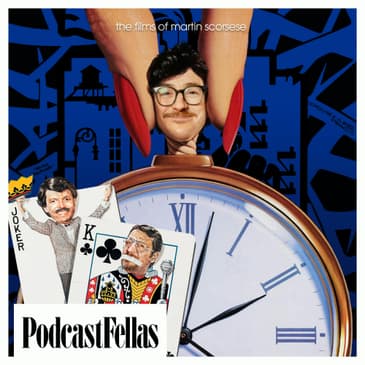




Did you pod my cast? DID YOU POD MY CAST?
Martin Scorsese's Raging Bull is often cited as one of the greatest films of all time - one of the greatest boxing films, one of the greatest biopics, one of the greatest screen transformations and lead performances of all time. It's also one of the greatest uses of repetitive dialogue.
The great David Krumholtz joins us to talk about Robert De Niro, Joe Pesci, the luminous Cathy Moriarty, and the tonal tightrope this film walks.
Again - DID YOU POD MY CAST??
Check out Krumholtz's De Niro story
Sign up for Check Book, the Blank Check newsletter featuring even more “real nerdy shit” to feed your pop culture obsession. Dossier excerpts, film biz AND burger reports, and even more exclusive content you won’t want to miss out on.
Join our Patreon for franchise commentaries and bonus episodes.
Follow us @blankcheckpod on Twitter, Instagram, Threads and Facebook!
Connect with other Blankies on our Reddit or Discord
For anything else, check out BlankCheckPod.com
Learn more about your ad choices. Visit megaphone.fm/adchoices
[00:00:01] [SPEAKER_06] I like you withIONAXS!
[00:00:22] [SPEAKER_01] Go get him champ. I'm the podcast. I'm the podcast. I'm the podcast. I'm the podcast. I'm the podcast, I'm the podcast, I'm the podcast, I'm the podcast, on the podcast. I'm the podcast, I'm the podcast, I'm the podcast.
[00:00:35] [SPEAKER_05] You wanna happy with this? I love that! No, no, no, I'm very happy. The other one I was thinking about doing is, if you podcast, you podcast. If you lose, you still podcast. There's no way you can lose. What's the word there? Uh... win.
[00:00:50] [SPEAKER_04] If you win, you win.
[00:00:51] [SPEAKER_05] If you lose, you win. You still win. There's no way you can lose. Right. No, I liked what you did. Thank you. I thought that was great. Thank you. And for the listener at home, my handwork was perfect. Yeah? My form was immaculate. You're not an amateur boxer? Thank you. Thank you for asking.
[00:01:08] [SPEAKER_03] Have you ever boxed? I trained with a boxer, yeah. Like sort of a workout thing, right? And then I pinched both nerves, one nerve in each shoulder and went to a chiropractor and he fixed me. But part of him fixing me meant I wound up with an elbow that locks up for the rest of my life. What age was this? 30, 31. Okay. Yeah. So he fixed one thing by breaking another thing.
[00:01:33] [SPEAKER_05] Yes. Yeah. My father made me train in boxing to toughen me up when I was upper single digits and I hated it. And your weight was also upper single digits at that time, right? My weight was lower single digits. Oh, my. I could not crack 100 pounds.
[00:01:51] [SPEAKER_04] Well, single digits would be one pound. It's lower single digits.
[00:01:55] [SPEAKER_03] I'm going to ask, you trained and did the person hit back?
[00:01:59] [SPEAKER_05] No, it was all kind of sparring, but it was at like a real boxing gym. And your father made you do it? Yes. My father used to, my father was, this has been talked about before, a degenerate gambling addict whose favorite bar was Jimmy's Corner. Are you familiar with Jimmy's Corner?
[00:02:16] [SPEAKER_03] Yeah, Jimmy's Corner. Yes. No, I'm not. On 44th Street.
[00:02:20] [SPEAKER_05] Owned. It was owned. He's sadly passed away by Jimmy Glenn, who was a former boxing corner man. And so he had Jimmy Glenn, the owner of this bar, who was an old former boxer himself.
[00:02:30] [SPEAKER_04] It's just when you're trying to get your kid a little bit of, you know, TLC. Yes. What you want to do is ask your favorite bartender for help. Right.
[00:02:37] [SPEAKER_05] This is like me at nine. Oh, my God. And my brother was so jealous. And my brother was a very physically rambunctious child who would sometimes attack other kids just kind of like randomly. He had so much excess energy. He'd start wailing on them. And he wanted to box. And my parents were like, this is a terrible idea. And it was like a year and a half, two years maybe of me begging my parents to let me stop and my brother begging to let him start. Wow. And finally, the switchover happened.
[00:03:05] [SPEAKER_05] And the second my brother boxed, he completely balanced out. It like solved him. And he had a golden gloves. He was a licensed fighter. He almost went pro as like a featherweight.
[00:03:18] [SPEAKER_03] But the two years that you boxed, you came away feeling like an inferior physical specimen. Crummy, you get me. I do.
[00:03:25] [SPEAKER_05] You get it hard.
[00:03:26] [SPEAKER_03] Yeah. Yes.
[00:03:27] [SPEAKER_05] I hated it.
[00:03:28] [SPEAKER_03] It was like extra gym class. If you didn't have a Napoleon complex prior to. Which I did. It only made it. Correct.
[00:03:36] [SPEAKER_05] Infinitely worse. Especially because my brother's also a little guy. I don't got no giant brother.
[00:03:42] [SPEAKER_03] It's why when I shake your hand, you really squeeze the shit out of my hand.
[00:03:46] [SPEAKER_05] I squeeze really hard. And I locked in on your eyes.
[00:03:48] [SPEAKER_03] By the way, I do the same thing. But your squeeze.
[00:03:51] [SPEAKER_05] You gotta do it.
[00:03:51] [SPEAKER_03] Is squeezier than mine. Yes.
[00:03:52] [SPEAKER_05] And we did a hug. I did a full body squeeze. I pinched those nerves.
[00:03:57] [SPEAKER_03] I don't want to insult you, but I didn't feel that happen.
[00:03:59] [SPEAKER_04] I think this is a good energy for this episode, though. Because, you know, we're talking about, you know. Confrontational. Yeah. And brotherly love. Brotherly love. Right. Brotherly love. Sort of the thin line here between insecurity and, you know, manhood and all that stuff. I became his manager.
[00:04:13] [SPEAKER_05] I kissed my brother's wife on the mouth. This is what happened. Yeah. What are you kissing on the mouth for? What are you kissing on the mouth? Yeah, with your mother, sure. Is this the greatest repetition movie? Yes. I picked a quote that was obviously saying the same thing 87 times. And that's part of why I picked that.
[00:04:28] [SPEAKER_04] Well, it just feels like the way his brain has been smushed. Like, he's got to cycle through phrases over and over to kind of, like, get to the phrase. Yeah.
[00:04:36] [SPEAKER_03] It's also, you know, obviously all improvised. Which is great. It's good? Good performance? Who's the lead guy in this? But obviously all improvised. But, you know, with improv, you know this. That there's that. There's that. Oh, the joke didn't land. Let's try it again. Yes. Yes. And genuinely, because of the chemistry between him and Pesci. Yeah. Great stuff comes out of the repetition.
[00:05:06] [SPEAKER_05] Correct. Yeah. And look, Scorsese, I'd say master of repetition in general. Sure. He's good at the rhythmic repetition of dialogue. He's good at making conversation feel real. But I think you're right. I think the punch-drunk nature of this and how kind of, like, emotionally unevolved these guys are means that he gets a lot more latitude to just, like, they can just repeat the same thing for five minutes straight and just escalate the intensity of it.
[00:05:29] [SPEAKER_03] I came away thinking, how in the world could they have ever made this movie without Joe Pesci?
[00:05:35] [SPEAKER_04] And yet they just found him randomly. Yeah. Like, as we'll talk about it. De Niro watches a TV movie.
[00:05:41] [SPEAKER_03] He watches this thing and goes, I bet I would have incredible chemistry with that actor. Yeah. And they meet and they have legendary, immediate chemistry that then they're thrusting on to film. Right. But carries through other films. You know how, that is so strange. Yeah. That De Niro intuited that.
[00:06:07] [SPEAKER_05] Well, especially he is the guy at this moment. He is, like, the new brand-o. Right. He's already gotten one Oscar. He's done Taxi Driver.
[00:06:16] [SPEAKER_03] Yes. Mean Streets. Deer Hunter. Deer Hunter and The Godfather 2. Yes. So he is the guy. He's the guy. He's, it's undisputed. The confidence is through the roof. He could get anyone to play his brother. Could get anyone to play his brother and steamroll them. Yes. And the movie's watchable.
[00:06:36] [SPEAKER_01] Yeah.
[00:06:36] [SPEAKER_05] And he goes, I'm going to let this little guy fucking shoot me out. Oh, it's amazing. Yeah. It's amazing. Joseph Pesci.
[00:06:42] [SPEAKER_04] Mm-hmm. Oscar nominee for this film.
[00:06:44] [SPEAKER_05] Sure that Little Joey Can Sing. I think that was the name of his album, wasn't it? Little Joe Sure Can Sing. Little Joe Sure Can Sing. That was his album.
[00:06:51] [SPEAKER_04] Yeah. Griffin, what's this podcast?
[00:06:53] [SPEAKER_05] This podcast is Blank Check with Griffin and David. I'm Griffin. I'm David. I said I'm David. You kiss my wife? You kiss my wife? You kiss my wife on the mouth, David?
[00:07:04] [SPEAKER_04] David's laughing. Sorry. Kiss my wife? I would just not want to hang out with Jake Lamotta. I'll just say it. Yeah. I just, I don't think I'd find him very charming.
[00:07:15] [SPEAKER_05] Crummy, we just did New York, New York, which will have come out the week before this, right? Okay. Correct? Because Last of Waltz is in between. Last of Waltz, controversially, we're doing on Patreon. I'm sorry. He's got too many documentaries. But I made the argument that Jimmy Doyle is of all the Scorsese De Niro characters. That's the last one you want to date. Um, hmm. Now, watching this movie, I was questioning it. I was weighing. He's pretty tough. Rupert Pumpkin is... Rupert Pumpkin's not great. Yeah, but he's gonna, what?
[00:07:45] [SPEAKER_05] He's, you know, he's gonna annoy you to death. He's gonna annoy you to death. Right.
[00:07:49] [SPEAKER_04] Yes.
[00:07:49] [SPEAKER_05] I mean, LaMotta, though. LaMotta, there's some risk. There's some obstacational hazard. Yeah.
[00:07:54] [SPEAKER_04] Yeah. He's a very, very tough customer. He is. Um, no, but like, we were kind of talking about how Jimmy is so uncharismatic on top of everything. Like, you know, that he's... No redeeming qualities. Right. He's very, very tough to imagine why you'd be around him in any sense. But LaMotta is similar, but I guess he has some swagger to him initially. He also has... You sort of can, like, you can see.
[00:08:16] [SPEAKER_03] And that's what's brilliant about this film. Yes. Is we're presenting an animal. Mm-hmm. Yes. We're telling people that he's an animal. And yet... A raging bull, if you will. A raging bull. And yet, they find a genuine humanity... Yes. ...in this guy. And there are... He has three kids. Mm-hmm. He has moments of being a peaceful, to some extent, person. He just wants to be a comedian. That's all he wants.
[00:08:46] [SPEAKER_03] You know, all this stuff.
[00:08:47] [SPEAKER_05] He's like Rupert Pumpkin in that sense.
[00:08:49] [SPEAKER_03] Yeah. And that's such a ridiculously fine line to make work. Yes. That only De Niro can do it. And what are you... What were you doing in that first screening of this film, sitting in the audience? Yeah. How confused were you about what you were being asked... Yeah. ...based on your cinematic knowledge up until 1980?
[00:09:15] [SPEAKER_03] 1980, what you were being asked to feel as an audience member about this guy?
[00:09:22] [SPEAKER_05] Well, even that was Scorsese's reluctance to making the movie. Of like, who cares about this fucking guy? I don't like this guy. I don't want to spend time with this guy. Right. This guy's unpleasant. He's a bore. Yes. In both spellings. Sure. Right.
[00:09:37] [SPEAKER_04] Yeah. Three spellings.
[00:09:39] [SPEAKER_03] Oh, boy.
[00:09:39] [SPEAKER_04] Uh, sure. B-O-R. B-O-R-E. B-O-A-R. Yeah. Yeah. Kind of. Yeah. Yeah. He's got them all. It's an incredibly watchable film given how tough it is to watch. Yes. I guess is the way to, you know, that's the sort of Scorsese thing.
[00:09:51] [SPEAKER_03] It's a timeless film. Yes. That elevated the art. Mm-hmm. Yes. Especially of the biopic, specifically. Which was not really a thing that much.
[00:10:01] [SPEAKER_05] And was a very limited thing. It was a very limited thing. I think it exists in a very specific vein.
[00:10:05] [SPEAKER_03] Sort of creates the map for what a biopic in an ideal way would be.
[00:10:11] [SPEAKER_04] The modern biopic. Right. Yeah. Because there's obviously, there's the old boring Hollywood. Like the story of Louis Pasteur. Right. Or, you know, like that kind of. Pride of the Yankees kind of stuff. Yeah. Where it's like, meet this nice guy. That I say.
[00:10:24] [SPEAKER_03] Meet this nice guy. This at this moment. Which is that it is truly an honor to talk about this film. Thank you so much for asking me to talk about this film. Because I, there's only a small handful of films that I bow to. This is one of them. Oh, yes. What else is in a handful? Oh, God. Let's not start. Okay. Because we're going to get into territory where. It's a big hand. Oh. No. It's a small hand. People are going to get into what's in the hand. You know, there's a couple other Scorseses in there.
[00:10:52] [SPEAKER_03] And a couple other, you know, there's some couple Spike Lees and Spielbergs and Kubricks and, you know, that kind of thing. But I'm, this is one for the ages. It completely validates the entire art form of cinema. I mean, it really does. And, and all that, all the people that work to make great cinema happen. Yes. And it ends in such a meta way.
[00:11:18] [SPEAKER_03] It's, it's akin to what Tarantino later did in Inglourious Bastards. Yes. Where the final line is, I believe this is my masterpiece. It, it, it, essentially, you know, Scorsese does that in this film and says, this is my masterpiece.
[00:11:34] [SPEAKER_05] It's also him thinking it's the last movie he's ever going to make or certainly the last studio movie he's ever going to make. I think as much as he's calling a shot, it's because he thinks it's the last chance he has to call a shot.
[00:11:46] [SPEAKER_07] Right.
[00:11:46] [SPEAKER_05] I should say this is a podcast about filmography. It's directors who have massive success early on in their careers. This is the compulsion. I must say the full thing.
[00:11:53] [SPEAKER_03] No, yeah. Orientate people. I have to orientate people.
[00:11:56] [SPEAKER_05] This is many people's first episode, I'm sure. Sure. Directors who have massive success early on in their careers, such as Taxi Driver, and are given a series of blank checks to make whatever crazy passion products they want. Sometimes those checks clear and sometimes they bounce baby, like New York, New York, which he is coming straight off of and is the biggest bounce of his career. This is a miniseries on the films of Martin Scorsese. It is called Podcast Fellas. We are the titular Podcast Fellas.
[00:12:21] [SPEAKER_05] Today we are talking Raging Bull with returning guest, the Raging Bull himself, David Krumholtz. That's the sound of me, Ray, of like snorting.
[00:12:32] [SPEAKER_04] You're not from the Bronx. You're from Queens, right? Yeah. So you could be the Queens Bull. You could be the Bronx Bull. I, yeah, I guess so.
[00:12:39] [SPEAKER_03] No, you're rejecting it. It's fine. Just because of the name Queen, there's always a feminine. Sure. So what's the feminine version of a bull? Cow? Cow.
[00:12:50] [SPEAKER_04] Yeah. Queens cow.
[00:12:51] [SPEAKER_05] I was thinking the alliteration too. What's an animal with a Q? Q. Well, you're getting into tricky territory now, Ben. Yeah, that's tough. What animals do exist with Q? Quail. Quail.
[00:13:03] [SPEAKER_03] Oh, the Queens quail. Yeah. Queens quail. I like that. You're smiling. Yeah. What kind of noises do they make? Probably a little. Right. Some kind of.
[00:13:13] Looby-dooby.
[00:13:15] [SPEAKER_05] The Queens quail gets in the ring.
[00:13:16] [SPEAKER_04] Yeah, there's a lot of others. There's the quokka.
[00:13:19] [SPEAKER_03] Oh, yeah, the quokka.
[00:13:20] [SPEAKER_04] Which is kind of like a weird little, like, furry guy. Little marsupial. Yeah, that's an Australian. It's like an Australian. Down under animal. Have you been to Australia? I have. You've made a movie or two, and I feel like they shoot them down there.
[00:13:32] [SPEAKER_03] I made a movie last year that takes place in New Jersey, and we shot it in Melbourne, Australia. That's Hollywood 3.0 for you. Crazy. That sure is.
[00:13:40] [SPEAKER_04] There it is. We've coined Hollywood 3.0 today to describe just like the fucking nonsense that goes on day to day. Hollywood 3.0.
[00:13:48] [SPEAKER_03] Mm-hmm. What was the New Jersey movie? What the heck? It's a movie that's coming out on Christmas Day. Perfect. This year. Okay. Mr. Irrelevant.
[00:13:56] [SPEAKER_04] Oh, yeah, with Superman and Paul. Yes, it's supposed to be very good. It's testing off the charts, says Hollywood 3.0. It is actually testing off the charts. It actually is.
[00:14:06] [SPEAKER_03] John Tuggle story.
[00:14:07] [SPEAKER_04] I think we need more sports movies. I think it's a gap.
[00:14:10] [SPEAKER_03] I'm am for this movie. I hear it's absolutely... Jonathan Levine directed... The director. I hear it's absolutely beautiful. Yeah. I hear it's like there's... It's a wonderful film-going experience.
[00:14:21] [SPEAKER_05] I have truly heard this. We have friends who were at a CinemaCon where they showed off a large chunk of it, and people were like elevating.
[00:14:27] [SPEAKER_03] Yeah. Yes. I... It's... It's... Levitating. I think it's the darkest of the dark horses for Oscars.
[00:14:33] [SPEAKER_05] Well, well, well.
[00:14:34] [SPEAKER_04] They called him Mr. Irrelevant, and yet... Michael Shannon's in it, right? Playing Bill Parcells.
[00:14:38] [SPEAKER_03] Michael Shannon is playing Bill Parcells.
[00:14:40] [SPEAKER_04] That is casting that makes a lot of sense to me. Bill's a real...
[00:14:43] [SPEAKER_03] And I have a little sneaky, funny, good role in it. What are you playing at? None of your business. No. I play... Shut the fuck up. So it... What's into you? Are you trying to blow my campaign? So it's about the New York Giants. Yes. The New York Giants in 1983. They had an equipment manager who was with them for at least 30 years, I think, named Whitey. Sure. Whitey. Good. And, you know, the chance to play a Whitey for me is a huge... You need one finally in there. You need one in your camp. Yeah.
[00:15:10] [SPEAKER_03] And so Whitey had retired and was kind of listless. They have this young player who gets diagnosed with, you know, questionably survivable cancer. Mm-hmm. Is likely going to croak. It's awful. It's tragic. He's 21 or 22 years old. And they call...
[00:15:33] [SPEAKER_03] They decide, the NFL and the Giants decide, to do everything they possibly can to save this kid's life. Mm-hmm. To try. And pay for it all. And they call Whitey. And they go, what are you doing? And he's like, I'm missing... You know, I'm missing the action of being part of the team. Sure. And they go, how about you... Will you drive this kid to all his appointments?
[00:15:57] [SPEAKER_03] So this older man, who's retired, becomes this kid's chauffeur and watches him slowly die. That's a good part. It's a good part. I enjoyed myself.
[00:16:09] [SPEAKER_04] Bill Parcells, you know what they called him? Mm-hmm. Griff. Mr. Elevent? No. The Big Tuna. One of the great sports names of all time. Why did he get that name? I'm not really sure where the name came from. Famously, Bill Parcells looked a lot like my dad. And people would mistake my dad for Bill Parcells. I can see that looking at you a little bit. Who was very famous, like, you know, when I was a kid. Like, he was the coach of the Giants. And then he was the... Didn't he, wasn't he the coach of the Jets for a minute? He was. Yeah, he was a New Yorker. Big year.
[00:16:37] [SPEAKER_05] This was my father, of course, New York in the 80s with Howie Mandel. People thought your father looked like Howie Mandel?
[00:16:43] [SPEAKER_04] His father, you know, when his dad had the curly hair and Howie had the curly hair. I can see it. We will post on social media. Fits like a glove.
[00:16:50] [SPEAKER_05] Hello. Over the head. Over the head. We will post on social media the side-by-side of Howie Mandel in this era and my father. But people would kind of rage in bull style be like, Hey, Mandel, you big-timing me? Wow. Oh, you think you're too good for your fans, Mandel?
[00:17:03] [SPEAKER_03] You know who my dad looked like? Who? Son of Sam. David Berkowitz. That's a good one. That's a good one. And literally was from Queens, lived in the same neighborhood. Good timing. And dogs talked to him. And David Berkowitz was a mailman and so was my dad. Yeah. The only difference was that Berkowitz had blue eyes and my dad had brown. I can think of one other difference.
[00:17:22] [SPEAKER_04] And also he didn't commit murder. Well, there's that. That's the difference I was thinking about. How good a mailman was David Berkowitz? Bad. I have to imagine that. I can't imagine that. I can't imagine he was very good.
[00:17:31] [SPEAKER_03] I probably ate the letters, right? I don't know if he was a paper eater. I have recurring dreams, coincidentally, in which I'm pulling large pieces. I'm in public in a situation where I need to talk to people. Yeah. And in the dreams, I'm pulling endless amounts of paper, chewed up paper out of my mouth. Oh, it's in there already. It's in there already. And I have to stop. And they're very vivid, realistic dreams.
[00:17:59] [SPEAKER_03] I have to stop and pull paper out of in between my teeth, out of my throat. Oh. And then I looked up like what those mean. And I think they said something like, you know, obviously they're anxiety dreams, but something to the, like you have something you need to get off your chest.
[00:18:16] [SPEAKER_04] Something unspoken.
[00:18:17] [SPEAKER_03] Yeah. You need to read what's on the paper.
[00:18:19] [SPEAKER_05] That's the answer. That's how you resolve the dreams. Well, it's all chewed up, man. It's all bits of paper. Unfold it, piece it back together, take a blow dryer. We're talking about mulch. We're talking about mulch.
[00:18:29] [SPEAKER_04] But in Inception, you know, that's, you always, right? Like that's, it's like, you always have to find like the weird papers in your dream. And that's like where the secret is. Right.
[00:18:37] [SPEAKER_05] And that's how you come up with a great idea to retire and let someone else run your dad's business.
[00:18:41] [SPEAKER_04] You worked with Chris Nolan. You should text him every time you have a weird dream being like, hey, Inception guy. Explain this dream. You do this?
[00:18:47] [SPEAKER_03] I don't have any way of contacting. Well, because he doesn't have a goddamn phone. Yeah. He doesn't have a phone. He's smarter than any of us. Well, beyond that, I don't think Chris would want to. Oh. You gave a phenomenal performance. I don't think that matters to him or me, to be honest with you.
[00:19:05] [SPEAKER_04] I just think it would be funny if it's like when you know a doctor. Yeah. And you're like, hey, look at this mole. Or, you know, like, hey, Chris, you did Inception. What's this dream mean anyway? You must love people's weird dreams. Right. Yeah.
[00:19:16] Yeah.
[00:19:17] [SPEAKER_04] David Krumholtz is here. David Krumholtz is here. Oh, yeah. Okay.
[00:19:20] [SPEAKER_05] The last time you were on the show, we talked about Sensible Woman, who is, you know, we're talking the other giant of this era.
[00:19:27] [SPEAKER_04] Well, he's talking the other best actor. Yes. You know, he did Pacino's best actor trophy and this is De Niro's best actor trophy. Yeah.
[00:19:34] [SPEAKER_03] Yeah. I wouldn't call Pacino the only other giant. I think there's a triumvirate. You're right. Who's the third? Hoffman.
[00:19:42] [SPEAKER_06] Yeah.
[00:19:43] [SPEAKER_03] Of that era. Of that era. Those are the three guys who were chasing each other. Those are the three. And they're rewriting the rules of acting. Yes.
[00:19:50] [SPEAKER_04] And they're three guys who I feel like a generation prior Hollywood would have been like, well, you're not a movie star. Like, you don't have the look of a movie star. Right. They look like a butcher.
[00:19:58] [SPEAKER_03] Right. They are ethnic American.
[00:20:00] [SPEAKER_04] Ethnic. They're small. They're kind of like, they got, they're handsome, but they got kind of funny faces. Right. You know, they're not conventional.
[00:20:07] [SPEAKER_03] Do they make those movies? Do they make, well, maybe The Graduate, but do they make Midnight Cowboy, Raging Bull, and let's say Serpico today? Not really. No. Or Dog Day.
[00:20:21] [SPEAKER_04] Yeah.
[00:20:21] [SPEAKER_03] They don't.
[00:20:22] [SPEAKER_04] Raging Bull is the closest in that like Hollywood will still respond to it. Because it's a boxing movie. Yeah. Right. And like a true story, real person movie. What is it? It was Serpico. I mean, maybe that feels like a TV show.
[00:20:35] [SPEAKER_05] It definitely is a TV. The answer is that all three of those things would be TV shows now. You know. Which is a shame. Yeah. Yeah. I think there is sort of like a Mount Rushmore of the male acting performances, the leading male performances that people like lose their minds over that are sort of held up as the highest. Indelible. Right. So Scent of a Woman is number one. Scent of a Woman is number one. That's right. Scent of a Woman. Chris O'Donnell.
[00:21:01] Right.
[00:21:01] [SPEAKER_05] That's right. Yes. No, I think it's like it's Raging Bull. Sure. It's Raging Bull for sure. That's the first one. If you combine the two Godfather Pacino performances. Sure. Right. Or you could pick either one.
[00:21:13] [SPEAKER_03] No, definitely not. You're way off now. Really? Yeah. You're getting crazy. What do you think? Jimmy Stewart and It's a Wonderful Life or.
[00:21:20] [SPEAKER_05] Well, that's quite a good performance.
[00:21:22] [SPEAKER_03] I think Denzel and Malcolm X is in it.
[00:21:24] [SPEAKER_05] Denzel, Malcolm X. Yes. Yes. Absolutely. Are we talking Streetcar? Are we talking on the waterfront? For Brando? You know, you kind of have to put Brando. I think you kind of have to. But I'm going to go.
[00:21:35] [SPEAKER_03] God almighty. I'm going to go Nicholson Cuckoo's Nest. Jack is sort of outside, you know. Because he's not an ethnic American. He's straight down the middle. He's straight down the middle. No.
[00:21:46] [SPEAKER_04] Yeah, that's true. What is, in fact, what is Jack Nicholson's? Isn't he Irish? I don't know. Yeah, I would imagine. Yes. New Jersey's on. Mm-hmm. But we're not here to talk about Jack Nicholson. We're not.
[00:21:58] [SPEAKER_08] No.
[00:21:58] [SPEAKER_04] But this one's. Irish, German, English, and Welsh descent. Fair enough.
[00:22:01] [SPEAKER_05] This is still a performance that people use as shorthand. Oh, 100%. I think this is the number one.
[00:22:08] [SPEAKER_03] Yes. You know? I saw this film when I was 21 for the first time. Mm-hmm. It changed everything for me. Because up until that point, I had only really wanted to do comedy, do comedy, done comedy. There was no, or, you know, cartoonish character shit. Suddenly, I watched this film and thought, I could do that. I don't know how. Mm-hmm. But if I just try. You want to do that.
[00:22:37] [SPEAKER_03] Like, trying. The goal has changed. To do that. Yeah. If I could do 10% of the immersion and the intimacy and the intensity of what De Niro did in Raging Bull, Mm-hmm. If I could do 10%, I would get dramatic jobs. The intimacy thing is fascinating. It's just an outrageously monolithic performance. Yes. It's arguably the greatest lead performance ever.
[00:23:08] [SPEAKER_03] That is very arguable. I think, I mean.
[00:23:11] [SPEAKER_05] No one's going to call you crazy for saying that. Certainly not. It's a reasonable opinion.
[00:23:15] [SPEAKER_04] I also think it's something where you, I have the experience of, like, I watched this film. I was very struck by it as a young man. Or, you know, like, obviously, it's a totemic film. And then you sort of. Back when you were a featherweight. I've never been a featherweight. Oh, I'm sorry. I hit this height when I was 13. I've always been a big boy. Yeah. Um, and then you, you know, you have a few years from it. And you're like, oh, but isn't that, it's just him screaming and yelling, isn't it? Then you watch the movie again. You're like, I forgot how good this movie.
[00:23:44] [SPEAKER_04] Or, like, and how good, like, and I forgot how it's not whatever the stereotype. I think intimacy is the word. You said it.
[00:23:51] [SPEAKER_05] That's the whole, that's the magic factor. It's the volcanic stuff. You're, you know.
[00:23:55] [SPEAKER_03] Let me bring my, let me bring my bantamweight perspective to this. Perfect. Okay. God damn it. The sound editing in this film. Yeah. Is a new roadmap suddenly for all sound editing going forward. The intimacy of the sound of that film. There is no film that sounds like Raging Bull to this day.
[00:24:19] [SPEAKER_03] There are attempts, but there, so you are as an audience member being whispered to. You're being shouted at. Mm-hmm. They're speaking to your soul. It's, it's, it's brilliant sound editing. Do you know the thing that's.
[00:24:38] [SPEAKER_05] So much of it, by the way, is ADR. Clearly. Yes. Oh, yes. But that Marty drove everyone crazy because he insisted that every punch, every flashbulb be a unique sound. That they not repeat any specific sounds. Mm-hmm. Which a lot of it's like Foley work. And it's over the top in a certain way. And the context.
[00:24:55] [SPEAKER_03] Yeah. You know, when he's in Miami at his house and he asks the photographer to take a picture. Take a picture for us. For us. Get in here, sweetheart. And they surround him. And the moment the first flash goes off, you hear one of his children scream. Yeah. You're, ah! Oh, my God.
[00:25:13] [SPEAKER_03] Just whatever standard film had come to just Scorsese manipulating the shit out of what was before to create something incredibly profound and new.
[00:25:29] [SPEAKER_05] I'm going to. Holy. I'm going to go even one higher than you. I think this movie is very well directed. When I was watching it, I said, who is the Scorsese kid?
[00:25:38] [SPEAKER_07] Hmm.
[00:25:38] [SPEAKER_05] Um. Yes. And Chapman.
[00:25:42] [SPEAKER_03] Chapman. Is DP. Yes. There's not a frame in this movie that isn't a painting.
[00:25:46] [SPEAKER_04] It didn't win the Oscar, which it's, you know, the Oscars are not the end of the world. But for cinematography? It's shocking. Yeah. For cinematography. What did? Tess. The Polanski film, which I'm sure Jeffrey Unsworth. Like, I'm sure had gorgeous vistas of the Moors, right? You know, like, that is, in my dim memory, a pretty movie. Sure. But this is one of those things where, one, you can show five seconds of Raging Bull in some clip package. Yeah.
[00:26:15] [SPEAKER_04] As you see all the time in these kind of, De Niro, ah, or, you know, you'll see him rolled out at award shows or on TV. And you're just, yeah, lean forward. And any shot. Because you cannot believe how this movie. An insert shot would get that response.
[00:26:28] [SPEAKER_03] And. Why black and white? Do we have theories?
[00:26:31] [SPEAKER_04] Oh, we can talk about it. Yeah. I'm sure that'll be in the research because I think there was a lot of reasons for the black and white. Mm-hmm. And just the, with the smoke and the, you know, just that you're in his mind in there.
[00:26:51] [SPEAKER_03] Well, yeah.
[00:26:52] [SPEAKER_04] And theater of it and the sort of just the slaughterhouse of it. What were you going to say?
[00:26:56] [SPEAKER_03] No, the contrast of how beautifully lit, almost theatrically lit, the boxing matches are with the crudeness of how the rest of it. Yes. The natural light through, through it all. Yeah. It's just.
[00:27:13] [SPEAKER_05] Well, the key to this movie is, you know, Marty said, I don't want to do this. I don't get this. And De Niro kept on insisting. We'll get into this in depth. But then he finally figured out, he was like, oh, boxing's a metaphor. Boxing doesn't matter. I can't think of this as a boxing movie. It's about getting in the ring. It's about whatever that thing is in your life.
[00:27:31] [SPEAKER_03] And let's face it. Scorsese doesn't need to be directed with. Sure. But this is the movie where he lets De Niro sort of direct. They're collaborating. They're right on a higher level. This is a 50-50 job. Yes. In fact, I can open the dossier. The trust is through the roof. Mm-hmm. What is required of De Niro? See, I'm now going to watch. Behold, as I marry this into a discussion about AI. Perfect.
[00:27:58] [SPEAKER_04] Let's do it.
[00:27:58] [SPEAKER_03] Because AI could have done this movie. We agree. What's required of De Niro is this genuine raw soul searching. Sort of an access that he is displaying to his own emotional nuance. The complicated levels of who De Niro is as a person. Who an actor should be as a person. Right? Someone who emulates humanity in nuanced fashion.
[00:28:27] [SPEAKER_03] That arguably no actor before or after had. And to give of that, to bear himself raw, he had to have trained mentally for this. Not just physically. Right? And you know that. This is all stuff you know as an audience member. And two different physical states. And two different physical states.
[00:28:45] [SPEAKER_05] Yes. One misshapen. Yes. Which is also two different mental states married to those. Yeah.
[00:28:50] [SPEAKER_03] And the confidence, De Niro's confidence, who's 36 at this point when he makes this movie. That's disgusting. He's playing a 19-year-old though. Yes. Right, right. Essentially at the beginning. Yeah. It's through the roof. And the uniqueness of De Niro that he has to face and live with, the burden of De Niro's uniqueness, applied to the uniqueness of Jake LaMotta.
[00:29:16] [SPEAKER_03] And there is no way, and you know this watching it, there is no way that De Niro is not in some sort of existential pain playing this character.
[00:29:29] [SPEAKER_05] Yes. And also there's something clearly that drew him to it. Correct. That he needed to express. That he couldn't really shake.
[00:29:36] [SPEAKER_03] This role is a sacrifice and a half that he's, and he's giving. It's giving. It's constantly giving. Right. Now, you have to be human to understand the true depth of not only the performance, but of the film. You have to be. Right? Mm-hmm. Now, here's where I married into AI. Let's do it. Who on, would you, you don't want to watch an AI basketball game, do you? Why would anyone? Why do we watch sports? There's a lot of stakes to it.
[00:30:02] [SPEAKER_04] Right. Yeah.
[00:30:02] [SPEAKER_03] We watch sports because it's human beings, which we are doing what we can't do. Okay. You cannot expect AI to make an impact with audiences in a way that film can. Film, I mean, real, I should say real people can't. Humans can't. On film. Because the audience is human. Everybody's talking about when they have these arguments about AI, they go, you know,
[00:30:31] [SPEAKER_03] well, what's the difference between a human actor and an AI actor? And an AI will learn from what humans do. Everyone discounts the audience. The audience is human. It can only empathize with humanity.
[00:30:45] [SPEAKER_04] Well, and that's the challenge of Raging Bull is like, it's not like I want you to understand that Jake LaMotta is a good guy or even that Jake LaMotta is sympathetic in a way of like, you know, here's why he behaved this way. It's not a like, don't you understand? Jake LaMotta just had a toughness. And that's why he was such a piece of shit. It's not that. It's more just you need to look at this darkness and this, you know. He existed. This exists. Right. This is part of the human existence. And right. And understand the nightmare of the human spectrum that he was on and that there's something
[00:31:15] [SPEAKER_04] to relate to, which is true Taxi Driver 2. That makes it all the more compelling. Like, you know, that you're like, there's something to relate to even though he's a fairly despicable person pretty much all the time.
[00:31:25] [SPEAKER_05] And also that there's like a sacrifice here, not just in the characters, but in the making of this movie. That is a thing that AI can never experience. I mean, this is the conversation right now. I just think it's like it was such a good fucking knockout punch is just like everyone flipping their shit over the Odyssey. Everyone circles back to the same thing, which is like this looked really difficult to make. Sure. This was not easy and I'm appreciating the sacrifice and the effort of this and I want to see it on the biggest screen.
[00:31:55] [SPEAKER_05] And it's like, that's a fucking knockout punch.
[00:31:59] [SPEAKER_04] The people who want to watch AI shit don't want to pay for it. It's not just AI. It's also just, you know, the years we went through people being like, eh, no one wants the movie experience anymore. You know, like that's being refuted is lovely.
[00:32:12] [SPEAKER_03] You know, Scorsese is not an insular filmmaker. Right? He's referential. But so many, you know, because, well, because he himself is a cinema expert. Right? But so many filmmakers make movies, quote unquote, they say this for themselves. You know, you've got to make the movie for yourself, be happy with it, and then the audience will love it. No. Scorsese goes, I'm the audience for my own film. I am all kinds of versions of that audience.
[00:32:39] [SPEAKER_03] I am the highfalutin, highbrow, erudite guy sitting in the back row. And I'm also the kid in the front row. Right. And what can satisfy everyone. And he's anticipating how the audience will feel. And he's literally framing shots and directing scenes from that perspective. The greatest trick that Scorsese pulls in this film is challenging the audience.
[00:33:07] [SPEAKER_03] Like, what in the world are they supposed to be feeling? Yeah. You know, Taxi Driver is a straight drama. Yeah. Right. Okay. Now this movie. It's a brutal comedy. It's a funny tragedy. Sure. It's so many things in stark contrast. It's comedy, love, family, bonds, violence, paranoia, sympathy, rage, disgust, sorrow, horror,
[00:33:35] [SPEAKER_03] you know, peace, triumph, success, ego, tranquility, the burden of ambition, you know. And ultimately it's the story. It's exactly what it should be, which is the story of one life to tell a story about the pugilistic nature of all lives and all life. Yeah. Yeah. And just. What an undertaking. And if he fucks it up and he didn't even think he should make the movie. Yes.
[00:34:03] [SPEAKER_03] And if he fucks this up, people are come out of the theater going, that director is a psychotic person.
[00:34:09] [SPEAKER_04] And his career is like, or close to it because his career is already in a little bit of trouble. And it's sort of like, right. You know, why do you do that? I think the fact that he doesn't really care about sports, which he's very upfront about, matters a lot in the movie too, because I like sports movies. Like I like a schematic sports movie just fine. Like I enjoy an underdog story. I enjoy this shit. But, you know, so many sports movies lock into like, okay, well, we need to see where he initially succeeded. Then he was brought low with this battle.
[00:34:37] [SPEAKER_04] And like his biggest triumph in this movie in the ring is like grinning like a freak at Sugar Ray Robinson. He didn't knock me down. Yeah. And Sugar Ray Robinson's just like, what? Okay. That's not a win. Right. And it's just like. You literally lost. That he's so separated from whatever the point of boxing is. Yes. You know, moment in life. And like at no point is there like the scene where someone's like, you did it. Here's the belt.
[00:35:04] [SPEAKER_04] Like, you know, like the arc of his career is this sort of like just this dim noise in the movie at best.
[00:35:10] [SPEAKER_05] I also think there's a core thing.
[00:35:11] [SPEAKER_04] He buys a building at one point. Yeah. And they're like from fights. And he's like, hmm. Hmm. And you're like, Jesus, he's a fucking landlord. Like this guy can't be served a steak without having a panic attack.
[00:35:23] [SPEAKER_05] I also I think the core thing this movie is about in a lot of ways is like the thing you're great at being a detriment to every other aspect of your life. Everything that makes him a good boxer. Well, if your ego.
[00:35:38] [SPEAKER_03] It's also about ego. Yes.
[00:35:40] [SPEAKER_05] If you don't have emotional intelligence. Yes. If you're not in conversation with yourself. Yeah.
[00:35:44] [SPEAKER_03] Because he's a fighter.
[00:35:46] [SPEAKER_05] Yes.
[00:35:46] [SPEAKER_03] That's a great fighter. Right. Who is able to piece together a pretty normal life on paper. On paper. Right. He's got the kids. He's got the family. Yeah. That's a big thing. But he becomes a clown. Yes. He becomes more than just an actual comedian slash clown. Mm-hmm. His life is clownish.
[00:36:07] [SPEAKER_01] Yes.
[00:36:08] [SPEAKER_03] His whole life.
[00:36:09] [SPEAKER_01] Yeah.
[00:36:18] David.
[00:36:19] [SPEAKER_05] Yes. I'm ready to get my nutrition into gear. And you know what I'm going to thank? The fine folks at Huel. Huel! Because Huel is a complete food, not a supplement.
[00:36:30] [SPEAKER_04] You can have Huel instead of a meal. There's a black edition powder. Yes. 40 grams of protein. You just mix it with water and milk in about 30 seconds. Complete meal. You can have it instead of food. It's not a shake on top of food. It's got 27 essential vitamins and minerals. No artificial sweeteners, colors or flavors. Or there's that RTD bottle. That's what I love. Have and go.
[00:36:49] [SPEAKER_05] You know what it stands for?
[00:36:51] [SPEAKER_04] Ready to drink. Correct. Okay. Make healthy eating simple. Get Huel today with my exclusive offer of 15% off online with my code check at Huel.com slash check. That's H-U-E-L dot com slash check. New customers only. Thank you to Huel for partnering and supporting our show.
[00:37:20] [SPEAKER_05] I'm going to open the dossier to tell you some stuff about this. Can I just ask you one quick question before you open it? Go ahead. Did you fuck my wife? Yes. I did. Thank you. Okay. I appreciate that's the answer.
[00:37:29] [SPEAKER_04] I fucked your wife. I fucked your brother. I fucked you. Whatever. Scorsese in the later half of the 70s is doing a lot of stuff. We addressed this to some extent on prior episodes. On top of the last Waltz in New York, New York. He even worked on a Broadway show called The Act with Liza Minnelli, who he was having an affair with at the time. He had no idea what he was doing. He was sort of soft fired. More kind of like he agreed to step aside and let an experienced Broadway hand come in
[00:37:57] [SPEAKER_04] to kind of quote unquote fix things. He was also having a very sexually charged affair with cocaine, the drug. He was doing a lot of drugs. Yes. In 1977, he goes to the Telluride Film Festival, which is very early. Mm-hmm. To present an award to Michael Powell, one of his heroes, the great British director. And Michael Powell says to him like, my dear boy, what are you doing here? Aren't you working on a play? And Scorsese's like, that's when I realized like I was not cut out for theater.
[00:38:27] [SPEAKER_04] I didn't understand. Like, you know. At this point, he wants to make Gangs of New York. That's going to take him a second. A little bit. Obviously. A little bit of time. He makes American Boy, which we discussed in our Scorsese short episode. It's fascinating. The profile of Stephen Prince.
[00:38:40] [SPEAKER_05] Have you ever seen that, Crumman? No. It's very good. You would be intrigued by it. You would be very intrigued by it. Okay. It's just him interviewing a guy who's got insane stories. And the adrenaline shot back from the dead from Pulp Fiction is stolen from that movie. That is true.
[00:38:54] [SPEAKER_04] That's a story he tells. Yes.
[00:38:55] [SPEAKER_02] Wow.
[00:38:57] [SPEAKER_04] And he's got Raging Bull, which is a movie he doesn't want to do, but De Niro has basically been trying to get him to do since 1974. He came to him on the set of Alice Doesn't Live Here Anymore and said, read this book by Jake LaMotta. I've like optioned it. There's some good scenes. He's an interesting character. De Niro, who is obviously a tough interview in that when you ask him like, why did you do Raging Bull? He's like, I don't know. It was interesting.
[00:39:21] [SPEAKER_04] You know, like he's just, but he says like, I like the book because I thought it had some good scenes to repeat this. A good scene is something that you think has a lot of dramatic possibilities and irony and humor and something that people can relate to. It's a very simple and bland statement, but you can imagine, I guess, De Niro just reading the book and being like, well, this scenario is something I can play out in my head as something that would be very dramatically compelling.
[00:39:48] [SPEAKER_05] And even talking back to the sort of point of getting in this character's head and this sort of spiritual connection he was feeling, he like admits when he reads it, the book is poorly written. Yes. Even De Niro admits this. This book is bad, but. Scorsese does not like the book. It's like a portal into this guy's brain. Like even I think the failings of the writing are telling him something as an actor that someone's going to have to process dramatically into something that works as a story. But he's seeing the scenes and he's seeing the way this guy's brain works.
[00:40:16] [SPEAKER_03] De Niro. Robert. Robert De Niro. Is the Joe DiMaggio of acting.
[00:40:23] [SPEAKER_04] Break this down. Please explain. As I'm a huge baseball fan.
[00:40:25] [SPEAKER_03] Joe DiMaggio had an amazing reputation for doing incredible things on the field, athletic things. Right. But making them look easy. Sure. To the point. De Niro is simple. Yeah. He is not deliberate. Yeah. He, I don't think there are any firm choices in his style. I think he goes, he lives in the moment and is, and accesses whatever is necessary to tell the story. If any strategy goes into that, I'm sure there's some.
[00:40:54] [SPEAKER_03] And of course, extreme emotional intellect. Yes. Extreme. But hyper subtle. But it's natural. Yes. There's a nature to De Niro that acting wasn't allowed to have. Yes. Especially on film up until really, until he came on the scene. You weren't, and maybe Brando you could argue, but even Brando's a little like, you know, making deliberate choices and speechifying.
[00:41:20] [SPEAKER_03] And you could almost say that Brando sort of had to fit the mold because he would have been so far ahead of his time that no one would have understood him. He wouldn't have worked.
[00:41:29] [SPEAKER_05] He needs to have one foot in the style of film at the time.
[00:41:33] [SPEAKER_03] But Brando now has laid the groundwork for De Niro to be as naturally simplistic, but also acrobatic as any actor had ever been. And I don't think there's been an actor since. Very few.
[00:41:48] [SPEAKER_05] It's hard to, I think there are people maybe who have gotten into that realm in a singular performance or in a brief period. I don't think there's someone who has a body of work that embodies what you're saying in the same way. I also think that he has always been so mysterious about his process for how much this is known as, you know, the Great Sacrifice movie and the Physical Transformation movie and all of that.
[00:42:16] [SPEAKER_03] The built-in inherent mystique of De Niro. Right. Where's this coming from? That he's this shape-shifting guy who then, he avoids interviews. He doesn't want to talk about what acting is. He has a reputation for being... Right. He has a reputation for being very quiet on set, not saying much, being a quiet person. Yes. Ooh.
[00:42:37] [SPEAKER_05] And compare this to... Spooky. Pacino and Hoffman, who are incredible, but we know the legends... Right. ...of what they went through and what they were thinking and how they strategized their roles. Right. And here he is and he's reading this book and he goes like, hey Marty, this is bad, we should make this movie. You're like, why? And he's like, I don't know, I want to play this guy.
[00:42:55] [SPEAKER_04] One thing... Well, I think there's two times... Because The Irishman is another situation where De Niro keeps coming to Marty being like, yeah. I just think this would be interesting. And Marty's like, I don't get it. I know this guy. And that takes him a while. Right. Yeah. Marty doesn't like that the book says that there's... In the book, they kind of try to rationalize everything Jake did. Like, there's always a reason for the violence for what he did, which Scorsese is just uninterested in. And he also is like, cinematically, I didn't like boxing because the boxing shit we would
[00:43:24] [SPEAKER_04] see as a kid, either filmed fights that maybe would be projected in a movie theater or movies, would be from like one angle. Camera all the way to the back of the stands. It was boring. Yeah. Right. But he agrees with De Niro. There are incidents in the book that are interesting. Right. Like, he can see that. Marduk Martin, who had already worked with Scorsese on Who's That Knocked On My Door, and Mean Streets, and New York, New York, and The Last Waltz, is handed the book. Marduk Martin's kind of like, I don't know if I want to do this, but here we go.
[00:43:51] [SPEAKER_04] He calls Jake LaMotta the bull in the china shop. He's cursed because he's so macho, but he's so fragile about women. Right? Just takes a woman essentially looking at him weird for him to completely collapse and become an insane, violent, aggressive... You can tell how insecure he is. Right? He writes a draft. He integrates some things that Marduk maybe wants about his family. Like, there's something about a fig tree in Staten Island that his grandfather had. Cool.
[00:44:21] [SPEAKER_04] De Niro is like, I fucking hate this. Like, this isn't what I'm going for at all. So then they hand it to Paul Schrader, who obviously had already worked on Taxi Driver, and who has a very deep understanding, I feel like, about male fragility. Broken man. Right. And at one point, Marty's like, let's do it as a play. Let me think about that. It's a bad idea. De Niro's getting increasingly mad. New York, New York comes out to bad reviews. Kind of the first time Marty's just gotten bad reviews.
[00:44:51] [SPEAKER_04] Like, people are just like, thumbs down. And same to De Niro. De Niro's... That's true. Yeah. Yeah. Uh, Scorsese's marriage to Julia Cameron has just collapsed. Uh, you know, he's feeling very disillusioned about everything. He's using a lot of drugs. Uh, Scorsese thinks basically that he wanted to die. Right? He's just kind of like pushing it to its limit. And he kind of hits a brick wall. 1978, he says, September 1978.
[00:45:16] [SPEAKER_04] After Telluride, after, like, uh, the play collapses, he's hospitalized. He spends four days in the hospital. Is this the heart attack? Yes. Yes. He physically collapses. He's hovering between life and death according to him. De Niro comes to see him. They talk very openly about everything he's going through. The official charge is internal bleeding. Okay. Or the official, like, thing on the chart.
[00:45:40] [SPEAKER_09] Damn. You have to be doing a lot of drugs.
[00:45:43] [SPEAKER_04] It's just completely devastating. And he's, you know, he's fragile.
[00:45:46] [SPEAKER_05] He's a tiny asthmatic man.
[00:45:47] [SPEAKER_04] Right.
[00:45:48] [SPEAKER_03] Yeah, true. Sure. And I met him. Marty. Fairly recently. Recently. And he, I can attest to his tininess. He's very small. He's very small. But he's energetic. I had a fortunately brief and pointless conversation with him.
[00:46:05] [SPEAKER_08] About the weather?
[00:46:05] [SPEAKER_03] I didn't know what to say to them, to him. It was a very strange circumstance. I'm not going to get into the whole story, but I was sitting almost directly across from him at a dinner, at a luncheon table. Oddly, sitting also next to F. Murray Abraham. Neither of us knew why we were invited to this thing. Uh-huh. But it was our big, grand, you know, meeting with him. F. Murray had never met him. That's kind of wild.
[00:46:35] [SPEAKER_03] And so he's 80. F. Murray's 80. He's sitting there. And I don't know what to say to him. And an introduction from his casting director goes poorly. In other words, she says, hey, Marty, this is David Krummel. And he's a tremendous actor. And he doesn't hear it. Literally doesn't hear that. That's tough. And she doesn't try again. And so I'm thinking I should say something. And he starts talking about styles of Chinese food.
[00:47:03] [SPEAKER_04] Okay.
[00:47:03] [SPEAKER_03] Like Sichuan, Hunan. And he says that he, in his opinion, Sichuan is the best. We're not talking about favorites. He's simply saying empirically that Sichuan is the best Chinese food. I disagree. And I say, for me, it's Cantonese.
[00:47:22] [SPEAKER_04] Classic sort of old school New York Chinese.
[00:47:24] [SPEAKER_03] And he says, Cantonese? Really? And I say, yes, I feel like it's because it's, you know, very New York-y and whatever. And he looks at me like I'm a moron and switches the subject to something else. I had ruined the train of thought. And that was it. That's the whole, my whole interaction with Martin Scorsese is that we disagreed on the best Chinese food style. And he moved on from me in that moment. And you'll take it to the grave.
[00:47:55] [SPEAKER_03] Well, he'll get to his grave before I will. So I'll take it to his grave. Maybe I'll go visit his grave. Drop off some Cantonese. With, you know, some lobster Cantonese. Yeah. And that's with all due respect to one of the greatest filmmakers of all time. Right, of course.
[00:48:12] [SPEAKER_04] Whose movie we are, of course, discussing. Interesting. I guess De Niro basically gets Marty to agree to this in the hospital. Which is maybe a little bit pressurized, but whatever. Robbie Robertson is Scorsese's roommate at the time. Which is a great person you want to be roommates with if you're trying to kick coke, right? Mm-hmm. And Robbie Robertson says, like, I noticed Scorsese finally kind of got back the anger that always helps him work. Mm-hmm. Where it's like, I can't live without doing this. You know what I mean?
[00:48:42] [SPEAKER_04] Like, he suddenly got his sort of, you know, his druthers again. His motor back. Yes, right.
[00:48:47] [SPEAKER_03] Perhaps he himself was a raging bull. A bit of a raging bull. Crushed by ambition. Yes.
[00:48:54] [SPEAKER_04] He says that being brought low. Burdened by ability.
[00:48:56] [SPEAKER_03] He wants to get back in that ring.
[00:48:57] [SPEAKER_04] Helped him understand a little bit more about the character. He wanted to make a film about self-destructiveness, obviously, right? Like, to sort of lay that bare. He reviews the film as kind of a rehabilitation for himself. He says, I don't want to explain a person with, like, one Freudian term. I don't, like, let's take all that out. So we're not going to make a movie about how, like, his dad was mean to him and that's why he's a piece of shit.
[00:49:22] [SPEAKER_03] Which is interesting, too, by the way. So the brotherly bond. And in the film, really, that is the only representation of family. Oddly, they never, if ever, really ever talk about their parents. We don't know why they both, what home they came from and why they're like this, these two brothers. Interesting.
[00:49:43] [SPEAKER_05] I also think the brother had been minimized in the first two versions. In prior projects. Yes.
[00:49:48] [SPEAKER_04] It's interesting. Schrader, similarly, is not interested in this project. Yeah. He's trying to make American Gigolo. You know, he's sort of transitioning to being, you know, more of a frequent director himself. So it's like, no one, De Niro is the engine. Like, both Scorsese and Schrader are like, I don't know. You know, they take Schrader's script, with Paul's blessing, to a Caribbean island, St. Martin, I believe, and just work on it for weeks together. They combine characters. They rewrite the dialogue.
[00:50:17] [SPEAKER_04] De Niro, if he's due credit on a script, it's this one, according to, you know, like he's very involved. But neither of them submitted. So they didn't even attempt to get it. It's credited to Martin and Schrader.
[00:50:28] [SPEAKER_05] Yeah. The other thing that gets changed is they greatly minimize the presence of the mob in his life. Right. And the sort of encroaching fear of the mob coming in for him because they're just like, we've done this. That's not what this movie's about. Who needs this? This is cliché.
[00:50:43] [SPEAKER_04] Schrader had written a long, like, three-page masturbation monologue. Good. In which LaMotta is in prison trying to jerk off and failing because he's such a failure. Who amongst us has not been there? Bob and Marty took that out because they felt it was too much. Schrader says, one of the best things I ever wrote. Don't know why they took it out. And he's filming it next year. Right. But Scorsese was honestly like, you know, like, it was just, it's impossible to show this kind of stuff
[00:51:12] [SPEAKER_04] and like retain anything in terms of like the audience's interest. I got a pitch.
[00:51:16] [SPEAKER_05] Hammer from the point of view of the penis.
[00:51:18] [SPEAKER_04] Sure.
[00:51:18] [SPEAKER_05] That's how you show it. It's just him going, oh.
[00:51:22] [SPEAKER_04] Whatever. The final result is a script that people like. De Niro hangs out with the real Jake LaMotta a lot. LaMotta is on set for some of the boxing scenes. It's interesting because I wonder what he thought of the movie. LaMotta lived to be like a hundred years old.
[00:51:38] [SPEAKER_05] Yeah. Which is crazy. Pretty crazy. That's the way, like, the French people eat chocolate and drink wine all day. You're like, maybe this is the key to long life. You just get in the ring and have your face fucking beaten in.
[00:51:48] [SPEAKER_04] He says that on set he would kind of be like, oh, I was such a son of a bitch. Like, he would be self-deprecating but in kind of a charming way.
[00:51:55] [SPEAKER_05] It must be wild to watch people act out these scenes from your life in a movie that's not glamorizing you.
[00:52:01] [SPEAKER_03] Well, wait a second. There's a lot. There's no way LaMotta lets this happen without thinking in some way it's glamorizing. You're right. He has to think.
[00:52:12] [SPEAKER_02] There's no way he's on that set not going, they're making a movie about me, baby. I'm a legend. I'm going to become part of a wider conversation. Mount Rushmore. You know?
[00:52:23] [SPEAKER_04] As we all know, De Niro gets in incredible shape to make this movie. And then they take a four-month break and De Niro goes on what they call essentially a pasta tour. He just goes to northern Italy and France for four months stuffing his face to get the weight to play later Jake LaMotta. That sounds like the greatest trip. I'm currently on a pasta tour. I might go on a couple. I'm on like a 30 to 40 year pasta tour currently.
[00:52:48] [SPEAKER_05] Had pasta just last night, made great pasta. I'm like Kiss where I keep saying like, this is the final pasta tour. And then I extend it for another three years.
[00:52:59] [SPEAKER_04] Apparently Jake LaMotta in his real act would recite Shakespeare. And the end of the movie was him doing that. And Michael Powell, again, the scene director, was just like, that's not going to work. No. Like Shakespeare's just all wrong for this. So they instead go for the on the waterfront because that's kind of like, that's his iconography.
[00:53:18] [SPEAKER_05] That's also a truth is stranger than fiction thing where if that were in the movie, you'd be like, this is too much of a flourish. This is pretentious. The real guy would never say this. Yeah, but.
[00:53:26] [SPEAKER_03] But. Yeah. The on the waterfront thing is a risk too. It is. Because if you think about it, the movie ends in such a ridiculously stark meta way, right? Yes. It's multiple layers of meta. It's De Niro reciting the monologue from On the Waterfront.
[00:53:44] [SPEAKER_03] He's reciting it flat, without emotion, without passion, clearly saying that these words of dialogue require some sort of illustriousness, some sort of performance quality. Some entertainment that this guy just does not have. So then that ends and he does his I'm the boss, I'm the boss, I'm the boss, I'm the boss. I'm the puck. And then Scorsese speaks to the audience with a Bible passage. He does.
[00:54:12] [SPEAKER_03] It's the once I was blind, but now I can see. Literally describing the intention, invention, and impact of the moving image. Literally saying, we were blind, we didn't have movies, but now we can see.
[00:54:27] [SPEAKER_05] And it's the empathy machine argument. It's like this is the best way to understand other people is through movies. Right. And here's the risk of that.
[00:54:34] [SPEAKER_03] There's the risk in the Shakespeare, there's the risk in this. It's essentially, it can be viewed as a pat on the back. Yeah. As Scorsese going, this is my masterpiece. I fucking did it. I'm making more than just a film about a boxer. I'm making a film about film. It's, again, Tarantino saying, having, you know, Brad Pitt say it's a masterpiece. It's bold.
[00:54:56] [SPEAKER_03] It's, but if you are a guy who knows you are an incredibly talented filmmaker and loves film and is losing the chance to make films because of one film going awry, New York, New York, and you're a drug addict.
[00:55:14] [SPEAKER_05] Yes. And your wife leaves you. You might be losing life. You've lost your love. You have a choice.
[00:55:20] [SPEAKER_04] She had a child that he's basically not going to raise. Okay.
[00:55:23] [SPEAKER_03] So you have a choice at this moment. You either end the movie with some Shakespearean bullshit. Yeah. Or you come right out and basically say to the audience in a pleading way, I deserve to make films. Yeah. I look at this damn thing. Films are my passion. Once I was blind and now I can see. And here, here it is. Raw as fuck.
[00:55:49] [SPEAKER_05] And also I refuse to self-destruct in the way that this man did. I refuse to be stuck hammering the fucking jewels out of my championship belt.
[00:55:57] [SPEAKER_03] And do you come away going, Scorsese knew exactly what he was doing when he made this film? Or do you go, there's no way he could have known the true impact of what this film is on a humanistic level?
[00:56:16] [SPEAKER_03] Is it an accident that this story that he didn't want to tell about this dopey, egomaniacal, violent, conflicted boxer, is it an accident that it turns out to be emblematic of human frailty itself? Does he know he's making that movie when he's making it?
[00:56:40] [SPEAKER_05] I think he knew he had nothing to lose. And I think that got him into a flow state. Right. That is what he connected to in the boxing sequences of that feeling of just being in there and it making sense. And the beauty of it, right? Even when it's beautiful. How beautiful it is. Yes.
[00:56:55] [SPEAKER_04] You know. I will also say about the Bible. Traitor was like, what the fuck is that about? He was like, huh? What are you trying to say there's some salvation? It is also, you know, a tribute to his film teacher, Haig P. Mnugin.
[00:57:11] [SPEAKER_05] Oh, yes. Yes. Who had passed away.
[00:57:12] [SPEAKER_04] You know, right after it says in honor of him. Yeah. And I do feel like he is talking about like what this person did for him as well. Like, you know, changing his view of the world.
[00:57:20] [SPEAKER_05] How he understood and understood film. The other thing I read was that I think the Schrader version was more intercutting between the older La Mata and his glory days. If you can call them that. And they made the big structural decision of like, it's bookends. Right. It's one flashback rather than a series of him recounting his whole life. Dewey Cox style originally was more structure than movie. Yes. Which so many biopics are now, right? Right. Yeah.
[00:57:49] [SPEAKER_03] And you are in Walk Hard, are you not? You are. I'm in Walk Hard. I'm in Ray. You're in both. Yes. Oh, you're in Ray. That's right.
[00:58:03] [SPEAKER_05] I heard he had a hole in the floor where most people stand.
[00:58:06] [SPEAKER_03] That kind of gets cut out of the movie.
[00:58:07] [SPEAKER_05] Does it really?
[00:58:07] [SPEAKER_03] That's interesting. Oh, wait. Can I tell a juicy story? Please. Okay. I'm going to do this because I haven't told this story yet. About that. So we're going to take a little sojourn into Springsteen. Deliver Me From Nowhere World briefly and you can choose to cut it if you want to. Oh, my one-on-one scene is with Jeremy Strong.
[00:58:29] [SPEAKER_04] Who's playing John Landau.
[00:58:30] [SPEAKER_03] Who's playing John Landau. I have heard what everyone has heard that Jeremy Strong stays in character and blah, blah, blah. Okay. And so, yes, I'm a little scared of Jeremy Strong when I show up to the set and I'm also ready to fight. I'm like, if he fucks with me, if I have to work around this guy, I'm ready to bash him.
[00:58:51] [SPEAKER_04] I saw the film. You play the head of Columbia. I have the, yes. Or whatever.
[00:58:55] [SPEAKER_03] I think CBS records. And, yes, that's correct. And so I have this scene. I only have two scenes in the movie. The second scene is me hearing the first version of Springsteen's Nebraska and not understanding how it's marketable and, you know, why we're doing, why we're going in this direction. And Landau, Jeremy Strong is making the case for having to happen something that's Springsteen. Okay.
[00:59:25] [SPEAKER_03] So show up on set. Jeremy Strong, nicest guy. He's not in character. He is in voice. Yeah. He's doing the affectation.
[00:59:35] [SPEAKER_05] A big difference that is often the case when you hear stories about people staying in character. It's not. Where they're like, they're talking to you about craft services. Right. They're just holding on to the dialect.
[00:59:44] [SPEAKER_03] Down to the accent.
[00:59:45] [SPEAKER_05] Yes. Which is a massive difference.
[00:59:45] [SPEAKER_03] So he's doing that. And so I'm in, and he's very sweet and wonderful. And he's a great actor. And I'm relieved. And we shoot the scene. And he says, after the first take, he says, I wrote a monologue for this scene that I'd like to try on film. Now, mind you, Springsteen is there. Landau is there. Yeah. While we're filming. Scott Cooper directing. Sure. He does the monologue. The hole in the floor.
[01:00:15] [SPEAKER_03] The hole in the floor monologue is written by Jeremy Strong. And it's long. And I'm thinking, not bad by any stretch of the imagination. But I'm thinking, selfishly, I'm like, well, this scene just became a six minute scene. Sure. Or an eight minute scene. And if they love this monologue. Yeah. This is all that's going to be in the movie. Sure. Is me sitting there listening to this monologue. Yeah. And I'm thinking, oh, shit. They cut and they come away and they go. No way.
[01:00:45] [SPEAKER_03] It was never said. This monologue is no. No. Springsteen's like no. Landau's like no. Yeah. Cooper is like no. Jeremy Strong, God love him, does not take no for an answer. It does not seem to be in his constitution. Let me try again. And so he does a paraphrased version of it on the next take. And the next take. And it's changing. It's evolving. Is he shortening it? No. He's not shortening it. It's just changing.
[01:01:14] [SPEAKER_03] He's trying to find the profundity in it. And they got it. And we step off set while they set up the next shot. And I hear Jeremy Strong speaking to Scott Cooper about it. And all I hear really is him making his case for it and saying, Sean told me to fight for what I want as an actor. Pen? I don't know. Interesting. And I'm just standing there and I said, William Scott.
[01:01:44] [SPEAKER_03] Pretty funny. And you know what? Jeremy Strong, if he was a true supposed asshole, would have gotten upset. He laughed his ass off.
[01:01:53] [SPEAKER_04] Lovely human being. I interviewed him for that movie. I was very charmed by him.
[01:01:58] [SPEAKER_03] He's a very nice human being. Normal guy. And all that to say that then I see the trailer for the film. And the trailer is that monologue. But then they cut the monologue out of the movie. So wait. So I'm like, holy shit. It's in there. The monologue that they didn't like made the movie. And now I'm starting to go, wait a second. Am I? Like how? There's no way people are going to sit through an eight minute scene. And if that's in the movie, then I wonder what was cut.
[01:02:28] [SPEAKER_03] Yeah. I reach out to Scott Cooper. I say, wow, I can't believe, you know, that made the movie. And he goes, oh, it's not in the movie. And it's not. The monologue from the trailer is not in that movie. It's not. Yeah. It's amazing.
[01:02:40] [SPEAKER_04] I watched the whole movie waiting for the trailer, Ronald.
[01:02:42] [SPEAKER_03] It's a wonderful marketing thing that Jeremy wrote haphazardly.
[01:02:46] [SPEAKER_04] I mean, maybe that was the conversation they had on set where they're like, kind of sum something up. So maybe we use it for the trailer. No, I talked to him about, for that movie. And I said, you know, your whole goddamn process is so insane. But was it weird that you had the guy and could go check with him? Yeah. Versus like half these movies where it's like you're playing some dead person. There's no Roy Cohn on set. And instead, this is like, he's fucking sitting over there. And you can go, is that better? Is that worse? Like, and he was kind of like, it was interesting. I mean, he wasn't.
[01:03:15] [SPEAKER_04] Raging Bull was the same way. LaMotta is there. He is there. He is there. And it's like, that strikes me as something that could be difficult if he tries to interfere. But I don't think he was there at all times.
[01:03:27] [SPEAKER_03] There's no way he did because he's probably feeling lucky they're doing it. Right. And also, they make him in moments into a monster. Yes. You know, I don't think there's a human being on earth that would sit there and go, yeah, make it more monstrous.
[01:03:42] [SPEAKER_04] I mean, I think it's vital that you start with him as a monster. Like, I mean, not just, not the, you know, with the steak. Yes. Where you're just like, good God, this guy's like at his, you know, peak or whatever, almost. And he's a piece of shit. Yeah.
[01:03:55] [SPEAKER_03] And Larry calls him an animal. Yes. He called me a fucking, you're an animal, Larry. You know who's an animal? Your mother's an animal.
[01:04:04] [SPEAKER_04] He goes to the mother right away all the time. Oh, it's a lot of mothers. He loves bringing up the mom. Yeah. Joe Pesci, just to get, was a child actor on the New York stage. Had not been in a film. It's from 1961. Hey, let's twist. Until 1976 is The Death Collector. Right. Which is the TV movie that they end up seeing. Right. Yeah. He was worn out. He'd given up. He didn't really like the business of acting. He likes acting as an art, he says. Like, you know, but he was pretty sick of Joe Pesci. Hates the hustle. Yeah. He catches wind that they want him for this role.
[01:04:33] [SPEAKER_04] He figured it was like a small role and was basically like, give it to a working actor who wants it. I'm running a restaurant in the Bronx for some friends of mine. You're like Joe Pesci. The story's on. He's helping some friends of his out. He's just helping a friend. Yeah. He basically just, you know, he's sick of it. Then he meets Marty and Bob. He saw working with the movie different. It was all, as you said, because De Niro had somehow seen The Death Collector on tape
[01:05:02] [SPEAKER_04] and was like, this guy's interesting. And there's a scene, I guess, in that movie where he runs a crap game and they liked his energy. I haven't seen The Death Collector. And, you know, they just like the way he talks. And that's how that happens. Kathy Moriarty. Joe Pesci had seen her picture in a club. Hmm. Liked the look of her. She'd never acted. She was 19.
[01:05:27] [SPEAKER_05] Which defies logic. You watch this performance and you assume they cast a 30-year-old who's playing young.
[01:05:32] [SPEAKER_03] Well, she's got that great old person voice. It's insane. She's got that great, she's got a little bit of smokiness in the voice. She's got more than that. And she is stunningly beautiful. Yes. In a classic film way. She's a beauty.
[01:05:44] [SPEAKER_04] Yes. Yes. But they obviously needed someone who was kind of flinty and tough and like, you know, could stand up to everyone. And I don't know how they get that out of a picture in a club, but I guess they meet her and they get it. They shoot the fight scenes for 10 weeks. They shoot, then they shoot dramatic scenes for 10 weeks. Then they take a four-month break. Everyone is paid. Yeah. While De Niro is on his eating tour. They shoot the damn thing for 20 weeks? 20 weeks. Insane. Then a four-month break.
[01:06:11] [SPEAKER_04] And then he comes back and they do the rest of it, which is not too much. And how long does that take? Not too much. Okay. Holy moly. The older LaMotta stuff is not heavy running time, right? No. You know, if you add it all up. No, it's like 10 minutes, 15 minutes. I think even. It's a half hour. Okay. It's the last half hour. When they just start doing some prep, he shoots some eight-millimeter footage of Bobby training in a gym. And Michael Powell, again, Scorsese's mentor, is like, the gloves wouldn't be red back then because he had like red boxing gloves.
[01:06:40] [SPEAKER_04] And he's like, you know, back then gloves were basically like that kind of like dark. It's maroon, brown, or black. And Marty is basically like, we got to do this in black and white. Number one, I want to differentiate from the Rockies and all the other sort of boxing movies right now. Like, I want to look different because those movies are all bright, reds and blues and all that. Right. At this point, Rocky is all American flag. And number two, and this is a nerdy Scorsese reason, he's really upset that color stocks
[01:07:08] [SPEAKER_04] are fading like Eastman film. Yes. The colors like not lasting. I guess. In terms of preservation. And yeah. Yeah. And then beyond that, he's just kind of like, it'll look period. It'll look like an old like daily news photo from the era. Right. Like it'll have that. That's the great argument. That is what the movie gets at. Right. For me. Yeah. And then in the book, apparently it opens with Jake LaMotta's first sentences. When my memories come back to me, I have the feeling that I'm watching an old film in black and white. Marty says, I don't remember that. Yeah.
[01:07:39] [SPEAKER_04] But apparently that is in there.
[01:07:40] [SPEAKER_03] Can I say there's a haphazard result out of it? Which is? Which is. Yes. Let's say, you know, yes, there's an old feeling to it. We're telling a classic story, a crude raw story. There's no color. It's black and white. His life is black and white. It's either that he's got it together and he's handling his life well, or he's a complete and other dark maniac. Right. Black, dark maniac.
[01:08:08] [SPEAKER_03] But there's also this haphazard effect on the comedy because we're seeing comedy clearly in, you know, deliberate comedic moments mixed in with violence. It's the three stooges.
[01:08:23] [SPEAKER_05] It's that pattern. Yes.
[01:08:24] [SPEAKER_03] It softens it in a way. Yeah. If it's in color, it's almost too vivid. If you see the blood and the blood is red, it's almost too much. I was going to say. By accident, in a way. Yeah. It is. The black and white of it softens the comedy.
[01:08:39] [SPEAKER_05] Yeah. If this movie were in color, it would be talked about as one of the most violent movies of all time.
[01:08:45] [SPEAKER_04] That is very true. Yes. Yeah. And obviously, he'd already had that experience in taxi driver. Yes.
[01:08:58] [SPEAKER_05] David. Yes. We hate repeats when it comes to broadcast television. That's true. Boring. But we love repeats when it comes to your favorite items of clothing. Those things you wear on repeat. The things you can't wait to wear again. The sweater that goes with everything, maybe.
[01:09:14] [SPEAKER_04] Your stroke in your chin. I do have a sweater that goes with everything. You do? Guess where it's from. Where's it from? Quints. They focus on high quality wardrobe staples made with premium materials like 100% Mongolian cashmere, organic cotton, merino wool. They've got styles that are timeless, versatile, and designed to become the dependable pieces you reach for day after day.
[01:09:32] [SPEAKER_05] But I bet you're going to tell me that their 100% Mongolian cashmere sweater start at what? $70? $80?
[01:09:39] [SPEAKER_06] $60!
[01:09:40] [SPEAKER_04] Giving you the softness and quality you'd expect from a luxury brand without the luxury price tag. They got premium pants. They got fitted tees. They got polos. I have like 10 Quints polos. Download the Quints app for app-exclusive offers or go to quints.com slash check. Get free shipping on your order and 365-day returns. Now available in Canada and the UK too. That's q-u-i-n-c-e dot com slash check.
[01:10:05] David?
[01:10:17] [SPEAKER_05] Yes? Did you know there's a new place where you, you specifically can let your nerdy freak
[01:10:23] [SPEAKER_04] flag fly? I did know that because it's a real digital town. Video Game Town. And it's populated by some of the best freelance writers on the internet, where you can read compelling editorials, reviews on the latest pop culture releases, get exclusive interviews with tastemakers.
[01:10:36] [SPEAKER_05] We've got coverage on meme culture, film reviews from Sadant Al-Aqa, articles dissecting television, both new and old, and a weekly podcast with some stellar guests.
[01:10:46] [SPEAKER_04] Video Game Town is run by two friends, Grant and Jared, who bring their decades of experience covering games, movies, and tech. They deliver the kind of analysis, editorials, podcast videos, rankings, and nerdy ephemera that you can't find elsewhere. So check them out at Video Game Town. And be sure to subscribe for their backlog of evergreen Video Game Town Hall episodes wherever you get your podcasts. And if you want to support the return of fully independent web media, you can directly support them on Patreon at Patreon.com slash Video Game Town for exclusive articles and podcasts.
[01:11:14] [SPEAKER_05] If you like world-class film criticism, Pokemon EV-lutions, industry talk, exclusive previews, hidden gems from the past, and media that's more than a little weird, consider setting up shop in town and becoming our neighbor by going to Video Game.town for new stuff every single day. Who's your favorite EV-lution? Uh, EV?
[01:11:42] [SPEAKER_04] He wanted to do the ring scenes as if, like, the viewers are the fighter, right? Yeah. And, you know, you're not cutting to the audience much. Like, you never really see them going, like, get him or whatever.
[01:11:56] [SPEAKER_05] And they're pretty abstracted even in the background of shots. As you said, it's a lot of smoke and a lot of just black backdrops.
[01:12:03] [SPEAKER_04] Uh, Frank Warner, the Foley guy, sound effects guy, used melons. He would fire rifles into them and stuff. Like, he did all kinds of weird sound effects. Uh, obviously at some points they drop the sound, which is so scary and impressive. And then they bring it back to really get you.
[01:12:18] [SPEAKER_05] Producer Ben, I'm realizing in another life you could have been a Foley artist.
[01:12:21] [SPEAKER_04] Yeah.
[01:12:22] [SPEAKER_05] It feels like some real Ben shit. Interesting work. To sit down and go, what sounds like a punch? Shoot a rifle into a melon. Totally. That's the way your brain works.
[01:12:29] [SPEAKER_09] Yeah. It seems really fun to come up with those concepts. Yes. An experiment.
[01:12:34] [SPEAKER_05] And as I said, everyone is different. They didn't want to repeat sounds. So, they did like a massive, massive number of takes and different techniques.
[01:12:42] [SPEAKER_04] Uh, and then obviously also this is the reunion of Marty and Thelma Schoonmaker. Uh, who will edit all the rest of his films. Yes.
[01:12:49] [SPEAKER_05] This was, I think, voted by the Editor's Society. She won the Oscar. She won the Oscar. But I think it was voted the best edited film of all time.
[01:12:57] [SPEAKER_03] Was there a sound editing Oscar at this time?
[01:13:00] [SPEAKER_04] Let's take a look here. Sound design. The sound Oscar. I think there wasn't. But let me see. Because, you know, remember they would sort of do like special. I don't know. Best sound. Look, it did go to the Empire Strikes Back. Okay. Which does have pretty good sound. Pretty good sound.
[01:13:13] [SPEAKER_03] Yeah. High bar there. Yeah.
[01:13:14] [SPEAKER_04] It was nominated. A great difficulty. Yeah. But the best sound was given to the Empire Strikes Back. Raging Bull was nominated for best. It won two Oscars. One for editing and one for Robert De Niro.
[01:13:24] [SPEAKER_05] Robert De Niro won for this?
[01:13:25] [SPEAKER_04] Yes, he did.
[01:13:26] [SPEAKER_05] For acting. For acting in this movie. Okay.
[01:13:28] [SPEAKER_04] It's obviously, this is, although I think he wasn't, there maybe for Godfather. I think it's the first time he accepts. I think that's correct.
[01:13:35] [SPEAKER_03] Am I crazy to say that he hasn't won an Academy Award since? That's correct. No, that's correct. He has two.
[01:13:41] [SPEAKER_05] He has exactly two.
[01:13:42] [SPEAKER_04] Wow.
[01:13:42] [SPEAKER_05] And I feel like it's been buzzing around, is it time to finally give him a third? Since Silver Linings.
[01:13:48] [SPEAKER_04] Right. Silver Linings and Fire Moon.
[01:13:51] [SPEAKER_05] He was nominated for both. There's a long gap. Like, he doesn't get nominated between Cape Fear and Silver Linings. Is that right? I think that's right. Yeah. I don't know what his third Oscar would have been exactly. I mean, it should have been The Intern. Have you seen The Intern?
[01:14:06] [SPEAKER_04] No.
[01:14:06] [SPEAKER_05] He's phenomenal in The Intern. Yeah.
[01:14:08] [SPEAKER_04] Yeah.
[01:14:08] [SPEAKER_05] He plays an intern.
[01:14:12] [SPEAKER_04] This is the ordinary people year, obviously. That's what wins Best Picture and Director. Yeah. Wow, what a year. Good Lord. Yeah. It beats, obviously, Timothy Hutton wins Supporting Actor over... Pesci. Pesci and Mary Steenburgen wins Best Supporting Actress for Melvin and Howard. Which is a good win. A lovely performance over Kathy. And Best Adapted Screenplay wasn't even nominated, which is somewhat shocking.
[01:14:35] [SPEAKER_03] Well, but if you think about it, not really, because the movie is heavily improvised. Yeah. There's no doubt. Is there even a script? There are multiple scripts. There are, but it's not like they stuck to it.
[01:14:47] [SPEAKER_01] Yes.
[01:14:47] [SPEAKER_04] There's no way. And to me, the most shocking win, yeah. The loss is the cinematography loss. Yeah. Yeah. So, there's, yeah, let's talk about the film.
[01:14:56] [SPEAKER_03] There's two scenes in this movie. One that I don't like and one that I absolutely love. Give them to them. Okay. The only scene I don't like in this movie, because it's a little on-the-nose foreshadowing, is them at, you know, on their first date, mini-golf. Mm-hmm. They lose the ball. She shoots it into some structure on this mini-golf thing, and the ball doesn't come out. Mm-hmm. And I felt like, okay, he's telling us that this guy's going to lose everything. Mm-hmm.
[01:15:26] [SPEAKER_03] That, you know, sometimes you take a shot and it doesn't end up doing anything. Mm-hmm. Right? Mm-hmm. Okay. So, that felt, that, in retrospect, watching, and I was like, okay, this scene is a little like the screenwriting 101. Mm-hmm. You know, and that's not to knock anything, but it's not great. But, alternately, alternatively, I don't know how to speak. You got both.
[01:15:54] [SPEAKER_03] The bit with the champagne glasses stacked.
[01:15:57] [SPEAKER_02] Yeah. At the end.
[01:15:58] [SPEAKER_03] Yes. Representing balance. Yeah. Sure. And Scorsese, at that point, deep into this film, now we're about an hour and 45 into the two hours.
[01:16:07] [SPEAKER_04] Yeah. When we're past his career and he's now, this is running the club.
[01:16:12] [SPEAKER_03] So, why is that scene in this film? Right? It's him proving himself that he can balance this thing. But Scorsese is playing now with what he established. Like, what is the, he's saying to the audience, you don't know what to feel, do you? Yeah.
[01:16:26] [SPEAKER_07] Yes.
[01:16:26] [SPEAKER_03] There is no balance. You're watching our lead character balance this, this thing. Excess. He's balancing excess. And you can't balance how you feel. I know you can't. I'm Scorsese. I made a movie that it is confusing you. Yes. You don't know what to feel. And if you feel disturbed, maybe that's the only thing you feel because you just don't, you're used to being told what to feel or assuming what you should be feeling. And this movie is so cross genre.
[01:16:56] [SPEAKER_03] There's 10 genres. You don't know what to feel. And so you're conflicted. You're uncomfortable. And honestly, watching that balancing and his pride in it, to me is the goriest moment of this movie. A movie filled with blood. The goriest moment is him doing this champagne balance and smiling and getting the congratulations from the few people that are gathered around.
[01:17:24] [SPEAKER_03] There's something so disturbing about that moment and so gross. The employee comes up and says, your wife is here. And he just couldn't be any more decisive. Right.
[01:17:34] [SPEAKER_05] He's just like, let me do this. That's the real point of it for me is that what he's balancing is an overflowing amount of alcohol for nobodies. Right.
[01:17:43] [SPEAKER_04] And it's like, what is the victory here? It's an incredibly tense scene because we've watched him fail to navigate the simplest human interactions throughout the movie. And anytime this guy fucking sits down for dinner or talks to someone, you're like, is he going to explode? Is he going to? And then you can feel the tension in the scene and in the audience of being like, are the fucking glasses going to fall over?
[01:18:08] [SPEAKER_07] Yeah.
[01:18:09] [SPEAKER_04] Is he going to scream at someone? He does the fake out. He does the fake out. Yeah. And then you're so you're tense because you've spent your whole life with this guy. It feels like just being on edge about what I'm like monster he can be. And then he does it. And you're like, huh, I feel triumphant. And then you feel bad about that. Yeah. You're like, he did a good job. And then it's just like, just there's this kind of revulsion and there's this weird triumph to it. That's what I love about this movie. Yeah.
[01:18:37] [SPEAKER_04] The same with him in the prison cell where you feel bad for him. Yeah. But then you're also just like, he's a monster. Like, you know, and like, he made out with a 14 year old at a club. And yeah. You know. At his club. As the owner. As the. And then when he says the like, what? I mean, she. His defense isn't even. I didn't know she was. Right. It's what? Does she look 14 to you? And then. To say that to a cop. And then there's that side by side of her as she is. And her high school photo or whatever.
[01:19:07] [SPEAKER_04] Yeah. And you're just. You're just like, I want him locked up. And then he's, you know, pummeling the wall. And you're just like. You know. Well, what is locking? You know, like what? What satisfaction am I getting out of this? I already knew he was like this broken animal. Yeah. I. It's.
[01:19:24] [SPEAKER_05] Well, also. He won't let you look away. He dissolves into banging his head against the cement wall. Saying dummy over and over again. And then that turns into boxing practice. Like he resorts back to the one thing he knows, which is to try to punch his way out of stuff.
[01:19:39] [SPEAKER_03] This is the kind of movie. You exit the theater. And the person you're with goes, what'd you think? Yeah. And you're afraid. To answer in an elaborate way of a thousand thoughts. But you don't want to be wrong. Yeah. And so you say, it was great. And that's all you say. It's very well shot. Wow. Because whatever you say. Whatever you say. Says a lot about you.
[01:20:02] [SPEAKER_04] Yeah. And that's what Marty wants to think about. And so.
[01:20:03] [SPEAKER_03] And that's exactly what he's doing. He's putting the audience in such an awkward position. How do you. Is he. Was he likable? Was he fun to follow? Was he funny? Was he. Was he. Is he a disgusting human being? You know. We all. Spend. The majority of our lives. Negotiating with the reality of who we are. And not ever accepting. Who we really, really are. And it isn't until the I'm a dummy. Yeah. Dash my head. That we see.
[01:20:34] [SPEAKER_03] The pain of accepting who you really, really are. Jake finally accepts. He is a dummy. You're so stupid. You're so stupid. You're so stupid. You're a bum. You know. It's. It's. And it's brutal to do that. But it's also brutal to negotiate with the reality. So. There's the rock and the hard place. Yeah. You know what I mean? I also. Think. We would be crazy not to talk about the style of comedy in this film. Mm-hmm. Can we do that? Please.
[01:21:04] [SPEAKER_03] So. We're now. Entering into this nuanced sort of circumstantial comedy. There's not a single written joke in this movie. Mm-hmm. There's just little things being said. Behavioral. Maybe. Behavioral. Maybe. Just. And it's gutturally funny.
[01:21:25] [SPEAKER_05] And a lot of it's also just rhythmic.
[01:21:27] [SPEAKER_03] It's. Correct. It's the martyr thing. There's no clever witty banter. To it. Yeah. It's the opposite of witty banter. Yes. And. Some of these lines. I wrote down if you don't mind. There's the. He says. When he throws the fight. And. Billy Fox. I think. Or Jimmy. Is it Billy Fox? Yeah. Let me look at it. I think it's Billy Fox. Is the fighter he fights. Billy Fox. Who does a bad job. Making it look like. A real fight.
[01:21:50] [SPEAKER_04] He can't sell it. Because he's too embarrassed.
[01:21:52] [SPEAKER_03] And he ends up getting suspended. LaMotta gets suspended. And he's looking at the paper. And we've had this. This. This very funny. Physical bit. Where he. He smacks. Pesci says. Smack me. Let me show you something. Just smack me. And he smacks him. And Pesci. Boom. It falls down. Yeah. That's so hot.
[01:22:10] [SPEAKER_05] He doesn't even do that. He goes. Put your hands up. Right. Right. There's not even a smack. And LaMotta just puts his hands up. And Pesci falls straight down.
[01:22:17] [SPEAKER_03] That's right. Yeah. There's also in that scene. He picks up the. De Niro picks up the paper. And says look at this. Look how they make me look. They make me look like a bum. Like a Mama Luke. And Pesci goes.
[01:22:28] [SPEAKER_02] I googled Mama Luke. Pesci goes. A what? And he goes. Like the Mama Luke of the year.
[01:22:36] [SPEAKER_03] It's just like. You know. There's no way they don't know. While they're making it. That that's funny. And while. And while they're editing these. Who knows what's not in the movie. From all that improv. There's no way it's not improvised. Like the Mama Luke of the year. That's one of my favorites. Then there's the. There's the moment where. He throws the fight. He knows it looked bad. He's crying his eyes out. In stark contrast. To the fight where he.
[01:23:05] [SPEAKER_03] I believe he loses. It's in the beginning. He loses the first fight. We see him in. Yes. He loses.
[01:23:11] [SPEAKER_04] But. Like. There's a somewhat moral victory. Correct. You kind of had him. Yeah. Yeah. You're getting close.
[01:23:17] [SPEAKER_03] That fight. Maybe it's one of the sugar ray fights. But he's sitting. In the. Whatever. The dressing room. Or whatever. Afterwards. And there's a real peace. Yeah. He got what he needed out. Yes. It's like post. Coital for him. Yeah. He's sitting there. Everybody else is kind of freaking out. Oh yeah. That's right. Joe Pesci's like.
[01:23:37] [SPEAKER_02] They fucking robbed you.
[01:23:38] [SPEAKER_03] Right. Right. And he's sitting there going. It's all right. It's all right. And he says. He goes. Ah. You know. Maybe I deserve it. Maybe I've done some bad things in my life. All of a sudden. You get. Oh. There's some emotion. There's intelligence there. Some awareness. You know. What a weird thing to say. From this crude guy. To say. You know what. Maybe it's just karma. You know. But. Later. There's the scene where. The small hands. He throws it. And he's. There's the small hands. Yes. But later. There's the scene where he's crying hysterically. Yeah. And his trainer goes. You know what. Don't fight ever again.
[01:24:08] [SPEAKER_02] It's a free country. Don't fight ever again.
[01:24:11] [SPEAKER_03] That line has me. Screaming. And then his. His trainer. That old man. Yes. Starts to cry. Yeah. But before.
[01:24:18] [SPEAKER_02] You know what. Don't fight again. It's a free country. Don't fight again.
[01:24:22] [SPEAKER_05] I just think the small hands thing is. So big. Because as you said. Like. He loses the opening fight. But he has inner peace. Because he feels like he proved. What he needed to prove. Right. And then after he wins. What is the biggest fight of his career. He cannot get over the fact. That he never will be able to achieve. What he wants to achieve. That's right. That physically he is incapable of actually getting. I can't get the fight that proves that I'm the best. And then you got Pesci. Yes.
[01:24:47] [SPEAKER_03] What is wrong with you? Why would you care about that? That's crazy. That's sick. You know. What are you talking about? You want to fight Joe Lou? You'll never. You're a heavyweight. You're a middleweight. He's a heavyweight. Yeah. It's never going to happen. Right. It's logically like. Who gives a shit? See you worry about shit. It's the things you worry about. That's why he's a sick bastard. That's why you're a fat fuck. Which. It's so. It's so good. But. Pesci is let loose.
[01:25:09] [SPEAKER_04] The heavyweight thing is really telling. Yeah. Where like you can tell a modest like. Well but I wouldn't actually be the best unless I could fucking like knock down Muhammad Ali. Right. And it's just like. Well you're not fucking capable of that. Right. You are literally not large enough. It's irrelevant. And like even if. It'd be true. If you went to the weight of a heavyweight. Yeah. You would just be a ball. Yeah. So like. So get over it. It's what he gets to at the end of the movie. He never gets over it. Yeah. He never gets over it. You know she beats Sugar Ray one time. Who is kind of the king of his division. Mm-hmm. And that's something. But you can tell like from there on.
[01:25:39] [SPEAKER_04] And that's very early in the movie. He's just like my hands are too small. But there's no way he's gonna ever feel like he won't. He'll never feel. Exactly. Vindicated in his. In his.
[01:25:45] [SPEAKER_03] And everything falls apart. Right. The. The. The. The comic engine. Of this movie. That really. The movie hinges on. Mm-hmm. The comedy. Or else it's. It's. It's too miserable to watch. Mm-hmm. Is the brother dynamic. It's a brother comedy. Two very different brothers. One's a handsome tall. Really physically fit. Beast animal. And his. You know. Wise cracking. But sensible. Little pugnacious. Napoleon complex. Mm-hmm.
[01:26:15] [SPEAKER_03] Tiny brother. You know. They both have the same size hands. But other than that. There's nothing. And there's a ton of comedy. And even that becomes tragic. Yes. You know. He beats the shit out of his brother. And then he tries. Years later. To. You know. His brother won't hug him back. Yeah. Hug him. Kiss me. Come on. Kiss me. Give me a kiss. Basically hug attack him. Yeah. Give me a kiss. Give me a kiss. And he won't do it. He never does it. He gets in his car. He says. Yeah. I'll call you. Pesci does. Yeah. You know. You'll call me. Yeah. I'll call you. You sure? Yeah. Yeah. You know. It's.
[01:26:45] [SPEAKER_03] It's like. Everything goes to shit. Yeah. Yeah. Scorsese's going. You want me to be cruel? I'm going to take the funny stuff away now. I'm going to make the funny. The stuff you were watching in the beginning. That really you. You were enjoying. I'm going to take that away. I'm going to ruin that for you. You know. There are certain films. And certain filmmakers. Who have no problem. Being mean to an audience. You know. That. You know. Let's. Let's stick it to them. Let's make them bleed. And Scorsese has to. He. You know.
[01:27:14] [SPEAKER_03] It's the visceral reaction. That he wants. He's not trying to get. Anyone going. Again. No erudite responses are necessary to a Scorsese film. Right. You're not. He doesn't want people walking out analyzing the shit. Which is what we're kind of doing today. Sure. Right. Yeah. That's true. This is not what he wants. No. He wants you to come out in pain. Feel something. Feel something. So visceral. Yeah. Panic. You know. Fear. Embarrassment. A little bit. Just.
[01:27:47] [SPEAKER_03] Who. How you felt about the movie. Because you don't want to like. Think. Make people think you're crazy. If you say. I like La Mata. Right. Or I relate to him. Or I sympathize with him. He wants you to think that. He's got. He's got you on the ropes. Yeah. How's that. How's that Scorsese? You got us on the ropes. You motherfucker.
[01:28:04] [SPEAKER_05] I think there's another thing. And it's because. Sorry. I love Martin Scorsese.
[01:28:07] [SPEAKER_03] No. But it's.
[01:28:08] [SPEAKER_04] It's what he does over and over and over again. Yeah. And he sparks this discourse among his viewers of like. Well I wasn't supposed to sympathize with that. Was I? Is this movie irresponsible? Or does he sympathize with this? And he's just like. Human behavior. Like. Like this happens all the time. Right.
[01:28:23] [SPEAKER_03] And in the world of film. Yes. Very. Very few. Filmmakers. Attempt to tackle. The thing that Kubrick's. All of Kubrick's movies are about. Mm-hmm. Which is the fight between the consciousness. Of humanity. And the subconscious. Nature of animal instinct. Mm-hmm. And that. That inherent battle. You know. You really. Man that's a tough line in a film. Mm-hmm. But if film is made for anything. It's for that.
[01:28:52] [SPEAKER_03] And that's a real. Ambitious thing to do. Very few filmmakers can pull it off. This is. If at this point. If Scorsese hasn't done it with Taxi Driver. This is him. And putting an exclamation point on. I can do this. As a filmmaker. I can show you a film. That will get to the base issue of humanity. And very few filmmakers can do it.
[01:29:20] [SPEAKER_03] Completely in a full way. Where the message is clearly sent. And yet. There's mystery as to how. Well. It's done. If that makes sense in a way. I think there's another massive thing going on here. Spielberg does it too. Yes. Yeah.
[01:29:36] [SPEAKER_05] I think the other massive thing going on here is. Scorsese. I mean you were talking about the comedy of this. He unlocks how much the comedy helps all of this go down. Because laughter is involuntary. You can make people laugh at bad behavior. Without judging. It's a thing that just happens. That just happens.
[01:29:53] [SPEAKER_03] And this is all involuntary. Totally. There is no single. Like I said. Written or deliberate joke. And hard to put your finger on.
[01:30:00] [SPEAKER_05] Why is this funny? It's his belly laugh stuff. And New York has the same very repetitive. Recursive improv. But it's not funny. And it's actually just punishing. It's punishing and it's off. You're thinking I hate this guy. Because I don't like spending time with him. There's nothing even entertaining. About spending time with him. Versus if it's entertaining. If you can locate. What is both the comedic and dramatic motor of a scene. And just wind that up. It's what he said when he read the book. There are scenes in this. I see that.
[01:30:30] [SPEAKER_05] There are scenes, incidents, setups in this that are interesting. Yeah. And if you can make those entertaining. The audience is with you a long way. Until they start to intellectualize it.
[01:30:40] [SPEAKER_03] The map. Mm-hmm. That is established in the late 70s. To be able to tell these sort of human frailty stories. With comedy. With you know. Part of that map. Is Annie Hall. Mm-hmm. Okay. Woody has done this thing. Where he goes. Oh you want to see a movie about human frailty? Mm-hmm. Cast me as the lead. I'm going to cast myself as the lead. Done. Mm-hmm. So by the time Raging Bull has come out.
[01:31:08] [SPEAKER_03] Audiences are used to. Seeing. These films. About fragile men. Mm-hmm. Who. Uh. Are crushed by ambition. And burdened by their ability. Mm-hmm. And so. Scorsese. I think uses that zeitgeist. Mm-hmm. To then. Give you something so. Horrifying. La Mata. Is. Is probably a much. Much more.
[01:31:38] [SPEAKER_03] Classically. Frightening monster. Movie monster. Than La Mata was as a person.
[01:31:43] [SPEAKER_01] Yes.
[01:31:44] [SPEAKER_03] Right. There's some. Um. Exaggeration. There's some. In who he is. For the film. For film's sake.
[01:31:51] [SPEAKER_05] Well also the density of the story. When you're limiting it to the highlights. Mm-hmm. You're seeing. Disproportionately. His explosions.
[01:31:58] [SPEAKER_03] And it's. Yeah. It's in my opinion. One of the scariest performances I've ever seen. Mm-hmm. When I was 21. Especially seeing this for the first time. De Niro's performance. Scared the bejesus out of me. There are times he truly goes dead eyed. Yes. He gets so. Animalistic. Yeah. That you go. Whoa. I didn't think a human being was. There's a psychotic nature. To this performance.
[01:32:22] [SPEAKER_05] I also think that like. The 70s. New Hollywood has the rise of the anti-hero. That really starts in the late 60s. But this is a big shift into like. This guy's not even an anti-hero.
[01:32:34] [SPEAKER_02] Right.
[01:32:34] [SPEAKER_05] This is putting the guy you'd never put at the center of the picture right there. Yeah. Right. Right. Because it's you know. Something like Midnight Cowboy has like. Well Ratzel Rizzo is on the side. Yeah. And you have an innocent. Who doesn't quite understand what he's getting into at the center. That balances it out. Mm-hmm. That makes you feel less dirty from where you're identifying.
[01:32:54] [SPEAKER_03] But this is the Ratzel Rizzo movie. Sort of. And again another reason they don't. They can't make this today. No. Well. They don't make movies. You know. Pesci when he blew up. Mm-hmm. After winning the Academy Award for. In the 90s. Goodfellas. Yeah. Suddenly he's doing all. You know a couple of the super. Yes. Remember. My Cousin Vinny. Yes. You know those movies are great. They are. They're great.
[01:33:19] [SPEAKER_04] Like movies where suddenly Hollywood is like. What's a vehicle for you? Right. What can you be the star? Right.
[01:33:25] [SPEAKER_03] Nowadays they don't do that. No. If you were to ask an executive. Hey. Is it a good marketing strategy to make a movie about a freaky person? Right. They would be like. We can't do it. Yeah. Yes. But wouldn't an audience like to see something different. Different for different's sake. Wouldn't they like to see something. People like this guy. Small. Weird. People clearly love watching this guy. Chubby. Yes. Strange. And the answer. On you know. To any layman. Mm-hmm. Who isn't a communications major. Straight out of college.
[01:33:54] [SPEAKER_03] Who's been. Who's failed upward into becoming a development executive at a studio. Is of course we want to see those. The problem is. Those people who make the decisions now are like. It's like sabermetrics.
[01:34:06] [SPEAKER_04] Yeah.
[01:34:07] [SPEAKER_03] They just go analytically. It wouldn't work.
[01:34:10] [SPEAKER_04] With you on sabermetrics. You know.
[01:34:12] [SPEAKER_05] That sabermetrics are ruining Hollywood 3.0.
[01:34:14] [SPEAKER_03] We are in the sabermetric period. Yes. Of Hollywood 3.0.
[01:34:18] [SPEAKER_05] Or whatever.
[01:34:19] [SPEAKER_04] I do love Hollywood 3.0 though. Take it all back. Hollywood 3.0 is better than ever.
[01:34:23] [SPEAKER_05] So then sabermetrics ruin Hollywood 2.0. And now we're building something new with 3.0. I hope so. I hope so. Because it's disgusting to be honest with you. I think this is what the Safdies do. And I think of the Scorsese influence that clearly is on their work. This is the movie that is the greatest driver.
[01:34:40] [SPEAKER_04] And just the sort of the Safdie thing of like how. Which can be uncomfortable and can kind of backfire. Of like how close can we get to a real person that's uncomfortable for you. Totally. Sort of. Yeah.
[01:34:49] [SPEAKER_03] Now have either of you ever met or seen Robert De Niro?
[01:34:55] [SPEAKER_04] I have not. Nothing beyond a sort of a you know sort of press conference type scenario.
[01:35:00] [SPEAKER_03] No. I have. Mm-hmm. And I have told my De Niro story on too many podcasts. But there's a second De Niro story. We will syndicate it on social media.
[01:35:09] [SPEAKER_04] It had a somewhat awkward encounter with him.
[01:35:10] [SPEAKER_03] I had a very very awkward wild. I kidnapped his kids for about 10 seconds. Yes. When they were four. I have heard this story. It's an unbelievable thing.
[01:35:19] [SPEAKER_04] Yes.
[01:35:20] [SPEAKER_03] Saddled with it. That you know I kidnapped my hero's kids by accident. Yes. He's got twins. He's a twin dad like me. Wow. It was the twins that I kidnapped by accident. By accident. By accident. By accident. There was no deliberate kidnapping. It was actually their fault that they got kidnapped. Mm-hmm. That's a. But I'm not going to get into the story because anyone can look it up and you'll see that I'm not lying about that part of it. Yeah. But the second story. Mm-hmm. So three years ago I'm at the SAG Awards. The.
[01:35:49] [SPEAKER_03] This is the Oppenheimer year? Oppenheimer. For Oppenheimer. Yeah. Right. And De Niro is there for Killers of the Flower Moon. Right. And I go to the bathroom. The bathroom is back behind the curtains. Uh. Backstage. And I go to the bathroom. And standing in front of the men's room seemingly waiting for someone to come out is Robert De Niro. And I see him and people are asking to take pictures with him and he's obliging.
[01:36:19] [SPEAKER_03] I go in and I pee. I'm in there. A reasonable amount of time I come out. He's still out there. And I realize he's not waiting for anyone to come out of the bathroom. And what has formed is essentially a line of fans lined up to take pictures with Robert De Niro as if he's like some sort of Disney mascot. Yeah. And he's happy to oblige. Now this is clearly not the De Niro of 1980. No. There's no way this is the De Niro of 1990, of 2000. This is someone who's accepted being the older statesman.
[01:36:49] [SPEAKER_03] Correct. Older De Niro who loves it. Yeah. Who loves the praise. And so I stand on line. Wow. I joined the line. Now I'd met him years prior. I assume there's no way he remembers me. And there wasn't. I went up to him and I said, hi, Mr. De Niro. I'm an actor too. I'm an Oppenheimer. And I just want to say it's great to me. He has no idea who I am.
[01:37:14] [SPEAKER_03] And thankfully, because, you know, I don't think he loved the story of me kidnapping his children. And so I said, do you mind if I take a picture with you too? And he said, yes. And I took a picture and he said, cheese. Wow. And then I found out that's what he does. With every fan picture, he reflexively says cheese. I mean, you're saying it's a smile, right? Right. So here's this guy who played Jake LaMotta. Right.
[01:37:42] [SPEAKER_03] Who played, what's the name of the character in Cape Fear? Max Cady. Yeah. Oh my God. This is a ridiculously complicated actor.
[01:37:51] [SPEAKER_04] A person on screen where you're like, the devil's here. You know, like. Correct. Yes. And then he did play the devil, of course.
[01:37:57] [SPEAKER_03] And then it's cheese.
[01:37:58] [SPEAKER_05] Well, there's a little bit of Jake LaMotta there with his dignity still intact. Absolutely. But especially when he had such a hard pivot to comedy.
[01:38:06] [SPEAKER_04] Right. Well, he did the comedies and then he did the sort of era of like showing up in weird kind of red boxy movies.
[01:38:11] [SPEAKER_03] De Niro doesn't get enough credit for being a great comedic actor. He's a great comedic film.
[01:38:16] [SPEAKER_04] Very funny actor.
[01:38:17] [SPEAKER_05] But, you know.
[01:38:18] [SPEAKER_03] Midnight Rom being.
[01:38:19] [SPEAKER_05] Yeah. He made himself more of a public figure. He made himself the spokesperson of Tribeca and started a festival and opened a bunch of restaurants.
[01:38:26] [SPEAKER_03] And now he's politically charged and with his. No, wait a second. He doesn't like Donald Trump. Is he pro or anti? David?
[01:38:31] [SPEAKER_04] David? Has he come out on this? Pretty sure. He's taking a wait and see approach. I switch. Was it Bo is Afraid? There was some movie where he was doing. No, it was Megalopolis. Okay. Where like he did a Q&A with Coppola. Uh-huh. And maybe Marty was there too. I can't even remember. But obviously he knows Coppola. Yeah. And like everyone who was there was like one minute in. He's like, and by the way, Trump is no good either. And everyone's like, he can't help himself. He can't. The second. Which I love. I love. And I wonder if there.
[01:39:01] [SPEAKER_04] I love the rumor MSNBC, you know, grandpa that he is.
[01:39:04] [SPEAKER_03] It feels very much like there's a personal issue too. Yes. Because. This is a New York guy. Yeah. And because De Niro kind of owns a lot of property in Tribeca. Which is, you know, and I'm sure Trump has his, you know, there must have been something that happened in the past. I just love when he's at that award show and he says, fuck Trump. But he doesn't just say, fuck Trump. He puts his arms up like a champion. He goes, I'm strong. Here's what it is. He does a Hulk Hogan.
[01:39:30] [SPEAKER_04] Here's what he said. Just imagine Donald Trump directing this film. It'll never go anywhere. Where like, I'm sure everyone was like, I don't think anyone thought Trump was in the running on directing Megalopolis. By the way, you could say that about literally any movie.
[01:39:43] [SPEAKER_05] You could say, imagine Trump directing a Cinderella story. And I'm like, yeah, it wouldn't be good. The guy's not a good director.
[01:39:48] [SPEAKER_04] He lacks the basic experience to direct a motion picture. And also, I love Megalopolis. It's a fascinating document. That's not something where I was watching it be. Train on rails.
[01:39:58] [SPEAKER_05] Thank God Trump didn't wreck this one. Do you remember, because it relates back to this movie, when it was the early stages of first Trump presidency, De Niro going, fuck Trump. Yeah. And Trump made a public statement about it. Maybe a tweet. Wash up Robert De Niro. Yes.
[01:40:14] [SPEAKER_03] He's a washed up old jerk.
[01:40:16] [SPEAKER_05] Bum. Low IQ. Right. Low IQ. Right. Right. He's lost his mind. And he said, I think he made one too many boxing pictures. His slam on him was, oh, he's punch drunk. Right. He's made one too many boxing pictures. He made one. He made Raging Bull. He made one second one, which is Grudge Match. I was about to say, no, he made Grudge Match. Never forget. Right. Which is De Niro versus Stallone. Correct. And in this. One of Trump's favorite movies. Is what I was going to say. Probably. Probably. But also, within the same term, he gives Stallone like the National Medal of Arms. True.
[01:40:45] [SPEAKER_04] So he's definitely seen Grudge Match. And Stallone's made a couple. Oh, he definitely watched Grudge Match.
[01:40:48] [SPEAKER_05] But you're not allowed to slam De Niro saying too many boxing pictures and be like, by the way, here's my best friend. I'm sorry.
[01:40:53] [SPEAKER_04] Are you saying this is where you draw the line on?
[01:40:56] [SPEAKER_05] I have decided, and I'm using this episode to speak out against it. I do not like Donald Trump for this one reason. David? Yes. Red alert. Uh-oh. There's been an outbreak. Biohazard. Of a new Patreon series. It's contagious. Oh, that's so true.
[01:41:26] [SPEAKER_05] It's been cooked up in the lab for your pleasure. From the fine folks at the Umbrella Corporation, we are covering Resident Evil. The film franchise.
[01:41:37] [SPEAKER_04] Yes. We've got the first franchise. Six movies. Yes. That beautiful second franchise. How many? Six? Seven? It's got the one movie. Oh, it's got the one. We'll be covering all of them on Patreon, doing commentaries on, yes, the Resident Evil, Apocalypse, Extinction, Afterlife, Retribution, the final chapter. Welcome to Raccoon City.
[01:41:56] [SPEAKER_05] This is an exciting time. Zach Kregor, friend of the podcast, has a new Resident Evil coming out. We thought this was a good opportunity to revisit the history of Resident Evil movies.
[01:42:05] [SPEAKER_04] Why not? Why not? Why can't we? Why can't we? We can. Check in for that August 1st. And it's going to be running all the way through November 1st.
[01:42:16] [SPEAKER_05] Followed by your March Madness winner, Dracula. Dr. Acula himself. That's so fun. So that's great. That's great. Thank you. Thank you so much.
[01:42:26] [SPEAKER_03] Can I take a moment? Please. Steal a moment away and just say that I know a lot of amazing actors who would say that without, that yes, in a world of Pacino's and Hoffman's and Nicholson's and- Duval.
[01:42:54] [SPEAKER_03] And Gina Rowland's and Peter Fox, that they'd be nothing without Robert De Niro. Yeah. That Robert De Niro laid so much groundwork for so much amazing work to come after. And he's still doing it. I mean, I don't know if you guys saw that Netflix series he did that a lot of people didn't watch. Unfortunately, he plays the president. Zero day. Did not watch it. Zero day. Zero day. Amazing. Amazing performance.
[01:43:24] [SPEAKER_03] Again, it's ridiculous. It's another character. It's another thing. The guy, he's basically playing Joe Biden. Right.
[01:43:32] [SPEAKER_04] Like an elder statesman president dealing with a big crisis.
[01:43:35] [SPEAKER_03] The guy is just the ideal thing. And it's all like, there's nothing that isn't derivative at this point. It's one of those things, it's like Led Zeppelin or something, or Wu-Tang Clan, where it just completely, there's no way you can ever say that anything new wasn't influenced by that thing. De Niro is that. I don't know if Scorsese is that.
[01:44:01] [SPEAKER_03] I think Scorsese is definitely a dynamic filmmaker and definitely one of the, for me, top three of all time. But in terms of completely restructuring the art itself, no crumbs left on the plate. And that's from Crumholtz. From Krumholtz. Finishing, and that's from Crumholtz. That's from Crumholtz. God damn it. I hate that my name is David Crumholtz. No, it's a great name. In this moment. It's a great name. Oh, sure. No. I just want to say, God, I love, I just, I get emotional.
[01:44:30] [SPEAKER_01] Yeah.
[01:44:31] [SPEAKER_03] I'm so glad that Robert De Niro exists. Mm-hmm. But to me, and I think he wants this, my guess is he doesn't want to exist. He wants his characters to.
[01:44:43] [SPEAKER_05] Well, it's the part of him that hates doing press. Correct. And seems like his toenails are being pulled out one by one.
[01:44:49] [SPEAKER_03] What an amazing, unique thing that is.
[01:44:52] [SPEAKER_05] Yeah.
[01:44:52] [SPEAKER_03] An artist that doesn't want to take credit for his art in a way. And doesn't, yeah.
[01:44:59] [SPEAKER_05] It's so noble. It's sort of like it came out of nowhere.
[01:45:02] [SPEAKER_03] It's noble. Right. The profundity of what he was able to achieve amongst a world of actors. Wow. Robert De Niro. Good actor. Beyond. Good actor. Beyond, on another level. It's like this thing I read about Wu-Tang once. And you know, I love the Wu-Tang Clan. Where it says there's Wu-Tang and then there's also hip hop. Mm-hmm. You know. It's like an actor thing.
[01:45:31] [SPEAKER_03] I don't know how to do that. I don't know if anyone knows how to be that, how to live with that talent. All we can all do as a collective, especially as ethnic, you know, American actors. I know. Is strive for that. Mm-hmm. But there's no escaping. You'll never be better than Robert De Niro. As an actor, you will never be better pound for pound than Robert De Niro. And that's okay.
[01:46:00] [SPEAKER_05] I think it's like Brando where, especially other guys of his generation, you see that everyone goes, this is the new thing to strive for. Mm-hmm. And I think De Niro is a thing that people strive for. And you can tell when people want to be De Niro.
[01:46:16] [SPEAKER_03] And of course, there's no De Niro without Brando. Yes. But De Niro didn't just come out of nowhere. But he doesn't feel iterative. That's what's different. And he blasts that style through the stratosphere. Yes. So he sees an opening. Oh, shit. Brando's doing a more sort of nuanced, weird, subtle, off-the-cuff thing that no one else is allowed to do. I'm going to, that's going to shoot, I'm going to do that, but take it to an infinite
[01:46:43] [SPEAKER_03] level that, again, I don't, there will never be another actor better than Robert De Niro. There will be actors that are good, as good. And there are. You know, Denzel and, you know, the list goes on and on. There is no such thing as better. And then you, it speaks to what is acting, right? What is it? It's a matter of degrees between the worst porn actor. Yeah. No offense to porn.
[01:47:09] [SPEAKER_03] I certainly don't want to fend off the pornography acting community. Mm-hmm. And Robert De Niro. That what is the tangible thing that makes De Niro better than your worst porn actor? Well, even as you said. There is nothing tangible. That this movie.
[01:47:25] [SPEAKER_05] It's a matter of degrees. Is going to build to watching this guy give a bad performance night after night. Right. Yes. That it takes a level of genius for De Niro to understand.
[01:47:34] [SPEAKER_03] What a bad performance is. Yes. And to be able to play it. I've seen, you know, actors play bad actors. Yeah. No one does it as well as De Niro. No. It's sick. It's frightening. In many ways, De Niro is maybe the most frightening person on earth that has ever lived. Are there specific? But in a way that I love and revere him. Of course. No, of course. And I would want to hug him and be his friend.
[01:48:00] [SPEAKER_05] Are there other specific scenes we want to shout out? Hmm. We're talking about the steak scene a little bit. But we didn't really get into it.
[01:48:05] [SPEAKER_04] The steak scene right at the start just to get an impression of like, this guy's been a piece of shit. Yes. He's got a wife we're barely going to get to know that, you know, that he just clearly treats like garbage.
[01:48:16] [SPEAKER_05] We're watching the end of his first era.
[01:48:18] [SPEAKER_04] Yeah. It's sort of the beginning of his star, his athlete stardom, but he's already, you know. Lamont at 2.0. Washing out of a marriage because he's an abusive piece of shit. There's all this stuff with Frank Vincent who basically always plays a guy who's going to like get the shit beat out of him in a Scorsese movie. Well, that's what's so great about Goodfellas.
[01:48:39] [SPEAKER_02] I mean, well, yeah. It's Scorsese.
[01:48:42] [SPEAKER_03] It's Scorsese going, I can do this twice. And it'll be better the second time.
[01:48:48] [SPEAKER_04] Yes. Amazing. Amazing. There's the pool, you know, when they're at the pool. Talking through the fence. Right. Yeah. And talking about Kathy Moriarty and you see the sort of the seeds of his, what do you call it? Insecurity being planted right there. Yes.
[01:49:05] [SPEAKER_05] Where Pesci's like, well, you know, you got this, you got to. It's a girl you got to go on a couple of dates with her.
[01:49:10] [SPEAKER_04] You got to go on a date so she's not just going to sleep with you, you know, like, you know. And shot through the gate. Yes.
[01:49:15] [SPEAKER_03] Like he's in a cage. Right. But Lamada's like.
[01:49:18] [SPEAKER_04] And he's also caging her. Right. Caging her. Well, so you tried.
[01:49:21] [SPEAKER_03] Yes.
[01:49:22] [SPEAKER_04] What you're telling me is you tried. You tried. Because he doesn't want to be like sloppy seconds or whatever about it.
[01:49:27] [SPEAKER_05] But she didn't go.
[01:49:28] [SPEAKER_04] She didn't go. Right. And so then there's a triumph of he gets her. Yeah. Her performance is just amazing because you're just like. And she's 19. That she's so young, but that just like so immediately you understand like, oh, this is so much more than he can handle. Like, you know, like he just thought he was like getting some pretty young girl.
[01:49:47] [SPEAKER_05] That's where I can't believe that she's actually 19 because the amount of like presence and command she has holding her own in these scenes against these guys. She's probably scared shitless.
[01:49:55] [SPEAKER_03] And she probably it scared her into intimidated. I should use that. That's the word. Intimidated shitless and intimidated into just hanging on for dear life and not fucking a damn thing up.
[01:50:07] [SPEAKER_05] And by the end of the movie, she's playing 10, 15 years older than she is. Right. And you buy it. Totally buy it. It feels more like it's a 30 year old playing young at the beginning than it does like a teenager playing old at the end.
[01:50:20] [SPEAKER_03] The contrast between the scene where early on, where he tells Joey, you know, hit me, punch me. Mm-hmm. And Joey, you know, beats the, gives him a real good beating and even opens one of his cuts. Mm-hmm. You know, come on, that's not, come on, you can hit me harder. What's wrong with you? Fuck a psycho woman. Hit you hard. Boom, boom, boom. And the scene later, the did you fuck my wife scene where there's no physical violence. Yeah.
[01:50:50] [SPEAKER_03] But it's the emotional violence between two brothers, you know, you're sick, but you know, you're a sick guy, you know, how, how, where do you get balls big enough to ask me that? Where do you get balls big enough to ask me that I fuck your wife? You know, and, and how hurt, how much more painful it is to watch these two brothers. Give me the right answer. Hurt each other like that.
[01:51:15] [SPEAKER_04] Yeah, but.
[01:51:16] [SPEAKER_03] The older brother hurt him, you know.
[01:51:17] [SPEAKER_04] I believe Joey's indignity. Oh, yeah. At the questioning. And I believe Jake's like, oh, well, he's not saying it. Yeah. So it must be true.
[01:51:26] [SPEAKER_03] Yes. And, you know. Jake probably did hear things. Sure. And is it true? Yeah. Did, did Vicky suck Joey's dick like she says she did later? And also. And talks about how, how his dick is bigger than, than Jake's? At this point. He had a bigger dick than you two. She knows that. She knows it. Or did it, is it true? At this point. How many years? Does Joe Pesci have a schwance? Well, I think he does. And De Niro has a micropedes.
[01:51:49] [SPEAKER_05] I don't think you get that Pesci energy from nowhere.
[01:51:52] [SPEAKER_03] I think, yeah. Pesci's got a good hog.
[01:51:56] [SPEAKER_05] At this point. Let's ask him. How many years have passed.
[01:52:00] [SPEAKER_04] Joe.Pesci at gmail.com.
[01:52:02] [SPEAKER_05] Since, yes. Since the, the Frank Vincent incident. So you're like, he's been holding onto this for. For 10 years. 10 years. And whatever it is.
[01:52:11] [SPEAKER_03] Oh, I don't know if it's that. In the movie? Yeah. Oh no, it's more like two, three years. Even still. Still. Years have passed. He's holding onto it. He must have heard something. Yes. You know. Even beyond that. He just wants the truth out of his brother.
[01:52:22] [SPEAKER_05] He just can't get over this idea. It's five years. I just. Five years. There you go.
[01:52:26] [SPEAKER_06] Yeah.
[01:52:26] [SPEAKER_05] If you were this angry to attack this guy this badly, what other reason could possibly exist other than my wife at the center of it? Right.
[01:52:33] [SPEAKER_04] Their relationship, the brothers, you know, collapses in 1950. That's when the fight is. He loses that final fight to Sugar Ray in 51. You see.
[01:52:41] [SPEAKER_05] But he didn't go down.
[01:52:42] [SPEAKER_04] Yes. But you see, you know, Joey at home watching it, knowing like, it's because I'm not there as part of this. He's just kind of like, he can't be controlled anymore. He just wants to be murdered in the ring, essentially. Or at least to prove something by like taking this ungodly beating and not falling down. Right? Like the cuts to, you know, to Pesci watching it at home where he's just, it's not, I mean, I don't even get the sense that he's like, I'm failing my brother, but he is kind of like, I understand that a piece of it is gone. He's unbalanced now. He's right. Yeah, exactly.
[01:53:11] [SPEAKER_03] There's also another scene toward the end where, you know, this is post arrest, post jail time. He's now doing standup as the opening act for a stripper that he's fucking. He doesn't have his own club anymore. In a tiny dive bar in New York City. Yes. And a guy is in the crowd heckling him saying, you're not funny, you suck. And we know that Jake LaMotta, as we know him, would normally beat the fuck out of the guy. Yeah. But he doesn't. He just kind of agrees.
[01:53:41] [SPEAKER_03] He's like, yeah, I do suck. You're going to try to make me come out of retirement? Yeah. Yeah. Yeah. You're pissing his drink for me, bartender. In other words, he's completely castrated. There's no part of him that is even fighting anymore.
[01:53:54] [SPEAKER_05] I think beyond that. He knows he physically can't do it anymore. Right. But he chooses standup. There's the earlier scene where he goes to the club and sees the performance. And I think he recognizes something in that guy of like, this is the closest thing to what I do. You are fighting the audience. And the command that guy has when he's able to throw off all these street jokes but land them is a thing he envies. And what is Scorsese's follow-up for Asian Bull? King of Comedy.
[01:54:21] [SPEAKER_07] Mm-hmm.
[01:54:22] [SPEAKER_05] Well, is there something in between? Or is it straight? That's a good question. No. I believe it's King of Comedy. Right? Yeah. Yeah. Two years later. But it is a thing. I mean, clearly right. A movie about a delusional comedian. Something in that sticks with De Niro. He's evolving.
[01:54:35] [SPEAKER_03] Yeah. Yes. There's absolutely.
[01:54:37] [SPEAKER_05] It's like a part two almost. Right. And that guy is much closer to being a successful comedian. LaMotta just like, it's back to what we were talking about. The rhythm's all wrong. You watch his standup and he's saying these jokes that are just a little bit off.
[01:54:50] [SPEAKER_03] There's the King of Comedy, the spiritual sequel to Raging Bull.
[01:54:54] [SPEAKER_04] I kind of. It's part of a trilogy with Taxi Paraport. Right. You know, like just like De Niro trying to plumb the depths of like a psychology. We are like transfixed by it, but terrified.
[01:55:04] [SPEAKER_03] A guy obsessed with being a different type of guy. But you know why though? Because he must be fascinated with De Niro. Yes. Scorsese's probably fascinated with De Niro. I guess so. Trying to crack him a little bit. Yeah. Trying to crack that man.
[01:55:16] [SPEAKER_05] Well, you watch Mean Streets and it feels like watching a director fall in love with a star. You know, it feels as extreme as Bogdanovich introducing a Sybil Shepard or whatever. There is those, that introduction. It's like, what the fuck is this that I have found? Mm-hmm. And I'm going to spend the rest of my life chasing this and studying this from all angles.
[01:55:38] [SPEAKER_03] And of course, De Niro, no doubt, is aware that he seriously stepped in some shit. Yeah. Getting to work with Martin Scorsese. No one understands him better than this guy. And it's not only about him. It's that he's just one of the greatest filmmakers. Right, right. Period, end of story. He's got the right guy in his corner. It's amazing. The symbiosis, the whole thing. Rare. Rare. Rare. Rare.
[01:56:01] [SPEAKER_05] Rare. I love them stitching the meat, talking about rare.
[01:56:05] [SPEAKER_07] Mm-hmm.
[01:56:05] [SPEAKER_05] And Pesci timing, how quick they can do the stitch up on the cut. There's little details like that. Nicholas Colasanto, coach from Cheers. Yes. Yes.
[01:56:14] [SPEAKER_03] This is his last movie role. And do we know what great actor is an extra in the film?
[01:56:19] [SPEAKER_05] We looked this up right before John Turturro. John Turturro.
[01:56:22] [SPEAKER_03] He's in the first club scene. They sit down at a table, and who's sitting there? A very young John Turturro. That's his first credit. Yeah. But he doesn't say a word. Yeah. Yeah.
[01:56:32] [SPEAKER_04] That's sort of like the lingering element of the mob stuff, you know, that's in the movie still, but kind of. Sure. Tone down. Yeah, because like that's a different story. Yeah. Like we're trying to get inside the brain of this man. Mm-hmm. There's no doubt that the mob was, had heavy influence on New York's boxing scene. Sure. In the 40s and 50s.
[01:56:53] [SPEAKER_05] But that's the least interesting thing going on in this guy's life.
[01:56:55] [SPEAKER_04] Like the movie is kind of like, yeah, yeah, yeah. Right. That's de Grieger. Yeah. Michael Botolucho's in this film. Really? It's like a soda jerk. Okay. Like, you know, just funny to think about. Yeah. Guys who had tiny little roles. There's a lot of people in the movie like that are sort of hanging around. But like it really is basically just the three. Yeah. Like people like Frank Vincent, Nicholas Colasanti. They're in and out for little bits. Right.
[01:57:24] [SPEAKER_04] His dad's in this movie. Charles Scorsese. This is the first one. For the first time. It's like one of the monsters. Yes.
[01:57:30] [SPEAKER_05] I mean, and we talked about this in the Scorsese shorts episode we did on Patreon. But Italian American and American boy really, I think, teach him the rhythm that he wants to replicate in his dialogue.
[01:57:41] [SPEAKER_06] Yeah.
[01:57:41] [SPEAKER_05] Right. It's how to get improv to get the feeling of that sort of conversational pattern in the back and forth. And so much of his parents fighting in Italian American is the feeling of. Yes. The family fight scenes in this movie.
[01:57:54] [SPEAKER_03] No. And that's the other thing about this movie. And like all great Scorsese movies, not all of them have this, but it's indelibly Italian.
[01:58:03] [SPEAKER_01] It is. American. Yes. Yes.
[01:58:05] [SPEAKER_03] A question. Is LaMotta in the movie? I thought at one point that he's the referee that hands the belt over to De Niro when De Niro finally wins the championship. That sounds right. There's a shot of the referee walking toward the camera and I feel like that is LaMotta. But I might be wrong.
[01:58:23] [SPEAKER_04] Maybe I'm wrong.
[01:58:24] [SPEAKER_03] I might be wrong. Maybe LaMotta is not in the movie.
[01:58:27] [SPEAKER_04] Yeah. I'm not seeing anything actually. I don't know. Not sure. He was certainly there. He said that De Niro got so good at boxing that he was like, I think that guy could have like held his own in the ring. Like he was impressed with him, but obviously he's also, you know, he's being a schmoozer.
[01:58:41] [SPEAKER_05] According to IMDB, LaMotta is not in this. Yeah. I couldn't find him either. Yeah. He does have like a weird semi resurgence of acting roles. LaMotta? Yes. He's in a 87 movie called Hangman. He's a detective in Maniac Cop in 88. He's in a movie called Mob War. So he does sort of, and he has like credits leading up to this.
[01:59:04] [SPEAKER_03] I can't believe you just said Mob War.
[01:59:06] [SPEAKER_05] Why? Do you know Mob War?
[01:59:08] [SPEAKER_03] I am in Mob War. You're in Mob War? No, I'm kidding. No. Okay. You believed it though. I did believe it. And it's believable. I did believe it. Like as a nine-year-old, I would be in a movie called Mob War. It could have been possible. Sure.
[01:59:20] [SPEAKER_05] You could have been Little Jimmy down the street in Mob War.
[01:59:23] [SPEAKER_03] Little Jimmy, Jimmy Palumbo.
[01:59:25] [SPEAKER_05] We haven't mentioned... Jim Palumbo. A wild thing about this movie is that it's produced by Erwin Winkler, who not only had produced New York, New York. Yeah, yeah, yeah. Which was his biggest failure, but also produced the Rocky movies. Like he's willingly signing off to make an anti-Rocky. I think that was part of the appeal. Yeah, it's bold of him though.
[01:59:46] [SPEAKER_04] Yes, it is bold of him. But I mean, he's obviously part of the problem with New York, New York is he's not someone who'd ever made a musical before. And so as a producer, they keep running like wildly over schedule and all this. With this, at least he knows like exactly how to do it. But this was an expensive movie. Okay. Yes, sure. It cost $18 million and it made like $25. It wasn't a success per se on release. We can talk about that. Just to tell you a couple other things.
[02:00:14] [SPEAKER_04] You know, when they're in the final edit, they have like some deadline. It was opening on Friday and it's like Sunday. They gotta be done. They have a print where they have to get it like over to the lab by midnight. And Marty doesn't like that there's this one scene where a minor character played by Marty's father is ordering a drink, ordering a Cuddy Sark, the whiskey. And Marty's like, you can't hear him saying it. You can't fucking hear Cuddy Sark. And they're like, too bad. We're done. Yeah.
[02:00:44] [SPEAKER_04] We gotta get that. And he says, I'm gonna take my name off the film. And they're just like, Winkler apparently is just like, yeah, okay, well, you can take your name off the film, but it's going to the lab. Yeah. You know, like they finally had to like calm him down. And Scorsese's like, I realized I was finally, I was near collapse. Like I basically had walking pneumonia. It wasn't a drug thing anymore, but the movie like just wiped me out and it comes out. It's not really a hit, but it is well received.
[02:01:10] [SPEAKER_04] There are some holdouts can be Vincent can be in the times kind of pandit Pauline Kale. Who's obviously tough, always tough to predict. She kind of pandit. But how, what in the world?
[02:01:23] [SPEAKER_03] How, what, oh my, what, what right, with what righteousness can you pan Raging Bull? Oh my God. That disgusts me. But as you said, people didn't have a frame of reference for it. It was. Who gives a shit? And yes, they did. You know, Citizen Kane, baby. Yeah. People didn't get Citizen Kane at the time. Oh my God. I hate. Oh my God. This is enraging knowing this.
[02:01:49] [SPEAKER_05] Enraging Bull.
[02:01:50] [SPEAKER_03] Enraging Bull.
[02:01:52] [SPEAKER_04] Kinkley tries to shoot Reagan the day before the Oscars and the Oscars get postponed.
[02:01:59] [SPEAKER_05] Well, Scorsese shows up to the Oscars for this movie surrounded by bodyguards. Yeah. I guess that's everyone. So the security was just insane. He dressed them up in just fancy tuxedos and acted like they were just his entourage. But he was worried that he was going to get shot.
[02:02:13] [SPEAKER_04] Right. Thelma Schoemaker wins the only other Oscar for editing and she says like, it was Marty's Oscar. I felt like I was winning for the fight sequences and those fight sequences were designed by him. You know what I mean? Like as much as I did a good job editing the film, like I felt like I was getting his trophy. Right. And obviously like Robert Redford wins and Ordinary People is an excellent movie and like was kind of an earthquake. It's like, this is the thing I try to tell people when they're like, I can't believe like Marty lost. It was a much bigger hit.
[02:02:41] [SPEAKER_04] It was a much bigger hit, but it was also just like a new kind of movie in a way. And it was talking about stuff that movies weren't really like starting to talk about yet. It's kind of like upper middle class, like psychological crisis movie.
[02:02:53] [SPEAKER_03] We know how much Oscars just will not respect comedy. Sure. And Ordinary People is a flat, straightforward drama. Yes. And this movie is raging bull or the chances of it winning hurt by it being somewhat funny in place.
[02:03:09] [SPEAKER_04] And it's also just a movie that everyone is not sure what to think about.
[02:03:12] [SPEAKER_05] I also think Ordinary People is like a difficult film. It is an emotionally like challenging film. It's a good movie. But it ends with catharsis. It ends with the son telling the mom off and the audience doesn't leave feeling good, but they leave feeling like some progress was made here. And knowing what they've been told to feel and then feel it. Yes. No, this is subversive. This is provocative. Yes. I also just want to call out Kathy Moriarty. Most of the reviews are sort of like, where the fuck did they find this person? She gets an Oscar nomination.
[02:03:40] [SPEAKER_05] She follows this up with Neighbors, the John Avildsen, Belushi Aykroyd movie. True. And then she gets in a really bad automobile accident and doesn't act for like another five years. And it does kind of really throw her career out of whack. She had like intensive back surgery, I believe. But also she just said that there was this thing of like, everyone discovers her, goes like, this is the great new ingenue. Immediately, can you lose the accent?
[02:04:06] [SPEAKER_05] That there was this real push of like, how do we get rid of the thing that made you unique in the first place? That's sad.
[02:04:13] [SPEAKER_03] That's unfortunate.
[02:04:13] [SPEAKER_04] She's still working to this day.
[02:04:16] [SPEAKER_03] She owns, I don't know if it's still open, but she owned a very popular pizza. Mulberry Street. Mulberry Street Pizza. In Beverly Hills.
[02:04:26] [SPEAKER_04] Yeah. I think four locations, I think. In South Southern California. So that's, you know, like the film, I would say, is pretty quickly though, I think highly. You know what I mean? It was the most nominated film that year. Yes. And it's just kind of like, maybe the financial thing is not, you know, but obviously a movie like this pays long dividends. When it becomes such an established classic and all that. But the next one, King of Comedy, that's the one where I feel like Marty again is starting to sweat.
[02:04:56] [SPEAKER_04] And then like the next two movies he makes are both kind of like, well, I got to make something. After Hours and Color Money. I need to get back and get braces.
[02:05:04] [SPEAKER_01] Yes.
[02:05:05] [SPEAKER_04] And obviously I love both those movies. But like, you know, it's not until Last Temptation, I feel like, that Marty is again making like, whatever. A more direct vision of his. Agreed. Yes. The box office game. This film, Griffin, came out on November, if I get it right, 14th. Okay. 1980. First in New York City, you know, in limited release. But it is on the top 10 here. Okay. At number 10. It must have opened at like the Ziegfeld or something. Sure.
[02:05:33] [SPEAKER_05] With a crazy perspyrn average.
[02:05:34] [SPEAKER_04] It's making $185,000. Number one at the box office. It's not a film we've covered, but we've covered works. One of the writers on this, we've covered her directorial works.
[02:05:47] [SPEAKER_05] Okay. So is it, it's either a Nancy or it's Nora? Is it Heartburn? Nope. Is it a Nancy? Yes. I mean, she wrote it. Is it Private Benjamin? It's Private Benjamin. There we go. You got any Private Benjamin thoughts?
[02:06:01] [SPEAKER_04] Oh, I haven't seen that movie in a very, very, very long time. I haven't seen that movie in a very long time. It's fun. It's very fun. Yeah. What I like about it is that it's like, you know, it's kind of dark. It's kind of all over the place. Like it's a wacky movie, but it's like, it's got a, you know. Opens with a death. Urmness to it. Yeah. It's a fascinating film. It was a huge hit. Yeah. And it got Nancy Oscar nominations. Three Oscar nominations total. And it's been number one, I think, for like two months. It's a big hit. Runaway smash. Number two at the box office. We just talked about it.
[02:06:30] [SPEAKER_04] Best picture winner in 1980. Ordinary People. Ordinary People. Another big hit. So, you know, we're in this like, you know, so far, like we've got a comedy, we've got a drama. This is movies that have stood the test of time. Number three at the box office, which was, I would say, a flop. A film from a very, very good director. A female director. Very few, obviously, were out there back then. But this was kind of her like mainstream swing and it doesn't work. It's a comedy and a drama.
[02:06:59] [SPEAKER_04] I don't know if you know this movie. I mean, maybe you do. It's a female director. Who's the female?
[02:07:04] [SPEAKER_05] Is it Penny Marshall? No, she wasn't directing. It's not like Joan McClendon Silver.
[02:07:08] [SPEAKER_04] It's not, but it's sort of, it's more in that realm. It's someone who had made an indie film in 1978 that is a wonderful film. Claudia Whale? Claudia Whale. Okay. How are you? Yeah. And this movie. Who had made Girlfriends in 78. And this is her, this is her studio film. Yes. It's from Columbia. Okay. The stars are Michael Douglas and Jill Kleberg. Ooh. Charles Grodin in a supporting role. Oh, what's this movie called? It's got a little bit of an anonymous title. After this, she only makes TV movies because like, it's kind of like, well, that didn't work and you're a lady.
[02:07:38] [SPEAKER_05] So it's not starting over. No, it's not. Seems like old times. I'm throwing out other movies that have posters with two smiling actors.
[02:07:44] [SPEAKER_04] It's got a song that's sung by Diana Ross and it's named after the song. Oh, what's it called? It's called. It's my turn. There we go. But it was kind of bodied by critics. It even rudely got like a golden raspberry nom in like the sort of early evil years of that organization. And it was a one strike you're out on her career.
[02:08:00] [SPEAKER_05] Very much so. Yes.
[02:08:02] [SPEAKER_04] It's like, Jill Kleberg's like a divorcee maybe or she's like a professor and then she meets this like widowed dad who's played by Michael Douglas and they have a, you know, romance. I think, you know, it's pretty low stakes in a way, but I've never seen it. I should see it. Number four at the box office. It's one of your favorite films of 1980. It's one of my favorite films of 1980. I think it's your favorite film by this director. We've covered it on the podcast. Is it the movie Thief? Nope. Nope. That was a good guess. Solid guess. Yeah.
[02:08:31] [SPEAKER_04] It's another best picture nominee of the year. And it's another kind of like smaller director making a more mainstream film.
[02:08:40] [SPEAKER_05] Smaller director making a more mainstream film. We've covered it on this podcast. It's one of your, it's one of Griffin's favorites. It's one of my favorites and I ranked it as their top film. You think?
[02:08:50] [SPEAKER_04] I think this is your favorite of his films.
[02:08:53] [SPEAKER_05] Whoa.
[02:08:54] [SPEAKER_04] Yes. And he's obvious. He's a totemic director. He recently died. He recently died. Yes. He recently died. He did.
[02:09:00] [SPEAKER_01] Hmm.
[02:09:01] [SPEAKER_04] What's that? Like recently, like last year.
[02:09:05] [SPEAKER_03] Oh, last year.
[02:09:06] [SPEAKER_04] Last year. And he's one of my guys? Uh, no. I would say not as much one of your guys. Maybe more one of my guys than your guys, given that we covered him on the show. I feel like he's more one of my guys, but this is your favorite. The biopic? It's a biopic.
[02:09:21] [SPEAKER_05] Whoa. Yes. Um. It's a true story. Biopic. Biopic. It's a true story. Yeah. Biopic. In 1980. Mm-hmm. Um. It's not. It's not Star 80. No. No. Uh, Bob Fosse didn't die last year. No. Um. Why? Why am I blanking on this?
[02:09:40] [SPEAKER_04] I don't know, because it's sort of one people forget. It was nominated for eight Oscars. Whoa. So it tied Raging Bull for the most noms that year, actually. Who's the star of this picture? Give it away. John Hurt.
[02:09:52] [SPEAKER_05] John. Oh, it's The Elephant Man. Elephant. It is my favorite. It is my favorite. You're right.
[02:09:57] [SPEAKER_04] Uh, nominated for eight Oscars. I don't think of it that way.
[02:09:59] [SPEAKER_05] But it is. No, of course it is.
[02:10:01] [SPEAKER_04] And yet it is. Of course it is. Uh, so that's also, I think, more of a hit in a way than Raging Bull was. Number five at the box office is a film from one of your favorite directors. Mm-hmm. But I think it is not one of your favorites of his. It's a sort of a more mainstream movie from him. It's not Popeye. No. Because I love that movie. It is a movie I love. This is, who's maybe your favorite director? Beyond Robert Altman. Beyond Robert Altman.
[02:10:29] [SPEAKER_05] Is it Lumet? No.
[02:10:30] [SPEAKER_04] That's another choice, obviously, for you. It's not Verhoeven. No. This is like an obvious? It's a pretty big guy for you. You want to do him on the show. I've worried it would be a little samey.
[02:10:43] [SPEAKER_05] Um, you've worried it.
[02:10:44] [SPEAKER_04] I think he's a great filmmaker.
[02:10:45] [SPEAKER_05] As did Martin Scorsese. You've worried that it would be samey. I've wanted to do him. What? Why am I blanking on these today? Give me something else. Is it Gilliam? No. No. What's the genre of this movie?
[02:11:00] [SPEAKER_04] It's a crime thriller. Okay.
[02:11:03] [SPEAKER_07] Hmm.
[02:11:03] [SPEAKER_04] Yes. It's got a sort of, you know, it's like him doing his version of a crime movie. Sort of like a popular. Oh, this is Gloria. John Cassavetes' Gloria. There we go. Which is a film, I just feel, it's not like you don't like Gloria. No, I love Gloria. But it's not your favorite of his? It's not my favorite, but it's up there. Okay. I love Gloria. I mean, it's a great movie. Yeah. Rules. Why did I think you didn't like it as much? I have no idea. Okay. All right. Yeah. All right. I'm wrong. Yeah. Yeah. I love Gloria. Do you not like any Cassavetes movies?
[02:11:32] [SPEAKER_04] I've never seen Love Streams. I like Love Streams. Yeah. And I've never seen Big Trouble.
[02:11:37] [SPEAKER_05] Big Trouble is the one I still haven't seen. Right. Otherwise, I think I like them all. Do you like Cassavetes?
[02:11:46] [SPEAKER_03] Yeah. Yeah. I mean, yeah. I guess I feel like, I want to say every time I've watched a Cassavetes film, I feel the, this is weird to say, but I feel the camera in a weird way. If that makes sense. He makes the camera announce itself. A little bit. Yeah, sure. And it kind of takes me out.
[02:12:14] [SPEAKER_04] Yeah. But I'm not wrong that Gloria is like, you know, him being like. It was him trying to play the studio game. Yeah. Like, can I make you a more kind of straightforward like movie with a premise that you can kind of sell? And it did fairly well. Right. Did fairly well. And she got an Oscar nomination. And she fucking rocks in it. Yeah. Um, but it still has plenty of people screaming while the camera is close to their faces. So don't you worry. The little boy won the Razzie, I believe, which was really rude.
[02:12:42] [SPEAKER_04] This is the, it's the first year of the Razzies where they're like, do we hate The Shining? Yeah. You know, and then like later, even the Razzies are somewhat embarrassed by their first, you know, awards. Um, number six at the box office. So that was the five. Number six is a fade to black. Okay. Which is a horror like comedy. It's like a weird little indie movie, uh, where a cinephile starts to turn into like famous film characters to kill people. That sounds good. I've never seen it. It sounds very cool. Yeah.
[02:13:12] [SPEAKER_04] I've seen it like written up as a sort of like forgotten cult classic. Mm-hmm. Uh, very popular in France. And that's when you know a movie is normal. Of course. Uh, number seven at the box office is the musical drama, The Idol Maker. Oh, yes. The first Taylor Hackford film. Yes. Speaking of Ray, which you were in. I'm, yes, correct. Ray Sharkey? Starring Ray Sharkey and Peter Gallagher.
[02:13:32] [SPEAKER_05] Which, uh, Derek C. and France and Ryan Gosling kept threatening to remake.
[02:13:37] [SPEAKER_04] Somebody stop him. I know. It didn't happen. I don't know anything about it except that it's sort of like about a singer, like who becomes famous? It's kind of like a fake music biopic.
[02:13:44] [SPEAKER_05] It's about like a producer manager, I think. Right. Okay. It's about the one who makes the idol. Oh, he's the idol maker. Yes.
[02:13:49] [SPEAKER_03] I heard a story about a party at Ray Sharkey's house in the early 80s in the Hollywood Hills in which a live pig was slaughtered.
[02:13:57] [SPEAKER_05] Ray Sharkey, one of the darkest figures of the post-New Hollywood movement.
[02:14:01] [SPEAKER_03] Yeah.
[02:14:02] [SPEAKER_05] Yes. Uh, I believe that story. If you go to Ray Sharkey's Wikipedia page, you'll believe any story about him. Mm-hmm.
[02:14:08] [SPEAKER_04] Um, number, uh, eight at the box office is The Stuntman, the great Peter O'Toole movie. Richard Ruff. Wonderful film. Yep. Uh, number nine is a movie I've never heard of called Kill or Be Killed. Okay. Which is, oh, a South African martial arts film. Cool. That was, that was called Karate Olympiad, retitled Kill or Be Killed and released in 1980 in the United States. Wow. Wow. Never heard of it. And number 10 at the box office, Raging Bull. Okay. So there you go. There we go. That's the box office of the year.
[02:14:38] [SPEAKER_04] A very, a very interesting package of movies. Mm-hmm. People had interesting movies to show you in 1980. Things were happening. You know what I mean? Like Gloria, Ordinary People, Elephant Man are all in the top five. Take your pick. It's a good Oscar year. It's a copery. Yeah. It is a good Oscar year. Yes.
[02:14:51] [SPEAKER_03] Yeah.
[02:14:52] [SPEAKER_04] So that's Raging Bull. Uh, David, anything, uh, you want to plug? Plug? Start a podcast.
[02:14:59] [SPEAKER_03] I mean, plug? Oh, Jesus Christ. I hate to hear myself do this, but I'm in a sports film. It's my first sports genre film called Mr. Irrelevant. Comes out Christmas Day, a week after Doomsday and Dune 3. Perfect time. Lots of people be in theaters. Yes. It's an alternative. Yes. Film to those big giant movies. Go see it. I hear it's lovely. I have yet to see it. I hear it's, it's, it's wonderful. Testing through the roof.
[02:15:28] [SPEAKER_03] Did we mention that? We mentioned it's testing through the roof. It's testing through the roof. So that's all I got. Uh, that and, um, I'm playing a Grateful Dead show tomorrow night. This won't air. No, this won't air. This is going to come out in September. But I'm going to plug it. Mid-September. Okay. Knowing that it will be months late. You're playing? I'm playing at the Orange Lantern in Paramus, New Jersey. Playing Grateful Dead songs. With a band called Golden String Fiddle. Okay.
[02:15:59] [SPEAKER_03] By the time you hear this, I will have played this show. Okay. Uh, I just want to let people know I'm doing it. That's what I do with my life. I play at places called the Orange Lantern in Paramus. Guitar? Uh, no, I play bongos, if you must know. Really? But I sing. The only reason I play bongos is because all I did was sing. You needed something to do with your hands. I was asked to, uh, sing. To pick up an instrument and the easiest thing was the bongos. Perfect. Yeah.
[02:16:29] [SPEAKER_03] And an incredible bongo player.
[02:16:30] [SPEAKER_05] I believe it. You have the intensity for it. I'm a real bongo boy. Yeah.
[02:16:34] [SPEAKER_03] Uh, thank you for being here. Dude, you guys are awesome, man. This one, it really is an honor to be asked to do this particular film.
[02:16:43] [SPEAKER_05] We were floating names, we were floating ideas, and the second your name came up, it felt kind of right.
[02:16:47] [SPEAKER_03] I'm just glad, like, you've never asked me to do, like, a Holocaust thing, drama, or some sort of, like, Jewish theme.
[02:16:54] [SPEAKER_05] No Talmudic movies.
[02:16:56] [SPEAKER_03] I really appreciate that. Yes. I figured you guys have that covered to some extent.
[02:17:00] [SPEAKER_05] Do you feel like that's usually what you get asked to do?
[02:17:02] [SPEAKER_03] I just don't know. No, I'm not saying that. I just don't like the idea that I'm the go-to Jew for that. Sure. I have no opinion on those films. Sure. Yeah.
[02:17:13] [SPEAKER_04] Oh. Tune in next week for The King of Comedy. With Stavros.
[02:17:17] [SPEAKER_05] Stavros. Yes. Yes. Straight up. The king of comedy himself. Straight up. Love it. We're getting into it. Is Rupert Pumpkin funny? Sure. Our argument is almost. I don't know. He got close.
[02:17:29] [SPEAKER_09] Over on Patreon, a few days ago, we released our episode on The Last Waltz.
[02:17:34] [SPEAKER_05] Hey, we did it. We're sorry it's on Patreon. This is the longest filmography we've ever covered.
[02:17:39] [SPEAKER_03] What are you doing beyond The King of Comedy? You doing Last Temptation? We're doing everything. You're doing everything? We're doing everything. We're doing the whole filmography, baby.
[02:17:47] [SPEAKER_05] That's why Last Waltz is on Patreon, because we're doing everything.
[02:17:49] [SPEAKER_03] You're doing, what is that? The one with Brad Pitt? The one with Brad Pitt? Yeah. You got to do that one. What's the one with Brad Pitt? You said everything.
[02:17:58] [SPEAKER_05] Isn't it with Brad Pitt? I don't think so. You think it departed? He's gone to India. No. Seven Years in Tibet? Yeah. You're confusing Seven Years in Tibet with Kundun.
[02:18:05] [SPEAKER_04] You're conflating Kundun and Seven Years in Tibet. Oh. Two films that angered the Chinese government that were released by Hollywood. The same time. Similar times. Right around? Yeah. 97, 98? Yeah. You know, I've never seen Seven Years in Tibet. I haven't either. That was a classic where people were like, wow, the studio's really taking a risk with this, and Pitt's taking a risk, and China's condemning the film. And it came out, and everyone was like, beautiful mountains. You know? The mountains look fucking great in this thing. And how about the film? I mean, he climbed over all those mountains.
[02:18:35] [SPEAKER_04] They had nothing to say about it.
[02:18:36] [SPEAKER_03] Should we watch it as per? Sure. I'll check it out. Yeah. Sure. Wait, who's the lead in Seven Years in Tibet? Brad Pitt.
[02:18:40] [SPEAKER_04] Oh, it is Brad Pitt. Yeah, yeah, yeah. But that's not a Scorsese movie. No.
[02:18:44] [SPEAKER_03] Scorsese did Kundun. Seven Years in Tibet.
[02:18:45] [SPEAKER_04] Who's the lead of Kundun? A child. A young Chinese man.
[02:18:49] [SPEAKER_03] I mean, like some playing the... Well, you see why it's an easy... Of course.
[02:18:53] Right?
[02:18:55] [SPEAKER_04] It would be funny if Pitt was like, I will be playing the Dalai Lama. Any questions? Pretty bold. Pretty bold. No, he's playing like a, you know, right? Like it was like he was like a mountaineer who climbed Everest. I think he was there for like six years, eight years.
[02:19:14] [SPEAKER_05] Something like that. Oh, yeah. Thank you all for listening. Thank you for listening. Thank you for being here, Crummy. Thank you for having me.
[02:19:24] [SPEAKER_03] It's a lovely... This is great. There's a brain trust here.
[02:19:28] [SPEAKER_05] That's what we call ourselves. We call ourselves the brain trust. Please remember to rate, review, and subscribe. And as always, David. Yes? You fuck my wife. You fuck my wife. Look at me. Look at me. Look at me. Answer my question. You fuck my wife? You fuck my wife?
[02:19:46] [SPEAKER_04] What kind of a question is that? I'm mad you asked the question.
[02:19:50] [SPEAKER_02] When do you get both big on it?
[02:19:56] [SPEAKER_09] Blank Check with Griffin and David is hosted by Griffin Newman and David Sims. Our executive producer is me, Ben Hosley. Our creative producer is Marie Barty Salinas. And our associate producer is AJ McKeon. This show is mixed and edited by AJ McKeon and Alan Smithy. Research by JJ Birch. Our theme song is by Lane Montgomery in The Great American Novel. With additional music by Alex Mitchell. Artwork by Joe Bowen, Ollie Moss, and Pat Reynolds. Our production assistant is Minnick.
[02:20:26] [SPEAKER_09] Special thanks to David Cho, Jordan Fish, and Nate Patterson for their production help. Head over to blankcheckpod.com for links to all of the real nerdy shit. Join our Patreon, Blank Check Special Features, for exclusive franchise commentaries and bonus episodes. Follow us on social at Blank Check Pod. Subscribe to our weekly newsletter, Checkbook on Substack. This podcast is created and produced by Blank Check Production.
[02:20:52] [SPEAKER_00] Do you hear that? That sound, right? That means that summer's officially here. It means that grown adults just sprint into the street for a frozen dessert shaped like a cartoon. But this summer, Mint Mobile has a better treat. Every plan, including unlimited, is $15 a month. And unlike ice cream, it won't drip down your wrist or look nothing like the picture. Does anyone have any cash? Give it a try at MintMobile.com slash switch. Upfront payment of $45 for three months, $90 for six months, or $180 for 12-month plan required. $15 per month equivalent. Taxes and fees extra. New customer offer for initial plan term only. Greater than 50 gigabytes may slow when network is busy. See terms.