




Join our Patreon at patreon.com/blankcheck
Follow us @blankcheckpod on Twitter and Instagram!
Buy some real nerdy merch at shopblankcheckpod.myshopify.com or at teepublic.com/stores/blank-check
[00:00:01] Blank Check with Griffin and David, Blank Check with Griffin and David Don't know what to say or to expect All you need to know is that the name of the show is Blank Check Blank Check is one episode away from winning 20 million rupees. How did they do it?
[00:00:28] A. They cheated B. They're lucky C. They're geniuses D. It is podcasted Good, sure, great, thank you You could have said anything there and I would have been happy Written I think the poster for this movie is so bad It is, it's wild how chaotic it is
[00:00:52] Siddhant, if you can talk, please weigh in on this Hi Just, just, what do you think of the poster? Well, uh Before we introduce you, we will introduce you, I promise Your screen went dim, hold on Oh, sorry Hit the, hit the, yeah
[00:01:02] Look, it was 2008 and you had Was 2008 That was when floating head posters were at their peak His head be floatin' Yeah, I mean this is, it's, it's like four different bad trends at the same time
[00:01:12] I feel like it's also a poster that has like multiple taglines on it Uh, it does have a couple taglines It's the multiple choice structure but it's different than the opening line I just read
[00:01:23] Right, it's got these sort of simplified who wants to be a millionaire, uh, motif Mm-hmm The font is bad Font looks really trashy Can, can you read what the four, the question is? What does it take to find a lost love?
[00:01:35] A. Money B. Luck C. Smarts D. Destiny Yeah, that kind of sucks All of the above? Yeah Yeah Yeah, it's just a bad poster That's all, I'm just saying it's a bad poster It is, it's, it's a, it's an incredibly busy poster
[00:01:50] And the British one sheet was this Right Which makes it look like it's like a comedy about a couple who gets married Yeah Calling it the feel-good film of the decade It's just wild, uh, how different the two posters are
[00:02:03] Because the American poster basically feels like it's hiding both of its actors' faces Right Even though it is a giant floating head poster, it is a floating head that is so dim They're both, yeah, in shadow Right It's like he's a Sith waiting to be revealed
[00:02:15] He does, he does look like a villainous He's a little Sidious-y, I think, absolutely, yeah Uh, you know what's wild? What? This movie made 150 million dollars domestic It made 141 million dollars domestically And almost 400 million worldwide Yes, so I was interested in this, uh, stat
[00:02:37] Because I think this is a thing we'll probably talk about a fair amount This movie won a Best Picture Mhm Yes Uh, but it was like, uh, maybe the last time there was a Best Picture winner That was this popular with the general public
[00:02:52] And this is the year that basically breaks the Oscars This is the year of no Dark Knight Right Dark Knight not getting nominated And no WALL-E WALL-E and to a lesser extent also Gran Torino, I would say You had these three movies that were like populist favorites
[00:03:07] That all failed to get nominations In lieu of, uh, Frost Nixon and The Reader Had to get Frost Nixon in there Slipping in there Yeah And the Academy loses their fucking minds and changes everything And keeps changing everything to try to solve that problem
[00:03:24] Meanwhile, this is the highest grossing Best Picture winner of the last 15 years Like nothing has eclipsed it King's Speech beats it by a little bit overseas Uh-huh But this beats it domestically Right And that's the only one that even comes close Yes
[00:03:40] This is the last time a Best Picture winner Basically becomes a blockbuster because of it winning Best Picture 2 That's the other thing Like 40% of its gross comes after the win Wow Yeah, and the stat was that that was the largest percentage post-Oscar win for any movie since Titanic
[00:04:01] How many Best Picture winners have we covered? The Hurt Locker The Silence of the Lambs Yeah The... there were other ones Titanic The Titanic The Titanic The Forrest Gump The Forrest Gump Ang Lee won Best Director twice but lost two times He didn't win Best Picture
[00:04:21] The Terms of Endearment The Terms That might be it So this is our sixth? But we've covered a few We've covered a few Yeah, I think that's it Yeah Because we never... we never covered uh... I don't even know what the funny answer is here
[00:04:39] We never covered Simmeron Yeah, funny I don't know I don't know what's funny Yeah, no, look, who knows what's funny anymore I mean, you can't say anything these days Comedy is illegal You're not allowed to make a joke about doing an episode on The Simmeron
[00:04:55] Introduce our podcast and our guest and then we can talk about it This is a podcast called Blank Check with Griffin and David I'm Griffin I'm David It is written That means... It is written Then I will say that? It is written, it is a podcast about filmographies
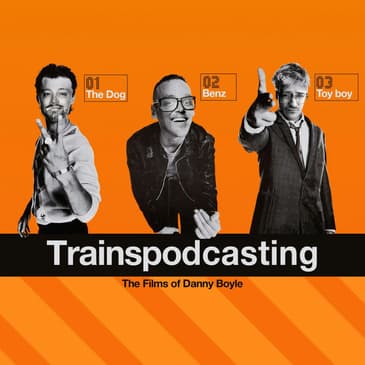
[00:05:09] Directors who have massive success early on in their careers And are given a series of blank checks And make whatever crazy passion projects they want Sometimes those checks clear And sometimes they win 20 million rupees This is a mini-series on the films of Danny Boyle It is called Trainspotcasting
[00:05:25] That's right There are many people who were disappointed it was not called Slumpod Million Cast Including me Oh really? Okay Alright, call us out You need the Indian perspective on this I would have been okay with it That's the only opinion you need That wasn't my problem
[00:05:38] Slumpod Million Here's my thing, okay So I'm very outspoken on this show about I like to go for the sweatiest combination of podcast and movie title possible And then anytime we land on a title that is not sweaty enough
[00:05:52] For our listeners, they're like, I guess Griffin lost the argument They didn't like that it was podcast away or whatever Right Which I want to do as Pod as a cast And you push for podcast news Yeah And your argument was
[00:06:06] If broadcast is in the title, you have to do it And I felt similarly, Trainspotting Pod is basically in there It's stupid not to do it I understand Slumpod Million Cast is funnier in terms of sweatiness But I was like, definitively it's this
[00:06:25] But that is what it's called It's called Trainspotcasting Our guest today, overdue on the show Santalaka Here to talk about Slumdog Millionaire Best Picture winner Can I speak? Yes Okay, good Just in general Oh, you have infinite permissions
[00:06:43] No, no, I'm going to do that from time to time And be like, wait, is it my turn to talk? Anytime There's no turns here No turns, it's a turn-less game Just a lot of talking over each other Yes I mean, some people don't like that
[00:06:54] But that is how it goes here Welcome to the podcast We're here to talk about the film that won Danny Boyle an Oscar Yes In the middle of his career Almost by accident It feels like this guy won Best Picture by accident to some degree A little
[00:07:07] I'm sure he was not rolling up his sleeves on this project No Thinking, you know what, I won an Oscar And you know what, this is the movie to get it Yes This is such obvious Oscar bait This is such obvious box office catnip
[00:07:20] Like, this is the kind of thing Americans will eat up You know, it's just The way it took the sort of movie world by storm Starting with Toronto I think came largely out of nowhere Yeah, well, infamously This movie was originally going to be released by Warner Brothers
[00:07:40] Who had recently shut down Warner's Independent Their specialty arm And they looked at this film and they went Straight to DVD? And they were like, we can't release this This is going nowhere And they were gonna put it straight to DVD
[00:07:54] And I think Danny Boyle and his team said Can we see if anyone else wants to buy it? Fox Searchlight picked it up for a song Put it in Toronto It exploded And then suddenly it became like the juggernaut The unstoppable
[00:08:06] And as I was saying, a populist favorite Like this is the movie Yeah, it was That everyone wanted to see win best picture in the public I guess so But there was so much Where's the Dark Knight talk Yeah But yeah, of the five nominees
[00:08:21] Of the nominees, unquestionable I think so I was more of a Curious Case of Benjamin Button guy That's fine Look, it's a movie I prefer I think I prefer that movie too Of the five nominees, Milk is my favorite
[00:08:34] Milk would probably be my pick of the five nominees Right I don't really care for Frost Nixon or The Reader I cannot stand The Reader Frost Nixon is, you know, whatever That's like a can of seltzer Reader I think is an abysmal film Sid, have you read
[00:08:51] Sid Hanth Yeah, thank you Have you read The Reader? I have not read The Reader I've seen The Reader Okay
[00:11:59] And then three years of no host And then the Regina Hall, Amy Schumer, Wanda Sykes trifecta Yeah Last year Which it's funny You don't even remember that they hosted the show last year No Will Smith's right hand hosted that show Last year Yeah Yeah Yeah, that happened
[00:12:17] Yeah, he slapped Chris Rock I forgot all about that And did you hear They're gonna have Oscar cops this year They've assembled an emergency task force That's what we need To make sure no one gets slapped I just love the idea of them like running scenarios Yeah
[00:12:30] Being like, alright, okay Maybe Tom Cruise is gonna like pour soup on someone's head Like what do we do, right? They're like, they're throwing out scenarios They got a contingency plan for everything You had an Oscar cops take
[00:12:40] You seem like you were gearing up to say something about the Oscar task force I was just gonna say, huh I wonder if they're gonna bring up the slap at all Oh No, they won't do that Kimmel? No He's gonna be respectful Yeah
[00:12:52] Look, it's been almost a year He's gonna ride out on a plaster cast of a hand Right? Like he's gonna go all, you have to Yeah Uh, no, Kimmel It's been a year It's been a year It's been a year
[00:13:02] I don't think this is too spicy a take It's been I don't think it's too spicy a take But this is a thing I've thought for a while Okay Everyone's, wait How did this happen? How could this happen?
[00:13:12] In what universe could Willard Smith think it was a good idea to get on stage? That's his full name And slap him I did not know that We fucked up in a Men in Black episode And people were dragging us for calling him William
[00:13:22] I didn't realize it was Willard I knew it was Willard I can't believe I called him William It might have been a self-aware joke by me Willard Smith slapped Christopher Rock Okay Is it Christopher you sure? I hope it's not Christian It's Christopher! Great
[00:13:36] Imagine if his name was Christian Rock I know That would be really good I'm sorry, no one, I've never heard that before That's so fucked up That would be good Oh shit Five comedy points Damn The fact that he's called Chris Rock That's just his name Yeah
[00:13:51] Is pretty great That's like a performer's name Yeah, right His dad I think was called Julius Rock? Yeah Which really is a good name Both of his brothers do stand up Tony Rock Right, but Chris is the best one It's a great name
[00:14:02] Rock's a great last name for a comedian But like Chris Rock is the best combination The Rock One of our funniest He should have called his kid The Anyway Kid Rock Look, you know, there's a lot Soft Rock You could call your kid Yacht Yacht Yacht Rock
[00:14:18] You could call your kid Yacht Rock Okay, alright, well it's been a year People were like how could that happen Yeah No, you saying that the task force Is gonna have to like How do you create the scenarios Prog That's my kid Prog Yeah
[00:14:34] But you're like what are the What are the scenarios you run through With them of what they need to anticipate Right? When the whole point is Last year I think the slap There are obviously a lot of factors That go into that moment
[00:14:47] Playing out the way it does But one of them is There were three months Of the producers of that show And the academy In the run up to the broadcast Continually saying We wanna like bring back The spontaneity and crazy things happening There was a little of that
[00:15:00] And then of course there was also like We're gonna sit people at tables With stairs leading right up to the stage Cabaret style seating And all this sort of stuff And I'm like I don't think that was in any way Planned or orchestrated No, of course not
[00:15:12] But I think they consciously Like nurtured an environment An intimate environment And tried to like be like And follow your impulses Like if a moment takes over You know? I don't I think that's the last thing They wanted to happen But now basically
[00:15:26] Like if you're leading an Oscar task force How do you define What are the spontaneous moments You want to have happen on the broadcast And which things you need to stop Like nip in the bud Here's the thing I think the Oscar task force Should be aimed at
[00:15:41] Like just letting Spontaneous things happen Yes Letting problems happen Yes This is my point Maybe even like manipulating Absolutely Push them What are the two biggest Oscar moments People talk about from the last decade It's the slap And it's the moonlight Yes But then
[00:15:57] And in both of those scenarios You just wish Like with the moonlight thing Yeah You wish there'd been Maybe just sort of Because I know it was the end of the night So they really just had to like Rush everyone on stage And be like Okay well
[00:16:09] You say your speeches now Because we gotta wrap it up But they should've just been like Alright guys Ten more minutes Yes Everybody settle down You guys go sit down Yeah We gotta give these guys their due And with Will Smith The weirdest thing was that it happened
[00:16:22] And then there were 20 unacknowledged minutes Yes They just kept doing the show Right Amy Schumer was apparently backstage Being like Can I come out And they were like Well there's nowhere for you In the run of show You know And then no one knew what to do
[00:16:35] And also Will Smith was just sitting there And there's the ticking bomb Of being like He's gonna win He's gonna win At some point This guy gets on stage And then what does he There was And then there was Marie's party at her old apartment Right
[00:16:48] I was just at home Yeah I was covering the apartment And the slap happens And everyone for like An hour is debating Was that real or not Sure And like You know Strong arm And there's the tweets of like Denzel is talking to Will Smith Right Right now
[00:17:03] Like you know Like all that stuff is going on And like the tension in the room Was just building and building And building Until the moment he gets on stage And starts talking And everyone realized Like oh he's real And he's It was real And everyone was like
[00:17:15] Oh my god I didn't realize it Until that moment Yeah I wasn't watching the Oscars I wasn't at home at the time I was on my way back from somewhere And then all of a sudden I started getting these messages From other people Who aren't watching either
[00:17:25] But have heard what's going on And these clips and all that I'm like now I have to tune in For the first time in years To see if Will Smith wins After this Sure That was the reason I tuned in I mean like the Oscar Task Force
[00:17:37] Should exist But it should be led by Andy Cohen And all the members of the task force Should be creative producers On different Housewives shows Right And they should be like We're going to keep everything in line And then they start going To audience members
[00:17:51] And whispering in their ear Like I said you suck Yeah Kristen Dunst said you farted Alright let's get on to Slumdog Millionaire Best picture winner Slumdog Millionaire Runaway hit A film that almost went Straight to video And then becomes A career defining film For Danny Boyle
[00:18:08] That now he almost lives In the shadow of its success Because also A guy who did not feel like Well he's obviously on an Oscar track Next in line Right He was not someone Where it's like One of these days He's going to have his Best picture breaker
[00:18:23] No One year earlier He had finally released The movie he said was like His biggest challenge to make Sunshine It went It didn't make a lot of money And his whole press tour for it Was basically just like I'm so tired And then one year later
[00:18:35] He just is like Best picture winner His most successful film Of the ten years previous A zombie movie Shot on a Gameboy camera Right You know And like his beloved early films Were like so angry Grungy Nihilistic How do you feel about Danny Boyle? What's your Boyle relationship?
[00:18:54] Generally pro Danny Boyle I'm sort of hit or miss On some of his recent stuff I mean it would be hard To be total hit Yeah I don't think Danny Boyle's Hit on the recent stuff Thoroughly Which was that movie Where it had like
[00:19:07] A twist every five minutes Trance That's the one Yeah It would be funny If you were about to say Which was that movie That had the I don't know The tech guy Who creates Apple products What's that movie Where there's a world Of which the Beatles Never existed
[00:19:23] One guy No it's Yes You're talking about trance Trance Yeah I'll tell you about Slumdog Millionaire It's my second favorite Danny Boyle film Where someone dives into a toilet You know That's In a way It's the most damning thing You can say about this movie
[00:19:39] With the poop dive Yeah He really I forgot how coded this kid is In poop? Yeah It's really like Swamp thing It's like Cologne Top to bottom Yeah It's an exosuit And it's because People are suddenly blocking The door They put A door They put a chair
[00:19:59] In front of the door Right To prank him Oh okay Because he messed with Yeah right It is my favorite moment In the movie I will say Is the poop He's like I gotta go I gotta go And they cut to him inside And he's saying like
[00:20:14] Look this is a slow one No Okay what's the phrase It's the wording He says Oh it's a shy one It's a shy one Which is funny One of the funniest ways To describe a turd Yeah Like a Yeah sort of A long relaxing session Yeah
[00:20:30] Oh it's a shy one And that's just in the subtitles too Yeah What he actually says Is basically Um I'm shy or I'm embarrassed Or something like that I guess in context Like that's the implication of it So the subtitle is Yeah Like giving you the implication
[00:20:44] Of what he's saying But no but see I think that's I would relate more To the kid saying I'm feeling shy or self-conscious It's a shy one Has such a different meaning behind it And is so funny I mean the other thing With this movie is like
[00:21:02] Simon Bovoy wrote the script In English entirely Right And then when Especially they start working With the kids The woman who is credited As the co-director on this movie Who was the casting director Lovleen Dundon Yes She was like You should do more of this film
[00:21:18] In Hindi especially with the children So she was like Translating the scripted dialogue In real time to the kids on set But that's interesting That there's the disconnect Yeah It happens a lot throughout the film But that's sort of With every subtitle film Sure Yeah But especially if
[00:21:36] You have to Translate like very in the moment And you can't think of Like I wouldn't be able to tell you Off the top of my head Because I'm not a translator Sure What's the Hindi equivalent of It's a shy one But specifically when you're
[00:21:48] Referring to your poop Right It would take me a bit to get there Yeah Okay this movie comes out 2008 As you said Like a fucking hurricane Out of the Yeah debuted at Telluride It won the TIFF People's Choice Award Yes And it you know Comes out
[00:22:05] Basically Christmas time In America But I think that was A twilight release Yeah Limited release Mid-November I saw it at the Angelica I saw it at the Angelica as well I remember seeing it Opening night I was so amped for this movie Because it was just That feeling
[00:22:22] There's a lot of hype Out of the festivals And Danny Boyle's back And all of that If you're like a film nerd And you're not a professional Film critic Like you two esteemed gentlemen are Right You're hearing Like the festival buzz On these things
[00:22:34] For like two or three months And you're like My friends and I went to go see it It was sold out Sure It was on like Four out of five screens At the Angelica opening night And we were like What's the next showing That isn't sold out
[00:22:46] And they were like 1030 Oh yeah And we were like We're gonna wait in the Angelica cafe For two and a half hours To see Slumdog I wanna see this With the hottest crowd possible Sure And we sit there And I'm like This thing is a fucking triumph
[00:22:58] This is undeniable What a like Emotionally overwhelming Like Tour de force Like Danny Boyle's Like honed his style perfectly And then as the season goes on And it becomes this sort of De facto front runner And there's the inevitable backlash Of like Is this thing corny and manipulative
[00:23:13] And sort of cliched and everything I was like Come on You can't Don't be cynical about this It's Slumdog That movie's undeniable Right The week of the Oscars I was like I should go see it a second time And I see a second time And immediately felt
[00:23:28] None of this works for me Oh no I now completely Like all of the charm Has disappeared for this movie now I feel like I see All of the sort of strings Had not seen it since then My second time in theaters that year Watched it again
[00:23:42] I, I Like none of this movie Was working for me this time Really Yeah I was surprised I thought I would be more Generous to it But it was like One of the wildest First to second viewing shifts I've ever had So now what's your relationship
[00:23:58] To this film So I liked it the first time I saw it And I liked it This time when I saw it Earlier in the week But I've hated it for years Okay so I'm with you Yeah That's fairly similar to me I didn't love it as much
[00:24:14] As you did on my first viewing But I was like I can see why this is so bad Sure You know And then I stowered on it quite quickly Probably like you're sort of describing As the sort of You know As it became such a big deal
[00:24:27] I was like Wait, wait, wait I didn't sign off on best picture here I don't know I don't know And then I remember that Oscar year Like it wins a lot of awards And you were sort of like It got a little boring Like it felt a little
[00:24:41] Sort of And my opinion of it Had really soured I re-watched it just now But then Now I've been watching the Boyle movies Yeah I re-watched it The first hour I was like This is fantastic And then I remember The second hour loses me more
[00:24:56] And I did kind of You know I sort of evened out on it So it came out positive It's a fought film The youngest group of the three actors The little guys Are so good The little Little slumdogs Are so good All three of those performances
[00:25:14] That it does kind of Like the movie does shoot out of a cannon At the beginning My other main takeaway is Dev Patel is pretty incredible in this It is interesting to watch it now Yes Knowing what a sort of like Variety of performance he's going to give
[00:25:30] He is excellent in it I feel like at the time I was dismissive of him Because I loved the kid so much Yeah And his performance is more subdued Yes And natural And I was kind of like Is he just kind of being himself Like you know
[00:25:44] The kids are so charismatic Right Is he just sort of Yeah A blank slate Do you like Dev Patel In general in this film I do In general yes In this film Emotionally what he's doing works Yeah Every time he opens his mouth
[00:25:58] It's a little bit weird for me I'm sure we'll get into like Let's get into it What this movie sounds like To me as someone from India But I will agree That the first 40 minutes of this movie Are just a firecracker With the youngest kids
[00:26:14] With the whole thing in Hindi It all It doesn't just sound authentic But even like outside of that It's so propulsive And it just keeps moving And like every second scene Is them running Running Yeah You know the camera work is I love like the colors
[00:26:30] I love like the sort of switches To the handheld camera And all that I think the movie basically peaks At the paper planes train sequence That's when you're like This thing is really humming And then it also just I feel like a lot of
[00:26:44] Weirdly like a lot of best picture winners The movie then From that point on Starts to become Pretty obsessed with punishing its characters Like making them go through Like biblical trials This is why that British poster That calls it the feel-good movie of the year
[00:27:01] Obviously it's a film With a big happy ending I get that it sends people out Of the theater feeling good But it is a really dark Miserable movie In a lot of ways With a lot of Yes like over the top Dickensian punishment Yeah like children
[00:27:16] Orphans being blinded And you know He's being electrocuted In the first five minutes of the movie You know By the sort of like Ostensible kind of nice cop Like a lot of this shit I forgot that like him winning Who wants to be a millionaire Is immediately intercut
[00:27:32] With his brother being shot to death In a bath full of money I remember the bath Full of money very well I remember that sequence And even my first time watching that movie I was like This is maybe not totally working Yeah
[00:27:44] I forgot that they cross cut it So instantly Like he has three seconds Of celebrating that he's won Before you cut to the brother Yeah it just The entire Adult Selim part of it Doesn't seem to work for me Just because I I can't seem to trace
[00:27:59] How he goes from like I'm a gangster To oh I'm gonna redeem myself And shoot people It's very quick Yes I remembered more of him And he's actually barely in Like he really is A minor It's also Presence The worst performance In the movie He's not Terrific
[00:28:16] And I remember being like Oh he's really dropping the ball But I also Yeah I remembered it Being a bigger chunk of it Like I remember more Frida Pinto in this movie She's really not in it much No Adult Selim At least in my estimation
[00:28:28] Some of it has to do with The lines he's given Because again He speaks English But like the actor Speaks English But he's Madhur Mittal Yeah speaking it in a very Stilted way As if these words Aren't familiar to him And and A lot of the script
[00:28:44] Seems to suffer from that Except when it's Dev Patel Because you know He speaks British English To begin with Yeah But with Madhur Mittal It These are not words That he would say So it sounds very like And it's not words that At least me as an Indian
[00:29:00] Would be used to hearing Coming out of someone's mouth Like It is our destiny brother And stuff like that I know it's You know meant to be this Thing of like Are they speaking English Are they speaking Hindi Or we're gonna This is for Western audiences
[00:29:14] So they can just say whatever Yeah The lack of authenticity Unfortunately sometimes Impacts the way it's performed And I think so emotionally Some of those moments don't connect Because I don't think the Actors are necessarily Connecting with them No He's got a good look He's very like
[00:29:31] Sort of the hair The kind of like I don't know He looks kind of cool Yeah I forgot that he was in Million Dollar Arm Oh that same actor? Yes Okay Same actor Is one of the two Baseball prospects in that movie Okay I think that's
[00:29:46] The smaller role but still I even think though That like the The middle age version Of that character Sure The sort of 12 year old Right Also doesn't work as They like In the same way that in the final part They make his redemption shift happen Way too quickly
[00:30:06] In the mid section I feel like I understand what they're going for Is This is a desperate kid In desperate circumstances He's doing what he needs to do to survive But I think even in that middle section He is played like a little bit like Joyfully nihilistic
[00:30:25] Like he's getting some charge out of it And it just feels like very quickly The kid becomes like Addicted to being bad You know? Like I just think that character Is not particularly well written Yeah To begin with On top of the dialogue Maybe being a little dodgy
[00:30:44] The first time you saw this movie Were you living in India Or did you see it later Like did you see it when it came out? So the US release was sometime in late 2008 Late 2008 Yeah I was still in India at the time
[00:30:56] I ended up moving to New York for college in 2009 But when this came out in the US There was already a lot of buzz around it From like festivals and this and that And a friend of mine who You know used to pay attention to all that
[00:31:08] Told me like Hey this awards season There's a movie that takes place in India That seems to be like Picking up a lot of steam And I was really interested And I didn't know whether or not It would be getting an Indian release So I ended up like
[00:31:22] Either downloading a pirated copy Or buying a pirated DVD Or something like that And watching it around the time It came out here in the US Yeah, sure late 2008 And yeah I liked it But I think you know being an impressionable 16 or 17 year old at the time
[00:31:40] A lot of the opinions and conversations That happened afterwards Made me feel like This is exploitative and blah blah blah And I'm like There is that element to it still But I've never watched the movie And disliked it Yeah, you know there's parts of it I dislike Yeah
[00:31:58] I would agree with that Yeah I feel closer to disliking it this time Whereas like my second time seeing it in theaters I more just felt like Bloom is off the rose a little bit It's lost some magic to me But I was, I don't know
[00:32:10] Dislike isn't even the word It's just like I was not connecting with it But it's, I mean It's one of the weird things about like The lives that movies have That are outside of their own control Where I feel like so much of the souring on this movie
[00:32:24] Is that there was this sort of like In so many eyes this film was viewed as like Oh what a triumph of like The Academy becoming more international And more global Sure By awarding this British film Exactly This British film made by white people
[00:32:41] Right and then I think people were like Oh I love Indian movies Like Slumdog Millionaire Where they do Jai Ho at the end Well you know And it starts to turn into like Right, a shorthand You know I mean I just think about the amount of like
[00:32:52] Trailers for bad American comedies In the ten years after this Where someone uses Slumdog as a joke title To refer to an Indian character Yeah It definitely happens in the Jason Bateman Spelling bee movie Yeah I think it happens What is the Jason Bateman spelling bee? Bad Words
[00:33:09] Oh His directorial debut I missed that one It happens in the Canadian Hayden Christensen comedy Little Italy Okay Well look I mean that's a Robert's direct Yes Is that not set in New York's Little Italy? I'm not sure I haven't actually seen it
[00:33:24] I've just seen scenes from it I think it happens in 30 Minutes or less Like it just became one of those Really crappy shorthand jokes Not funny No Never And I don't mean that in some like Aggrieved way It's just like a boring joke Yes Yeah, whatever
[00:33:40] Oh it happens on Oh Hello Which is the John Maloney Yes But of course they are supposed to be Ignorant Oh no I enjoyed that Right But I guess that Yeah I want to open the dossier Please For this film Yes Quick question Sorry to interrupt
[00:33:59] You can interrupt me Literally anytime I'm joking I'm not joking No please feel free Like Best Picture Winner since it Like The Artist Has Slumdog Millionaire Do you think it's been sort of Memory hole as in like a movie That people don't really talk or think about?
[00:34:14] A little bit Okay Do you not agree? Like I do think it's I mean The Artist is a more extreme example Where that almost feels like a collective Hallucination Right Like not just that it won Best Picture But it won like a lot of critics awards Yeah
[00:34:27] You know like it was sort of this like Universally Like yeah that's Oh yeah I remember that film Like the first responses coming out Of Khan and people being like I'm gonna sound crazy But this thing might win Best Picture And people were like
[00:34:41] How is a fucking French silent film With actors that Americans don't And they were just like I'm telling you this thing It's people It's down the middle whatever Magic of cinema baby Right But whatever critic that was Was like There was a dog There was the dog
[00:34:55] From Fraser Was it the same dog? It was It was the second dog Oh Right It wasn't So it was a Moose So it was a career Oscar It was Augie or whatever Yeah It was a career Oscar then Yes Well that's right That was the thing
[00:35:10] It was that dog's true grit Everyone had worked with him Yeah No but that same critic was like That having been said This film is gonna win You know I mean I do know I mean I think it's the best I think it's the best Critics sent out
[00:35:23] All of the critics awards They were like This movie is like Too broad Everyone's gonna turn Their nose up at it And then it won Like every critic award Best Picture And now as you said I think feels Like a collective hallucination The artist is the biggest one
[00:35:36] Where you're like What happened That wasn't a crossover hit It remained pretty niche And critics don't seem To think back on it fondly Well and also he The director Harrison Benavidesius I mean, Danny Boyle has continued to make sort of interesting and, you know, different movies.
[00:35:50] Like, you know, maybe... has struggled a little bit under the shadow of a Best Picture win, but like, he's, you know, he's a well-known director. I think this film has, like, very little standing in, like, critical, serious-minded film communities.
[00:36:04] I do think just because it was such a big hit, it's the kind of movie that you hear people's moms saying, like, I love Slumdog Millionaire. It's so romantic. People forget that because, you know, it was the runner-up for Best Picture at, um...
[00:36:18] No, sorry. It was third place for Best Picture at the New York Film Critics. And Danny Boyle was the runner-up for Best Director, I believe. And, like, you know, it won Best Director at the Los Angeles Critics and so on.
[00:36:34] So, you know, like, it was in the mix with critics. These sort of other big critic movies that year were Rachel Getting Married and Wally, which, like, surprisingly won the LA award. It felt like critics were trying to push Wally over the threshold.
[00:36:51] And it was championed by, you know, by many critics. It was certainly, like, well-received at the time. I think that has totally been memory hauled. That is what... Looking back, I was like, so what were the big critical movies of the year?
[00:37:08] And I was like, oh, this was one of them. That I had sort of forgotten. What is your opinion on that? I think it's like an evergreen five-dollar bin at Walmart movie. In a way, that, like, keeps it in the collective consciousness, maybe. You know?
[00:37:19] No, for me, it was a little different just because it comes up in a very specifically Indian context for me. But again, only from time to time. And it's like, oh, this was... It felt at the time like a watershed moment for Indian talent on a global stage.
[00:37:31] And of course, you know, the last year or so with the success of RRR, I keep thinking, like, I haven't seen something like this from something Indian or Indian adjacent in the West since Slumdog Millionaire. But outside of that, I don't think about it
[00:37:45] as a movie, as a piece of art, as much as I do about everything around it. A specific cultural phenomenon. A weird cultural curio. Yeah. But like, right, not exactly an influential movie in a way. Although it's like... But then again, like, it launched Dev Patel,
[00:38:01] who is a fairly enduring star. Yes. It launched Frida Pinto, who is in movies sometimes. But then you look at both of them, and it was like, look at these two huge, like, Indian stars that come out of this film.
[00:38:13] And it's like, Dev Patel was a British actor, and Frida Pinto famously had, like, not gotten any work in India. She was basically an unknown. Yeah. And then there's other smaller things, like, you know, Anil Kapoor being in Ghost Protocol. Yeah, and in 24 as well.
[00:38:29] Yes, he was in 24. Which was weird in my memory. And then he acquired the rights to remake 24 in India. Right. And he made the Jack Bauer role. I mean, no offense to the guy, but a little long in the tooth?
[00:38:43] I guess Kiefer was kind of in his sort of late 40s when 24 came along, early 40s? I'll say that was the other huge surprise for me rewatching this movie. I think that performance is incredible. Yes. I remember at the time thinking,
[00:38:57] like, this guy is so charismatic and transfixing. But I don't think I gave him enough credit for the actual, like, dramatic craft of that performance. He's such a scumbag in the movie. It's so good. Which is great. And he never drops it.
[00:39:10] You're never like, oh, you know what? He kind of came around at the end. You're like, no, fuck that guy. But he's so good at turning it off and on. Well, and the Regis thing, like, at the peak of real American who wants to be a millionaire. Sure.
[00:39:24] Where it's like, you're constantly playing the line of, like, do you seem like you're about to deliver bad news or good news? You want to throw people off. And, like, Anil Kapoor is doing that in his performance as a performance on the show.
[00:39:36] But he's also playing the subtext of, he doesn't want this kid to win. And he's trying to psych this kid out. And it's fascinating to watch from the perspective of someone who grew up with Anil Kapoor's movies because he's like a quintessential nice guy hero.
[00:39:50] Wow. He's like a face. Yeah, he played this character called Mr. India who was like one of our big superhero calls. That seems great. I love it. Yeah, and then seeing him play a villain in this and then play a villain in Ghost Protocol,
[00:40:01] it was a bit strange, but, like, you know, good for him getting... temporary Hollywood recognition. Did you ever watch the show in India? Which is, obviously, it's not called Who Wants to be a Millionaire, right? But I forget what it's exactly. Kaun Banega Crorepati?
[00:40:18] But there's nine versions of it in India. Wow. Okay. In different languages. But doesn't Amitabh Babchand present it? Or had he at some point presented it? Yeah. I swear to God. Well, we are talking about it. We are. I think this is adding to the audience. Yeah.
[00:40:35] Which is what I wanted to ask. So you mentioned Regis Philbert. Was he the host in the U.S.? He was the original host in the U.S. And he was, I would say, fairly crucial to its success in the U.S.
[00:40:44] as Chris Herron was in the UK. You needed... It's so much host, that show. Compared to most game shows. Like, you really need someone who's gonna hold your attention. And Regis kind of played it similarly to this. I'm on your side, but, you know, what are you doing?
[00:40:58] And that's sort of shaking his head. Are you sure that's your final answer? It could be with this one. I mean, it could be A or C. Maybe D. The thing here was, it was a huge show in the UK.
[00:41:09] They bring it over as a summer replacement series. It's like, who's gonna host it? I don't know. Who do we have already under contract? It was an ABC show and he worked at ABC. Throw it to old man Philbin. And then the show airs and becomes humongous.
[00:41:22] And very quickly it became, who wants to be a millionaire on five nights a week? They famously... It was so popular. It revived ABC, which was a... Like, at the bottom of the ratings. And so they were like, well, you know what they want? This every day.
[00:41:37] And they burned out the public's interest in it too quickly. Like, it was a summer show that then became a fall show. This was 98, 99? That sounds right. Because the British show launches in 97 maybe or 98. Yeah, it was... I can't look it up.
[00:41:53] But it got so overblown so quickly. I think the first guy wins the show... The first person to win the million happens within two or three months. And that was like the fever pitch of the thing.
[00:42:05] And then they do it... Start doing it like five nights a week. And then it very quickly becomes like, we need to do celebrity episodes. We need to do special event episodes to keep it fresh. But Ree just went from being this sort of like...
[00:42:16] Obviously incredibly famous, but a little bit like taken for granted as like perennial, he'll always be on TV. To being like the hottest man in broadcasting again. Like once again went to being like one of the most famous men in America.
[00:42:28] And everything was parodying who wants to be a millionaire. Okay. Yeah, so it had a huge moment, but like... It burned out fast. Yeah, by 2001, it's daytime syndicated. It got moved to syndication. So it's never been like a big movie star who draws eyes to the American version?
[00:42:45] Not so much because then it was Meredith Vieira who's another talk show. Terry Crews, Cedric the Entertainer. Yeah. But the bigger stars... Michael Strahan maybe? Maybe. They start hosting it deeper into its syndicated realm where they're like, we need someone bigger to boost the ratings.
[00:43:01] Okay, yeah, because the Indian versions have always been hosted by enormous names. Like to the point that these are people that, you know, non-South Asians in the West have probably heard of. You have Amitabh Bachchan who hosted it originally who's referenced pretty heavily in the movie.
[00:43:17] After him, the Hindi version was hosted by Shah Rukh Khan. Oh, wow. He's one of the most famous people in the world. Yes. I mean, these are two of the most famous Indian actors of all time, right? It's like if Tom Cruise and Brad Pitt had hosted
[00:43:33] Who Wants to Be a Millionaire. Yeah. And I was gonna say... Aren't they busy? I guess you can kind of knock a lot of them out quickly. But the show was so popular that like... It was worth it. And interestingly, the Telugu version has been hosted
[00:43:46] by Chiranjeevi who is the father of Ramcharan. Oh, yeah. And after him, N.T. Ramrao Jr. So both of their dads... Oh, no, no. N.T. Ramrao Jr. from Aam Aadhaar. So it's a big deal over there. And it's still a much watched thing.
[00:44:03] Yeah, the non-Hindi ones are still... I'm not entirely sure if there's any Hindi version that's still on the air. But at the time, especially when it first began in 2001 with Amitabh, it was enormous. It is obviously... It's a very durable format. It's very easy to understand. Yes.
[00:44:22] And you can just revive it any time. You don't have to tweak it. It's just funny that when... Fifteen questions. When this movie came out, it almost felt like it was nostalgic for American audiences to watch a movie about who wants to be a millionaire.
[00:44:35] And then I think they revived it again in primetime with Regis after the film. Just because there was such a bounce. Yeah, I understand that because... So the music that plays in, you know, the movie, the Indian version, I believe that's from the American and... Yes, absolutely.
[00:44:49] Of course, I've never heard it on those versions. Interesting. I've never... I don't think I've ever watched clips from any of those shows. But for me, this music conjures such a distinct feeling of time and place and intensity because it was so enormous in Indian households as well.
[00:45:08] Yeah. No, I mean, the music was 50% of the success of that show. You guys both know that Stephen Knight was one of the creators of Who Wants to Be a Millionaire. Director of Locke. Yes. And Serenity. Guy loves his hot seats. Yes. Incredible.
[00:45:22] But it was just like, the pitch on this show beyond just like the stakes of here's how big the prize is gonna be, here's how simple the format is, is just like, some guy's gonna fucking perform the hell out of these questions, right?
[00:45:34] Like he's in a David Mamet play. And then you're just gonna have the most dramatic set and music of all time. It's incredibly dramatic. To the point that when it launched in Britain, there was that, you know, a lot of the reaction was like...
[00:45:46] -"Get over yourself." -"Take it easy." Like, this is insane. Because the classic British, you know, game show energy is much more like you're having a cup of tea. Right. And it's like you're gonna win a dinner plate or something.
[00:45:58] It's not like you're gonna win a million pounds! No, but that's what Jeopardy is like. It's like, it's like, muted. And other American game shows are like, insane, over-the-top bananas. And this one was like, no, no, this is a serious intellectual exercise. Um... Your life depends on it.
[00:46:12] And it really launches like, The Weakest Link and Deal or No Deal. All of these shows that are so host-dependent and like, vaguely antagonistic. Yes. Fiberglass sets and searching lights. The host kind of being like, look, I'm your friend here, but also you're in trouble.
[00:46:26] You know, like the weird energy there. Anyway. The banker told me your wife is thinking of leaving you. The whole banker thing in Deal or No Deal. Banker's one of my favorite characters in all of fictional media. Um, all right. So, Slumdog Millionaire.
[00:46:40] Danny Boyle gets Simon Boffoy's script. This is how this begins. And the only preface is, this movie's about who wants to be a millionaire. Danny Boyle is like, I hate that preface. I hate being... I hate hearing that. I don't want to make a movie about
[00:46:55] who wants to be a millionaire. And he's basically like, I don't want to read it. And this is what Danny Boyle said to you. He's like, they could have maybe told me, like, set in India, you know? Anything else. You know, anything else. It's a love story.
[00:47:08] Um, uh, but, uh, you know, uh, he eventually decides, because Simon Boffoy wrote it, he's like, well, you know, I've heard of him. He wrote the full Monty. I guess I'll crack it open. And, uh, once he read a scene set in an outdoor toilet,
[00:47:23] he was like, I'm in. I want to make this movie. The man... The man likes his poop. Uh, Siddhant, you read Q&A. SIDDHANT KUMARIAN I did. So it's based on that. Telling us it is barely, barely anything like this film.
[00:47:38] Now, Q&A is an Indian novel, correct? Like, it is not a British novel or anything like that. No, it's written by Vikas Swaroop, who's an Indian author and diplomat. Who was... Had stints in South Africa. Is that some posts? Yeah. Canada, it looks like. Yeah, yeah.
[00:47:51] Yeah. And I know the book was, you know, popular and won various prizes, but man, by the time it was done, I just, I threw it across my couch. Like, I think it is such an awful book. Like, it has a couple of ideas that I really like
[00:48:08] that I wish were explored more in the book, but also explored more in the movie. But just, it is such a disjointed non-narrative with like three out of nowhere plot twists on the last three pages that Simon Bofoy, like, he made it a story.
[00:48:26] Like, it's not a story without this screenplay. Boyle obviously did not read the book. He read the script. He's like, maybe read the book later and he was like, my movie is not particularly inspired by the book. It is a pretty ingenious structure for dramatic storytelling.
[00:48:40] That's why I really love the first half. Because I feel like the movie lets go of the structure of the second half. I want to go all the way with like, tell me how every question relates to his life. I want to stick to that.
[00:48:51] As someone who's read the book in which that happens, let me tell you, it's a huge improvement that they don't do that. Really? Yeah. Because it keeps going. It just, it kills any sense of tension, any sense of momentum.
[00:49:04] But a part of that has to do with just the way the book is written. Yeah. First of all, I can't tell if Vikas Swaroop is a bad writer. Because the thing is, the entire thing is written in first person. Mm-hmm. From the perspective of the main character.
[00:49:20] Okay. And so I don't know if, because I haven't read anything else by Swaroop. Is it starting with the interrogation as well? Or is it mostly in the moment? Okay. Yeah, yeah. So the broad structure of the game show and the interrogation is the same,
[00:49:36] but it has almost nothing else in common. Gotcha. Um, so it's all written in first person. And, um, so I can't tell if he's writing... purely 100% from the perspective of the character or he's just a bad writer. Sure. But also what's confusing is,
[00:49:54] it's all narrated in the present tense, even when it switches... Oh, weird. -...in time. That's irritating. And like, if that was just between chapters, I would be fine with it. Sometimes mid-chapter, it kind of, it feels like you're reading the thoughts of Dr. Manhattan.
[00:50:11] Yeah, yeah. He is existing in all times. Yeah. And it's... God, where do I even begin with this book? It's also much darker and much more grim than anything in the movie. Interesting. Like, uh, the prologue with the interrogation... Yeah. ...he gets sexually assaulted by a cop. Jesus.
[00:50:30] The first question he remembers because of something to do with sexual assault. Oh, jeez. And the third one, it's because someone gets molested. And like, I think that's like the first four or five questions. So you're saying this movie is far less grim and intense than... Yes.
[00:50:44] Okay. And this movie has some grim stuff. Yeah. And I will say, like, there's a narrative reason for all of this, which is fine. Like, you know, it's... You know, I'm not one to say what should or shouldn't be depicted in a book. Sure, sure. But it...
[00:50:58] No matter where this book ends up in time, if you can even tell, it just feels completely disconnected from everything else. Yeah, yeah. Yeah. And also there's no central love story. There's no... There's like one or two recurring characters. Salim isn't his brother. He's just like a friend
[00:51:16] who appears in a couple of chapters. Okay. Yeah. All right. Well, whatever. That doesn't sound good. No. Boyle says... I like this quote from him. You read scripts, they're really good. Technically, they're excellent. They do everything they need to do, blah, blah. But they never glitter.
[00:51:31] They never really vibrate for you. This one did. So he loves this script. Yeah. He loves how Dickensian it is. Mm-hmm. And he is, like, you know... Licks the poop. Patronizingly or not, drawn to, like... You couldn't make a Dickensian movie about, like, life in modern Britain, maybe,
[00:51:48] because of, like, you know... But, like, in India, it makes more sense. Now, I don't know... how much Danny Boyle knows about what he's talking about, in a way. But, like, he's drawn to, like... depicting this sort of, like, you know, the wild swings between wealth and poverty.
[00:52:03] Right? You know, that, like, being on a game show could represent things like that. Right? You know, like, very... It is very Dickensian. Dickensian always... Dickens always has these, you know, people being suddenly elevated out of their circumstances and, like, what that means and all that.
[00:52:16] Like, that is such an obsession for him. I talked about it in The Millions episode two, but there's that bizarre... Or I think it was on the trance... Whatever. I've talked about both of these episodes because we've been recording them in a weird order.
[00:52:28] But there's this special feature on, like, the trance Blu-ray that's Danny Boyle doing a career retrospective and, like, speed rounding all his movies. And he talks a lot about Slumdog through the framework of, like, he felt intense lingering guilt over the damage that the beach production
[00:52:49] did to that actual beach. Oh, no. Both short term and long term. Uh, and that it was, like, part of the challenge for him on this movie is... Can I make a film in a culture where I am not disrupting that culture itself?
[00:53:05] There's still, obviously, you can debate the levels of cultural tourism in him making the film. But I think a lot of it was, like, this film had a very small crew. The way they worked with, like, children who were not professional actors.
[00:53:19] Uh, I mean, there's this very, uh... daring anecdote that they basically set up a college fund for all the young kids in the movie to make sure that they were set for life off of this rather than giving them, like... You know, all this sort of stuff.
[00:53:32] But I think that was a big part of it for him too is, like, can I go to a different place and not ruin the place by making the movie there? Almost as a self-challenge. It's interesting. He's kind of self-aware about what he's doing here.
[00:53:47] Because he says, like, if you think about it, that's not really a very good idea. White guy going and making a film in a place he's never been. You know, like, I'm not a big fan of films. I'm not a big fan of films that go and show
[00:54:00] white guys going around India, that kind of film. It's not my kind of film. I think culturally, that kind of film has lost its place. We want people's stories from their own countries. So I think it's not a good idea to make it.
[00:54:10] But then, I just at the time thought, oh, I love this place and I loved being there and I loved the energy of the city. It felt like New York in the 80s, he said. Like, it's just... Danny Boyle is always doing this, where in retrospect, he's like,
[00:54:24] I don't know how I feel about that movie. A lot of flaws. And he's like, I don't know why I made it. I don't know why I made it, but he's like, at the time, I was filled with energy and excitement. Uh, I think the movie...
[00:54:35] JJ thinks the movie he's talking about is the Darjeeling Limited. This is in JJ's research. Oh, interesting. Which is the year before. Yeah, no, I mean, it makes a lot of sense. I mean, the other big thing with this movie is, uh...
[00:54:48] 20 Days Later is obviously the first film he shoots on video, but it's a very, very primordial form of video, right? And the difference in digital video have been humongous in the six years between these two movies. Millions and Sunshine are both on film in between.
[00:55:06] And he and Dodd-Mantle are basically getting, like... Was this shot on RED camera? I think it was. Um, but there's this anecdote I always think about with this one that's really interesting, where they, like, this was at the point in time where the RED camera was being presented
[00:55:19] to all these filmmakers. It was a silicon imaging camera, actually. It wasn't a RED, yeah. All these companies that had tried to make these revolutionary high-def digital cameras lure filmmakers like Soderbergh and Boyle in to use them. They show him this camera, and they show him
[00:55:32] the image capacity... capabilities and everything. And then he went like, is there any reason it needs to be this shape? And they were like, what were you saying? What do you mean? And he's like, well, like, a camera is a certain size
[00:55:46] and a certain shape because it has to contain, like, the room for film canisters. And you built this like a camera. But if you're basically telling me, like, it's a lens connected to a sensor, and then, like, a battery,
[00:55:58] none of this needs to be in this, like, block, right? And they were like, I guess technically you're right. And he and Dodd-Mantle basically unscrewed the camera and just figured out a way to put most of the guts of the camera in a backpack.
[00:56:13] So Dodd-Mantle was basically just holding a lens connected to wires. And they had, like, amazing flexibility in terms of being able to literally just run around with this thing. And I thought, that's, like, such a smart thing to go, like, oh, we're holding on to the idea
[00:56:28] of the shape and weight of a camera based on what historically has been a camera. If you're telling me we're shooting on video, then we should rethink all of that. What are the things we could never do with a film camera?
[00:56:38] And I feel like you feel that in just even his freedom of being able to, like, go into these spaces without traditional lighting setups, without a camera apparent, you know, being seen by all the sort of citizens on the street.
[00:56:53] Like, I think they were able to be a lot stealthier in how they shot this film. And if I'm not mistaken, this was also the... Sorry to bring it back to the Oscars again. The first digitally shot film... Yeah, first digitally shot film to win Best Cinematography.
[00:57:07] I would imagine that's true, yes. Because it was still, you know, pretty new. And looking back, ooh, it is a very digital film. It so belongs to that era where people had just discovered digital color timing. It is, I think maybe outside of the first Magic Mike,
[00:57:22] the yellowest movie I've ever seen. I've never seen this very yellow-orange. It makes your teeth hurt sometimes. I do kind of love how vibrant it is. Yes. But it is... Yeah, because, right, like... I'm trying to think of what the next...
[00:57:35] Well, I guess Avatar wins the next year. So, right. Really quick, speaking of the Oscars, I did some... A bit of research. I think this is the first movie to win Best Picture without a significant white character. Uh, that has to be true, right? What even comes close?
[00:57:50] I don't know. Yeah, there's The Last Emperor, but that has... It's not Sam Watterson, who is a season of The Killing Fields. It does have a white character. Yes. It's Martin Sheen, right? Who is it? No, it's not John Hurt.
[00:58:04] Oh, God. I looked this up just a few... Peter O'Toole. Now I have to remember, because Sam Watterson is in The Killing Fields. Yes. What is Martin Sheen in? Martin Sheen is in one of those sort of like Tony 80s films set in a foreign country
[00:58:18] by a camera watch. Anyway. Um, yes. But The Last Emperor is, of course, largely non-white. That is true. Yeah. But yeah. No, Peter O'Toole's like the third, you know, billed guy in it. There's no doubt. But look, semi-tellingly, it falls into a similar category with that film
[00:58:35] and also with Parasite, which is rare Best Picture winners with zero acting nominations. It does feel... Although that does happen. It does happen. Look, it happens with Return of the King. It's not like it's without exception, but it does feel like... You know what else happened with Gigi?
[00:58:49] Yes. That's one reason Gigi won nine, went nine for nine. Because it didn't have to lose any acting awards. Which is so weird that it didn't... I don't understand how you like that movie and don't nominate Leslie Karras, who I think is the most undeniable aspect
[00:59:03] of a film I don't like very much. It's very strange. It's because she didn't sing, is my guess. Her singing was dubbed. And I think there must have been some weird judgment about her. But her performance is great. Here's the other weird thing about Gigi,
[00:59:13] and then I'll shut up about it. I just did Gigi on Scott's podcast. Scott Aukman's podcast. David just saw Gigi for the first time. A film that is demented. It is a bizarre movie. Maurice Chevalier, obviously, is the, you know... The old man saying,
[00:59:24] -"Heaven for the girls!" That's the song he sings. He was nominated to a neighborhood watchdog list after that performance. He was given an honorary Oscar that year. Okay. So they essentially were like, we're not nominating you for Gigi, but here's an Oscar for your whole thing. Okay.
[00:59:40] Your whole Maurice Chevalier, rich French guy thing. Yes. 30 years from now, you'll be a candle. You'll be Lumiere. Right. Anyway, I think... I'm sorry. I was just trying to find what this Martin... Oh, it's Gandhi! Gandhi, Gandhi, Gandhi. Gandhi, obviously, best picture winner. Yes.
[00:59:58] But that has more white characters. That's got evil English villains and... I just think very often when you have these films that are... Have a largely international or exclusively international cast, none of the cast members end up breaking through to nominations. Dev Patel came close.
[01:00:14] And Dev Patel, there was the weirdness of whether he was lead or supporting. That was his problem. He was nominated for a Screen Actors Guild Award. I am, to this day, not sure if he's a lead actor. I think he's not.
[01:00:25] He's not in a lot of the film. The kids are so crucial to the first half. Yeah. But it's sort of... I mean, it's sort of Hopkins' Silence of the Lambs thing where it's like the movie is so much from his perspective. Yes.
[01:00:39] So I would err on this, but also because he was not a well-known actor. Yeah. They will often just sort of be like, well, put him in supporting. He did get the BAFTA nomination. Yes. They put him in lead? I believe so. Let's find out. And they...
[01:00:53] I believe he got a SAG nomination. Did he not? SAG was supporting though. Yeah. It's also just wild that his one Oscar nomination he does get is like the same situation as this where it's like, well, multiple people played the part different ages, so he's nominated
[01:01:08] and supporting for what is the lead character of the film. Wait, he wasn't nominated for lead in Lion? He was nominated for supporting for Lion, which I think is capital bullshit. It's the same thing though because there was a kid and that's how they got away with it.
[01:01:21] Yes. It's just wild that it worked on that movie and he couldn't break through on Soundline. But it was partly like them being like, sorry we snubbed you for Soundline. You know, like it was a little bit of that. He's very good in Lion and it was like,
[01:01:32] it did feel like a mea culpa. A little bit. Yeah. Remember Lion? I love Lion. Lion's good. Love Lion. That feels like a movie that's been totally memory-hold. Yeah. Because again, that director has not made another hit. No. What did he do?
[01:01:47] Didn't he do a Jesus movie with Joaquin Phoenix? Oh yes, yes. He did the Joaquin Rooney Marr Jesus movie. Did that ever come out? Not really. Like a little bit. It snuck out? It was a shy one. It was a shy one? Yeah.
[01:01:59] Yeah, it was a shy one. All right. Boyle likes the script. He also keeps citing a non-fiction book called Maximum City Bombay Lost and Found. Okay. Written by someone called Suketu Mehta. I'm sorry if I'm pronouncing that wrong.
[01:02:14] Which apparently he brought up so much in the press store that he was told to stop bringing it up because they were afraid that the person who wrote that book would be like, do I... Am I owed some money?
[01:02:23] Like, are you adapting my book all of a sudden? Am I wrong in thinking that after Slumdog, he straight out optioned that book to maybe develop that into a film? I don't know. Okay. I'm gonna look up this thing.
[01:02:34] Um, he also cites Titanic as a huge reference point. He loves the narrative structure of Titanic. Sure. And he says he's borrowing from it. Cutting back and forth between the timelines. You know, the person reflecting all that stuff. Uh, even though of course his main character's
[01:02:49] like 18 years old, not 100. Um, and, uh... Danny Boyle buys film rights to Maximum City Bombay Lost and Found June 2009. I wonder if he bought the rights just so he wouldn't get sued for taking so much from the book retroactively.
[01:03:05] He talks about, and I don't know if you have any perspective on this, that apparently the game show is more difficult, he says, in India than it is in America or Britain. Like, he says like the questions are really hard, really fast on that show.
[01:03:19] Right, because in this movie, uh, they make the comment that like, oh, professors and scientists don't get past 16,000. Right, that there's a steep curve. And in America, the first like eight questions are always kind of like... Pretty easy. Yeah, I think it's in India, the first few
[01:03:36] are generally easy to get you to that first tier. Yeah. Uh, but then after that, they grow increasingly difficult. And eventually, a few people won the big jackpot. But, um... Yeah, I have no point of comparison because I've never watched the American one. Sure. Um...
[01:03:51] Film was funded by Pathé and Warner Independent, as you said, Griff threw in five million dollars. Um, and uh, and then obviously later Fox comes in and takes some of that money. Because Warner's like, this isn't big enough to be a major studio release
[01:04:09] and we no longer have a specialty division. We'll have a fire sale. Does anyone want this movie? We see zero value in it. Uh, so Gail Stevens cast the film in Britain, but most of the film is Indian actors. Yes.
[01:04:25] So, Lovleen Tandon, uh, who had worked on Monsoon Wedding and Vanity Fair from Mira Nair. Yeah. That's the connection apparently that she gets brought in. Uh, and she said she loved the script. She's first assistant director of Monsoon Wedding as well? Possibly.
[01:04:41] I was looking at her IMDb last night. Yeah. Uh, and she is this sort of like super integral member of the team and that's why she gets this co-director credit that was so possibly inadvertently controversial. Sure. Because then people watch the movie, I think,
[01:04:55] and are like, well, wait a second. This movie has two directors. Which is the weird thing about giving someone a co-director credit. Well, same thing happened with, uh, City of God. City of God, yes. Yes. Because co-director is probably not the word...
[01:05:09] No. ...to use because it sounds like, it just sounds like the movie has two directors. I was reading interviews with him. I mean, I'm sure they're in the dossier as well, but basically he was like, we needed someone to function as an intermediary
[01:05:21] with the kids and because she had done the casting and had found the kids... And then she's writing the dialogue. And then the dialogue has to be translated. So he was like, she was sort of there every day in a nebulous position.
[01:05:32] And then at some point, I think, in post-production, he goes to her and said, what if we call you the co-director? But the title basically came about much later. I think somebody on the production said it was a title that came up over a Coke.
[01:05:44] Right. Yes. Christian Colson, the producer, said that. It's just like, I want to give you some better credit for what you did. And then so there were people going to bat for her saying that, you know, she should also be nominated alongside him.
[01:05:55] But then I believe she came out and said, like, this is a bit embarrassing. Yes. She was like... Yeah. ...right, do not, I don't want to be considered that way. Like, that is not... What is fascinating to me, she has not a single film credit after this film.
[01:06:09] In any position. Wow. That is weird. Isn't it? She's the one who convinced, you know, Boyle that all the child acting should be in Hindi, not in English. A master stroke. Right. But then apparently, Boyle says, like, he called Warner's and Pathé and was like,
[01:06:26] so we think, like, kind of half the movie is not going to be in English, actually. And the way, what he said is, the silence when I said that on the other end of the phone. You can tell they had thought he's gone insane.
[01:06:37] Like, clearly, like, his impression is like, they're like, oh, God, you've gotten to the set... Yeah. ...and now you're gonna produce something. Because I guess in 2008, that was just a much more aggressive concept. Now I feel like it would be almost, like, assumed, like, well, yeah, sure. Right.
[01:06:55] The film's set in another country. Like, it'll have subtitle dialogue. We can handle that now. The year after this is Inglourious Bastards, which I think quietly is kind of revolutionary on that front of being like, every character is speaking the actual language
[01:07:08] they would speak realistically in that situation. And you have a film that is in French and German and English almost in equal parts. And became a big hit. But I think until that point, it felt like box office poison to people. And, well, the thing about Slumdog
[01:07:22] not being entirely in Hindi is, like, I don't think that in and of itself is a bad decision just because, you know, even if you look at the story, it makes sense for them to be speaking English beyond a certain point, you know, when they're interacting with tourists
[01:07:36] and, you know, at the end on the game show. That's all fine. I think the bigger problem is that it is written... The English is written from a very British and Western perspective. The way they're talking does not track.
[01:07:50] The way they're talking and the way the movie is cast. Because you have a lot more authenticity for the younger kids, but for the middle kids, you cast these, you know, Anglophone kids who have gone to, like, posh British schools who don't sound like they'd be speaking
[01:08:14] the way a slum kid learning English would speak. Sure. You know, like, these are kids that I knew. I come from a relatively privileged background. I... Tanay Chheda, who plays the middle Jamal, like, I grew up doing theater with him. Oh, really? Wow.
[01:08:28] Ashutosh Lobo, he's a friend of a friend. Okay. And as soon as you start casting people from my social circle... For sure. ...for slum kids, you've made a bit of a mistake because we're not going to be able to, you know, at that age especially,
[01:08:41] bring that kind of authenticity. And that's not what was asked of them to begin with. Right. And I do think the middle kids are the least successful parts of the movie. The movie sort of spends the least time with them. Yeah. And also their faces are browned up,
[01:08:55] which is its own thing. Really? Oh, yeah. Oh, yeah. Wow. They're definitely lighter in complexion than what's presented in the film. Okay. I think there was... Right, there was... The middle kids were where they were... They had the biggest problems.
[01:09:13] What age are the middle kids supposed to be? Thirteen, which is what they were sort of anxious about. They were like, you know, there's sexual elements to this part of the storyline, especially with... Yeah. ...the female character, like, what do we do there?
[01:09:24] How much do we sort of emphasize that? Yeah. Apparently, the... Sorry, what's his name? Tanay... Tanay Chedda. ...was the... He recommended the guy they cast as Salim. So they must have known each other. Okay. Okay. All right. Like, he said, we went to school together. Like, meet him.
[01:09:45] They had no time. So that's when they... Like, they cast those kids at the last minute. The only thing I know about the casting of this movie is that Danny Boyle's... Yeah, Patel is cast out of skins, unsurprisingly. Danny Boyle's daughter is a huge skins fan.
[01:09:57] He gets this script, he's developing it, his daughter reads it. She's like, oh, you should cast Dev Patel from skins. And he was like, I'm not casting some guy you have a crush on from some T4 show. Right, and she talks about...
[01:10:10] Or he talked about how for like two or three months, she kept on being like, have you seen Dev Patel yet? And he's like, no, I can't find the fucking lead of my movie. And you keep on recommending Dev Patel.
[01:10:20] And then one day, he actually watched skins with her and was like, oh, this guy's incredible. I should have listened to my daughter. He's good on skins. He's really good on skins. Yes. It's one of those things where you're just like, you rarely see teen performances
[01:10:32] that are that unselfconscious. He's kind of like just the goofy friend on the show. He's very like... Yeah. It's very different than this performance, which I think is another reason that he was resistant to casting him because this character's so much more internalized. Uh, but he's incredibly good.
[01:10:48] That guy was just like always good at acting. Uh, the way Boyle puts it is that he had a very clear opinion on how things should be as well, which impressed him. PATEL did. Yeah, like he was coming in being like,
[01:10:59] well, no, I think, you know, like he wasn't just sort of like, I'm a teenager, tell me what to do. He seems like a very serious-minded guy in a good way. Um, right. Dev didn't want Jamal to turn into a smiler.
[01:11:09] He didn't want to earn people's love for him in an easy, cheesy way. Dev's got a cracking smile, Danny Boyle says. Could have been an easy option, but he wanted to play him simply, with great dignity. And Boyle was just like, that's when I was just like,
[01:11:23] this is a star, this kid, like, understands things more than I do. Like, you know, I'll do whatever he asks. But he is pretty much the only British actor in the film playing an Indian character, right? Like, he's the only British-born actor, I think. That's right.
[01:11:38] I think the incredible calculation on his part in his performance is that he plays the entire thing being incredibly uncomfortable on camera. He seems uncomfortable. Right, and it feels like... It sells the idea that this broadcast becomes like a national phenomenon that everyone's tuned into.
[01:11:56] Like, who is this kid? Because it does feel like that kind of weird thing that happens once in a while on television where you're like, what's going on here? This is lightning in a bottle. He never warms up, you know? Riz Ahmed auditioned to play Salim.
[01:12:09] Oh, I didn't know that. Well, that would be a much better movie. Uh, apparently gave a great audition. But, I don't know. Whatever. He got in his face, apparently. Like, ripped open his shirt, you know? Went real. Okay. Brita Pinto, Indian model, had never appeared
[01:12:25] in a film before. Uh, and Boyle just cast her, like, you know, right away. He talks about that, like, that she's one of the few people he just sort of cast, like, the minute she walked into the room. She's very beautiful. Can she act, though?
[01:12:38] I have no idea. I've never... I've seen her in a couple of other things and I'm not really sure. It became one of those... It felt... I felt a little bad for her. Yeah. Because she almost became a bit of a butt of jokes
[01:12:50] of sort of like, you know... I mean, there was that movie that got delayed. Fuck, what was it? Night of Cops. Is that the one? Was it? It might have been Night of Cops. That movie was shot so long ago, Brita Pinto is in it.
[01:13:02] That was Lex G's joke. That was pretty damning. And like... Yes. I guess I've seen... I mean, remember she was in the Woody Allen movie? Yep. That was the first thing she did after... Right. She has that, Plan of the Apes Immortals,
[01:13:14] and then her sort of two big... Uh, uh, The Winterbottom, uh, Trisha, which is the Tess adaptation, right? Uh, sure. Uh, yeah. And then she does the Julian Schnabel, uh, Mural movie. Yes. That was another one that kind of got delayed.
[01:13:32] Right. But those were like two serious-minded directors who cast her as the leads of their films and it was like, let's really test her dramatic chops. And both of them felt kind of, uh, inconclusive, I would say. I remember she's in the Andy Serkis Mowgli movie. Yes.
[01:13:48] Is she? One of the human... Yes. Don't remember much about that. Me neither. And then there's the... When she popped up in... Ron Howard's Hillbilly Elegy. She's in that. I was... Yeah. As the, you know, the... Because, um, J.D. Vance married an Indian woman. Uh-huh.
[01:14:04] As, uh, as J.D. Vance's wife. J.D. Vance, now a senator from Ohio. Good. Yeah. Have you heard about that guy? Great. And I remember her popping up. I hear his opinions keep getting better and better. That's what I heard. He's one of these guys
[01:14:16] who just sort of keeps getting wiser and more thoughtful. I remember her popping up and being like, oh shit, Frida Pinto. And like, I don't think she's bad in that movie at all. Like, it was not one of those things where you're like gritting your teeth.
[01:14:28] But she's playing a supportive partner. Sure. She doesn't have much to do. Yeah. What's... What's interesting coming out of Slumdog Millionaire is that, yeah, it led to an increased presence of Indian talent in the West. But in India, unless the actors in Slumdog were already popular,
[01:14:47] it did practically nothing for them. Right. Like, no one really had a career in India after that. She talked about like, I still couldn't get hired for Indian films. Yeah. It's odd. I mean, it is like, there was four or five years there
[01:14:59] where even if people weren't sure if she was a good actor, it did feel like she was everywhere. And it was like, she was the spokesperson for different brands. She was constantly in press. She was everywhere. As we know, Dev Patel was everywhere.
[01:15:12] The two of them were dating for six years, which everyone loved. Anil Kapoor started showing up and stuff. And I think the thing that makes me so mad is that, yes, Irrfan Khan started getting roles in Hollywood movies. But like, the worst, most... Horribly wasted. Right.
[01:15:28] Because he's one of... Was... Yeah. He passed away a couple of years ago. Which is incredibly sad. One of the greatest screen actors, maybe ever. And Hollywood would give him like, guy in helicopter in Jurassic World. He plays basically the same part in Jurassic World and Amazing Spider-Man.
[01:15:45] But he's like rich guy who's maybe evil. Right. And he like, in Amazing Spider-Man, he dies off camera in a limo. And in Jurassic World, it's in a helicopter. Like, it's like the same non-arc. The best Hollywood role he ever got was Life of Pi.
[01:15:59] And that is not even a plum role. It's just that he's so captivating in even his limited scenes there. And you're just like, my God, this guy is so obviously... I mean, that's how it always feels in shit like The Last Samurai or whatever,
[01:16:13] where you're like, hey, why don't we tap some of these guys from... They've got a whole movie industry over there. Let's bring a couple of them in. You know, this guy has like six lines, but we'll get a big star, because this is a Tom Cruise movie. Right.
[01:16:24] And you're just like, this guy's blowing me off with the Creed! And you're like, well, yeah, because he's a fucking superstar. Like, it's just not... You don't know who he is. And I mean, Rufus Cunn is obviously also just...
[01:16:33] He's like one of the great actors of his generation. Right? Not just star. And could kind of do anything. Yeah. Not just like, you know, charming leading man thing. Like he was a chameleon. Not a chameleon, but like he could do anything. He could do a lot.
[01:16:48] And like very few actors are able to touch you in such a deep way. That's such amazing eyes. Exactly. That's what my mom always said about him. And like, I'm getting emotional just thinking about him. Like I haven't been able to watch any of his movies
[01:17:02] since he passed. It would probably be a bit too much. It was one of those things too, where he was surprisingly young. Obviously you knew like, oh, he shouldn't... But he was only like 53. Like, I think I would have assumed,
[01:17:13] oh, well, he must be in his 60s or something. He's been around a long time. Yeah, I mean, it was very... And it happened like weeks apart from Chadwick Boseman. Yes. Right. It was 2020. Um... That time? Well, nothing else was going on. Oh, you're right. No, no, no.
[01:17:28] Thank you for putting that in perspective. Right. He wanted Shahrukh Khan. Is that how... That was Boelsford. He wanted the guy who actually presented... Yeah. ...the game show. And he was like, I'm busy. He was nice about it, but he was like, I'm busy. Uh, Anil Kapoor...
[01:17:44] I'm not hosting your fake who wants to be a millionaire. Anil Kapoor's son apparently loved train spotting and was more interested in Western films or whatever. So maybe that was part of the push that helped get him. But, uh, yeah, you know, Irfan Khan, Boels,
[01:17:59] basically just says, like... It's not a big part. He didn't really want to do it. He'd done that part in A Mighty Heart. Remember that movie? Sort of a similar police inspector role. And Boels basically just, like, begged him.
[01:18:13] And said, like, I just have to have you in this movie. You're the best. And he thinks he kind of saves the movie. I mean, the fact that the movie basically opens with him. Like, he really does an incredible job of just setting the stakes of the thing.
[01:18:28] You know? You need, like... You need that intimidation provided by a real master class actor rather than just some guy who's scary and tough. You also need him to be at the end, like, now you're not telling me. You're not lying. And you're like, yeah, he knows.
[01:18:43] I just get that he knows that now. And he's also part of my favorite, like, small little moment in the movie that is both funny and it tells you so much about the character. Where, I think Dave Patel makes fun of the other cop in the room.
[01:18:58] I don't remember exactly what he says. But so that cop... He's a hefty fella. Yeah, yeah. So they start a fight. I think Dave Patel's character, Jamal, he attacks him. And, like, I think maybe other cops get involved. But, like, Irfan can't barely react
[01:19:14] because he's like, all right, this is not my problem. And he's just like, hey, hero. Like, as if to say, like, come on, just cool it. He barely moves and it's so funny. And it shuts everyone up. Exactly what would happen in real life
[01:19:25] where this guy's like, all right, these people are gonna, like, fight. This is my desk. This is my space. I don't need to do anything. Here's a problem I had with this film upon this rewatch. And it was not something that struck me
[01:19:38] the two previous times I saw this in theaters, even when I had cooled down at the second time. But it really stuck out to me here. I feel like this film is, like, has a slider on... Dev Patel's... Specifically, the character at that age. His intelligence.
[01:19:57] And how intelligent they want him to be or not to add the tension to the scene. And I feel like there's obviously a difference between the whole premise of this film, which is like, here's an uneducated person, right? The basic general knowledge
[01:20:13] that would win you a trivia competition, this guy would not have gotten from a school. So it is defying logic that he is succeeding so wildly. But I also just think in some of his answers, in, like, the interrogation scenes,
[01:20:28] the bit almost seems to be, oh, he's, like, entirely glib. He is almost unaware. When the character is presented as being pretty savvy in all of the flashbacks... There has to be this weird thing of, like, he's like, no, you don't understand.
[01:20:42] I only know the answers to questions that completely relate to my life. Which I get, and I get him being like, I don't have... But sometimes it makes him seem almost alien. Like, or something, you know, it's a bit odd. But yeah, you can't answer simple questions.
[01:20:55] Right, because the gambit of this film is, he knows all these answers because he happens to have experienced the exact right series of things to plant these in his head. But then the movie wants to have it the other way by saying, like, and he knows nothing else
[01:21:07] other than these 16 answers. He cannot answer his name, you know? I don't remember if this was from the book, but the fact that he doesn't know that Gandhi is on Indian money, but... But he knows who Gandhi is. Right. And he's on not just the thousand rupee notes,
[01:21:24] he's on all of India's money. That's the thing. I just... I kind of call bullshit on it. Like, if you pointed a gun at me, and was like, who's on ex-Indian money? That's your first guess. I'd probably guess Gandhi somewhat ignorantly. Just being like, he might be.
[01:21:38] Fair enough. Right, right. And it's like, I understand him saying, well, I had such a clear burned in memory with an American hundred dollar bill that I'll never forget that. But like, anything that wasn't an impactful moment in his life, he has completely forgotten.
[01:21:53] Like, this character almost feels like he's like Sammy from Memento. Where it's like, he's got the tattoos of 16 things he's experienced. I will say, I do like that when the cricket question comes up. So while I was watching, I was like, oh, is he gonna remember this
[01:22:08] because the game was on in the background? I'm glad he didn't. I'm glad that the scene that takes place with Latika in the kitchen, and there is a game in the background, that's just something he tunes out. So I'm glad there was one answer along the way.
[01:22:20] That's the one where he basically guesses it, right? He does the 50-50 and guesses. And the Three Musketeers payoff is good. Yeah, the Three Musketeers payoff is good. You front load that, you just feel like, of course, that's gonna be the question,
[01:22:30] and then they flip which one he has to answer. Right. He gets bonked on the head. He gets bonked on the head with a book. That's gonna leave a lasting impression. But also remove information. Yes, that's the problem. You'll only remember two Musketeers. Yes. I couldn't...
[01:22:47] If you were like, name the three Musketeers. Yeah. Aramis, Porthos, Oliver Platt, Chris O'Donnell. I know it because of this movie. But... I think it's Chocolate, Nougat, Caramel. It's a good chocolate bar. It is. It is a good chocolate bar.
[01:23:04] I'm just not sure I could name them all, but if you gave me those four names, you know, like, one of the answers is Cardinal Richard. Okay, not him. D'Artagnan, I'm like, that's the fourth guy. I do like that the movie captures that in the early questions,
[01:23:15] where there would always be that cheeky thing where for like the first three or four, two of the answers are comically bad. Yes. Initially, that's what they do. Yeah. And it's... That's why the show was well designed because it got the contestants to loosen up. Yes.
[01:23:31] Because the show is so intense. Yeah. But they could be like, all right, all right. So, you know... You know, the United States of what? Pizza? You know, like, whatever. Um... They shot on location. Mm-hmm. He used Indian crews, which I think is partly,
[01:23:48] like you say, informed by his... The beach. Yeah. He was like, I don't want to bring my own crew. I don't want to be an intruder. Yeah. Like, so they... And obviously, like, India has such a robust film industry. Yes. Like, it's not that hard. But apparently,
[01:23:58] it was unusual for them to shoot in the slums, which they did. Like, that was frowned upon by the... They were like, you don't want to go in there. And he was like, no, I do. Come on. It's got to be authentic or whatever.
[01:24:08] Like, that was the thing that was... The thing that was different, I guess, about his approach. Yes. Um... I don't know. In Bollywood, like, are they mostly shooting on stages? Like, is location shooting less common? That can't be true. Because I've seen plenty of Bollywood movies
[01:24:26] that have, like, gorgeous... Yeah, there's plenty of location shooting that does happen. I mean, there's, you know, stage work too, of course. Yeah. But, um... No, there's location shooting to the point that the norm in Bollywood for dialogue was ADR. Every movie would be entirely ADR
[01:24:41] because you couldn't capture all that sound out in the real world, even though you'd be shooting in the real world. Am I incredibly wrong in thinking... I knew it. I knew it. I knew it. Uh... That film shoots are much longer on average in India as well. Yeah.
[01:25:01] That it's a more sort of... I don't know if relaxed is the right word, but there's just like... The sort of almost Kubrick approach to, like, you take the time you need to get it right rather than crunching yourself into an arbitrary schedule. Right?
[01:25:15] Yeah, because for the most part, um... You don't have to hit a release date that's decided before the movie. Right. Right, that's like three years in advance. This must come out Christmas, blah. Yeah, right. I just... Like, I imagine him coming to Mumbai
[01:25:29] with a crew that's a lot more run and gun on a slightly more strapped budget must have been also very odd. Probably. They shot at the Taj Mahal without receiving permission. Uh-huh. Nice. Uh, and they had... Because they didn't want to show the Indian government
[01:25:45] that the scene was about kids running scams at the Taj Mahal, I guess because they were afraid the Indian government would be like, well, we don't want people to think that's what goes on here. Probably would have, yeah. Right. So instead, they just kind of rushed in
[01:25:59] and sort of messed around and then they were almost caught and pretended to be like a documentary crew. They were very afraid, essentially, that the footage would be impounded and the movie would be doomed. Like, that was their gamble there. The torture sequence, however,
[01:26:14] gained police approval with one small note. The torture of him, the superstructure. Yeah, like the linking him up to cables and electrifying him and all that. And the note was just, no one above the rank of inspector could be involved in the torture.
[01:26:34] They were like, yeah, no, that's fine. But just, it has to be like a whatever. More low-level guys. It's the right height as far as where you're hanging him from the ceiling, that all looks good. Yeah, they apparently showed them around
[01:26:49] and they were like, here's a police cell and here's an interrogation room. How many years? No, that's good. Looking great. You guys really got the details right. As much as there are things that are inauthentic in the movie, that was an image that was very familiar
[01:27:01] from Indian movies as well. What strikes you as the most inauthentic stuff in the film? There's a lot of stuff. And, you know, individually, nothing is too bad apart from, you know, the spoken dialogue. But just starting with like the title, Slumdog Millionaire, the million is not how
[01:27:19] numbers would be counted in India. Right. What does the title of the game show translate to in English? Kaun banega crorepati? Who wants to be a... Who will be a crorepati? So, the way it works is, you have, you know, 10, 100, 1000, 10,000. Over here, you have 100,000.
[01:27:38] But in India, you have one lakh. That's one comma two zeros and then three zeros. Sure. Then you have ten lakhs and then you have one crore, which is, I think it's ten million, but it's written as one comma two zeros. You're correct that it's ten million.
[01:27:53] Two zeros and then... Yeah. So, which is why ten or twenty... It's 20 million in the movie. Yes, it's two crore. Yeah, it's 20 million. It's two crore. Yeah, so it would be two crore. So that... But, you know, that's a thing where, like,
[01:28:05] fine, it's for a Western audience to translate it. Sure. And then there's these, like, small little things, like, you know, the kind of handcuffs that they use, the ones that, like, snap on, which are used in America. You'll see in every Hollywood movie. A classic handcuff.
[01:28:19] Yeah, those aren't the kind of handcuffs that are used in India, but that's, like, for the understanding of a Western audience. Sure. Because in India at the time, it was the Dobby handcuffs where you would have to, like, screw something in. Oh, really?
[01:28:31] Oh, that's like the old-fashioned handcuffs. Exactly. They were trying to get Jack the Ripper in those, but he didn't stand out of their grasp. It takes you too long to screw it in. It seems... Yeah. Look, the design of the, you know, modern handcuff is undeniable.
[01:28:44] Could you imagine if Jack the Ripper had existed in the time of True Crime podcast? They would have nailed that guy so hard. Oh, they would be all over his ass. All the listeners would have saw it. When I was a kid...
[01:28:55] This is hilarious to think about now or whatever. Sort of frightening to think about now. When I was, like, five, I dressed up as a policeman for Halloween. A copper. And I was given a pair of metal handcuffs. And guess what happened five seconds into my, like,
[01:29:11] you know, kindergarten Halloween party? Handcuffed your friend? Handcuffed my friend. Where's the key? And I was like, I don't know. -...key. -...key. And then a huge... Metal handcuffs! Yeah. Not like now, you get, like, some plastic thing. The plastic ones are easier to break.
[01:29:27] Uh, Sadam, do you feel like, uh, that was a bad choice on David's mother's part? No. Do you feel like... I'm just interested in what you're saying... The first time I got to pick my costume, I was Spider-Man. Hey, good call.
[01:29:39] Which I think might have been next year. You're saying that you feel like you recognize some of those changes being made as things to make sure the film is understandable to a Western audience, especially since it moves so quickly. Do you feel like most of the inaccuracies...
[01:29:54] Obviously, you know, you have to project intent onto this. Do more of them read to you as that kind of thing rather than, like, a complete negligence as to... I would say so. Look, again, like, intent can be hard to discern, but ultimately,
[01:30:10] this was... I would say it's not really made for an Indian audience. It was good for them that it did relatively well in India. It did. Okay. It came out in January of 2009. It was, like, huge premiere and everything. But it's... I would say it's sometimes difficult
[01:30:27] to watch because, you know, I've written down actually a couple of lines of dialogue that are just, like, very, very British that, you know, we wouldn't say, like, oh, your accomplice nip out for a piss. Or, like, the cricket is on. We would just say, like, cricket,
[01:30:43] we're gonna watch cricket or the match is on. The cricket is a very British thing. But, like, all those individually, like, are forgivable. But I think what affects me when I'm watching it is, like, you... If you sort of hermetically seal yourself
[01:30:58] and just watch it for what it is without any broader context, it's perfectly enjoyable. But also as an Indian viewer, based on, you know, what I've seen throughout cinema with, you know, American and British production set in India or with Indian characters
[01:31:14] and also things that I've experienced in my own life, you can't really separate watching this movie from, I guess, the experience of the movie watching you or what you might think of how other people might feel watching the movie. Westerners, how are they gonna perceive this?
[01:31:32] How is this gonna, you know, further... You know, make their opinions of India maybe more negative or whatever it is. I think that's so much of the trickiness of this movie's legacy now is, like, because it was so wildly successful and beloved,
[01:31:46] you have 15 years of a lot of people who are like, I understand what India's like. I saw Slumdog Millionaire. And they just take everything in the film as gospel. It's like, for a film that, you know, is presenting itself as being, like, gritty,
[01:31:58] you know, they're like, well, I'm not seeing some, like, fantastical Hollywood version of this. This was, like, a serious independent film that won Best Picture. And it's very much a fairly fantastical view of... I don't know about that, really. Oh, really?
[01:32:14] I think it is, like, the parts of Mumbai that it depicts. I don't think there's anything horribly unrealistic or made up about it because... Yeah, one of the reasons Mumbai lends itself to, you know, Dickensian stories is because you have...
[01:32:31] Some of the richest people in the country live there. Yes. Poverty and wealth living side by side but completely walled off from each other. Like, some of the, you know, biggest slums in the world alongside some of the most opulent high-rises.
[01:32:46] And, you know, there are red light districts, there are other things, and like... Nothing that I was watching, like, from the perspective of the space, the environment, that never really bothered me. I think it's more that the movie doesn't seem interested
[01:33:02] in anyone's relationship to the city or the space around them other than this is just a plot device. Sure. And I think that's where... That's one thing the book does better. Again, I think it's an awful book, but... It does have much more of a sense
[01:33:19] of what these people's identity is as it relates to the city. Sure. Like, you know, in the movie, you know, the riots, I think they're meant to be the riots of 93, they just sort of like happen in the background and whatever. And like, the book,
[01:33:35] I don't think really covers, you know, specific ground on that, but it does do one very interesting thing. The main character's name is not Jamal, it's Ram Muhammad Thomas. He has a Hindu first name, a Muslim middle name, and a Christian last name.
[01:33:54] And how he identifies or how he refers to himself depends on who he's talking to, depends on which part of the city he's in. And it's not like a major overarching part of the book, but it does go to show that there's more
[01:34:09] of an understanding of the religious dynamics at play, the social dynamics at play. And fine, for whatever reason, you know, they chose to simplify it and just have him be a Muslim character. Although that's not discussed much in the film at all. Exactly, exactly. Other than...
[01:34:23] Easy to pick up on, to be honest. Like, I'm aware of what the Bombay riots were like, but like, the movie is not really giving you much context for what's going on. Exactly. Other than the fact that their names are Salim and Jamal, with the last name Malik,
[01:34:36] which are Muslim names, it doesn't really come up other than, you know, that they're attacked by a Hindu mob, which is why they see a kid dressed as Ram. Right. Which is such a strange phantasmagorical image. It is incredibly effective when you like,
[01:34:52] just because of what's going on. And I almost like that the movie doesn't really explain it. Yeah. Like, they just opened the door and saw this, like, during all of this. Yeah, like, that's not something that would happen. That's not a complaint. Right. It's supposed to be chaotic.
[01:35:07] There would be a kid dressed as Ram in the middle of this riot. Right. There's usually not a lot of, like, cosplay involved in political riots, I feel like. Yeah. Although, you know, tell that to the QAnon shaman. The mother dying... Yes.
[01:35:20] The mother dying and then the way he kind of blends that image with like, the fire over her face as the flashback sort of like, is seen again and again in the movie is also kind of indelible. Sad. So Dickensian. I think that's why
[01:35:36] I think some Western audiences were also like, is this movie kind of full of shit? Like, you're telling me, like, little orphan boys are getting kidnapped and trained. And, you know what I mean? Like, they maybe struggled to, like, dig into the reality of it.
[01:35:50] Interestingly, that part is the only thing they actually brought over from the book other than the structure. Sure, sure, sure. Yeah. The thing about the kids getting blinded and all that. I mean, incredibly rough. Yeah. It is the Danny Boyle thing. Yeah.
[01:36:05] And they are never like, the edges don't get sanded off of his movies even when they are bouncier and happier. They also have this kind of like, very raw, you know, this is like an R-rated movie. This is not like...
[01:36:16] No, it's the thing that makes it feel so unlikely that this... It's like a box of a sensation. Yes. Yes. Is that it really dips into the darkness. Have you ever gotten chilied in the pants? No. Of the Chili Willy. They do nail his ass.
[01:36:32] I keep trying to decipher what they're actually saying because I love the subtitle of Chili's on his Willy. But they're all yelling so much that I can't... Like, I've slowed it down and tried to understand but I have no idea what they're saying.
[01:36:43] It is a charming moment though. The little kids are just so cute. The moment when he dances for her is so sweet. That kid is so magnetic. He is. He's all grown up now, I imagine. This movie is 15 years old. Yeah.
[01:37:01] Also, we did bring up recently the whole college fund thing which reminds me, Azruddin Ismail who plays the youngest Salim... Yes. ...ended up moving back to a slum a few years ago. Things just did not end up panning out for him. One of the things with the fund
[01:37:19] was like it would be paid out to them at the age of 18 as long as they continued their education. But for like a slum kid, that's a very difficult thing to do. Sure. You know, continue studying when you have to like provide for a family. Yeah.
[01:37:34] And like him and the girl, the one who played the youngest Latika, they were given like apartments... Sure. ...to live in. But then the upkeep of those apartments is so expensive that they had to like sell them. Or at least he did, the one kid. That's rough.
[01:37:50] Yeah. No, I mean it's like... You can make these sort of gestures but they don't often pay off unless you are actually remaining engaged... Yeah. ...for a decade plus, you know? There was also just this sort of weird thing of like
[01:38:07] at the Oscars all the kids were there. Yeah. And they're all like on stage at the end of the night. And you're like, okay. You know, like it felt a little weird. Right. They were sort of being toted around because you're just like, who are these kids?
[01:38:20] Like what's up? You know, there was... Well, yeah, and I think, you know, it's often the thing gets talked about with child actors in general. But like you take a very young child and you sort of whip them up into the whole like award season fervor
[01:38:36] and you're throwing them into like a ton of cocktail parties and making them talk to like adult strangers every day for months on end. And then at some point you tell them like, well now back to your normal life. And it's like, I think that's very disorienting
[01:38:47] if you're a small child. And if you don't send them back to your normal life and you're like, and now you just act in more movies, that's also disruptive. Yeah, there was this one famous incident where, again, the youngest Salim,
[01:39:03] like he was too tired to give an interview to a journalist. I think this happened in India. And like his father slapped him or something like that. Yeah. It's tough. I don't know. I've had kid actors. It's a tough conversation no matter what or where.
[01:39:19] Like you're always kind of like, should this be allowed? Like in any circumstance. It does feel like it's just been taken as a given for a very long time. And I've only recently in the last year or two heard more people sort of saying like,
[01:39:30] is this ethical in any level? Yeah. And like I have mixed feelings of it as a child actor myself. Like it's something, you know, artistic training and blah, blah, blah. But then there's also the argument that like at the end of the day, this is child labor.
[01:39:44] Yeah. It is. And you know, if someone says child actors should be banned entirely, like my knee jerk reaction is like, no, what the hell are you talking about? But then you think about it for a second in the context of what you're demanding of these kids. Yeah.
[01:39:58] And it's like, maybe that's not the worst idea. No, it's just, it's such a psychologically complicated thing. I think acting as an adult does weird shit to your brain. Let alone if your brain is still like very much forming
[01:40:11] and then you throw all the weird, I don't know, the social elements on top of it. Slumdog millionaire. Is there anything else specific in the movie that you want to talk about? Uh, he doesn't really, he talks about this in the notes, like that he doesn't really distinguish
[01:40:29] between the periods and any of the time periods. Sure. He didn't want to like throw a filter on or have like a whooshing sound or whatever. Like do anything kind of, you know, like, uh, now we're going to, you know, five years ago.
[01:40:42] You know, he's like, I wanted it to be fluid. I wanted the memories to kind of just be, uh, as memories really are. Yeah. Um, which like it is like that. Um, he showed the movie to MIA very early
[01:40:58] because of course he uses her song in the film. It is so funny. And she wrote another song for the film that she was Oscar nominated for with Aira Rockman, right? Oh, Saya. That's... She was nominated for Jai Ho and Saya and Jai Ho won.
[01:41:11] I think Oh Saya is the better song. You don't like Jai Ho? You don't like Jai Ho? I'm okay with, like, I think it's fine. It's a rousing, uh, anthem. Uh, yeah, you know, it's fun. I don't know. Well, it's not Aira Rockman's best work. Uh... Yes.
[01:41:29] I think it's so fascinating that Paper Planes comes out in 06 or 07. Uh, maybe earlier than that. Let's see. Well, yeah, 06 maybe. 06? Oh... No, 08. Really? Yeah, February 2008. Okay. So that year. It just, like, it obviously, the song comes out, it makes whatever impact.
[01:41:51] And then, like, five or six months later, it's in the Pineapple Express trailer. It explodes, right? It's like one of those few trailers that, like, made a song. But it had already been in circulation for a bit. Did they know that? The trailer, like, explodes it.
[01:42:05] It is not in that movie. Oh, okay. But, like, that trailer makes it, like, the number one song in America. And then this is the movie it's actually in. It is actually in it. Yeah. But I think people, a lot of people still think of it
[01:42:17] as the Pineapple Express song. Um, is it not in it at all? It's not in it at all. She basically watched the movie and said, you need a scene where he, you explain how he got onto the show. It doesn't make sense. Yeah.
[01:42:30] And Bo was like, oh, we shot that scene. I'll put it back in. Like, he was like, it was a good note from her. Good call. Yeah, right. But she was obsessed with Aya Harukman and that's why she wanted to work on the movie.
[01:42:42] She was basically like, I analyze him. Great, great choice to get Rahman to do the music because he's one of the greatest composers in the world. And, um, I'm glad that the West was sort of exposed to him through this movie even though if you made a list
[01:42:57] of his best compositions, I don't think anything from Slumdog would be in, like, the top 100. Sure. Even though I like the music of this movie. No, but right, you're saying, like, for him it's like, yeah, you know, he helped out. He did a little stuff for you.
[01:43:09] But also, so wild is also Indian viewers to see Rahman and other Indian names and faces on stage at the Oscars. Because that's not something that happens very often. And then seeing Rahman and the lyricist Gulzar, who is a legend, and he's like 90-something at this point,
[01:43:26] you know, winning an Oscar for best song. It was, you know, huge that these big names were getting recognized by the West. But it was also huge that lesser known people were getting recognized too. Like, how many sound mixers can you name off the top of your head?
[01:43:42] I can name one, and his name is Rasool Pukutty, because he won an Oscar for this. And then he just became, like, a huge celebrity in India overnight, pretty much. See, that's so... That's cool. It's so interesting, because I feel like it's like...
[01:43:55] India has an incredibly busy film industry that gets lots and lots of attention within the country. It's not a niche thing. And this movie, you said, you know, this movie did do well in India, but it wasn't, like, the biggest film of the year. No, no, no.
[01:44:09] But I do feel like there is that thing with the Oscars, where that does give you some sort of weird celebrity in your home country if you win an Oscar for some reason. A lot of it is also Western validation.
[01:44:21] Right. There's a sort of two-edged thing to it. But, like, especially if you win best foreign film, maybe for a smaller country, you know, not like France or whatever, you know, Japan, the big one, like, that you're suddenly elevated to, like, this sort of massive artistic star.
[01:44:39] That's so interesting that a sound editor would be like... Sound mixer or sound editor? Sorry. It's also just interesting to me that, like, as films more and more slip away from being, like, the center of American culture, right? What used to be seen as sort of like
[01:44:56] the apex of the popular arts, you know, being a movie star and things getting adapted into a movie that was, like, the biggest, that's the top of the pyramid. And, like, it's definitely sliding here. And then also, I think, even just in terms of industries,
[01:45:11] overseas, you know, like, the domestic film industry has become less and less important. As films become less and less important in America, but also, like, other countries are starting to outgross us, their films are actually crossing over here more and more.
[01:45:26] During the Parasite season, there was that Bong Joon-ho quote where they were asking him how much he cared about Oscars. And he was like, it's a local show. It would be nice, but, like, I don't care that much about winning the American Film Awards.
[01:45:39] Kevin O'Connell. But I couldn't remember his name. Sound mixer? Because he was the guy who got nominated for 21 Oscars before he won once. He would get nominated every year and never win. And it was one of those things where they're never gonna bring that up
[01:45:52] on the show because he's a sound mixer. Then he finally won for Hacksaw Ridge. And I remember when he won, I was like, he finally got an Oscar. Skip, leave, say, a mixer or an editor. He's an editor, right? Yeah, that's what I thought.
[01:46:06] I was gonna throw him out and then I thought I'd seem stupid. But I... So stupid of you. The only dumb thing I've said this episode. The only Oscar nomination this movie did not win was best sound editing. It won sound mixing. Okay.
[01:46:18] Because it missed on two Oscars, but obviously it was double nominated in song. Did it lose sound editing to Dark Knight? It lost sound editing to the Dark Knight. Yeah. You know what I'm saying, though? It is interesting that like, even with like Bong putting that out
[01:46:32] from the get-go, you did feel when that movie won all those awards that it was like, oh shit, this is huge. This is huge for South Korea. It was the last good thing that happened in the world. It really was. Everything was downhill from... It was so nice.
[01:46:47] David and I were texting throughout the whole thing and I'm like, I'm not giving myself credit here, but I was like, I think it's gonna win. I think it's gonna like sweep. And David was like, I don't know. And if it does, it's gonna win one of,
[01:46:58] but it's not gonna win everything. And we were just texting throughout the night of like, oh shit, he's winning all of it. And it just suddenly felt you were like, maybe good shit can happen. Yeah. And that was a little sense of optimism.
[01:47:10] That was not only the last time I watched the Oscars. I woke up at 5 a.m. because I was in India. I woke up early in the morning to watch the Oscars. And the times when it's been, you know,
[01:47:20] I mean, since then I've been in the U.S., I think. And I just haven't bothered just because I don't think anything can top Parasite winning Best Picture. Well, I know a certain movie star and a certain right hand that would disagree with you.
[01:47:33] All right. Oh, good. You said good things. I'm sorry. I missed that part of this. So, yeah. The film got good reviews. It won the Toronto People's Choice Award. And was the winner of the Academy Award for Best Picture of the year.
[01:47:47] Can I just ask, did it not win Gold Globe Best Picture? Is that what you were saying? Did it not win the Golden Globe? I didn't say that. No, okay. Then I missed... Director was James Camp... Was that... No, that was the following year.
[01:48:01] That's actually... No, it won all four Golden Globes it was nominated for. Picture, director, screenplay and score. The big... That was... It was partly that the big competition that year was Benjamin Button. Yeah. Which was a movie that did well and got a bunch of Oscar nominations
[01:48:16] but was immediately regarded as a disappointment. I think from the trailer... The hype was so massive. People were like, oh, is he about to make his Forrest Gump? Is this gonna fucking run the table? And then it was... It lost to the Indian Forrest Gump. Yeah.
[01:48:28] I mean, look, they're similar films in a lot of ways in sort of their spirit. Wasn't there recently a direct Indian remake of Forrest Gump starring Aamir Khan? It was pretty good. Is it good? Should I watch it? I love him.
[01:48:40] How does it compare to American Forrest Gump? It's not as polished. And the VFX are so strange because they... When Aamir Khan's younger, they de-age him and they slim him down a bit. But the entire background warps around him as well. But it's pretty good. It's like blurring.
[01:49:00] It's pretty good. Also, wait, I forgot to mention this. Q&A is actually a lot more like the Indian Forrest Gump. That makes sense. Because he goes to war against Pakistan. Oh, it's this man clutching all these pole proles. Yeah. That's interesting.
[01:49:15] Okay. Right. Whereas this doesn't really do that. No. Apart from the Bombay riots, I don't think there's a lot of real-world moments that he's interacting with, right? Very few. No. I can't seem to recall anything like... There's just some random cricket match on that's...
[01:49:31] It's not like the most famous cricket match of the year or whatever. It's not like he suddenly has to sub in and play the match. Do you care about cricket? Yeah, I do. I love cricket. Do you watch a lot of cricket here?
[01:49:42] Is it easy to watch here? It's not easy to watch. But also, I tune in... Like when I'm here, I tune in only during the World Cup. Once every four years. It's the year after the FIFA World Cup. So it's this coming year. I know. I know.
[01:49:54] Oh, sorry. No, no. I wasn't saying... I just... I know. Yeah. But I've gotten completely disconnected from cricket since I came back here. From where? England. Oh, you don't know that I grew up in England? No. He actually doesn't know. David...
[01:50:08] This is a bit they used to do. For years and years. It's very defensive because we would always pretend we were hearing this for the first time. And now when someone actually has that reaction, David tends to clench his...
[01:50:18] Oh, that's why you were doing the I know, I know thing. Okay. I apologize. No, it's fine. I grew up in England and I loved cricket as a sport to watch. One of the best sports to watch. Depends on the format though.
[01:50:30] Yes. I think I would agree with you on that. I don't know what you think the best format is, but... I'm Dawn. I'm so Dawn between ODI and 2020. Because I'm a 2020 guy because that was kind of what was hot when I was living in England.
[01:50:45] I'll say this much. Generally, 2020 World Cup ODI. Uh-huh. Yeah. But I also... Yeah. I love a leisurely... You're checking in with it. You're eating lunch. It's on... A test match. I love test matches or at least I used to. I don't know.
[01:51:00] There's no way to keep in touch with it anymore. Yeah. Even... I think like Sling DV might have a package or something like that. Right. But I would have to devote a lot of time. Yeah. I'm gonna worry about it when the World Cup comes around.
[01:51:12] Do you care about domestic cricket at all or no? Not really. Not... Well, do you mean... Domestic cricket? Like, like, do you... Indian. I assume India has. Oh, I thought you were... Yeah. In Britain, you would call it domestic cricket. Um...
[01:51:26] In India, the domestic scene isn't really big, but we have the IPL. Right. Indian Premier League, which is basically club stuff with cricketers from all over the world. Right. Sure, sure, sure. Uh... I haven't paid attention to it in like 20 years, but it's still really huge.
[01:51:40] I'm just wondering. I haven't thought about cricket in a while. I love cricket. Next World Cup is in India, so I might find myself going back at some point. Because I flew back for the 2011 final in Mumbai. And? And we won.
[01:51:53] Yeah. But I mean like, was it cool? Oh, it was so cool. Yeah. I feel like Ben has been holding the mic right under his mouth for two minutes waiting to share some cricket opinion. Ben, what are your opinions on cricket? I think that the stick... Yeah.
[01:52:09] That's what we call it. That's pretty fucking good. Yeah. In fact, at any point, you could have anywhere between... What did you say before? Eight and ten sticks on the field. Nice. Yeah. You can get the wickets and the bails. No, no, no. The bails too.
[01:52:24] So you'd have up to like 14. Wait, so what am I forgetting? A lot of sticks. The two bats, the wickets, the bails. You can have up to four bats because each batsman could also have a runner. That's... Sure, that would be an unusual, but...
[01:52:34] Right, I suppose you're right. Ben, as a man of fashion, I think, from the perspective of someone who's not as fashionable as you but also doesn't give a shit about sports at all, Yep. I think cricket uniforms are far and away the best uniforms in professional sports.
[01:52:48] Are we talking about the white ones or the colored ones? Uh, either way. I just think the basic cut of the thing. That's fair. You like the kind of sweater thing. I like the sweater thing. I like the high socks.
[01:53:01] It was a very proud moment for me when I was 11 years old and I started playing cricket and I was good at it. And I remember my teacher pointing at me and saying, -"The American's good at it." Well... It's a way to shame them.
[01:53:11] That I took to bowling really well for some reason. And I just remember that moment. We've talked a lot about how you were forced to play basketball because you were tall and were bad at it. Yeah, and I lack eye coordination for it or something.
[01:53:23] Like, I've just never been good at basketball. And also, it's so physical. And I wasn't... I just never had the killer instinct to like, bash into people, you know? Sure. Like, to really get physical. Can I call out one scene that we didn't talk about?
[01:53:35] Yeah, go for it. Sorry. That I think is like, sort of the most interesting scene. The cricket scene. The cricket scene. No, the scene in the bathroom with Anil Kapoor. Uh, the scene in the bathroom with Anil Kapoor. In the middle of the taping. Right. Where he writes...
[01:53:50] He's in the wrong answer. Right, right, right, where he's messing with him. That scene and the following scene where he has to figure out, -"Is this guy psyching me out, getting in my head?" -"Yeah." Or, -"Is he actually trying to throw the game?"
[01:53:59] And the tension of like, -"Is this guy trying to rig this for the sake of the show?" -"Mm-hmm." -"Because this is his job." And then, like, this kid keeps on winning. It's gonna be a big news story. Versus what the scene ends up being about,
[01:54:12] which is like... What you're talking about is kind of under-explored in the movie, which is like the class tension of everyone, you know, in major cities like that, where people are right next to each other, but yet these divides are so large, where you understand suddenly,
[01:54:27] like, con, the interrogation, all of that stuff is just about like, this seems too good to be true, there has to be some scam running here. And that's what I realized while watching the movie this time,
[01:54:38] is that even though that's what the cops are meant to figure out, I don't think at any point, anyone on the show, especially the host, really believes that he cheated. -"No, I don't think so." -"No." -"They're with him." -"Right."
[01:54:51] But Anil Kapoor is revealing in that scene, like, I don't want you to cross this line. There has to be a division between you and I. You cannot suddenly jump up to my level of fame. And he keeps referring to him as Chaiwala. Yeah.
[01:55:06] You know, the person who serves tea. Right. Which, you know, at the time was meant to be like a put-down. Yeah. Now, Chaiwala has a completely different connotation. Because even though it means the same thing, it is part of the creation myth of Narendra Modi, our prime minister,
[01:55:22] because he was famously, you know, a kid who sold tea on railway platforms. Really? And look at him now, he's a totally not fascist prime minister. Wow. Sorry, I shouldn't laugh. No, you can laugh. It's fine. That's interesting. I didn't realize that's his, like, folksy origin story
[01:55:39] that he's mythologized. So that part plays very differently now. Interesting. Right. Because, like, yeah, the whole... Immediately this kid sits down, he says he serves tea, and you can tell the Anil Kapoor character's like, -"Great. This is my bit with this kid."
[01:55:50] -"We found a dog that stands on its hind legs." Yeah, right, right. Love Anil Kapoor's just audacious enunciation from Chaiwala to, like, millionaire. It's incredible. He's an incredibly transfixing actor. Yes. And that's the thing with him in Ghost Protocol, that's sort of the weirdest part of the movie.
[01:56:06] Yeah. Where you're just like, everything in this movie's been so high energy, and now suddenly we're, okay, we're doing more of a dialogue focus, and then, like, he's, like, you know, flirting with Paula Patton. Yeah. And she hits him and he's like,
[01:56:19] -"Oh, I like it." And you're like, -"Whoa, this is so..." But it works for the, like... Yeah, yeah. Anyway, I like him a lot. As you said, there was the whole crazy thing with it almost going to DVD, essentially, and then the festival starts sniffing around
[01:56:35] and Warner Brothers is like, -"Oh, do we actually own something that's worth something?" And then so when Fox Searchlight is like, -"We want to pick it up." Warner's just like, -"Well, we're not gonna give it away for free!" Like, there was a little bit of...
[01:56:46] Sure. Um, but basically, Fox Searchlight was... Peter Rice was in charge there, and he was the guy who just, like, was well-known at the time for... I could see the Oscars taking this. Like, you know, just sort of knowing what to go for.
[01:57:01] And still to date, their highest grossing film ever. The film did get a huge backlash in India from some corners at least. I almost thought Bob Chum sort of condemned it, right? And then kind of backed off, like maybe? Like there was a weird thing around that.
[01:57:14] There was some confusion about that because some comment on a blog of his was highlighted. Yeah, a blog. Like, was he writing his blog? He was... Someone else had written something that was then, I don't know, highlighted or pinned. I really have no idea.
[01:57:30] But yeah, so there's a lot of mixed feelings about this movie where it's like, you know, exploitative or it's poverty-borne. And I'm not gonna say anyone who says that is wrong because I kind of feel that way myself sometimes about it.
[01:57:43] Whenever something like this makes it into the spotlight, obviously there's gonna be more conversation about it. It's not the only film to deal with themes and locations like this. There are Indian movies that have done it as well but maybe done it in a more nuanced way. Sure.
[01:58:01] I know one big point of contention was the phrase, slumdog, which is... I don't want to say it's a slur, but it's sort of like... Kind of a nasty word. Yeah, it's sort of like an insulting way to refer to someone even though it wasn't
[01:58:13] commonly used in India or anything. But I believe Danny Boyle said something, he wanted it to be like the appartmento between slum and underdog, which definitely does not come across. It should be slumderdog, obviously. That would have killed. That's an extra hundred million. But... Too boring.
[01:58:37] I think, again, the issues that people have with it have at this point been like talk to death. So there's nothing that I can really add to it. And it's also, look, if you're gonna win best picture and be a huge...
[01:58:48] You're going to paint a different size target on your back, like no matter what movie you are. Yeah, yeah. There's gonna be much more discourse about you that's gonna be much more sort of critical. And look, when that discourse happens now,
[01:58:59] it feels like it's happening in a fairly small... In the marketplace of ideas and, you know, the best ideas win. Right? Yes, absolutely. It's fair and balanced. No, it just... Now these arguments seem to feel more like they're happening in an echo chamber.
[01:59:15] Whereas with a movie like this, you're like, oh, they're actually like... There are people who are going to see this at malls and there are Oscar voters and there are critics. And there's like a national, international, ongoing discourse about this film
[01:59:29] that isn't just 20 accounts on Letterboxd or whatever. What? I just think it's... Letterboxd is the greatest marketplace. I was looking at the run of best picture winners over the last 15 years, starting with this. And like for so long either the film that was the highest grossing
[01:59:46] at the time of the Oscar ceremony would win, or what then wins overtakes what was previously the highest grossing film. It was a big deal. It was usually like either it's a final sort of anointment at the end of a successful run or that is the kingmaker itself.
[02:00:02] And you're like, Kingspeech has a bit of that and then it really just starts to like... Obviously, Hurt Locker at the time is the lowest grossing best picture winner ever. Yeah, and then things like The Artist and Birdman and stuff became more common for like, oh yeah,
[02:00:15] the movie did well, it made $40 million. It did fine. Right, like Parasite getting up to like whatever it was, 65 or 70 was kind of humongous. Whereas Best Picture used to basically be an automatic $100 million domestic, whatever it was. And now it's like, right, Coda, Nomadland, Moonlight.
[02:00:35] It's what's interesting about this year where like I was saying to you right before we started recording... Coda made $4 billion at the box office. That's it? I forgot. Yeah, it did. And that's only because of the pandemic, it would have made 80.
[02:00:47] There was one guy who bought this really big ticket made of gold. A giant gold ticket. Yeah, right. No, we were talking right before the record that at the time of this record, I guess the Oscars are happening right around when this episode comes out, right?
[02:01:00] Yeah, yeah, that's a good point. The Oscars will be... March 12th. They will have just happened. Okay. It was so crazy when Ram Charan fell off the stage while doing Nardu. I don't know how Will Smith got back in there. And Will Smith caught him.
[02:01:14] It was like a hero redemption moment. He used his hand for good. He caught him with just the one hand. It landed on his feet. Anyway, I mean, I thought it was nice after the Way of Water won Best Picture for James Cameron to be like,
[02:01:28] as a special treat, let's watch Avatar 3 right now. And they just pulled down the screen and sat there for three hours. And it was like a rough, automatic form, but it still played. It was good. I couldn't believe he would show it.
[02:01:39] No, it feels like if Everything Everywhere All at Once wins, which seems to be the presumed frontrunner at this moment, we are recording a month out, that will be like the highest grossing Best Picture winner in a good couple of years. Seven or eight at least,
[02:01:53] if not more. And like an actual crossover populist favorite. Yeah, a film that people saw and did pretty well at the box office in the US. Yeah. And then you're like saying like, oh, well, the outside sort of disruptor pick seems to be Top Gun Maverick,
[02:02:08] which is the highest grossing film in years. Yeah. It does feel like for the first time since Slumdog, you actually are going to have a movie that, I don't know, people give a shit about outside of our nerdy circles.
[02:02:20] Yeah, since then, you've had this sort of gulf growing between, I don't want to, you know, reduce it and say between art and entertainment. The kind of movies that most people go out and watch in theaters versus, you know, the more critical darlings,
[02:02:32] but also not so much critical darlings as it is its own category of award darlings. Yeah. Because if I'm not mistaken, David, you might be able to shed some light on this. Please. Slumdog was, I think, the film that began or at least strengthened the trend of
[02:02:50] fall film festivals being a pipeline into awards season? Maybe to a greater degree? The true beginning of that is American Beauty. That's where the sort of Toronto to best picture pipeline becomes a thing. Now it's in a constant thing. It was the first time it really worked.
[02:03:06] That was the first time where a movie like exploded out of the festival circuit. I would say by Slumdog, that's a good question in general because I do feel like there's not a lot... I feel in the years in between,
[02:03:15] you had a lot of movies that would launch at Toronto and would become close contenders. Like a nomination. Like Shuno or Sideways or whatever. But this like... Like La La Land. Right. It being a winner and it basically staying in like number one position
[02:03:29] from Toronto till the Oscars. Yeah. It doesn't really happen again because, you know, Crash is that weird scenario where it's at TIFF, doesn't hit. Right. Comes out many months later and then builds Steam. So yeah, Slumdog is kind of the second time that happened. Yeah.
[02:03:47] American Beauty being the first. And then after that, it's just an easy way to do it. It's become the easiest path. Get your buzz going in the fall, you know, and have everyone salivating. Let's play the box office game. Real quick before that,
[02:04:02] I do actually have another Oscar related question. I'm sorry. So at the time when this picked up all its Oscar steam, so in India, a lot of us were theorizing that, you know, why has this movie taken on the life that it has in the West?
[02:04:16] You know, why is... You know, why is it getting all these awards? And some part of us felt like, is this because of like the 2008 terrorist attack that had just happened in Mumbai that kind of put... Which was shocking. ...the city on the map,
[02:04:31] on the global map in a way, was... Do you, over here, having been here at the time, do you get the sense that that had anything at all to do with it? No, I don't... I don't remember. I do remember that. Like that was one of those like
[02:04:45] global terror incidents that was not just sort of like one day news. That was a very, very massive shocking event. So maybe a little bit... But the movie is not really, you know, you know, too connected to... I... I don't know. I don't know. Maybe mildly.
[02:05:02] I think it might have strengthened the emotion behind it. But I also... I just remember that film feeling unstoppable from September on. Okay. You know, as David said, there was sort of the lurking in the wings, like what if Benjamin Button is a masterpiece?
[02:05:19] And the second people saw it and they were like, it's kind of cold. It was like done. Done. Nothing else is winning. If Dark Knight had gotten nominated, then maybe there was a thought that it could have like just been pure like juggernaut populism one.
[02:05:31] But then I just think everything only seemed to help Slumdog more and more that season went on. Right. Yeah, I don't know. I think it was also a bad competition. Yeah. In a way. Yeah. Do you like Benjamin Button? I do. I think out of...
[02:05:46] Out of those five? Those five, it's probably my favorite. Although Ross Nixon did introduce me to, you know, what the whole deal was with Nixon. So... That crazy guy. He was not a crook. I know. I know. I know. I heard him say it. This film came out
[02:06:00] November 14, 2008. Limited. Limited. Wait, wait, wait, wait, wait. What's going on? We're gonna play the box office game. I'm sorry. Ben wants to put me in the hot seat. I mean, we have to. Absolutely. There's a quiz in our show. We've been talking about this for six months.
[02:06:17] What is that? The Home Depot thing? Okay. Today's contestant. Griffin Newman. Hi. So Griffin, this film comes out... It really does make everything feel more intense. It's very intense. Yeah. November 14, 2008. Limited release. On 10 screens, it makes half a million dollars. Okay. So it does not become a millionaire.
[02:06:41] Yet. It obviously will expand slowly and much steeper. And Hange is hovering over five different buttons right now. Number one at the box office. New this week. Okay. Action film. Okay. Franchise. Major franchise. November 2008. Bit of a disappointment from the last entry. Major franchise.
[02:07:06] What number entry is it? Well, that'll give it away. Fuck. That will get... Because it's a deep number. And the last one was really big. It's 2008. And there was a peak. You said action? Action. Can you tell me what distributor? I'd like to use a lifelength distributor.
[02:07:28] Sony Pictures. It's a Sony Pictures. It's not a Spider-Man. It's not. Oh, it is Quantum of Solace. Quantum of Solace. So you got. Great. Okay. $32,000. A film that Frida Pinto auditioned for. Oh sure. Yeah. The main role? That music has lyrics in my head, but they're in Hindi.
[02:07:54] You could sing it. Do you remember what the lyrics are? Just the title of the show. Gone. Burning. They just keep on singing the title over and over. No, that's just in my head. Oh, oh. It doesn't actually have lyrics. Okay. All right.
[02:08:06] Number two at the box office. Was number one the week before. Okay. Also a sequel. Also a sequel. But a family film. It's also a sequel, but it's a family film. Animated or live-action? It's animated. It's an animated sequel. Made $180 million. It made $180 million. The American box office.
[02:08:27] Million dollars. And the box, is it a two? Number two. It's an animated number two in 2008. It's not an Ice Age. So I think it's not a blue sky. You need to like fuck with them more. Is it a Dreamworks? What's the matter with you?
[02:08:49] You think you're so smart in your shirt? He's not that aggressive. Surprised you're able to button it up. Okay. Wow. Is it a Dreamworks film? Yes, it's a Dreamworks. Is it? Actually, it's from Paramount. I'm sorry. I believe Paramount had a distribution deal with Dreamworks this time.
[02:09:08] It's a Dreamworks film. This film, I believe is called, final answer. Madagascar colon escape to Africa. Correct. Madagascar escape to Africa. Wow. A false title. A false title that movie's about them trying to escape from Africa. They land in Africa. They're trying to escape from it.
[02:09:26] They wanted to put two in. It's a back to the future thing. Absolutely. Yeah. Number three at the box office. Should've called back on this. Yeah, okay. It's a comedy. R-rated. R-rated comedy in 2008. Yes. November.
[02:09:45] It performed fairly well, but not maybe on the level of say some of the big, you know, comedy hits of that time. You're knocked up. We're talking your peak Apatow. Super bad. And this isn't an Apatow film? Was Judd Apatow involved with it? Has this role model.
[02:10:01] It's role model. Okay. Was he involved? No. But like it has the. Adjacent. Good movie. Yeah, fun. Now number four at the box office. Is. We should do this every time. It's kind of good. A number three. It's a number.
[02:10:20] It's a lot of sequels in this box office. You said number four is a number three. Number four is a number three. Number four is a number three. It's a teen. Oh, it's high school musical three senior year. That's right. A huge hit. Yeah, Halloween release. Yep.
[02:10:37] It's been out for a month. Yeah makes 90 million dollars. Also modern American masterpiece. And number five is a film from a great American filmmaker. Okay, who makes a lot of movies. Mm-hmm. This film was Oscar nominated. Mm-hmm.
[02:10:52] I don't think it's one of your favorite but not for best picture. And what do you think you're doing wearing a red hat? Poor jerk. You're never gonna get all my money. I'm mr. Billionaire should be like that. What was the question sir?
[02:11:05] What I'm just trying to be like, you know, an antagonistic game. So let's start home wearing a red hat. You think you are not a make America great again? Oh fair enough. Yeah, I forgot. Right. That's a weird connotation. It doesn't have any text on it. Right. Right.
[02:11:19] Life of quality. Thank you. Exactly. I'm going to see you soon. All right, Steve's is too much better. I'll take that burn. I'll take that burn. I'll take that burn. Much better. I'll take that burn. What do you have onions for lunch? You stink. Okay.
[02:11:31] Well now it's just back to this hacking my character swinging a hatchet. My breath. What was your question? I'm on your side. Was it not only for best picture? Thank you. No, but it was Oscar nominated for acting for acting. It's a director. You said you like her.
[02:11:46] We both like we both like but not one of their better. I think you don't like this film. I don't think it's one of his better. You don't think it's one of his better films. Can you tell me which acting category was nominated to know? Tree.
[02:11:56] No, no, no. We know it was not for. Oh, okay. It was not ready for best actress in the leading world. It also got to design nominations cinematography and art direction. Wow. And is this did you say what genre drama? It's a drama.
[02:12:10] It's sort of a oh, I'm film is this changeling. It's Clint Eastwood's and movie. I really don't like yes, but an interesting one. Sure. Remember how the poster her head's all big. Yeah, she's looking at the kid. Kid's tiny.
[02:12:25] It kind of looks like she wants to eat the kid honey. I ate those. I need yeah changeling one of the only Clint's that wasn't made of one of them. Yeah, it's a it's a universal and I remember that was another
[02:12:36] sort of like hot tipped on the project that kind of sputtered out. Yeah, I've got some attention. So what was the final winnings for him or for Slumdog Millionaire? Oh for Griffin by a million dollars. Okay, great job. Slumdog only beat me by a hundred and forty. Sure.
[02:13:04] Yeah, some other films in the top to sure Zack and Miri make a porno. They did hanging around. Soul men that Bernie Mac and Samuel Jackson. It is I saw that film. It was disappointing Malcolm D Lee the secret life of bees covered on this show.
[02:13:18] Yeah, saw V. Whoo. No V. No, never mind. Oh bad one. Yeah VI is the good one. Yeah, it's a good one. Yeah. So what about the American healthcare system? I believe saw V is heavy on Luke Danes from Gilmore Girls though.
[02:13:32] So probably pretty good and number 10 of the box office Beverly Hills Chihuahua a big ass bark in its way to 94 million domestic hit that movie eat at the box office, but yes, yes Slumdog Millionaire is waiting in the wings to take them all down.
[02:13:51] Sure and be one of the biggest hits of 2008, right? Yes. Yeah, that's what's wild. It ends up being one of the obviously the biggest hit of 2008 was the Dark Knight the Dark Knight and you had, you know, your Indiana Jones your Kung Fu Panda your Wally your Hancock
[02:14:06] your Wally your Iron Man. Sure pretty big. Yeah, you know what happened to that series Iron Man. It's weird a couple of them. It's weird that it's just sort of like falling away, you know, it feels like you'd really want to run that thing into the ground.
[02:14:20] So not I loved your tweets about Ant-Man and the Wasp. Oh, which one you had a series of tweets before you had seen it about like I like this movie. It's a shame. It doesn't tie into anything else in the universe. I'd like to see more franchise building.
[02:14:34] Yeah, I'm really just a standalone character story was doing the Ben McClure thing because Ben was getting a massage at that time. So he had kind of you had asked me what is doing that? Yeah, right. You had your Jonathan Majors is really good in this film.
[02:14:46] It's a shame. They totally waste him and they're never going to bring him back and anything else. It's just a nice glimpse into an alternate universe where I could believe that was the case Ant-Man versus Wasp Man. I'm a quantum man.
[02:14:58] Hey, and if people want to see tweets like that, they should follow you. They should. I'm at Elon Musk. Yes. Yes. Parody parody parody parody. No, I'm you can find me at at Sid Hunt at Loco. And you you have a bajillion bylines.
[02:15:12] You write all over the place. Yes, and I always love to read your writing. I was telling you right before we recorded how much I like you did a series on I guess it was all the Marvel films through to end game. That's right in 2019 for slash film.
[02:15:24] Yeah. Were you really you examine them from a lot of angles, but especially within sort of the American military industrial complex. Yeah, and I think hit on a lot points better than I've seen a lot of other people. Thank you. I appreciate it.
[02:15:37] Do you're just being nice because I was nice about your performance in the he-man. You were incredibly nice about my performance. You weren't just a little nice. It was it's the exact review you want to read when you play Orko. Yay. We're both nepo babies here. Oh, absolutely.
[02:15:55] The whole thing with he-man for me was like, I don't know fucking anything about him. Yeah. So all of the messing with the cannon and all that. I'm just like that's over my head. Grew up on him, right? Yeah, I knew there was he-man and Skeletor.
[02:16:07] It is that was it with that show how it's like there are people who grew up on and love it and like what we did with it. There are people who had no prior knowledge who liked it
[02:16:16] a lot and then there are people who care about it too much who are furious. But anyway, thank you for being on the show long overdue. Thank you for having me. And thank you all for listening. Please remember to rate review and subscribe.
[02:16:30] Thank you to Marie Barty for our social media helping to produce the show. Regis and for her apartment which became a de facto recording studio today. I feel like I'm losing Regis and I don't know who I'm becoming instead.
[02:16:43] Thank you to Joe Bowen and Pat Reynolds for our artwork. Thank you to Leigh Montgomery and the Great American Novel for our theme song. Thank you to JJ Birch for our research AJ McKeon Alex Baron for our editing and you're welcome for not recording in
[02:16:57] the studio with the jackhammer. Thank you to Ben Shapiro for that outro. Thank you to Ben Shapiro for the outro. Tune in next week for 127 hours a movie about man who is destroyed by a woke boulder. Is that what happens there? The boulder is just so woke?
[02:17:15] The woke mind virus takes his own. Okay. Well, you can go to Blankcheckpod.com for links to some really nerdy shit including our Patreon Blank Check special features where we do franchise commentaries and stuff like that. And as always, Danny Bull loves it when people are covered
[02:17:32] in poop. He does.