




Join our Patreon at patreon.com/blankcheck
Follow us @blankcheckpod on Twitter and Instagram!
Buy some real nerdy merch at shopblankcheckpod.myshopify.com
[00:00:01] Blank Check with Griffin and David, Blank Check with Griffin and David Don't know what to say or to expect All you need to know is that the name of the show is Blank Check I can take a bragging podcast. I can take a conniving podcast.
[00:00:26] I just can't stomach a sentimental podcast. Oh, very nice. Thank you. I mean, I was also thinking, things changed. I'm not the same podcast I was in Vancouver. That is good. That one's funny too. Maybe I should have gone with that. I gave you both options.
[00:00:42] Yeah, but you had a little Eric Roberts you wanted to do. Well, I mean, that's actually right. Right. That's the doctor character. I'm worried about doing Eric Roberts. Like, I feel like if you do even an impression of Snyder in this movie,
[00:00:58] you maybe never come back from that. Right, you get evil. Did this movie make him evil? Is he evil? Is Eric Roberts evil or does he just look evil? And please weigh in, guys. I think he's at the very least broken. Is that fair to say?
[00:01:09] Can I weigh in on this? Please. Yes. Yes. Yes. Yep. Yep. Because like, this is what his, this is like one of his first ever movies. Like, he's only like three movies in at this point. Has Pope of Greenwich Village happened at this point?
[00:01:20] No, that's the next year. Okay. He had to be persuaded to take this role. So he was bright enough to know this is not a sympathetic one. Yes. But based on what I've read about him, he's bad news. And then I would even say in this movie,
[00:01:34] I found myself thinking on the way over here, it would have been interesting if this was sort of like more influenced by Travis Bickle as a performance choice. See, I think it's an unbelievable performance. You do? I do. I do. I think it's an incredible performance,
[00:01:49] but I think it's the kind of performance that's like ruinous for a career. And I think, you know, there's all the dumb hand-wringing that happens over like when people play the Joker, they never come back from that. And I'm like, it's a fucking clown with face paint.
[00:02:01] Like even as extreme as you're going to make him, people know what movie they're in. Right. And this is a performance I watched where I'm like, I don't know how you come back from this. Yeah.
[00:02:09] I don't know how you play this this thoroughly and don't have it somehow permanently alter your brain. And he trusted Fosse when he agreed to it, and I don't think Fosse did well by him.
[00:02:19] And I also think Rupert Pupkin is another version of who this character could have been, but he was just following orders. I mean even more than the sort of the violence, obviously in the ugliness of the character and whatever, the desperation of this guy. Yeah.
[00:02:35] Like every scene of this movie is like the porno scene in Taxi Driver, but amped up to 75. Yeah. Where you're just like Jesus Christ, guy, please. You're making me so fucking uncomfortable. Combined with the firework, the firecracker scene in Boogie Nights. Yes. Yes. Yes.
[00:02:50] That's a good one where you're just like, I want to turn this off because I don't want to look at this guy anymore. Yeah. He's just making me feel awful. Let's get to it right away because this is a podcast called Blank Check with Griffin and David.
[00:02:59] I'm Griffin. I'm David. It's a podcast about filmographies, directors who have massive success early on in their careers. They're given a series of blank checks to make whatever crazy passion products they want. Sometimes those checks clear. Sometimes they bounce. Baby. Cool.
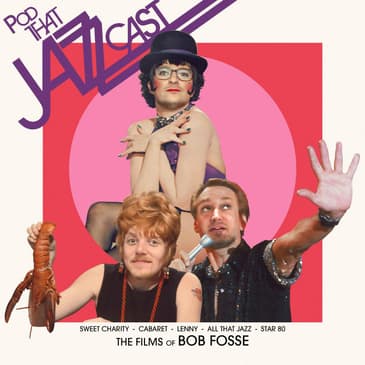
[00:03:11] This is a miniseries on the films of Bob Fosse. Mm-hmm. It is called Pod That Jazzcast. That's right. This is our final episode. Sadly. Career cut short. Started late making movies. Died young. Yeah. Ish. Youngish. Youngish. What was he? Let's find out. He was old for him.
[00:03:29] The fact that he got to that decade is kind of amazing. That's a good one. Yeah. I mean, he will, I'll give you the research, but he essentially expected to be dead after all that jazz. Right. And then he was like, I'm still alive.
[00:03:41] I made the movie where I'm dead. I don't know what to do now. Like, I figured this was it for me. All That Jazz has perhaps the greatest final film energy of all time. Right. But then he made another movie and then he died. The other thing is,
[00:03:54] I always thought because, I mean, this movie was so damaging to his career that I was like, he made this movie and everyone hated it. And then he died immediately. And it's like, no, he lived for like another five years. No, he was working on other stuff.
[00:04:04] Five, six years. He just never could get a movie made again. Yeah. He went back to the stage and it, this movie is a shame for reasons that we'll get into. But. So here's the thing. I love this movie. I think this is a great movie.
[00:04:16] But I think this movie is almost unbearable to watch. I think this movie is like staring into the sun. I think it's one of the darkest films ever made. It's very upsetting. It is like brutal and unpleasant. I do think it's incredible.
[00:04:29] I will admit watching it this time, I like couldn't even fully focus on it. You think this is. For the sake of my sanity. You really think this is a fabulous, incredible movie? I do. I do.
[00:04:41] But it's the kind of film that I don't ever feel like I can actually endorse or recommend to people. Recommend to people. Right. Why would you recommend this movie to someone who's apart from you? Not even because of what it says about me. But I'm just like,
[00:04:51] I mean this. I don't know what even to tell you. Like grueling, unpleasant. Yeah. Yes. Like the first time I saw this movie, it fucked me up for like a week. I really, like really haunted me and mind you in the wake of watching it.
[00:05:03] I went deep into like I read the fucking Bogdanovich book. I you know, and I watched galaxy and I was just like so sort of obsessed with the tragedy of the whole fucking thing. Red like killing of a playmate. Like all the stuff sort of surrounding it.
[00:05:14] But I spent a week where I was like really fucking haunted by it. And so even in preparation for this podcast, I was like, I'm gonna I'm gonna fucking half watch it because if I give it full attention, I won't be able to record tomorrow.
[00:05:25] If I like fully engaged with this thing, I will be too haunted by it to engage or at least haunted by the soundtrack. All of it. One of the worst soundtracks from the best filmmakers. And by the way,
[00:05:38] I do want to mention I really do appreciate you giving Bob Fosse the credit as the filmmaker he was and I do think he is as you know, highly regarded in the theater community. Obviously, no one could get enough of sucking a stick in that world.
[00:05:54] Yes, he I do think is incredibly underrated as a as a filmmaker. I agree. I think so too.
[00:06:01] And I think part of it is just that his legacy is so large in theater that people come to conclusions of what they think he must have been as a filmmaker, you know, yes, but that said my I have a lot of thoughts about this movie.
[00:06:15] One of his what a waste of such a of a guy with I mean talk about his filmmaking not even, you know, Pauline Kael would call them tricks. Sure. The the skill and the talent in his quiver using it towards such a nasty brutal.
[00:06:30] I don't want to say a trivial story. But when I think about what's a great movie, I think why was this made? What's the what's the point of this? What are we taking away as human beings?
[00:06:38] It's the fascinating thing of like along with just the horrible tragedy of Dorothy Stratton's death. Two huge directing careers are essentially immediately killed in the wake of this thing, right? Well, like Bogdanovich essentially put into a coma at least with Bogdanovich. Yeah. Yeah.
[00:06:56] And never like fully recovers. Cult of personality wise. He's been intact and you know, sure kind of recovered it. But but yes, certainly he never was a major. No don't make me. And he got to marry her sister. So is it really a sad story?
[00:07:09] And then and then the Fosse thing, like when you read interviews with Bogdanovich before he died about like when Stratton would always come up and they'd ask him about Star 80 and he'd be like, I was so fucking angry.
[00:07:20] He would do that. Yes. That he would do that to another filmmaker. But he framed it not that they were friends, but like this brotherhood of directors. Right. And he said and he got exactly what he deserved.
[00:07:31] Everyone hated the fucking movie and destroyed his career and he died. That reminds me of in Anatomy of Murder when they're prosecuting the like, let's think about ruining a man's life before we convict this person of rape and is like anyone want to talk about the woman?
[00:07:44] Absolutely. Absolutely. But it is to another filmmaker. It is fascinating that I do think a lot of the response to this movie was well, Bob Fosse brought this on himself. He cursed himself. Why would he do this?
[00:07:56] He has the written and directed by credit and it's his last movie and it is I mean, he really went into this, you know, guns blazing. I'm going to get the rights to this article. I don't care if I have to call her Dorothy's mother.
[00:08:08] I'm telling this story and I am not I'm disappointed that he I'm this movie breaks my heart. And he dies restaging Sweet Charity, which is essentially the thing he was trying to avoid doing as a film, but not as a show as they're two completely different entities.
[00:08:27] Absolutely. Yeah, absolutely. And yes, he dies at Gwen Verdon's arm. There's a certain poetry to the whole fucking thing, but I also think probably by his own admission at that point is correct. It's like the last thing I want to do is have to revisit my past works.
[00:08:39] We can get into it. There are many things he did on fault. Look our guest today from Double Threat. Hi, show difficult people. Julie Clowster is here. I'm delighted to be here. Thank you so much for having me. Hi, Julie. Second, we announced we were doing about Fosse.
[00:08:51] Everyone said Julie better be on one of these. It's better. Julie's doing so kind. I really do appreciate it. I'm 100% have to have you here for Star 80. Yeah, this movie bums me out. It's a hot take.
[00:09:04] Yeah, don't know my Eric Roberts question just to go back to this. Like I feel like in the 80s he was considered a major talent. Yeah, he was nominated for an Oscar for Runaway Train. Runaway Train happened before that. No after I'm saying like this is very,
[00:09:17] very early in his career. He took it to get an Oscar this. Oh, yeah, everyone making this movie thinks they're getting Oscar nominations. But like in the 80s, he is, you know, a talent.
[00:09:28] Yeah, he's seen as a talent. And then when is it that he then becomes seen as on set nightmare? You don't want Eric Roberts. It's like late 80s early 90s. It's a very similar arc to Mickey Rourke.
[00:09:42] Right? Because I want to deal with that guy. It's not like at some point. The guy has a mental break and then becomes too difficult relative to its talent. It's that there's like 10 years of everyone being like this guy's a fucking movie star.
[00:09:54] If only he could get his demons in check, right? And not only does he never get his demons in check, but he never becomes like a commercial star. Never. He's never worth it. But he never stopped to put up with his bullshit.
[00:10:06] He never stops working. No, and then he just becomes like the guy who makes like a million directed video movies a year. And it's like fun fact. He's, you know, related to Julia Roberts and then he'll pop. Okay, brother. And Emma Roberts father.
[00:10:22] Yes, he's Emma Roberts. Right? Like Julia Roberts was like his annoying kid sister who would be on set and people. Eric Roberts's sister is here. Like Eric Roberts has an Oscar nomination. Essentially like 10 years before Pretty Woman. Right? Well five runway trains. What is it?
[00:10:39] Runaway train is 1985. Okay. I mean, but there's even like you had like Christopher Nolan giving him a good little supporting part in Dark Knight and being like Eric Roberts reclamation project and then kind of right doesn't really go anywhere.
[00:10:54] Mickey Rourke when he was winning all his fucking wrestler awards kept on being like, do you remember this? All of his speeches? He was like one of the greatest undersung actors is Eric Roberts. You gave me another chance. You should give Eric Roberts another chance.
[00:11:05] And the main thing that translated into was he got Stallone to hire Eric Roberts in the Expendables. He is in the Expendables. He currently has like 40 movies, 50, 60 movies in production. Too many movies. Well, I just don't understand it.
[00:11:19] Anyway, I was just shocked that this was so early in his career that he was actually almost like an ingenue. So what does he do before this? Before this he's in King of the Gypsies.
[00:11:29] Okay. Which he gets a Golden Globe like new star nomination for and then something called Raggedy Man, which is with Sissy Spacek. Okay, where he's sort of the, you know, Raggedy Man. Coley and he's the Raggedy Man. It's the yeah, it was it's like Raggedy Ann.
[00:11:45] That's what it is. It's just no, it's a dark and gritty. I mean God, you know, Sissy Spacek. It's directed by Jack Fisk. Her husband. Okay. It sounds kind of divorced mother and telephone switchboard operator living with her two sons in a small town during World War II.
[00:11:59] Sounds it was her follow-up to coal miners. Okay. So it's like anyway, yeah and then star 80. That's his first three movies and then Pope of Greenwich Village Coca-Cola kid runaway train. He gets an Oscar nomination right and everything after that.
[00:12:12] I've never heard of yeah, like never heard of any of these movies the moment they go. Congratulations Eric. You've made it. He doesn't give another memorable performance until it's like until the villain in like the specialist or right right heavens prisoners.
[00:12:25] But even at that point, I think people are going like is this where this guy was supposed to end up right ask Sandy Dennis. Well, he was worth it. Yeah. I mean there are so many their parallels right stories.
[00:12:36] Yes, especially when you think about this movie being about people that hang out in LA for long enough to get cast unless they're horribly unpleasant in which case even LA is like you are not enough of a mention.
[00:12:49] You should hang out at the Playboy man, but you creep us out. Yeah, I'm now just I didn't realize Emma Roberts is with Garrett Headland. Yeah, they just had a married have a baby Rhodes. Yeah, Rhodes Headland roads are HODS.
[00:13:04] Correct. Yes, and apparently him and Julie Robert middle name scholar talk for a while. Yeah, they're being aspiration. Yeah, he four wives or no, no three.
[00:13:17] He didn't talk for like decades right and it was sort of when Emma was older that I think the plea was made for like for the sake of her. He made that teacher for the said a low Vera.
[00:13:29] I mean, he just seems like a huge bummer to me but every performance is certainly transfection. Yes. Yeah. Yeah. Yeah, that guy is worse. That guy's really bad Paul Snyder.
[00:13:42] I think one of the things that curses him with this performance, even though I'm realizing it is that his sort of most beloved performances were after this is this maybe reveal something inherent in him.
[00:13:56] You know, I'm not I'm not a no, I know what you mean, but I just play a role like this and people are just like now you're that guy to me and I can't there's something that feels very honest in this performance that does not feel like acting where there's an energy that he is revealing within himself.
[00:14:11] That is just you can't totally forget, you know, I it is just like this performance and this movie feel like staring into the sun for me.
[00:14:20] And I think it's that difference of like he and work were both trying to be these like troubled James Deaney leading men, but work never gave a performance that bummed you out this fucking much. There was always a sort of like sad poetry to work.
[00:14:35] And then Robert, you just have this back of your head. I mean like Ebert when this movie came out when a whole thing of like this is the best performance of the year. How is this being snubbed? Right?
[00:14:43] And he's just like he's just too much of a creep. People don't want to. Yeah, it's not. It's unwatchable. They don't want to give him any credit for doing something this unpleasant. Can I give you guys a little context on star 80?
[00:14:52] Please just just to help, especially a movie like this. Oh, David. David's rubbing his temples already trying to dig into this. Like I said, Bob Fosse made all that jazz. Now I'm imagining Julia. You enjoy the film all that jazz. Oh, it's it's the best ever.
[00:15:06] I call this movie. Oh, that in cell. Indeed, you're a really good piece for The New Yorker that everyone should look up about when the quad did a Fosse Film Festival. I saw all of them and I had never seen. Yeah. And I'd never seen star 80 before.
[00:15:26] And I was as turned off as you. But I did not walk away with a sense of this being a great. Sure. I can't imagine what it feels like to watch in a room with other people also. I mean, think about watching the news about a shooting or.
[00:15:42] Sure. Sure. Or Georgie Scott having to watch the video of his daughter and her. No, that was great. She was having a great time. Come on. She had her Bush and everything. That was that was terrific. Hardcore's camp. This was oh, this happens every day.
[00:15:58] And Fosse with all of his access to style and storytelling decided to make sure people knew that Dorothy Stratton was raped after she was murdered. It is bizarre how transfixed so many people were by this story. It is. I mean, yeah, it's well, we can talk about it.
[00:16:19] He makes all that jazz. There's no planned follow up. There's nothing else. His plan follow up is a great right. Exactly.
[00:16:26] According to Lynn Lovett, who is his script supervisor and one of his loyalists, she says, I think he was almost embarrassed to still be alive after all that jazz. So he eventually is like, all right, what am I going to do?
[00:16:37] He thinks about doing a ballet at the Joffrey. He thinks about doing a musical adaptation of Big Deal on Madonna Street called Big Deal. I think that does eventually become a project. Exactly.
[00:16:48] He thinks about Cy Coleman's musical Atlantic City, which he was sort of like my heart wasn't in it. I whatever you know, that doesn't come together. He's asked to do Chicago is a movie with Goldie Hawn and Liza Minnelli. I mean, which sounds fun.
[00:17:06] I mean, but he was kind of like, no, I don't fucking do that. Like, I don't do stage to movie like I do something else. Right? Like, that's not the Bob Fosse way. I can't get it up again for old material.
[00:17:16] It's like trying to go back to an old girlfriend. That's his quote. And his old it was his old girlfriend is Dream Project. Not his. Yeah. So Patty Shiafsky, his drinking buddy slash mentor slash Hollywood, whatever. First name that comes up after the credits. Thanks to Patty Chaius.
[00:17:32] Yes. Dedicated to really again, you know, this was about a woman. He slides across a human woman. The Pulitzer Prize winning death of a playmate article in the Village Voice and Fosse says. Unsurprisingly, maybe to Julie, maybe to all of us.
[00:17:49] I really identified with Paul Snyder when I read this because he was trying to get in. Not like I've been excluded that much, but there's just I think he was just like, I get the Hollywood insanity of this.
[00:18:03] And I think Paul Snyder is how he fears he is perceived. I think it's exactly who he fears. He is a schmucky guy. I believe that his quote, which is gross in its own right, was he is who I would be if I were not successful. Yes.
[00:18:20] Right. Exactly. Which is grounds for prison. There's the go to actual prison. There's the moment he cross cuts between and I imagine saying if I didn't have a podcast, I'd be Kyle Rittenhouse. You know what I mean? Don't say that out loud.
[00:18:37] I am the defender of this movie and it's the moment in it that I think is probably grossest. And it's this thesis. There's the moment he's cross cutting between the sexual assault of her dead body, of her corpse.
[00:18:48] And then Hefner looking over the contact sheet and the Roger Rees, not Peter Bogdanovich character in the editing room. And they're both very serene and at peace.
[00:19:00] And it does feel like that's the exact point Fosse is making is thank God I had talent and I found a thing I did well. Like it's upsetting. But also these poor guys haven't learned yet and they're not going to be okay.
[00:19:13] Right. This is going to destroy them. Yeah, there is right. There's doom surrounding everything. Her mother was not in that montage. Her cute little sister, future Mrs. Bogdanovich was not. Their pain is irrelevant. Yes. Well, her sister was like a child. But she would learn about it.
[00:19:30] No, no, no, no. 100%. And would soon be a bride, which is really the happy ending, as I mentioned. But yes, Fosse's take is basically like, look, if they had accepted him into Hollywood, this probably wouldn't have happened. This fascinates him for whatever reason.
[00:19:44] He writes, he gets the rights to the article. It's almost a Hitler painting thing for him. Or Charles Manson succeeding in the recording. Yeah, Charles Manson dropping an album. But the answer is always like, A, the person wasn't good at the thing.
[00:19:57] And B, and with Paul Snyder, it was even more nebulous. What is the thing? Using him. Right. But it was like you just want to be successful. You want to make money off of other people. You want to be respected.
[00:20:08] Which is a time-honored tradition in Hollywood, being a barnacle. There wasn't even a failed art that he was trying to do that he could put his finger on. There was not a creative pursuit.
[00:20:19] And then the additional thing is, like, when people say, like, man, if Hitler just fucking got into art school, all that would have been avoided. It's like you're making it sound like it was just some judgmental person behind a desk who didn't like their fucking package.
[00:20:32] A gatekeeping girl boss. Versus that, like, perhaps these people emanated energy that turned off everyone around them their entire lives. And it wasn't that they were turned evil Joker style. But anti-social. Yeah, anti-social. Hosted to a vat of rejection. Abuser, violent abuser sociopath.
[00:20:48] That's the thing that I do think Roberts gets too well. Is this guy immediately makes you want to peel your skin off. Right, so why am I hanging out with him for an hour and 45 minutes?
[00:20:59] Well, that's what audiences are certainly asking as they're filing out of the theater. Or not filing out of the theater, filing out of the theater into a different movie 30 seconds in. And expecting my sympathy towards him because he really does get the Roy Scheider treatment in this.
[00:21:14] I don't know if I feel any sympathy for him. I'm saying Fosse does. And that is so gross to me. I think Fosse, I think, look, I really think this movie is just like a total poison pill movie from Fosse. It's just like this industry is sick.
[00:21:29] It's disgusting. Right, you know, like, that's more what. But he was like that in Vancouver. What was his excuse? Vancouver. Well, no, I mean, Fosse certainly is a complicated human being. There's no question. But like, I don't, I don't, I don't see a lot of sympathy.
[00:21:44] But no, I know what you're saying, Julie. It's like it is fascinating, but very dark that he is interested in this man. Portrait of an incel as a who cares? Right. He goes deep into this research process, right? He gets all the police reports.
[00:21:59] He gets taped interviews and like transcripts. Access to the house where she was murdered and raped. Well, he breaks into that house. Yes, which we'll get to, which is intense. Does Killing of a Unicorn, is that published after the movie comes out?
[00:22:12] Yeah, because that movie is partly Bogdanovich being like, I'm going to set the record straight, which also nobody needed. No, quiet. No, you be quiet as well. Agree. No. And have you read that, Julie? I've read the Village Voice article that the film was based on.
[00:22:25] The Bogdanovich book is perhaps the most upsetting piece of art I've ever come across. What about the film that he made that was shelved and bought back in Vancouver? They All Laughed, is that what it's called? Have you seen that? I have seen that.
[00:22:40] And I've seen Galaxina, which is the sci-fi movie they don't really cover in this. I haven't seen the horror movie. Yeah, I haven't seen the Fantasy Island, she guessed right. You know what I mean? No, there are two significant film roles before the Bogdanovich movie.
[00:22:53] They All Laughed, I know a lot of people defend. That's what it's called, yes. That's like a scene as a sort of like, right, a cult classic. It's been reclaimed. I feel just watching it, it's not even like I'm making an intellectual judgment.
[00:23:05] Emotionally, I just, the thing feels so haunted to me. Right. That I cannot enjoy it. Especially that he tried to like, recreate it and bring it out and retitle it or whatever. Do the thing where he kept reviving it.
[00:23:18] He bought the film back from the studio because they didn't want to release it because she had been murdered. And he bankrupted himself trying to self-release it. I find that too haunting. The Bogdanovich book is an even more extreme version of what you're talking about.
[00:23:33] It's like, do you not understand that I'm the real victim of this? I understood her better than anyone else. Absolutely. The Bogdanovich, I mean, that guy is a nightmare. And the other thing about it that's just horrifying is he, the way he keeps on speaking about her.
[00:23:47] When it was like they were together for 10 weeks or something, it was like he was the only person who truly understood her. We saved her. Right. He saved her. Unsuccessfully saved her. Right. This whole thing where it's like you, you, right.
[00:24:02] But he has this complex that he saved her even though, you know, directly leads to her death. And then the other thing is he speaks about her like she's his daughter and he is proud of how smart she was.
[00:24:10] When he would introduce her to friends and he would make her read books and he'd be like, see, she got it. All these relationships of his are so creepy. Creepy. And I don't want to judge him for marrying her sister. That's absolutely his business.
[00:24:25] I just don't like that we're focused on the men around her. Absolutely. Yes. Absolutely. Yes. This is the syndrome of these beautiful women and they become these icons where we don't know anything about them.
[00:24:38] They die, you know, and they just, they turn into these angels with halos around them where we just see pictures of them. You're like, oh, and then you get weird legends around them. All that shit. That's clearly what's going on here.
[00:24:49] Bob Fosse writes a script, passes it to Paddy Chayefsky being like, can you punch this up? Paddy Chayefsky says, it's fine. You don't, it's perfect. No, no. Don't touch it. And then he puts on gloves and goes into a fucking chemical bath.
[00:25:04] Paddy Chayefsky had just worked on Altered States, which is his last movie, which he hates the director so much. He hates how it ends up that he takes his name off the movie and then he died in 1991 of cancer. So like that cast this weird Paul over things.
[00:25:19] I feel like he's gone now. A weirder Paul than Paul Snyder. Maybe. Maybe a weirder Paul than Paul Snyder.
[00:25:27] At Paddy Chayefsky's funeral, Fosse famously dances, said he had promised him if that he died, if Paddy died first, he would do his last public appearance as a dancer at his funeral. Apparently he danced for 30 seconds about it. 30 seconds. There was nothing funny about it.
[00:25:44] Bob made it totally appropriate. That's E.L. Doctorow. Well said that. It's like for my money, the most touching moment in the Fosse-Verdon series, which you were in. Yes. Yes. As as one of the the less women assaulted him sexually when he was a young man. Yeah.
[00:26:02] Was that fun to me? Yes. I was very honored to be involved with it. Did that come about from your love of Fosse? Yes.
[00:26:11] And Thomas, Tommy Kail and Lynn were very kind and welcoming me to the set, not just for my role, but when they filmed the all that jazz moment. And Fosse's daughter was in the audience and Lynn and Lynn got to do the run.
[00:26:27] And then Sam Rockwell got to do the run. And then Tommy Kail got to do the run in the audience. And I was very honored to be a part of that. That's with Nicole there. Yeah, it was very cool. Yeah. This movie is not commercially appealing.
[00:26:42] Obviously, this is not an interesting project. But Alan Ladd Jr. Crazy old Alan Ladd Jr. over at the Ladd Company, which is this point at Warner Brothers. Gives him an $11 million budget, gives him a $1 million salary to direct Fosse's highest ever and gives him final cut. Yeah.
[00:27:00] It's just these days where Alan Ladd was just sort of like, well, you're an artist. And Ladd had also just saved all that jazz and that fucking paid off beautifully for him. So you do understand him being like, the fucking blank checks says whatever.
[00:27:13] If he wants to do it, he'll fucking make it work. Which all those guys always cite Alan Ladd as like the last of a breed who would just believe in a filmmaker that much. The end of the 70s.
[00:27:24] Yeah, he was the last guy standing from that whole era. You have to agree to not use Peter Bregdanovich's name, not to use Dorothy's mother's name. Right. Credit as Dorothy's mother, they never say her name. Correct. And then they start shooting. They change the siblings' names too. Sure.
[00:27:42] Then they start shooting the movie and guess what? Bob Fosse was really annoying the whole time. It's like the research every single time. And he was this kind of crazy tyrant who was very difficult to work with.
[00:27:52] And yes, he made the location scout break into the murder home without a permit and take pictures and make sure that they have the carpet exactly the same and everything. This detailed recreation of the crime scenes. Very, very creepy.
[00:28:08] To be fair, the Village Voice article, which I think is a very well-written article, described their body. I think at one point she mentions that her body was uncharacteristically in rigor mortis instead of, you know, just kind of like translucent and reclining.
[00:28:28] So I don't completely blame him for being interested in that detail of an article written by a woman. But his attention to the detail of it and the sexual violence of it and combining the two in a, you know, lavish, revolting way is, I think, unforgivable.
[00:28:46] Well, it's the whole thing. The Fosse thing he loves in all of the movies other than Sweet Charity where it's like, I'm dealing with different temporalities. I'm dealing with different states of reality. Right? You're sort of doing this like parallel editing between these different threads.
[00:29:01] This movie, you have the interview, this sort of superstructure that he loves so much where I believe once again he is the pioneer of.
[00:29:08] When you see Lenny, you remember the first time I ever saw Chevy Chase being a young man thinking, oh, this is where this comes from. Right. Right. You like Lenny? How do you feel about Lenny?
[00:29:20] I think it's a masterpiece. I think it could, I think it could lose 45 minutes. I agree with that. I agree. I love Lenny. We were, David and Colin Quinn, our guests were a little softer on Lenny.
[00:29:30] But I think Lenny is pretty unimpeachable as a piece of filmmaking, even if it is 45 minutes long. The fact that the superstructure he decides to do is, you know, running the story in chronological order. Except for the flash forward at the beginning to the murder.
[00:29:47] This is the thing. So it's like you have her interviews with the press, you have her story running in real time, but you pretty much fucking open the movie on the worst of it.
[00:29:57] Right. And so it's just looming over fucking everything. It's not even like you know what you're buying a ticket to.
[00:30:03] This is the inevitability of the sad place this movie ends. But you're like starting off with like, I'm watching the guy fucking like talking to himself, pacing back and forth after he's done it.
[00:30:13] Shot pornographically, in my opinion. I think, you know, Pauline Kael said about A Clockwork Orange, she called it prurient. She said it was pornography because it was trying to elicit something very specific out of a viewer.
[00:30:27] And she also said that the only pain the viewer ever sees is Alex's in A Clockwork Orange. And I think that that's similar with this movie is I think the only sympathy that you see from the filmmaker is with Paul Snyder.
[00:30:39] And I think that those opening scenes, like why did he have to cut his push ups and sit ups on the beat like he was dancing? Right. It's the Fosse thing. Yeah. But it's not Paul Snyder doing his thing with on Broadway playing is it?
[00:30:55] No, no, no. There's even the I mean, the whole Fosse isolation of the body parts thing, right? And his choreography. Whose body parts are they?
[00:31:03] Well, I mean, this is the thing. Right. But like his that whole technique of his, she then translates the film with the insert shots and the editing onto the specific parts and whatever.
[00:31:13] He's like reapplying it in this where like the scene where they go to the Playboy mansion and he does it every time a guy runs his hand up a woman's back. And it's the same kind of thing of what you're talking about.
[00:31:25] Imagine that like, you know, Dylan Klebold and Eric, what's his name from Columbine? You know, cocking their guns in rhythm to, you know, a jazzy number and showing it in close up. How dare you? How dare you artify this as though it is art?
[00:31:42] This is the question about any of these movies, right? Like even about a movie like Schindler's List or whatever. It's like, can we point a camera at this? Like, can you make this something that's also entertaining?
[00:31:50] You can certainly point a camera at it, but giving it a music video feel. Sure. That's what you're talking about. Cale calls his bag of tricks, right? Like him resorting to his. Right. That he's making it all jazzy.
[00:32:03] But you wouldn't call it that if he were making Cabaret or even, you know, he had turned his attention to great artists. Yes. You know, he had sort of canonized Lenny Bruce and himself, which obviously is what it is.
[00:32:17] And, you know, Liza Minnelli. And now he is, you know, really interested in this like disgusting low IQ murderer. Yeah. Yeah. Well, I mean, this is my problem with the movie is like I don't like Paul Snyder to me just seems like a problem.
[00:32:35] Like I can't get into his headspace at all because there's no beginning with him. Like from the moment you went, he enters. You're just like, well, this is she should get as far away. And everyone immediately clocks it. Right. Everyone says they meet him other than her.
[00:32:51] And even if the movie is an opening with her murder and isn't about the, you know, you're just sort of like, well, I mean, it's get out. It doesn't even have the unpredictability of a, you know, of a driller killer or a joker where you're like, right.
[00:33:07] It does feel like an exploitation movie. It is. You know, like, and so that's how you then have to start engaging with it. But then when did she die in 1980? Stratton. Yeah. Yeah. And like this happened. The movie is very 1980. This movie is only three years later.
[00:33:21] I can only imagine how unsettling that must have felt in 1983. Just to me, this is, you know, a story like I don't I was not alive when this happened. There was a Jamie Lee Curtis TV. There is.
[00:33:32] There had already been a TV movie, which I imagine is less, you know, garish simply because it was a television movie. You can't see your tits. It's and it's probably just a lot.
[00:33:43] Yes. And I think it's a little bit more of sort of just like the Dorothy Stratton life story. Right. Whereas and the killing of a playmate is sort of death. Peter. It's definitely a killing of a unicorn. Right.
[00:33:57] I keep on getting the two tiles. Yes. The the original article is so much about like the the differing viewpoints of the thing. Right. I think it is an investigation into this. I don't even want to like to say the word toxic.
[00:34:13] That sounds so trendy, but no violent relationship. Yes. Yes. But also and also just the weird culture of Playboy and the mansion and all that. There were these three different unhealthy relationships in her life that took different forms.
[00:34:27] And let's add Fosse as the fourth. Well, Fosse then right when he acquires the article becomes the fourth. Absolutely. That even in her death, there was this weird obsession thing with her fucking tits, which I saw more in this movie than anything in her head.
[00:34:43] There's also well, yes, there's also the thing of just like all these people go like you don't understand. She had this she was going to be Judy Holliday. She was going to be Cheryl Lombard. Right.
[00:34:55] OK. And it is this thing where I'm just like, well, first off, look, we never got a chance to find out. Right. She was someone with no acting background who got put in three movies and then was murdered senselessly.
[00:35:05] So like there's there's not really. And she seemed like she was a kind person. She seemed like she was a kind person. But whenever anyone talked about her, it just felt like, God, you were projecting so much onto a child.
[00:35:17] You know, it's the thing I find so sort of upsetting about this entire story is that she was just this figure that everyone looked at and they were just like, have you seen anything like this before?
[00:35:29] And part of it even I think what this movie does get at well is that so much of what people are reacting to and going like, holy shit, this girl's a star.
[00:35:37] Is her like naivete, her like sort of like, oh, geez, sorry. Like the thing she doesn't know. She's a child of a child in the body of a beautiful young woman. Right. Right. And people are like, this is unbelievable. How will never reconcile these two realities?
[00:35:52] I tell your mind's going to explode. You won't believe this fucking person. Yeah, it's called a 19 year old. And that's that's the thing.
[00:35:59] When I like watch real interviews with her or watching these movies, I'm like, that's a 19 year old who maybe would have gone on to become an interesting performer.
[00:36:06] Sure. It's like Sharon Tate as well. I mean, Sharon Tate hadn't been in more movies, but there's also people get obsessed with the sort of like, oh, but what if like, oh, it was just beginning for her and there's a whole career that didn't happen.
[00:36:16] Those guys weren't saying what if they were like it was there. Sure. Yeah. I mean, yeah. The thing was there. Beauty is very beguiling. And beauty and dying in insane circumstances.
[00:36:27] Yeah. Like, you know, like it'll it'll you just like, well, no, I keep going back to these are not insane circumstances happen to women every day. They're murdered. They're murdered by men who feel rejected and cannot handle that.
[00:36:38] The circumstances are not insane. Her like the murderers were kind of insane.
[00:36:42] The circumstances are definitely insane, but the media circus around it is although, you know, you can talk about, you know, white women syndrome, you know, like white victim, you know, like the thing that obviously the media loves to glom onto that kind of a story.
[00:36:58] Dead blondes. And like, I remember when I worked at People magazine a zillion years ago when I was a baby and I would like comb through European news looking for stories to suggest to people.
[00:37:09] Like you could just tell them salivating whenever it was some kind of like young woman murdered, like in weird circumstances. And, you know, people would just immediately just be like, oh, well, we know what that is.
[00:37:22] We're at like once again culturally at an all time high of being obsessed with these stories and endlessly adapting these stories.
[00:37:31] Like all these stories are not only being adapted again, but they're being adapted as like fucking 10 hour podcasts and TV shows are like drawn out, stretched out with what I think often feels like a very performative empathy.
[00:37:45] Yeah, I don't listen to those things, but I know they're right. They're all out there. Right. But it's a it's a conversation I feel like we keep on having of sort of just like, is this whole thing fucked up?
[00:37:55] Do we keep on turning this into entertainment to tell ourselves, God, I'm so invested in the tragedy of this person, these people.
[00:38:02] I think about the people who actually had to live through this continue to live through this, the way that the narrative is being rewritten by people with other interests. You know, it's it's a it's a it's a complicated, complicated fucking thing.
[00:38:17] I think the reason I find this film powerful and I'm choosing that word specifically because it's like the movie undeniably has this power to it, whether it's a really ugly, harmful, evil power or not is, you know, a debate.
[00:38:33] But like, I feel like this is one of the only sort of true crime movies, if I can call it that, that feels somewhat cognizant of how ugly and fucked up the entire cycle of the thing is.
[00:38:49] Now, it's it's the Fosse thing where it's like this guy fucking hates himself. He knows he's a piece of shit. Right. All these movies are about how he feels unlovable. It's about him. Disgusting. It's about him. He's pouring at least some part of himself into these stories. Yes.
[00:39:03] And I think the thing that always has made Fosse interesting to me as a filmmaker is unlike a lot of other people who do this, where at the end they want you to find them a little bit cute or forgive them or let themselves off the hook.
[00:39:13] Fosse wants to kill himself by the end of the movie. Like he really is just like and now I've explained all my sins to you. Please let me die. Please, please let me die. I want no forgiveness. Right.
[00:39:23] I think this is a movie that is somewhat, even if not consciously.
[00:39:28] And I agree with everything you're saying of what is deeply fucked up about the existence of this movie, but the way he chooses to pick the story, you know, the methods through which he went to adapting this story, all of that.
[00:39:40] I think this movie is somewhat, even unconsciously in conversation with the fact that the very act of trying to do this is fucked up and everything surrounding this entire thing. Yeah. Like the whole thing is evil from the get go.
[00:39:56] Every person's reaction to this girl is evil, you know, that everything is wrong. And as she rises in Hollywood, there's no escape from evil. It's just new layers of whatever. Like the industry is going to crush her or manipulate her, destroy her in some way or another way.
[00:40:13] And you have this final line in the interview where it's like, what's it like? She's like, you go to the airport and people come up to you and it's like sweet. But it's so depressing because you're like, she didn't really ever care about any of this.
[00:40:25] At the end of the day, it was his pursuit of don't you understand? Fame is important. Money is important. All this worship. Right. The final scene where she tries to like end the marriage, he's like, I'll give you $7000, half of what I have.
[00:40:37] And you're like, she has $14000 for how much they've been putting her through the fucking ringer. Right. And it may or may not be historically accurate, but in the story, yes. Right. There's a sort of let's go back home. Yeah.
[00:40:50] But we all know people like this where it's like you're in showbiz, you're working constantly and you're like they actually have gotten paid.
[00:40:56] They're just being put on the fucking factory line for five years and they're living out of a suitcase and push from one thing to the other. Like the Backstreet Boys getting $10 a day for their lunches or whatever. Right.
[00:41:06] Like playing to me. She was living with Bogdanovich at the time. Yeah. By the end of her life. Yes. Her short life. Bob Fosse wants Melanie Griffith. That's his first choice. OK. He saw Body Double. He was jealous as hell. I bet.
[00:41:19] I mean, Body Double is right around. I'm trying to think nobody knows the year later. So what is Melanie Griffith hopping for him? Night moves. She is she is in night moves and that's like the mid 70s. Obviously. Roar.
[00:41:33] Yeah. I don't know. Body Double was after, huh? Yeah. Body Double is right after and that of course is her kind of comeback. God, he must have been so jealous of that. Yeah. Yeah. Because that's right. That's the sort of like Hollywood purian.
[00:41:44] This is a horrible place, but it's also like a fun watchable movie with a point of view. Sure. Yes. OK. But like I mean Fosse for better or worse, I don't think could view things as pulp.
[00:41:57] He was just like this is miserable. We have to sit in this misery. Miley Griffith, not to just invoke more darkness, but also like when Miley Griffith is 16 years old. She's married to Don Johnson. He does a Playboy shoot of her as like a teenage girl.
[00:42:12] Yeah, she's some she's a teenager. The parallels there are a little bit uncomfortable. Obviously, Don John is not Don John Don Johnston. Johnson. Oh my God is not Paul Snyder, but there are weird parallel.
[00:42:25] Mayor Don John is also not Paul Snyder for the record. Don John just likes his body. Right. Don John, he likes his want to see like his girls, his gym, his whatever.
[00:42:36] Meryl Hemingway, as everyone knows, like I feel like that's the most famous thing about this movie, right? She like campaigned for the role. She was like, I'd say, you know, it's got to be me.
[00:42:45] She eventually gets herself in front of Fosse. Fosse is like you're not a voluptuous person. She famously got a boob job. Yeah, she's always said that. Like, oh, it wasn't for the movie or anything like that. You know, whatever. Do with that what you will.
[00:42:57] That's their on her bare breasts are on screen more than her point of view. She is nude in the film quite often. Bob Fosse tries to sleep with her the entire time he's making the movie, which seems to be the Bob Fosse experience basically.
[00:43:12] Although they did not get together at all. She rebuffed him. But she says that he was essentially constantly asking her to do it. But she says that he was essentially constantly an emotional pest. Yes, Ben's like, why are we doing collapsing here?
[00:43:26] He's directing her in a scene where a director is manipulating her into having sex. And did you have to rape her in the jacuzzi is a question. Yeah, right. That's part of it. Right. Which they don't get to in this way because they're afraid of Hefner.
[00:43:42] Like, right. You know, suing them as well. I think Hefner is really minimized in this story. I think we're dead. He's deified. Yes. Yeah, it's true. He is basically just like a talking head. God man who comes in. Yeah.
[00:43:55] It's weird to see him not shriveled up. That's how I've always known. It's like a little old raisin. Yeah. Yeah. Yeah. Just desiccated by the time I was a kid. Oh yeah. And you were just like, oh, it's just like some weird creepy old right.
[00:44:08] Even on Playboy after dark. He was a troll. The studio wants Richard Gere. And this is after American Gigolo, I think. Right. You know, Richard Gere is like a major heartthrob at this point. Yeah. Fosse wants Robert De Niro. You mentioned Pupkin.
[00:44:24] He would have been better. Probably understands like this guy can do, can go places right. You know, King of Comedy has happened at this point. Because King of Comedy is 80 right? 81? 82. 82. Okay. So not yet. No, it has happened because it's been a while.
[00:44:38] But maybe not. Maybe it hasn't come out yet. This is all very close. Yeah. This movie comes out in 83. Pumpkin, the better choice for him if you're going to do one of these lonely mustachioed. But it's compensating for the lack of the writing.
[00:44:51] Ultimately, you're asking an actor to do a job you didn't on the page. I think. Yeah. He asks Hemingway to try and like seduce Robert De Niro to like convince him of the role. Hemingway's like, no thank you.
[00:45:01] And Hemingway beyond that says just like she perceived that like De Niro rebuffing Fosse. And he's like, no, I'm not going to do that. I'm not going to do that. Fosse just took so hard. Like this guy, you know, this great actor doesn't think I'm anybody.
[00:45:14] Another blow for men in the Dorothy Stratton story. Yes. When will they ever get a break? Maybe they will recover one day. And then they get Roberts into whatever. He convinces Eric Roberts to do it. But like you said, Julie, like he has to convince him.
[00:45:27] I mean, like, you know, I don't. Eric Roberts wasn't that stupid. He knew that taking this role was a bad idea. He certainly he was resistant and suspicious. I mean, obviously it is a meaty role, but like I certainly would be like,
[00:45:41] no, there's no way anyone will be able to look at me after I do a movie like this. Do a pass on the script, man. Don't like don't Dirk diglify me unless there's anything likable about me. It's Bob Fosse. He's made four movies.
[00:45:54] Three of them have been nominated for Best Picture. Like, you know, it is. The script needs work. Patty was wrong. There are notes. Well, Patty, you know, Patty said no notes. If you've seen the hospital, Patty was also probably saying, let me die. Yeah.
[00:46:07] Get on my phone. Be Sam. Yeah. Fosse's like, start talking like him. Start dressing like him. You know, get into this guy's head. And I don't know. It seems creepy. Sam Shepard was the first choice for to play Hugh Hefner, which would be great.
[00:46:23] He makes a lot of sense, like as a Hefner. Yeah. And that doesn't happen. Fosse wants Harry Dean Stanton. Hugh Hefner was like, if you cast Harry Dean Stanton as me, I will not let you like use the Playboy like archives or the mansions or
[00:46:37] anything like that. So Cliff Robertson is the compromise. I mean, the problem in Stanton too weird looking is my assumption. But if you have his eyes, the problem is that in terms of screen energy, there's just something too fucking grandfatherly about Cliff Robertson.
[00:46:54] Well, yeah, that's the notion is that he was the patron saint of the patriarch. It was the kind of Lord Michaels. Right. Right. Yes. And they, they, they shoot in Vancouver and Los Angeles. It's a horrible shoot. No one has a good time.
[00:47:11] Don't have a good time making this movie. No, it's a huge bummer. It would be bad if they did. That's true. You know what? At least they sell. Right. Oh yeah. It was pleasant time. We were all eating croissants all day. No. In the middle of the shoot,
[00:47:23] Fosse calls and ranking and says, I'm living in a world where no one wants to live. I'm living in a world. Now we got to get to this spot. We got to get to the murder and I really don't want these people.
[00:47:33] I really like these people. I don't want to see them die. Sounds like Bob Fosse was kind of going insane making this movie. Yeah. And at one point Cliff Robertson says he turned to Cliff Robertson.
[00:47:42] He said, he's going to kill her and I don't know how to stop him. We have to do something. So that's the vibes. It's really, really nasty. And it's confounding that he then chose to, I don't know what the fucking shooting order was. Right.
[00:47:58] It was a sequence basically. But would they have shot the murder stuff? Since that's wraparound. I believe they shot. I think they shot that last. I think they were able to get out of that house. Well, yes. But hearing that I'm like,
[00:48:12] I'm surprised he didn't change his plans ago. You know what? Maybe we don't want to show this on screen in any way, even sort of fractured. Yeah. You didn't want to show the like BDSM bench he made to rape her anally after he'd already murdered her.
[00:48:26] You don't want to show that right before the credits come up and dedicate it to Patty Chayefsky. Right. Why would party goers laugh at something like that? That doesn't seem like a chill or fun. Like I would be concerned. I would be worried. Yeah. This is, it's,
[00:48:40] I suppose it's sort of the nervous, like, Oh, laughter. Right. I also think this is a, the whole world is bad movie. Everyone's evil world. Okay. No one liked Derek Robertson's vibes on the set. Oh, wow. People complained about him constantly.
[00:48:53] And it's one of those things where it's like, Oh, is he too in the character or is he just Eric Robertson? He's a pain in the ass. Meryl Hemingway said like he was a totally nice guy until they started shooting and then he was like, like bad vibes.
[00:49:05] Everything about this as, as our researcher said, worst vibes on like research ever. Everything is bad. Robert says the whole thing made me sad. I was pathetically unhappy the entire time and Sven Nyquist is shoots it like, so it's a Fosse working with a great cinematographer,
[00:49:19] but not someone he knows, not his usual guy. Sure. Sure. So he's bringing in this kind of European master. Right. And as Julie pointed out, like they have this whole idea of like this sort of like rhythmic staccato musical, like sort of presentation of things. Worst soundtrack ever.
[00:49:38] Yes. This is Burns who... Big Shot, two Billy Joel song, one which is a cover from like a prom singer, I believe. Right. The other is Big Shot. Right. Right. They do, don't go changing the track, please. What's it? Just the way you are. They're dancing to prom.
[00:49:55] Right. They do that at the prom and then they, yeah. And then there's the, what is that one? Is it Sing, Sing, Sing? When he's like, da, da, da, da, da, da, da, da, da, da, da, da, da, da, da, da, which is roller skating.
[00:50:06] That song, whatever that song is. We all know that music. But the list is insane. And then what's his name? Ralph Burns? Who did the score for this and had won the Oscar for the last two Fosse movies. Right. And essentially creates like two stings. There's that.
[00:50:22] Well, then there's a creeping like dread, you know, score. Whenever that truly makes my skin crawl, whenever that plays. Well, you know what it's leading to. You saw it before the credits. Yeah. Well, yes. But also I do think musically it is upsetting.
[00:50:34] Even if you isolate that. If you played this in this room right now, I'd start like scratching myself, I think. This story doesn't deserve this bag of tricks. Up on Cripple Creek. I'm just looking at the other weird things. Sookie Sookie by Steppenwolf. Let the good times roll.
[00:50:47] Do you think I'm sexy? By Rod Stewart. YMCA. The worst. Just the way you are. Yeah. Flush it down the toilet. Yeah. I almost jock jams adjacent. Yeah. They start screening this movie and the test screenings go very poorly. Really? People walk out.
[00:51:05] Bob Fosse refuses to make any changes thinking he has made his best film. Alan Ladd sees the film and is like, this one's not going to be a hit. And it comes out, it's positioned for awards, right?
[00:51:17] It comes out in limited release in November and it gets mixed to bad reviews. Although there are some like Roger Ebert who liked it. Like, you know, there were some people who connected with it. Hugh Hefner thought it was disgusting the way it linked sex to violence.
[00:51:32] He didn't like the intercutting of the photo sessions with the murder scene, things like that. Peter Bragdanovich obviously just like writes a whole poison pill book about how much he hated it. And the movie comes out and it is a huge flop and is despised.
[00:51:45] And Bobby Fosse doesn't make another movie and then he dies. And it feels like this thing of like, like Lynn was on our all that jazz episode and he was so excited and he was like, God, you know, God bless you on star.
[00:51:58] I don't know how that's going to go. Like it's such a bum note to end. He's never seen it. It is fascinating to me that, you're talking about Bob Fosse being undersung as a director, right?
[00:52:09] And we announced that we were doing this mini series and I saw a lot of our fans and a lot of let's say the more sometimes the fans of ours who run more snobbish or film snobbish, right? Or film bros. Sure.
[00:52:24] Who think of him as, well, no, this is what was interesting. A lot of them were saying, this is so exciting. What a cool pic. Finally, cool of them to pick someone off the beaten path.
[00:52:33] I've never seen any of these movies. What a good excuse to finally see them. Right. And that's what I was sort of surprised by was how many of these people were sort of saying like, I know that's a blind spot. I appreciate that.
[00:52:41] I'm now going to have an impetus to watch all these movies. Right. But the people who had seen Fosse movies, even most of them were like, obviously the one I haven't seen in star 80 because I can't put myself through that.
[00:52:52] And then the smaller section of people who were Fosse fans had seen star 80 were like, good luck. No idea how you fucking do an episode. It does just feel like a movie that is still radioactive, radioactive, haunted. Yeah. I don't know.
[00:53:03] I mean, there's the whole obviously like there's I don't even know how to touch this, but the, the Merrill Hemingway element of it as well. When you have like this and Manhattan on opposite sides of each other.
[00:53:15] Right. And they're two movies that are essentially about the same big story. And they're both about the same thing. And so I think that's what I was surprised by. And I think that's what I was surprised by. Right. And they're both about the same thing.
[00:53:25] And so I think that's what I was surprised by. And I think that's what I was surprised by. But in very, very different ways, one that is very much romanticized and fictionalized and, you know, is still kind of like is using the tricks of filmmaking to make people
[00:53:38] buy into something. Yeah. Manhattan he is like selling you on like, no, this is what I should be doing. Right. I'm giving fucking Gershwin. And I'm giving you a beautiful. You're supposed to be swooning at the end of this.
[00:53:50] She actually decided at one point to go somewhere and do something. And that movie. Right. And then the end of the movie is like, thank God she's not going to do that. She's going to hang out with Woody Allen. Like, it's great.
[00:53:59] But but it is fascinating to me that like that movie's existence is sort of about the same thing this movie is about. Thankfully, minus the murder, you know, guys being disgusting towards young, beautiful women. Right. Just seeing a child and going like, I,
[00:54:14] I need to explain to everyone why you're the most important thing in the world. And I feel like after this movie, her career just kind of goes nowhere. She doesn't make a movie for another couple of years. And the movie she does make is called Creator.
[00:54:25] Right. You know, then the mean season. Is that the, is that the Peter O'Toole movie? Creator is the Peter O'Toole movie. Yeah. Does she do a run on Ellen? Doesn't she do like a 90s sitcom run? Roseanne? Oh, yes.
[00:54:38] Yes. I mean, it's not like she disappeared from anything. I from like, but and she was in that, that TV show Civil Wars that was kind of a hit. Like I think she got maybe like a Golden Globe nomination for it or something,
[00:54:52] you know, like in the early nineties. She is. But that's back when if you're a movie, movie actor going to TV, it's sort of like, Oh, it's a step down. It's a concession. Right. She's made a couple documentaries now. Right.
[00:55:04] I know she did a documentary about sort of the history of depression in her family and try sort of trying to fight against it. And which I heard is very good. It's called my suicide. I mean, I'm not sure.
[00:55:16] But she's also done movies about yoga and stuff. Right. She's like very into all that world. So that's what she's a survivor running from crazy. That's the documentary about her. She is. She is. And by the way, when she does interviews today,
[00:55:31] she speaks about all of this work and this period of her life with a thankfully, you know, like thank God, a really kind of sound perspective feels like she is a really process a lot of it in the healthiest way possible.
[00:55:47] But it is one of those things to just be like Jesus fucking Christ for like six years, all this shit was thrown on me. It was all okay. Yeah. And she's in that movie personal best in between Manhattan and started. There is sort of like a landmark movie.
[00:56:01] Like that's kind of the one time she got to make like a real Mariel Hemingway movie. Yeah. She is the protagonist. It's not a perfect movie, but it's like one of the first Hollywood movies to have a lesbian relationship in it. And it is that Robert town.
[00:56:12] Yeah. Yeah. And it made her like a sort of LGBT icon. Yes. And she played like gay characters in various things on Roseanne, I think is that the thing that her character was like kind of the first major recurring lesbian character on on prime type television.
[00:56:28] I think on Roseanne, maybe my staff said like, I'm not gay, but I liked that. I came this kind of like figure of, you know, whatever. But look, also, I mean, kind of makes sense that she not to project pivots in her career and
[00:56:42] is like, I no longer want my characters to be defined by how much men are obsessed with them. You know that she's like, I will become a, uh, an ally to the lesbian community. It makes a lot of sense. It can't be worse. Yeah. Yeah.
[00:56:55] I like Mariel Hemingway and everything I've ever seen her in pretty much. I just haven't seen her in a lot of stuff. I've seen her in this and Manhattan and probably saw those Roseanne episodes back in the day. But like, you know,
[00:57:06] personal best is good. Yeah. Personal best is good. I have seen personal best. Apparently she did some Becker. Becker's a good show. Julie, I've never seen it. Sorry. He's a mean doctor. That Lynn hasn't seen star 80. I haven't seen Becker.
[00:57:21] You'll have to make sense of it. It's the only jewel in the dance and crown. You haven't. I do feel like Becker is one of those shows where if there was a streaming deal tomorrow and all of Becker went up on Amazon freebie or
[00:57:33] some shit, the world would be healed. The world would be healed. And we would just get all these vulture think pieces of like rediscovering Becker. The greatest I'm ready is Becker. The high point of American television. I just feel like I'm not saying this from, from experience.
[00:57:47] Wow. Becker is truly hard to stream. This is what I'm saying. Yeah. There's a couple seasons on Pluto TV. That's it. But in my mind's eye, when I think back to the handful of Becker episodes
[00:57:56] I've seen, when I replay them in my head, I'm like, if I watched that today, I would maybe argue to give that a peep up. Yeah. Becker rules. Yeah. I'm sorry. I watched Becker. It was good. I'm pro Becker.
[00:58:06] I'm pro Becker. I'm not being ironic here. I'm not either. He was a Bronx doctor. He was grumpy. Right. He would go to a diner. That was the show. Yeah, that was it. That was the whole show. Shawnee Smith. Who's that?
[00:58:19] She was on Becker. Oh, Shawnee Smith. Yeah. That's who said Johnnie Smith. No. Shawnee Smith. Right. Alex Farrell from, uh, Terry Farrell from Star Trek. Yeah. Alex Dessert from Swingers. Yes. Becker. Becker. Anyway, back to story. There's no energy for Becker in this room. I'm sorry.
[00:58:36] I'm sorry. I want to rewatch Becker. Uh, well you can't. You'd have to buy the DVDs. I think you'd have to buy the box sets. Has it even been released on DVD? I don't know it has. I think you can get some Becker DVDs.
[00:58:48] Is there a Shout Factory complete Becker? Yes. $37. For the whole? We can't talk about Becker anymore. She's stopping it. Five seasons. I'm shutting it down. I appreciate it. I'll place an order. Well, okay. So back to Star 80 Ben, what'd you think of Star 80? Yeah, Ben. Stinks! Hated it.
[00:59:08] Bum me out. Watched it this morning. It's the worst day to start your day. Not a great way to start your day. Yeah. Fuck. Yeah, Julie had you. Okay, wait. I do have one major thought though. Okay. Sorry. Stabbing someone in the butt as revenge.
[00:59:23] With? A little ass knife. Nope. At the prom? The filing end of a nail clipper. Oh, that's what it was? It's an incredible nail clipper. It's a really bizarre movie. Yeah, it's so weird and specific. That was fun. Okay. That's a standout moment.
[00:59:39] This is when he takes her to prom and she had mentioned that a football player was lousy to her and said she was bad as fuck. Um, yeah. And he does that and you're like, get away from this person. I mean, that's just what I'm thinking
[00:59:50] the entire time. Yeah. Yeah, no. Julie, like how many times have you seen Star? This was only my second time. How often are you going to revisit this movie? Yes. Did you see it the first time when it was at the quad? Yes. Yes, absolutely. Yeah, I did.
[01:00:04] And it was just heartbreaking to see one of your favorite painters decide to, you know, spend their last years working on this, you know, beautiful portrait of like John Wayne Gacy. Well, it's also like, and I really got his eyes right.
[01:00:18] Really got that blue. I mean, I pretty much agree with all of your criticisms on this movie. And as far as it being powerful, I would just add so is pornography and so is the Zapruder footage. No, very, very, very true. But is it a great film?
[01:00:33] I don't know. I don't know. I mean, I am. I constantly wrestle with the first time I watch it. I was just so fucking affected by it. And there is the sort of just the fossy construction.
[01:00:45] I am so in love with like I do like the way he thought about film. You know, I think that the issue, especially what you're saying used to what ends right. And like, right. I think when you think about the written and direct,
[01:00:58] I think that so much of what is horrible about this is in the writing because we know he could make a I mean, and then you think about, you know, Mr. Arthur contributing in all that jazz and having another and him respecting writers, but not necessarily being
[01:01:11] the one to have that auteur credit when he I don't think he was capable of, you know, I, I agree with that. I, I, I think this one was much more directed than it is written. And it's the only movie he has the writer director credit, you know,
[01:01:27] like he wrote all that jazz. Like you said, you know, he co-wrote. But yeah, this is the only written and directed by Bob Fosse movie. Just not to be pat about it. We probably shouldn't have been written by a man like it's what you're saying.
[01:01:37] But just there's no sort of a glimpse into her point of view or interiority, any of that. It's just the thing. American Psycho has two female voices behind it and is therefore such an insightful and even funny critique of like, I mean, it's
[01:01:54] almost like the, you know, reductress version of Body Double in a way. That's the perfect example. But it's it's it's a similar thing where for so long people were like, you can't fucking make the American Psycho movie. That's irresponsible. Unfilmable. Right. How can you put that on screen?
[01:02:13] It's if you drag Bredy's Talos across the coals, it's actually really fun. Right. Yeah. It's actually a lot of we got we got the rights to story and we made him look like an asshole. That's a win win.
[01:02:25] Right. But you think about how close we came to getting like Oliver Stone, DiCaprio, American Psycho and what a fucking nightmare that would have been. And I think it would have been somewhat similar. Yeah. Yeah. And frankly, at least,
[01:02:38] you know, at least Patrick Bateman was on the movie poster. We have, you know, the victim and I don't even want the victim. We have that we get to still jerk off to her gauzy beauty. Right. The poster is essentially just a pinup.
[01:02:54] It's it's her biting a flower. Yeah, absolutely. We don't even though it's about it's not about her, but we still get you're selling the sex. I mean, yeah, I know what you're saying. I remember I think it was the Onion last week when Roe v.
[01:03:08] Wade was overturned, saying that women are classified as service animals now by the Supreme Court. And I do think that they I mean, it's funny because they're called playmates in the Playboy world. They're called pets and penthouse. Right.
[01:03:21] I think that that is absolutely you know, they are a source of decorative pleasure. You know, you see the other women in Hugh Hefner's world playing pinball at like two in the afternoon, you know, having like a catered lunch. There's joking about their diets.
[01:03:42] It is like it's like pets. It's people who have like show dogs. There's the moment where she, you know, puts the check down wrong or whatever. And then she's like, oh, I'm not supposed to do that way. And then she does the bunny dip. Yes. Right. Yeah.
[01:03:54] And he is, you know, you have her as benevolent in offering her an apartment and a job at one of the clubs. And we see people act towards her the way that Paul Snyder had acted towards his, you know, car show models. And I don't believe
[01:04:13] Fosse is so insincere at wanting to expose sexism because he makes it so sexy. Sure. That I get I'm just I'm sick to my stomach, not mentally, but just physically. And it's sort of this is an appalling
[01:04:29] what a bummer of a movie. And I think it is reacting to the fact that like your sympathy with her is like, gosh, isn't it awful? Someone really killed this B. Jean Frise. I think there's this thing of
[01:04:43] I mean, the whole thing of did you hear the story? They killed this B. Jean Frise. Really? Who? What was he like? Well, sure. Sure. I think there's this whole thing that's interesting about Fosse making this film essentially when he feels like he's on
[01:04:57] borrowed time. Right. And a lot of people who have sort of an extra chapter to their life that they did not think they were going to have talk about it with a certain sense of enlightenment. Reflecting on his own life, you mean? I'm not talking about with Fosse.
[01:05:14] Right. Oh, I see. I mean, I'm going to go on a quick side tangent here, but I just have no better way to say this because I'm done. The one thing I'm going to say, OK, what is it? George Lucas talk show
[01:05:23] the pandemic. We got hyper fixated on our lists and then started this thing where every week we'd watch an entire season of our list and we get people from our list and Robert Wool would come on the stream with us and stay on
[01:05:36] for like two hours. And I've I spent more time talking to Robert Wool during the first year of the pandemic than my parents probably. Right. Only ever as Watto. It was a very, very bizarre relationship where I felt like, you know, some weird attachment without ever having
[01:05:50] conversation with him as myself. And then last year I had my fucking health problems and I need my gallbladder taken out and then there were problems with my liver and the surgery was delayed and I was fucking suffering.
[01:06:05] And my friends, when I finally got my surgery as a joke, as a present, but a kind of a bit, they paid to get a cameo from Robert Wool. And I was like, this is the last thing I need right now. I've gotten the full Robert Wool experience.
[01:06:23] The only thing I've had an abundance of in the last 18 months of my life is conversations with Robert Wool over a screen. Yeah. Right. Yeah. But Robert Wool leaves this video for me and not that he should,
[01:06:34] but I realized the second I started watching it, oh, he doesn't know who I am. I've never spoken to him outside of the fucking pandemic. He gets a cameo request from Griffin Newman. That means nothing to him.
[01:06:42] And he goes, your friends, you know, they said you have minor surgery. Isn't it funny? They always, if it's you, they say it's minor surgery. If they have surgery, it's major surgery. He's making his jokes, whatever. Right.
[01:06:53] I'm like, this is sweet. Why the fuck did you pay for this? Robert Wool. Yeah. Give it to charity. Right. Exactly. And then he said this and it really stuck with me. Right. He's like, you know, I was friends with Glenn Prey of the Eagles.
[01:07:05] Really good friends with me. He had a really, really bad heart attack. Famously chill guy. Almost died. Right. And he comes back and I said, how do you feel now, Glenn? You got this extra time. And he said, Bobby, I'm going to live so well.
[01:07:16] Okay. I'm going to live so well. I thought I was enjoying life now, but I realized how close I came to losing it. And I'm just going to live so well, man. I'm just going to really, really enjoy my life.
[01:07:28] And Bob Fosse seems to have done the exact opposite thing after a near-death experience where he's like, what the fuck am I still doing here? Yeah. Totally soured. Sure. And like shriveled. And this movie like is made in hell. Right. Like it's like he's already dead. Right.
[01:07:44] And there was you saying like, what a shame for him to like take this poison pill and end his career on this horrible note. And it's almost like he didn't know anything other than to just wallow in like not just...
[01:07:57] It doesn't change who you are. If you're having a death scare, it's not going to change your personality. No, no, no. Absolutely not. But it was almost like he resented that he was still alive. It wasn't like he gained any sense of appreciation.
[01:08:08] It comes up with Fosse over and over again where it's like he has this right near-death experience and he maybe for a month is like, well, I'm going to try and live healthier and I'm going to try and not behave the way I behave.
[01:08:18] And then like a month later, he's like smoking cigarettes until they're burning in his mouth and squeezing every nurse's ass. And like, you know, he's like, he's like, I cannot escape myself. You know, whether or not that is like, he could have escaped himself. I have no idea.
[01:08:30] But certainly that is his opinion of himself. But is that his like ticket to just... I just, I think it's just... Well, I'm not saying any of this as a defense. I'm just trying to interrogate how he ends up here.
[01:08:41] Him writing his own story is saying, well, I had this, you know, extra life that was granted to me. It's just always all about him. And maybe use this opportunity to like get to know like half of the population
[01:08:59] as human beings instead of, you know, oh, here we go. More grab ass. It's like maybe he talked. I don't know. The lack of sympathy for any female character in this is just really, really shocking.
[01:09:13] It's like you say, he has sympathy for her, but as this object that's like cursed. Possession, you know, sociopaths like Trump with his daughter. 100%. It's like they're his assets, belongings, possessions, you know, status symbols. And then the thing I'd said about like him turning to Cliff Robertson
[01:09:33] and being like, somebody do something where it's like, why are you recreating this like inevitable, like horrible thing in front of your eyes and then being horrified by it again? Like, and look, there's something about this that recurs in culture forever.
[01:09:47] We'd like you said about true crime pockets, but like, right. We are certainly or a slice of us are certainly completely transfixed by victims. Yeah. And like, you know, we do deify them into this like creepy ways. Robert Greene's great movie, Kate plays Christine.
[01:10:04] Is like a really fast. Watching that one. Not the car one. Not the car one. Correct. Right. No, like a very difficult watch, but it is a movie about an actor trying to play a tragic person who killed herself.
[01:10:19] Right. Right. And you do sort of get into this whole thing of like, why are we compelled to these stories? Why do people feel like telling these stories is the ultimate height of like artistic achievement? If you can reclaim these profound tragedies, you're an actor
[01:10:32] and you get to play the role of the victim or the the culprit or whatever the fuck it is. Why are we so obsessed with these? And the whole added thing that comes up with like now, I think in particular with the true crime podcast where people
[01:10:45] want to like solve them. You know, where it becomes an activity for listening. Finding meaning and applying storytelling tropes to things that are chaos. Right. Well, this happened because, you know, Sharon Kate was murdered because it was the end of the 60s. Like, yeah, we could say that.
[01:11:05] Sure, sure. It becomes part of a legendarium rather than being this weird. She was a human being and her preference would have been to stay alive. Right. She did not want to be a symbol, an interesting like fucking chapter. Right. We can make sense of it culturally.
[01:11:20] And that's our, you know, that is our how our brains work is to try to make sense out of chaos. We need to turn things into these narratives. But I ultimately think it comes down to like it got my dick hard
[01:11:31] and my brain was firing in a really interesting way because as a narcissist, I see myself in these men and some of them are successful and some aren't. And they are. It isn't that interesting. And that's what so negatively of himself or whatever.
[01:11:48] He sees this man. He's like, well, this is could this be me if I don't get a big break? Am I this guy like and he finds that an interesting. That's really interesting to him.
[01:12:00] The other problem for me is that like they have to sand off Hefner and Bogdanovich so much. Right. Hefner for fear of legal reasons and Bogdanovich into a character that basically doesn't resemble the bro code. Yes. Right.
[01:12:15] Right. That that you're really just hyper fixating on this one toxic relationship she had in a way that like the killing of a playmate has like it's it's at least looking at the ego the various more people who controlled her in various ways.
[01:12:33] Yes. Right. And that and that playboy was sort of an acceptable. What would you call that in today's sort of content generating hub? Right. That like playboy was sort of its own studio.
[01:12:48] And it also was like one of those systems like I had that joke about the Backstreet Boys. That is a real fact. They got 10 bucks a day. Right. Right. You know, like where it's sort of like, well, you're a playboy bunny.
[01:12:59] So enjoy that. You don't really have any freedom. You're not really going to make money, but you're safe here. Like right. You know, and it's like you're in our system. What is different between what Hefner was offering her and what Paul Snyder was offering her
[01:13:13] in his services as quote unquote a manager? Right. Right. Not murdering her. Well, yes, but I'm talking only before we get to that. A better deal. A better day. Thank you. That's the thing. It's like there's a veneer of respectability.
[01:13:25] This is a system and a pipeline that at this point, there's like 20 years and we have accepted He was a better manager. Right. And partially because of his fucking playboy after dark shit and whatever.
[01:13:33] It's like, but you're right. Because he has a reputation is like, well, Hugh Hefner, you know, I loosen the cultural norms. I introduce you to an agent and he will get you on perhaps love boat. But it's the same thing. It's a kept woman thing. Right.
[01:13:46] It's it's it's a breed. It's breeding, you know, animals as pets that are really beautiful. At no point is anyone ever asking her what she wants to do. Right. Do you ever get a sense of what she enjoys or doesn't?
[01:13:57] It is the thing I to go back to find so haunting about that final line where her only answer is like, I guess it's nice when people come up to you at the airport.
[01:14:05] Yeah, it's nice to be loved and it's nice to have attention from people that think you're beautiful and are friendly and Which is the basic thing. She appreciate you. Yes. A 16 year old girl who had not found any confidence in herself.
[01:14:17] Yeah, that's something that's like let's let's keep going. Let's brainstorm on Dorothy Stratton's character for a day. Yes. Yes. Yeah. Because this is the final Fawfossi episode. Mm hmm. And in a very different form than our episode on The Ward, which is not as toxic a film.
[01:14:37] Sure. But it's a bummer on a career. Right. On what? The Ward is John Carpenter's last movie. Oh, I see. It's kind of a nothing movie. Yeah. Sure. That finishes his career with. Yeah. Unless he wants to make another movie. Obviously.
[01:14:49] He is still alive. Right. Yes. He is still alive. I just one of the reasons we asked you to come on this, because I didn't know what your opinions were. But I knew you had strong opinions on this movie and opinions on Fawcett at large, whatever.
[01:15:01] But I'm just curious if there's anything else you want to discuss within the larger Fawcett. Oh, so much. I wouldn't even know where to begin.
[01:15:08] I just I'm I'm so heartbroken that that, you know, the way it looks in retrospect, that all that jazz is sort of like who he wanted to be.
[01:15:15] And maybe Starrity was saying, well, this is who I really am. Maybe, you know, perhaps we can see that as like the penultimate and the ultimate.
[01:15:20] I don't think it's that simple. I also think that, you know, he has a track record of like giving women like wonderful things. I mean, I will always talk about one of the last shots in Cabaret when Sally Bowles decides to she doesn't even decide to.
[01:15:37] It's just her job. She shows up for her job. Yeah. She thinks about her abortion for a minute.
[01:15:41] She thinks about her lover going on a train and that being the last she'll ever see of him and that she has to show up to work because that's what she does.
[01:15:51] That is what she chose. And before she goes on stage, she goes from thinking about it to nothing about it. And you see her go into a smile and then the curtain opens and she walks onto stage and Fosse shot that in a medium.
[01:16:05] And I think that is so fucking brilliant. I think that he did not decide to go in close on Liza's beautiful, expressive, from the back of a fucking theater face.
[01:16:18] You could see her backstage at the Kit Kat club, make that decision and then go on stage and do her fucking job. I think the restraint and the confidence in his lead actor is so fortifying.
[01:16:30] And I don't I do think that his attitude towards women, both personally and creatively, was complicated. If I had just seen this film, I would not think that does break my heart to leave his legacy with such an ugly relic.
[01:16:44] It is the thing that's so complicated about him because he obviously had this very unhealthy dynamic with women and relationship to them. And I don't say what I'm about to say to excuse the previous thing, but it also is like he had these meaningful artistic collaborations.
[01:17:02] Yes, with women he respected as collaborators, Rankine and Verdon and so many of the dancers he worked with. And Minelli and all these people. And it's like these lines were constantly getting crossed with him sexually.
[01:17:12] But it is that thing of you're right. If you only watch this movie and read stories about Bob Fosse's personal life, you would come to a very different conclusion about him in totality.
[01:17:24] And I don't say this to excuse any of his behavior or condemn any of it either. Right? He, like a lot of people, incredibly fucking complicated and good and bad. But there is, I think, not just in the relationships he had as a collaborator with those people,
[01:17:42] but there's just like insight into Sally Bowles as a character, Charity as a character. I would even argue Honey Bruce. Like, absolutely. You know, who really is like a co-lead of that movie. And Valerie Pryne has given room to give such a fucking incredible performance.
[01:17:59] It is the thing that is lacking in this movie and is bizarre because for how much the failings of this film fit into his failings as a human being, they had not been failings of his as a dramatist up until this point.
[01:18:12] Absolutely. And not just as a dramatist, but as a creative, you know, I hate the word hyphenate, but this auteur. And I do think ultimately, however he conducted himself as a private human is a part of the conversation, certainly.
[01:18:30] But ultimately, I judge creative men by how they collaborate with like the Nichols and May of it all. And, you know, Monica Johnson writing with Albert Brooks. Like I think about that as do you really respect women that you will listen to us?
[01:18:45] Not just as a director, lead actor, but the way he and Gwen Verdon and the reason why it's Fosse Verdon is because he trusted her with his choreography and he trusted her with her direction.
[01:18:56] And those are the family jewels when it comes to an auteur's ego and that he was able to let her in and let her speak to the performers and let her help him shape the thing that he is sort of like.
[01:19:12] That's where his that's, you know, where his identity really is, is very special and interesting about him. We wouldn't be talking about him if he was not like an absolutely compelling, fascinating artist.
[01:19:23] Right. But the process letting, you know, like hiring Tina to be head writer, that that to me is very that that's that's unusual. And especially in the 70s when you got all the credit. David and I were texting about this the other day.
[01:19:38] But the whole sort of cultural phenomenon of certain men who are young geniuses, especially in film. Sure. Get divorced. And 70s film, which is capital S, capital F. But like Bogdanovich, Polyplath's a key example of this, right?
[01:19:56] Get divorced and never fucking get back in the groove again, ever again. And it sort of reveals like, oh, that person was a collaborator, you know, whether it was Marsha Lucas or Polyplath. And they actually had that was your marriage designated roles on the film.
[01:20:12] But in addition, clearly we're balancing out a lot more than just that in a Gwen Verdon way. Oh, you're credited as this, but really you're the other part of the brain.
[01:20:22] But also not to be because I also hate the backhanded like, well, you're the one behind the man. No, no, it's she was. She was a director. Right. That's that's the thing.
[01:20:34] It's like a lot of these guys, I think, feel like, well, she was like a good whisper in my ear rather than being like, we're the Coen brothers. Yoko and John. We're working in tandem. There's a thing that's missing.
[01:20:45] And whether it was somewhat selfish of him or not, there was something at least perceptive enough in Fosse to when he had fucked up that marriage being like, I can't make movies without her. And this is the movie that she probably has the least involvement.
[01:21:01] Well, he knew that he couldn't make theater without her. He couldn't really make anything without her.
[01:21:05] Well, but he I yeah, the film Fosse and film is a fascinating notion because it's not like theater because, you know, she was with him that night when he died because she was like basically directing Sweet Charity. Right. Let me give you a little post star.
[01:21:28] Please. Michael Jackson asked him to shoot the music video for Thriller, which is crazy. But obviously, Michael Jackson considers Bob Fosse the colossal. The little prince that makes perfect sense. Third episode in a row we've talked about this. I love that.
[01:21:41] Yeah, he looks like he's about to drop dead. You cannot believe he's actually still alive. It's shocking. It's yeah. Bob Fosse declines because he thinks Michael Jackson is weird. He is very bummed out that Star- That's saying a lot.
[01:21:56] Yeah, Bob Fosse's like, nah, I don't want to deal with you. Bob Fosse's really bummed out that Star-80 does horribly. He essentially retreats to the Hamptons where he like kind of spends the rest of his life with this new girlfriend, Phoebe Unger.
[01:22:08] Let's just clarify. Not only does horribly, but the reviews are like, what the fuck is wrong with you? Why would you do this? It's a little like the Peeping Tom thing where people are like, how dare you?
[01:22:19] Yes. Except Peeping Tom is like eventually kind of vindicated and this people were like, no, fuck you. Yeah, go sit in the corner. He is just sort of like moves in with Phoebe Unger.
[01:22:30] She said that he would just like show her movies and like talk about them at certain points. She was just casting his Oscar votes for him. They're just like sitting there being movie nerds together.
[01:22:39] He eventually comes back to try and save the choreography on Hal Prince's famous Broadway bomb Grind. And then he works- What is Grind? It's a musical that, you know, went nowhere, but it's a Hal Prince, you know, musical. So it was a big deal.
[01:22:54] It's a portrait of an African-American burlesque house in Chicago in the 30s. I have never heard of this show. Sounds adjacent to Danson and the other stuff that was going on. But it didn't do well. He works on Big Deal, which I mentioned before.
[01:23:08] He starts working on The Survival of Sweet Charity with Gwen Verdon. And they're having a great time together as much as Gwen Verdon's like, you know, same old Bob. I mean, the thriller of it all is an interesting factoid, not just because of the Michael Jackson.
[01:23:20] It's like he could have gotten fabulous, fabulous music videos made if he had cared. I imagine he believed that was below him.
[01:23:28] I'm sure he did. But you're right because it's sort of like, you know, you were only a couple years before those are basically like, you know, the coolest. It's right around when they are starting to become like art. He should have done music video.
[01:23:40] I mean, that would have reinvigorated his career. It would have opened up a new chapter. But it's a chapter I think he probably would not have- He was snotty about it and then he put the worst soundtrack ever together for this.
[01:23:51] But like even if he had done the thriller music video and it had blown up and everyone was like, holy fucking shit. I still think he would have been like, I'm not going to fucking do this again. Well, yeah, he should have.
[01:24:02] Yeah. Big Deal seems like the sort of all consuming thing that is like sort of the final thing that does him in. It's a huge flop. Adapting fucking Italian movies into musicals. He does win the Tony. Well that's what Sweet Charity was. Yeah. Was it?
[01:24:15] All that jazz is so eight and a half adjacent. I know Vine is its own fucking literal musical. But he does like it as much as it's not a hit. He is like satisfied. He's working. Yeah, he's doing what he does.
[01:24:27] And he wins a Tony, his final Tony for choreography. And then he starts working on a Walter Winchell movie that's going to star Robert De Niro, his big white whale at this point clearly.
[01:24:37] So about, you know, gossip column, you know, sort of a sweet smell of success kind of thing. Yeah. And then he dies before it starts filming. In Gwen Verdon's arms outside the theater opening night. In the middle of the street.
[01:24:52] A few other things that are late Fosse projects that are just fascinating to consider. Chicago, like we mentioned. Dreamgirls, the film adaptation of Dreamgirls, which fascinating to consider. A Broadway adaptation of Anne Rice's novel The Vampire Lestat starring David Bowie and Mick Jagger.
[01:25:08] I mean, sounds like a good time. Yeah. And Good Morning Vietnam, which he was very interested in. I saw that recently. I loved it. It's good. I've never seen it. It is very kind and human. It's a very sentimental movie. You'd like it, Griffin. It's a good movie.
[01:25:29] It's such a relief when you watch a movie like that, that you've somehow missed and you've assumed in your mind like that thing's going to be a relic of its time. And I'll understand some of the values, but it's going to age weirdly.
[01:25:38] Not age poorly, but just like... And then you watch it and you're just like, this thing fucking rules. Also, Robin Williams is gone. It's one of his all heart performances. Brilliant. And Robert Wool. Oh, Bobby's in it? Bobby.
[01:25:56] Yeah, no, he dies in Gwen's arms at the intersection of Pennsylvania and 14th in Washington, D.C., where they were working. And that's it. It is quite a way to go. All his friends go out to dinner on his tab, which was specified in his will.
[01:26:11] Was he unhealthy? What was going on? He smoked like one billion shillings a day. He looks horrible. He looks so bad. The idea that he got to pick Roy Scheider to play him is like, yes, I'd like Jessica Chastain to play me, please.
[01:26:25] And I would like Drew to be really amazing. Scheider's also just like in such amazing shape in that movie. Roy Scheider's fabulous in it. That's why it is so unfair to see Eric Roberts get the Roy Scheider treatment in this movie about being an incel piece of shit.
[01:26:42] Yes. Yeah. As opposed to, you know, someone who is a complicated person making fabulous art. Yes.
[01:26:51] And, you know, the final memory here is David Picker, one of his guys saying when he got home, there was a phone message on his machine from Bobby saying like, I want to talk to you about the script you just sent me.
[01:27:01] Like he's still talking about show business and Bobby is dead. That's what he says in all that jazz. Work, that's all there is. Yeah. It is a fascinating career. It is.
[01:27:11] There's no question. I would love to see some of... I wish he had made like five more movies. It's absolutely a shame that he didn't make more.
[01:27:18] How much in this series, which I'm very excited to listen to, did you or were you able to discuss about theater knowing that theater is not something you can just call up and say, oh, this is what shows are about? I mean, I don't know what Chicago was.
[01:27:34] Yeah. We talk a lot on the cabaret episode about the various permutations of that show. The movie is so much better than the show. Maybe people are not on record in the theater world as much as they, you know...
[01:27:47] But it is so different, the movie and the show. I think the approach to the movie is brilliant. Some wonderful performances from the stage. I loved seeing Alan Cumming. And I know that there's a fabulous production in London, apparently.
[01:27:57] The main is apparently fabulous. But that film really took it and just exploded it. We have our researcher, JJ, is great and has put together what he calls a Fossia, which is a dossier of Fossia related facts.
[01:28:11] So we've tried to stay up on sort of the context of the important theater works in between those things and the different productions. And then we had Zegler on the cabaret episode, who's such a student of the history of musical theater. It's impossible to analyze.
[01:28:24] Trying to catch a cloud or something. Absolutely. And I mean, when I'll read Wikipedia entries, and I can't sleep at night even prior to this series, and go down rabbit holes of certain actors' careers and what were the big fucking Broadway shows that elevated them
[01:28:41] or these famous productions of these classic works or whatever. And there is this feeling of like... You had to be there, buddy. You had to be there. I will say, did you discuss Liza with a Z? We will be discussing that. We're doing that on our Patreon.
[01:28:59] I think we will have posted it. I will come back to discuss Liza with a Z. I think Liza with a Z is such an incredible example of how you can direct theater for film. And in a way that I can't think of anything else.
[01:29:15] Because everything else is sort of PBS archive, make sure that they're in focus. And just, you know, people be like, just believe me. I know. I know. It's like, do you cut it all? He shows Gwen Verdon in the audience losing her mind.
[01:29:29] Liza backstage, all of the edits, he can do exactly the right... Like, you do the medium shot for the hand flick that he wants. The cutting is just sublime. It is such an incredible... I've never seen a better example of shooting theater.
[01:29:44] It's been a little chunk of time since we recorded our Sweet Charity episode, a movie I enjoyed greatly. And then since then, I pretty much, maybe in two months, have had... If they could see me now stuck in my head on a continuous loop.
[01:29:59] And you've seen Gwen perform it, but it's on variety shows. This is what I was going to say. I've gone down this rabbit hole where I keep on watching any performance of it I can by anyone at a high level.
[01:30:07] So every different film version of Gwen Verdon doing it, different variety shows, doing it at the Tony's, or career retrospectives. There are many different, but none of them are A, equivalent to that being properly adapted to film. Say, had she been in a theatrical film.
[01:30:22] Or B, capturing the feeling of seeing her do it live. I've watched fucking Sun Foster do it, and Christina Applegate do it, and whatever. Oh yeah, that was bad. She's great, but that is... I would see Tony Danza, Cafe Carlisle. I'm sorry for your loss.
[01:30:39] I had a ball of a time. I was enjoying it. Woody came out with his clarinet. He did! It was just Danza! It was just Danza with a little song. Woody nowhere to be seen. Just a little? It was a $27 martini. Well, this is true.
[01:30:54] But then at the end of it, he did fucking If They Could See Me Now, and I almost started crying. I'm just like, I'm so fucking into this song now. Oh really? You've seen Kathy Lee Gifford sing it for Carnival Cruise?
[01:31:01] I've seen, I've been watching every fucking, listening to every version of it. It's a fun song. Cy Coleman is fabulous. Have you listened to City of Angels at all? No other. Wonderful. Enjoy it. Enjoy the soundtrack. It's a... Gellbart wrote the book.
[01:31:19] Yes, and David Zippel, the Hercules guy. It's a wonderful show. Cy Coleman's fabulous. It is that thing that's so fucking frustrating. But it's great. And it's why I'm happy Fosse Verdon exists as a series, to like sort of textualize her importance.
[01:31:35] It's imperfect, but there are three episodes that are drop dead. Pippin, Lenny, and I don't remember, maybe the pilot. Yeah, but it is that thing where you're just like, you have to kind of take people's word to some degree.
[01:31:49] And especially with that one, where it's just like, well, everyone agreed at the time that came out that the thing, the flaw of the movie, one of the inherent flaws of the movie was try as she might. Shirley? Yeah, it's just like...
[01:32:03] Shirley's innocent. He was excited about the 60s effect. It's way too long. Way too long. He's doing everything at once. But Big Spender is shot the way the show was meant to. That to me is a perfect translation. There's great shit in it.
[01:32:17] But like, yeah, it just all is like, why couldn't I see Verdon do this? Why does this only exist in my head? Why is this? It just becomes a fucking legend. Well, Verdon is in Dam Yankees, which is kind of shocking that she... But yeah, whatever Lola wants.
[01:32:32] That to me was, that's my whatever worm, ear, eye worm, the scene in the locker room. I re-watched that again recently as well because of this. But it is that thing. It's tough to talk about someone. She was precision. She was like, what do they say?
[01:32:48] What do they say? Like Dionysus versus, what is it? Apollonia. Like the line versus like, you know, feeling versus brain basically. Like Verdon was precision and then ranking was like all sensuality. Oh, all round and, you know, not surprising she had arthritis and all those health problems.
[01:33:17] I think she probably had no joints or any stability. But I mean, oh my God, those two. And I know it's not nice to think about women as like, well, you got your Jackies and your Marylands.
[01:33:29] But like, wow, those two as muses to him, absolute, just incredible artists that he was able to use as paintbrushes, but also they were, you know, holding the brush as well. Like they're kind of dead center between them almost.
[01:33:45] Well, I was a wonderful actress and I think she was able to. Yeah, that's a really interesting point where Eliza in terms of style and technique. Yeah. Yeah. She's fabulous singer. She acts to her singing. And then and then as a dancer,
[01:33:58] she's just this like floppy fun noodles, goofy noodle, absolute loopy. You know, and a beautiful dancer in her own right. But so personality driven that it is like that's film acting for. Yeah, I love Liza. I did. Oh, yeah. We're very lucky to have her.
[01:34:16] Let's do the box office game, Griffin. And then let's do our Fosse ranking. I think that's all we have to do left. Right? I think so. Star 80. We're going to talk about the box office of the week. This movie came out.
[01:34:28] Open and limited release. It's not in the top five. Okay. This is November 1983. Okay. November 11th. Okay. Remember, remember, remember, remember. Number one of the box office is a generational classic. It's not Return of the Jedi. No, no. I mean, generational. I really mean it here.
[01:34:45] Not E.T. Good guesses. I mean, it's about a generation. Oh, it's not American. It is the big show. Oh, gosh, that's interesting. Yes. Nineteen eighty three. The big how much of loves fun, sex, fun and friendship can a person take?
[01:35:01] Yeah, that's the tagline for the big show. Huge hit. Yeah. I was having this conversation the other day about how like like Motown embraced that movie and released the soundtrack on their label. And it was like this big boost to all those old artists. Motown. Yeah.
[01:35:16] If they were just like, here's this movie about like white yuppies enjoying black music. Right. I just think pieces for that while they're doing all their summer home. No, it's right. While they're watching the big show is is right. It's kind of an, you know, whatever disgrace racially.
[01:35:31] Well, sure. I mean, not that these people would have, you know, nonwhite friends, but but I've only seen it once. I'm like my grandma's got into that college anyway. Yeah. What's because what is it? Is it Grand Canyon?
[01:35:44] That's kind of trying to be like Gen X Big Chill or whatever. And everyone's like your intention is so bad. We're talking about Grand Canyon. I have not seen I saw the big chill as a teenager on my grandma's TV and Utica. I'm like a 12 screen.
[01:35:57] It was a I remember that's how I remember the big show. Sure. With my mom constantly interjecting, being like, you don't understand, like, you know, like, you don't let me try. Yeah, I think that's how I think I like half watched it as like
[01:36:07] a 10 or 12 year old on TV. My dad trying to explain to me like but this was like when it came out, it was kind of blew everyone's mind. Definitely worth rewatching as an adult because it was such an adult movie when like, you know, entertain children's
[01:36:21] entertainment with Star Wars is for children. Right. Big shows for adults. Never the tween shall meet. Right, right. This weird branching off point where cast and has like fucking launched Indiana Jones and done the Star Wars sequels and is like and now I make a family movies.
[01:36:35] Right. Number two, the box office is James Bond film in 83. But it's a weird one. It's a weird one. It's not never say never again. It is never seen. Which you say doesn't count. It does not count is a remake of Thunderball.
[01:36:49] It's a bad movie, but it is directed by Irving Kirshner. Yeah. Number three, who's Emperor's right? We're not good. His best. No, we're behind number three of the box office is a standup movie. It's a standup comedy punchline. No, no, no. It's not like Eddie Murphy.
[01:37:06] It's not Eddie Murphy. But you know, as a comic of that renown, a comic that is it is it a Richard Pryor. Yes, live in the sunset strip. No, the later one. It's the later one. Is it the name of the venue or does it know?
[01:37:21] It's it's a you know, it's a catchy title, I guess. I don't think Richard Pryor here and now. Oh, I think it's his last concert movie. Yes. At least that was released in theaters. Yes. Yeah. George Carlin's never been funny and I'm sick of seeing all
[01:37:37] this shit about abortion with his face connected to it. That's all. When will Jesus bring the pork chops? I've I've never listened to George Carlin's comedy. I know nothing of George Carlin. Yeah, I'm going to I'm going to be sure. I like Judd Apatow's Gary Shanling doc.
[01:37:56] Yeah, well, Gary Shanling doc was amazing. I like the Carlin doc just because I lost 45 minutes. I've seen plenty, but I loved it. I thought it was a beautifully made doc. I couldn't watch that George Carlin movie. He gave me money. I love Shanling.
[01:38:11] Like I genuinely loved him as an artist, whereas Carlin, I watched that and I think he is very interesting. You did watch it? I did. I did. I had COVID. I was stuck in bed. It went up. COVID! If only George Carlin were alive to speculate on COVID.
[01:38:26] COVID! COVID! Yeah, you got your meds. You got your meds. But I was like, yeah, I was stuck in bed and I was like, yeah, give me five hours. And I do. He is interesting as a figure. He is interesting as.
[01:38:41] Disagree. Met a million guys. No, a million guys like that. I'm not saying him. I'm saying in terms of like charting the way that comedy evolves around him. Sure. He's almost like a force. Impact line across the different. Absolutely. Influence more than.
[01:38:56] Yes. Anyway, I didn't mean to interrupt. I like the jeans he wore over the years. This is true. But this is the thing. I have no negative Carlin. I've just never done it. I watched this five hours and I was like,
[01:39:08] I should fucking put on a Carlin special. And then I put it on. I was like, I don't really enjoy watching this. Yeah. I find him. I find his. Workday. Interesting. Five hours. Yeah, I know. COVID number four at the box office was number one the week before.
[01:39:21] It is a comedy flop. It's got big stars. Big flop. 83 comedy. Yeah. Big director. Big director. John Landis. No. It's not best defense, is it? No, but it is similar to that military arms. Oh, is it the fucking, um, is it the Chevy chase?
[01:39:41] Gregory Hines. Yes. Sigourney Weaver. Oh, and it's called deal of the century. Yes. And who directed it? It's directed by it's directed by William Friedkin. William Friedkin. Oh, not someone who screams Chevy chase comedy. Right. They're arms dealers or what? Yes. Chevy chase is an arms dealer.
[01:39:59] And I don't know, uh, you know, whatever. That's one of those movies. I remember seeing the video box office. It's turning it around and being like, this is a fucking thing. What are you fucking talking about?
[01:40:10] Yeah. The posters, all three of them with like aviators giving a thumbs up. My head would spin like Reagan's in the exorcism away from the television screen. It doesn't make a full rotation. It lands when it's look away from this over there. Not this movie.
[01:40:26] It had opened number one the week before it's dropped to number four. So clearly people are like P.U. Yeah. Um, number five at the box office is an American comedy. It's an early film from a big star. Early film, big star. A cruise? It's a cruise.
[01:40:44] It's a cruise. It's not risky business. No, it's even earlier. Is it not taps? Is it? It's not losing it. Not losing it. It's not all the right moves. It is all the right moves. You see his dick in it.
[01:41:01] Yeah. I watched a cocktail for the first time. That's a confounding movie. My mother's always had a crush on Brian Brown. I mean, Brian Brown is kind of hot. Yeah. I get it. Brian Brown in cocktail also is playing it like he's in a drama.
[01:41:14] Yes. And the movie is sort of like, eh, who cares? Right. But he is definitely trying to be locked in in that movie. That movie is bizarre. It's bizarre. It is so bizarre. Because it's like Tom Cruise wants to be a big hit in the city.
[01:41:28] He can't figure it out. He can't get hired. Right. So he becomes a waiter at a bartender at TGI. Fridays. And he's so good at it that he gets to be a bartender at a better bar.
[01:41:41] Right. And then that falls apart when he cheats on his girlfriend for no good reason. Yeah. As part of like a bet. Right. And then the movie cuts to like three years later and they're in Jamaica or the Bahamas or whatever. Yes. They're in the Caribbean.
[01:41:54] And then it becomes kind of like a murder movie or like, like, like kind of like a Brian Brown is underwater. I just remember the poem. The poem is everything. The stuff in the, yeah. I was digging into it. I mean, it sounds like it was like.
[01:42:05] It was a tougher script that got. They were trying to make like bright lights, big city or some shit. Oh really? I just watched it at a slumber party. And then at some point they were just like, we got to make it a fucking Tom Cruise movie.
[01:42:17] And they like reshot half of it and it becomes more about him winning back Elizabeth's shoe. Her being a secret rich girl in the penthouse and all that. But like the murder mystery of Kelly Lynch gets sort of like punted. It's very bizarre. It's very bizarre. Kokomo though.
[01:42:33] Oh yeah. Aruba, Jamaica. Do I want to take you? Etc. Some of the movies in the top 10. The Dead Zone. Oh sure. Fabulous movie. Inspiration for one of my favorite SNL sketches of all time. What's that? Glosser Trivial Psychic. Do you remember this one? Oh yeah. That's funny.
[01:42:51] It's when Walken went on. I think it's first time he's seen promote the dead zone. And he's a guy where anytime anyone touches them, he gets a premonition of the most trivial thing that's about to happen in their life.
[01:42:57] You're gonna get coffee. It's going to be a little too hot. Burn me? No, just a little too hot. For people, I wasn't even trying to do a Walken impression. I don't want to fail. I don't want to even try. The Right Stuff. Educating Rita. Good movie.
[01:43:14] Is Return of the Jedi in here anywhere? Yes. Number 18. It's been out for half a year. Sure. I'm just saying it's interesting that even the culture has changed so much by this point that certainly half a year into Star Wars' run, it was higher up.
[01:43:29] It was still in the top 10 or whatever. Empire Strikes Back was higher up. Now these things are fizzling out faster. But it's made hundreds of millions of dollars. It's a big hit. Ewok don't run to the theater. I remember that was a thing Entertainment Weekly said.
[01:43:44] And then yeah, what's your Fosse 5? It's tough. To make the Fosse 5? Well no, it's easy to make the five. Because he didn't make a six film. I feel like I go all that jazz with Cabaret. I do too, but I'm not sure about it.
[01:44:01] I'm not sure about it either. It's also the thing. Do you, Julie? I don't know. I don't want to throw away Revolver because I like Abbey Road. It's impossible. I would put Cabaret and all that jazz as number one. They're both just absolute essential masterpieces.
[01:44:20] Well it's also just like, all that jazz is about is defining a statement as an artist has ever made. Cabaret beat The Godfather. No, I'm just saying in terms of just like...
[01:44:30] I'm just trying to remember because I'm not nearly as knowledgeable as you are in terms of context. It beat it for director, not for picture. Oh, it didn't? Yes, it loses picture, it wins director. Oh, I didn't realize that. There's this real Fosse Coppola thing we've talked about.
[01:44:44] Despite that, what an undeniable masterpiece to shoot for the king and you best not miss. I mean, what I said to Dan, I'm just like, do you know who he beat out for best director that year?
[01:45:00] Francis Ford Coppola in The Godfather, the guy we use as shorthand for directing a movie. I mean, there's just the thing, unfortunately, that Cabaret just feels more and more relevant as time goes on. It just feels like this incredibly... Clip shot of the distorted Nazis and the brass.
[01:45:16] At the fucking end, it's just we'll never not be haunting it. People hadn't seen a movie about the Holocaust and not just the Holocaust, but also in the tradition of great musicals. Gypsy, by the way, best musical ever. Not my favorite. My favorite is Sunday in the Park.
[01:45:30] The best musical ever is Gypsy. It's at the end of vaudeville. The idea that this is the end of Weimar and the beginning of something. And it is a period of dread and great art. It's like the producers being like, oh my God, think of it.
[01:45:51] This was less than a generation away. And this guy comes out with, I mean, fine, the mafia, sure. This, there are, I mean, Pauline Kael was close, but otherwise, there are no words. What a masterpiece. Yeah, I don't know. I'd say Cabaret Photo Finish number two for me.
[01:46:11] And then I guess I'd go... You'd go Star 80 Sweet Charity. No, I think I'd go Lenny. Interesting. Star 80 Sweet Charity. But it is this thing of just like, Sweet Charity is a lumpy movie that brings joy.
[01:46:25] Versus Star 80, a film that just makes me think very deeply about everything I hate about the world. You know? But have I convinced you that it's merely powerful, not fabulous? I think you have certainly... It would be wild to call that movie fabulous. Or even great.
[01:46:46] I'll say this. I don't know if I will ever, ever watch it ever again in my life. And just even academically feel the need to study it. But that's experiential. I think even in the quality, you watched it recently and you still think it's a great film.
[01:47:04] I mean, you still made it. Yeah, yeah, yeah. It's on a level with... I wish she hadn't. Is that weird to say? No, it's not. No, it's not weird to say. Is this a nasty thing to say about a thing though? To be just a completely bizarre object.
[01:47:21] I wish she hadn't been born. What a terrible thing to say. You're not wishing death on anyone. Should I take it back? Maybe I should take it back. You're just wishing... You're talking millions of dollars and people's time.
[01:47:30] You're wishing a sliding doors moment in his career or whatever. It hurt women. It hurt people. It certainly didn't help anybody. Yeah, and I think you present a very pervasive argument for the damage of it. Persuasive argument. Persuasive, yes. And I don't know. I think it's like...
[01:47:47] To some degree the movie contains the evil I think it's about. Absolutely. It perpetuates it. So the question is like am I giving it credit for capturing the thing that I think it is...
[01:47:59] Is it doing that with any insight or is it just merely fucking trapping an evil genie in a bottle? But then do you need self-awareness in order to make something great? These are complicated questions. But Sweet Charity, thank God it exists.
[01:48:12] There are people finding Rich Man's Frug on YouTube every day. Yeah. I mean the pieces of Sweet Charity are unbelievable. Absolutely. Rhythm of Life is a joy. So is that your thing? I'm a brass band. I think it's my five. Oh, sorry.
[01:48:27] Lenny is number three. Star-80 number four. I think Sweet Charity is number five. Really? I think I have it. But Sweet Charity's got those joyful... This is what I'm saying. It's like a fucking... Put Star-80 last. You'll feel better about yourself. Probably won't. David, what's your...
[01:48:42] I have Star-80 last although I'm not sure about it and Lenny. Because Lenny is a movie where I'm like... I didn't respond too much to it but I do think it's beautifully made and well done.
[01:48:50] And Star-80 actually responded to it quite a lot but I also kind of want to put it away in a corner. I don't dislike any of these movies. If someone showed you a video of someone being shot in the head, you'd respond to that?
[01:49:00] No. I've seen that and I responded to that differently. Which I didn't like that either to be clear. But on YouTube... What's her name? Christine Chabot. I haven't seen that video.
[01:49:11] I haven't seen that video but once when I was a teenager, someone showed me one of the lives. But emotional reaction is not necessarily indicative... No, no, no. But I'm a film critic. I see a lot of fucking movies.
[01:49:23] And a lot of movies just kind of wash over me. I certainly respect a movie that will provoke a reaction. It's not boring. I'll say this too. There are movies that upset me that I don't give any credit to.
[01:49:34] I don't think just eliciting an emotional response out of me, immediately I give credit to. What a shame that he used his talent to make such a nasty... I cannot disagree with that. I'm going to go cabaret, All That Jazz, Sweet Charity, Lenny, Star-Hating.
[01:49:49] I'm probably going to do the same but I can't compare Cabaret and All That Jazz. I'm going to put Cabaret as the top as a very, very powerful sentimental favorite movie that changed my life when I was 13 or whatever. When we're all dead, people should see Cabaret first.
[01:50:03] All That Jazz, it's very close at those things. I've just seen people preparing for these episodes, coming out watching Cabaret for the first time going, Holy fucking shit. I cannot believe how modern this film still feels, how bracing it feels.
[01:50:19] But that's it. That's Bob. What a time with Bob we've had. Look, I've always wanted to do it almost since the beginning of this podcast because I just think it is...
[01:50:28] His film career is not thought of as a complete sort of statement and for ups and downs it really is an interesting one. I mean, and just the weird like... The fact that... Does Coppola have a movie this year? The Outsiders is this year. Okay. Why? What's your...
[01:50:50] No, no, the thing of like Cabaret, Godfather, Godfather 2, Lenny, All That Jazz, Apocalypse Now. Sure, right. That they had this weird sort of like dance. Right, but now this is... They're both kind of in a weird decline.
[01:51:01] I know. What would have lined up perfectly is if One From the Heart was the same year as this. Or Cotton Club which is 84. Right, Cotton Club is the one that should have been the same year as this. Yeah, yeah, yeah. Okay, well, life doesn't work out. Yeah.
[01:51:16] Also, you have to put Sweet Charity above Star-Eighty because Sweet Charity is a movie musical and there are so few fabulous exceptional movie musicals. It's true and the guy knew how to fucking... I love Sweet Charity. To sync up his choreography with his filmmaking.
[01:51:34] In a way that few did. It's a shame that he didn't make more musicals.
[01:51:36] And speaking of a shame, and I think it is absolutely imperative that we say this, AIDS wiped out an entire generation of gay men who were disproportionately the most brilliant theater artists, specifically not to mention artists, period.
[01:51:54] I think very frequently about what kind of filmmaker a Michael Bennett would have been or could have been. Bob Fosse was an example of a director choreographer that got a chance to make a film.
[01:52:08] And I think about all of the privilege that all the people that AIDS took from us could have had just like him. Well, I mean, we did the...
[01:52:19] Musker and Clements, the Disney directors a year or two ago, which ended up being a lot about Howard Ashman as well.
[01:52:27] And it's the pipeline of animation. The fact that things take years and years to get made means that even though he died so young, there were like three films with his fingerprints on them on top of Little Shop, right? Little Shop is fabulous.
[01:52:42] He was able to have these films that were coming out years after he had died, posthumously winning Oscars and also like having that ripple effect on our understanding of storytelling at large. Even though he never got the chance to direct the films himself.
[01:52:55] You're like, that's a guy who somehow was able to overcome the limited time. Yeah. Adam Shankman, director choreographer who was able to direct and choreograph Hairspray. Yes. Another fabulous movie musical. And so much of the visual language takes cues from the choreography and editing.
[01:53:19] So what a shame. What a shame. What a shame. I agree very well. Yeah. This has been our mini series on Bob Fosse. Thank you so much for having me. Thanks, Julie. Is there anything you want to plug? Yeah. I mean, Double Threat.
[01:53:33] Yeah, Double Threat. Yeah, it was very, very challenging watching this in the aftermath of Roe v. Wade and just thinking about women being treated like animals and we do not treat animals well. It's a rough time. It was very, very really just grieving and painful.
[01:53:53] And I don't know. I don't know. Yeah. Yeah. No. Yeah. Not a plug. Just the thought. Absolutely. Thank you for having me on. Our pleasure. Long overdue. We are next mini series proper is Stanley Kubrick, our March Madness competition winner.
[01:54:15] Well, please think about Star-80 when you talk about Clockwork Orange. We will. It's a good connective tissue. You know how people say rape isn't about sex unless you shoot it real sexy. It is a movie I've not seen, I think, since I was 13 years old.
[01:54:32] And I'm very curious. Yeah. Fear and Desire, Killer's Kiss. One episode. Yeah. Combining them in one episode per movie after that. Pods wide cast. Now we're going to combine 2001 and Barry Lyndon. Yeah. It's going to be a short one. We'll double them up. It's gonna be like 80 minutes.
[01:54:49] Yeah. It'll be like our fucking THX American Graffiti. Yeah. We're not doing that. But yeah, first, our first Kubrick episode is Killer's Kiss and Fear and Desire. Yeah. Yeah. It'll be interesting to cover his movies.
[01:55:01] I mean, it's like, especially after coming off of Hossie where all these movies are about, like, this guy working through all his fucking demons. The Kubrick movies, it's there's obviously just the whole thing of like, who the fuck was this guy? Sure. You know, weird mystery God man.
[01:55:15] Hard. He worked to try to keep himself out of his movies. We'll talk about it. Yeah. Thank you all for listening. Please remember to rate, review and subscribe. Thank you to Marie Barty for our social media and helping put the show together.
[01:55:27] Alex Baron, AJ McKeon for our editing. Thank you to JJ Birch for our research, putting together the Fossiers, which I know were particularly difficult ones, especially this one. Yeah, I think this one was annoying. I think he had fun though. He looked.
[01:55:39] He does. But there's some difficult, some difficult material. Oh yeah. Thank you to Joe Bon and Pat Reynolds for our artwork. Lane Montgomery, the great American elf for our theme song.
[01:55:51] Go to BlankCheckPod.com for some real nerdy shit, including Blank Check special features, our Patreon page where we do commentaries on franchises like the Roger Moore James Bonds. Yes, that's what we're doing. Right. Yes, that's what we're doing.
[01:56:07] That's what we're doing. Tune in next week for whatever we just told you is coming next week. Right. And as always, Hail Satan. Hail Satan. Hail Satan.