




Mixed by: Kyle Joseph
Join our Patreon at patreon.com/blankcheck
Follow us @blankcheckpod on Twitter and Instagram!
Buy some real nerdy merch at shopblankcheckpod.myshopify.com or at teepublic.com/stores/blank-check
[00:00:01] Blank Check with Griffin and David, Blank Check with Griffin and David Don't know what to say or to expect All you need to know is that the neighbors are shy with Blank Check There are few who deny at what I do I am the best
[00:00:25] For my talents are renowned far and wide When it comes to surprises in the moonlit night I excel without ever even trying With the slightest little effort of my ghost-like charms I have seen grown men give out a shriek
[00:00:45] With a wave of my hand and a well-placed moan I have swept the very bravest off their feet Yet year after year it's the same routine and I grow so wary of the sound of screams
[00:01:02] And I, Jack, the Podcast King, have grown so tired of the same old thing You think if I didn't do all the lead up it would make any sense? If I just start with year after year it's the same routine?
[00:01:29] You need the high before he drops down to the low, you know? Uh, yes you do. You're totally right. Is this the most, both the singing part done by Elfman and the speaking part done by Chris Arandon, the most enunciated performance in movie history?
[00:01:44] Uh, it is very enunciated. I am Jack Skellington! Can we just start out with it? I know it's boring. Can I just say it? Say it, David! Jack's sexy. Hell yeah. Jack's fucking hot. He's hot as shit. Yeah man, he's a bone man.
[00:02:03] He's a bone man. He's a hot bone man and he's cool. He's hot as hell. Look, I said this to producer Ben the other day but I said this is probably the boneyest movie we're ever going to cover on the podcast. Good point. Yeah. Definitely.
[00:02:17] Right? Hard to beat. I would say top contender. What is even the competition? The Bone Collector's nowhere near. No. No. Bone Collector, obviously, it's got that in the title there. I assume there's some bones.
[00:02:32] But if the titular Bone Collector were also a Skellington, it would be in competition. Like this movie has bones in multiple places, maybe underneath but he doesn't pull it off. It stars a Skellington and then the thing's lousy with bones.
[00:02:49] It's a whole bone town that runs on bones. What about, I mean Ben did pick Ernest Dickerson for March Madness once. What about Bones? The movie called Bones.
[00:03:01] Yeah, it's still, I mean like truly guys, the TV show Bones I don't think can give this movie a run for its money. Now to be fair, I will say I've watched a lot of Bones. There are a lot of Bones.
[00:03:13] There do be a lot of bones in Bones. But this is the whole thing. It's not called that ironically. She does solve mysteries through bones, right? Like she studies the bones. But she has flesh all over her bones. This is the thing. You keep getting stopped at that.
[00:03:26] She's not made out of bones. This is the thing. Any other narrative that centralizes bones this much doesn't also star a Skellington. Yeah. I do want to say though, David, I think you're right.
[00:03:39] I think a lot of this episode will be talking about the bizarre cultural staying power this movie has had. Because few films have really grown to this size in a cult way over years to become like just the absolute most mainstream movies.
[00:03:55] It is weirdly in that sort of Wizard of Oz conversation of like movies that came out, did okay at the time and are now just like so deeply woven into the tapestry of pop culture.
[00:04:05] I do think that's an underrated element though is that both Jack and Sally are hot. They're very hot.
[00:04:11] But then I do, as you're implying, I just have the immediate thought of like, I guess I think Jack's so hot that I should go to a store that sells hoodies with his face on them. Yeah. And start roasting myself. Right. But he is hot. Okay? Yes.
[00:04:28] I mean, it's this thing where it's like you almost need to clock your embarrassment for liking this movie now because of the hot topic nature of it and nothing against hot topic, but it just became such a thing.
[00:04:40] But then I watched this and I'm like, right, this is just the best fucking thing. It is one of those things that above all else is just like an incredible human accomplishment on a technical level. Yeah.
[00:04:50] Our guest today who I want talking more than just throwing in a yeah. Have you introduced the podcast or you want to introduce the guest pre-introducing the podcast? I want our guest throwing out more than a couple yeahs before I introduce the podcast and then him.
[00:05:05] Yeah, I want yeahs but not just yeahs. Let's unstop at yeahs. I'm coming in. I'm coming in. Do it. I know you guys like the guest to talk before they're introduced. We love it. Correct. So I am trying to be a good guest. Thank you.
[00:05:18] I'm trying my best. But I was being conservative. I will be honest.
[00:05:22] And I also my first experience with The Nightmare Before Christmas was also being annoyed by it because I would go into Hot Topic and look for cool South Park t-shirts because I was such a cool kid. And then I was like, what is this? Nightmare Before Christmas crap.
[00:05:36] And then I watch it in college and I was like, this movie is so wonderful. It's the best. So you didn't watch it till college. No, it took me a long time because I was rebelling against the Hot Topic crowd. For some reason, I don't know.
[00:05:52] I loved animation, but I never watched this movie until I was like 20 or something. Fascinating. Okay. Good to know. I saw this film in theaters. Yeah. I don't think I did as much as I wanted to. You would have been quite little.
[00:06:05] I know, but I really fucking wanted to see it. And I think my mom thought it was too scary. Saw it on a porch. Keep going. He's leaving the frame now. Ben's going to have a lot of opinions on this movie.
[00:06:20] It is funny that when Hot Topic, not exclusively, but is partially responsible for the reclamation of this movie, it's like this identity of like, yeah, but that's the weird Disney movie. That's not like your happy singing princess talking animals Disney movie. This is the weird movie.
[00:06:38] Disney didn't even want it. They put out under Touchstone and now Hot Topic is reclaiming it. And now you go to Hot Topic and it's like 90% Disney store. Hot Topic is just Hot Topic sells like frozen merchandise now. Yeah, it does.
[00:06:51] And that's we can leave Hot Topic there. It's like, that's it. The culture war is over. It's just all blended together. Just like everything else. It's all blended together. Right. It's just a pop culture store, but it's like cooler merch of the most mainstream things
[00:07:08] is what Hot Topic identity. What's like, this is like, it's like a Hercules bag, but it looks like the VHS box or whatever. Sounds pretty good actually. Yeah, I'm going to buy it for you for your birthday. Thank you. This is Blank Check with Griffin and David.
[00:07:22] I'm Griffin. I'm David. It's a podcast about filmographies, directors who have massive success early on in their careers. Sometimes success that takes like a decade or two to become clear. Your biggest movie is your first movie, but no one really realized it at the time.
[00:07:37] And are given a series of blank checks to make whatever crazy passion projects they want. And sometimes those checks clear and sometimes they bounce baby. And sometimes you take inexplicable 16 year gaps in between movies. 13, 13. This is 13. We talked about this.
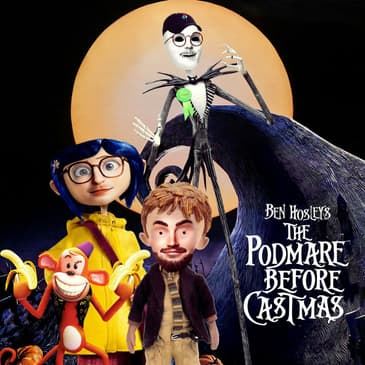
[00:07:51] This is Avatar and Wendell and Wild are Selick and Cameron both coming out of, yeah, yeah. Same gap. Yeah. It's a miniseries on the films of Henry Selick. A brand new miniseries. And the title of the miniseries is Ben Hosley's The Podmare Before Caspmas. It is good.
[00:08:13] I do think it's one of your best efforts. I will give it up. You texted that right away and we were all just like, okay, yeah. Because we were like, I guess it's Podmare Before Caspmas, right? What else are you going to do?
[00:08:26] Do you do, you know, Night Pod? I mean, it's like whatever. And then I had the breakthrough the other night of producer needs to get top billing on this series.
[00:08:35] Ben Hosley will forever be associated as the auteur of this miniseries, whether or not he's the main one talking. I'm the biggest fan of this. I always want the sweatiest, most clumsy possible names for the miniseries. So this is really making my heart sore right now.
[00:08:53] Ben Hosley's The Podmare Before Caspmas. And we're so excited to have on. Ha ha ha ha. To have on as a guest, long overdue.
[00:09:07] Someone who we found out a year and a half ago, whenever it was, when your movie came out, that you were a fan of the podcast and could not believe it. It was absurd. And we have been waiting for the right opportunity to bring you on.
[00:09:20] But the director and co-writer of Mitchell's vs. the Machines, Michael Aranda. Hello. Now I looked it up. Do you technically get the Academy Award nomination with the animated film? Like, can you refer to yourself as an Academy Award nominee or is it my film was nominated?
[00:09:38] Oh, that's interesting. Hey, man, I'm running with it. I don't know. There's no rules. There's no laws. Fucking Oscar nominee. But, you know, I've I've never said that out loud out of shame of being an idiot. Academy Award nominee. That's very nice.
[00:09:57] And you personally won three Annie Awards. Yes, that's true. That's true. You won screenplay director picture. Right. Those were fully you got to fucking hold those things. Yeah. Yeah. No, I've got the statue and stuff. It's they're very nice. They spin around.
[00:10:15] And no, it was that it was really wild, you know, because it's like the movie was just we were doing it for fun. And it's it's so wild that anyone liked it or cared. But I'm really glad. And let me tell you something.
[00:10:28] I'm a dang ass freak for this podcast. I love this podcast. I it's you guys are so smart and funny. And it you have this, like, infectious love of movies that sort of makes me fall in love with movies all over again every time I listen. Question mark.
[00:10:45] That's pretty sweet. If you decide. And I've also tried to put the word dang ass freak into three upcoming film screenplays. And then I'm really hoping I'm just trying to propagate this into the culture.
[00:10:59] And it's my dream that teenagers are calling each other dang ass freaks by at least twenty twenty one. I mean, I am truly astounded. Thank you. That's that. That is my dream, too. And any royalties I will throw your way.
[00:11:18] Well, I mean, now we're now we're talking now. I need congratulations industries to grow. So I'm trying to get you some new income sources. How are our sales so far, Ben? They've been pretty good. Ben's clothing line. Congratulations. Yeah. Y-O-U-Lations dot com. Here's the thing.
[00:11:39] I started filling the orders. A lot of work. Yeah. You're actually hand mailing and packing everything. Yeah. So I'm so happy that they're leaving, though. That's true. Because I do have a bunch of boxes of all this stuff. But yeah, Michael is a patron. He ordered a shirt.
[00:11:59] So I have a shirt coming. Was it was it the dang ass freak freak shirt or the graduation shirt? Right. Absolutely. The dang ass freak shirt, which for people who don't know, was inspired by a puddle. As it says on the website.
[00:12:15] It looked like E.T., kind of. Michael, can I ask? Yes. There was some point in the like marketing of Mitchell's versus machines.
[00:12:24] And I don't remember if it was in the lead up to the movie coming out or if it was in the the lead up to the Oscars after the movie was released where Katie Mitchell started the lead character. Yeah, a letterboxd.
[00:12:36] Who's a film fan started being identified as a blankie. Uh huh. And then it led to a letterboxd account that was done in character, but through the official like marketing team. Right. The marketing team being me. I wrote all of that. Okay, this is my question. Okay.
[00:12:56] Because there was this Katie Mitchell letterboxd account that was watching the Campion movies along with us in real time. Yes. And it was just because I was and I needed content and I and I was like, well, she would be a blankie if she was a film fan.
[00:13:11] And it was also a good excuse for me to like write, you know, get quote unquote content. No, this was my only question.
[00:13:18] I was I couldn't I wanted to know if it was you gave some poor marketing person marching orders to listen to our podcast and play act being a fan of it or if it was you doing it.
[00:13:28] No, it was it was me at my house at like three a.m., you know, talking about Sally bongers and having a blast. And it was really fun.
[00:13:37] I will say it was like so purely enjoyable because, you know, with animation, you write a joke and then nine years later you find out if anyone laughed at it or not.
[00:13:46] And it's like nice to write something and have people immediately like like it or not or whatever. So it was it was a blast. I only stopped because I got busy, but I would I would I would do that if anyone was paying me.
[00:14:03] So so in Mitchell's vs. Machines, there's a moment where you see Katie's Mount Rushmore, her like for sort of inspirational idol filmmakers. And it's Ashby, Gerwig, Ramsey, Siama. Uh huh. Uh huh. Uh huh.
[00:14:20] Did you at this age, at that age rather have like a big four like that? You end up going to CalArts. We were talking about this right before recording the school that I dropped out of. Yes. And I didn't realize you dropped out of as well.
[00:14:33] And we both started there the same year. Yeah. Were you in experimental or character animation? I was in character animation. OK. And were there like Mount Rushmore animator filmmakers like that who got you like what was your process of getting into?
[00:14:48] The idea of being an animator, doing animation. Oh, no. I mean, you know, it was yes.
[00:14:53] I mean, when I was, you know, like that actually idea of the Mount Rushmore was inspired by just a thing that was in my office of Miyazaki, Hal Ashby, Celine Siama and Lucas Moody's son, who I love.
[00:15:10] And they had a word bubble that said, make don't fuck this up, make a movie we'd respect. And I don't know. And, you know, I don't know if we did it or not. I haven't called Marty or anything, but but that's sort of where that idea came from.
[00:15:25] And just sort of like becoming an animator and stuff. Oddly and sort of embarrassingly at this point, it was like I just loved Ren and Stimpy so much. And I was like, this is the best cartoon. And I love the Simpsons.
[00:15:39] And that was just sort of like my whole diet growing up. And I was like, is there a way that I can do this? Question mark. And, you know, I sort of applied to CalArts after going to another art school and failing.
[00:15:55] And I like applied there several times. And then eventually they they let me in with the lowest portfolio score of all time. Wow. Which I'm very proud of. But sheer force of personality. It was sheer will. Absolutely.
[00:16:10] Yeah. Just just they were like, this kid is not going to leave us alone until we tell him in the door. I mean, we'll get into this in in the run of this episode because it's kind of important to the formation of this movie.
[00:16:23] But at CalArts, which is the best animation school in America. Right. I mean, I feel like it's definitely in America. Yeah. And was founded by Walt Disney as a sort of pipeline to to develop new employees.
[00:16:38] Back when there were very few places you could go to do animation afterwards. And even I mean, in the in the 70s, when when Selick and Burtner are going there, they talk about where they're both like, I guess we work at Disney now.
[00:16:50] Like there weren't multiple places you could you could land that would give you consistent work. But character animation is much more about performance. Classical sort of like nine old men animation acting and that traditional style, which obviously was originally hand drawn, but has shifted over to CGI.
[00:17:14] And I guess stop motion's covered there as well. But I felt like the people I knew doing stop motion at CalArts were more the experimental animators. Yes. One hundred percent. And it was just by the nature of these are people who just have visual ideas.
[00:17:29] They want to make sort of tonal explorations rather than needing to convey a very clear narrative or doing something that has consistent laughs or an emotional arc or anything like that. Yeah. Well, and Henry Selick is kind of the perfect experimental animator.
[00:17:47] You know what I mean? Like if you look at his student films and the films that he made right before Nightmare Before Christmas and Slow Bob in the Lower Dimensions and stuff like that, like it's it's textbook experimental animation.
[00:17:58] But I think that's one of the reasons he's such an exciting filmmaker of narrative films, because he brings that madness and like and sort of like an inability to or it's not like just a relentless need to innovate.
[00:18:14] You know, like that you could see in a short films and then is carried on to all of these movies. And it's really kind of wonderful to see.
[00:18:22] And I always feel like I feel like looking at his movies, it seems like he's always trying to get back to those short films where it's like because it seems like Monkeybone, which is his biggest like blank check or whatever, is the one that's most like those short films.
[00:18:37] And he's like reaching towards those, you know. So it's really interesting in that context, because, you know, at CalArts, you do make these four films for or, you know, make a film a year.
[00:18:50] And seeing Henry Selick's early films really was informative of like what his later films were. And if you're out there listening, watch them. They're really fun. Yeah. And, you know, I am I defend.
[00:19:04] Late period Burton or at least a larger percentage of late period Burton more than most people. But when you watch Vincent, it's hard not to feel depressed.
[00:19:14] But if you watch Vincent and there is an energy and creativity there that even I can't argue consistently exists in any of his films the last 20 years. Whereas Selick still feels like he's making student films. Oh, yeah. It does not feel like anything's gotten watered down.
[00:19:30] It's maybe to the detriment of his career and the consistency of his work that he just seems to be so stubborn about the way he makes things and how unwilling he is to budge. David, we should crack into the dossier.
[00:19:45] But there's a thing I saw in there that jumped out to me based on what you're saying, Michael. Burton says, you know, there was a there's a tribalism to the two different animation camps at CalArts.
[00:19:57] Yeah. And that the character animators would look at the sort of experimental animators and go like, well, they don't know how to tell a story. They're just doing sort of like jerk off art pretension shit.
[00:20:07] And the character animators, the experimental animators look at the character animators and go like they're sellouts, they're sentimental. They're doing like buy the book. That's accurate. And Burton said that Selick was the only guy in his time who actually coexisted between the two camps.
[00:20:23] Sure he could. Yes. He moved between the two tribes is how Burton puts it. The only one. Because, I mean, it's Bird, the Pixar guys, you know, Joe Ranft, Selick, Burton, all there at the same time.
[00:20:37] All these guys are contemporaries within the same couple of years at CalArts. And Selick was the only guy who seemed to be able to have a foot in each world.
[00:20:45] Well, part of that seems to be he was worldly is a thing they note because he'd already studied at Rutgers and Syracuse and the Central St. Martins College of Art and Design in London. So maybe he'd already been through the tribalism.
[00:21:01] Before I crack into this, Michael, you like have you met Selick? I assume you maybe have crossed paths with him in some way. Yes. No. No, I did.
[00:21:11] At some point, Netflix flew us up to meet all the stop motion people because Guillermo del Toro is making a movie up there and Henry Selick is making a movie and Laika is up there. And we met Henry Selick and he was so wonderful and nice.
[00:21:25] And also I was struck by the same thing you guys are talking about where I was like he was showing us footage from this movie and I was like, how cool is it this late in your career that you're like swinging harder? Yeah.
[00:21:38] Yes. Which that movie is that like you're not shaving any of the edges, any of the edges away. You're actually sharpening them. And it was really cool. And we had a beer with him and we got to see the sets.
[00:21:51] And I will also say, like seeing a stop motion animation set is probably the closest you can ever come to like going to, you know, the Willy Wonka's Chocolate Factory. It's like exactly what you want it to be.
[00:22:04] It's like all these beautiful sets and these artisans making like little eyeballs and stuff. It was really wonderful. So I was I was really amazed by that. But yeah. So I have met him once. We're not like bros. Not yet.
[00:22:20] Have you gotten to see Wendell and Wilde yet? No, unfortunately, I just saw clips and I saw them like animating some of the shots and stuff, which is really cool. But I haven't seen the movie. I'm really stoked to see it. I've seen the movie.
[00:22:34] And when this movie in this episode is dropping, I guess everyone will have been able to see it because it will be on Netflix. Is that right? Right. This episode is dropping basically Thanksgiving. Yes. I think Wendell and Wilde is coming out early November. Yeah.
[00:22:46] I think it's coming off from what I remember. And I thought it was great. And we'll talk about that later. That's great. It's coming out late October. Wow, it's coming out soon. Damn. Yeah.
[00:22:56] Your thing to me, David, was like, it's kind of amazing and I can't believe they let him make it. Right. But it is also one of those movies where you're like, I can see why this wasn't greenlit instantly. It's tough to summarize.
[00:23:08] It's got tons and tons of ideas. But it's very nice. I'm going to tell my famous, long anticipated Toronto Airbnb story when we get to that episode. Folks, it's going to live up to all expectations. Wow. Oh my God. Wow. I'm shaking. I'm literally shaking.
[00:23:26] Five months in the making at that point. Wow. This story that is really five minutes long. Should I tell my Michael Shannon story? Yeah. Tell it on this episode. OK. But we'll get to Michael Shannon. There's a tease. OK. I'm telling you to crack it open.
[00:23:41] Because I should crack open the dossier, right? We should not linger any longer. I'm telling you to crack it open. Then we can talk about our relationships in this movie. Yeah. One person involved with this film is Tim Burton, of course.
[00:23:52] We did a whole mini series on Tim Burton. It was very long. We didn't have the dossiers back then, I know. No. But we did get quite into, you know, the wiry haired nightmare child of Burbank.
[00:24:07] You know, this little creature of the suburbs who cooked up his crazy imagery in his head before he went to CalArts. Right? Talked about how he was an animator. I feel like a lot of this stuff has been discussed on the podcast. Yeah.
[00:24:22] And people still will ask, am I missing something or did the boys not cover Nightmare Before Christmas and the Burton series? We were always adamant of like, no, that has to be a Selleck series.
[00:24:32] And people either still don't know that Tim Burton didn't direct it or even if they know someone else directed it, give Burton most of the credit for it. But basically his involvement is he does Vincent at CalArts, which is an incredible short film I recommend everyone watch.
[00:24:48] He does. And that does well in like the festival circuit. And Vincent comes out of Disney being like, we don't know what to fucking do with this guy. You know, he's drawing like the Lady Fox and Fox and the Hound.
[00:25:02] And he wants to do the monsters for Black Cauldron. And they're like, this is too much even for Black Cauldron. So post Vincent, they're like, what else you got? And he wants to do like a holiday television special.
[00:25:15] He wants to do like the Tim Burton version of a Rankin Bass special, basically. Yes. And it was pretty much, it was vaguely inspired by the poem. Sorry. Yeah, it began with a poem inspired by Clement Clarke's Moore's seminal holiday classic, The Night Before Christmas.
[00:25:32] He calls it The Nightmare Before Christmas and he writes this poem about the pumpkin king, Jack Skellington, who becomes obsessed with Christmas. So he does have it all right there. But first he pitches it as a TV special to Rick Heinrichs, as you say.
[00:25:49] Or he's working with Rick Heinrichs. Rick Heinrichs is a Disney cohort. Right. And becomes his big sort of art director for years and years. Yeah. And Burton's quote on this, which is funny. It was a really funny project. Everyone was nice about it.
[00:26:06] It was like being in that show, The Prisoner. Everyone's nice, but you're never going to escape. He would have all these meetings with people and everyone would be like, this is such a great idea. Obviously I will not be producing this movie.
[00:26:20] And then obviously Tim Burton goes on, moves on from Disney, makes Pee-wee's Big Adventure, you know, goes over to Warner Brothers. Right. And the Tim Burton story unfolds.
[00:26:33] Disney basically gives him the money to make live action Frank and Weenie rather than make this because Frank and Weenie would be cheaper and faster. And then that becomes his director's reel for live action that gets him hired on Pee-wee.
[00:26:46] And right by the time he's done the first Batman, he's on Scissorhands. He goes like, you know what I'd really like to do is that thing. Does Disney still own the rights to that? He is a little concerned doing it at Disney, right?
[00:27:01] Because he sort of has this thought of like, or I guess there's the fear that Disney actually has to do it because he had pitched it there or originated it there. Like whether they own the rights to it. Yeah, right.
[00:27:16] There's a funny thing in the dossier that Burton was like, the time that I pitched it to them, it was actually unclear whether or not any of us were still employed. It was one of those periods where Disney was sort of collapsing.
[00:27:28] Right, there was a change in like bosses and people were getting fired in between movies. So he was like, I might still own that through a loophole or I might have to do it with them.
[00:27:39] And I can't imagine Disney wanting to make this movie because at the time it just seemed too weird for them. But of course, after every Scissorhands and Batman and all that, he can get something made.
[00:27:51] And David Hoberman, who was a big Disney exec at the time, was just like, we wanted to go to Tim Burton and say we can think outside the envelope. We can do something different and unusual.
[00:28:01] I believe at this point they still are basically going off of a weird poem Tim Burton wrote. It's not like there's a screenplay. Correct. There's a poem and drawings and credit to Katzenberg. I mean, A, I think Disney wants to be in the Tim Burton business, right?
[00:28:17] To some degree Disney is kicking themselves of letting this guy go who now has made so much fucking money for Warner Brothers. So they're like, how do we get him back here?
[00:28:26] And obviously the next 20 years becomes Disney trying to fully pull Tim Burton back into their fold to a degree that maybe starts to kill him.
[00:28:34] But the other thing is like Katzenberg, the Disney Renaissance is going so fucking well that to his credit he's like, we should try branching out.
[00:28:45] We should use the birth we've been granted by Disney animation being as strong as it ever can, as it ever has been to move into different areas. Stop motion is a thing that has not really been done at a studio level in Hollywood.
[00:28:59] And I think he's looking at the success they had with Roger Rabbit and saying like, we should try different styles. We should try different techniques. And Burton's brand is so strong at this point that there's finally like a clear marketing hook for this movie.
[00:29:15] Yeah, it finally seems like it finally seems like a profitable good idea. Whereas he's a name because he's a name you can put on top of a movie that people actually will notice at that time. Yeah. And they would now too, honestly.
[00:29:28] I mean, it's the problem with putting his name above the movie and it diminishing Selleck's responsibilities. Like Selleck even says, I understood why they needed to do that.
[00:29:37] Did you hear the audio commentary where Henry Selleck ruefully says, and I'm the director of Tim Burton's The Night Before Christmas? He has such a complicated relationship to it because it's like he knows he will never get the credit he deserves for this movie.
[00:29:54] And yet the movie never would have gotten made or seen if that name was not permanently affixed to the title. Burton first brings in Michael McDowell who wrote Beetlejuice. That doesn't come together, although McDowell is credited for adaptation in the credits.
[00:30:12] Did you hear the story that Carolyn Thompson did this podcast and said that Michael McDowell totally panicked and just delivered the songs in screenplay form and nothing else? And everyone was losing it.
[00:30:29] She put it, quote, that he had snorted his salary because I guess Michael McDowell had a bit of a drug problem at the time. And so just reformatted the Danny Elfman lyrics into a screenplay and production began based on that because they had to start.
[00:30:51] And that wasn't really a problem because obviously stop motion is slow and they had songs so they could do the songs. Yeah, well, just to back up for a second, because the development of this movie is bizarre, but it is like right.
[00:31:05] Burton comes back to them. They're saying we're all in. He says, I don't have the time to do this. He's filming Batman Returns. The production and development of this movie will span Batman Returns and Ed Wood.
[00:31:17] So he recommends Selick, who at this point has been doing a lot of stuff for MTV. Not just like he's won two Academy Award, Student Academy Awards. We'll get to Selick. I understand.
[00:31:31] I understand. But he throws it to Selick and then goes to Elfman and essentially pairs the two of them up and goes, Danny, just start writing songs. And Burton is basically describing the story beats and Elfman is writing songs off of the story beats.
[00:31:49] But there's an outline and their songs and there's no script. They go to McDowell. He doesn't give them anything usable. Caroline Thompson is dating Danny Elfman at this point in time. She is. She also wrote Edward Scissorhands, of course. And she basically says everything was kind of there.
[00:32:07] Danny had written all the songs. The thing I had to do was write Sally's story. Right. Which she says is sort of her major contribution and obviously just turn it into a script. They had a pretty tight budget. Eighteen million dollars, which I guess that seems low.
[00:32:26] I mean, I know nothing of animation budgets in the 90s, but that seems pretty low. I do think stop motion people are paid a sickeningly small amount of money for what they do because they're so passionate and they love it so much.
[00:32:41] They're like, I just want to do this. And oh, you'll give me, you know, twelve dollars. I'll take it because I get to play with puppets all day and not in a bad way. Just in a yeah, it's it's it.
[00:32:53] I do think that happens in the stop motion industry to eat to this day to sort of a not great extent. Henry Selick, who JJ sort of already been telling me this, but he's he's a candid man.
[00:33:05] There's going to be many a quote from Selick over these movies. I feel like the guy would hit the press and really just bounce basketball off of people's faces. But he he says there are very few final lines of dialogue in the movie that are Caroline's.
[00:33:19] We worked with her, but she was off on other movies. We were constantly rewriting. But then he also says, I'd like to do a silent movie, honestly, in stop motion. I think characters can tell the story without any dialogue, which is interesting.
[00:33:32] Yeah. I mean, there's a world of you could do this movie with just the songs. Absolutely. As like a fully barely needs the interconnected dialogue. Like it's 85 percent. Yes. No, 85 percent, Michael, pay attention.
[00:33:50] It is the weirdness of this. Like the development of it is so backwards where it's like a notion songs based off the notion, a script written to fill in the space between the songs.
[00:34:03] It makes sense that most of like the dialogue narrative stuff that happens in between does feel like the Sally Finkel scenes, scenes which is just like, OK, now getting a new perspective in here. There's that Netflix show, The Movies That Made Us.
[00:34:16] And they do an episode where there are a lot of good interviews with Selick and Thompson. I think Elfman is part of it, too. But she basically talks about like she's just done a movie with Tim Burton.
[00:34:27] She's living with Danny Elfman. She's just waiting for them to ask her to write it. Like she's watching them not get the script figured out. And she's like, I can do this in a weekend.
[00:34:37] And basically like wrote it in a week, as you said, went on to other jobs, but like finally gave them the shape of the thing. But they are animating this movie before they have a script. They're just like, well, let's start doing the songs. This is Halloween.
[00:34:51] We know we can do that. Right. So in comes Henry Selick, Burton's old pal and classmate. Burton, as you say, Griff is busy on Batman Returns and then eventually on Ed Wood. He doesn't want to deal with stop motion himself. Selick says Tim doesn't enjoy directing stop motion.
[00:35:07] It makes him nervous to be on the set so much. They started production in 1990. This film comes out in 1993. Yeah, it came out actually on Halloween. Of course, if they released it now, it would come out in April because that's how you do it now.
[00:35:21] You got to release the holiday movie a good few months before the holiday. Yes, but it was it was 18 months of production, 18 months of prepayment.
[00:35:31] I mean, that's the thing that I think people don't understand about animation is it is now I feel like there's a little less of this. But it used to be like you need to have every single fucking thing figured out before you start. Yeah. Right. No, 100 percent.
[00:35:45] Well, and I think that I do think that on this movie, it's it sort of seems like it was almost freeing for them to not have a script,
[00:35:54] because like so much of the joy of the movie is just like in the spaces, like, how can we make this song that we already have as dazzling as possible?
[00:36:04] And it's like, well, a guy's playing a guitar. Maybe there's a weird little face in there. Do you like that? And it's like, yeah, I love that. And the guy, a guy doffs his cap. And guess what? There's three little freaks in there. Do you like that?
[00:36:15] And I'm like, yes, I'm clapping and begging for more. And it just seems like the storyboard artists really like wrung all the joy they could have out of it. And yeah, and it's an incredibly laborious process, like regular animation takes forever.
[00:36:30] And stop motion animation is like glacial. And I talked to some people who worked on this movie. And it's so striking to me. Anytime you talk to anyone who works in slow motion, stop motion, they are the chillest human beings you've ever talked to in their life.
[00:36:44] They're so calm. They're like, yeah, you know, I just did the shot after, you know, took three and a half weeks, but we got it. You know, and I'm like, what? It took three and a half weeks to have Jack scratch his chin and gesture at the moon.
[00:36:57] But then you watch it and you're like, well, that that was worth three and a half weeks. That was great. You know, it looks like nothing else. That is what I do. Right. Yeah. A hundred. But if you sneezed, could you ruin a month's worth of work?
[00:37:10] I just always think about slipping, spilling a cup of coffee. I'm that guy. Yeah. Like I'm like visiting set. I'm like, oh, wow. Cool. And just like, yeah, everyone's mad.
[00:37:22] I mean, I don't know if you watch any of this sort of like making of documentary stuff that's been done around Phil Tippett recently with Mad God coming out.
[00:37:31] But he talks about I think he talks about this also in the ILM series on Disney Plus, which is really good.
[00:37:37] That like it took him like 50 years to realize that he was bipolar and that his life was just like constant, like mania, tension, nerves, discomfort other than when he was doing stop motion.
[00:37:52] Oh, wow. He would go into this zen state and there was something about what you're talking about of just like everything is just moving at this glacial pace. You know, I can just hyper focus on this one tiny thing for one twenty fourth of a second.
[00:38:08] Yeah. And I know a couple I do know a couple like stop motion animators who that is like they sort of call it their therapy.
[00:38:16] They just like smoke a bunch of weed in the morning, get blazed and like slowly, happily move a puppet for twelve and a half hours. And it's like they it's like the their best thing in their life. And it's so and the results are so wonderful.
[00:38:30] I'm like this. How nice for the world that this gets to happen. That is nice. But I what stop motion have we covered before? Because we definitely well, we covered like Corpse Bride and Frankenweenie on Patreon.
[00:38:43] Yeah. Did we cover something else? Obviously, we've done animators on the show before. I don't think so. No, I guess not. But like I think I've talked about it. It just I do love how it looks.
[00:38:52] I love watching these movies, but I do, especially when it's a shot that's like someone closes a door like some very boring shot. Yeah, I get a little stressed out thinking like, fuck, that was like a week. Yeah. And it is.
[00:39:05] So it is. Yeah, right. Yeah. There's no getting around it. You can't like puts their jacket on or whatever. You're like, oh, God, forever. Although there are some shots in Nightmare Before Christmas that I'd imagine were very satisfying where you could tell it just, oh,
[00:39:18] somebody held up a cup and water fell through it. And then they just film that. And then they were done. The one I always think of is the close up shot of Sally's spoon with the holes in it. Yes, that's the one. And the poison goes through it.
[00:39:30] And you're like, that's a 100 percent live action shot. No stop motion required. That must have been the best day ever. Yeah, no, they're like, hey, we got two seconds for free. Boom. Done. Two seconds in real time. All right. So Henry Selick, here we go.
[00:39:44] Obviously, he worked at Disney after graduating from Cal Arts. Some of his movies that he loves and cites as inspiration. The Adventures of Prince Ahmed and the Seventh Voyage of Sinbad. I think those are both stop motion classics, right? Sinbad is the, what's your name, Lottie Redinger.
[00:40:06] It's like shadow puppet sort of stop motion. Or Prince Ahmed, I'm sorry. Is that? Yeah, Prince Ahmed is. That often gets credit for being the first feature length animated film, I feel. Cool. Yeah. I've never seen it. Have you seen it, Michael? I have not seen it, unfortunately.
[00:40:27] It's like from the 20s or whatever. It's very old. It's pretty astounding. OK, so it's credited as it's the oldest surviving animated feature film. That's cool. There are two earlier films that were made in Argentina that are lost. Is it dope or what? Fuck them. It rules.
[00:40:44] Yeah, it looks pretty cool. She uses sort of like shadow puppet-esque flat models. So the whole thing looks like it's done in silhouette. Oh, that's funny. Well, that is like a recurring thing through Selick's movies where he's constantly using shadows.
[00:41:00] And the whole plot of his sort of cinderbiter or shadow king or whatever was all about shadow puppets top to bottom. And it sounded like a wild kind of movie. This is his unmade film. Yeah. His half made film that will never see the light of day.
[00:41:18] Yeah, the five clips exist online that you could watch. Yeah, it looks wild. All right. In 1979, he worked at Disney Works under Eric Larson and Glenn Keane, big legends of the field. He takes leave from Disney in 79 and he makes a few shorts funded by the AFI.
[00:41:36] So there's Seepage, which is I think you mentioned, Michael. Rules. And also Phases and Tube Tales, which were nominated for Student Academy Awards. But yeah, why does Seepage rule? I guess I need to watch Seepage.
[00:41:51] I mean, there are parts of it that are a little problematic, which maybe don't rule.
[00:41:55] But it's just like it's shot in live action with enormous puppet cutout figures that are life sized and are sort of like manipulated through, you know, I don't know, like this long laborious process. But it also has this like dazzling horse animation in the middle of it.
[00:42:14] That's like one of the coolest things I've ever seen. And it's it's look, it's very disjointed. You know, it's not I wouldn't say it makes a lot of sense. But but it's really interesting and you kind of can't look away from it.
[00:42:27] And it goes between this like really kind of bizarre, tense conversation between these paper cutout people in live action and this really expressive wild horse animation.
[00:42:37] And it's like and it just reminds you of all the great things about Henry Selick in one little instant that he's like this master image maker. And he sort of just chases whatever is new and that he hasn't seen before.
[00:42:51] And it's like and you can kind of see echoes of that in like his all of the movies coming in. So another thing he does, he goes back to Disney work on Fox and the Hound. That feels like the last one for all these guys. Yeah.
[00:43:05] Right. Everyone's kind of bummed out. He takes permanent leave after that. He funded forms his own production company called Selick Projects in 1986. He's doing ads for like Pillsbury, you know, doing some doughboy stuff. Yeah. And of course, a lot of.
[00:43:22] Exactly. Emma, you know, Job King and all those guys. Yeah. And and he does a lot of like MTV Idence, right? Like those really cool early 90s stop motion MTV things where it's like the logo. Right. I've seen some of those. Those are cool.
[00:43:40] Fox and the Hound is 81. Black Cauldron is 85. So that's like obviously the biggest flop that almost kills Disney. And it comes four years later. Like there's a gap when the films are much closer up until that point.
[00:43:52] So it does feel like Fox and the Hound was sort of like a clearing house moment. But MTV stuff quits after that, too. Right. Or does work on the cauldron as well? Yeah. He started working on it and they fired him from it.
[00:44:05] And I think like Lasseter and all those guys, you know, Joe Ranft and all those guys. I think I do. It's so interesting seeing all the different ways that they rebelled against Disney in their own way.
[00:44:15] Like they all went in different camps, but all were sort of almost a reaction to Disney. And like Tim Burton being the most like violently different. But it still is kind of a reaction to Disney. It's like, oh, Disney's sweet and I'll be dark.
[00:44:28] Absolutely. Yeah. And I think all those guys viewed it as like this is a pale imitation of what Disney used to do.
[00:44:36] Like I like Fox and the Hound, but it feels like an idea for all these guys where they're like our entire lives have been working towards trying to work at this magic factory. And it feels like it's a shadow of itself.
[00:44:47] And we have to figure out something new now. Well, and animators like at their core are sort of like these artists that want to work and then are put in this like studio system, like stop down.
[00:45:01] And it's like those conversations that those guys had about like Fox and the Hound and stuff remind me of conversations that I hear, you know, at the when I go at lunch at any studio of like we keep making the same bullshit over and over again.
[00:45:14] It's time to change things up. You know, like animators have this like they're really sweet and love drawing and are happy to be there. But like inwardly, they're all little artists, you know, including me.
[00:45:25] And it's like I find a real like kinship with those guys just sort of like being pissed off because the thing is, they all love Disney. Like when you hear Tim Burton talk about Disney, he's kind of like soaring about it and really like loves those cartoons.
[00:45:40] Like all of them, the Pixar guys, they all really love Disney, but they just wanted something more. Right. Fox and the Hound was the moment where they're like Disney isn't what it used to be. Yeah, totally. Totally.
[00:45:53] And I have not seen that movie since I was a kid, but I remember just being, OK, fucking sucks. No, I'm kidding. I haven't seen it in a long time. The Don Bluth revolt happens mid Fox and the Hound. That movie really is the center point for everything.
[00:46:08] He in the middle of that goes, this is bullshit. I'm starting my own company and takes like 30 guys with him. Yeah. So, yeah, that movie is is the real fulcrum point of American animation in its own weird way.
[00:46:19] The MTV stuff, as you were saying, David, before I interrupted you, is huge because MTV starts investing a lot in experimental animators, student people right out of art school to both do shorts, to try to do pilots, do indents. Like suddenly there's actually an economy for experimental animation.
[00:46:37] And then we get Beavis and Butthead. Yes. Groundbreaking work. And it does feel like those like idents and stuff like kind of were like shaping the 90s or something. Like it's like those feel so much like, I don't know, going to Urban Outfitters in 1994 or something.
[00:46:54] It's like you could feel the echoes. Yeah. There's no purer distillation of that era than like watching MTV, you know, like animation and stuff like that. Absolutely.
[00:47:06] He also created a pilot for an MTV series called Slow Bob in the Lower Dimensions, which I have watched at least some of. Yeah. And does rule and was obviously just like far too weird even for MTV in the early 90s.
[00:47:22] Well, that's what's funny where he where he's like I left Slow Bob to make Nightmare Before Christmas. And I'm always you know, I always think of this as his fulcrum point. I don't think Slow Bob was going to get made. It was too insane. It's quite insane.
[00:47:38] But I hope it is cool. It would be nice if it did. It is very cool. And Tim Burton brings him on and quote says, he's truly the best. Henry is a real artist. He's done a lot of great stuff for MTV.
[00:47:49] He was doing a lot of great stuff for Stop Motion. There was just a really a group of really great talented artists up there in San Francisco. It's hard to find people who are talented at it because it's a much more rarified form.
[00:48:01] And Burton did worry that working with such a talented and idiosyncratic director might spark some creative conflict. Griff, do you know the phrase tired and emotional? No. I mean, outside of just feeling that way all the time.
[00:48:19] Well, sure. In the British press, and you can roast me all you want for bringing this up. Tired and emotional is a famous euphemism for drunk.
[00:48:29] So they'll say, you know, they used to they used to say like, oh, you know, X and X had to leave a party yesterday because he became very tired and emotional or whatever.
[00:48:38] So talented and idiosyncratic is one way of putting like, you know, a certain, you know, strong personality. Right. There's a lot of euphemisms here one could use. But in the press, Burton is like he was a great collaborator.
[00:48:54] Right. In the press, I feel like Burton lavished praise on him. There was no mention of any tension.
[00:49:00] No, I think the tension. I mean, the other thing is, you know, when Selick sort of defends how much the movie is his, which it is, he's like Burton came to visit set five times over two years. He maybe spent a total of eight to 10 hours on set.
[00:49:16] He was like, it's his movie in the sense that it started with him. But it was like me adapting a book that was never actually written. You know, it's like it's his original source material.
[00:49:28] But it is this fascinating film because you're like Thompson, Joe Ranft, Elfman, Selick, Burton all can be given a fair amount of credit for the shaping of this film.
[00:49:42] In every sense. I mean, even just on a basic story sense, it's kind of put together by these five people. And Burton's the one who's really the genesis. He's the first seed.
[00:49:55] Selick has that quote that's all over the dossier. That's like, it was Tim's egg, but I was the one who hatched it. Oh, yeah. But yes, it was, you know, Burton was both the genesis point and also the 800 pound gorilla that allowed the thing to get made.
[00:50:15] And also to some degree insulated them and protected them and was able to say just back off and let them do whatever the fuck they want. That is the credit that Selick gives him. He's like the guy had total faith in what we were doing.
[00:50:28] I would send him the shots and he would give us the thumbs up, but he's working on Batman or whatever. And he would completely insulate us from like Jeffrey Katzenberg studio notes.
[00:50:38] It's not just studio notes. This is 90s Jeffrey Katzenberg, one of the most famous sort of controlling, not like Jeffrey Katzenberg was never right about anything or anything, but he's notoriously a busy buddy. He's coming in, he's micromanaging. And you feel the lack of interference on this movie.
[00:51:00] You know, especially how much the Disney Renaissance formula is so refined at this point. The character of Jack and how he behaves is so bizarre and so outside of what's in Disney movies where it's like, here's this like self-obsessed, arrogant, self-pitying weirdo who just ruins everything.
[00:51:22] And refuses to apologize for it. Like the Jack's Lament song is him being like, well, fuck you. I did look what I did. It was good. Why should I feel bad about myself?
[00:51:35] I love this movie, but I watched it with my wife who had never seen it before. And she was like, this motherfucker gets everything he wants. And all of a sudden he's feeling on wee about it. Now he's ruining Christmas.
[00:51:49] But then he gets defensive about like, fuck me. Why should I feel bad about myself? I'm Jack motherfucking Skellington. It's very funny. He's a funny character. Yeah. But you just think about all the stories you hear, like the Black Friday screening of Toy Story
[00:52:05] and Katzenberg wanting to cut part of their world and all this shit. And you're just like, this is a movie that has gotten none of those notes. Yeah. A hundred percent. Yes.
[00:52:13] And I think the thing is so much watching it this time really clicked for me how much Jack is an analog for these guys trying to figure out how to make commercial art. Yeah. Yeah, yeah, yeah. I had the exact same thought.
[00:52:27] Right? Like how do I make a mainstream thing that audiences like? And they just do not know how to change their own nature. And they're looking curiously at the Christmasland like it's a Disney movie. Like, right. How do I do that? This makes people happy.
[00:52:41] And then when they try, they give kids monsters and they start crying and they're like, well, that didn't work. Shit. You know, but eventually someone's happy. You know, the kid with no eyes is happy.
[00:52:52] But Jack's like end point he lands on is like, well, fuck them. The audience is stupid. I made a great Christmas. He's not wrong. Eat my Skellington shit. So the only other thing. Well, there's two other things that I feel like are interesting about that.
[00:53:10] One, obviously, is that the idea of putting Tim Burton's name over the title came late. A month before release. Correct. They'd actually shot a title sequence with candy corn letters. So like that's being pressed on Henry Selick late in production.
[00:53:32] And Selick does acknowledge, like, I understand it as a marketing decision. And Tim Burton sort of says the same. But both of them obviously feel a little bad about it in retrospect, I think. Yes. In different ways.
[00:53:46] I understand it and I will rue it until the day I die. Exactly. Exactly. Selick says the only big difference that Burton he had was that Selick wanted the ending to be that Oogie Boogie was actually Dr. Finkelstein in disguise. There was Scooby Doo ending that he storyboarded.
[00:54:05] And Tim Burton thought that was a bad idea. I would say I agree with Tim Burton on that. Well, and in that interview, it said that they they fought so hard about it that Tim Burton ruined an editing bay, which I found baffling.
[00:54:22] And I feel like that's such an example of animators getting in fistfights over whether a dog's nose is red or not. It's balding men in their 30s choking each other, wanting a carriage's hair to be red or blue or something.
[00:54:40] But it was so funny because I understand Tim Burton is like, look, I made all these hit movies. You gotta listen to me. But but look, it's an amazing the shot of him as all bugs is like one of the coolest shots in the history of the medium.
[00:54:55] You need him to be bugs. Yeah, it's gotta be bugs. Which I think Selick basically says there are four big bug shots once he's sort of unstitched and each of those shots took four months. Oh my God. Maybe you shouldn't be bugs. Worth it.
[00:55:12] Like the bug shots were just a nightmare because every fucking individual bug has to be like pulsating. And one of them said that like whenever anyone had a break, they would do some like bug work.
[00:55:25] Like, hey, squiggle some bugs around over there in the corner for a second. Another thing, Selick insisted on Santa Claus making things right. You know, he replaces all the toys and Burton hated that. But then showed when they showed the movie to friends, everyone loved that.
[00:55:40] I love that. I don't love it because I need the world to be made right. I just like Santa Claus is sort of like indignant, like, yeah, I can fucking fix Christmas. It's funny. Right. I'm fucking Santa Claus. Yeah. You got a shrunken head. Here's a puppy.
[00:55:55] Okay. You know, like it's not even cheerful. It's just like, uh-huh. Uh-huh. We should say the other thing that I think basically happens at the same time as permanently attaching Tim Burton's name to the title is bumping it from Walt Disney. To Touchstone.
[00:56:12] Right. Because it was supposed to be big Disney. Then they got scared at the last moment and went like, can we release this as more of a grown up movie? And the thing I don't think I knew that this movie opened at the New York Film Festival.
[00:56:24] That's cool. Uh, yeah, it did. They at the last second were just like, let's make this highbrow. Huh. Kids might be too scared of this. Yeah. It's funny because I watched it on Disney Plus. I don't know about you guys.
[00:56:37] Yeah. And Disney Plus introduces it with the castle fanfare now, but they did not do that back then. It is. If you go on the fucking Blu-ray message boards, it is a thing that fans are constantly crying out for.
[00:56:49] When will Disney release the version with the Touchstone logo at the beginning? They should. They should do it. I support that. I'm going to riot until they do. I think it was only changed when they did the 3D re-release.
[00:57:01] I think up until then, the DVDs always had the Touchstone logo. Yeah, that's too bad. I love the Touchstone logo. You know, they had 40,000 square feet of warehouse space across 20 sound stages. Jesus Christ. Joe Ranft, who is sort of a legend. He died young, right?
[00:57:20] He's a Pixar guy though, right? Yeah. He died in a car accident during the production of Cars, but he is a guy where if you just scan his career, he pretty much touches every important part of American animation for like 20 years.
[00:57:37] Yeah, and he's significant on this movie. I feel like his name is one of the earliest names in the credits to come up, and he was the head of the storyboard artists. Yes.
[00:57:49] He has this touch because he was one of the key founding members of all those Pixar movies. He was a giant part. He was the story supervisor on Toy Story. And I really associate one commonality that those movies have and this movie has is that they're like,
[00:58:04] those early Pixar movies hit the concept of the movie like a pinata until all of the joy fell out of it where it's like, we're going to get every good joke and moment out of toys, and we're going to get every amazing moment out of monsters.
[00:58:18] And I feel like this movie does that with like Halloween-y stuff, where it's like there's going to be a shrunken head, there's going to be a guy with an axe through his head, there's going to be a creature from the Black Lagoon, there's vampires, there's werewolves, there's Frankensteins.
[00:58:31] It has all of that joyful invention, and I sort of associate that with Joe Ranft, I think. Yes. You can watch, I mean, there are so many videos from different behind-the-scenes things over the years,
[00:58:45] but you can watch his storyboard presentations where he would act them out, and it was kind of incredible. I mean, he ended up, he was one of the first Pixar guys to end up doing major voices consistently in the movie.
[00:59:00] And it was the sort of famous story of Lasseter would show his wife the storyboard reels from A Bug's Life, and that they hired, I don't know if they've ever publicly said who it was, but they hired some other comedic actor to play Heimlich. Yeah.
[00:59:18] And the cut he showed his wife was like half that actor's recordings, which weren't finished, and half the Ranft leftover recordings. And he noticed that every time his wife was laughing, it was Ranft. Yeah, right. And when it was the actor they hired, she was silent.
[00:59:34] And he went to Disney, and it was like semi-radical at the time to be like, I think this guy should be the fifth lead of our movie. Well, that happens so often in movies, it's like you try to do a copy of a copy, and it never works.
[00:59:46] You know, it's like, you know, there's so often where it's just like, just do, you know, just do the scratch. Because it works. Well, you do the voice in Mitchells. Oh, that is the one example that I wouldn't follow because nobody likes it.
[01:00:02] Everyone's like, why does this fucking kid sound like a 40-year-old guy? No, that's a fun performance. But I will say that it was the best choice for the movie. We tried a million amazing actors who were all better and funnier than me.
[01:00:17] But there was something about the whatever was happening in the reels that people just liked more. So we went with it. But it, but it happened. That happens all the time in animation.
[01:00:26] Selick says there's the, there's the character corpse boy, who's the little pudgy boy in the striped shirt. He looks like Pugsley Adams. Yeah, that's Joe Ranft. And he's got the stitch together eyes. Yeah, that was sort of, he was like, that was the spirit of Joe Ranft.
[01:00:38] I mean, this is, this is the other thing with this movie. I'm going to put this forward right now. Please.
[01:00:44] This movie feels like while not attempting to do this, more successful at the thing that everyone has tried to do since Star Wars of can every character be fascinating? Oh, yes. Can even the tiniest non-speaking character be like, oh, what's, what's going on with that guy?
[01:01:03] Wait a second. Best background characters of, I think you're right. I think since Star Wars, no better background characters. How many times? You got the melting guy. Yeah. The guy with the axe to his head. They're all fucking bangers. Top to bottom.
[01:01:17] How many times do we read some fucking interview with someone promoting their new blockbuster and they're like, I wanted this to feel like the Mos Eisley Cantina. And anytime someone does that scene where it's like, we've designed 80 characters in the background.
[01:01:29] We want you to be asking who they are. And we figured out their backstories and whatever. Every time that scene happens in a movie post Star Wars, you feel the movie grind to a halt.
[01:01:39] It never has the natural feeling of Star Wars where it's just like this actually feels like all these people exist. This is just an ecosystem. And I want to know more because the movie isn't trying to tell me. And this film fucking opening number. This is Halloween.
[01:01:52] You're introduced to every townsperson and every one of them makes some sort of impression. It's not like they're going to have character arcs. But it's like you get each of them and you're like, that's their voice. That's their look. They all have such specific physicality.
[01:02:06] You know, it just immediately every one of these characteristics in your head. Yeah. They all feel like so loved up, you know, like. And I just think that it is like it was like nobody's watching the candy store.
[01:02:20] And it's like, yeah, let's have a character with its little sweet little boy with stitched. It's also just fun that it's like every monster archetype. Let's put everything in here. But they're not. They're also not just the boring normal monster.
[01:02:35] They're like little weird Nosferatu creepy heads that are like one fifteenth the size that they're supposed to be. And you're just like watching it with a giant grin on your face. And the characters almost exist in different design styles.
[01:02:48] Yeah, is another thing like this movie is aesthetic is very patchwork. You know, it is like just throw everything in there because they're all operating on different rules. Sure. Yeah. Yeah. Well, you know, we'll talk about it.
[01:03:03] Just while we're on the voices, I just want to note a few voicings. Obviously, the most famous thing is that Danny Elfman sings as Jack, but Chris Sarandon speaks. And this caused a rift between Selick and Elfman that lasted for forever. It's why Elfman didn't do Ed Wood.
[01:03:24] Yeah, right. Between Elfman and Burton as well. Yeah. Yeah. Right. Elfman wanted to do everything right. He wanted to sing and speak and Selick felt like he just wasn't working in the speaking parts and recast him.
[01:03:38] And right. It's why I mean, I feel like Elfman and Burton have had a very up and down relationship in general. Right. They sort of come apart and go back together.
[01:03:47] There's a quote from Selick in the dossier where he's like, I don't know, their friendship is really weird. I don't even. He describes their friendship as very weird.
[01:03:56] But yes, Ed Wood is the only movie they don't work on together until Sweeney Todd because there is no original score. And then Mrs. Peregrine out of I'm looking here, lack of interest by everybody who can be bothered.
[01:04:14] But yes, no, they have like a major falling out off of this. It does make sense when you consider when you read about the way in which this movie is developed. Elfman is basically the main driving force and writing this film for a book.
[01:04:29] He is the biggest creative writing wise. Yeah. The biggest creative voice. Right. Yeah. No question. And it's his masterpiece. Yes. Yeah. No. Every song rules.
[01:04:40] Yes. And it's also sort of secret sauce is like, I think Jack as a character is in different ways, expressions of Burton, Selick and Elfman. Right. But from a writing standpoint, he's really putting himself into it.
[01:04:56] And then his girlfriend at the time is writing the script and essentially beefing up the character of the woman who cannot get the self-involved, obsessive control freak lunatic to pay attention to her.
[01:05:11] It's like these two characters are being written from very, very personal standpoints, which is important in a movie that's going to be 75 minutes long, mostly sung. You're not going to have like intense character development scenes. But yes, Elfman never gets over not being able to talk as Jack.
[01:05:27] The two voices are very similar. So it's successful. It is like it's so interesting that he was like so hurt by that because it's like, I don't know. I mean, maybe he wanted to be an actor. I don't know. But he's doing a great job on the voices.
[01:05:43] Yeah. I mean, he did like Forbidden Zone where he's, you know, the main on camera performance performer in that, which is the movie Danny Elfman did with his brother. Well, he's sort of playing more of like an Oogie Boogie demon type character, like, you know, a jazzy demon.
[01:06:00] But it sounds like I had always thought it was just that he wanted to do it and they went with a bigger star. I didn't realize that he recorded the entire thing. Yeah, Salek just did not like what he was doing speaking wise.
[01:06:15] That he wasn't delivering as strongly in the dialogue as he was in the same part. It's also just so funny at like the time we were recording this, the Mario trailer has just come out.
[01:06:26] And there's obviously just endless hand wringing about like, why does this need to be Chris Pratt? What do you gain by hiring a big star rather than someone who sounds like Mario? And it's so funny because I've been sort of like behind enemy lines in all these conversations.
[01:06:41] And it's like, it's just conventional wisdom because it's conventional wisdom and nobody actually checks to see if that matters or not. I remember the dog in our movie. They were like losing their mind because there's like, there's no celebrities in this movie.
[01:06:59] Abby Jacobson, people don't know who she is. And I'm like, yeah, she's great. She's a great voice actor. It's a great performance. Like shut up. Who cares? And they were like, what about the dog? What about the dog? Look, famous dog owners.
[01:07:10] What if Jessica Alba is the voice of Monchi the dog? And I was like, dude, are you going to sit in a recording booth with Jessica Alba and be like, hey, Jessica, I need you to snort a little harder on this one. Yeah.
[01:07:23] Just kind of really bring your A game to the snorts here. Jessica Alba, famous actress. How did she do? Jessica, your motivation here is you're a good boy. You're a very good boy.
[01:07:38] And like, but it's true that like they're just like, look, this actor has this amount of Instagram followers and you need to cast them. And no one is ever like, does this work? Do kids care? Do adults care?
[01:07:51] You know, I think there was a point with DreamWorks movies or whatever when they had the people on the couch in. And when more people watch late night shows that maybe it did matter. And maybe those DreamWorks because those DreamWorks movies are very successful or something.
[01:08:04] But I have not noticed it mattering in the past like 10 or 15 years. I would agree with that. And I also think that era of DreamWorks movies was a very bizarre brief period where they were also like really caricaturing the characters to match the actors.
[01:08:21] The scripts are almost reverse engineered around the basic personas of them. Yeah, like Jack Black and Kung Fu Panda. Right. Will Smith and Shark Tale and shit like that. So, like they were really making them fit and feel of a piece with that actor's live action films.
[01:08:38] But it is that thing when you're just like the highest grossing domestic animated film of all time, I believe, is still Incredibles 2, which stars Craig T. Nelson. Yeah, yeah, exactly.
[01:08:49] You know, it's like in the same way with the Mario movie, you're like, what actor are you going to cast who is ever going to be a bigger draw than Mario? Yeah, Mario is a big draw.
[01:09:00] But the thing I love about Incredibles 2 is it's like, okay, the original cast is coming back, but who can we have? You know, come on, let's get some new villains. It's like Bob Odenkirk and Catherine Keener. I love both of them. Isabella Rossellini. Isabella Rossellini. Exactly.
[01:09:17] You're not really throwing to like, you know, whatever, Shawn Mendes or whoever La La Crocodile is voiced by. I mean, I just, 93 when this comes out, you're almost dead center between Aladdin and Toy Story. Right? And this idea that Disney's like Danny Elfman cannot play the lead character.
[01:09:34] We need to get a bigger star. Chris Sarandon. Like that's the level. We need the cop who shot Chucky. Right. That's who Chris Sarandon is. Right. Here's a guy who got an Oscar nomination 20 years ago. Right? You look at the rest.
[01:09:47] Oh, he's a wonderful actor and he's really good in this. It's like, that's their idea of like, let's get a proven actor in this role. And even through the rest of the decade, it's like D.B. Sweeney is the lead voice in Dinosaurs.
[01:10:02] Tony Goldwyn in Tarzan, you know, Tate Donovan and Hercules. Like they'll often get, they'll follow the Aladdin model where it's like, let's get one or two bigger names in the supporting parts, the funny parts, the villain, whatever it is.
[01:10:15] Toy Story does kind of fuck it up in certain ways where they like cast two actors very well. And in the time that they're making the movie, those two guys become superstars. And Pixar remains pretty stubborn for a while about like, we're going to cast the right people.
[01:10:29] We will cast Dave Foley. We will cast Alper Brooks. We will cast Craig T. Nelson. We don't need the biggest names. And no studio ever takes that lesson. They're never like, oh, cool. You mean a cool character actor that would do a really good job in the role?
[01:10:44] Let's get them. Like they're like, no, no, no, no, no. How can I make the most cynical, horrible decision? Well, I just love that even when they bumped Elfman, it felt like they actually thought very carefully about casting this and cast the right person. Yeah.
[01:10:59] Well, on that note, Santa Claus, who is also the narrator of the film briefly, was intended to be voiced by Vincent Price, a hero of Tim Burton's, as we all know. And he was brought in and they recorded him, says Selick.
[01:11:19] But he said he just lost his wife and he was despondent and it just didn't work. Just sort of like weird and sad. Yeah, that is weird. Vincent Price just couldn't get in like a Santa Claus mood, I guess.
[01:11:30] Then he says we met with Don Amici, who was insanely grouchy. Quote, I couldn't believe how grouchy he was. I would love to know what that means. Like they just sat down with Don Amici and Don Amici was like, grrrr. Like, well, how grouchy was he?
[01:11:47] Like, what are we talking about? Then they went to James Earl Jones and apparently Danny Elfman told James Earl Jones, I wrote this part especially for you. And James Earl Jones got very angry and yelled, you don't know me. Hearing that voice say that would be terrifying.
[01:12:07] You don't know me. And so they end up with a local actor called Ed Ivory, who's like a San Francisco guy. Who's great. He's great. He's such a secret weapon in this movie is just how fucking grumpy Santa Claus is. He's grumpy in like a relatable way.
[01:12:29] Like, yeah, he's like exasperated. He's exasperated in the way that you would be if like your flight got diverted to Atlanta. You know, he's not like bringing fury like of a thousand suns. He's just like, yeah, you idiots don't kidnap me next time and I'll do Christmas better.
[01:12:47] And he never softens. He's just like, yeah, F you. Yeah, I love that. He's not like, you know what, Jack, we both learned a lot from each other. I gotta go. There are no lessons in this movie.
[01:13:00] That's like the big thing that makes it feel so on Disney. It's that there's no lessons and that the entire character arc is that a guy just feels kind of weird and depressed about his job. And then after a while is like, you know what?
[01:13:13] I was good at my job. I actually I'll just keep doing my job. I'm good at it. I'm fun. I get myself again. It's fine. I'm back in my own skin. This is great. It's a movie about like stubborn artists trying to work within a studio system.
[01:13:26] Very much so. And just and just coming out of it with complete resolve that they were in the right, even in the face of failure. I think that's a perfect take, by the way. Right. We should dig into the movie proper.
[01:13:37] But this is the thing I want to talk about. And Michael, I'm hoping not to put you on the spot that you can speak to with some sense of greater knowledge than I have.
[01:13:46] A thing that was very revolutionary in this movie is that Selick was adamant that he wanted the camera to move as if it were a live action film. Oh, yeah. The camera movement in this film is fucking bananas.
[01:14:00] And his stop motion was not already hard to begin with. You're adding this other level, this other type of movement into the situation. And basically there were not a lot of feature length stop motion films before this. There's like Will Vinton's Mark Twain film and things like that.
[01:14:15] But stop motion was pretty clamped down because it's much like Richard Williams being like, I'll fucking hand draw the camera movement. Yeah, yeah, yeah. No one else wants to bother with this. It's too difficult, but I'm willing to do it.
[01:14:28] This was like Selick's biggest sticking point was it has to move like a live action film. And he's like moving the camera like fucking Vincent Minnelli in this. Like I truly think there are less than 10% of the shots in this movie that are totally locked down.
[01:14:44] Well, and you can feel it. You feel like this is a huge movie. From the opening moments, that spiral down into the trees. Then you go into the tree and then the This is Halloween number never stops moving. And it's like, yeah, it's shot.
[01:15:00] Because the thing is, it's like they amazingly make these spaces feel huge. Whereas they're just like a curtained off piece of a warehouse. And all of a sudden you feel like you're like this Halloween land is infinite. And I did talk to some of the animators about that.
[01:15:16] And I think they all were like, I think this is the first time anyone's done this in a stop motion. Certainly in a stop motion movie. And it wasn't used that much.
[01:15:25] And they have this like, you know, motion control camera that moves one frame per, you know, one like millimeter per frame. And they have to and they and but the one of the animators were saying that it like it kind of it wasn't super reliable.
[01:15:42] So sometimes you would do a shot and like you would have to redo it because the camera move was like fucked up. But but it was like it added this extra layer of difficulty. But it also makes the movie feel like feel huge.
[01:15:56] And it's a huge technological breakthrough. And it was also the first stop motion animated movie where this where the artist could kind of check their shots, which is interesting.
[01:16:05] Like like in the past, like when they're making the California Raisins, they worked, you know, a week and a half on a shot. And if it looks terrible, they just have to start over. Right. They just get it when it fucking is processed a week later.
[01:16:18] Yeah, yeah, exactly. They had to wait. Yeah. Wait a week. Watch it in dailies and just cross their fingers and hope it doesn't look like shit.
[01:16:24] Right. And they basically had like a computer capture system so they could basically see what they were getting, even if it wasn't playing back 35 millimeter. Right. Yeah. No, they they were saying that they could see the front the two frames before.
[01:16:37] OK, so you can. So it wasn't perfect because now because when I saw when I went to visit Wendell and Wild, like they just right next to their little workstation, they have a monitor, they hit play and it just the animation up until that point.
[01:16:49] And then you could try it, redo it, try it, redo it or whatever. But in these guys only had three frames to work with. So it was like they could see that.
[01:16:59] And one of the animators was telling me this guy, Anthony Scott, who's like animated all these amazing shots on it, that they had this little green. It was like also this green digitized shitty screen that they had to look at.
[01:17:11] Like so they were like just squinting through and it's like that arm motion looks OK, right? I hope this looks good in four and a half weeks. But it's and it's a magic trick that they pulled it off.
[01:17:23] And it's a magic trick that it feels like this huge infinite world. And it feels like a Busby Berkeley musical. That's why that's one of the reasons why those music sequence feel so alive is the cameras swirling around.
[01:17:34] Yes. And the characters never stop moving like there's very complicated choreography in this movie. Very little of it is traditional dancing.
[01:17:44] But like you look at the making Christmas sequence and every bit of their construction, you know, the characters overlapping each other and the camera moving around them is like so tightly choreographed. It's just it's insane how complicated they made this movie.
[01:18:00] Yes. It doesn't feel complicated. It doesn't feel like it feels like you're in a world. Like the only thing about this movie that suggests that where you maybe feel like, oh, they're being pushed to their limits is that there's not a lot of people around.
[01:18:13] Right. Like that. Like there's only the town is not heavily populated. It's not crowds and crowds. Well, you say that, David, but it's like there are 25 developed towns people. That's the thing. It's still amazing. But, you know, it just but like you really feel like, oh, my God.
[01:18:33] Right. It took so much to make every one of these interesting characters. It's so cool. But everything else like the camera moving around, you're just like, well, of course it's moving around. We're in Halloween town. They took the camera and moved it around there. Yeah. Easy.
[01:18:45] The trick, which is what Selick wanted. Like he wanted to sell this as a real viable world, which the more you know, it's been, I feel like one of the big revolutions of CGI that's under discussion.
[01:18:56] It's like now there is this freedom to move the camera more like a live action camera to, you know, simulate lenses and lighting effects and things like that.
[01:19:06] That I think you can get to this really interesting mid space where you embrace the things that only animation can do. But you do it with the language of how a live action film would be shot. And it lends it a certain veracity.
[01:19:20] This also this particular space is so interesting for stop motion, too, because like now stop motion uses a lot of CG. I was going to say, yeah, like they will like literally and there is a studio that I won't name or whatever.
[01:19:35] And they make great movies, but I don't understand this process where they will literally animate the scene in CG like you would animate a scene in Toy Story or, you know, Maya or something.
[01:19:47] And then they'll 3D print every frame of that CG and put it on the characters faces. And I'm like, at that point, what are we doing? You know, like it's this movie has that perfect balance of like the technology is advanced enough.
[01:20:02] So where you can move the camera around, you could have characters with different faces in the magnetized, you know, little face plates on the characters. But you also get that hint. You get to see thumbprints on, you know, Dr. Finkel's, you know, lip flap.
[01:20:16] And you really feel like it's this tactical thing which makes it feel like even more of a magic trick. There are certain close up shots of some of the puppets where you actually feel like you can see them decomposing.
[01:20:27] And it's a thing that the movie can own because they're all creepy Halloween town people. But also, yes, what you're saying so often now like face replacement for stop motion, which people don't know is making different heads with different faces so you can replace them.
[01:20:43] Smiley face, sad face, grumpy face, eating face. And then you have to do all the in between faces to transition from one expression to another and all the different mouth shapes for dialogue and all that.
[01:20:55] But like something like Corpse Bride is maybe the biggest problem with Corpse Bride was they attempted this thing where they built incredibly complicated mechanics inside the puppet heads. And rather than have replacement faces, they tried to build faces that were more expressive that feel pretty frozen.
[01:21:11] Like all the characters in that movie feel kind of Botox. And now when you have face replacement like this, as you're saying, Michael, it's done with a lot of CGI preplanning and it's very clean and precise. And there's something about like, yeah, the Jack's face isn't perfect.
[01:21:26] Yeah, you see the thumbprints and you see that it's like someone did that. And they're all like did this actually hand sculpted. So they're not all perfectly. He's not always a perfect orb. Yeah, yeah, yeah, yeah, yeah. He gets lumpy at times.
[01:21:44] But yeah, you open with this incredible number introducing every character, setting up the tone, the music, introducing like eight million visual ideas. Yes. But you have to set up the stakes of this thing incredibly quickly.
[01:21:57] Like not the stakes, but the world of this is so complicated where you're like there's a forest where there are eight trees and each of them is one of the major American holidays. Yes. In this tree. What are the eight?
[01:22:10] We've got Thanksgiving and Easter and Christmas and Halloween. What are the other ones? Let me look back here. It's a good question. Truly, because I saw this film in theaters. St. Patrick's Day. St. Patrick's Day. Yeah, of course. Yeah. What a very culturally sensitive town that must be.
[01:22:29] Yeah. I bet you there's nothing offensive going on in St. Patrick's Day town. There's just a river of beer and, you know, drunk Irish little leprechauns roaming about. And sectarian violence. Wait, what's going on here? Go relax. I'm looking here at the shot. Okay.
[01:22:49] The four trees you see at the beginning are jack-o'-lantern, Christmas tree, turkey, Easter egg. Right? And egg. Right. Those are the four I remember. Yes. And I've never taken the time to actually study here.
[01:23:03] That is like a box with stars on it and a feather coming out of the top. And then there's Valentine's Day. There's a heart in St. Patrick's Day. Last one, I do not know. Wait, I'm going to look at this to see if there's a, yeah, like, huh.
[01:23:20] What could that be? Right? It's a very odd shape. I mean, I'm wondering if it's supposed to represent New Year's Eve in some way, but it looks like nothing. Is it birthday town? Oh, is it a birthday cake? That sounds right. That might be right.
[01:23:35] Could that be a thing? Just it's for birthdays? So they have four o'clock at a time, those fuckers. It might be Fourth of July. It's Fourth of July. It's Fourth of July. Okay. So it's Fourth of July, Valentine's Day, Patrick's, Easter, Thanksgiving, Halloween, Christmas.
[01:23:50] You know, I'd love to go to Fourth of July town. Sounds like a great place. Definitely not going to be weirdly aggro. No, I just remember when my dad was taking me to the AMC. Well, back then it was the Lowe's, 84th Street, Griffin.
[01:24:05] And he was, I remember him having the trepidations because he was like, so I just need to prep you for like the story of this. It's like, you know, Halloween and you know, Christmas. Well, they have towns in this movie.
[01:24:20] And so each town is like for that holiday. And when you say it out loud, it's like, yeah, sure. Okay. That sounds simple. But I do get that my dad was like, you know, this isn't just like there's a guy and a princess and a bad guy.
[01:24:34] You know, like it is a little more theoretical. It's a little more heady for like a little kid. Yeah. And it's also the internal logic of it is like in this town, it's basically that holiday every day. But also they're prepping all year for the one day.
[01:24:48] For like the super Halloween. It is that holiday in the real world. Even though they don't ever seem to leave the tree. No, but also their worldview is based around the holiday. So kind of like everything is shaped through that lens. They don't know that other holidays exist.
[01:25:03] They don't know that the outside world exists. They're just like, fuck, it's this one day we got to make it count. I mean, this is where the 68 minutes really helps them. You just keep moving. You're like Jack lights himself on fire. Everybody loves him. Keep going.
[01:25:20] And you don't have a chance to really examine it. Is he like the king of this town? No, there's a mayor. My favorite thing is that he is the pumpkin king, of course. But yes, it's like Christmas Town. They want to make presents and deliver them.
[01:25:37] There's a Halloween town. Right. They seem to just sort of have like a horror back and all. And then at the end, they're like great Halloween, everybody. Like best Halloween yet. Were they just kind of like putting out spooky vibes to the universe?
[01:25:50] Like that's what they were doing. Well, and they also imply that they scare people, but they don't scare each other. No. These are all questions that are whizzed by gleefully. And I'm happy to not answer. Yeah, but it is true.
[01:26:05] I mean, at this point in time, basically all animated films were 75 minutes long. That was the length. That was the amount of budget they would allot you. They didn't think it was worth the time and energy to make a film longer than that.
[01:26:18] And I think there was this assumption that audiences would not be tolerant of an animated film longer than that. Like when Cars came out, it was the longest animated film of all time. Oh, interesting. I didn't know that. Like Cars and Incredibles were like the first.
[01:26:34] Incredibles was two hours, I think. Right. They're like the first two to like get within striking zone of two. I mean, it's truly because as they told us on our film all the time, it's like a million dollars a minute. Right. So it's like exponentially more expensive.
[01:26:51] Like, oh, you want an extra half hour? That's a lot more money. Yeah. And sometimes that math, I don't know if that math really works because it didn't end up being that on our movie or whatever.
[01:27:01] But it is like that's sort of the producers like, you can't make it longer. It's so expensive. You know, they're just shouting from the rooftops at you. But it is this thing where stories have to just sort of like carry you along with confidence and vibes.
[01:27:18] And just like you need to understand we're not going to have the time to really go deep on all of this. Like I've been watching a lot of universal horror films recently for spooky season. A lot of them have gone back up on streaming services and such.
[01:27:33] And like all of those movies are pretty much 70 to 75 minutes. And yet a lot of them you feel fat on them. Like you watched even the ones I love, there's often a lot of shoe leather, right? Yeah, yeah, yeah.
[01:27:47] Around a couple big sequences, a lot of wind up to get to the point. And this is a movie that is just like we're going to zoom so just hold on. Yeah. Because it's not simplifying its narrative at all to fit into this length.
[01:28:00] Well, it is a simple story, all things told. You know, it's like Jack's – you know, like there are – there's a complicated backstory and stuff. But it's just like he sees Halloween. He tries to tell the people about Halloween. They go to – they take over Christmas.
[01:28:14] It doesn't work at the end. Right. I mean and so many, you know, the Disney princess movies of this time have the big I want song, right? There's a thing I want. I know I want it. There's a larger world out there I want.
[01:28:28] This has this triumphant opening number. Jack comes out as the Pumpkin King, sets himself on fire, dips himself in some green goo, comes out of the fountain. This is all good. Five stars, five stars. Great. Incredible. Great, great. That's the best intro.
[01:28:42] Like I wish I could enter every room by lighting myself on fire. That moment where they're all chanting and he slowly rises out of the goo with like his arms across his chest and his fucking like bat bow tie fans out.
[01:28:56] And like everyone's just cheering him and you're like this guy rules and it's immediately followed up by him being like I'm so fucking depressed. I want to cry myself. He has an I don't want song. Right. He's just like I feel no joy from anything anymore.
[01:29:09] There's nothing he knows he wants. There's no aspiration. There's no explanation either. He doesn't explain why he's sad. No, he's just like I'm so tired of this shit. Right. It's just true like existential depression. Yeah. Kids love ennui. Right.
[01:29:25] And I'm just watching him cross the gate and just being like oh, why won't this complicated artist boy notice me? You know that thing where it's like Sally is Jack with emotional intelligence but also not given the room to be this self-indulgent. Yeah. Yeah.
[01:29:42] And she's just like I see that we would get along. Why can't I get you to notice that I exist? Well, and you can sort of see it's I could I don't know if this is right or not.
[01:29:54] But it's like to me I could kind of see the contours of the version of Sally before Carolyn Thompson came in where she's just kind of mooning over Jack. Yes.
[01:30:05] You know and it's like it's sort of it's a little annoying and it's nice every time that she does get a little bit of agency and stuff like that.
[01:30:13] But it does seem like I could totally see how this is like cookie cuttered around because, you know, Tim Burton is not the greatest, you know, fullest renderer of female characters in the history of cinema.
[01:30:25] You know, like and it feels a little bit like that where it's like oh, this beautiful tragic figure loves this, you know, sad ghost boy for some reason. Yes. And then it's like it's nice when she's given like a surprising amount of dimension for one of these films.
[01:30:42] And it was nice hearing Carolyn Thompson even say like I would have gone further, but I did what I could. Considering how short this movie is, it is surprising how many scenes Sally has on her own from her perspective.
[01:30:58] And it is the thing they set up well where it's like her identity isn't just being in love with Jack. It's almost more defined by this like horrible relationship she has with her erstad's father, needing to get out, needing to find this sort of freedom.
[01:31:13] And Jack represents like I wish I was given the room to just let my freak flag fly like that. Yeah. People let me do whatever the fuck I want. Jack is liberated. Yes. Right. And she is obviously imprisoned.
[01:31:27] Right. So he's a little bit of an aspirational figure like that. And then it's also just like I feel like we get along. Why won't he talk to me? Yeah. This guy is so caught up on his dumb bullshit. But Jack does his lament.
[01:31:40] I mean, this is two songs in under 10 minutes. Yeah. You get to Jack's lament, which David is your background when he does the Hamlet with his own head. He does. And obviously that is where we introduce the weird. How do you describe it? Looped mountain thing.
[01:31:57] What is that? It rules to be clear. Yeah, it's a Curlicue Mountain. It's like one of the most iconic images from this movie from the 90s. And yet I don't even know how to put it into words, which I guess is why it's so cool.
[01:32:12] It is also just one of those transcendent visual moments of like you have this thing that's like very much a Tim Burton illustration that you feel like would be impossible to render in three dimensions, right? Yeah. This idea of like what if a mountain looks like this? Why?
[01:32:25] Why would it look like that? What are you talking about? Why would a cliff be curled like that? It's like I don't know. Build it. And then he's standing on top of it.
[01:32:31] You can't keep on thinking about – you can't stop thinking about how like gnarled and curled it is.
[01:32:36] And then when he takes the first step forward and the thing starts to unfurl in front of him, you're just like, oh, that's the kind of reality we're operating in this movie where anything could happen. It's so cool.
[01:32:47] And I guess like in the commentary or whatever, Henry Selick was like he had to sell that to Tim Burton because Tim Burton was like I want this world to feel real. Don't have any magic in it. Yeah. And Henry Selick was like, I don't know.
[01:33:01] It's a mechanical mountain. Dude, look at it. Are you going to cut this out of the movie? That's the best part. Right. The mountain itself is a monster. I don't fucking know who gives a shit. It should happen. Yeah, exactly. Like this movie is like an opera.
[01:33:12] Like you want the most ecstatic emotional things to happen. Yes. Yes, totally. And that's like one of the things that's sort of magical about it is that every opportunity for something surprising and wonderful to happen, they take. They don't pull any punches.
[01:33:28] Even like a movie like Edward Scissorhands or something, the real world and the sort of like the cookie cutter Burbank and the ghostly place that Edward Scissorhands come from, the contrast is so high. And he really keeps those borders really firm.
[01:33:49] And like Henry Selick is like so inventive that he can't help himself. That like Halloweenland is a little spooky and crazy and it's like it's like ceaselessly inventive. And it's and even the world that the humans live in at the end, like looks like this weird gothic painting.
[01:34:04] Like there's never any like totally real reality. It's all invented. And that's one of the reasons why it's like so you can't look away from the screen. Yeah. And Christmas Town is as insane as Halloween Town.
[01:34:17] It's the same level of like you have these weird wind up polar bears. The wind up polar bears are the best. Yeah. But I like the spinning Christmas tree. That's fun. Why don't they spin more often? What else? Yeah, they should always spin. Yeah.
[01:34:34] What other cool stuff is going? I mean, I love Jack putting the lights in his eyes that really that really sticks with me. That's another thing they talked about as sort of like a challenge to themselves is so much of animation is about like expression through the eyes.
[01:34:49] And they were like, let's make a character who doesn't have eyeballs. Yeah. And Disney was like, he must have eyes. What are you doing? He's the main character of the movie. And it's like and it was it is this cool. I mean, it makes him iconic.
[01:35:02] Like that's why he's on if he had eyes, he wouldn't be on the Hot Topic sweatshirt. No, he wouldn't. I mean, his face design is so simple. And they just decide like, well, what if we make him the most expressive character ever?
[01:35:16] What if he has the biggest facial expressions possible at every moment? He just emotes thoroughly.
[01:35:24] There's a thing in the dossier, David, I think it was from Burton on Burton where Burton talks about like the genesis of this idea for him was speaking to what you brought up, Michael, about like the style of
[01:35:38] the town in Edward Scissorhands and how much he's talked about that like that movie is what he felt like growing up in his hometown. And CalArts was the inventor's mountain at the top of the hill where you get to make your weird art. Right.
[01:35:53] That Burton said he was obsessed with holidays as a child and like Halloween obviously makes a lot of sense for him. But it was Christmas as well, because growing up in the suburbs of California, you don't have seasons. So he was like, the whole year felt unmoored.
[01:36:07] And the only time you really felt a sense of place and time was the corridor between Thanksgiving or Christmas and Halloween where the decorations would go up, where there would be activities themed to those things. It really like. Right. That's the thing.
[01:36:22] Like you could walk into the supermarket and even though it's whatever, summer all the time, you can see some fall leaves and some Halloween decorations and you can be like, right, it's this time of year. Right. It's true. It's very interesting.
[01:36:38] And obviously, again, we did Burton on the show and we talked about the sort of his weird Gen X-y, I'm in a suburban environment. I like that he calls it, he says it feels very floaty. I do like that word of his.
[01:36:52] I guess it's just kind of like unmoored from everything. But I do like that both of these towns are like decorations come to life. Yeah. I like that. Look, I enjoy Hotel Transylvania. It's a hotel. All the monsters go there. We enjoy these films. Yes, we love that.
[01:37:12] That's right. And then sometimes they need a break from the hotel and they have to go on a cruise. They have to go on a cruise. Yes. But I like that the people in Halloween Town are not really, it's not like it's like a Dracula and a Frankenstein.
[01:37:29] I know Sally is sort of a Frankenstein monster, but she's also like a rag doll. Jack Skellington is sort of a skeleton, but he's also the pumpkin king. A skeleton. What is he? He is a skellington.
[01:37:42] The mayor of Halloween Town, like that's not a, I mean, he's sort of a Jekyll Hyde thing, but he's a fucking freak. Nothing looks like that. It's so special. Like there's no archetypes that are lazy. Yeah, right. He's just like weird German expressions.
[01:37:58] No. And it's like you have the Wolfman as one of the background characters is the only one who feels like more specifically in the classic monster archetypes. But as you said, like they like distort. There's no Dracula.
[01:38:09] There's four vampires of odd shapes who look like Edward Gorey drawings. You have two witches. You have like the creature from the Black Lagoon is the undersea gal. You have Satan. Right? Yeah, you do have Satan, the Lord of Darkness himself. And you have the boogeyman.
[01:38:24] But like the impression of the boogeyman is very specific. He's like a pillowcase full of bugs. And he's also like New Orleans voodoo guy. Like I don't know how else to describe it. You're hitting, well he's like Cab Calloway. I mean we'll talk about this. He's Cab Calloway.
[01:38:41] We can mention this. Yes, yes. You're hitting on all these different types of monsters. Like you can tell the brainstorm session must have been so fun deciding like what are the 25 types we need in here? But they also feel totally liberated to create their own types.
[01:38:55] And the types they have that are riffing, it's what you're saying, David, of just so often everyone starting from the point of the six iconic. Yeah. Universal monsters. Universal monsters. And just changing them enough that they don't break copyright law.
[01:39:12] And this is really coming at it from a different angle. Well, and that feels like I don't know, like maybe – and I don't know who's really responsible for this.
[01:39:21] But it does sort of feel like that Selick relentlessly innovative sort of thing you could see in all of his movies where he's like if someone showed him a picture of a Dracula that looked like Dracula, he'd be like, I don't know. That's boring. What's the point?
[01:39:37] And if someone had these little Edward Gorey freaks, he's like, yeah, more of this. And I think that that sort of decision making, it was like that's what's cool about this movie is it's like a jailbreak. They all like escaped from Disney and are like let's go insane.
[01:39:50] And all of the animators talked about it too because it like they were both having a lot of fun. But they were also like we're making Pillsbury Doughboy commercials. Right. And now we're making a real movie with the king of Hollywood, Tim Burton. Holy shit.
[01:40:08] And they were like working 12-hour days and like killing themselves because also like stop motion animation as an art form was like on the line.
[01:40:17] They were like if this goes well, there could be more movies and I'll be employed more and also this art form I love will flourish. And goddamn if it didn't work. You know, it took seven or eight years or something.
[01:40:29] But like the success of this movie I really do think makes it OK for Laika to come out with their, you know, movie a year and all of these like stop motion animated movies. Laika doesn't happen if this movie doesn't have as long a tail.
[01:40:44] And James and the Giant Peach is almost made like right back to back with this movie because Disney was just like we're going to invest in this as an idea to see if this is viable. Then they tap out. Wilvinton Studios goes under.
[01:40:58] Film Night buys it and they finally are able to come around and go like is there nostalgia for this idea now? Yeah. Ten years later. But yeah, no, it's a really like it's rare.
[01:41:11] You know, Snow White is another example where everyone's just hoping like does this actually prove this as a medium? Yeah.
[01:41:20] And if it doesn't, we all might be out of work or back to doing, you know, there's I feel like I've talked about this in other episodes, but I do find it fascinating that it feels like whatever the first breakthrough film is in any form of animation almost becomes the genre that everyone's trying to replicate.
[01:41:40] Oh, yeah. So, so much of hand-drawn animation was still chasing the princess fairy tale musical. Yeah. And then the CGI becomes so defined by Toy Story and the majority of stop motion films are still creepy. Yeah, no, it's true.
[01:41:57] That's a really that's a super good point because like they're never like, oh, this was successful because it was great and it was filled with love and it was made by people that really cared. It's always like, oh, this is what they like toys.
[01:42:10] I don't know toys come to like small soldiers. I don't know. Stop asking me fucking questions. Right, right.
[01:42:15] But like Aardman is the only studio that's been able to work consistently at a high level and stop motion and do something totally different tonally because like it feels very tied to this, you know, and they started their company on we're getting Selick back. Yeah. Yeah.
[01:42:32] Yes, they did and they did it successfully. And yeah, they've never really what what was the last like a movie? Missing. I remember Missing Link. Yeah. Oh, missing. And they're working on one now that looks right.
[01:42:44] I know they are, which I'm all, you know, thumbs up like I'm all for it. There was a bit of a gap, but they have like three things coming now. Right. Good because missing. I know Missing Link didn't do well, but, you know, come on.
[01:42:56] Yeah, but it's it's the one by the the guy from the Decembrists. Oh, right. And it's cool. I've seen like sets of it. It's very rad. And it's like so observed because it's like a bunch of people in Portland making a movie about Portland.
[01:43:09] And like every detail is like perfect. It's called Wildwood. Yes. And then they have something else called the Night Gardener, which is different from Master Gardener. Paul Schrader has yet to make an adorable also starring Joel Edgerton. I will say this, though, from the creator of Ozark.
[01:43:27] Oh, wait, really? Yeah. Is that what it is? Oh, OK. Never seen Ozark. It sounds like it's maybe a little more adult dramatic, but there's not a lot known about it. Yeah. All right.
[01:43:42] So anyway, I mean, the plot of Nightmare Before Christmas is fairly simple, but still Jack does a good Halloween. Great job, Jack. But then he then he feels ennui. Yes. So he wanders over to Christmastown. We talked about Christmastown and he my favorite.
[01:44:01] Maybe my favorite thing Jack does, decides to study Christmas scientifically. He hooks a bunch of stuff up to Christmas things and is like, what's going on here? I want to slow down for half a second. What did I miss? I did have to pull.
[01:44:17] What the whole Christmas, what's this sequence? Oh, well, sure. I thought we'd mentioned Christmastown. Yeah, but what's this obviously amazing. I did have to pull next to my desk maybe quietly my favorite character in the whole movie.
[01:44:29] And I realized he was right here next to where I'm recording. Oh, wait, get him closer. There is the trumpet player who calls him bone daddy. Hell yeah. Yeah. That guy's awesome. That guy rules. Wait, do they have just characters of toys of all the background characters?
[01:44:46] Basically, it makes sense. Oh my God. I want the melting guy. Yeah. Oh, you can get him. No, that's the other reason I say like the Star Wars thing is like, I mean, we're recording this in early October.
[01:44:58] If you go into any fucking Walgreens, the amount of Nightmare Before Christmas stuff they have is insane. Huh? Like Nightmare Before Christmas has just become 30% of all Halloween decorations. Yeah. Well, there's no other there's like almost no other Halloween movie.
[01:45:14] I mean, there are, but there's none that connected, I guess. This is the other thing. It clearly was not a commercial calculation for them. But the fact that this movie basically gets to run the table from Halloween to Christmas. Yeah.
[01:45:29] That it's seasonal for the last three months of the year. Disney just makes bank off of this fucking thing. Well, and the Haunted Mansion ride is like so amazing.
[01:45:41] Like every year they make it better and it's like so amazing and it really does feel like watching the whole movie. And it's like that Oogie Boogie one at the end is like stunning piece of animatronics.
[01:45:53] Like, you know, because it's because the iconography, it's like that's one of the things about this movie. It's like every character's iconography is like perfect. Like Oogie Boogie is this like perfect personification of I don't know, fear or something, you know.
[01:46:08] And like Jack Skellington is this mascot for Halloween. They're all like perfect. Yeah. I mean, Burton said the whole idea for Oogie Boogie is that like no one in this town is bad. Right. You know, except for Oogie Boogie. But even then it's just because that's his nature.
[01:46:26] But they should kill Oogie Boogie. Yeah, he sucks. Well, I mean, like because obviously when Jack hires the little children who are quasi bad. Yes. No, they're fun. They are fun. They're very fun. And they sing a very fun song. Lock, shock and barrel, baby.
[01:46:45] A young Ben Hosley playing Locke. They sing possibly my favorite song in the score. I mean, I love that their song so much.
[01:46:55] And their bathtub is another one of those things of just like it's like the moment of the mountain unfurling of just like, yeah, the bathtub should have actual legs. Yeah. That move. And it moves so satisfyingly, like bounces on the ground with each step. It's so good.
[01:47:11] The three of them are Elfman, Catherine O'Hara and Paul Rubens. Paul Rubens is Locke, right? And Catherine O'Hara is Stock or whatever. And Elfman is Barrel. It's Shock, David. Yeah, please show some respect. Put some respect on that name. One of my favorite Tim Burton stock company players.
[01:47:34] Yeah, he's got such a great voice. Yeah, he's the mayor. Frank Welker is the dog, of course. Zero. Great name for a dog. It's also cool that the mayor has two faces and one isn't evil. One's like they're both smiling. Like what?
[01:47:52] One is one is like smiling and like your best friend and the other one's like just terrified all the time. Panic. I feel like more accurately sums up people in power. Yes, yes. Yeah, he's I mean, that's we assume the way it works is Jack is the king.
[01:48:08] So the buck stops with him and the mayor has to actually deal with all of the bureaucracy. Right. He has to do all the stuff. Is it like the British royals? Like, is he the king of the town and sort of ceremonial senses?
[01:48:22] And then the mayor's the prime minister. Yeah. How it wait. How would you know about that? Yeah. How would you know about that? Griffin. Griffin. My podcast co-host grew up in England. Oh, boy.
[01:48:34] By the way, Carolyn Thompson in her one of her interviews talked about growing up and I think I'm checking my notes a town called Dizzlington. And I like lost my mind. I was like, I have to bring this up in the podcast. Hence, this very sweaty transition. Wow.
[01:48:51] Wait, what? She didn't grow up in Dizzlington. What are you talking about? She spent a summer where she fell in love with reading in, I think, a town called Dizzlington. Wow. Good for her. She mentioned it like eight times in this interview and I was losing my mind.
[01:49:05] But yeah, no way. You know, when he hires the little kids, he's like, keep Oogie Boogie away from this. And I'm like, why don't you keep Oogie Boogie away from your town? He sounds bad. You know, he's bad. Right. David's in favor of martial law. Right.
[01:49:20] Instead, Oogie Boogie is like just building like a deck of cards themed torture chamber down there. No one's checking in on him. Oogie Boogie seems to have like diplomatic immunity. Like he's just got his side of town.
[01:49:34] But yes, Jack falls through, falls in love with Christmas, comes back. I don't remember if it's after or before him in the lab trying to synthesize Christmas, which I love. But the scene of him doing the town meeting is so great because there's this shift of
[01:49:53] Jack loving this fucking thing, assuming everyone else is going to be as excited as him about what he's discovered. And they don't get it. It's not spooky. He's trying to sell for them like the loveliness of Christmas and it totally flies over their heads.
[01:50:07] So he has to adjust the pitch on the fly and start to like skew it into scary directions ending with the Santa Claus thing. And then there's that brief moment backstage where he's just like, I guess that's what I had to do to sell it to them.
[01:50:21] Like he knows it's like he gave a disingenuous pitch to the studio head in order to get the green light. Yes. And he's like, I'm hoping I can still get my thing made my way. But that's just what I had to do to sell it.
[01:50:34] So yeah, this is my question to you guys. Does Jack want to replace Santa Claus whole hog? Like literally just do everything that guy's doing or does he want to do his version of Christmas, which is what he ends up doing? You know what I mean?
[01:50:52] I think I kind of think he does. I think for a moment he does. It's like it's like Griffin saying he's trying. He's Tim Burton trying painfully to make it like, is this a normal movie? He's trying to draw the Fox lady. Yeah. That's what it is.
[01:51:10] I think it's a movie about the fact that you cannot fundamentally change your nature. Your basic core being. Right. He's like, give me a reindeer. And Dr. Finkelstein is like, yeah, sure. I'll give you a reindeer. Gives him a skeleton.
[01:51:23] But it's not like Jack responds to that with like, no, I wanted a reindeer. He's like, great, perfect. Just what I want. I love this. Like and that's true of everything. It's not like his standards lower, but I think he is starting trying to perfectly replicate
[01:51:36] Christmas as he sought. And he just wants the glory of being the guy at the center of that. And then some combination of like the concessions he has to make in order to get them excited to work on it and his just basic instincts coming out of him.
[01:51:52] Yeah, he just makes a terrifying Christmas with skeleton, reindeers and a coffin slut. Ben, do you think this is the best Christmas? Like, is this what you would like Christmas to be as a kid? You know, just because it's a weird Christmas. Just throwing it to Ben.
[01:52:11] Well, I like video games. Like I liked any video games. If I got a video game system and then it bit me, I don't know if I'd be into it. So there's I love chaos. I love bugs. I love bones.
[01:52:24] But the presence in this movie, the way they're presented, they're attacking everyone. They are. Yeah. Yes, I can't sign off on that. But what if it's delivered by a bone man? Does that help? Absolutely. Yeah, absolutely.
[01:52:41] Ben, you're saying this, but if for this Christmas I gave you a wooden duck with bullet holes and sharp teeth on wheels, you would be thrilled. I would. I would. That would be I would be a really sweet present to give me. Shrunken head in a box.
[01:52:57] Something I really like. Right. Yeah, shrunken head too is actually kind of a sick gift. This is what I'm saying. You would like you would be happy getting any of these presents. I know you don't want the thing to attack you. Yeah.
[01:53:10] But assuming it didn't then bite your hand, you would be happy receiving any one of these presents. Totally. You'd be thrilled. I would be thrilled. Cool striped snake. Come on. Well, striped snake. Striped snake. Yeah, I mean, that's a lot of work. That's a big snake.
[01:53:27] A toothy wreath. A toothy wreath. Yeah, toothy wreath is fun. Toothy wreath I like. They're also fun. And I just I love how like the the making Christmas number is so ominous. Like it does sound almost like some like military march the way it builds. Yeah.
[01:53:47] Well, and it's like these I mean, am I crazy? Because you guys might know more about trailers than me. It just feels like these songs are used in like every trailer. Like at least like What's This? I've heard in like a thousand trailers. Absolutely.
[01:54:00] No, What's This became a real go to like family comedy. Yeah, like I get them in the Santa Claus or three or something like that. Yes. And then and then I also I watch so many trailers when I can't sleep for no clear reason.
[01:54:16] I even will find myself watching trailers where they clearly are using a sound alike of What's This? Yeah, yeah, yeah. Cut it to What's This? Couldn't get the rights and have a song that has basically the exact same meter.
[01:54:27] Yeah, but yes, no, that one in particular is used a ton. And it's so good. I was listening to it in the car like after I watched the movie. I was like singing along to it. It's great.
[01:54:39] I once witnessed my friend with his son who is maybe three at the time. His son was just saying, I want to listen to Jack Skellington. And my friend was like, Oh, that's not the name of a song. Which song do you want?
[01:54:54] And he was like, Jack Skellington. And so my friend was just sort of like, my friend was like, Do you want this is Halloween? Do you want Jack's lament? And he was like, Jack, where's Jack Skellington? And finally, What's This? I believe was the answer.
[01:55:11] That's what that was. Pull out a gun, put it to your friend's head. I said. It was just one of those classic moments where I was basically watching a toddler live entirely rent free in a grown up's mind.
[01:55:26] My friend was just about to melt all the way down. There's the moment in Making Christmas I Love when he comes in with his like Elfman enunciation. Like the song's been like, and then it slows down and he does the like, I don't believe.
[01:55:45] Like it sort of slows down to his appreciation. I don't believe. Yes, it's so good. And then he ends that bit by laughing maniacally like a monster. Like he's trying to show appreciation of like, look at this magic around me. It's like he cannot stop being scary.
[01:56:05] I guess. Yes, I guess again, that is what I'm asking. It's like, is it that it's just so different? So that's exciting for him. Yes, yes. He's stuck in a rut. Right, he's stuck in a rut.
[01:56:16] Yeah, but it's not like he sees Christmas and he's like, this is what's going to make me likable. That's what I like about Jake Skunz. And he's not trying to turn Halloween Town into something more palatable or whatever.
[01:56:27] No, and I don't think he's trying to be more likable. I don't think he's trying to change Christmas. But it's almost like trying to do Christmas reminds him what he liked about Halloween in the first place. The more he butts up against it.
[01:56:40] I mean, even that moment when Lock, Shock and Barrel finally come back with Santa Claus. And he's just doing like, I'm so excited to meet you. And Santa Claus is like, you've kidnapped me. Right. And he's like, I'm going to do Christmas great. I'll make you proud.
[01:56:56] And he's like, who the fuck are you? What are you talking about? Well, and it's and it's like, you know, Carolyn Thompson or whatever says in the thing that it's like.
[01:57:06] And Danny Elfman says in the commentary, too, that he's like, he felt it was like him at the height of Oingo Boingo. Like he became a rock star. And for some reason he was bummed out.
[01:57:17] And this other thing, which isn't better or worse, made him re excited about art again, which is like film composing. And he's like, oh, I want to do this. And I do think you're right, Griffin. It's just sort of like a this. It feels exciting again.
[01:57:31] Like I got bored doing the same thing over and over again. And this feels new and different and exciting. And like, you know, by the end of the movie, he has no attachment to any of the core values of Christmas.
[01:57:42] He just wanted to do something new and like get everyone excited about it. And then, yeah, when it's over, it's like, ah, who cares? I didn't I'd like to do my thing anyway.
[01:57:51] I'm also realizing how much the relationship between Jack and Santa Claus, excuse me, is just Rupert Pumpkin and Jerry Lanford. Yeah, totally. It's like I will force this man to respect me. He is my idol and I will at some point make him respect me as an artist.
[01:58:11] That's a really good point. It's Danny Elfman going to James Earl Jones at James Earl Jones saying, I don't know who you are. You don't know me. So, yeah, everyone at the town gets a Christmas job.
[01:58:29] Sally, of course, is locked in the tower by Dr. Finkelstein, who is fun. I like Dr. Finkelstein. What a great character. Yes. And Santa is abducted. And I guess they're turning this all around, Griff, in two months. That's the implication, right? Yes. Yes.
[01:58:49] They're swerving right from Halloween to Christmas. Like this is a tight schedule for them. Absolutely. Then what happens next before they actually do Christmas? I guess it's mostly like Sally escaping and trying to turn Jack around. Yeah, Sally's trying to stop it from happening.
[01:59:07] She's the one person who sees that this is going to go wrong. Yeah. Yes. She sort of has like prophetic powers. Right. Right. This whole midsection is them prepping Christmas while trying to get Santa Claus.
[01:59:21] And then pretty quickly, like once Santa Claus is in Halloween town, he's handed back to Lock, Shock and Barrel. Jack is on his way. He's got his Santa suit. He's got his sled. Fog. No worry. I got zero. He can light my way. Yeah.
[01:59:36] Zero is just so great. He's a good boy. Awesome. He's a good boy. So cool. Then the next thing is the Oogie Boogie sequence, which is like to me one of the coolest and most inventive things in the whole movie.
[01:59:49] Like the black light stuff and all the weird casino stuff. It's such a different palette, and they found a way to make this character feel dark and dangerous when everything is dark and dangerous by doing that black light technique.
[02:00:03] And also just like it is like one of Henry Selick's weird things. Like dude loves, bro loves casinos. Yeah. Like in every one of his movies, there's like a weird like casino zone. He's like Sonic. Look. I also love casinos, and I am also like Sonic.
[02:00:21] So I support that there. We should discuss the Cab Calloway thing. Yes.
[02:00:27] Obviously, that feels like something that Danny Elfman and Henry Selick and Tim Burton all are like weird old cartoon junkies who loved when like in a Betty Boop number someone would do like a Cab Calloway thing. It's that exactly. Right.
[02:00:44] Cab Calloway's short, a Betty Boop short with Cab Calloway that I think is called Mini the Moocher. I know he sings Mini the Moocher in it, but it's one of those early shorts where you have live action animation coexisting.
[02:00:55] And Burton was like as a kid that would come in the rotation of like cartoon packages on TV and always jumped out to me as like who is this guy? What is he doing in a cartoon with Betty Boop?
[02:01:05] And when you're a kid, especially like Cab Calloway has a very bizarre presence. He doesn't sound like anyone else existing with cartoon characters. So he had this sort of archetype in his head, which like the origins of most of American animation comes directly out of minstrel shows.
[02:01:24] There is this thing that we never want to discuss. But like Mickey Mouse and Bosco and Bugs Bunny and all these characters really are like the evolution away from Al Jolson into anthropomorphic animals. But they all start out in that vernacular.
[02:01:40] So a lot of early animation has this sort of jazzy tone to it and these sort of racial caricatures. I remember Griff, your favorite game Cuphead. Yes, there's a lot of pushback on Cuphead.
[02:01:54] Right. Can you even do this style anymore because it's so rooted, you know, in these sort of even if you're not thinking of it, you're doing a pastiche of stereotyping. So Oogie Boogie was like Burton's big thing. Forbidden Zone plays with a lot of this as well.
[02:02:10] As I said, like Elfman's performance in that movie, he plays like the devil, but he plays him in this very 30s, 40s bandleader style. He's not doing blackface, but it is in that kind of vernacular, certainly in the songs and everything.
[02:02:27] And then he brought it, the two of them brought it to Thompson and Selick, and they were the two who seemingly had pause about it. In that Movies That Made Us show, Caroline Thompson talks about being like, you can't do this.
[02:02:41] Tim, I know you think this is charming, but you are not thinking of the semiotics of this. This makes you look incredibly ignorant. And Tim Burton apparently punched a wall in protest. It's like, I want a jazzy burlap sack, man. Made of bugs. They hired Ken Page.
[02:02:57] Yeah, Ken Page, who is black, you know. And he's an incredible actor. Right. He's wonderful and he's played Oogie Boogie many times, I feel like. Yes. He was old Deuteronomy. He was the original old Deuteronomy.
[02:03:10] I think he was the second guy to play the lion on Broadway in The Wiz. Sure. After Ted Russell went to do the movie. And he has like an incredible resume and like performs the shit out of this character.
[02:03:23] I mean, I'm sure that this is a common feeling. Maybe you guys felt this way. Well, Michael, you saw this later in life. But when I saw this as a kid, I was very scared of Oogie Boogie. Yes. And I didn't like when he was bugs.
[02:03:39] I loved when he was bugs. I have to say I had completely an opposite reaction. Same. Big bug fan. Seven-year-old David just did not like it. I didn't love him before he was bugs, but when he was bugs, I was like, I can never unsee that.
[02:03:55] That's so – that really unsees a bridge too far. I will say this. I remember – because my mom wouldn't let me see this in theaters when it came out despite me wanting to so desperately. There were toy commercials for this movie playing in regular rotation.
[02:04:09] And I had a bunch of the toys before I had seen the movie because I was like, if you're not going to let me see this fucking thing, at least you got to pay me out at Christmas time.
[02:04:17] You got to like – you got to make this good in some way. There was a store near my elementary school that sold lighting fixtures. Like it literally just sold lamps and for whatever reason, the only thing they sold aside from lamps was Nightmare Before Christmas toys.
[02:04:31] Was it on the Bowery? That's like the classic lamp district down there. No, I want to say it was like on like 13th between 6th and 7th or something like that. Okay, sure. It was like a small – That's like the lamp sub-district.
[02:04:44] Yeah, it was like a small lighting fixture store and it felt – in retrospect, the owners must have just liked this movie. They sold all the action figures and I'd walk by it every day at school and I'd be like, mom, you're getting me these fucking toys.
[02:04:56] I'm telling you. But the commercial for the action figures revealed the bug thing. Oh, interesting. Because the Oogie thing was like, oh, the Oogie action figure splits open and the bugs are inside.
[02:05:07] So I remember knowing the bug thing going in when I finally ended up seeing the movie on VHS a year later. I did not know the bug thing. And at that point, I thought it was cool because I thought the toy was cool. But it is upsetting.
[02:05:20] I mean it is – It's upsetting in so many ways. I think there's a two-pronged thing. First of all – I think it's three prongs but I want to hear your two prongs. Okay.
[02:05:30] I think part of why Oogie is effective, right, in a town where as you said everyone is scary, is like one, he's the only one who seems genuinely malicious. Yeah. Like everyone's spooky but this is not a town where people are like playing tricks on each other. No.
[02:05:46] They seem to love each other. And like delight in murder. Yes. Right. It's not an Addams Family thing where it's like, oh, they're perpetuating violence against each other. These people all coexist and they just do their monster things on their own.
[02:05:58] Oogie Boogie is the only person who seems to get pleasure out of torturing other people. Two, the person we see him torturing is the one person who doesn't belong in this town, is here against his will. True. Yeah.
[02:06:11] You really feel bad for Santa Claus, right, because he's not in on the bit. Right. And yeah. And then third prong, he bugs. So important. Prong one is I don't like that it's all bugs under there. Sure.
[02:06:28] Then prong two is I really don't like that it's then bugs everywhere. Oh, sure. You know, if you take him out of the pillowcase, then first it's a body made of bugs. Don't like that. Second, it's just bugs all over the place. It's a billion bugs. Hate that.
[02:06:45] Right. Don't remember what the third prong was. I will say I was talking about Oogie Boogie with Emma Stefanski, and at one point, I just have to say this because it's canonical for our podcast. Emma Stefanski said, I wish I was bugs. Yes. Very good.
[02:07:01] Very good Emma thought. But I do not wish I was bugs, and I don't want anyone to be bugs. No. And look, when I saw like Prince of Darkness later in life, and there was a man made of bugs, I was like, cool. I love this.
[02:07:14] What a cool looking. But at seven years old, I didn't like that it was bugs. I think it's because I saw it later. I loved it in defense. He does have some fucking cool contraptions and gadgets.
[02:07:26] I mean, you got the playing cards with the fold out arms and the spinning knives. You got the fucking jackpot. Like what am I saying? The fucking slot machine. Cowboys. His lair being built around a roulette wheel of death. Yep. Why does he care about rolling the dice?
[02:07:49] He does a classic Two-Face in Batman Forever thing where he's like, snake eyes. No, I need 11. It's like, do you need an 11 to kill someone? I think it's sort of. Like you have rules all of a sudden.
[02:08:01] Yeah, I think, you know, what's the fun if there are no limitations, you know? Yeah. I think that's just to sort of allow Jack the time to get there. Yeah. And the problem is when this guy rolls snake eyes, snakes actually come out of the eyes.
[02:08:15] That's one of the best things in the movie. And the movie is just all stuff like that where it's like you could have just had a static shot of dice. But instead you have snakes coming out of the pieces.
[02:08:27] It's so fun and every place where it could be boring, it says like, no, what's the craziest, most fun thing we could do? You know, what is the most Halloweeny thing we could do? Guess what? Frog's breath. It's not just spice.
[02:08:40] It's an actual frog in a canister who breathes out. That is cool. And that stuff will get you. Yeah. Frog's breath will really knock you out. It'd stink.
[02:08:51] The montage of Jack delivering the presents, I like that they play by like fucking peanuts rules where you're never going to see grown up faces. Right? I love that. That's so cool. And they look kind of photorealistic in their silhouettes. Yes. It's so fun.
[02:09:06] But like the cop answering the phone, his head's obscured by the lamp. The parents are always seen from behind or like low angle or whatever it is. But this great series of basically like one panel comic strips of the presents going wrong. They're so good.
[02:09:25] I like that the shrunken head kid doesn't quite seem upset about it. He's confused. He's just like, he's not crying. You know, the only kids who are upset are where the toys are actually like hunting them in the house. Trying to murder them. Right. Not being into that.
[02:09:44] Right. There's the kid, right, being chased by the duck. Yeah. And the duck and the weird floating Mickey Mouse analog. Right. I think that's called the nightmare teddy or something like that. Cool. Good. And then the snake eating the tree is so good. All of it's good.
[02:10:01] All of it's good. All of it is great. I remember the trailers leaning really hard on this stuff. I remember the kid turning around with the shrunken head being like the big trailer moment that they were leading with.
[02:10:13] There's the quote from Selick in the dossier from Premiere Magazine when this movie was coming out. Talking about the stuff Burton was developing when they were at Disney together. And I think all the other animators were like this guy's got such a unique, fully developed voice and aesthetic.
[02:10:32] Why isn't Disney letting him do whatever he wants? Why aren't they green lighting his holiday special? And Selick said, I thought that people, especially kids, would love his work in the way they love Charles Adams. But nobody recognized that at Disney. They thought this is just too weird.
[02:10:46] It is the funny thing of like he was pitching these things and their response was this is too spooky. And Selick's looking around going like there's a lot of spooky shit that kids like. There's a lot of stuff with this design sort of sense.
[02:11:00] There's a lot of stuff with this morbid sense of humor that has been popular with kids for decades. And you're just operating from this space of caution and then the trailer is like leading with all of that shit and it worked.
[02:11:13] Because I bet kids liked it the most. I bet they had a screening and the kids went nuts when this shrunken head came out. Because that is sort of a thing about the studios and stuff where they really assume the worst of children.
[02:11:26] They're like kids are little dumb, dumb babies that don't understand this stuff. But if you test it and you actually see what a kid's like, they love this shit. They love death and destruction. And these are the scenes where human children are in peril. Yeah.
[02:11:43] And it's pretty clear that this was the shit that went through the roof. No, totally. And that's always the problem is assuming an audience will not like something versus just showing them.
[02:11:55] And that's why every animated movie has the edges sanded off and it's hard to make anything that has any kick to it. Which is why this movie is still so surprising where you're like, oh man, they're just kidnapping Santa Claus and trying to murder him.
[02:12:14] And it's still fun and funny because you don't see stuff like that that often. Right.
[02:12:20] Like here's another thing that would never, ever happen today or with any conventional notes sort of rounds even in this period of time is the cops start getting all these calls about children being terrorized. They put police searchlights out in the sky. Jack goes like, oh, spotlights.
[02:12:41] They love us. And then they start firing guns at him. Jack gets shot down. It's really funny.
[02:12:47] I like the idea that in a world where America was a little more up front about the fact that Santa Claus existed, someone stealing Christmas would mount, would require a military response. Absolutely. That America's like bombard the false sled until he's out of the sky. Absolutely. Absolutely.
[02:13:07] I mean, he is invading homes and essentially like committing crimes. There is a reason they're going after him. Right. And then you get Jack in the arms of an angel in a cemetery. His Santa Claus suit sort of shot through and singed and everything.
[02:13:28] Singing what is Jack's lament. This song about this self-pitying song about how no one got what he was trying to do and how he failed. That just has this immediate, like incredibly severe whip turn over to what the heck? I did my best. Those fucking idiots.
[02:13:50] I made this for the fans, not the critics. Well, and it's so funny to seeing him whip himself into a frenzy from like this frenzy of self-justification, which any artist I think is familiar with. Yeah. You know, he's right to be mad.
[02:14:06] But at the same time, Christmas is also sorry. Santa Claus is also right to be mad. Yeah. He saved Santa Claus.
[02:14:12] One could argue these guys have been talking past each other a little bit because it's only late in the movie that he's like, by the way, you don't have Sandy Claws. And Santa Claus is like, uh-huh. Okay.
[02:14:25] Like maybe Jack could have spent more than an afternoon in Christmas Town. Yeah. It's real. What? Well, Jason Concepcion called page 10 knowledge. Right. Snow, lights. Look, I get it. I'll hook some stuff up to some. Everything I need to know.
[02:14:47] And Christmas is saved and Jack is also saved. Yeah. And Santa does give Jack a nice thing, which is he makes it snow. He does.
[02:14:58] The moment where Oogie Boogie like thinks he's dropping Santa Claus and he turns the platform back up and Jack sitting there with a smug look on his face. And then the music goes like, da da da da da da da da.
[02:15:13] This was one of the, like, first four or five DVDs my family owned after not being a big VHS household.
[02:15:19] I remember a period of time where I would wake up at 6 o'clock in the morning and just watch certain moments from this movie over and over again before I went to school.
[02:15:28] And that was one of these moments that just feel like transcendent where just the music and the movement and the behavior all lines up. And that was I just thought was the coolest shit in the world. Yeah. Jack coming back and fucking taking taking Santa Claus.
[02:15:44] But yes, he makes it snow. It's over. Yeah. He's a kiss. Right. Yeah. Sally. He finally notices that Sally is a person. Yes. Oh, that he should talk to her. That maybe that's like the better way to handle his midlife crisis is find another person to relate to.
[02:16:02] Yeah, totally. Yeah. And he's right. Yeah. And then Dr. Finkelstein, of course, has now made his bride so he can kind of lessen his grip. And it's just him, which I think is very funny. Yes. It's just him with a blonde wig. Ten out of ten masterpiece. Yeah.
[02:16:22] It's perfect. It's a perfect movie. It's and it is it is a movie that is so good that it triumphs over the cultural ubiquity that now exists around it. Yes. Totally. It's zero percent diminished in my eyes when you were actually watching the thing. Yeah.
[02:16:38] Because it's every frame is just spewing with love and invention. And you can't you can't deny it. Yeah. There have been multiple times in the last 20 years because it's basically like it comes out. It does. OK.
[02:16:54] It went from being like, could this be a blockbuster to this movie is maybe a little too outra to then overperforming relative to their lowered expectations. Right. It made 50 million dollars, which was seen as like basically sleeper hit, you know, like, oh, interesting.
[02:17:08] I thought it was more of a flop. No, it did. It did well. Like a flop relative to how insane the Disney numbers were at this time. Yeah. But I think they were like Aladdin or whatever. I think they were happy with how this ended up.
[02:17:22] The thing was, it did a lot better than Disney's big release of that year, which was non animated. Oh, three Musketeers. The three Musketeers, which that was their big fortune on. Right. Yes. And I think three Musketeers ended up around 50 and cost like twice as much. Right.
[02:17:41] So they were sort of like, look, all right. You know. And then I think just very quickly, this movie starts doing incredibly well on video, starts doing incredibly well every time they replayed on TV. Three years later, they're still making merchandise.
[02:17:54] There was this period, I mean, I'd go to the local comic store near my house and they had all the expensive Japanese name before Christmas toys because the movie had clearly stuck there more at first. Oh, interesting. And had stayed in the conversation.
[02:18:07] And then this stuff was getting imported to the US at jacked up prices. So then they started making American stuff. Then in 2000, they re-released it in theaters and it does like $300,000. They released it on like a couple screens. And then post Chicken Little, they convert this to 3D.
[02:18:24] They actually take the time to do it properly. And I know we're going to do the box office game proper, but the 3D releases are like the first re-release does nine. Then the second one does like 20. Oh wow. 15. But yes, it grows. It's crazy to think about. Right.
[02:18:40] This movie basically gets to like $100 million through multiple re-releases. They at a certain point dropped it. It was like growing and then it dipped down. But then even in 2020 when theaters weren't really reopened, they re-released it and made another $2 million in like October 2020 when it's just drive-ins.
[02:18:59] You know, it's a good movie. So that's why. It is. Multiple times they floated as the legacy of the movie grew to Burton, the idea of trying to make a sequel. And it's a thing he's always been very protective of. Like, I think we hit on something here.
[02:19:16] There's a purity to it. Clearly the thing has stayed in people's hearts on its own without needing another thing. There's a video game that's not particularly good. That's like a continuation of the story.
[02:19:27] And I think they might have written a sequel book at some point from Sally's perspective. That's like partially the events of the first movie retold and then a continuation after that. Those are like the only two official sort of narrative continuations.
[02:19:41] But it seems like the thing I'm curious about, there were a couple times it would get floated that Disney wanted to do something new. And then Burton would do an interview and he'd be like, I just I beg them not to do it.
[02:19:54] I beg them not to do it. And it was unclear if Burton actually had kill rights or if they were still deferring to Burton because they want to be in Burton business and they know they can't do it without his name attached to it.
[02:20:09] They can't do it without his approval. Or if he was out there decrying it, that's going to kneecap the movie. Now, the last 10 years, Burton has done so much Disney. But now it feels like their relationship has maybe finally ended.
[02:20:24] Like it doesn't seem like after Dumbo they're that eager to get back into work with him. And the last couple of years it started getting floated again.
[02:20:33] And who knows if there's any validity to this, that they've been exploring the notion of trying to do a live action remake, which is the world's worst idea. Oh boy. Well, but I'm hearing I'm seeing here that Chris Pratt will be playing Jack Skellington.
[02:20:48] He's working really hard in The Voice. He's working really hard in The Voice. It's going to be something unlike anything you've ever heard from Jack Skellington before. This is Halloween. Hey, guys, it's Halloween.
[02:20:59] In the 2000s, when they were trying to push him to make a sequel, they kept on being like, obviously we'll do it in CGI. And Burton would be like, what the fuck are you talking about? Even he knows that's unforgivable. Yeah.
[02:21:11] And I think that, you know, I also think that's why it's so such an indelible classic is because there's nothing ruining it. It's this perfect gem and it's not encumbered by any like, oh, and we all know the sequels are terrible. And right. Made us hate those characters.
[02:21:29] The only thing I'm surprised by is that they've never done it on Broadway. That feels like the one thing you could do. You will. The thing is that you would need to make more songs because it's too short.
[02:21:41] Yes, but it is surprising to me that Elfman has never been tempted to do that because it does make the most sense. If you found a Tamor-esque person, right?
[02:21:50] If you had the right person existing outside of the mainstream of theater, giving them a bigger canvas to not just do very literal minded adaptations of the look of this movie, but find a way to convert it for the stage.
[02:22:04] Because they had like a Disney theme park live stage show at some point, which you can look up photos of and looks horrendous.
[02:22:10] Like unsurprisingly, when you put a guy in a bald cap and paint his face white and put the long mouth on him and black out his eyes, it looks monstrous. It is not fun. But I think you could do something more representational. Like a mask? Yeah, yeah, yeah.
[02:22:28] Box office. We'll play the box office because it's also on game. I also want to note this film was nominated for an Academy Award for visual effects. I believe it was the first animated film to ever get such a nomination. Yeah, Kubo gets one as well. I know.
[02:22:43] It's happened a few times since, but I believe this was the first. It lost to Jurassic Park. Heard of it? Fair enough. Yeah, I mean, fair enough. Both good. Especially since Jurassic Park, the winners for that Oscar are Dennis Muir and Phil Tippett and Stan Winston.
[02:22:59] Yeah, you know what? It's a real murderer's row. Yeah. Yeah, anyway, but obviously there's no animated Oscar back then. It opens, we're going to do its first wide weekend.
[02:23:13] It did the classic Disney limited release on like five screens and it at the time had the second highest per screen gross in history. I guess so. It did well, I guess, in that little way. But then it expands to just 563 theaters.
[02:23:30] So it's, you know, it's taking its time and opens number three. Number one at the box office is a comedy that had been new the week before and has actually jumped up to number one. It's an adaptation of a sitcom. It's not Adam's Family. No, that's 91.
[02:23:52] No, it's like way worse. Which Caroline Thompson also wrote. Which she did. I mean, she was the hot goth movie writer back then. Okay, it's not Beverly Hillbillies? It is the Beverly Hillbillies Penelope Spheeris film.
[02:24:09] Dabney Coleman, Diedrich Bader, Jim Varney, Cloris Leachman, Jim Varney, Lily Tomlin, Lea Thompson. Yeah, actually kind of a great cast. I haven't seen the Beverly Hillbillies. I haven't seen it. Ben? Haven't seen it. Well, you would have been my closest bet for someone having seen that movie.
[02:24:31] I saw it in theaters. Wow. It was incredible. No, I don't remember it at all. Yeah, it's probably fine. Apparently Dolly Parton plays herself. Sure. As we said, it was directed by Penelope Spheeris. It's just interesting that it jumped to number one. So, you know, that's something.
[02:24:49] How did they end up there again? They strike oil? Correct. Excuse me. It's very, very obvious what happens. Okay. Jim Varney's character becomes a billionaire after inadvertently finding crude oil on his property while firing his gun because he's shooting a jackrabbit.
[02:25:08] And then they decide Beverly Hills, that's the place to be now that we have money. Yes. Now that they have $1 billion. Number two at the box office is an action film, action science fiction film, Two Big Stars. Go ahead. Action science fiction. 1993 is Demolition Man. It's Demolition Man.
[02:25:31] I love it. We were supposed to introduce it together at Nighthawk and then I died and you had to do it alone. That's correct. I introduced it myself. I hope everyone enjoyed that. I believe I flailed my arms around a lot. You'd love that movie.
[02:25:45] I apologize to Christina afterwards. I do love that movie. I think it's great. And I stuck around to watch at least some of it at Nighthawk and I do love how it opens. LA is on fire. The Hollywood sign is on fire.
[02:25:58] It's like a helicopter shot and then the title just says Los Angeles 1996. It's really fun. We wipe our butts with three shells. They sure do. Number three is Nightmare Before Christmas. Number four is another live action Disney film that was a big hit. In 1993, it's not Three Musketeers.
[02:26:19] No. It's a live action Disney comedy. It'll warm your heart. It'll warm my heart? Yes. It's a heartwarming comedy. Does it have a big comedy star in it? No. Well, it has a comedy star in it, although he is a supporting character. Is it like a family comedy?
[02:26:44] Yes. I will say I saw this movie in theaters. I saw the Three Musketeers in theaters and I saw Nightmare Before Christmas. I was really, I think, seeing any PG or below movie. No, I'm like, I must have seen this movie, right? Yes.
[02:26:59] In theaters, it was like a big culturally ubiquitous thing. Yeah. And how? What? Yeah, culturally ubiquitous is strong, but it certainly, it was kind of a word of mouth hit that lingered in the culture. It made $68 million. Okay.
[02:27:19] So, but it was more than it was a surprise hit because it didn't really have like a big star. It was more, do you want me to tell you? You want more clues? Yeah, give me another clue. It's a sports film. Oh, it's not a Mighty Ducks. No.
[02:27:36] And it's not Big Green. No. And you said it is Disney, right? It is Disney. It's from Walt Disney Pictures. Not Little Giants? Not Little Giants. You guys are missing the fucking forest from the trees right now. It's staring you in the face. What?
[02:27:56] It's based on a true story. Okay. Can you tell us which sport? Does that give it away? Yeah, I'm going to tell you which sport, but it's going to give it away. Oh, oh, oh, oh, I know the answer. It's Cool Runnings. It's Cool Runnings. There we go.
[02:28:13] It would have been funny if I was like, oh yeah, no, it's, I can tell you the sport, Bobsled. Do you know what it is now? Yeah. We're just Buffaloed. Haven't seen it since theaters. Maybe I've seen it once on TV. Yeah, yeah.
[02:28:27] I mean, I haven't seen it probably in 20 years, if not more, but I remember finding it fun. Yeah, I liked it. Yeah, a fun, cute movie. Number five at the box office is another inspirational sports movie based on a true story. Okay.
[02:28:42] Is it one of the Prefontaine movies? No, those are later and depressing. This is inspirational. Truly inspirational. It'll make you cheer. What studio? Sony. I mean, TriStar. And is it based on a true story, you said? It sure is.
[02:29:02] Okay, it's a Sony TriStar based on a true story. Is it Rudy? It's Rudy. One of my favorites. He was so short. Is that why I like Rudy so much? Because I believe he was five foot six. Five foot nothing is, I believe, what Charles S. Dutton says.
[02:29:17] Five foot nothing, a hundred nothing. I am really dazzled by this, by the way. I listen to the podcast all the time and it's like, I always thought that I'd get at least a couple. I'm nowhere near any of these.
[02:29:29] Griffin is just like shooting three pointers from the half court. To be fair, I own the soundtrack to Rudy on vinyl. I'm always ready to talk Rudy. Gary Goldsmith. I bet you that's a good soundtrack. Incredible score.
[02:29:43] Isn't the best part is that at the end when they carry him off the screen, there's like an epilogue that's like, no player was carried off the field since Rudy. And I'm like, wait, the milestone is that? That he was the only one to be put on shoulder?
[02:29:58] It's because he was so goddamn small. What, are you going to carry a linebacker off? They're big. David, that's the milestone. Five minutes. He just kind of runs around for five minutes, right? He doesn't do a lot.
[02:30:13] It's one of those incredible movies where you're like, what do you tell? How do you build a two hour movie out of that? The entire movie is he sits on the bench for three years.
[02:30:19] He plays for five minutes at the end of a game and it's like they built a pretty compelling narrative around it. I cried. Yeah. Yeah. I fucking love Rudy. Rudy's pretty good. This movie does. I'm just looking here. I wasn't looking at this weekend. Sure.
[02:30:35] It gets to number one in weekend three and stays there for weekend four. So it did kind of, you know. That is correct. It's two screens, then 563 screens. Then they add another thousand screens. It goes up 31% in the third week.
[02:30:50] And it finally gets knocked off, ironically enough, by the Three Musketeers in mid-November. Yeah. And then Adam's Family Values comes out and then in comes the most quotable protagonist in film history. Mrs. Doubtfire.
[02:31:07] Mrs. Doubtfire, where the run is Griff, and this is just for your amusement because you're a box office nerd. She swings in Thanksgiving, number one. What's she pulling down weekend one? Weekend one, she opened $20 million. Very good. Healthy. Weekend two, barely drops $15 million.
[02:31:29] Weekend three, she's down to $10 million. Wayne's World 2 knocks her off, number one. Weekend four, the Pelican Brief comes in. But Doubtfire's making another $10 million, basically. So Doubtfire's just holding steady. It's a quiet $10 million off to the side.
[02:31:45] The week after that, Doubtfire climbs 3%, but Pelican Brief is still number one. That's Christmas. And then New Year's weekend, Mrs. Doubtfire surges, climbs 74%, knocks the Pelican Brief down. She's a fucking haymaker. Then the next weekend, Mrs. Doubtfire remains number one. She's finally stopped by Philadelphia.
[02:32:12] For two weeks, Philadelphia is number one. January 28th, Mrs. Doubtfire is back, number one again! I'm not kidding. For the listener at home, the fire in David and Griff's eyes is like shining right now. They're ecstatic. So wild. I'm secondhand getting chills about Mrs. Doubtfire's box office run.
[02:32:34] Anyway, she's not even in the box office for this weekend. No, but we had to talk about it. We had to talk about it. Some other movies in the top ten. Malice with the famous Aaron Sorkin, I am God monologue.
[02:32:50] The Joy Luck Club, which was sort of like another Disney release that was sort of a quiet hit. Wayne Wang's movie. Something called Judgment Night with Emilio Estevez and Cuba Gooding Jr. I've never heard of this movie. So Stephen Hopkins, sort of gangster movie? Dennis Leary's in it?
[02:33:12] Yeah, I don't know. The Good Son, the Macaulay Culkin is evil movie. Yes. Which I remember as a kid being so scandalized that that existed. I agree. I was so mad. It was like Hollywood Hogan or something. It was like the heel turn from Macaulay Culkin.
[02:33:34] It was also one of those things where it was like, oh, Macaulay dropped his quote from eight million to five million in order to take on more challenging material because his dad manager thought he needed to expand. Like it was like cushioned in between Macaulay vehicles.
[02:33:49] He was like, we need to start showing different sides of Mac. And then number 10 of the box office is The Age of Innocence. And I'm just assuming just off the top of my head that film was directed by James Ivory or something.
[02:33:59] Let me just check here, see who directed this. Martin Scorsese! Oh, my monocle fell out. David, you're wrong. He only makes gangster films. He just keeps on making the same self-indulgent gangster films over and over again. But do you know who the real gangsters are, Griffin?
[02:34:14] It's New York High Society in the 19th century. Yeah. I think you're going to say the critics giving Scorsese an easy pass as he keeps on making Pablum. And that's it for this episode, unless there's anything else we need to discuss. But I don't think there is.
[02:34:37] Michael, any final points? I love this movie. I love all these movies. Watch them all in a row. It's a blast. And yeah, I'm, hey, it was an honor and privilege to be here.
[02:34:49] Seeing you guys excited about the miss Doubtfire thing was maybe the highlight of my month. And it was a real treat. So thank you very much. That's very sweet of you to say. Thank you for coming on. What do you mean? You're the best.
[02:35:05] What are you talking about? Long overdue. Excited to have you on again sometime. And very excited to see what you do next. I rewatched Mitchell's last night to be fresh. It's such an excellent film. That's very nice.
[02:35:21] Among the many things that are impressive about it, you tweeted, I think, right before the Oscars last year, your manifesto. That was part of your pitch. Which I stole from the Pixar guys who made a manifesto before they made the story.
[02:35:35] And I was like, oh, that's so cool. We should do that. Defining family. But it's what we're talking about with the Pixar guys trying to start a new wave with computer animation.
[02:35:44] And this movie with stop motion where it's just like, can we expand the idea of what an animated film is? What are we not going to do that everyone else is doing?
[02:35:52] And what are we going to do? And I read that thing. I read it when you posted. I read it again last night. It is truly inspiring. It is exciting. It is so nice to read someone in the position that you're in who gets to make movies.
[02:36:04] Really trying to use that to push boundaries. And it's a lot of what you said there. I'm trying to find this. And it came purely out of insecurity because I was like, oh, God. Oh, God. It's too scary to think about making a movie. Shit.
[02:36:21] And I was like, maybe if I could hype myself up and really kind of blow smoke up me and Jeff who made the movie, we could blow smoke up each other's asses. We could really make it seem like we're doing something great.
[02:36:34] But it was. It actually really helped writing that stuff out because it forced the crew to be like, you said you were going to do this thing, remember? And it's like, oh, shit. We have to do it. We have to do a new one.
[02:36:50] Because at one point the studio was like, just make it look like The Incredibles. Just make it. Who cares? The Incredibles looks good. And I was like, yeah, yeah, maybe. I guess it'll be more money.
[02:36:59] And, you know, and then the crew was like, what are you doing? You said it was supposed to look different. What are you going to cave? And I'm like, no shit. Okay, you guys are right. Right, right, right. And it's hard to fight those battles in the studio.
[02:37:12] But it is. That's why I love and respect a movie like this. And all the movies from those Pixar guys. It's like, it just, you know, you have to treat it like a jailbreak and like you're stealing the keys to your dad's car.
[02:37:27] Driving off a mountain or whatever. Look, we'll spend the next month talking about Henry Selick's battles to continue getting these things made within studios. There's a really good quote here we didn't read in the episode that I just want to get to close this out.
[02:37:41] It's a sight and sound interview that Selick did in December of 94. So I guess this is a year after the movie. And he says, I'm definitely working commercial films.
[02:37:51] The budgets are high enough to mean that I have to respect the fact that we want the films to pay for themselves so we can make more. But the audience is more open than Hollywood imagines.
[02:38:00] So I'm always trying to put in more than an audience can handle new imagery, new techniques, even pushing novel storylines. The commercial rule for me is the stranger the imagery, the straighter the story. You can't bend it too much.
[02:38:11] In my own films, I've often used very realistic images and very disjointed storylines because I'm more interested in tone poems than tight little stories. But in the films I'm doing now, I like to have understandable stories so I can go a little further on the visual side.
[02:38:25] That's right. That's why he's the king, man. Yeah. No, he figured it out for as much of a difficult time he has getting movies off the ground. There's a reason his films linger. Yeah, totally. Well, thank you for being here. People should watch Mischel's Versus Machines again.
[02:38:43] Check it out. We need those clicks, guys. We need those clicks on Netflix forever. It's on Netflix! Excited to have you on again sooner rather than later and excited to see what you do next and everything else you do. Thank you.
[02:38:57] Thank you all for listening. Please remember to rate, review, and subscribe. Thank you to Marie Barty for our social media and helping to produce the show. Thank you to Alex Barron and AJ McKeon for our editing. Joe Bowen, Pat Rounds for our artwork.
[02:39:13] JJ Birch for our research who is very relieved that he doesn't have to read 87 books about Kubrick anymore for each episode. The most written about filmmaker in history. Thank you to Lin Montgomery and the Great American Novel for our theme song.
[02:39:29] Go to BlankCheckPod.com for links to some real nerdy shit including Blank Check special features, our Patreon feed where we are doing the Roger Moore Bond movies and very soon coming up next, the two National Treasure films. The National Treasure diptych due to overwhelming demand.
[02:39:53] Next week, James and the Giant Peach with the aforementioned queen of bugs and books herself, Emma Stefanski. That's right. One of those guest bookings that just felt like well obviously we should have her in the movie based on a book about bugs. It has to happen.
[02:40:12] It has to happen. James Peach. And as always, Jack Skellington is a dang ass freak. Oh, he's so hot.