
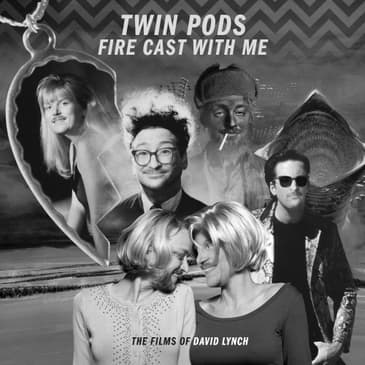




One of the more harrowing films we’ve covered on the podcast (and the second film we’ve covered in 2024 with a memorable “gobble gobble” line), 1992’s TWIN PEAKS: FIRE WALK WITH ME was not the quirky, enjoyable plotline wrap-up fans of Twin Peaks wanted. David Lynch instead challenged the audience to identify with Laura Palmer’s humanity and pain, making her a real person - not just a girl wrapped in plastic. THE FIRST OMEN director Arkasha Stevenson joins us to talk about how this film (and WILD AT HEART) inspired her to become a filmmaker, the uncanny experience of watching it without any prior knowledge of the Twin Peaks series, and the directorial choices Lynch makes that create the film’s deeply unsettling atmosphere.
Join our Patreon for franchise commentaries and bonus episodes.
Follow us @blankcheckpod on Twitter, Instagram, Threads and Facebook!
Connect with other Blankies on our Reddit or Discord
For anything else, check out BlankCheckPod.com
Learn more about your ad choices. Visit megaphone.fm/adchoices
[00:00:29] [SPEAKER_03]: When this kind of podcast starts, it is very hard to put out. The tender bows of innocence burn first, and the wind rises, and then all goodness is in jeopardy.
[00:00:41] [SPEAKER_08]: That's why our episodes end up being three hours long, David.
[00:00:44] [SPEAKER_08]: Okay, why is that?
[00:00:45] [SPEAKER_08]: Because when it starts, it's hard to put out.
[00:00:48] [SPEAKER_08]: Oh, fires are hard to put out.
[00:00:49] [SPEAKER_08]: Innocence is burning, and yeah. You know.
[00:00:51] [SPEAKER_07]: Yeah. Okay. Yeah. Well, this one's not gonna be three hours. I'm just telling you that right now.
[00:00:57] [SPEAKER_07]: Sure, it's gonna be 3.30.
[00:00:57] [SPEAKER_07]: Uh-huh. Okay.
[00:00:59] [SPEAKER_07]: Hello.
[00:01:00] [SPEAKER_07]: Three and a half bucks. Hello.
[00:01:02] [SPEAKER_08]: Hi. How are you doing?
[00:01:03] [SPEAKER_08]: I'm fine. Me? I'm fine.
[00:01:05] [SPEAKER_08]: I just knocked your water over.
[00:01:07] [SPEAKER_08]: It's been a tough morning. Let's just say this.
[00:01:09] [SPEAKER_05]: Yeah, let's just say it.
[00:01:11] [SPEAKER_05]: Yeah, let's just say it.
[00:01:11] [SPEAKER_05]: We've had some technical difficulties.
[00:01:14] [SPEAKER_08]: Look, in the grand scheme of things, could be worse.
[00:01:18] [SPEAKER_08]: Watched a movie last night that depicts someone whose life is full of much greater struggles than what we've gone through.
[00:01:24] [SPEAKER_04]: Wait, sorry. Actually, we've had technical difficulties.
[00:01:27] [SPEAKER_08]: Okay, that's what's going on.
[00:01:28] [SPEAKER_08]: Right.
[00:01:56] [SPEAKER_08]: Sure. Yes.
[00:01:57] [SPEAKER_08]: Sure.
[00:01:57] [SPEAKER_08]: And then it bounces, and then you're like, I can catch the check, and then you bounce it further.
[00:02:02] [SPEAKER_08]: Right.
[00:02:02] [SPEAKER_08]: And then 20 years later, people are like, I think that was a masterpiece.
[00:02:06] [SPEAKER_08]: Right? That's basically the insane life cycle of this whole-
[00:02:10] [SPEAKER_08]: Yes.
[00:02:10] [SPEAKER_08]: This movie and this world? Yes.
[00:02:12] [SPEAKER_08]: Yes. Absolutely.
[00:02:12] [SPEAKER_08]: We're talking about the films of David Lynch and his television, frankly, to be honest.
[00:02:17] [SPEAKER_08]: Mm-hmm.
[00:02:17] [SPEAKER_08]: Mm-hmm.
[00:02:17] [SPEAKER_08]: To be quite honest.
[00:02:23] [SPEAKER_08]: Mm-hmm.
[00:02:24] [SPEAKER_08]: This is a series that we've titled Twin Pods Firecast with Me.
[00:02:27] [SPEAKER_07]: Yes.
[00:02:29] [SPEAKER_07]: Yes, that's true.
[00:02:30] [SPEAKER_08]: This is the moment where everything's lining up.
[00:02:31] [SPEAKER_07]: We're in an unusual studio.
[00:02:33] [SPEAKER_07]: Yes.
[00:02:33] [SPEAKER_08]: Um...
[00:02:34] [SPEAKER_08]: This is a-
[00:02:35] [SPEAKER_08]: Is this a Black Lodge?
[00:02:36] [SPEAKER_08]: Yeah.
[00:02:36] [SPEAKER_08]: Compared to our Red Lodge?
[00:02:38] [SPEAKER_07]: White- Black Lodge and White Lodge.
[00:02:40] [SPEAKER_07]: It's okay.
[00:02:40] [SPEAKER_07]: Aren't there three lodges?
[00:02:41] [SPEAKER_07]: No, there's just the Black Lodge and the White Lodge.
[00:02:43] [SPEAKER_07]: Goddammit.
[00:02:44] [SPEAKER_07]: The Red Room is the Black Lodge.
[00:02:46] [SPEAKER_07]: They're the same thing.
[00:02:46] [SPEAKER_07]: Okay, well...
[00:02:47] [SPEAKER_07]: Yeah.
[00:02:48] [SPEAKER_07]: It's okay.
[00:02:48] [SPEAKER_07]: Don't worry about it.
[00:02:49] [SPEAKER_08]: So then...
[00:02:50] [SPEAKER_08]: Well, then maybe this is the Red Room.
[00:02:52] [SPEAKER_08]: No, yes.
[00:02:53] [SPEAKER_08]: Introduce our guest.
[00:02:54] [SPEAKER_07]: Guest today.
[00:02:57] [SPEAKER_07]: Who we...
[00:02:58] [SPEAKER_07]: We're just...
[00:02:59] [SPEAKER_07]: We're just putting through hell.
[00:03:00] [SPEAKER_07]: We put through the ring.
[00:03:01] [SPEAKER_08]: We're really sorry.
[00:03:02] [SPEAKER_08]: Uh...
[00:03:03] [SPEAKER_08]: Fantastic filmmaker.
[00:03:04] [SPEAKER_08]: Director of The First Dome, and Akasha Stevenson.
[00:03:07] [SPEAKER_02]: Hello.
[00:03:08] [SPEAKER_08]: Hi, Akasha.
[00:03:09] [SPEAKER_07]: How are you doing?
[00:03:09] [SPEAKER_02]: I'm good.
[00:03:10] [SPEAKER_02]: How are you guys?
[00:03:11] [SPEAKER_07]: Oh, we're fine.
[00:03:12] [SPEAKER_07]: Chill.
[00:03:13] [SPEAKER_07]: The word is chill.
[00:03:15] [SPEAKER_08]: Apparently Griffin hasn't eaten anything today.
[00:03:17] [SPEAKER_08]: It's 1250 PM.
[00:03:18] [SPEAKER_08]: Cool as ice.
[00:03:19] [SPEAKER_08]: I asked for a granola bar.
[00:03:20] [SPEAKER_08]: It's been 45 minutes.
[00:03:23] [SPEAKER_08]: Everything is going...
[00:03:24] [SPEAKER_08]: As Ben said, everything is going well.
[00:03:27] [SPEAKER_07]: Akasha is in New Orleans in a podcast studio that is surrounded by saints and Vikings and
[00:03:34] [SPEAKER_07]: Pelicans logos.
[00:03:36] [SPEAKER_07]: Yes.
[00:03:37] [SPEAKER_07]: Yes.
[00:03:37] [SPEAKER_02]: I never travel without my sports spirit.
[00:03:40] [SPEAKER_02]: Right.
[00:03:41] [SPEAKER_07]: This is your sad dressing.
[00:03:42] [SPEAKER_02]: Yeah.
[00:03:43] [SPEAKER_07]: You brought it.
[00:03:44] [SPEAKER_07]: Yeah.
[00:03:44] [SPEAKER_07]: Um, uh, here to talk with us about, uh, Twin Peaks Firewalk with me.
[00:03:50] [SPEAKER_08]: Uh, Akasha, I heard you on The Big Picture.
[00:03:54] [SPEAKER_08]: Uh, and you talked about how this movie and Wild at Heart are like the two sole reasons
[00:04:01] [SPEAKER_08]: you became a filmmaker.
[00:04:03] [SPEAKER_02]: That is not a lie.
[00:04:05] [SPEAKER_02]: It's very true.
[00:04:06] [SPEAKER_02]: Um, I, um, did I tell the story about how I was first introduced to David Lynch on that
[00:04:14] [SPEAKER_02]: podcast?
[00:04:15] [SPEAKER_08]: Please tell the story.
[00:04:17] [SPEAKER_02]: Okay.
[00:04:17] [SPEAKER_02]: I had, uh, dropped out of college, was living on my mother's couch, um, and was at...
[00:04:24] [SPEAKER_08]: You had been studying photojournalism.
[00:04:26] [SPEAKER_08]: Is that right?
[00:04:26] [SPEAKER_02]: This was even prior to photojournalism.
[00:04:29] [SPEAKER_02]: Oh, wow.
[00:04:29] [SPEAKER_02]: This was when I was picking my nose and doing nothing important, you know?
[00:04:34] [SPEAKER_02]: Um, and I went to this bar that is now condemned, but it was called Hell.
[00:04:40] [SPEAKER_02]: And it was this...
[00:04:41] [SPEAKER_02]: Jesus.
[00:04:41] [SPEAKER_02]: It's a wonderful bar.
[00:04:43] [SPEAKER_02]: It's, you know, you pee in a trough both in the men's and women's bathrooms.
[00:04:47] [SPEAKER_02]: It's just an absolute carnival ride.
[00:04:50] [SPEAKER_07]: Wait, wait, where is this bar?
[00:04:51] [SPEAKER_07]: Hell, where is this?
[00:04:52] [SPEAKER_02]: It is now condemned, but it was in Chapel Hill, North Carolina.
[00:04:55] [SPEAKER_07]: Chapel Hill.
[00:04:56] [SPEAKER_07]: Yeah.
[00:04:56] [SPEAKER_07]: Below...
[00:04:57] [SPEAKER_07]: It's now condemned.
[00:04:57] [SPEAKER_02]: It's condemned.
[00:04:59] [SPEAKER_02]: It's below bubs if anybody from Chapel Hill is listening.
[00:05:02] [SPEAKER_09]: Okay.
[00:05:03] [SPEAKER_02]: Yeah.
[00:05:04] [SPEAKER_02]: And they, it was a dance party and on a projector they were playing silently by our walk with
[00:05:10] [SPEAKER_02]: me.
[00:05:11] [SPEAKER_02]: And so mid dance, cause this is how I dance.
[00:05:15] [SPEAKER_08]: Uh, right.
[00:05:16] [SPEAKER_08]: And for the listener at home, our Kosh is doing probably the best dance I've ever seen.
[00:05:19] [SPEAKER_02]: Thank you.
[00:05:21] [SPEAKER_02]: I saw the, the scene where, um, the one armed man, Mike is trying to drive Laura and Leland
[00:05:31] [SPEAKER_02]: off the road.
[00:05:32] [SPEAKER_02]: Uh huh.
[00:05:33] [SPEAKER_02]: And so, you know, people are, he's screaming at Laura and there's no sound.
[00:05:37] [SPEAKER_02]: So I'm just trying to read his mouth and his lips and I just keep catching the word
[00:05:41] [SPEAKER_02]: corn.
[00:05:45] [SPEAKER_02]: And what the hell is this?
[00:05:48] [SPEAKER_02]: And I, I actually left the bar and I might be aging myself, went across the street to,
[00:05:54] [SPEAKER_02]: um, the video rental store.
[00:05:56] [SPEAKER_09]: Oh yeah.
[00:05:57] [SPEAKER_02]: And it's like, I described the scene and they're like, that's definitely David Lynch, but that
[00:06:01] [SPEAKER_02]: movie's out right now.
[00:06:02] [SPEAKER_02]: Here's wild at heart.
[00:06:03] [SPEAKER_09]: Yeah.
[00:06:04] [SPEAKER_02]: And so I went home, watch wild at heart.
[00:06:07] [SPEAKER_02]: My brain exploded.
[00:06:08] [SPEAKER_02]: And, um, yeah, there's another like 10 hour story from there, but that that's the gist.
[00:06:15] [SPEAKER_08]: So when did you watch this movie in full?
[00:06:18] [SPEAKER_02]: Um, it was probably after that I started devouring every Lynch movie I could find.
[00:06:24] [SPEAKER_02]: And it was in the mix of everything.
[00:06:27] [SPEAKER_02]: Um, but it strangely enough is the movie I watched the most.
[00:06:33] [SPEAKER_02]: I watch it multiple times a year.
[00:06:35] [SPEAKER_02]: Right.
[00:06:35] [SPEAKER_02]: And, but also the film I know the least about at the same time.
[00:06:40] [SPEAKER_07]: Did you watch it before twin peak?
[00:06:43] [SPEAKER_07]: Like, did you ever, you know, go back and watch the whole show as well?
[00:06:46] [SPEAKER_07]: Or like, was the movie kind of separate for you?
[00:06:48] [SPEAKER_07]: Cause I feel like just some people, the movies kind of separate.
[00:06:50] [SPEAKER_02]: I didn't even know there was a show.
[00:06:51] [SPEAKER_02]: I watched this movie.
[00:06:53] [SPEAKER_02]: And then when I realized months later, this is a prequel to a TV show.
[00:06:57] [SPEAKER_02]: I was just like, well, now howdy, this is really exciting.
[00:07:05] [SPEAKER_07]: Because that's, I, you're not the only person I know who feels that way, who is like, oh yeah, I just like that movie.
[00:07:12] [SPEAKER_07]: Yeah.
[00:07:13] [SPEAKER_07]: And to me, I'm like, is this movie like, does it make any sense outside of twin peaks, the TV show?
[00:07:19] [SPEAKER_07]: But it must make a strange sort of sense.
[00:07:21] [SPEAKER_08]: A lot of people who were diehard fans of the show were furious when this came out, came in with loaded expectations,
[00:07:26] [SPEAKER_08]: wanting it to be something it wasn't trying to be.
[00:07:30] [SPEAKER_08]: Right.
[00:07:30] [SPEAKER_08]: I, uh, Arkasha, full, full transparency.
[00:07:32] [SPEAKER_08]: I now feel more comfortable admitting this.
[00:07:35] [SPEAKER_08]: When this podcast started, the first year of our show was this incredibly dumb bit that David and I constructed,
[00:07:40] [SPEAKER_08]: where we decided we were only going to talk about the Phantom Menace as if no other Star Wars movies had been made.
[00:07:45] [SPEAKER_08]: We thought it was the funniest thing in the world.
[00:07:47] [SPEAKER_08]: And it was just like, here's a failed franchise that never went forward.
[00:07:50] [SPEAKER_08]: Right.
[00:07:50] [SPEAKER_08]: Who knows what the rest of this was supposed to be?
[00:07:56] [SPEAKER_08]: It rarely does.
[00:07:57] [SPEAKER_08]: I do kind of like to try to engage with something in the quote unquote wrong order that is also an order that the narrative of the universe almost is suggesting.
[00:08:09] [SPEAKER_08]: Like our whole take was like, if George Lucas is claiming that you actually should watch this movie first, then let's pretend that the other movies don't exist.
[00:08:16] [SPEAKER_08]: I did watch this before watching Twin Peaks.
[00:08:19] [SPEAKER_07]: Before watching any Twin Peaks at all.
[00:08:21] [SPEAKER_08]: Yeah, I saw this like a month or two ago because it was playing at the Paris theater.
[00:08:24] [SPEAKER_08]: I'd only ever seen the pilot.
[00:08:26] [SPEAKER_08]: And then after seeing this, I then watched all of the show and then watch it again last night.
[00:08:32] [SPEAKER_08]: I will say it definitely made more sense to me having watched the show.
[00:08:36] [SPEAKER_02]: It's so interesting because I had almost the opposite experience where where I probably interesting.
[00:08:44] [SPEAKER_02]: No, Twin Peaks is this movie and this world.
[00:08:47] [SPEAKER_02]: And and, you know, the TV show is the Shirley Temple that you give your child before you start giving them mixed drinks.
[00:08:54] [SPEAKER_08]: You know, it's like, yeah, I think what was interesting for me was that here's this thing that I've been so aware of for such a long time that I've just never engaged with.
[00:09:03] [SPEAKER_08]: And especially with television, I have like a tremendous amount of blind spots where there are things I feel like I know through osmosis.
[00:09:09] [SPEAKER_08]: But I've just never watched a lot of these totemic shows.
[00:09:13] [SPEAKER_08]: And in this weird sense, I had sort of this like a bird's eye view of the reputation of both the show and the movie and ostensibly what both of them were trying to do and how they were different and how they were similar.
[00:09:25] [SPEAKER_08]: And then in reality of actually watching both of them, I feel like my notion of what the series was is actually a little closer to what the movie.
[00:09:36] [SPEAKER_08]: Is and my notion of what the movie was is actually a little closer to what the series is.
[00:09:43] [SPEAKER_08]: Right, right, right, right.
[00:09:44] [SPEAKER_08]: In that I feel like in cultural reputation and we talked about this on the season one episode, but like the stuff that like jumps out in the sort of like meme of vacation culture is like all of the Red Room stuff and the weirdest elements.
[00:09:58] [SPEAKER_08]: And then you watch the series and so much of it is like interpersonal soap opera done with this uncanny David Lynch tone.
[00:10:04] [SPEAKER_08]: But it's about the sadness and the social and romantic and sexual entanglements of all these people.
[00:10:10] [SPEAKER_08]: And then it has this layer of weird supernatural stuff kind of happening at the margins.
[00:10:16] [SPEAKER_08]: And then I had always heard that people didn't like the movie because the movie was the swerve of him being like, I'm just going to place you in the last week of this woman's life and make you deal with like the pain and the suffering of her as a real person.
[00:10:29] [SPEAKER_08]: And when I heard that people didn't like it, I assumed that it was like, oh, because he got away from the genre elements.
[00:10:35] [SPEAKER_08]: But in a way, this movie is more about kind of like the curse of the Twin Peaks universe.
[00:10:43] [SPEAKER_08]: A little.
[00:10:43] [SPEAKER_08]: And the main theme of Twin Peaks for me, which is just sort of like what is evil?
[00:10:48] [SPEAKER_02]: Well, exactly.
[00:10:49] [SPEAKER_02]: And that's what I love about the movie so much is that it's priorities get switched, right?
[00:10:55] [SPEAKER_02]: Yes.
[00:10:56] [SPEAKER_02]: To where instead of talking about, I guess it re-anchors you first and foremost in that Laura is the protagonist of this entire story.
[00:11:06] [SPEAKER_02]: You know, and there's that story that or that intro that Log Lady gives where she says every story starts with one story.
[00:11:14] [SPEAKER_02]: And I think when you're watching that show, you forget that it's about Laura.
[00:11:17] [SPEAKER_02]: You know, Laura is kind of just this woman, you know, a corpse wrapped in a plastic wrap.
[00:11:22] [SPEAKER_02]: But then, you know, I was thinking a lot about Blue Velvet for some reason and that line where Comic-Con says, why are there men like Frank Booth in this world?
[00:11:32] [SPEAKER_02]: And what I love, Fire Walk with me is because it says, let's talk about that.
[00:11:38] [SPEAKER_02]: Let's talk about where evil comes from and mine to the core of this whole universe.
[00:11:42] [SPEAKER_08]: Yeah.
[00:11:42] [SPEAKER_08]: I do feel like I keep coming back to and watching his movies.
[00:11:47] [SPEAKER_08]: There is this almost like childlike reckoning David Lynch has with like, I don't understand how people are capable of things this terrible.
[00:11:54] [SPEAKER_07]: Right.
[00:11:55] [SPEAKER_08]: And I'm trying to understand like where this energy comes from and especially how someone can like present one way and do things so separate from that behind closed doors.
[00:12:05] [SPEAKER_08]: Like how can both of these things be contained within any single person?
[00:12:10] [SPEAKER_08]: Right.
[00:12:13] [SPEAKER_07]: Bob, we'll talk about, we're going to talk about all this.
[00:12:15] [SPEAKER_07]: But right.
[00:12:15] [SPEAKER_07]: But I also feel like the genesis of this movie slightly is Lynch's fixation on Laura.
[00:12:22] [SPEAKER_07]: Yes.
[00:12:23] [SPEAKER_07]: Fixation, I mean it in a good way.
[00:12:26] [SPEAKER_07]: That he probably didn't see coming when he conceived of a gigantic soap opera with 45 characters that's about a whole town.
[00:12:32] [SPEAKER_07]: Well, that's the point.
[00:12:33] [SPEAKER_07]: And then he keeps being like, I just can't get over what happened to Laura.
[00:12:36] [SPEAKER_07]: The thing that I thought of as an impetus for the show.
[00:12:39] [SPEAKER_07]: Right.
[00:12:39] [SPEAKER_07]: Not what the show is.
[00:12:41] [SPEAKER_08]: I feel like the line I've heard a lot of people use is that like the radical act of this movie is that it transforms her from object to subject.
[00:12:49] [SPEAKER_08]: Yeah.
[00:12:49] [SPEAKER_08]: And it does feel like you watch the series and you see Lynch in real time.
[00:12:53] [SPEAKER_08]: And it's the part of just the kind of idea of this movie existing that I find very emotionally affecting.
[00:13:00] [SPEAKER_08]: Which is what he talked about of like he cast this local actor who's mainly just supposed to be a still photo and a prop basically.
[00:13:07] [SPEAKER_08]: And is immediately taken with like this person has something.
[00:13:11] [SPEAKER_08]: There's like a real actor here.
[00:13:13] [SPEAKER_08]: And is working to try to fit her into the show and have reasons to put her in front of camera and give her dialogue and agency.
[00:13:19] [SPEAKER_08]: But all of this is like backed into the corner of we've killed off her ostensible main character.
[00:13:25] [SPEAKER_08]: Sure.
[00:13:25] [SPEAKER_08]: And then you kill off her secondary character.
[00:13:28] [SPEAKER_08]: You know?
[00:13:28] [SPEAKER_08]: And it's like here's him devoting this entire movie that's sort of in real time he became very connected to like what he felt Cheryl Lee was capable of doing.
[00:13:38] [SPEAKER_08]: That no one was letting her do.
[00:13:40] [SPEAKER_08]: And what he felt was profound about Laura Palmer as a character that he felt he needed to put on screen.
[00:13:46] [SPEAKER_08]: Not just as like other characters talking about her in the past as a plot.
[00:13:50] [SPEAKER_02]: And that's why people were so upset when this movie came out.
[00:13:53] [SPEAKER_02]: Because people you know this isn't just a movie.
[00:13:56] [SPEAKER_02]: It's a character study of a young girl who's experiencing and navigating all this horrible drama.
[00:14:01] [SPEAKER_02]: And when you're used to Twin Peaks this show you're like no I want more Douglas Sirk.
[00:14:05] [SPEAKER_02]: I don't want to have to deal with this.
[00:14:07] [SPEAKER_02]: And I think that's why I became so obsessed with this film.
[00:14:12] [SPEAKER_02]: Because I think he portrayed all of this so accurately.
[00:14:16] [SPEAKER_02]: And so in a strange way.
[00:14:19] [SPEAKER_02]: You know it doesn't feel surreal I think to have lived the life of a teenage girl and understand how treacherous it is.
[00:14:24] [SPEAKER_02]: And then to watch this movie and say like oh yeah they're demons.
[00:14:28] [SPEAKER_02]: Yeah they're evil spirits.
[00:14:29] [SPEAKER_02]: You know?
[00:14:30] [SPEAKER_02]: You know?
[00:14:31] [SPEAKER_02]: But it's actually I was reading not too long ago.
[00:14:35] [SPEAKER_02]: Have you guys seen the movie Peyton Place?
[00:14:37] [SPEAKER_07]: No.
[00:14:38] [SPEAKER_07]: No I've never seen Peyton Place.
[00:14:39] [SPEAKER_07]: I've never seen the movie Peyton Place.
[00:14:41] [SPEAKER_07]: Obviously.
[00:14:41] [SPEAKER_02]: Ironically also made a soap opera based on it.
[00:14:44] [SPEAKER_07]: But yes.
[00:14:45] [SPEAKER_07]: Obviously turned into a TV show.
[00:14:48] [SPEAKER_07]: Yeah.
[00:14:49] [SPEAKER_02]: Yeah.
[00:14:49] [SPEAKER_02]: So Peyton Place.
[00:14:50] [SPEAKER_02]: And do you mind if I do spoilers here?
[00:14:54] [SPEAKER_00]: Attention.
[00:14:54] [SPEAKER_00]: Attention.
[00:14:56] [SPEAKER_00]: This is a spoiler alert for the 67 year old movie Peyton Place.
[00:15:00] [SPEAKER_07]: Yeah.
[00:15:01] [SPEAKER_07]: No.
[00:15:01] [SPEAKER_07]: Spoil away.
[00:15:01] [SPEAKER_02]: Well so apparently you know David Lynch's agent said that before when the idea of Twin Peaks first came about he hosted the screening of Peyton Place and that this was like the impetus for Twin Peaks the series.
[00:15:18] [SPEAKER_02]: And Peyton Place is about this like very small bucolic town that is dealing with all this you know these horrible scandals and gossip and trauma.
[00:15:28] [SPEAKER_02]: And there's a girl in this film who is raped by her mother's husband and the town.
[00:15:38] [SPEAKER_04]: And impregnated right?
[00:15:39] [SPEAKER_02]: And impregnated and the big scandal is that the doctor in town gives her an abortion.
[00:15:44] [SPEAKER_02]: But she really like she's this beautiful blonde sweet girl.
[00:15:50] [SPEAKER_02]: And so after seeing Peyton Place I couldn't re-watch Fire Walk with me in the same way you know.
[00:15:55] [SPEAKER_02]: Feels like these two films are so married.
[00:15:57] [SPEAKER_07]: And it is right.
[00:15:58] [SPEAKER_07]: It's the most obvious inspiration for Twin Peaks right?
[00:16:01] [SPEAKER_07]: I mean he cites it when he's.
[00:16:03] [SPEAKER_07]: Yeah.
[00:16:03] [SPEAKER_07]: Yeah.
[00:16:04] [SPEAKER_07]: Coming up with the show.
[00:16:05] [SPEAKER_07]: Right.
[00:16:06] [SPEAKER_08]: Yeah.
[00:16:06] [SPEAKER_08]: I think the other thing that kind of disarmed me watching the movie first and it's it makes sense I mean for you to watch the movie first but not have the awareness of the TV show whereas I was watching it knowing I was doing the wrong thing.
[00:16:19] [SPEAKER_08]: And trying to like fit it into the notion of like so what is the show relative to this.
[00:16:25] [SPEAKER_08]: And the thing that caught me off guard so quickly in just my dumb surface level understanding of what the show was where it's like I've seen the high school prom photo of Laura Palmer and I've seen the photo of the corpse.
[00:16:38] [SPEAKER_08]: And I know the show is centered around this figure and I know the movie is the prequel of the last week of her life.
[00:16:43] [SPEAKER_08]: The thing I didn't know is that like I think I assumed oh the movie is going to be this tragedy about a woman's life a young woman's life going off the rails ending in her death at the end.
[00:16:54] [SPEAKER_08]: And instead this movie is about the first week of her life or the last week of her life excuse me but her life is already fully off the rails like the you're just watching the end of the spiral.
[00:17:06] [SPEAKER_07]: She's accepted I think her death in the first scene basically in the gobble gobble scene like she's already there's already a sort of serenity to her.
[00:17:13] [SPEAKER_08]: Which let's say this is the better gobble gobble movie covered on this podcast in 2024.
[00:17:17] [SPEAKER_08]: We did Gigli recently.
[00:17:19] [SPEAKER_08]: Yeah.
[00:17:20] [SPEAKER_08]: But yes that that's the thing that I think is so disarming about it is you're basically watching a movie that starts with someone pretty close to rock bottom and then you're just seeing how it fully falls apart.
[00:17:32] [SPEAKER_02]: And here's the thing when I first watched the movie I didn't know Laura Palmer was gonna die like that's how.
[00:17:39] [SPEAKER_02]: Wow.
[00:17:40] [SPEAKER_02]: Yeah.
[00:17:40] [SPEAKER_02]: Fresh and clean I came into this you know I was watching it with totally and there's something so beautiful about the filmmaking to where I was just accepting every riddle and I wasn't expecting that to tie into some greater context.
[00:17:57] [SPEAKER_02]: I was just like the gobble gobble scene this is a secret language between two lovers and that makes sense.
[00:18:04] [SPEAKER_02]: And then later people are speaking in code and in this secret language at you know the bar in Canada and it just all I didn't question any of it.
[00:18:14] [SPEAKER_08]: It's such a funny flip too of like when the show is airing at its peak and people are loving it.
[00:18:22] [SPEAKER_08]: Right.
[00:18:22] [SPEAKER_08]: The audience is like pumping their fists and hooting and hollering anytime some new weird element is introduced that isn't explained.
[00:18:29] [SPEAKER_08]: By the time they get to this movie and it's a year after the show's been canceled they're so frustrated that they're not getting answers and you have the opposite response to that which is like the one-armed man shows up in this and you're like I love this unexplained element.
[00:18:43] [SPEAKER_08]: And everyone else is like where's my closure on the one-armed man.
[00:18:46] [SPEAKER_07]: And where's my closure on the show and the show had this cliffhanger and like then it's you know we can and we can talk about all.
[00:18:54] [SPEAKER_08]: I mean we'll talk about it and obviously he thought this was going to be the first of three movies.
[00:18:59] [SPEAKER_08]: Sure.
[00:18:59] [SPEAKER_08]: But it speaks to his priorities where he's like no the thing is to remind everyone that like this is a real person and it's the thing especially in a world and I think this is part of this movie's reputation improving so much especially in the last decade is like our increasingly true crime obsessed culture.
[00:19:17] [SPEAKER_08]: Often kind of loses the actual victims in a way you know it's sort of even if it's paying attention to them it doesn't in a way that sort of abstracts them and dehumanizes them and flattens them.
[00:19:32] [SPEAKER_08]: And this is a movie that like it's it's a weird comparison point but there's a clip I'm obsessed with a Bob Odenkirk on the Howard Stern show where Stern is asking him about Farley and how close he was with Chris Farley.
[00:19:44] [SPEAKER_08]: And he's like still clearly angry about it.
[00:19:48] [SPEAKER_08]: And he's like the frustrating thing is it was so inevitable and it was so cliched.
[00:19:53] [SPEAKER_08]: You kind of knew where it was going and yeah.
[00:19:55] [SPEAKER_08]: Right.
[00:19:55] [SPEAKER_08]: And when there are those stories about celebrities who are caught in this cycle where you're just like they seem to be just circling the drain and this is going to end bad and we all know it.
[00:20:04] [SPEAKER_08]: And I always sit back and wonder like how do they not have a support system how they not have friends and family who are physically pulling them back from this and getting them back on the rails.
[00:20:13] [SPEAKER_08]: And this is a movie where Laura Palmer kind of exists in that way relative to her town.
[00:20:19] [SPEAKER_08]: And everyone is just kind of like I don't know what to do.
[00:20:22] [SPEAKER_08]: And everyone who deals with her is kind of clearly saying like this isn't going to end well.
[00:20:27] [SPEAKER_08]: I don't know how to pull her out.
[00:20:28] [SPEAKER_08]: And they know she's in trouble.
[00:20:29] [SPEAKER_08]: And she knows she's in trouble.
[00:20:31] [SPEAKER_07]: And she knows she's in trouble.
[00:20:32] [SPEAKER_07]: Right.
[00:20:32] [SPEAKER_07]: And there's right.
[00:20:34] [SPEAKER_07]: There's a powerlessness collectively across the town.
[00:20:38] [SPEAKER_02]: Well, and this is going to sound terribly misanthropic.
[00:20:41] [SPEAKER_02]: So just like pull the cord at any point.
[00:20:43] [SPEAKER_07]: I think we can be misanthropic on the Fire Walk with me episode.
[00:20:46] [SPEAKER_07]: This is a very sad, dark, misanthropic film and lovely in its weird way.
[00:20:51] [SPEAKER_07]: But it is.
[00:20:51] [SPEAKER_07]: Go ahead.
[00:20:51] [SPEAKER_07]: Yes.
[00:20:52] [SPEAKER_02]: I think it's so obvious what state she's in, but nobody wants to deal with it.
[00:21:00] [SPEAKER_02]: And that's I do love this scene.
[00:21:03] [SPEAKER_02]: And for some reason, this scene was really like just pierced my heart when I first watched it is when the mom allows.
[00:21:10] [SPEAKER_02]: She knows she's being drugged.
[00:21:11] [SPEAKER_02]: She knows that Leland Palmer is drugging her at night.
[00:21:15] [SPEAKER_02]: And instead, she still, you know, drinks the milk and then has this beautiful vision of this wonderful unicorn.
[00:21:21] [SPEAKER_02]: And I was like, well, of course she's going to, you know, turn a blind eye to all of this,
[00:21:26] [SPEAKER_02]: because wouldn't you rather look at this beautiful unicorn than have to face real life?
[00:21:30] [SPEAKER_02]: It's a horrible, dark fact.
[00:21:32] [SPEAKER_02]: And so it's very like there's a willingness to all of this, you know, which is, I think, why all of the evil thrives so fiercely.
[00:21:41] [SPEAKER_07]: Right.
[00:21:41] [SPEAKER_07]: Because people want to just try to survive rather than fight it, which seems impossible.
[00:21:47] [SPEAKER_07]: Which I also think.
[00:21:48] [SPEAKER_07]: And that is what Bob is to me is it's like, right.
[00:21:51] [SPEAKER_07]: It's like we already we talked about this when we talked about the first season of Twin Peaks.
[00:21:55] [SPEAKER_07]: But like it's like, yes, Bob, you can just be like Bob's a monster.
[00:21:58] [SPEAKER_07]: Right.
[00:21:58] [SPEAKER_07]: Like it's like a science fiction monster.
[00:22:01] [SPEAKER_07]: But it's also just like, yeah, Bob's just like a force.
[00:22:03] [SPEAKER_07]: Yes.
[00:22:04] [SPEAKER_07]: You can't defeat.
[00:22:05] [SPEAKER_07]: Like he's ineffable or whatever.
[00:22:07] [SPEAKER_07]: Like there's no resisting it.
[00:22:09] [SPEAKER_07]: Like there's or there's no defeating.
[00:22:10] [SPEAKER_07]: I don't know.
[00:22:10] [SPEAKER_07]: Whatever.
[00:22:11] [SPEAKER_07]: Yeah.
[00:22:11] [SPEAKER_02]: Yeah.
[00:22:11] [SPEAKER_02]: Interesting thing is that, you know, you think about.
[00:22:15] [SPEAKER_02]: This is why I love rewatching this film is because you have this one explanation where evil is coming from the Black Lodge.
[00:22:22] [SPEAKER_02]: It's perpetrated by spirits.
[00:22:25] [SPEAKER_02]: Meanwhile, you have Leo and Jacques and and all these other really nasty characters who are, you know, perpetrating just horrible cruelty.
[00:22:35] [SPEAKER_02]: And they're not possessed.
[00:22:37] [SPEAKER_02]: You know, there's nothing to indicate that that there's something supernatural going on there.
[00:22:41] [SPEAKER_02]: And this is this is another layer, like even more misanthropic is that you think about like, OK, why is all of this allowed to happen?
[00:22:50] [SPEAKER_02]: And and, you know, Laura is when she's in the state, she's easier to take advantage of.
[00:22:56] [SPEAKER_02]: She's easier to control.
[00:22:57] [SPEAKER_02]: She's part of the economy.
[00:22:58] [SPEAKER_02]: She's part of this trade between Canada and and this small town.
[00:23:04] [SPEAKER_02]: You know, it's it's it's kind of a really damning commentary on humanity.
[00:23:11] [SPEAKER_07]: Yes. I mean, again, it's hard to talk about.
[00:23:15] [SPEAKER_07]: We're sort of talking about Twin Peaks over many episodes, right?
[00:23:17] [SPEAKER_07]: We're spreading this sort of project of his over the TV seasons and then the return in this movie or whatever.
[00:23:24] [SPEAKER_07]: But I mean, Ben Horn, who I will bring up again, like is this character who is evil.
[00:23:30] [SPEAKER_07]: Yes.
[00:23:31] [SPEAKER_07]: But banal, capitalistic kind of evil guy.
[00:23:34] [SPEAKER_07]: Right. Just wants to screw people over, get money.
[00:23:36] [SPEAKER_07]: But he also like clearly has sex with Laura.
[00:23:40] [SPEAKER_07]: Doesn't, you know, admits it, but doesn't really atone for it.
[00:23:44] [SPEAKER_07]: Loses everything, but also isn't punished.
[00:23:46] [SPEAKER_07]: Like his arc is Lynch talking about like mundane banal evil while there is.
[00:23:50] [SPEAKER_07]: Yes. Also a black lodge with a monster in it that possesses Leland Palmer.
[00:23:54] [SPEAKER_08]: And I agree with you that he is, in my read, the most evil character across the Twin Peaks universe.
[00:24:00] [SPEAKER_08]: Yes.
[00:24:00] [SPEAKER_08]: But part of what makes him the most evil to me is he is a guy who is not in conflict with his evil.
[00:24:06] [SPEAKER_08]: Like there's nothing supernatural.
[00:24:07] [SPEAKER_08]: He's not like fighting the possession of Bob, which whether you take it literally or allegorically, it's like this guy's just making calculated decisions.
[00:24:15] [SPEAKER_09]: Right.
[00:24:15] [SPEAKER_08]: And living with them.
[00:24:16] [SPEAKER_08]: Ben's not even in this movie.
[00:24:18] [SPEAKER_07]: Right.
[00:24:18] [SPEAKER_07]: I mean, he's in the deleted scenes.
[00:24:19] [SPEAKER_08]: Right. And Ray Wise is so good in this film.
[00:24:22] [SPEAKER_08]: Right.
[00:24:22] [SPEAKER_08]: And you read about like how Lynch didn't tell him that he was the one who killed Laura until right before they shot that episode.
[00:24:29] [SPEAKER_08]: He was very unnerved.
[00:24:31] [SPEAKER_08]: That was not how he was consciously playing the character.
[00:24:34] [SPEAKER_08]: Even though if you watch the show, it does feel like it lines up.
[00:24:37] [SPEAKER_08]: It feels like screamingly obvious.
[00:24:39] [SPEAKER_08]: Right.
[00:24:39] [SPEAKER_07]: Right.
[00:24:39] [SPEAKER_07]: Yeah.
[00:24:40] [SPEAKER_08]: And he was worried about like, I've come to like this guy.
[00:24:43] [SPEAKER_08]: And now you're going to assign like these horrible actions to him.
[00:24:47] [SPEAKER_08]: And he said that he ultimately felt very pleased with the arc Lynch gave him.
[00:24:54] [SPEAKER_08]: And like not that the character was redeemed, but that he's like depicted as having this struggle, which doesn't make anything he does more forgivable.
[00:25:03] [SPEAKER_08]: But it's sort of like there are these two sides of the thing where it's like here's a guy who's like in the throes of madness.
[00:25:09] [SPEAKER_08]: Right.
[00:25:09] [SPEAKER_08]: Like he is trying to fight these horrible compulsions he has.
[00:25:14] [SPEAKER_08]: There is like a struggle within him versus like Ben Horn who just does shit and like justifies the means.
[00:25:21] [SPEAKER_08]: Right.
[00:25:22] [SPEAKER_08]: Or doesn't.
[00:25:23] [SPEAKER_08]: Right.
[00:25:23] [SPEAKER_08]: And as you said, like Jack and Leo are just like guys who are kind of creepy.
[00:25:27] [SPEAKER_08]: Like I love the Jack performance so much because it's like and Leo to a lesser extent, but especially Jack is like everyone in this town is kind of like horrible and is putting a nice face on it.
[00:25:40] [SPEAKER_08]: And Jack is like the one guy who's just sort of like this.
[00:25:43] [SPEAKER_08]: We all want this.
[00:25:44] [SPEAKER_08]: I'm a scumbag.
[00:25:45] [SPEAKER_08]: We all want sex and drugs.
[00:25:46] [SPEAKER_08]: Right.
[00:25:47] [SPEAKER_08]: Fucked up.
[00:25:47] [SPEAKER_02]: Like this is Jack in a strange universe kind of comes full circle, almost like Humphrey Bogart, where Humphrey Bogart is so ugly that he has become extremely handsome.
[00:25:59] [SPEAKER_02]: And Jack is so off-putting that you're kind of like, do I like this guy?
[00:26:04] [SPEAKER_08]: You know, also because you're like he's sort of the most honest person in the town.
[00:26:08] [SPEAKER_07]: Right.
[00:26:09] [SPEAKER_07]: There's no veneer to Jack Renaud even compared to like Leo or whatever.
[00:26:12] [SPEAKER_08]: Is that commendable?
[00:26:13] [SPEAKER_08]: But yes, it's all these different like forms of evil and like what drives people to do things.
[00:26:20] [SPEAKER_02]: It's almost an advertisement for just simplicity.
[00:26:24] [SPEAKER_02]: You know, it's having and that's what I really love about the doppelgangers in the Twin Peaks show.
[00:26:33] [SPEAKER_02]: You know, just knowing that it's almost too much for us to fathom that so much complexity exists within one being.
[00:26:39] [SPEAKER_02]: And so it's it's it's almost, you know, he's doing us a solid by kind of dividing it up into two different bodies for us, you know, and there's this, you know, the moment with Leland Palmer when he it's after the whole nobody's eating until Laura washes her hands argument.
[00:26:57] [SPEAKER_02]: And then he's sitting on the side of the bed and you physically see him switch when Bob can leave his body.
[00:27:03] [SPEAKER_02]: And then all of a sudden he realizes, oh, I did something horrible.
[00:27:07] [SPEAKER_02]: And that that was so brilliant and perfect to you and helps me really kind of metabolize what was going on.
[00:27:16] [SPEAKER_08]: And, you know, well, the moment at it at the very end before the like the actual sort of killing takes place when Leland says, like, I read your diary.
[00:27:29] [SPEAKER_08]: I'm going to paraphrase it, but like I didn't realize you didn't know it was me.
[00:27:34] [SPEAKER_08]: Right.
[00:27:34] [SPEAKER_08]: And then he moves out of frame and then Bob enters frame from the opposite side and said, like, I didn't know you always knew it was me.
[00:27:43] [SPEAKER_08]: It's kind of the homography to me in a way.
[00:27:45] [SPEAKER_07]: Yeah.
[00:27:46] [SPEAKER_07]: Right.
[00:27:46] [SPEAKER_07]: The handwashing as well.
[00:27:48] [SPEAKER_07]: It's just is such a good there's so many ways to take the like, you know, does Leland know he's, you know, corrupted her and wants her to like or is he, you know, is it his own like feeling of I need to clean myself or you know what I'm like?
[00:28:02] [SPEAKER_07]: It's I love all that creepy metaphorical stuff.
[00:28:06] [SPEAKER_07]: I'm opening the dossier.
[00:28:07] [SPEAKER_07]: Okay.
[00:28:09] [SPEAKER_07]: Yeah.
[00:28:10] [SPEAKER_07]: This is just some research we have on the movie, Arkasha, but Pierre Edelman, who is a guy Lynch works with a lot, who is a French guy he meets making Dune, who apparently was kicked off set for being annoying by Raffaella De Laurentiis and made a fortune in blue jeans and also went to prison.
[00:28:30] [SPEAKER_08]: Yeah.
[00:28:30] [SPEAKER_08]: I was going to say, I mean, this is what I want more of.
[00:28:33] [SPEAKER_08]: Can we get this back into the film industry?
[00:28:34] [SPEAKER_08]: Just eccentric dungary tycoons.
[00:28:37] [SPEAKER_08]: Yeah, right.
[00:28:37] [SPEAKER_08]: We are like, you know what?
[00:28:38] [SPEAKER_08]: I like bankrolling weird art.
[00:28:42] [SPEAKER_07]: Yes.
[00:28:43] [SPEAKER_07]: He worked for CB 2000, which is a boutique French production company.
[00:28:49] [SPEAKER_07]: And after Wild at Heart does so well, he basically at Cannes wins the Palme d'Or.
[00:28:55] [SPEAKER_07]: Right.
[00:28:56] [SPEAKER_07]: He crashes a party and grabs Lynch and is like, I will make anything you want to make.
[00:29:01] [SPEAKER_07]: Like, you know, what can we do?
[00:29:03] [SPEAKER_07]: I'll give you money.
[00:29:04] [SPEAKER_07]: Ronnie Rocket is what they think, which is this long gestating never made Lynch project is what they think they're going to make.
[00:29:09] [SPEAKER_08]: The way people say life is what happens when you're making other plans.
[00:29:13] [SPEAKER_08]: David Lynch's career is what happens while trying to make Ronnie Rocket.
[00:29:16] [SPEAKER_08]: Like every single project starts with his plan was to make Ronnie Rocket next.
[00:29:21] [SPEAKER_08]: And then instead we end up with whatever we end up with.
[00:29:24] [SPEAKER_07]: Yes.
[00:29:25] [SPEAKER_07]: So Lynch accepts, signs a three picture deal with these guys.
[00:29:31] [SPEAKER_07]: And Twin Peaks around this time is flagging on ABC basically after, you know, exploding.
[00:29:39] [SPEAKER_07]: And, you know, the sort of brief phenomenon of it, the ratings start going down.
[00:29:43] [SPEAKER_08]: I mean, just to snapshot this moment quickly, right?
[00:29:45] [SPEAKER_08]: Like first season of Twin Peaks is like this out of the box surprise phenomenon.
[00:29:49] [SPEAKER_08]: Then like two weeks later, Wild at Heart premieres at Cannes, gets booze and wins the bomb tour.
[00:29:56] [SPEAKER_08]: Right.
[00:29:56] [SPEAKER_08]: And you're like, they're starting to be like he's at his absolute cultural peak and people are starting to turn on him at the same time.
[00:30:04] [SPEAKER_08]: And then it's like that fall, Twin Peaks comes back, falls off a cliff.
[00:30:09] [SPEAKER_08]: Wild at Heart gets an Oscar nomination, does fairly well commercially for his movies at that time.
[00:30:16] [SPEAKER_08]: But then it's all ready by like 1991.
[00:30:19] [SPEAKER_08]: It's like, are people over him?
[00:30:20] [SPEAKER_08]: Did he go too far up his butt?
[00:30:23] [SPEAKER_07]: And so when Twin Peaks gets canceled, he is like, let's do the third season as a movie.
[00:30:28] [SPEAKER_07]: Yeah.
[00:30:29] [SPEAKER_07]: So they start working on that.
[00:30:31] [SPEAKER_07]: They had a third season idea.
[00:30:32] [SPEAKER_07]: And it was all going to be all about, you know, Cooper's doppelganger.
[00:30:36] [SPEAKER_07]: And there's a lot you can read about it.
[00:30:37] [SPEAKER_07]: Like they have a plan.
[00:30:39] [SPEAKER_07]: Yeah.
[00:30:39] [SPEAKER_07]: And then Lynch switches to, no, I actually want to do a prequel.
[00:30:43] [SPEAKER_07]: I want to do everything up to when Laura dies.
[00:30:48] [SPEAKER_07]: And I want it to be called Fire Walk With Me.
[00:30:51] [SPEAKER_07]: And that is the point, you know, I guess at which people like Mark Frost, who obviously co-created Twin Peaks, are like, I'm done with this.
[00:31:01] [SPEAKER_07]: I'm sick of this.
[00:31:02] [SPEAKER_08]: They've sort of also had a falling out of sorts at this point, basically, where like...
[00:31:05] [SPEAKER_08]: The way season two went, I think, caused so many problems.
[00:31:09] [SPEAKER_08]: Whose fault is this?
[00:31:10] [SPEAKER_08]: And he's sort of taking it back.
[00:31:11] [SPEAKER_08]: And he always talks about like, I was in love with that world and I was in love with those characters and I wasn't ready to let them go.
[00:31:18] [SPEAKER_08]: But it also feels like it makes sense where you do an eight episode first season where they wrote it all in advance and they had a certain amount of control and there wasn't a ton of oversight.
[00:31:27] [SPEAKER_08]: And everyone sort of viewed this as a flyer.
[00:31:29] [SPEAKER_08]: And then season two comes in and the show is forced onto the demands of a 22 episode season.
[00:31:34] [SPEAKER_08]: Now it's time to make the donuts.
[00:31:36] [SPEAKER_08]: How do you stretch this out?
[00:31:37] [SPEAKER_08]: How do you keep it going?
[00:31:38] [SPEAKER_08]: And the thing collapses.
[00:31:40] [SPEAKER_08]: I understand his thinking of like, is the way to bring this back movies?
[00:31:44] [SPEAKER_08]: Can I refocus it back to I only have to deal with two hours at a time?
[00:31:49] [SPEAKER_08]: I can re-exert the control over it.
[00:31:51] [SPEAKER_08]: I'm in my Jerry Lewis phase where the French are willing to give me money.
[00:31:55] [SPEAKER_08]: They like anything I do, even if everyone else is starting to turn on me.
[00:31:59] [SPEAKER_08]: Maybe I can reclaim this.
[00:32:01] [SPEAKER_08]: But what's fascinating is he's making this movie based on some personal compulsion to like reclaim what he liked about this universe.
[00:32:09] [SPEAKER_08]: And the public, I think, assumes, oh, he's going to make a movie to fix this.
[00:32:14] [SPEAKER_08]: He's going to solve the show.
[00:32:15] [SPEAKER_08]: He's going to give us a sense of resolution we didn't get.
[00:32:18] [SPEAKER_08]: And those two things are happening at odds and aren't in conversation at all.
[00:32:23] [SPEAKER_08]: David?
[00:32:24] [SPEAKER_08]: Yes.
[00:32:24] [SPEAKER_08]: You know what we like?
[00:32:26] [SPEAKER_08]: If you had to name one thing that you and I both like on this show.
[00:32:30] [SPEAKER_08]: I think we love the movies.
[00:32:31] [SPEAKER_08]: We love the movies.
[00:32:33] [SPEAKER_08]: What?
[00:32:33] [SPEAKER_08]: And what do we love?
[00:32:35] [SPEAKER_08]: We love going to see the movies at the theaters.
[00:32:38] [SPEAKER_08]: That is very, very true.
[00:32:40] [SPEAKER_08]: That's very true.
[00:32:40] [SPEAKER_08]: It's a thing we stump for.
[00:32:42] [SPEAKER_07]: The theater experience is worth preserving, is the best way to experience a movie.
[00:32:47] [SPEAKER_08]: And let's just say it.
[00:32:48] [SPEAKER_08]: David, we're thrilled.
[00:32:50] [SPEAKER_08]: We're excited.
[00:32:51] [SPEAKER_08]: We're overjoyed.
[00:32:51] [SPEAKER_08]: This has long been in the works to celebrate the great union of Regal and Blank Check.
[00:32:58] [SPEAKER_08]: Because Regal Cinemas is offering Blankies an incredible deal on unlimited movies.
[00:33:03] [SPEAKER_08]: You know from the Regal Unlimited program, David?
[00:33:07] [SPEAKER_07]: The Regal Unlimited program is an all-you-can-watch movie subscription pass.
[00:33:11] [SPEAKER_07]: It pays for itself in just two visits.
[00:33:13] [SPEAKER_08]: You see any standard 2D movie anytime with no blackout dates or restrictions, premium formats.
[00:33:18] [SPEAKER_08]: You can get your reservations for those as well.
[00:33:21] [SPEAKER_08]: Pay the little surcharge, which of course includes my beloved 4DX.
[00:33:26] [SPEAKER_08]: With Regal Unlimited, you won't just save money on tickets.
[00:33:28] [SPEAKER_08]: You also save on snacks.
[00:33:30] [SPEAKER_08]: Members get 10% off all non-alcoholic concession items.
[00:33:34] [SPEAKER_08]: So if you're planning to see two movies this month, Regal Unlimited just makes sense.
[00:33:38] [SPEAKER_08]: We're both fans of this program.
[00:33:40] [SPEAKER_07]: We're both members!
[00:33:40] [SPEAKER_07]: Regal Unlimited, exactly.
[00:33:41] [SPEAKER_07]: We're both members.
[00:33:42] [SPEAKER_07]: Card-carrying members!
[00:33:48] [SPEAKER_08]: And you know what else is easy peasy?
[00:33:50] [SPEAKER_08]: You can sign up right now on the Regal app or at the link in the description for this episode
[00:33:54] [SPEAKER_08]: and use code BLANKCHECK, one word, to get 10% off your three-month subscription.
[00:34:00] [SPEAKER_07]: I mean, this is a big deal.
[00:34:02] [SPEAKER_07]: Huge.
[00:34:03] [SPEAKER_07]: This is a movie company that shows movies in theaters.
[00:34:07] [SPEAKER_07]: Which we love!
[00:34:07] [SPEAKER_07]: Sponsoring our movie podcast.
[00:34:10] [SPEAKER_07]: Yeah.
[00:34:10] [SPEAKER_07]: And the two of us go to Regal Cinemas to see movies.
[00:34:14] [SPEAKER_07]: Once again, 4DX!
[00:34:15] [SPEAKER_08]: You don't understand how exciting this is for us, guys.
[00:34:17] [SPEAKER_08]: And I also want to say, here's some benefits.
[00:34:19] [SPEAKER_08]: You sign up for Regal Unlimited, you get the free tickets for your one subscription fee,
[00:34:22] [SPEAKER_08]: right?
[00:34:22] [SPEAKER_08]: Per month.
[00:34:23] [SPEAKER_08]: You also can earn points.
[00:34:25] [SPEAKER_08]: Get your points.
[00:34:26] [SPEAKER_08]: All the purchases you make.
[00:34:26] [SPEAKER_08]: This is real griff stuff here.
[00:34:28] [SPEAKER_07]: The Regal Crown Club.
[00:34:29] [SPEAKER_07]: I've been a member since 2008, baby.
[00:34:31] [SPEAKER_08]: You can redeem those points for upgrades on concessions or free concessions, but also
[00:34:35] [SPEAKER_08]: you can log onto their website and you can buy excess promotional merchandise.
[00:34:41] [SPEAKER_08]: I do this all the time.
[00:34:43] [SPEAKER_08]: Oh, how do you get figural cup toppers months later?
[00:34:46] [SPEAKER_08]: Click, click, click, click, click, click, click.
[00:34:48] [SPEAKER_08]: Type, type, type, type, type.
[00:34:50] [SPEAKER_08]: Redeem points.
[00:34:51] [SPEAKER_07]: Also, on Mondays, you get 25% off candy.
[00:34:53] [SPEAKER_07]: On Tuesdays, you get 50% off popcorn.
[00:34:55] [SPEAKER_07]: Plus, you get discounted movie tickets as low as $5 with a Regal Value Days program.
[00:34:59] [SPEAKER_07]: Look at this.
[00:34:59] [SPEAKER_07]: It's an embarrassment of riches.
[00:35:01] [SPEAKER_07]: On your birthday, you get a free popcorn.
[00:35:02] [SPEAKER_07]: I love my birthday.
[00:35:03] [SPEAKER_07]: Every time you visit a ticket to a movie, Regal Crown Club just tracks those visits and
[00:35:07] [SPEAKER_07]: you get the bonus extra credits.
[00:35:08] [SPEAKER_07]: You don't have to do anything.
[00:35:09] [SPEAKER_07]: It's just doing it for you.
[00:35:10] [SPEAKER_08]: I sound a little more excited about it, David.
[00:35:11] [SPEAKER_08]: That's incredible.
[00:35:12] [SPEAKER_04]: It's really incredible.
[00:35:13] [SPEAKER_07]: What ease of use.
[00:35:14] [SPEAKER_07]: Once again, go to the Regal app or you can use the link in the description and use code
[00:35:18] [SPEAKER_07]: BLANKCHECK to get 10% off your three-month subscription.
[00:35:21] [SPEAKER_03]: And then you can go see movies.
[00:35:24] [SPEAKER_07]: I go to the Regal Essex a lot.
[00:35:25] [SPEAKER_07]: That's sort of my local Regal.
[00:35:27] [SPEAKER_07]: I'm a little brag.
[00:35:27] [SPEAKER_07]: Where do you go?
[00:35:28] [SPEAKER_08]: I go to Union Square because they got the 40X.
[00:35:30] [SPEAKER_08]: A classic.
[00:35:30] [SPEAKER_08]: Right.
[00:35:30] [SPEAKER_08]: You like the 40X.
[00:35:32] [SPEAKER_08]: Yeah.
[00:35:32] [SPEAKER_08]: I love the 40X, David.
[00:35:35] [SPEAKER_08]: Regal!
[00:35:38] [SPEAKER_07]: I know, Arkasha, you probably came to this movie fresh.
[00:35:42] [SPEAKER_07]: You did not know about all this drama.
[00:35:44] [SPEAKER_07]: But of course, if you watch it, it's fairly obvious that the prologue section of the film
[00:35:50] [SPEAKER_07]: with Chester Desmond, that's just supposed to be Cooper.
[00:35:55] [SPEAKER_07]: McLaughlin just doesn't want to do this movie at all.
[00:35:58] [SPEAKER_07]: McLaughlin is sick of being Dale Cooper, is sick of being typecast.
[00:36:02] [SPEAKER_07]: They kind of talk him into, what if you do just a little bit, five days of shooting, which
[00:36:07] [SPEAKER_07]: is what they get out of him.
[00:36:08] [SPEAKER_08]: But also McLaughlin...
[00:36:10] [SPEAKER_07]: And then they restructure it to just, it's another guy who's kind of Cooper-y.
[00:36:14] [SPEAKER_08]: McLaughlin, Fenn, and Boyle, I feel like have all talked about how raw they felt at the
[00:36:19] [SPEAKER_08]: time of feeling like we were abandoned by Frost and Lynch.
[00:36:23] [SPEAKER_08]: They set the show up.
[00:36:24] [SPEAKER_08]: It took off.
[00:36:25] [SPEAKER_08]: We're young.
[00:36:26] [SPEAKER_08]: Our careers are banking on this thing.
[00:36:27] [SPEAKER_08]: And then it was sort of left to its own devices.
[00:36:30] [SPEAKER_08]: And like Fenn refuses to do this.
[00:36:33] [SPEAKER_07]: Sherilyn Fenn says she was, quote unquote, being a brat.
[00:36:36] [SPEAKER_07]: Laura Flynn Boyle says that she had other stuff going on.
[00:36:40] [SPEAKER_07]: So they recast her with Moira Kelly.
[00:36:42] [SPEAKER_07]: Right.
[00:36:42] [SPEAKER_07]: Richard Boehmer was basically, did shoot some, was in the script.
[00:36:48] [SPEAKER_07]: Was written but never shot.
[00:36:49] [SPEAKER_07]: But was kind of not into it.
[00:36:50] [SPEAKER_08]: There's obviously 90 minutes of deleted scenes that now exist as, quote, the missing pieces.
[00:36:54] [SPEAKER_08]: I've watched it.
[00:36:55] [SPEAKER_08]: Yeah.
[00:36:55] [SPEAKER_08]: As have I.
[00:36:56] [SPEAKER_08]: Uh, but that is a lot of the supporting townspeople of Twin Peaks stuff that is not in the film
[00:37:02] [SPEAKER_08]: at all.
[00:37:02] [SPEAKER_08]: Once he really realized anything that isn't about Laura's story isn't really important
[00:37:07] [SPEAKER_08]: to this movie.
[00:37:08] [SPEAKER_08]: But yeah, it felt like you read all three of them and they were sort of like, I had other
[00:37:12] [SPEAKER_08]: stuff going on.
[00:37:13] [SPEAKER_08]: I had contra, I had a conflicts.
[00:37:16] [SPEAKER_08]: I couldn't be in the movie.
[00:37:17] [SPEAKER_08]: And then with distance, all three of them were like, I was kind of just like bitter about
[00:37:20] [SPEAKER_08]: the whole thing.
[00:37:22] [SPEAKER_08]: McLaughlin said the typecasting thing.
[00:37:24] [SPEAKER_08]: But I think with distance was also just like, I felt burned by how everything went down.
[00:37:28] [SPEAKER_08]: Um, the Chris Isaac character in this is very much, uh, an astronaut brain in Beneath the
[00:37:35] [SPEAKER_08]: Planet of the Apes language.
[00:37:37] [SPEAKER_08]: Sure.
[00:37:38] [SPEAKER_08]: Sure.
[00:37:38] [SPEAKER_08]: Where you're like, here's a guy who's like so similar to the type of the other guy going
[00:37:43] [SPEAKER_08]: through an almost identical arc before the original guy comes in and sort of takes over again.
[00:37:47] [SPEAKER_07]: Right.
[00:37:48] [SPEAKER_07]: Like, Akasha, what do you make of the prologue, especially someone not familiar with the show
[00:37:52] [SPEAKER_07]: or whatever, like that we don't even really get to Laura initially and it's instead this
[00:37:57] [SPEAKER_07]: odd murder investigation to like kick things off?
[00:38:00] [SPEAKER_02]: Well, first off with the Kyle MacLachlan thing, that kind of hurts my heart.
[00:38:04] [SPEAKER_02]: I had no idea that it wasn't immediately destined for Chris Isaac.
[00:38:07] [SPEAKER_02]: And that totally made sense in my mind.
[00:38:10] [SPEAKER_08]: Beyond that, it was like, announce they're making the movie.
[00:38:13] [SPEAKER_08]: Kyle MacLachlan says, I don't want to be part of it.
[00:38:16] [SPEAKER_08]: They announced the movie's canceled.
[00:38:18] [SPEAKER_05]: Oh.
[00:38:18] [SPEAKER_08]: Like, if he can't do it, then they're not going to make it.
[00:38:21] [SPEAKER_08]: Right.
[00:38:21] [SPEAKER_08]: And then he like comes back and is like, I will give you five days.
[00:38:25] [SPEAKER_08]: Right.
[00:38:25] [SPEAKER_07]: We'll give you a little bit if that will.
[00:38:27] [SPEAKER_08]: So that's when they sort of bifurcate it and go like, we only need him for the sort
[00:38:31] [SPEAKER_08]: of.
[00:38:31] [SPEAKER_07]: I love Chris Isaac in this film.
[00:38:32] [SPEAKER_07]: I don't mind how it turned out.
[00:38:34] [SPEAKER_07]: But, you know, you can tell there's sort of odd surgery to it of just like, well,
[00:38:38] [SPEAKER_07]: OK, we'll just sort of do a Cooper type.
[00:38:41] [SPEAKER_08]: Like in this way, that's so odd where like Lynch has made several works that are clearly
[00:38:45] [SPEAKER_08]: working around major logistical issues or like recutting a TV pilot or recasting parts
[00:38:52] [SPEAKER_08]: or any of these things.
[00:38:53] [SPEAKER_08]: Right.
[00:38:53] [SPEAKER_08]: And somehow sort of knows how to own it as intentionality.
[00:38:57] [SPEAKER_08]: But like, yeah, it's it's an odd structural thing because you're like, well, he wants
[00:39:02] [SPEAKER_08]: to make the Laura Palmer movie.
[00:39:04] [SPEAKER_08]: You could imagine people said you can't make a Twin Peaks movie and not have Cooper in it.
[00:39:08] [SPEAKER_08]: So he writes this wraparound of Cooper and then Cooper doesn't want to do it.
[00:39:13] [SPEAKER_02]: But, you know, for somebody who was just entering totally blind, totally fresh, it was almost
[00:39:17] [SPEAKER_02]: the perfect entryway because the whole point for me as a viewer with that beginning was telling
[00:39:24] [SPEAKER_02]: me like, OK, this we're going to be operating in mystery and riddles.
[00:39:29] [SPEAKER_02]: You know, nothing's going to be as it seems.
[00:39:31] [SPEAKER_02]: Nothing's going to be explained to you.
[00:39:32] [SPEAKER_02]: Just like buckle up, enjoy the ride.
[00:39:35] [SPEAKER_02]: And and that's what I was ready for.
[00:39:40] [SPEAKER_02]: And I'd been primed for already was that this was going to be a film that was dealing with
[00:39:47] [SPEAKER_02]: that that can't be quantifiable.
[00:39:50] [SPEAKER_02]: And yeah, and that's kind of I'm already kind of exhausted by that, by trying to be rational
[00:39:54] [SPEAKER_08]: and figure out why you're saying in your like daily life.
[00:39:57] [SPEAKER_02]: Oh, yeah.
[00:39:58] [SPEAKER_02]: Just in life, you know, trying to figure out answers for who, why, when, where all the
[00:40:04] [SPEAKER_02]: time when when really, you know, I think the Lynchian world, but then also our world doesn't
[00:40:10] [SPEAKER_02]: really operate that way.
[00:40:12] [SPEAKER_02]: You know, that's how we try and make sense of the world, but that's not really how things
[00:40:16] [SPEAKER_02]: go down.
[00:40:16] [SPEAKER_02]: So, so when Lil comes out and she's wearing a sour face and it's all a riddle, I was just
[00:40:25] [SPEAKER_02]: like, yes, I'm in.
[00:40:26] [SPEAKER_02]: I don't really know what this means, but we're tapping into something like some sort of childlike
[00:40:34] [SPEAKER_02]: way of calculating and functioning in the world.
[00:40:37] [SPEAKER_02]: I was ready to kind of regress to that state and just let this stuff flow.
[00:40:42] [SPEAKER_02]: So, and then I just love Chris Isaac and Kiefer Sutherland's performance might be one of my
[00:40:49] [SPEAKER_02]: favorite of all time.
[00:40:50] [SPEAKER_07]: I think Kiefer is like incredible.
[00:40:52] [SPEAKER_07]: So fun in this movie and strange.
[00:40:56] [SPEAKER_08]: He he's such a great fit.
[00:40:58] [SPEAKER_08]: I don't want to be the negative Nelly.
[00:40:59] [SPEAKER_08]: I do butt up against Isaac a little bit just in that it's like the feeling of he's so much
[00:41:06] [SPEAKER_08]: the Cooper type.
[00:41:07] [SPEAKER_08]: Like here's another Cooper type.
[00:41:09] [SPEAKER_08]: Right.
[00:41:09] [SPEAKER_08]: Like a grumpier Cooper.
[00:41:10] [SPEAKER_07]: He's got more, he's got a sort of right.
[00:41:13] [SPEAKER_07]: A dirtier edge to him.
[00:41:14] [SPEAKER_07]: Right.
[00:41:14] [SPEAKER_07]: He's more willing to fight.
[00:41:15] [SPEAKER_07]: Like he doesn't feel.
[00:41:17] [SPEAKER_07]: Yes.
[00:41:17] [SPEAKER_08]: He's got less of the boyish sort of enthusiasm.
[00:41:20] [SPEAKER_08]: I think.
[00:41:20] [SPEAKER_07]: Whiz.
[00:41:21] [SPEAKER_07]: I think if Chester Desmond didn't vanish.
[00:41:24] [SPEAKER_07]: Yeah.
[00:41:25] [SPEAKER_07]: I would not like the Chester Desmond thing.
[00:41:27] [SPEAKER_07]: I kind of like the Chester Desmond thing because it's sort of like what will happen to Cooper
[00:41:33] [SPEAKER_07]: one day.
[00:41:34] [SPEAKER_07]: Right.
[00:41:34] [SPEAKER_07]: Where it's like you'll get invested in this inscrutable mystery.
[00:41:38] [SPEAKER_07]: You'll go to kind of.
[00:41:40] [SPEAKER_07]: You'll get lost in the darkness.
[00:41:40] [SPEAKER_07]: Right.
[00:41:40] [SPEAKER_07]: You'll go to kind of try start pulsing and then you just go away.
[00:41:44] [SPEAKER_07]: Right.
[00:41:45] [SPEAKER_07]: And where did you go?
[00:41:46] [SPEAKER_07]: Well, you know, we don't know.
[00:41:47] [SPEAKER_08]: Which is another big Twin Peaks thing of like these things just keep happening over and over
[00:41:51] [SPEAKER_08]: and over again.
[00:41:52] [SPEAKER_08]: These like cycles that don't stop.
[00:41:53] [SPEAKER_08]: The Kiefer character to me is so interesting because he's so different than any like law
[00:41:58] [SPEAKER_08]: enforcement agent we've seen across the series so far.
[00:42:02] [SPEAKER_08]: And Kiefer's at such a weird career point in the 90s where you're like he's sort of this
[00:42:07] [SPEAKER_08]: guy who is like kind of a movie star but seems to prefer playing like supporting parts and being
[00:42:14] [SPEAKER_08]: the guy who doesn't have the story weight.
[00:42:15] [SPEAKER_08]: And he's like equally good at playing like unbridled like id crazy like guy and also playing like weird
[00:42:25] [SPEAKER_08]: bookish man or guy.
[00:42:27] [SPEAKER_02]: He perfectly disappears into the role to the point where I almost didn't even realize it was
[00:42:31] [SPEAKER_02]: him when I first watched it.
[00:42:32] [SPEAKER_02]: Somebody was like, oh, and Kiefer Sutherland's great.
[00:42:34] [SPEAKER_02]: I was like, what are you?
[00:42:35] [SPEAKER_02]: We're talking about different movies.
[00:42:36] [SPEAKER_02]: And then I was like, the blinking guy.
[00:42:39] [SPEAKER_07]: Because, yeah, I guess at this point he'd done like Young Guns and Flatliners.
[00:42:43] [SPEAKER_07]: Like he's, he's in Lost Boys.
[00:42:45] [SPEAKER_07]: I feel like obviously that's his launch.
[00:42:47] [SPEAKER_07]: Right.
[00:42:48] [SPEAKER_07]: And he's where, when does the Julia Roberts thing happen?
[00:42:51] [SPEAKER_07]: Not to be right around this time.
[00:42:53] [SPEAKER_07]: Right.
[00:42:53] [SPEAKER_07]: Like it's sort of this odd moment where it's like, is this going to be right?
[00:42:58] [SPEAKER_07]: Because they obviously they co-star in Flatliners.
[00:43:00] [SPEAKER_08]: But he has a couple like rock and roll bad boy parts.
[00:43:01] [SPEAKER_07]: Right.
[00:43:02] [SPEAKER_08]: Right.
[00:43:02] [SPEAKER_08]: And then you're like sort of zooming towards like a 90s where he's going to like be the
[00:43:07] [SPEAKER_08]: one guy who's unafraid to play like the horrible, unredeemable racist in like John Grisham
[00:43:11] [SPEAKER_08]: movies.
[00:43:12] [SPEAKER_08]: Sure.
[00:43:12] [SPEAKER_08]: But also like Dark City, which is one of the most insane performances of all time.
[00:43:19] [SPEAKER_07]: Yeah.
[00:43:20] [SPEAKER_07]: I love that performance.
[00:43:21] [SPEAKER_07]: Yeah.
[00:43:21] [SPEAKER_07]: Yeah.
[00:43:22] [SPEAKER_07]: He's, he's, he's good at being a little goblin.
[00:43:24] [SPEAKER_07]: And this is kind of a little goblin, like a friendly little goblin.
[00:43:27] [SPEAKER_07]: A different type of goblin.
[00:43:28] [SPEAKER_07]: Yeah.
[00:43:28] [SPEAKER_07]: Yeah.
[00:43:28] [SPEAKER_08]: A benevolent goblin.
[00:43:29] [SPEAKER_08]: Yeah.
[00:43:30] [SPEAKER_08]: Yeah.
[00:43:31] [SPEAKER_08]: But as you said, like here's this inscrutable like opening scene where Lynch comes in
[00:43:37] [SPEAKER_08]: and he's yelling and then Lil does this weird dance.
[00:43:41] [SPEAKER_08]: And then like two minutes later in the car, Kiefer's just like, what was that?
[00:43:46] [SPEAKER_08]: And Chris Isaac's like, you didn't get it?
[00:43:48] [SPEAKER_08]: Well, it's just like, isn't it obvious?
[00:43:51] [SPEAKER_08]: Yes.
[00:43:51] [SPEAKER_02]: Everything like from the very beginning, you know, you open up on static and so you know,
[00:43:57] [SPEAKER_02]: like, okay, this, this is going to be a portrait of an unclear or impenetrable image, you know,
[00:44:03] [SPEAKER_02]: and there's going to be a lot of distortion.
[00:44:06] [SPEAKER_02]: And then immediately afterwards you have, you know, Gordon who can't hear anything.
[00:44:12] [SPEAKER_02]: And so it's, it's, there's so many setups to let the viewer know, like stop questioning,
[00:44:19] [SPEAKER_02]: just feel your way through it.
[00:44:22] [SPEAKER_02]: Um, because this is going to be a movie about two worlds that are butting up against each
[00:44:26] [SPEAKER_02]: other and eventually, you know, permeating into each other.
[00:44:29] [SPEAKER_02]: And, um, and it's probably, I think that's why, you know, it's so interesting.
[00:44:33] [SPEAKER_02]: It's so divisive, just like Steely Dan, you got to be careful when you bring it up in
[00:44:36] [SPEAKER_02]: bar conversation.
[00:44:38] [SPEAKER_07]: Please bring up Steely Dan.
[00:44:39] [SPEAKER_07]: That's totally, that's totally exciting.
[00:44:41] [SPEAKER_07]: Okay.
[00:44:41] [SPEAKER_02]: We're in the right crowd.
[00:44:42] [SPEAKER_02]: Cool.
[00:44:43] [SPEAKER_02]: But people, people, some people hate this movie and I think it's because it asks them to
[00:44:48] [SPEAKER_02]: let go of control and also enter the POV of a young woman, you know, which also really
[00:44:53] [SPEAKER_02]: upsets people.
[00:44:54] [SPEAKER_07]: Yeah.
[00:44:55] [SPEAKER_07]: Yes.
[00:44:56] [SPEAKER_07]: I think, right.
[00:44:56] [SPEAKER_07]: I think the main reason this movie is so profoundly upsetting.
[00:45:00] [SPEAKER_07]: It's one of the more upsetting films I've ever seen.
[00:45:02] [SPEAKER_07]: And so if you, I think some people, somewhat understandably, somewhat not put up with this
[00:45:07] [SPEAKER_07]: force field essentially that was, you know, outwardly just kind of like, well, it's not,
[00:45:13] [SPEAKER_07]: you know, this isn't the Twin Peaks I know.
[00:45:15] [SPEAKER_07]: Like where's the pie?
[00:45:15] [SPEAKER_07]: Where's the whimsy?
[00:45:17] [SPEAKER_08]: There's a feeling of like, is this movie punishing me?
[00:45:20] [SPEAKER_08]: Is it trying to make me feel bad for enjoying old Twin Peaks by saying like, hey, someone was
[00:45:25] [SPEAKER_08]: in pain here.
[00:45:26] [SPEAKER_08]: Which I think the key thing, not to be overly pat about it, is like, this is a movie that
[00:45:29] [SPEAKER_08]: does not allow you to look at the unicorn.
[00:45:32] [SPEAKER_08]: Right?
[00:45:32] [SPEAKER_08]: Right.
[00:45:33] [SPEAKER_08]: It does not allow you to check out.
[00:45:35] [SPEAKER_08]: For most of them.
[00:45:36] [SPEAKER_07]: I would say at the end, it is finally trying to, when, you know, the sort of angelic stuff
[00:45:41] [SPEAKER_07]: at the end, trying to like, be like, it's okay.
[00:45:44] [SPEAKER_07]: Like she's, she's in a better place.
[00:45:46] [SPEAKER_07]: It's, it's good that she, you know, moved on from this world in a way.
[00:45:51] [SPEAKER_07]: Like she was in such suffering.
[00:45:53] [SPEAKER_07]: Like, but it's not like, you don't feel like happy about it.
[00:45:57] [SPEAKER_07]: You're more just sort of like, there's, there, maybe there's some peace at the end of this.
[00:46:01] [SPEAKER_07]: Like that's the best you can hope for.
[00:46:03] [SPEAKER_07]: Yeah.
[00:46:03] [SPEAKER_02]: It's a movie that, that says you are looking at a unicorn.
[00:46:09] [SPEAKER_02]: Right.
[00:46:09] [SPEAKER_02]: It lets you know, like you are being distracted by pretty things because those are nicer to
[00:46:14] [SPEAKER_02]: look at.
[00:46:14] [SPEAKER_02]: Meanwhile, there's existential mold growing in your home, you know?
[00:46:19] [SPEAKER_08]: So, um, right in that way, it's like one of those movies that kind of implicates the
[00:46:24] [SPEAKER_08]: audience, especially if you're someone who is wrapped up in the sort of like pop cultural
[00:46:29] [SPEAKER_08]: phenomenon, the water cooler, like guessing of Twin Peaks when it was going on, which is
[00:46:33] [SPEAKER_08]: like, you're making sport of this, you know?
[00:46:36] [SPEAKER_02]: And in a way, Twin Peaks, the series is the unicorn, you know?
[00:46:40] [SPEAKER_02]: Yes.
[00:46:40] [SPEAKER_02]: Yeah.
[00:46:40] [SPEAKER_02]: So I, I definitely think that's a really good way to put it.
[00:46:44] [SPEAKER_02]: I think that's probably why people are so upset.
[00:46:45] [SPEAKER_02]: They feel very implicated.
[00:46:47] [SPEAKER_08]: Right.
[00:46:48] [SPEAKER_08]: It's like, you're making me feel bad for liking the thing that you made.
[00:46:51] [SPEAKER_08]: Yeah.
[00:46:52] [SPEAKER_08]: And I'm always fascinated by things that are sort of punishing of the audience like that
[00:46:57] [SPEAKER_08]: in a way that isn't vindictive, but is trying to like sort of litigate our relationship to
[00:47:03] [SPEAKER_08]: different works.
[00:47:04] [SPEAKER_08]: But like you read about people being like violently upset with Peeping Tom when it came
[00:47:09] [SPEAKER_08]: out, right?
[00:47:10] [SPEAKER_08]: And you watch that now and you're like, how could anyone be like ripping a chair out of
[00:47:15] [SPEAKER_08]: the studs in the theater over this movie?
[00:47:18] [SPEAKER_08]: Which I, you know, whatever.
[00:47:20] [SPEAKER_08]: I understand people being like, I don't like it at the time.
[00:47:22] [SPEAKER_08]: But people were like, how dare you?
[00:47:24] [SPEAKER_08]: This is, this is culturally offensive.
[00:47:27] [SPEAKER_08]: Everyone who worked on this should be in jail.
[00:47:28] [SPEAKER_08]: And the answer is that people were just like, you're making me feel bad for buying a ticket
[00:47:33] [SPEAKER_08]: to a horror movie.
[00:47:35] [SPEAKER_07]: People feel judged.
[00:47:36] [SPEAKER_07]: I do also think.
[00:47:37] [SPEAKER_07]: I feel judged.
[00:47:38] [SPEAKER_07]: Yeah.
[00:47:38] [SPEAKER_07]: Now that he has done Twin Peaks The Return, this is no longer the final thing that came
[00:47:45] [SPEAKER_07]: out of that world.
[00:47:47] [SPEAKER_07]: He made a series after this that is darker and more violent and more explicit.
[00:47:52] [SPEAKER_07]: So this no longer feels quite as incongruous.
[00:47:55] [SPEAKER_07]: Like this just makes more and more sense to, but like, I've always loved this thing.
[00:48:00] [SPEAKER_07]: So I am not really, I am not the offended Twin Peaks fan of 1992.
[00:48:04] [SPEAKER_08]: I will add on to that.
[00:48:05] [SPEAKER_08]: I think also the legend for so long, the missing pieces didn't come out until the early 2010s,
[00:48:10] [SPEAKER_08]: when the 2010s finally got on a DVD release.
[00:48:12] [SPEAKER_08]: There was always this sort of legend of like, there are 90 minutes of deleted scenes that
[00:48:17] [SPEAKER_08]: have all the characters who aren't in this movie.
[00:48:19] [SPEAKER_08]: And I think people pinned a lot on the idea of like, is that the movie I want to see?
[00:48:24] [SPEAKER_08]: Is there a version of this that gives me everything I want that he just chose to withhold from
[00:48:30] [SPEAKER_08]: me?
[00:48:30] [SPEAKER_08]: There's a fucking vault with 90 minutes of the townspeople doing bits.
[00:48:35] [SPEAKER_07]: This movie is two hours and 15 minutes long, which is already long.
[00:48:39] [SPEAKER_07]: But the initial cut that he had was something like four to three and three and a half, four
[00:48:46] [SPEAKER_07]: hours.
[00:48:48] [SPEAKER_07]: And they kind of, Mary Sweeney, especially who's, you know, working on this movie as the
[00:48:53] [SPEAKER_07]: editor, big collaborative lynches has to kind of help David Lynch realize like, it's Laura's
[00:49:00] [SPEAKER_07]: story.
[00:49:01] [SPEAKER_07]: Right.
[00:49:01] [SPEAKER_07]: A lot of this stuff just kind of has to go.
[00:49:03] [SPEAKER_08]: If they don't relate to her.
[00:49:04] [SPEAKER_07]: Right.
[00:49:04] [SPEAKER_08]: But it's right.
[00:49:05] [SPEAKER_08]: It's not just like, oh, there's a longer cut of this movie.
[00:49:07] [SPEAKER_08]: It's like, there are 15 characters who don't appear in it for a second.
[00:49:12] [SPEAKER_08]: Yes.
[00:49:12] [SPEAKER_08]: And they shot entire scenes.
[00:49:15] [SPEAKER_08]: I mean, it's like so funny where you read like David Bowie was saying like he was kind
[00:49:20] [SPEAKER_08]: of frustrated with his experience on this movie because he was on tour, I think, and he wanted
[00:49:24] [SPEAKER_08]: to play the part, but the scheduling was limited.
[00:49:26] [SPEAKER_08]: And he was like, they had to cram all of my scenes into only five days and it wasn't
[00:49:31] [SPEAKER_08]: enough time to get it done.
[00:49:32] [SPEAKER_08]: And then if you're going to see this movie at the time and you're like, David Bowie appears
[00:49:37] [SPEAKER_08]: in three shots.
[00:49:38] [SPEAKER_08]: What do you mean?
[00:49:39] [SPEAKER_08]: Five days wasn't enough time to get it done.
[00:49:41] [SPEAKER_08]: Right, right, right.
[00:49:44] [SPEAKER_07]: So Twin Peaks Fire Walk With Me.
[00:49:46] [SPEAKER_07]: I have nothing more for you on the production, really.
[00:49:48] [SPEAKER_07]: Making this was not like a complicated experience, really.
[00:49:52] [SPEAKER_07]: I think they did it fast.
[00:49:55] [SPEAKER_07]: They kind of enjoyed it.
[00:49:56] [SPEAKER_07]: Obviously, there are things that were, I think, pressurized.
[00:49:59] [SPEAKER_07]: Like David Bowie has always complained that he didn't have much time to work on his accent.
[00:50:04] [SPEAKER_07]: Yes.
[00:50:05] [SPEAKER_07]: Or things like that.
[00:50:06] [SPEAKER_07]: But it was not like a bad experience.
[00:50:09] [SPEAKER_07]: The bad experience is them showing it at camp.
[00:50:11] [SPEAKER_07]: Like that's when this curdles for them.
[00:50:14] [SPEAKER_07]: But we should talk about the movie.
[00:50:16] [SPEAKER_08]: Akasha, I have a question for you.
[00:50:18] [SPEAKER_08]: And I apologize if this is getting into like dissecting the frog territory.
[00:50:23] [SPEAKER_08]: And I don't want to demystify your process in this way.
[00:50:25] [SPEAKER_08]: But I'm very fascinated because of, you know, you're talking about this experience you had seeing this movie projected at a bar.
[00:50:32] [SPEAKER_08]: I feel like we've covered movies before in this show where I will like use that term of like if this were playing at a bar with the sound off, I would think I was seeing the greatest movie of all time.
[00:50:41] [SPEAKER_08]: And I cannot imagine how profound these pieces must be if I had the context, if I had the full awareness.
[00:50:48] [SPEAKER_08]: But this idea of this thing that Lynch is, you know, uniquely capable of doing, of creating these moments, these images, these weird, these things that can grab you and create some feeling.
[00:50:59] [SPEAKER_08]: Even sort of split up, divorced, removed from their proper environment.
[00:51:05] [SPEAKER_08]: And I think you are similarly skilled as a filmmaker.
[00:51:09] [SPEAKER_08]: And he talks a lot about, you know, his creative process and where these things come from and not trying to over explain them.
[00:51:16] [SPEAKER_08]: As someone who like sees this, this is basically the entry point to you becoming obsessed with film.
[00:51:23] [SPEAKER_08]: You then went to AFI because you had heard that Lynch went there.
[00:51:27] [SPEAKER_08]: Like you basically built an entire road off of like trying to understand the power of what his work meant to you and how you could sort of do that yourself.
[00:51:36] [SPEAKER_08]: Do you now like watch Lynch movies and try to analyze what is it that is making this effective and put that into your work?
[00:51:44] [SPEAKER_08]: Or do you have your own process of just like how do I filter my obsessions into an image that feels like it could have a similar power and meaning?
[00:51:54] [SPEAKER_02]: Oh, gosh.
[00:51:54] [SPEAKER_02]: I think analyzing, that's why these podcasts are so dangerous, I feel like, because we're talking.
[00:52:03] [SPEAKER_07]: Yes, we're very dangerous.
[00:52:04] [SPEAKER_07]: We are.
[00:52:04] [SPEAKER_07]: We're kind of the baddest boys in podcasts.
[00:52:06] [SPEAKER_07]: We are.
[00:52:06] [SPEAKER_02]: It's because we are trying to dissect something that can't be dissected or the frog dies on the table once you do, right?
[00:52:12] [SPEAKER_02]: But you can't help but try and do it.
[00:52:17] [SPEAKER_02]: And I actually, you know, when I first, I have a really hard time articulating myself.
[00:52:22] [SPEAKER_02]: I'm very shy.
[00:52:23] [SPEAKER_02]: I'm not a very linear thinker.
[00:52:26] [SPEAKER_02]: So I have a very hard time with process, you know.
[00:52:29] [SPEAKER_02]: Mm-hmm.
[00:52:30] [SPEAKER_02]: And then I watched Wild at Heart and Fire Walk with me.
[00:52:35] [SPEAKER_02]: And those films are not interested in those things either, you know?
[00:52:39] [SPEAKER_08]: It was an immediate sort of like, this is my wavelength.
[00:52:43] [SPEAKER_08]: Finally, a movie is operating the way my brain works.
[00:52:46] [SPEAKER_02]: And that was my first time experiencing that, where I was like, I have clicked into this way of thinking and communicating that finally makes sense to me.
[00:52:57] [SPEAKER_02]: And I don't feel like such a freak anymore, you know?
[00:53:00] [SPEAKER_09]: Mm-hmm.
[00:53:00] [SPEAKER_02]: And then simultaneously thinking like, I didn't know you were allowed to make this kind of art.
[00:53:06] [SPEAKER_02]: And like, this blew my, you know, I was aware of like the creme master cycles.
[00:53:13] [SPEAKER_02]: I was aware of Bjork.
[00:53:14] [SPEAKER_02]: Like, I knew that there was some, you know, magical stuff out there.
[00:53:18] [SPEAKER_02]: But for some reason, Wild at Heart really tapped into my own heart so strongly to where I was almost scared of wanting to be a filmmaker.
[00:53:28] [SPEAKER_02]: So I didn't want to touch it for a very long time.
[00:53:31] [SPEAKER_02]: But instead, it kind of led me into photojournalism.
[00:53:36] [SPEAKER_02]: Yeah.
[00:53:36] [SPEAKER_02]: Because I wasn't looking at Wild at Heart through the lens of surrealism.
[00:53:40] [SPEAKER_02]: I didn't really know what surrealism was.
[00:53:44] [SPEAKER_02]: And this is going to sound kind of crazy, but a lot of the characters in David Lynch films were not dissimilar from people that I knew in real life.
[00:53:54] [SPEAKER_02]: And definitely not so once I got into photojournalism.
[00:53:58] [SPEAKER_02]: Yeah.
[00:53:59] [SPEAKER_02]: And so I was like, oh, this isn't a surrealist.
[00:54:01] [SPEAKER_02]: This is somebody who's really interested in fringe populations, you know.
[00:54:05] [SPEAKER_08]: And people.
[00:54:06] [SPEAKER_08]: Like genuinely interested in people.
[00:54:08] [SPEAKER_02]: Yes.
[00:54:09] [SPEAKER_08]: Right.
[00:54:09] [SPEAKER_08]: Yeah.
[00:54:09] [SPEAKER_02]: Like somebody who understands, I think, the mindset of a teenage girl so well because he's so interested in people.
[00:54:19] [SPEAKER_02]: And so that.
[00:54:20] [SPEAKER_02]: Sorry, I'm kind of rambling now.
[00:54:21] [SPEAKER_02]: But.
[00:54:22] [SPEAKER_02]: No, no, no.
[00:54:22] [SPEAKER_02]: But once I got brave enough and photojournalism definitely forces you to be, you know, to work on your confidence and your bravery.
[00:54:32] [SPEAKER_02]: That's when I was like, OK, now I'm going to go to IFI and try this.
[00:54:35] [SPEAKER_08]: Yeah.
[00:54:35] [SPEAKER_08]: No.
[00:54:35] [SPEAKER_08]: I mean, it makes sense to me because I think there was like an era of people who clearly seemed inspired by Lynch and were trying to sort of like retrofit, deconstruct the process and do it themselves.
[00:54:51] [SPEAKER_08]: And it felt like an affect to a certain extent.
[00:54:56] [SPEAKER_08]: And I feel like there's there's a wave of filmmakers now that I think you're part of where I feel like you have movies that are able to capture once again that same kind of feeling of like there's something primal here that's not literal that has intense power.
[00:55:12] [SPEAKER_08]: And I do think it makes more sense what you're saying of like watching this and the turnkey being, oh, I can do my version of this.
[00:55:21] [SPEAKER_08]: Not I can make something the way he makes something.
[00:55:23] [SPEAKER_08]: But if he's able to filter his interpretation of the world into something that is legible to others, then I can trust I can communicate that and it can mean something to other people.
[00:55:35] [SPEAKER_02]: That's perfectly said.
[00:55:36] [SPEAKER_02]: It's so empowering for you to get extremely personal.
[00:55:39] [SPEAKER_02]: Right.
[00:55:40] [SPEAKER_02]: And that doesn't necessarily mean like trauma dump on people, but that, you know, just like personal is in the way your juices flow, you know.
[00:55:48] [SPEAKER_02]: And then it's also I think he's such an exceptionally American filmmaker to where I think like I find a lot of comfort in 1950s, 1960s iconography.
[00:56:00] [SPEAKER_02]: You know, that's kind of like a pacifier for me.
[00:56:03] [SPEAKER_02]: To be watching something like Blue Velvet, it makes what's so disturbing really palatable because you're simultaneously being comforted while you're watching, you know, Frank Booth do these horrible things to Isabella Rosalie.
[00:56:17] [SPEAKER_02]: Yes.
[00:56:18] [SPEAKER_02]: So it's, yeah, just the experience in itself is very conflicting and confronting.
[00:56:26] [SPEAKER_08]: Not to be glib about it, but it's what can I say?
[00:56:29] [SPEAKER_08]: David Lynch taught me it was okay to be weird.
[00:56:31] [SPEAKER_02]: Yeah.
[00:56:32] [SPEAKER_02]: And it works so good.
[00:56:33] [SPEAKER_02]: You know, it's like.
[00:56:34] [SPEAKER_02]: Yes.
[00:56:37] [SPEAKER_08]: Okay.
[00:56:37] [SPEAKER_08]: So this movie opens.
[00:56:39] [SPEAKER_08]: Yes.
[00:56:40] [SPEAKER_08]: With the little thing.
[00:56:42] [SPEAKER_08]: As I said, that feels like the closest to sort of like the weirdo funny Twin Peaks stuff that people liked on television.
[00:56:48] [SPEAKER_08]: Like, I wonder if the first four minutes of the movie people were kind of on board.
[00:56:53] [SPEAKER_07]: Kimberly Ann Cole as Lil, the interpretive dancer who gives clues to the FBI agents.
[00:56:59] [SPEAKER_07]: Sour face.
[00:57:00] [SPEAKER_07]: Right.
[00:57:01] [SPEAKER_07]: Before sending them on their way.
[00:57:02] [SPEAKER_07]: It does feel to me very like David Lynch, the Eagle Scout too.
[00:57:06] [SPEAKER_07]: Like where like his idea of being an FBI agent.
[00:57:09] [SPEAKER_07]: I think he loves codes and, you know, being in a secret club.
[00:57:16] [SPEAKER_07]: Right.
[00:57:16] [SPEAKER_07]: And the fact that Chester knows what a Blue Rose case is.
[00:57:20] [SPEAKER_07]: But, you know, Sam Stanley is not allowed to know yet.
[00:57:24] [SPEAKER_07]: Right.
[00:57:25] [SPEAKER_07]: Like the sort of levels.
[00:57:26] [SPEAKER_08]: It's funny.
[00:57:27] [SPEAKER_08]: I mean, with everything we're talking about that, like so much of Lynch's thing is like feel it.
[00:57:32] [SPEAKER_08]: Don't try to decode it.
[00:57:33] [SPEAKER_08]: And then this movie starts with being like, this is a code.
[00:57:37] [SPEAKER_08]: Right.
[00:57:38] [SPEAKER_07]: Yeah, it's true.
[00:57:38] [SPEAKER_07]: It is making fun of.
[00:57:40] [SPEAKER_07]: Right.
[00:57:40] [SPEAKER_02]: Also, I feel like intuition presents itself to you in codes.
[00:57:45] [SPEAKER_02]: Right.
[00:57:45] [SPEAKER_02]: Yes.
[00:57:45] [SPEAKER_02]: Yeah.
[00:57:46] [SPEAKER_02]: Right.
[00:57:47] [SPEAKER_02]: They do kind of start to meld.
[00:57:49] [SPEAKER_02]: Yeah.
[00:57:53] [SPEAKER_07]: But I'm sure, yes, if you're a viewer of the show, you are like, what is going on?
[00:57:58] [SPEAKER_07]: But this is something that is in the show, you know, this mention of a prior murder that was similar to Laura's murder, Teresa Banks.
[00:58:06] [SPEAKER_07]: And then we have this kind of odd showdown of them in this hostile mean town with a bunch of nasty sheriffs and deputies.
[00:58:16] [SPEAKER_07]: That isn't like Twin Peaks.
[00:58:17] [SPEAKER_07]: That isn't like Twin Peaks.
[00:58:18] [SPEAKER_07]: Exactly.
[00:58:18] [SPEAKER_08]: It doesn't have the surface charming queenness.
[00:58:20] [SPEAKER_07]: Versus like versus right.
[00:58:22] [SPEAKER_07]: Cooper wandering into Twin Peaks and just being like, I love this place.
[00:58:25] [SPEAKER_07]: Everyone at the diner is hostile.
[00:58:27] [SPEAKER_07]: Right.
[00:58:28] [SPEAKER_07]: Harry Dean Stanton is sad.
[00:58:30] [SPEAKER_07]: Harry Dean Stanton is mean and sad.
[00:58:32] [SPEAKER_07]: Who's the sheriff?
[00:58:33] [SPEAKER_07]: Who's the local cop?
[00:58:34] [SPEAKER_07]: Abel.
[00:58:35] [SPEAKER_07]: Right.
[00:58:35] [SPEAKER_07]: Yeah.
[00:58:36] [SPEAKER_07]: You know, and like and.
[00:58:38] [SPEAKER_08]: Yeah.
[00:58:38] [SPEAKER_08]: They walk into the sheriff's office and they're just like, who the fuck are you guys?
[00:58:41] [SPEAKER_08]: They're just immediately antagonistic with them versus we've talked about on Twin Peaks.
[00:58:46] [SPEAKER_08]: Like part of the charm is that weirdo Dale Cooper shows up and everyone's like, whatever you say, Dale.
[00:58:52] [SPEAKER_08]: Yes.
[00:58:53] [SPEAKER_07]: Well, throw rocks at bottles if that's what your dream told you.
[00:58:55] [SPEAKER_07]: Right.
[00:58:56] [SPEAKER_07]: The best ongoing gag in Twin Peaks is that everyone's cool with Dale.
[00:59:00] [SPEAKER_07]: Right.
[00:59:00] [SPEAKER_07]: That Truman, the most straight arrow guy is into Dale's sideways approach.
[00:59:06] [SPEAKER_08]: Right.
[00:59:06] [SPEAKER_08]: And Chris Isaac's so much less weird than Cooper and they act like he is the weirdest.
[00:59:11] [SPEAKER_08]: Right.
[00:59:11] [SPEAKER_08]: Outsider possible.
[00:59:13] [SPEAKER_07]: He has to prove himself by punching them.
[00:59:15] [SPEAKER_07]: Right.
[00:59:15] [SPEAKER_07]: By having a fight with them.
[00:59:16] [SPEAKER_07]: Yes.
[00:59:17] [SPEAKER_02]: And that is one of the missing pieces, a prolonged fisticate.
[00:59:20] [SPEAKER_02]: The fight.
[00:59:21] [SPEAKER_02]: Yeah.
[00:59:21] [SPEAKER_07]: It's so weird.
[00:59:22] [SPEAKER_07]: Have you watched the missing pieces?
[00:59:24] [SPEAKER_07]: Yeah.
[00:59:24] [SPEAKER_07]: Yeah.
[00:59:24] [SPEAKER_07]: The missing pieces has like a seven, like a they live style.
[00:59:27] [SPEAKER_07]: I mean, why did they think that was going to make the movie?
[00:59:30] [SPEAKER_07]: I guess is the question.
[00:59:31] [SPEAKER_07]: It's so long and irrelevant.
[00:59:33] [SPEAKER_07]: It's funny.
[00:59:34] [SPEAKER_08]: Yeah.
[00:59:35] [SPEAKER_08]: To me, I just, yes.
[00:59:37] [SPEAKER_08]: You watch the missing pieces stuff and you're like, how could he ever have thought most of
[00:59:41] [SPEAKER_08]: this would possibly fit into this movie?
[00:59:44] [SPEAKER_08]: I do wonder if part of it was him just being like, is this my last chance to play in this
[00:59:49] [SPEAKER_08]: world?
[00:59:49] [SPEAKER_08]: As much as the hope was to make multiple movies.
[00:59:52] [SPEAKER_08]: Right.
[00:59:52] [SPEAKER_08]: He was just like, I have to do everything I can in Twin Peaks while I have the chance.
[00:59:57] [SPEAKER_08]: Just shoot it.
[00:59:58] [SPEAKER_07]: Yeah.
[00:59:58] [SPEAKER_07]: I think you're right.
[00:59:59] [SPEAKER_07]: Um, but the trailer park, the fat trout trailer park, um, is, is very scary.
[01:00:08] [SPEAKER_07]: I, I'm very, I'm, I, I watched this.
[01:00:11] [SPEAKER_07]: I've seen this movie many times.
[01:00:13] [SPEAKER_07]: Uh, my latest watch, I watched it on my laptop in bed at night, which is not something I do
[01:00:18] [SPEAKER_07]: a lot of anymore.
[01:00:19] [SPEAKER_07]: Mm-hmm.
[01:00:19] [SPEAKER_07]: And I was very, to this, I'm still so spooked by Chris Isaac just poking around the trailer
[01:00:25] [SPEAKER_07]: park.
[01:00:26] [SPEAKER_09]: Mm-hmm.
[01:00:26] [SPEAKER_07]: And the car and like just the dilapidation and just the sense of, you know, what Lynch
[01:00:31] [SPEAKER_07]: is so good at of like, there's something over your shoulder.
[01:00:33] [SPEAKER_07]: Yeah.
[01:00:33] [SPEAKER_07]: Or whatever.
[01:00:35] [SPEAKER_07]: You know, there's a, there's a question mark thing.
[01:00:38] [SPEAKER_07]: Yeah.
[01:00:38] [SPEAKER_07]: Right?
[01:00:38] [SPEAKER_07]: Like it's, he's so good at monstrous vibes without actually having to show you anything.
[01:00:45] [SPEAKER_07]: Or just showing you Harry Dean Stanton looking bummed out or a weird dirty woman with an
[01:00:51] [SPEAKER_07]: ice pack on her face or whatever, you know, things like that.
[01:00:53] [SPEAKER_02]: It's interesting because it feels like very, I think superficially it feels simplistic, right?
[01:01:00] [SPEAKER_02]: Like it, it feels like there's no crazy camera moves.
[01:01:03] [SPEAKER_02]: There's no crazy, yes, um, makeup effects or anything.
[01:01:06] [SPEAKER_01]: Mm-hmm.
[01:01:06] [SPEAKER_02]: Um, but then, you know, re-watching it, you realize that like in, in an atmosphere like
[01:01:11] [SPEAKER_02]: that, in like a trailer park, you don't see a lot of people, but a lot of people see you,
[01:01:16] [SPEAKER_02]: you know?
[01:01:17] [SPEAKER_02]: Sure.
[01:01:17] [SPEAKER_02]: Sure.
[01:01:18] [SPEAKER_02]: And he does that.
[01:01:19] [SPEAKER_02]: There's a simple moment where they are first entering the trailer and Harry Dean Stanton
[01:01:24] [SPEAKER_02]: standing outside and all of a sudden you just pop out to this wide voyeuristic angle
[01:01:29] [SPEAKER_02]: and you're just like, oh yeah, everybody's staring at them, you know?
[01:01:34] [SPEAKER_07]: Right.
[01:01:34] [SPEAKER_07]: Cause there's a cop here.
[01:01:36] [SPEAKER_07]: Like this is, this is a well-dressed man amongst them as well.
[01:01:39] [SPEAKER_07]: Like this is, he's so out of place.
[01:01:41] [SPEAKER_08]: But also, I mean, that's a good point where like in a town like Twin Peaks where people
[01:01:46] [SPEAKER_08]: are spread out, but everyone is converging.
[01:01:49] [SPEAKER_08]: Everyone's sleeping with everyone else.
[01:01:50] [SPEAKER_08]: Everyone has a history with everyone else.
[01:01:52] [SPEAKER_08]: Right.
[01:01:52] [SPEAKER_08]: They're meeting in these common spaces, you know, they're all like interloping.
[01:01:57] [SPEAKER_08]: And then like a trailer park is this very bizarre community where it's like everyone
[01:02:01] [SPEAKER_08]: is so close and yet sort of separated by design.
[01:02:05] [SPEAKER_08]: And kind of wants to be left alone.
[01:02:06] [SPEAKER_08]: Right.
[01:02:06] [SPEAKER_08]: It's like my home is three inches away from your home, but like I'm closing my door and
[01:02:12] [SPEAKER_08]: I'm staying in my little sardine can.
[01:02:14] [SPEAKER_02]: So you know everything about everybody else, but you don't, you've never spoken to them,
[01:02:19] [SPEAKER_02]: you know?
[01:02:20] [SPEAKER_01]: Right.
[01:02:20] [SPEAKER_02]: And then they, there's that added layer of the electric poles.
[01:02:26] [SPEAKER_02]: Right.
[01:02:27] [SPEAKER_02]: Sure.
[01:02:27] [SPEAKER_02]: And, and you start to get the sense that, that, okay, there is something supernatural flowing
[01:02:32] [SPEAKER_02]: through the electricity.
[01:02:34] [SPEAKER_02]: Like electricity is this force that we think we've harnessed, but really, you know, all
[01:02:41] [SPEAKER_02]: these other beings are using it for, you know, communication or, or whatever.
[01:02:46] [SPEAKER_02]: I'm again, dissecting the frog.
[01:02:47] [SPEAKER_02]: But, but that was just another, like just a simple shot of the power lines.
[01:02:52] [SPEAKER_02]: You're like, oh, there's so much going on that these guys don't realize yet that have
[01:02:57] [SPEAKER_02]: to do with the pros.
[01:02:58] [SPEAKER_02]: Yeah.
[01:02:59] [SPEAKER_08]: It is this thing I love about Lynch, how much it feels like sometimes his greatest source
[01:03:05] [SPEAKER_08]: of like power is him just asking a question a five-year-old would ask of being like, isn't
[01:03:11] [SPEAKER_08]: it weird that there are just like things that travel through like lines in the sky that power
[01:03:16] [SPEAKER_08]: everything?
[01:03:17] [SPEAKER_08]: That we all just accept that like electricity flows through everything.
[01:03:22] [SPEAKER_02]: And that's why we should stay away from children.
[01:03:25] [SPEAKER_07]: Yes.
[01:03:25] [SPEAKER_02]: Not those terrifying questions.
[01:03:27] [SPEAKER_07]: Lynch is, he's always been very interested in electricity.
[01:03:30] [SPEAKER_07]: I think like he, you know, he is, he's asking those.
[01:03:33] [SPEAKER_07]: That's what I'm saying.
[01:03:34] [SPEAKER_07]: He's like, isn't that crazy?
[01:03:37] [SPEAKER_02]: Electricity has its own story arc in this film.
[01:03:41] [SPEAKER_02]: You know, it starts out as just this hum in the power lines and then it ends as this massive
[01:03:47] [SPEAKER_02]: lightning storm while Laura is realizing that Bob is her father.
[01:03:52] [SPEAKER_02]: You know, just tracking the electricity through this film is pretty fascinating.
[01:03:55] [SPEAKER_08]: Yeah.
[01:03:56] [SPEAKER_08]: Yeah.
[01:03:56] [SPEAKER_08]: That's a great point.
[01:03:57] [SPEAKER_08]: Um, so after.
[01:04:00] [SPEAKER_08]: This is 30 minutes.
[01:04:01] [SPEAKER_08]: That's sort of cold open.
[01:04:02] [SPEAKER_08]: It's a, it's a sort of mini movie onto itself in a way.
[01:04:05] [SPEAKER_08]: And then at like the 30 minute point you cut to the Twin Peaks sign and the theme song.
[01:04:09] [SPEAKER_08]: Oh, sorry.
[01:04:10] [SPEAKER_08]: Sorry.
[01:04:10] [SPEAKER_08]: In between.
[01:04:11] [SPEAKER_07]: You're right.
[01:04:11] [SPEAKER_07]: I'm sorry.
[01:04:11] [SPEAKER_07]: There is this even odder interstitial of the FBI.
[01:04:15] [SPEAKER_07]: Finally introducing Dale.
[01:04:17] [SPEAKER_07]: Dale is there.
[01:04:18] [SPEAKER_07]: Gordon is there.
[01:04:19] [SPEAKER_07]: Miguel Ferrer, you know, Albert is there.
[01:04:22] [SPEAKER_07]: But then, uh, David Bowie appears.
[01:04:24] [SPEAKER_07]: Yes.
[01:04:25] [SPEAKER_07]: As a guy called Philip Jeffries who's another agent with a, uh, Nolens accent.
[01:04:29] [SPEAKER_07]: Went missing.
[01:04:30] [SPEAKER_07]: Who went missing and has reappeared and yells about a convenience store.
[01:04:35] [SPEAKER_07]: Uh, and there's, you know, that's basically it.
[01:04:38] [SPEAKER_07]: That, that I think actually we see that and then we cut back to.
[01:04:42] [SPEAKER_07]: Oh no.
[01:04:43] [SPEAKER_07]: Then, right.
[01:04:43] [SPEAKER_07]: Then Cooper goes to the trailer park and sees Let's Rock written on the car.
[01:04:47] [SPEAKER_07]: Right.
[01:04:48] [SPEAKER_07]: And that's the end of that.
[01:04:48] [SPEAKER_08]: That's the end of that.
[01:04:49] [SPEAKER_08]: No one has any sense of it.
[01:04:50] [SPEAKER_07]: Um, I would say, you know, if you're sitting down, uh, watching Twin Peaks Firewalk with
[01:04:56] [SPEAKER_07]: me ready for some Dale Cooper action and that's what you get, you probably are going
[01:05:00] [SPEAKER_07]: to be a little befuddled.
[01:05:01] [SPEAKER_07]: I also find that scene very unsettling.
[01:05:03] [SPEAKER_07]: I don't know.
[01:05:04] [SPEAKER_07]: Um, is this where we see the convenience?
[01:05:08] [SPEAKER_07]: I guess almost all the actual convenience store stuff is not in the movie.
[01:05:12] [SPEAKER_07]: It's in the missing pieces.
[01:05:14] [SPEAKER_07]: Like Juergen Prochnow as a, uh, woodsman or, is that what they're called?
[01:05:18] [SPEAKER_07]: The woodsman?
[01:05:19] [SPEAKER_07]: Right.
[01:05:20] [SPEAKER_07]: Do you know what I'm talking about?
[01:05:21] [SPEAKER_07]: No.
[01:05:22] [SPEAKER_07]: Do you know what I'm talking about, Arkasha?
[01:05:24] [SPEAKER_07]: Are these the Norwegians?
[01:05:27] [SPEAKER_07]: The woodsman?
[01:05:27] [SPEAKER_07]: So the woodsman, so in Twin Peaks The Return, the woodsman are these sooty, uh, you know,
[01:05:33] [SPEAKER_07]: uh, black, uh, creatures with like flannel shirts.
[01:05:38] [SPEAKER_07]: They look like this.
[01:05:39] [SPEAKER_07]: Okay.
[01:05:39] [SPEAKER_07]: I have not gotten to the return.
[01:05:40] [SPEAKER_07]: They're kind of a major part of the show.
[01:05:42] [SPEAKER_08]: I'm moving through all of this.
[01:05:43] [SPEAKER_07]: But the original woodsman is, uh, Juergen Prochnow wearing a big beard.
[01:05:47] [SPEAKER_07]: Sure.
[01:05:48] [SPEAKER_07]: And you see him for one second.
[01:05:49] [SPEAKER_07]: Juergen Prochnow obviously is in Dune.
[01:05:51] [SPEAKER_07]: Yes.
[01:05:51] [SPEAKER_07]: He worked it.
[01:05:52] [SPEAKER_07]: And, uh, he's in the convenience store where you see Bob eating corn with, uh, the arm.
[01:05:59] [SPEAKER_07]: And the boy with the pointy face mask.
[01:06:01] [SPEAKER_07]: The jumping guy.
[01:06:02] [SPEAKER_07]: Yeah.
[01:06:02] [SPEAKER_07]: All that stuff.
[01:06:04] [SPEAKER_07]: And it just amuses me so much that these were just ideas rattling around in his head.
[01:06:09] [SPEAKER_07]: He tries to get them in there.
[01:06:10] [SPEAKER_07]: And then like, I just love to think about him calling Juergen Prochnow and being like,
[01:06:15] [SPEAKER_07]: do you want to like wear a big beard and sit and have no dialogue for like 30 seconds in
[01:06:19] [SPEAKER_07]: my movie?
[01:06:20] [SPEAKER_07]: And he's like, yeah, sure.
[01:06:21] [SPEAKER_07]: Whatever.
[01:06:22] [SPEAKER_07]: David.
[01:06:23] [SPEAKER_07]: Yes.
[01:06:23] [SPEAKER_07]: This episode.
[01:06:25] [SPEAKER_08]: Can you guess?
[01:06:26] [SPEAKER_08]: Can you guess who brought this episode to our listeners?
[01:06:29] [SPEAKER_08]: Could it be Mooby?
[01:06:30] [SPEAKER_08]: Correct.
[01:06:31] [SPEAKER_08]: Correct.
[01:06:32] [SPEAKER_07]: Look, it's a reasonable bet.
[01:06:33] [SPEAKER_07]: Good friends of ours.
[01:06:34] [SPEAKER_07]: Because some of our closest friends.
[01:06:36] [SPEAKER_07]: They're a curated streaming service.
[01:06:37] [SPEAKER_07]: They're dedicated to elevating great cinema from around the globe.
[01:06:39] [SPEAKER_07]: Of course.
[01:06:39] [SPEAKER_07]: We know this.
[01:06:40] [SPEAKER_07]: Every film is hand selected.
[01:06:42] [SPEAKER_07]: You can explore the best of cinema streaming anytime, anywhere.
[01:06:44] [SPEAKER_08]: Directors.
[01:06:45] [SPEAKER_07]: They're emerging auteurs.
[01:06:46] [SPEAKER_07]: Always something new.
[01:06:46] [SPEAKER_06]: This was great.
[01:06:47] [SPEAKER_06]: We all know that.
[01:06:48] [SPEAKER_07]: Be quiet because there's a new thing, Griffin.
[01:06:50] [SPEAKER_07]: Yeah.
[01:06:50] [SPEAKER_07]: They have a 4K restoration of the director's cut of Tarsem Singh's 2006 film, The Fall.
[01:06:57] [SPEAKER_07]: Yeah.
[01:06:57] [SPEAKER_07]: Finally available to stream on Mooby.
[01:07:00] [SPEAKER_07]: Yeah.
[01:07:00] [SPEAKER_07]: This is cool.
[01:07:00] [SPEAKER_07]: And I feel like this is a movie that's been hard to find.
[01:07:02] [SPEAKER_08]: I've been out of circulation for a while.
[01:07:04] [SPEAKER_08]: Very often, I've seen a cult classic.
[01:07:06] [SPEAKER_08]: Many times over the years, different people, not just one loud, annoying person over and
[01:07:10] [SPEAKER_08]: over again, but in fact, a variety of people, listeners of this show.
[01:07:13] [SPEAKER_08]: Asking us to do Tarsem Singh's short filmography.
[01:07:16] [SPEAKER_08]: Perfect.
[01:07:17] [SPEAKER_07]: Well, but specifically that this is one of the ultimate blank check movies.
[01:07:20] [SPEAKER_07]: Yes.
[01:07:21] [SPEAKER_07]: This one, especially because it was shot like over four years.
[01:07:23] [SPEAKER_07]: Right.
[01:07:24] [SPEAKER_07]: It bankrupted him.
[01:07:25] [SPEAKER_07]: Tarsem had this long gap.
[01:07:26] [SPEAKER_07]: They did it in like 28 different locations.
[01:07:28] [SPEAKER_08]: After the sell.
[01:07:29] [SPEAKER_08]: And then after the fall, he made a couple movies again pretty quickly.
[01:07:32] [SPEAKER_08]: Mirror, mirror.
[01:07:32] [SPEAKER_08]: But there was a long gap where he doesn't make a future film.
[01:07:34] [SPEAKER_08]: And he was working on this while doing very high level commercial and music video work.
[01:07:38] [SPEAKER_08]: And he would take these big paying jobs and immediately funnel them into this movie and
[01:07:42] [SPEAKER_08]: shoot whenever he could.
[01:07:43] [SPEAKER_08]: It's got a young Lee pace.
[01:07:45] [SPEAKER_08]: One of his early breakouts.
[01:07:46] [SPEAKER_07]: It's got this sort of Yodorowsky influence.
[01:07:47] [SPEAKER_07]: Right.
[01:07:47] [SPEAKER_07]: It's very painterly and dazzling.
[01:07:49] [SPEAKER_07]: I've never seen it.
[01:07:50] [SPEAKER_07]: I'm going to watch it.
[01:07:51] [SPEAKER_08]: It's well, it's it's very much my kind of thing.
[01:07:54] [SPEAKER_08]: It's it's a griff bait movie.
[01:07:55] [SPEAKER_08]: It is a intersection between fantasy and reality.
[01:07:59] [SPEAKER_08]: Right.
[01:07:59] [SPEAKER_08]: It's got an amazing child performance.
[01:08:01] [SPEAKER_08]: Right.
[01:08:02] [SPEAKER_08]: I think I love, of course, we know from my segment Griffin Newman Kids to Watch.
[01:08:06] [SPEAKER_08]: This is an exciting film.
[01:08:07] [SPEAKER_08]: This was a film that was very important when it came out.
[01:08:09] [SPEAKER_08]: It's part of just the positive that movie brings to our culture.
[01:08:13] [SPEAKER_08]: Right.
[01:08:13] [SPEAKER_08]: You got stuff like like the substance blowing up multiplexes.
[01:08:18] [SPEAKER_08]: Yeah.
[01:08:18] [SPEAKER_08]: Then they're also, you know, keeping things in rotation, taking things that have had tangled
[01:08:22] [SPEAKER_08]: rights for a while, putting them back out to the masses.
[01:08:25] [SPEAKER_08]: It's really exciting.
[01:08:25] [SPEAKER_08]: I love that run they're doing with the substance.
[01:08:27] [SPEAKER_07]: But that's what we're talking about.
[01:08:28] [SPEAKER_07]: We're talking about the fall.
[01:08:29] [SPEAKER_07]: I want to talk about everything they do.
[01:08:30] [SPEAKER_07]: It's all good.
[01:08:31] [SPEAKER_07]: I'm just going to tell you that you can stream the fall and other great films by trying
[01:08:34] [SPEAKER_07]: movie free for 30 days at movie dot com slash blank check.
[01:08:38] [SPEAKER_07]: That's M-U-B-I dot com slash blank check for a month of great cinema for free movie.
[01:08:42] [SPEAKER_08]: Movie.
[01:08:43] [SPEAKER_08]: David.
[01:08:43] [SPEAKER_08]: Yes, Griffin.
[01:08:44] [SPEAKER_08]: I have what I've often referred to on this podcast as bad body syndrome.
[01:08:48] [SPEAKER_08]: Sometimes your body seems in full rebellion.
[01:08:50] [SPEAKER_08]: It doesn't work.
[01:08:51] [SPEAKER_08]: It's fighting against me.
[01:08:53] [SPEAKER_08]: It's fighting against the other parts of itself.
[01:08:55] [SPEAKER_08]: I understand.
[01:08:56] [SPEAKER_08]: And that it starts right on the surface level.
[01:08:59] [SPEAKER_08]: Right.
[01:08:59] [SPEAKER_08]: My skin is constantly in crisis, sometimes contrasting crises.
[01:09:03] [SPEAKER_07]: And the summer is hard, man.
[01:09:04] [SPEAKER_07]: You got the UV rays taking its toll.
[01:09:06] [SPEAKER_07]: This is the thing.
[01:09:07] [SPEAKER_07]: I feel this relief.
[01:09:08] [SPEAKER_08]: Oh, we're out of the summer.
[01:09:09] [SPEAKER_08]: The sun's going to finally hide away.
[01:09:11] [SPEAKER_08]: Right.
[01:09:11] [SPEAKER_08]: My skin's going to get a break.
[01:09:12] [SPEAKER_08]: Oh, no.
[01:09:12] [SPEAKER_08]: But that chilly autumn is going to cause its own problem for shifting to new issues.
[01:09:18] [SPEAKER_07]: So what are you dealing with it?
[01:09:20] [SPEAKER_07]: You know, what are you doing?
[01:09:21] [SPEAKER_08]: I'm using one skin.
[01:09:22] [SPEAKER_07]: I'm saying hello to one skin.
[01:09:24] [SPEAKER_07]: Today's episode does come from one skin.
[01:09:26] [SPEAKER_08]: It's my secret weapon.
[01:09:27] [SPEAKER_08]: Our new friends.
[01:09:28] [SPEAKER_08]: Against the weather's toll on my skin.
[01:09:30] [SPEAKER_08]: And guess what?
[01:09:31] [SPEAKER_08]: It's a secret I'm sharing with all of our listeners.
[01:09:32] [SPEAKER_08]: One skin products, Griff.
[01:09:34] [SPEAKER_07]: They've got this OS01 heptide, which is a scientifically proven substance that can reduce dysfunctional cells, also sentient cells, which is a central source of skin aging.
[01:09:48] [SPEAKER_07]: And it can actually reverse the biological age of skin by several years, according to groundbreaking research.
[01:09:55] [SPEAKER_07]: So you're going to have healthier, more youthful looking skin.
[01:09:58] [SPEAKER_07]: And it won't just look great, which is what we all want, obviously, but it's good for your overall health.
[01:10:03] [SPEAKER_08]: Yeah.
[01:10:03] [SPEAKER_08]: You know, David, treating the symptoms rather than the root causes of aging has long been the norm.
[01:10:08] [SPEAKER_08]: Most skin care available on the market is designed to provide a temporary reduction in visible signs of aging, addressing just the surface symptoms of an underlying decline in skin health.
[01:10:17] [SPEAKER_08]: This is what I butt up against as someone with very sensitive skin.
[01:10:19] [SPEAKER_08]: Right.
[01:10:20] [SPEAKER_08]: Is I try to target one specific issue and then sometimes it has some knock on effect or whatever.
[01:10:25] [SPEAKER_08]: And then I'm using a different product for something else.
[01:10:27] [SPEAKER_08]: You're using this stuff.
[01:10:28] [SPEAKER_08]: Holistic.
[01:10:29] [SPEAKER_08]: This is what I like about it.
[01:10:30] [SPEAKER_08]: I got one product that helps my whole skin system.
[01:10:33] [SPEAKER_05]: Wait, I'm sorry.
[01:10:33] [SPEAKER_05]: You guys are both glowing.
[01:10:35] [SPEAKER_05]: Thank you.
[01:10:36] [SPEAKER_05]: I got some little bottles.
[01:10:37] [SPEAKER_05]: Yeah.
[01:10:38] [SPEAKER_08]: And there's one reason for that, Ben.
[01:10:40] [SPEAKER_08]: It's called OneSkin.
[01:10:41] [SPEAKER_07]: So OneSkin is the world's first skin longevity company.
[01:10:44] [SPEAKER_07]: OneSkin addresses skin health at the molecular level, targeting the root causes of aging.
[01:10:48] [SPEAKER_07]: So skin behaves, feels and appears younger.
[01:10:49] [SPEAKER_07]: It's time to get started with your new face, eye and body routine at a discounted rate today, Griffin.
[01:10:56] [SPEAKER_07]: Today.
[01:10:56] [SPEAKER_07]: You can get 15% off with the code BLANKCHECK at OneSkin.co.
[01:11:01] [SPEAKER_07]: That's 15% off OneSkin.co with code BLANKCHECK.
[01:11:05] [SPEAKER_05]: One word.
[01:11:06] [SPEAKER_05]: Once again, that is.
[01:11:08] [SPEAKER_05]: OneSkin is the world's first skin longevity company.
[01:11:11] [SPEAKER_05]: OneSkin addresses skin health at the molecular level, targeting the root causes of aging.
[01:11:15] [SPEAKER_05]: So skin behaves, feels and appears younger.
[01:11:17] [SPEAKER_05]: It's time to get started with your new face, eye and body routine at a discounted rate today.
[01:11:23] [SPEAKER_05]: Get 15% off with the code BLANKCHECK at OneSkin.co.
[01:11:26] [SPEAKER_08]: By the way.
[01:11:27] [SPEAKER_08]: Yeah.
[01:11:27] [SPEAKER_08]: After you purchase, they're going to ask you where you heard about them.
[01:11:30] [SPEAKER_08]: Please support our show and tell them we sent you.
[01:11:33] [SPEAKER_08]: We only have one body, one skin and only you can choose to make it better.
[01:11:37] [SPEAKER_08]: Age healthy with OneSkin.
[01:11:39] [SPEAKER_08]: Once again, that's 15% off.
[01:11:42] [SPEAKER_08]: OneSkin.co with code BLANKCHECK.
[01:11:46] [SPEAKER_07]: I don't know.
[01:11:46] [SPEAKER_07]: What do you make of the Cooper interstitial or it's the most inscrutable part of the movie?
[01:11:53] [SPEAKER_07]: And we do not need to dissect the frog at all.
[01:11:54] [SPEAKER_07]: I'm not asking for fan theories here.
[01:11:57] [SPEAKER_07]: More just sort of its flow in the movie.
[01:11:59] [SPEAKER_02]: Well, the really interesting thing that I always hooked on was the first thing David Bowie says is we're not going to talk about Judy.
[01:12:08] [SPEAKER_09]: Yeah.
[01:12:08] [SPEAKER_09]: Right.
[01:12:08] [SPEAKER_02]: And I was, so then when I did realize that there was a show, I was like, who the hell is Judy?
[01:12:14] [SPEAKER_02]: And she ends up being a concierge at the Great Northern, right?
[01:12:20] [SPEAKER_02]: Right.
[01:12:21] [SPEAKER_02]: She's in the scene and you never see her again.
[01:12:23] [SPEAKER_02]: And then you realize like, oh, is he talking about Judy Garland?
[01:12:27] [SPEAKER_02]: Like, what is he?
[01:12:29] [SPEAKER_07]: Yeah.
[01:12:30] [SPEAKER_02]: What is that?
[01:12:32] [SPEAKER_07]: It's something that, have you seen Twin Peaks Return?
[01:12:35] [SPEAKER_07]: Have you seen the, you know?
[01:12:37] [SPEAKER_02]: Yeah, I watched it when it came out, but I honestly, it felt like I had malaria for a moment and had all these fever dreams.
[01:12:43] [SPEAKER_02]: And so I feel like I need to rewatch it, right?
[01:12:47] [SPEAKER_07]: It's worth rewatching, which I'm doing right now.
[01:12:49] [SPEAKER_07]: Judy is sort of obliquely a part of that too.
[01:12:54] [SPEAKER_07]: I don't feel, again, I'm with you on the dissecting of frog.
[01:12:58] [SPEAKER_07]: I'm not going to explain in some kind of nerdy fan, but Judy is sort of like another Bob, another sort of like thing that's bad and scary and a monster that they're kind of talking around a lot.
[01:13:10] [SPEAKER_07]: But it's not like someone in that show sits down and is like, so the deal with Judy is this.
[01:13:16] [SPEAKER_07]: It's another word they have for a thing they don't understand.
[01:13:19] [SPEAKER_07]: And Jeffrey's, the David Bowie character clearly encountered this other world in the same way that Chris Isaac's character gets zapped to wherever he gets zapped to and that Dale will eventually end up in the Black Lodge.
[01:13:34] [SPEAKER_08]: I just feel like he's, the reason you have so many people in like various aspects of law enforcement who become either like corrupt or sort of like checked out and apathetic and lazy at their job is it is like so painful to imagine building a life around constantly staring into the eye of the worst things happening in humanity.
[01:14:01] [SPEAKER_08]: Yeah.
[01:14:01] [SPEAKER_08]: Right. It is like a thing that will like, if you're actually open and feeling and engaged with it, even if you're doing that in the name of trying to help people and stop things, it is going to hurt you so profoundly that you go mad or you check out and you create a distance or you need to find some other way to like get your vices to balance that or whatever it is.
[01:14:26] [SPEAKER_08]: And you're seeing sort of like different versions of these agents eventually going over the edge.
[01:14:32] [SPEAKER_08]: Right.
[01:14:33] Right.
[01:14:33] [SPEAKER_02]: This is like a conspiratorial side tangent on what you just said.
[01:14:38] [SPEAKER_02]: But when I was a kid, I was really obsessed with hearing gossip about these like these CIA programs that would enlist basically empaths or people who were, you know, schizophrenic or needed to be heavily medicated and see what was the line that they could tow by reducing their medication to the point where they could still tap into these extrasensory abilities.
[01:15:04] [SPEAKER_02]: Wild.
[01:15:05] [SPEAKER_02]: Wild.
[01:15:05] [SPEAKER_02]: Yes.
[01:15:05] [SPEAKER_02]: That did not be, you know, go absolutely mad.
[01:15:09] [SPEAKER_02]: Right.
[01:15:10] [SPEAKER_02]: Yeah. And that's so, that's, sorry, when you just said that, that made me think about that a lot because that's kind of Dale Cooper in a way, right?
[01:15:15] [SPEAKER_02]: Yes.
[01:15:16] [SPEAKER_02]: Yeah.
[01:15:16] [SPEAKER_07]: Make a movie about that, Arkasha. I'm into it.
[01:15:18] [SPEAKER_07]: I know the Men Who Stare at Goats or whatever was something along those lines.
[01:15:22] [SPEAKER_07]: Sure.
[01:15:22] [SPEAKER_07]: But like, I love that.
[01:15:24] [SPEAKER_08]: But that's the whole sort of.
[01:15:26] [SPEAKER_07]: I love that era of, right, like the government being like, should we like do spooky stuff?
[01:15:30] [SPEAKER_07]: Like, I mean, I know that's what the X-Files is eventually.
[01:15:32] [SPEAKER_07]: Yeah.
[01:15:33] [SPEAKER_07]: And we're like, is there, like, should we just devote a billion dollars just seeing if there's anything to spooky stuff?
[01:15:38] [SPEAKER_07]: Maybe there isn't.
[01:15:39] [SPEAKER_07]: Right.
[01:15:39] [SPEAKER_07]: Like, let's just take a look.
[01:15:40] [SPEAKER_08]: That's what the Blue Rose thing basically is.
[01:15:42] [SPEAKER_08]: But Dale Cooper being this guy who does seem to have what you're saying, these sort of like extrasensory abilities, right?
[01:15:48] [SPEAKER_08]: Or this like sense of like feeling and perception and compassion that allows him to like get clues and dreams and whatever.
[01:15:56] [SPEAKER_08]: And he literally like looks like a Chester Gould illustration.
[01:16:00] [SPEAKER_08]: Like, Kyle MacLock as a person looks like Dick Tracy as drawn.
[01:16:04] [SPEAKER_08]: And he's like this gee whiz, damn, that's great coffee kind of guy who we're watching be the sort of like funny, steady hand in the show that makes the universe feel right.
[01:16:15] [SPEAKER_08]: And we can sort of watch Twin Peaks, the series and believe that he's ultimately going to fix everything.
[01:16:20] [SPEAKER_08]: And we're just like trucking towards this narrative where he's just going to get fucking caught in the red room.
[01:16:27] [SPEAKER_08]: You know, like he goes like one step too far and he can't get out of it.
[01:16:30] [SPEAKER_02]: Which if this were a documentary would be what would happen.
[01:16:34] [SPEAKER_02]: You know, somebody would feel just a little too much and it drives them mad.
[01:16:38] [SPEAKER_08]: Yeah.
[01:16:39] [SPEAKER_08]: And either, right, either that happens or you start to construct walls to stop yourself from going mad.
[01:16:45] [SPEAKER_08]: And in the process you stop feeling as much, which is its own problem, its own danger.
[01:16:51] [SPEAKER_07]: Yeah.
[01:16:53] [SPEAKER_07]: So from there, yes, then suddenly we are in Twin Peaks.
[01:16:57] [SPEAKER_07]: The music is back.
[01:16:58] [SPEAKER_07]: But it's truly like 30 minutes mark.
[01:16:59] [SPEAKER_07]: The aesthetic is back, yes.
[01:17:00] [SPEAKER_08]: The design, theme song.
[01:17:02] [SPEAKER_08]: You imagine audiences settling in and being like, okay, now is the real movie starting?
[01:17:07] [SPEAKER_08]: Now is he going to do the thing I want?
[01:17:12] [SPEAKER_08]: And he sort of is.
[01:17:14] [SPEAKER_08]: He's really only engaged with the teenage characters.
[01:17:17] [SPEAKER_07]: Yes.
[01:17:18] [SPEAKER_07]: And of course, Donna has been recast with Moira Kelly, who is not bad in the film at all.
[01:17:24] [SPEAKER_08]: I quite love as an actor, but is so wildly different from Laura Flynn Boyle.
[01:17:28] [SPEAKER_08]: And it is just the recasting problem I always have where it's hard to track it as the same character.
[01:17:34] [SPEAKER_08]: Like, I watch this and I sort of think of her as a different character than the same Donna from the series.
[01:17:41] [SPEAKER_07]: That's sort of how I deal with it.
[01:17:43] [SPEAKER_07]: Yeah.
[01:17:43] [SPEAKER_07]: I'm like, this is almost Laura's view of Donna at this point.
[01:17:48] [SPEAKER_07]: Laura's so lost.
[01:17:49] [SPEAKER_07]: Right.
[01:17:49] [SPEAKER_07]: Or so loopy or so, you know, resigned.
[01:17:52] [SPEAKER_07]: And like, but, and it's like, or it's like we're viewing Twin Peaks through a slightly darker veil and Donna just kind of feels different because of that.
[01:18:01] [SPEAKER_07]: Because Laura Flynn Boyle's performance is very sort of sweet.
[01:18:04] [SPEAKER_08]: Yeah.
[01:18:05] [SPEAKER_07]: And Moira Kelly's is also sweet, but just a little more, you know, whatever, like tinge with darkness.
[01:18:11] [SPEAKER_07]: Yeah.
[01:18:12] [SPEAKER_07]: I guess.
[01:18:12] [SPEAKER_07]: She doesn't, she's not bad in the film at all.
[01:18:15] [SPEAKER_07]: No, I think she's quite good.
[01:18:16] [SPEAKER_08]: I mean, she's also, she's a little more like, I don't know how much of it is literally just their faces.
[01:18:22] [SPEAKER_08]: Right.
[01:18:23] [SPEAKER_08]: But there's something a little stealier about Laura Flynn Boyle.
[01:18:27] [SPEAKER_08]: Yeah.
[01:18:27] [SPEAKER_08]: That is, exists in an interesting contrast with her playing so sweet on the show and being kind of the one character on the series who's like, this was a person.
[01:18:37] [SPEAKER_08]: You know?
[01:18:38] [SPEAKER_07]: I don't know.
[01:18:39] [SPEAKER_07]: Do you have a take on this?
[01:18:40] [SPEAKER_07]: Obviously, Moira Kelly's your first.
[01:18:41] [SPEAKER_02]: She's my first.
[01:18:42] [SPEAKER_07]: Donna Hayward.
[01:18:43] [SPEAKER_02]: Yeah, she is.
[01:18:44] [SPEAKER_02]: And I, I do find Moira really interesting because for me, she seems almost more sweetly naive.
[01:18:54] [SPEAKER_02]: I was going to say.
[01:18:55] [SPEAKER_02]: Yeah.
[01:18:55] [SPEAKER_02]: And then there's also quite a bit of sexual tension between her and Laura in Fire Walk With Me where it doesn't feel like there's that ever or a hint of that in Twin Peaks, which is, is, I mean, if we're going to look at kind of the more complex version of things in the film format.
[01:19:14] [SPEAKER_02]: That's, that's, that's there.
[01:19:16] [SPEAKER_07]: But I mean, because like, as you said, like the, right, the only characters who really matter deeply in this movie from the show are Laura, her parents.
[01:19:25] [SPEAKER_07]: Right.
[01:19:26] [SPEAKER_07]: And then to a lesser extent, like James, Bobby and Donna, you know, her friends.
[01:19:32] [SPEAKER_07]: That's basically it.
[01:19:33] [SPEAKER_07]: Like, yes, we see, uh, Shelly or, you know, whoever, you know, we see other characters.
[01:19:39] [SPEAKER_07]: But really it's like.
[01:19:41] [SPEAKER_07]: It's her friends at school and her parents.
[01:19:42] [SPEAKER_07]: Right.
[01:19:43] [SPEAKER_07]: And, you know, her relationship with Bobby is, you know, completely sort of busted.
[01:19:49] [SPEAKER_07]: Her relationship with, um, uh, James is like quite not, you know, she's, you know, you feel like, like she understands him and he's trying to help her and she's kind of, you know, like, you know, that dynamic is.
[01:20:04] [SPEAKER_08]: It's almost like a figure of pity for her.
[01:20:07] [SPEAKER_08]: A little bit.
[01:20:07] [SPEAKER_08]: She's just like, you haven't crossed over.
[01:20:10] [SPEAKER_08]: Like, your view of the world is still a little clean.
[01:20:12] [SPEAKER_07]: And you think you can protect me, but like, I know that's so, you know, far beyond you.
[01:20:16] [SPEAKER_08]: Yeah.
[01:20:17] [SPEAKER_07]: And it's sweet that you're trying.
[01:20:19] [SPEAKER_07]: And then her relationship with Donna is also protective where she, Laura is so off the rails.
[01:20:25] [SPEAKER_09]: Yeah.
[01:20:25] [SPEAKER_07]: But she's, you can like, I feel like Donna being there is partly Laura.
[01:20:29] [SPEAKER_07]: We need to understand that Laura does have some internal awareness and knows Donna can't like go as far as she can go.
[01:20:38] [SPEAKER_08]: She's sort of like spiraling the drain.
[01:20:41] [SPEAKER_08]: Right.
[01:20:41] [SPEAKER_08]: The stakes for her are like, she cannot let Donna get pulled down with her.
[01:20:45] [SPEAKER_08]: Like, it's the one thing that kind of snaps her into like reality in the movie is the fear of like, am I infecting Donna?
[01:20:55] [SPEAKER_08]: I don't want her to suffer as well.
[01:20:56] [SPEAKER_08]: I mean, it's just interesting how like the series obviously is unfolding the layers and revealing to you the darkness underneath these people.
[01:21:05] [SPEAKER_08]: Yes.
[01:21:06] [SPEAKER_08]: Right.
[01:21:06] [SPEAKER_08]: This show, Bobby's introduced with like his drug running at the forefront.
[01:21:11] [SPEAKER_08]: Yes.
[01:21:11] [SPEAKER_08]: That is basically his introduction.
[01:21:13] [SPEAKER_07]: Yes.
[01:21:13] [SPEAKER_07]: And Laura is introduced doing coke.
[01:21:16] [SPEAKER_07]: Right.
[01:21:17] [SPEAKER_07]: Um, a hundred percent.
[01:21:19] [SPEAKER_08]: Yeah.
[01:21:19] [SPEAKER_07]: The veneer of the show is gone even though the aesthetics and the music remain.
[01:21:25] [SPEAKER_07]: Right.
[01:21:26] [SPEAKER_07]: Right.
[01:21:26] [SPEAKER_07]: Yeah.
[01:21:26] [SPEAKER_07]: Yeah.
[01:21:27] [SPEAKER_08]: And James, you know, the whole thing with James being like having the aesthetics of like the biker bad boy but being the sweetheart.
[01:21:34] [SPEAKER_08]: I think this movie even plays it up.
[01:21:36] [SPEAKER_08]: It really makes him like naive and childlike.
[01:21:42] [SPEAKER_07]: Yeah.
[01:21:42] [SPEAKER_07]: How do you feel about James Sarcasha?
[01:21:44] [SPEAKER_02]: I was going to, what's so interesting about the movie is that I actually end up liking Bobby so much more because you realize like, oh, he's not trying to be somebody he's not.
[01:21:54] [SPEAKER_02]: He's actually quite sweet when she's in trouble and, and, you know, realizes, oh, she doesn't love me.
[01:22:00] [SPEAKER_02]: She just loves my coke.
[01:22:01] [SPEAKER_02]: He still gives her drugs, you know, whereas James, which seems to be the person, he abandons her in the middle of night in the woods and drives off, you know, and she does scream at him.
[01:22:15] [SPEAKER_02]: But, but you kind of stop liking him because he's the one who's supposedly closest to her, sees that she's in a lot of tumult and still leaves.
[01:22:25] [SPEAKER_02]: And it's, that's probably one of the more upsetting moments of the film, I think, is when he drives off.
[01:22:33] [SPEAKER_07]: Bobby is low key, kind of my favorite character.
[01:22:38] [SPEAKER_07]: In the whole universe.
[01:22:40] [SPEAKER_07]: You've said this before.
[01:22:41] [SPEAKER_07]: I think that performance is so special, but I, I like, I like him in this.
[01:22:46] [SPEAKER_07]: I love him in The Return.
[01:22:49] [SPEAKER_07]: I also love Garland.
[01:22:50] [SPEAKER_07]: I love the scene in the movie, in the show where he and Garland have this big kind of like tearful understanding, which is, that's in season two, so we'll talk about it later.
[01:23:03] [SPEAKER_07]: I think you probably just watched it.
[01:23:05] [SPEAKER_07]: Yeah.
[01:23:05] [SPEAKER_07]: Yes, yes, yes.
[01:23:06] [SPEAKER_07]: I have seen that.
[01:23:06] [SPEAKER_07]: But yes, I agree with you, or Kasia, like, it would be easy for Bobby to just be the soap opera teen villain you root against, right?
[01:23:15] [SPEAKER_07]: This is the, oh, it's the golden boy, but actually he's bad.
[01:23:18] [SPEAKER_07]: Sure.
[01:23:18] [SPEAKER_07]: And instead, he is oddly sympathetic in his patheticness.
[01:23:23] [SPEAKER_07]: And he, I think, understands the rock bottom.
[01:23:26] [SPEAKER_07]: Laura is at quite well in a way.
[01:23:29] [SPEAKER_07]: He can't do anything for her.
[01:23:30] [SPEAKER_07]: Right.
[01:23:30] [SPEAKER_07]: Right.
[01:23:31] [SPEAKER_07]: But like, there is, there is some self-awareness to Bobby.
[01:23:36] [SPEAKER_07]: It is crazy that he shoots someone in the head in this movie.
[01:23:38] [SPEAKER_07]: Yes.
[01:23:40] [SPEAKER_07]: Like, that seems pretty crazy, especially since it's never addressed again on Twin Peaks.
[01:23:45] [SPEAKER_07]: No.
[01:23:45] [SPEAKER_07]: That Bobby straight up murdered someone in the woods and no one found the body.
[01:23:50] [SPEAKER_07]: When Laura says it to James, he's like, what the fuck are you talking about?
[01:23:53] [SPEAKER_07]: Yeah.
[01:23:54] [SPEAKER_07]: That's not a plot point.
[01:23:57] [SPEAKER_07]: Like, it would be, the way Bobby has an altercation with a Canadian drug dealer and then shoots him and his head explodes, you're like, oh, there must be something in the TV show where they found a dead body.
[01:24:08] [SPEAKER_07]: No, no, that just never comes up again.
[01:24:09] [SPEAKER_05]: Isn't it the piece of shit cop that we meet in the beginning?
[01:24:14] [SPEAKER_02]: Cliff.
[01:24:14] [SPEAKER_07]: Oh, yes.
[01:24:15] [SPEAKER_07]: It's, yes.
[01:24:16] [SPEAKER_07]: The guy he shoots is Cliff Howard, who, yes, is the, right, the cop from Deer Meadow.
[01:24:22] [SPEAKER_07]: Not the sheriff, but the mean cop.
[01:24:25] [SPEAKER_07]: Yeah.
[01:24:25] [SPEAKER_07]: Yes.
[01:24:26] [SPEAKER_07]: But again, that doesn't, it's odd that that happens.
[01:24:30] [SPEAKER_08]: It ties into Fire Walk With Me.
[01:24:32] [SPEAKER_08]: It does not tie into anything that happens in the rest of the Twin Peaks.
[01:24:35] [SPEAKER_07]: I'm not mad about it.
[01:24:36] [SPEAKER_07]: It's just very dramatic out in a movie that is already incredibly dramatic.
[01:24:40] [SPEAKER_07]: Yes.
[01:24:40] [SPEAKER_07]: Like.
[01:24:41] [SPEAKER_02]: They did hide that body well with that thin layer of soil.
[01:24:44] [SPEAKER_02]: Yeah.
[01:24:45] [SPEAKER_08]: Clearly.
[01:24:46] [SPEAKER_08]: Yeah.
[01:24:46] [SPEAKER_08]: In a town where they're really good at finding dead bodies.
[01:24:48] [SPEAKER_08]: Right.
[01:24:49] [SPEAKER_07]: This one stays buried.
[01:24:50] [SPEAKER_07]: The earth just claims him, I guess.
[01:24:52] [SPEAKER_07]: I don't know.
[01:24:53] [SPEAKER_07]: So, but yes, mostly we're with Laura.
[01:24:57] [SPEAKER_07]: What's happened in this movie, I guess, right, is that it's what you said earlier.
[01:25:01] [SPEAKER_07]: It's like, Laura has finally realized there's a monster, like, you know, that's part of what's
[01:25:08] [SPEAKER_07]: happening.
[01:25:08] [SPEAKER_07]: You know, right?
[01:25:08] [SPEAKER_07]: Like, she has a foot on the other side of reality now.
[01:25:15] [SPEAKER_07]: Versus before she was just disassociating when these terrible things were happening to
[01:25:20] [SPEAKER_07]: her.
[01:25:21] [SPEAKER_07]: Right?
[01:25:21] [SPEAKER_07]: Like, and now it's kind of, I feel like she's up against the membrane.
[01:25:27] [SPEAKER_07]: When did you say that?
[01:25:29] [SPEAKER_07]: I said that in our Twin Peaks season one episode, poking the membrane.
[01:25:32] [SPEAKER_07]: Right.
[01:25:33] [SPEAKER_07]: I don't, like, that's my clearest way of describing Laura's, like, state of mind in this movie.
[01:25:41] [SPEAKER_07]: Yeah.
[01:25:41] [SPEAKER_07]: Obviously, she's also just generally spiraling and, you know, but like, it's like there's
[01:25:46] [SPEAKER_07]: an awareness and that's what I think is bringing her both clarity and bringing her to the end
[01:25:51] [SPEAKER_07]: of her life.
[01:25:51] [SPEAKER_08]: It's like feeling a kind of suffering that you can't unknow.
[01:25:53] [SPEAKER_08]: So that cannot be rolled back.
[01:25:56] [SPEAKER_08]: Oh, God.
[01:25:56] [SPEAKER_08]: It's so depressing.
[01:25:57] [SPEAKER_07]: Cheryl Lee's so good in this.
[01:25:59] [SPEAKER_08]: Yeah.
[01:25:59] [SPEAKER_08]: I mean, it feels like you read the response at the time and people were sort of begrudgingly
[01:26:04] [SPEAKER_08]: like, I can't deny she gives a very good performance.
[01:26:08] [SPEAKER_08]: But it's an incredibly painful performance because you're just watching someone kind of
[01:26:13] [SPEAKER_08]: accurately depict that level of, like, complete collapse of self.
[01:26:19] [SPEAKER_02]: There's also this interesting idea that, and throughout the whole film, you're not
[01:26:23] [SPEAKER_02]: quite sure, you know, upon first viewing, what's a delusion and what's fantasy and what's
[01:26:29] [SPEAKER_02]: not and what's real life.
[01:26:30] [SPEAKER_02]: And so when I first watched Fire Walk With Me, I thought the shooting was actually just
[01:26:37] [SPEAKER_02]: a fantasy, like a drug-fueled fantasy.
[01:26:39] [SPEAKER_02]: I wasn't even sure.
[01:26:40] [SPEAKER_02]: And then, especially now that we talk about it never coming up in Twin Peaks, it's like,
[01:26:44] [SPEAKER_02]: oh, maybe it was.
[01:26:45] [SPEAKER_02]: And then also, and this is traveling into dissecting the frog territory.
[01:26:50] [SPEAKER_02]: But these theories that Laura and Leland are actually joined within this shared delusion of
[01:27:00] [SPEAKER_02]: Bob, that neither of them can really face what's happening.
[01:27:04] [SPEAKER_02]: And there is, do you guys remember this movie?
[01:27:06] [SPEAKER_02]: It had Kiefer Sutherland in it.
[01:27:07] [SPEAKER_02]: No, not Kiefer Sutherland, Donald Sutherland in it.
[01:27:10] [SPEAKER_02]: It's called American Horror Story.
[01:27:13] [SPEAKER_07]: No?
[01:27:14] [SPEAKER_07]: American?
[01:27:15] [SPEAKER_02]: I think it was American Horror Story, but...
[01:27:18] [SPEAKER_07]: Is it called An American Haunting?
[01:27:19] [SPEAKER_02]: An American Haunting.
[01:27:20] [SPEAKER_02]: That's it.
[01:27:21] [SPEAKER_02]: There you go.
[01:27:21] [SPEAKER_07]: Sure.
[01:27:22] [SPEAKER_07]: I do remember that movie, like a sort of spooky witch movie from the mid-2000s, but I have
[01:27:27] [SPEAKER_07]: not seen it.
[01:27:28] [SPEAKER_07]: Yeah, me neither.
[01:27:29] [SPEAKER_07]: Okay.
[01:27:29] [SPEAKER_02]: I saw it.
[01:27:30] [SPEAKER_07]: Sissy Spacek.
[01:27:31] [SPEAKER_02]: And it does, it posits a theory about Salem witch trials and stories of possession really
[01:27:45] [SPEAKER_02]: stemming from really horrible trauma within families.
[01:27:47] [SPEAKER_02]: Like in this movie, Donald Sutherland was actually, you know, raping his daughter and his daughter
[01:27:54] [SPEAKER_02]: thought that she was being possessed by a ghost.
[01:27:56] [SPEAKER_02]: And then Donald Sutherland thought he was being possessed by the same ghost.
[01:28:00] [SPEAKER_02]: And so they started to meld these weird fantasies together.
[01:28:04] [SPEAKER_02]: And it's interesting thinking about it through that lens of like how tubular is or Chad explains.
[01:28:10] [SPEAKER_07]: Right.
[01:28:10] [SPEAKER_07]: We talked about this a little bit already, right?
[01:28:14] [SPEAKER_07]: But like, it's like Bob is, I think that is, you can just deal with Bob as a metaphor
[01:28:20] [SPEAKER_07]: in the movie functions just fine.
[01:28:22] [SPEAKER_07]: Correct.
[01:28:22] [SPEAKER_07]: You can deal with Bob as a spirit or a manifest state, but like he can...
[01:28:26] [SPEAKER_07]: Or worst impulses.
[01:28:27] [SPEAKER_07]: Right.
[01:28:27] [SPEAKER_07]: Or darkest state.
[01:28:28] [SPEAKER_07]: Yeah.
[01:28:29] [SPEAKER_07]: He can just be a metaphor for the both of them, like realizing the terrible thing that
[01:28:36] [SPEAKER_07]: is happening.
[01:28:37] [SPEAKER_07]: And like when they are seeing Bob is when they are thinking about it at the most clearly
[01:28:40] [SPEAKER_07]: and it is the most distressing.
[01:28:42] [SPEAKER_08]: There is, look, this is all very difficult stuff to talk about, but there was a conversation
[01:28:46] [SPEAKER_08]: I had that I think about a lot with someone when, you know, whatever it was, 2016, 2017,
[01:28:54] [SPEAKER_08]: where there was the first real like kind of wave of reckoning of Me Too within the industry.
[01:29:00] [SPEAKER_08]: And suddenly all these stories were being shared, right?
[01:29:03] [SPEAKER_08]: And the men who were being accused were putting out these denials, these sort of like complete
[01:29:08] [SPEAKER_08]: denials of this has no basis in reality.
[01:29:10] [SPEAKER_08]: I support survivors, but everything that's being said about me is false.
[01:29:14] [SPEAKER_08]: And I was talking to someone who was like, look, this is kind of, it's the sort of thing
[01:29:18] [SPEAKER_08]: that's difficult to talk about because no one wants to hear this right now.
[01:29:21] [SPEAKER_08]: And there are obviously people who consciously did something and are choosing to just publicly
[01:29:27] [SPEAKER_08]: deny it to save face.
[01:29:29] [SPEAKER_08]: But I remember this friend of mine saying to me, I sometimes think that in some of these
[01:29:35] [SPEAKER_08]: cases, the perpetrators have also disassociated from the acts.
[01:29:40] [SPEAKER_08]: That much like their targets, they actually do not have the memory of doing that as themselves.
[01:29:48] [SPEAKER_08]: That they've sort of like bifurcated their consciousness around this thing, knowing they
[01:29:52] [SPEAKER_08]: did something so harmful, you know, which is not to absolve them of responsibility.
[01:29:56] [SPEAKER_08]: But I think that's sort of the tragedy of Leland Palmer is like he is fighting this horrible
[01:30:01] [SPEAKER_08]: thing that he is doing and he is removing himself from it.
[01:30:05] [SPEAKER_02]: It's totally, it's exactly what this film is about is taking your experiences and your impulses
[01:30:10] [SPEAKER_02]: and divorcing them from your physical body and putting them in a little box, right?
[01:30:15] [SPEAKER_02]: It's, there's this really creepy quote that Ted Bundy said after he was caught in Florida
[01:30:21] [SPEAKER_02]: and they're like, just, just confess and we won't, you know, whatever.
[01:30:26] [SPEAKER_02]: And he goes, even if I wanted to, my body physically will not allow me to share the secrets
[01:30:32] [SPEAKER_02]: I've been harboring for decades.
[01:30:34] [SPEAKER_02]: Yeah.
[01:30:34] [SPEAKER_02]: And that really stuck with me, you know?
[01:30:37] [SPEAKER_07]: Because it's like years of building up those walls have been happening with him with, but
[01:30:43] [SPEAKER_07]: yeah.
[01:30:44] [SPEAKER_07]: Right.
[01:30:44] [SPEAKER_07]: Right.
[01:30:44] [SPEAKER_08]: Whether Bob is like a justification or like a fragmentation or whatever it is, there is
[01:30:50] [SPEAKER_08]: that kind of split that tends to happen, I think, in these cases where people cross
[01:30:55] [SPEAKER_08]: that line into perpetuating such harm upon others.
[01:30:58] [SPEAKER_02]: Absolutely.
[01:30:58] [SPEAKER_02]: And then you have that, I think so strongly in this movie, especially with Michael Anderson
[01:31:03] [SPEAKER_02]: being, you know, he presents himself and introduces himself as the arm.
[01:31:08] [SPEAKER_02]: He is the second arm.
[01:31:09] [SPEAKER_02]: And it's when you think about how, how we harbor guilt in our bodies or evil in our bodies,
[01:31:17] [SPEAKER_02]: it is, you know, pretty physical.
[01:31:18] [SPEAKER_02]: But it's really interesting thinking about like the way Mike wanted to rid himself of
[01:31:23] [SPEAKER_02]: the evil he was committing was by cutting his own arm off.
[01:31:26] [SPEAKER_02]: And that evil in the form of an arm takes life.
[01:31:29] [SPEAKER_07]: Yeah.
[01:31:30] [SPEAKER_07]: So, okay.
[01:31:31] [SPEAKER_07]: I, I, and I hate to get too theoretical about Twin Peaks, but yes, Michael J. Anderson
[01:31:37] [SPEAKER_07]: is the arm and Mike, the spirit Mike cut off his arm to sort of rid himself of Bob and
[01:31:44] [SPEAKER_07]: evil.
[01:31:45] [SPEAKER_07]: Yeah.
[01:31:45] [SPEAKER_07]: But then I've, I've long wrestled with like what, cause the arm is malevolent ish in the
[01:31:52] [SPEAKER_07]: red room.
[01:31:52] [SPEAKER_07]: Michael J. Anderson, he's sort of helpful.
[01:31:55] [SPEAKER_07]: Yeah.
[01:31:55] [SPEAKER_07]: He gives weird clues.
[01:31:57] [SPEAKER_07]: He's got this kind of jocular odd energy.
[01:32:00] [SPEAKER_07]: Yeah.
[01:32:01] [SPEAKER_07]: But he's also scary.
[01:32:02] [SPEAKER_07]: He's somewhat allied with Bob.
[01:32:05] [SPEAKER_07]: And I've long wondered like what he represents beyond this little sort of trickster figure.
[01:32:14] [SPEAKER_07]: Like he doesn't seem like, like Bob, it's like Albert calls him in season two, like the
[01:32:19] [SPEAKER_07]: evil that men do.
[01:32:20] [SPEAKER_07]: Right.
[01:32:21] [SPEAKER_07]: Like Bob, it's like the malevolence is so surface level.
[01:32:26] [SPEAKER_07]: And I, I don't know.
[01:32:28] [SPEAKER_07]: I mean, I just, I don't know what you guys make of the arm.
[01:32:31] [SPEAKER_07]: Like Arkasha, I don't know what you think his role is or if we even need to think about
[01:32:35] [SPEAKER_07]: it.
[01:32:36] [SPEAKER_07]: Like, but I've, I've, I've long wondered how I sound like such a dork, like how good or bad
[01:32:43] [SPEAKER_07]: he is.
[01:32:44] [SPEAKER_07]: I know it's so lame to think about Twin Peaks in this way of like, who's the villain?
[01:32:49] [SPEAKER_07]: Who's the good guy?
[01:32:50] [SPEAKER_08]: You know, but I mean, my, my read as a recent, like, you know, a dilettante into this world
[01:32:55] [SPEAKER_08]: trying to make my way through it has not spent as much time as you have.
[01:32:59] [SPEAKER_08]: Uh, it's what you said, Arkasha, about like the way our body holds like trauma and memories
[01:33:04] [SPEAKER_08]: and pain.
[01:33:05] [SPEAKER_08]: Right.
[01:33:05] [SPEAKER_08]: There's this sort of feeling of like the red room being the receptacle for all the worst
[01:33:09] [SPEAKER_08]: things, the things we don't want to think about, the things we repress.
[01:33:12] [SPEAKER_08]: Right.
[01:33:13] [SPEAKER_08]: The way, like the, the, the, the compartmentalizing of the sort of darkness.
[01:33:20] [SPEAKER_08]: Right.
[01:33:20] [SPEAKER_08]: And there's this feeling of Mike being like, if I sacrifice my arm to this, do I clean myself
[01:33:26] [SPEAKER_08]: of this darkness?
[01:33:27] [SPEAKER_08]: Right.
[01:33:27] [SPEAKER_08]: And yet he's constantly haunted by Bob.
[01:33:30] [SPEAKER_08]: He is now a one arm man who like lives with Bob.
[01:33:33] [SPEAKER_08]: Right.
[01:33:34] [SPEAKER_08]: It doesn't do anything.
[01:33:36] [SPEAKER_08]: The arm was like this sort of like sacrifice in vain that he said, like, if I surrender
[01:33:40] [SPEAKER_08]: this to the room.
[01:33:41] [SPEAKER_08]: Right.
[01:33:42] [SPEAKER_08]: Am I clean of this?
[01:33:43] [SPEAKER_08]: The arm wasn't evil, which is why the arm isn't evil in there.
[01:33:46] [SPEAKER_08]: He's kind of evil, but he's not really.
[01:33:49] [SPEAKER_07]: And he make, Mike is now good.
[01:33:51] [SPEAKER_07]: But you're right.
[01:33:51] [SPEAKER_07]: Mike can't do much.
[01:33:53] [SPEAKER_08]: Yeah.
[01:33:53] [SPEAKER_08]: And Bob's still there.
[01:33:55] [SPEAKER_08]: All he can do is say, like, I also see Bob.
[01:33:57] [SPEAKER_08]: Stay away from Bob.
[01:33:58] [SPEAKER_08]: Don't take the ring.
[01:33:59] [SPEAKER_08]: What do you think, Arkasha?
[01:34:01] [SPEAKER_02]: Well, this, this is definitely not an answer to that, but there, you know, years ago,
[01:34:05] [SPEAKER_02]: I read this script online and there's this scene where, well, so first off, you know, in the
[01:34:22] [SPEAKER_02]: scene that I don't think was ever shot where Laura and her two Johns, Buck and Giggling
[01:34:31] [SPEAKER_02]: Man are driving from the Bang Bang Bar to this bar in Canada and they're speeding and
[01:34:39] [SPEAKER_02]: they're drinking.
[01:34:40] [SPEAKER_02]: And at one point, Buck turns to Laura and he goes, right.
[01:34:45] [SPEAKER_02]: And is this in Missing Pieces?
[01:34:48] [SPEAKER_02]: Or I didn't think it was ever shown.
[01:34:50] [SPEAKER_07]: I don't think it is.
[01:34:51] [SPEAKER_07]: I don't think so.
[01:34:51] [SPEAKER_07]: It doesn't sound familiar.
[01:34:52] [SPEAKER_07]: I know that this is a thing talked about in lore.
[01:34:55] [SPEAKER_07]: Yes.
[01:34:56] [SPEAKER_07]: The, uh, I sound like this noise is made.
[01:34:58] [SPEAKER_02]: Yeah.
[01:34:59] [SPEAKER_02]: And so you just get this idea that, that whatever this arm is, it's something that's going to
[01:35:04] [SPEAKER_02]: permeate throughout.
[01:35:06] [SPEAKER_02]: You know, it's kind of that Ormac McCarthy idea that, that evil won't hold in one physical
[01:35:12] [SPEAKER_02]: form, but, but it's, it's contagious.
[01:35:14] [SPEAKER_07]: And like, so in Twin Peaks, one of the funniest and strangest in the world of Twin Peaks notions
[01:35:20] [SPEAKER_07]: is that yes, Bob is this creature of evil and Garmin Bosia, you know, the pain and suffering
[01:35:27] [SPEAKER_07]: is what he gets from what he's doing, which is creamed corn, which we see several times
[01:35:35] [SPEAKER_07]: throughout all of the Twin Peaks things, including here.
[01:35:38] [SPEAKER_07]: Yeah.
[01:35:38] [SPEAKER_07]: Yeah.
[01:35:39] [SPEAKER_07]: Um, and it's sort of like food, it's nourishment to these creatures that live in this other
[01:35:44] [SPEAKER_07]: world.
[01:35:45] [SPEAKER_07]: And the arm wants the, the, the corn.
[01:35:48] [SPEAKER_07]: Sure.
[01:35:49] [SPEAKER_07]: The arm wants his Garmin Bosia.
[01:35:50] [SPEAKER_07]: He wants to eat.
[01:35:51] [SPEAKER_07]: Yeah.
[01:35:52] [SPEAKER_07]: And Bob, it's like, is like malevolent in a crazy way.
[01:35:56] [SPEAKER_07]: And he, he's out there, whatever, breaking the rules.
[01:36:00] [SPEAKER_07]: I don't know how, you know, like he, right.
[01:36:01] [SPEAKER_07]: He's out in our world, like being, being awful.
[01:36:04] [SPEAKER_07]: Yeah.
[01:36:04] [SPEAKER_07]: And the arm is like some sort of more restricted thing where he's like, I don't do that, but
[01:36:09] [SPEAKER_07]: I do need suffering to exist.
[01:36:12] [SPEAKER_07]: Like I do, you know, like even though I'm stunted or I'm sort of like only here and I
[01:36:17] [SPEAKER_07]: don't even maybe like Bob and I'm sort of working against Bob sometimes, I do need his
[01:36:23] [SPEAKER_07]: pain and suffering.
[01:36:23] [SPEAKER_07]: Okay.
[01:36:24] [SPEAKER_07]: Because the end of the movie is Bob giving him the pain and suffering.
[01:36:26] [SPEAKER_08]: Let me refine my, my read I was giving, right?
[01:36:30] [SPEAKER_08]: Like the idea that Mike sacrifices the arm to like, well, then that becomes the evil.
[01:36:36] [SPEAKER_08]: The evil was in the arm.
[01:36:37] [SPEAKER_08]: And I can be good.
[01:36:37] [SPEAKER_08]: I send the arm to the evil place.
[01:36:39] [SPEAKER_08]: I'm good.
[01:36:39] [SPEAKER_08]: I'm freed of that.
[01:36:40] [SPEAKER_08]: And yet his life is not right.
[01:36:42] [SPEAKER_08]: By putting all of that on the arm, the arm becomes the idea of the trauma.
[01:36:46] [SPEAKER_08]: Right.
[01:36:47] [SPEAKER_08]: Like he still had the experience of cutting his arm off, which means the arm is now a place
[01:36:52] [SPEAKER_08]: of trauma by the nature of deciding it's the problem.
[01:36:56] [SPEAKER_08]: And that's sort of like the conflicted existence of the arm as a character is like there was
[01:37:02] [SPEAKER_08]: no root evil.
[01:37:03] [SPEAKER_08]: It caused no harm, but it became a point of harm.
[01:37:05] [SPEAKER_07]: I almost hate doing all of this because like I said, I don't need Twin Peaks to write, to
[01:37:09] [SPEAKER_07]: have superhero logic to me at all.
[01:37:12] [SPEAKER_07]: I think everything should have superhero logic.
[01:37:14] [SPEAKER_07]: I want my Easter eggs explained.
[01:37:16] [SPEAKER_08]: But I do, you know, I'm a gunter at heart.
[01:37:19] [SPEAKER_07]: Lynch does, obviously is so fascinated by symbolism and representation of mystical concepts of consciousness
[01:37:29] [SPEAKER_07]: and things like that.
[01:37:30] [SPEAKER_07]: Like he's not doing this just because it's random.
[01:37:33] [SPEAKER_08]: Has he ever tried meditation?
[01:37:34] [SPEAKER_07]: I feel like that would maybe chill him out.
[01:37:38] [SPEAKER_07]: If I'm at Lynch, I just tell him try meditation.
[01:37:40] [SPEAKER_07]: And I cannot deny that anytime we are in the Red Room in any kind of Twin Peaks, I'm so transfixed.
[01:37:48] [SPEAKER_08]: Yeah.
[01:37:48] [SPEAKER_07]: And I'm not parsing it for meaning, but I am.
[01:37:53] [SPEAKER_07]: I am very fascinated by whatever thoughts he's trying to process.
[01:37:59] [SPEAKER_08]: It was the great surprise of finally watching season one for me that the Red Room appears
[01:38:03] [SPEAKER_08]: one time.
[01:38:04] [SPEAKER_08]: It does.
[01:38:05] [SPEAKER_08]: And I'm like, I was made to believe that this show was like half in this place for how much
[01:38:11] [SPEAKER_08]: this is what gets recirculated in the conversation and the imagery.
[01:38:16] [SPEAKER_08]: Yeah.
[01:38:17] [SPEAKER_07]: Do you care about the Red Room more or less than some things are, Kasia?
[01:38:21] [SPEAKER_07]: Or like, is it more Laura's story that you are taken by?
[01:38:26] [SPEAKER_02]: Oh, I think I definitely became obsessed with the Red Room once I watched the show.
[01:38:31] [SPEAKER_02]: I think I was so obsessed with Laura initially, but the Red Room is interesting in the sense
[01:38:38] [SPEAKER_02]: that it's another one of those areas where Lynch is able to tap into this universal iconography
[01:38:44] [SPEAKER_02]: that allows us to make everything so intensely personal.
[01:38:50] [SPEAKER_02]: I think that's why people are either fans of Lynch or not.
[01:38:54] [SPEAKER_02]: And if you're a fan, you're super.
[01:38:56] [SPEAKER_02]: Because not answering or having very defined rules about what all this means allows you
[01:39:01] [SPEAKER_02]: to really put your own imprint on it.
[01:39:03] [SPEAKER_02]: And the Red Room is this little cubbyhole of hell, you know?
[01:39:09] [SPEAKER_02]: And when we were doing First Omen, we were doing a lot of research on the rules of hell.
[01:39:15] [SPEAKER_02]: Like, there's rules.
[01:39:15] [SPEAKER_02]: There aren't.
[01:39:16] [SPEAKER_02]: But, you know, reading that there's hell and Satan will take what creates meaning and rip
[01:39:24] [SPEAKER_02]: it to shreds and make it formless, you know?
[01:39:27] [SPEAKER_02]: And that is the function of Satan.
[01:39:28] [SPEAKER_02]: And that is what hell is.
[01:39:30] [SPEAKER_02]: And so when you get into this Red Room and all of a sudden people are speaking backwards
[01:39:36] [SPEAKER_02]: and, you know, communication is even more clipped.
[01:39:40] [SPEAKER_02]: And it just felt, it felt so perfect.
[01:39:45] [SPEAKER_02]: And it felt so, like there was so much depth in this space that's very simplistic.
[01:39:50] [SPEAKER_02]: It's, there are no walls.
[01:39:51] [SPEAKER_02]: It's just curtains, you know?
[01:39:54] [SPEAKER_07]: Just curtains and a statue and a light.
[01:39:57] [SPEAKER_02]: Yeah, which lets you put even more of your own imagination into it and makes it inescapable.
[01:40:02] [SPEAKER_08]: But that's interesting.
[01:40:03] [SPEAKER_08]: The idea that it's like the most ultimate form of punishment for the human consciousness
[01:40:09] [SPEAKER_08]: is things that are inexplicable.
[01:40:12] [SPEAKER_08]: Right.
[01:40:12] [SPEAKER_08]: Like so often hell is depicted as like you are in a fiery pit and there's a little demon
[01:40:19] [SPEAKER_08]: and he's poking you with a pitchfork.
[01:40:21] [SPEAKER_08]: Right.
[01:40:21] [SPEAKER_08]: Like he's punishing you and people are like, oh, eternal suffering.
[01:40:24] [SPEAKER_08]: But you're like, there are rules to that.
[01:40:26] [SPEAKER_06]: Like the thing.
[01:40:27] [SPEAKER_08]: It's hot and the guy's poking you.
[01:40:28] [SPEAKER_08]: He is poking you.
[01:40:29] [SPEAKER_08]: That's a problem versus like.
[01:40:30] [SPEAKER_08]: It sucks.
[01:40:31] [SPEAKER_08]: What's more terrifying than being in the Red Room being like, I don't know why he's speaking
[01:40:34] [SPEAKER_08]: backwards and no one can explain this to me.
[01:40:39] [SPEAKER_07]: Beyond that, the Red Room is kind of comforting in a way.
[01:40:44] [SPEAKER_07]: The music is interesting.
[01:40:45] [SPEAKER_07]: The vibe is interesting.
[01:40:47] [SPEAKER_07]: It's not.
[01:40:48] [SPEAKER_08]: Cocktails are expensive.
[01:40:49] [SPEAKER_07]: I should mention.
[01:40:49] [SPEAKER_07]: It's just very overpriced.
[01:40:51] [SPEAKER_07]: Nice.
[01:40:52] [SPEAKER_07]: In Twin Peaks season two, the very extended sequence in the Red Room, kind of the longest
[01:40:56] [SPEAKER_07]: sequence he ever did in there.
[01:40:57] [SPEAKER_07]: It's just Cooper moving from one room to another through the curtains.
[01:41:01] [SPEAKER_07]: There's like a curtain space in the middle.
[01:41:02] [SPEAKER_07]: And it is such a great idea of hell of like, no, maybe if I just go to this room.
[01:41:08] [SPEAKER_07]: It's the same room.
[01:41:09] [SPEAKER_07]: If I go to this room, that's that room again.
[01:41:11] [SPEAKER_07]: The only thing that happens in the Red Room in Twin Peaks Firewalk with me that we haven't
[01:41:15] [SPEAKER_07]: talked about really is the ring is there.
[01:41:19] [SPEAKER_07]: Right.
[01:41:19] [SPEAKER_07]: The arm introduces Cooper to the, there's this ring and Cooper is very intently like, don't
[01:41:25] [SPEAKER_07]: take the ring.
[01:41:26] [SPEAKER_07]: Right.
[01:41:26] [SPEAKER_07]: He's trying.
[01:41:27] [SPEAKER_07]: Mike says that to her as well.
[01:41:28] [SPEAKER_07]: Exactly.
[01:41:29] [SPEAKER_07]: Well, he's trying, right.
[01:41:30] [SPEAKER_07]: Cooper's like trying to, and when she puts the ring on, not to jump ahead, but you know,
[01:41:36] [SPEAKER_07]: like when things are going down at the end, she's in the train car.
[01:41:39] [SPEAKER_07]: When she puts the ring on, I think the notion is the ring protects her from Bob.
[01:41:44] [SPEAKER_07]: Bob can't possess her.
[01:41:46] [SPEAKER_07]: If you want to think about this somewhat literally, Bob sort of is ready to move from Leland into
[01:41:51] [SPEAKER_07]: her and she's warding him off.
[01:41:53] [SPEAKER_07]: And that's why Bob has to kill her.
[01:41:56] [SPEAKER_07]: And Cooper in his more simplistic savior kind of, like doesn't want her to die.
[01:42:02] [SPEAKER_07]: And he wants like so much of Twin Peaks is Cooper trying to save Laura.
[01:42:06] [SPEAKER_07]: Yes.
[01:42:07] [SPEAKER_07]: Right.
[01:42:07] [SPEAKER_07]: Like first he's trying to solve her murder, but as the show goes on and then in the third
[01:42:10] [SPEAKER_07]: scene, you know, it's like him trying to be like, how can I fix it?
[01:42:12] [SPEAKER_07]: How could I save Laura?
[01:42:13] [SPEAKER_07]: Laura wants to die.
[01:42:16] [SPEAKER_07]: Right.
[01:42:17] [SPEAKER_08]: I mean, I keep going back to the movie about someone who's ready to die.
[01:42:20] [SPEAKER_08]: She can't do it anymore.
[01:42:22] [SPEAKER_08]: I'm not suggesting she killed herself.
[01:42:23] [SPEAKER_08]: I'm just suggesting that maybe she let herself be killed.
[01:42:27] [SPEAKER_07]: And that's why it's sort of good that she puts on the ring and that we see her and, you know,
[01:42:34] [SPEAKER_07]: in an angel form and you write like, you know, that it's like, I think Lynch is like, there's
[01:42:38] [SPEAKER_07]: there's something, you know, necessary about this as sad as it is and as tough as it is
[01:42:43] [SPEAKER_07]: for someone like Cooper who cannot grapple with that notion.
[01:42:47] [SPEAKER_07]: Yeah.
[01:42:48] [SPEAKER_07]: I don't know, Arkasha, if you agree.
[01:42:52] [SPEAKER_02]: This is such tricky territory, right?
[01:42:56] [SPEAKER_02]: It's very sticky because it's that if we say Laura wants to die at the end, this is it.
[01:43:05] [SPEAKER_02]: That's a pretty damning comment, I think, especially when, when, you know, the prologue of all of
[01:43:11] [SPEAKER_02]: this is Laura is representing one of many young women.
[01:43:16] [SPEAKER_02]: And this is really just a story of all the different ways that, that, you know, we use
[01:43:22] [SPEAKER_02]: and abuse young women.
[01:43:24] [SPEAKER_02]: And, um, so that, that's almost strangely enough, almost too dark for me to think, you know,
[01:43:30] [SPEAKER_02]: which is why it is horrifying.
[01:43:33] [SPEAKER_02]: Yeah.
[01:43:34] [SPEAKER_02]: It's, it's, it's terrible.
[01:43:35] [SPEAKER_02]: And, and we're so relieved when that angel shows up, you know, at the very end.
[01:43:39] [SPEAKER_02]: And it's like, you don't really know what that means, but you really needed it.
[01:43:43] [SPEAKER_02]: You know, um, at least I did at the, at the end of the film.
[01:43:46] [SPEAKER_02]: And I think that you, in order to not sacrifice your identity in the name of all the horrible
[01:43:56] [SPEAKER_02]: trauma you experience, you have to essentially kill yourself or let yourself be killed.
[01:44:02] [SPEAKER_02]: That's, um, that's essentially the message for women at the end of this film.
[01:44:10] [SPEAKER_08]: Right.
[01:44:11] [SPEAKER_08]: It is, yeah, you're so broken that there's no coming back is, is pretty fatalistic.
[01:44:16] [SPEAKER_07]: I think one reason you're laughing is that this was a commercially released film.
[01:44:20] [SPEAKER_07]: Yes.
[01:44:20] [SPEAKER_07]: Under a somewhat of a name brand.
[01:44:23] [SPEAKER_07]: Yes, it was European money or whatever, but nonetheless, like to imagine audiences being
[01:44:29] [SPEAKER_07]: presented with this, especially in the guise of this show, that's like, yes, it's dark
[01:44:34] [SPEAKER_07]: and yes, it's about a twisted murder case, but also it's like a town where you get to
[01:44:38] [SPEAKER_07]: go have your coffee and pie.
[01:44:39] [SPEAKER_08]: I mean, there was a thing that JJ put in the dossier about how like so quickly after season
[01:44:44] [SPEAKER_08]: one took off, they signed a four book deal.
[01:44:47] [SPEAKER_08]: Yes.
[01:44:47] [SPEAKER_08]: And that they were frustrated the show collapsed so quickly that only three out of the four
[01:44:51] [SPEAKER_08]: books got published.
[01:44:53] [SPEAKER_08]: And you're like, right, as much as it wasn't like the fucking MCU, this very quickly was
[01:44:58] [SPEAKER_08]: set up as like a multimedia franchise, you know?
[01:45:02] [SPEAKER_07]: Like, why can't this be a cash cow?
[01:45:04] [SPEAKER_07]: And this movie is the opposite of that approach.
[01:45:07] [SPEAKER_07]: Yes.
[01:45:08] [SPEAKER_07]: This movie is a slaughterhouse.
[01:45:09] [SPEAKER_02]: Well, it's like you said, it's very confronting and I laugh because it's really dark and this
[01:45:16] [SPEAKER_02]: isn't like a fun conversation, but it's because I think that's very, you know, very true.
[01:45:22] [SPEAKER_02]: And I think the, and you brought this up at the beginning of this discussion is that we
[01:45:27] [SPEAKER_02]: have this fascination with death and, you know, there is, we all, I think as a culture
[01:45:37] [SPEAKER_02]: have a dead girl fetish, you know, was what was so addictive about the first season is
[01:45:43] [SPEAKER_02]: that we were able to indulge in that dead girl fantasy.
[01:45:46] [SPEAKER_02]: And then you find out who killed her and then kind of the air is let out of the balloon.
[01:45:50] [SPEAKER_02]: Right.
[01:45:52] [SPEAKER_07]: It's yes.
[01:45:53] [SPEAKER_07]: It's the saddest answer.
[01:45:55] [SPEAKER_02]: Right.
[01:45:55] [SPEAKER_02]: It's the saddest answer.
[01:45:56] [SPEAKER_02]: Yeah.
[01:45:56] [SPEAKER_07]: It's not like, oh, some crime wave or oh, some like conspiracy.
[01:46:00] [SPEAKER_07]: It's like this was happening in her home and everyone sort of was just trying to look away
[01:46:06] [SPEAKER_07]: from it.
[01:46:06] [SPEAKER_08]: And also not to repeat myself, but the fact that the movie starts at such a low point that
[01:46:11] [SPEAKER_08]: it isn't here's the week where everything went wrong.
[01:46:14] [SPEAKER_08]: Right.
[01:46:15] [SPEAKER_08]: It's just here's the end of a very long decline.
[01:46:18] [SPEAKER_08]: Yeah.
[01:46:18] [SPEAKER_07]: Yes.
[01:46:19] [SPEAKER_07]: What's happened to Laura is that she's become aware of what's happening to her.
[01:46:23] [SPEAKER_07]: Yes.
[01:46:24] [SPEAKER_07]: And that's what's fueling, I think, somewhat, you know, the destructiveness and the acceptance
[01:46:29] [SPEAKER_07]: and, you know, that's so hard to consider for the audience.
[01:46:33] [SPEAKER_02]: Yeah.
[01:46:33] [SPEAKER_02]: And that's what's so that was kind of a really depressing thing to watch the season afterwards
[01:46:40] [SPEAKER_02]: because you realize like, oh, this was such a beloved person and she's been murdered in
[01:46:47] [SPEAKER_02]: this horrific way, yet nothing really changes after that.
[01:46:50] [SPEAKER_02]: You know, you get to explore the rest of the town, but but.
[01:46:56] [SPEAKER_02]: But the drugs keep flowing and the underage prostitution keeps, you know.
[01:47:01] [SPEAKER_07]: Yes.
[01:47:02] [SPEAKER_07]: And like it is notable that Twin Peaks, the show.
[01:47:06] [SPEAKER_07]: Yes, they I guess they kind of eventually shut down one eyed jacks kind of.
[01:47:11] [SPEAKER_07]: But it is definitely not a show about Cooper rolling up his sleeves and being like, all right,
[01:47:16] [SPEAKER_07]: we're solving this.
[01:47:17] [SPEAKER_07]: Yeah, let's right.
[01:47:18] [SPEAKER_07]: Let's fix the town.
[01:47:19] [SPEAKER_07]: Right.
[01:47:19] [SPEAKER_07]: Now, because it's an ABC show, you don't see, you know, it's mostly just spoken of.
[01:47:25] [SPEAKER_07]: You don't see the town continuing to like pump out drugs and prostitution.
[01:47:29] [SPEAKER_07]: Right.
[01:47:30] [SPEAKER_07]: But yeah, I mean, certainly when the return comes around, it's not like Twin Peaks has
[01:47:34] [SPEAKER_08]: been fixed.
[01:47:34] [SPEAKER_08]: Well, can we talk about the scene in this movie that I find most upsetting is the scene at
[01:47:38] [SPEAKER_08]: the bar that feels like it goes on forever.
[01:47:42] [SPEAKER_08]: Right.
[01:47:42] [SPEAKER_08]: You have this sort of like musical loop of this live band performance that seemingly is just
[01:47:48] [SPEAKER_08]: playing the same 10 notes over and over again for hours.
[01:47:51] [SPEAKER_08]: Right.
[01:47:51] [SPEAKER_08]: It truly feels like a cycle of hell.
[01:47:54] [SPEAKER_08]: And you're watching.
[01:47:56] [SPEAKER_08]: This isn't happening at one eyed jacks.
[01:47:58] [SPEAKER_08]: This isn't happening in the structure of them wearing fucking masquerade masks and being
[01:48:03] [SPEAKER_08]: in there like nicely designed sort of like satin rooms.
[01:48:07] [SPEAKER_08]: And the idea of this being like a proper business, even if it's a business happening in secret.
[01:48:13] [SPEAKER_08]: It's like this is just a woman sort of like being taken advantage of physically in real
[01:48:20] [SPEAKER_08]: time in a room in public other people and no one is reacting.
[01:48:25] [SPEAKER_08]: Right.
[01:48:25] [SPEAKER_08]: And it is this thing of like you can sort of track in this way that is incredibly dark
[01:48:32] [SPEAKER_08]: Laura's logic of why she's putting herself in this situation, why she's going along with
[01:48:37] [SPEAKER_08]: it, which is like to someone who has been commodified this much physically and sexually
[01:48:41] [SPEAKER_08]: in her mind, there is a form of agency to I am choosing to let this happen.
[01:48:47] [SPEAKER_08]: Right.
[01:48:48] [SPEAKER_09]: Yes.
[01:48:49] [SPEAKER_08]: Like you can sort of see the sense of control that she thinks she's exerting over her environment
[01:48:54] [SPEAKER_08]: by being like, no, but this is the version of this that I'm I chose to show up here.
[01:48:59] [SPEAKER_07]: Right.
[01:48:59] [SPEAKER_07]: Right.
[01:49:00] [SPEAKER_07]: Right.
[01:49:00] [SPEAKER_07]: Right.
[01:49:00] [SPEAKER_07]: And that's why she doesn't want Donna really sinking into it.
[01:49:03] [SPEAKER_02]: I think that this is such this is such an important part of this film is that the
[01:49:08] [SPEAKER_02]: only sort of agency a young woman has is is through like self exculpatory sexism and
[01:49:14] [SPEAKER_08]: exactly.
[01:49:15] [SPEAKER_02]: Yeah.
[01:49:15] [SPEAKER_02]: Yes.
[01:49:16] [SPEAKER_02]: In commodification.
[01:49:17] [SPEAKER_02]: It's in what's really terrible.
[01:49:20] [SPEAKER_02]: Well, not terrible, but what I think is so well crafted.
[01:49:24] [SPEAKER_02]: And what I think is so well crafted about this part of the film is that it's presented
[01:49:27] [SPEAKER_02]: in a way that engages you in a real way.
[01:49:31] [SPEAKER_02]: Like the lighting super sexy, the music super sexy.
[01:49:35] [SPEAKER_02]: Right.
[01:49:35] [SPEAKER_02]: You're really having fun with it until Donna gets involved and just and Laura starts screaming.
[01:49:44] [SPEAKER_02]: And that really is like the bucket of cold water.
[01:49:46] [SPEAKER_02]: We were like, oh, my God, this is this is literal hell.
[01:49:50] [SPEAKER_08]: But also at that point, this scene has been going on for over 10 minutes.
[01:49:54] [SPEAKER_08]: The music is so loud and droning that there are burnt in subtitles for the dialogue.
[01:49:59] [SPEAKER_08]: Right.
[01:49:59] [SPEAKER_08]: Where it's like, no, we know you can't hear what she's saying.
[01:50:02] [SPEAKER_08]: This guy sort of like pushes the boundary of like, what if I take her top off while we're
[01:50:07] [SPEAKER_08]: dancing?
[01:50:07] [SPEAKER_08]: She doesn't react.
[01:50:09] [SPEAKER_08]: No one reacts.
[01:50:10] [SPEAKER_08]: She pulls it down further.
[01:50:11] [SPEAKER_08]: And then she's just continuing to exist in this room.
[01:50:13] [SPEAKER_08]: She goes into the booth.
[01:50:15] [SPEAKER_08]: She's talking to other people.
[01:50:16] [SPEAKER_08]: She remains topless.
[01:50:18] [SPEAKER_08]: Two things I think this scene captures very, very well are like the weirdness of when something
[01:50:23] [SPEAKER_08]: that bizarre and what's what's the word I'm looking for?
[01:50:30] [SPEAKER_08]: How quickly things get normalized.
[01:50:33] [SPEAKER_08]: If something that strange happens in a public space and everyone sort of either going to
[01:50:37] [SPEAKER_07]: confront it immediately or it's just going to kind of be like, I guess we're not going to
[01:50:40] [SPEAKER_08]: talk about if it doesn't get confronted immediately.
[01:50:42] [SPEAKER_08]: Everyone just sort of adjust to, I guess this is the reality of the room.
[01:50:45] [SPEAKER_07]: And I if I don't like it, I'm just going to try to get away from it rather than deal with
[01:50:50] [SPEAKER_07]: it.
[01:50:50] [SPEAKER_08]: Right.
[01:50:50] [SPEAKER_08]: And as you said, Arkasha, there's this feeling at this point, like Laura is so beaten down
[01:50:56] [SPEAKER_08]: that it's like everyone views me as a sexual object.
[01:50:58] [SPEAKER_08]: Right.
[01:50:59] [SPEAKER_08]: I'm like sort of commodified and like fetishized as this like perfect prom queen girl.
[01:51:05] [SPEAKER_08]: But I'm like abused by my family and these forces of evil.
[01:51:09] [SPEAKER_08]: I'm like lusted over by all these teen boys.
[01:51:12] [SPEAKER_08]: At this point, she's gotten kicked out of one eyed jacks.
[01:51:14] [SPEAKER_08]: So now she's doing even like the less structured version of the idea of sex work.
[01:51:19] [SPEAKER_07]: But also ads or whatever.
[01:51:20] [SPEAKER_07]: Right.
[01:51:20] [SPEAKER_08]: With randoms.
[01:51:21] [SPEAKER_08]: Right.
[01:51:22] [SPEAKER_08]: And as you said, it's just like, well, the agency I have is choosing the form in which
[01:51:26] [SPEAKER_08]: my currency is my sexuality rather than her believing she has any other sense of self
[01:51:31] [SPEAKER_08]: at this point.
[01:51:32] [SPEAKER_08]: Right.
[01:51:33] [SPEAKER_08]: The other thing this scene captures so well is like, I think an actual accurate representation
[01:51:39] [SPEAKER_08]: of peer pressure where before Donna gets drugged when it's sort of the four of them standing
[01:51:46] [SPEAKER_08]: in a square and you're just watching Donna sort of accept like, I guess this is how grownups
[01:51:53] [SPEAKER_08]: behave.
[01:51:55] [SPEAKER_07]: Donna doesn't seem that into it.
[01:51:57] [SPEAKER_07]: It was more just kind of like, is this what I have to do here?
[01:52:00] [SPEAKER_08]: But there isn't even that much of like, come on, what are you?
[01:52:02] [SPEAKER_08]: A coward.
[01:52:02] [SPEAKER_08]: Right.
[01:52:03] [SPEAKER_07]: No, it's just, yeah, it's just the overwhelming atmosphere.
[01:52:06] [SPEAKER_08]: I guess I have to do this.
[01:52:07] [SPEAKER_08]: I guess this is normal now.
[01:52:09] [SPEAKER_02]: It's a damning commentary on how desperately we need human connection because that's.
[01:52:15] [SPEAKER_02]: Yes.
[01:52:15] [SPEAKER_02]: This is all in the name of relating to Laura.
[01:52:18] [SPEAKER_08]: Right.
[01:52:19] [SPEAKER_08]: Which, you know, like we've seen so many after school fucking specials where it's presented
[01:52:25] [SPEAKER_08]: as a gang of five kids who are like, what are you?
[01:52:28] [SPEAKER_08]: A coward?
[01:52:29] [SPEAKER_08]: You don't want to smoke this dupe?
[01:52:31] [SPEAKER_08]: Yeah.
[01:52:32] [SPEAKER_08]: And you're like, that's not what happens.
[01:52:33] [SPEAKER_08]: It's you watch three other people doing something and immediately you put it on yourself and go
[01:52:38] [SPEAKER_08]: like, are they going to reject me if I don't do this?
[01:52:40] [SPEAKER_08]: I want to be part of this.
[01:52:41] [SPEAKER_07]: Or if I complain or if I say like, you shouldn't do that.
[01:52:44] [SPEAKER_07]: Right.
[01:52:44] [SPEAKER_07]: Or why is this happening to you?
[01:52:45] [SPEAKER_08]: You don't want to be part of it because you think it looks cool.
[01:52:47] [SPEAKER_08]: You want to be part of it because you want to be part of anything.
[01:52:49] [SPEAKER_08]: And if that's the space you're in right now, you don't want to be outside of it.
[01:52:54] [SPEAKER_08]: And yet the fact that like the thing that flips Laura, the one sort of moment in the
[01:52:59] [SPEAKER_08]: last hour of this movie where she seems to have some like clarity is seeing Donna, the
[01:53:06] [SPEAKER_08]: fear of Donna like falling into this and her immediate response being.
[01:53:11] [SPEAKER_08]: Don't become like me.
[01:53:12] [SPEAKER_08]: No, don't borrow my clothes.
[01:53:14] [SPEAKER_07]: Well, first the jealousy.
[01:53:16] [SPEAKER_07]: You're right.
[01:53:16] [SPEAKER_07]: She just picks a different thing to sort of get upset about.
[01:53:19] [SPEAKER_07]: But she does say to Donna, like, you know, like, don't become like me.
[01:53:25] [SPEAKER_07]: She gets there eventually.
[01:53:26] [SPEAKER_08]: But I think don't borrow my clothes is her version of the unicorn, which is like it's
[01:53:31] [SPEAKER_08]: too painful to actually verbalize her real fear in that moment.
[01:53:36] [SPEAKER_08]: She has to fight to get that statement out.
[01:53:38] [SPEAKER_02]: But after this like very profound, deep conversation, I'm realizing now that at the bar, whenever
[01:53:44] [SPEAKER_02]: anybody is not drinking their beer fast enough, my favorite thing to say is chug a lug, Donna.
[01:53:49] [SPEAKER_08]: Chug a lug.
[01:53:50] [SPEAKER_08]: Wow.
[01:53:50] [SPEAKER_08]: Gobble, gobble.
[01:53:52] [SPEAKER_08]: Right.
[01:53:52] [SPEAKER_08]: That's the only moment that is someone actually kind of saying to her, hey, are you cool or
[01:53:57] [SPEAKER_08]: not?
[01:53:57] [SPEAKER_08]: Right, right, right, right.
[01:53:58] [SPEAKER_08]: Right.
[01:53:59] [SPEAKER_08]: Otherwise, it's just her observing and trying to keep up.
[01:54:03] [SPEAKER_07]: We should wrap up soon.
[01:54:05] [SPEAKER_07]: Our time is coming to a close.
[01:54:08] [SPEAKER_07]: Not to sound portentous.
[01:54:10] [SPEAKER_08]: It's already portentous.
[01:54:11] [SPEAKER_08]: I mean, we're in an alien studio.
[01:54:13] [SPEAKER_08]: Our cautious screen has gone blank.
[01:54:16] [SPEAKER_08]: We're talking to a disembodied voice.
[01:54:19] [SPEAKER_08]: I've eaten one granola bar all day.
[01:54:23] [SPEAKER_07]: So is there anything we want to say about the ending of the film?
[01:54:26] [SPEAKER_07]: The absolutely horrifying train car sequence before we play the box office game?
[01:54:33] [SPEAKER_07]: I should, and I note that, yes, this movie premiered a can to booze and disappointment
[01:54:39] [SPEAKER_07]: and the entire adventure stops dead.
[01:54:43] [SPEAKER_07]: Yes.
[01:54:43] [SPEAKER_07]: Like, it's like, that's that.
[01:54:45] [SPEAKER_07]: Yeah.
[01:54:45] [SPEAKER_07]: This movie flops.
[01:54:46] [SPEAKER_07]: It does get indie spirit nods.
[01:54:48] [SPEAKER_07]: Like, there's clearly some awareness.
[01:54:50] [SPEAKER_07]: Yes.
[01:54:50] [SPEAKER_07]: Like, there are some critics who are with it.
[01:54:53] [SPEAKER_07]: Yeah.
[01:54:53] [SPEAKER_07]: But, you know, the Twin Peaks ride is over for a long time.
[01:54:57] [SPEAKER_08]: A lot of the Cheryl Lee notices for this movie felt a little bit like the Ana de Armas blonde
[01:55:02] [SPEAKER_08]: Oscar nomination.
[01:55:03] [SPEAKER_07]: Yeah, where it's like...
[01:55:03] [SPEAKER_07]: There was a weird sort of patronizing sympathy, even though she loves...
[01:55:06] [SPEAKER_07]: You went through this suffering.
[01:55:07] [SPEAKER_07]: Right, right.
[01:55:08] [SPEAKER_08]: Yeah.
[01:55:13] [SPEAKER_07]: I find the ending, like, too difficult to watch, and I usually sort of have to look to
[01:55:16] [SPEAKER_07]: the side a little bit.
[01:55:18] [SPEAKER_07]: Mm-hmm.
[01:55:18] [SPEAKER_07]: When she's just, like, screaming, you know, in Leland's face and things, like, in Bob's
[01:55:23] [SPEAKER_07]: face.
[01:55:23] [SPEAKER_07]: You know, it's just like...
[01:55:25] [SPEAKER_08]: Well, it's the other part of it being wild that he shot 90 minutes of these other scenes
[01:55:29] [SPEAKER_08]: where you're like, this movie doesn't have many sequences.
[01:55:32] [SPEAKER_08]: They all go on longer than they feel like they should.
[01:55:35] [SPEAKER_07]: I mean, Arkasha also just made a movie that I watched in a theater with my friend Emmett,
[01:55:40] [SPEAKER_07]: where we both were, I love the movie, but at times having to do the thing of, like, I
[01:55:44] [SPEAKER_07]: kind of need blinkers on for a second.
[01:55:46] [SPEAKER_07]: I don't know what's going to happen.
[01:55:48] [SPEAKER_07]: I'm, you know, unsettled.
[01:55:50] [SPEAKER_02]: Thank you.
[01:55:51] [SPEAKER_02]: I think this is...
[01:55:52] [SPEAKER_02]: The train scene is kind of the core of darkness, where I actually watch the movie.
[01:55:57] [SPEAKER_02]: I don't really watch that scene, you know?
[01:56:00] [SPEAKER_02]: No.
[01:56:00] [SPEAKER_02]: It's a little too much for me.
[01:56:02] [SPEAKER_02]: But although I do, there is like this wave of relief when this beautiful angel comes.
[01:56:10] [SPEAKER_02]: Right.
[01:56:10] [SPEAKER_02]: Yeah.
[01:56:11] [SPEAKER_02]: But yeah, I mean, what I was saying before, the horribly dark thing I was saying before
[01:56:16] [SPEAKER_02]: is kind of, you feel that every time, especially when, you know, for some reason, what's most
[01:56:21] [SPEAKER_02]: disturbing to me is that you do see Leland Palmer.
[01:56:25] [SPEAKER_02]: It's not just Bob.
[01:56:26] [SPEAKER_02]: And he uses the two, right?
[01:56:28] [SPEAKER_02]: So you have this feeling like, oh, is Leland Palmer somewhat aware?
[01:56:32] [SPEAKER_02]: I don't, for some reason, the little Jimmy Scott song makes me sob like a donkey every
[01:56:40] [SPEAKER_02]: time I hear it.
[01:56:41] [SPEAKER_02]: Because it's just this, you know, it's almost this, you're all of a sudden in Leland Palmer's
[01:56:47] [SPEAKER_02]: point of view and just feeling terrible for him in this horrible act that he wasn't,
[01:56:52] [SPEAKER_02]: you know, he seemingly had no control over.
[01:56:54] [SPEAKER_02]: So it's almost a little too confronting.
[01:56:56] [SPEAKER_08]: Well, you also have the whole, we didn't even talk about it, but the sequence in the
[01:57:00] [SPEAKER_08]: middle where they're in the car and he's getting all the flashbacks of like trying to find a
[01:57:05] [SPEAKER_08]: sex worker who reminds him of his daughter.
[01:57:07] [SPEAKER_08]: It feels like so he can put that energy somewhere else without harming her.
[01:57:11] [SPEAKER_07]: And that's Teresa Palmer obviously is part of that.
[01:57:14] [SPEAKER_07]: But then he almost stumbled into having sex with his daughter in that context.
[01:57:18] [SPEAKER_07]: Right.
[01:57:18] [SPEAKER_07]: Yes.
[01:57:19] [SPEAKER_08]: And it's like he's fighting the sort of like growing awareness of what he's done and who
[01:57:24] [SPEAKER_08]: he is.
[01:57:25] [SPEAKER_08]: And you're right in that sequence.
[01:57:26] [SPEAKER_08]: It does feel like he's actually more present as much as Bob is there physically also represented.
[01:57:34] [SPEAKER_08]: Yeah.
[01:57:34] [SPEAKER_08]: It does kind of feel like Leland is in his body in those final moments of the worst things
[01:57:40] [SPEAKER_08]: happening.
[01:57:40] [SPEAKER_07]: And then, of course, that's why I feel like we need to have that epilogue where Bob like
[01:57:43] [SPEAKER_07]: sucks the blood out of him.
[01:57:45] [SPEAKER_07]: Yes.
[01:57:45] [SPEAKER_07]: And puts it on the floor.
[01:57:46] [SPEAKER_07]: Yeah.
[01:57:48] [SPEAKER_07]: Really for internal logic, but also just for our understanding of Leland where it's like
[01:57:52] [SPEAKER_07]: right now it's, he's going back into a fugue, right?
[01:57:55] [SPEAKER_07]: Like now that this is over with.
[01:57:57] [SPEAKER_07]: Yeah.
[01:57:58] [SPEAKER_07]: Yeah.
[01:57:58] [SPEAKER_07]: They're kind of taking that away from him.
[01:58:00] [SPEAKER_07]: Yeah.
[01:58:00] [SPEAKER_07]: And he will exist in the form we know him in the show is this man who's kind of like
[01:58:06] [SPEAKER_07]: aware and not aware of what happened.
[01:58:07] [SPEAKER_08]: Right.
[01:58:08] [SPEAKER_08]: If I, if I can try to wrap up a theme I was putting out there and let's see if I can land
[01:58:13] [SPEAKER_08]: this plane at all.
[01:58:14] [SPEAKER_08]: But like the feeling of these scenes going on longer than they should.
[01:58:19] [SPEAKER_08]: And part of it is just like, this is so punishing.
[01:58:21] [SPEAKER_08]: He's not cutting away from it.
[01:58:23] [SPEAKER_08]: We're living in this for so long.
[01:58:25] [SPEAKER_08]: But I also think Lynch kind of uses, and I think he does this in other films as well,
[01:58:30] [SPEAKER_08]: but this one he does in a, perhaps a more subtle way of like using a sort of incorrect
[01:58:36] [SPEAKER_08]: editing, which isn't to say like, you know, crossing the line.
[01:58:40] [SPEAKER_08]: Gaff.
[01:58:41] [SPEAKER_08]: Gaffs, goofs and spoofs, errors.
[01:58:44] [SPEAKER_08]: No, I mean like sort of the obvious like new wave kind of like jump cut and continuity
[01:58:51] [SPEAKER_08]: errors and things you do to like jostle the audience and that sort of disorientation.
[01:58:55] [SPEAKER_08]: I feel like he creates too much air in scenes on purpose.
[01:59:00] [SPEAKER_08]: He is like slowing down time in the edit where things are happening at like an unnatural
[01:59:08] [SPEAKER_08]: pace.
[01:59:08] [SPEAKER_08]: And I think about a very different movie that is also about coming to terms with death in
[01:59:13] [SPEAKER_08]: a certain way, in many ways overtly.
[01:59:15] [SPEAKER_08]: But Mijael Black, which we recently covered and is three hours long.
[01:59:19] [SPEAKER_08]: And as we joked, and most of our listeners seem to joke when they watch the movie for
[01:59:24] [SPEAKER_08]: the podcast, like this movie truly has one hour of pauses in between every single line
[01:59:29] [SPEAKER_08]: of dialogue.
[01:59:30] [SPEAKER_08]: There is just a weird silence in response to every single line.
[01:59:33] [SPEAKER_08]: And for a movie like that, that is going for something more whimsical and romantic, even
[01:59:37] [SPEAKER_08]: if sad, people are like, this is so bizarre.
[01:59:40] [SPEAKER_08]: And then this is a movie that uses almost a similar technique as like a tool of disorientation.
[01:59:46] [SPEAKER_07]: Right.
[01:59:47] [SPEAKER_07]: Um, I think you're right.
[01:59:48] [SPEAKER_07]: I think this is a, I mean, Arkasha, you make movies.
[01:59:52] [SPEAKER_07]: I don't know if like there is a subtle art to this, right?
[01:59:55] [SPEAKER_07]: Uh, how much to push sort of what you're talking about?
[01:59:59] [SPEAKER_02]: Well, it's interesting because it's, they say, you know, life imitates art or whatever.
[02:00:03] [SPEAKER_02]: It's a, it's, I feel like in the editing room, people are really afraid of these quiet
[02:00:08] [SPEAKER_02]: moments and these moments that you're not entirely sure what the purpose of this airspace
[02:00:13] [SPEAKER_02]: is.
[02:00:14] [SPEAKER_02]: And it, it almost just really supports the theme of all of his films.
[02:00:18] [SPEAKER_02]: It's like, there's a lot that is happening and that is being said that words can't articulate
[02:00:24] [SPEAKER_02]: and you have to trust yourself enough to into it and feel about the unknown.
[02:00:28] [SPEAKER_02]: And here's a good long cross the room stare.
[02:00:31] [SPEAKER_02]: That's going to last three minutes.
[02:00:33] [SPEAKER_02]: And that's the thing.
[02:00:34] [SPEAKER_08]: Yeah.
[02:00:34] [SPEAKER_08]: I feel like a lot of the unease he successfully creates just comes from why aren't people
[02:00:39] [SPEAKER_08]: reacting faster?
[02:00:41] [SPEAKER_02]: That's a real, uh, I think dangerous thing to be or seemingly dangerous thing to be doing
[02:00:48] [SPEAKER_02]: when you're making film, because at least on the studio level, you would have to fight
[02:00:53] [SPEAKER_02]: tooth and nail for years to keep that airspace and, um, it would still get hacked, you know?
[02:00:59] [SPEAKER_08]: Right.
[02:01:00] [SPEAKER_08]: Like not only is the sort of traditional rule of editing to cut everything as lean as you
[02:01:06] [SPEAKER_08]: possibly can remove anything that's extraneous, but also most people want to, even when they
[02:01:12] [SPEAKER_08]: identify what the valuable can't lose pieces are, you know, you, you cut in late and you
[02:01:18] [SPEAKER_08]: cut out early.
[02:01:19] [SPEAKER_08]: Right.
[02:01:19] [SPEAKER_08]: That's this like whole mantra.
[02:01:21] [SPEAKER_08]: Right.
[02:01:22] [SPEAKER_06]: Right.
[02:01:23] [SPEAKER_08]: Um.
[02:01:23] [SPEAKER_07]: And he's always doing the opposite.
[02:01:25] [SPEAKER_07]: He's breaking that rule.
[02:01:26] [SPEAKER_07]: Yes.
[02:01:27] [SPEAKER_07]: Uh, and the movie is long, but I never feel like uncompelling, like, you know, right?
[02:01:32] [SPEAKER_07]: Like the movies.
[02:01:33] [SPEAKER_02]: But it's punishing by design.
[02:01:35] [SPEAKER_07]: Yes, it is.
[02:01:36] [SPEAKER_02]: But it's, um, it's interesting because there's, um, I watched pickpocket not too long ago on
[02:01:42] [SPEAKER_02]: Criterion.
[02:01:42] [SPEAKER_02]: Great movie.
[02:01:42] [SPEAKER_08]: The best.
[02:01:43] [SPEAKER_02]: And how, and really watching how, um, there's about eight frames extra at the beginning of
[02:01:51] [SPEAKER_02]: scenes where people are about to walk through a door and eight frames left over when people
[02:01:56] [SPEAKER_02]: leave.
[02:01:57] [SPEAKER_02]: And, um, it's, it's in a way creates this like ghost.
[02:02:02] [SPEAKER_02]: You appreciate the ghost of the person that was there and, or this mystery of, of what
[02:02:09] [SPEAKER_02]: this space was like before a person enters, what energy they're going to bring into the
[02:02:13] [SPEAKER_02]: room is, is really honored.
[02:02:15] [SPEAKER_02]: And you would never have those eight frames now, you know, ever.
[02:02:18] [SPEAKER_02]: No.
[02:02:18] [SPEAKER_02]: Um, those guys would get hacked right away, but, but it almost creates this, this sounds
[02:02:23] [SPEAKER_02]: really, um, I'm like waxing rhapsodic, but it almost creates the spirituality to pickpocket.
[02:02:30] [SPEAKER_02]: Um, especially when it comes to his room and the space that he spends the most time in.
[02:02:35] [SPEAKER_02]: And, um, I like that about Lynch films.
[02:02:37] [SPEAKER_02]: I feel like he honors that kind of space.
[02:02:40] [SPEAKER_07]: I think that's very well said.
[02:02:43] [SPEAKER_07]: I think we should play the box office game.
[02:02:45] [SPEAKER_07]: Sponsored by Regal Cinemas.
[02:02:48] [SPEAKER_07]: Uh, Arkusha, we're going to, this movie came out August 28th, 1992.
[02:02:52] [SPEAKER_07]: Great, uh, release date.
[02:02:54] [SPEAKER_07]: Wow.
[02:02:54] [SPEAKER_08]: I do often think that is the single, I think you and I both agree, the single two worst
[02:02:59] [SPEAKER_08]: release dates that feel still like the absolute dumping ground.
[02:03:03] [SPEAKER_08]: Unpunishment, right.
[02:03:04] [SPEAKER_08]: Are the first week of January and the last week of August.
[02:03:06] [SPEAKER_08]: Right.
[02:03:07] [SPEAKER_08]: They've even sort of salvaged the beginning of September now.
[02:03:10] [SPEAKER_07]: Right.
[02:03:11] [SPEAKER_07]: But, uh, we're going to try and guess the top five.
[02:03:13] [SPEAKER_07]: Griffin is going to try and guess the top five movies.
[02:03:15] [SPEAKER_08]: Because my brain is broken.
[02:03:16] [SPEAKER_07]: Um, actually an interesting, yes.
[02:03:19] [SPEAKER_07]: Okay, so.
[02:03:20] [SPEAKER_07]: Okay, August, 1995.
[02:03:21] [SPEAKER_07]: August 28th, 1992.
[02:03:24] [SPEAKER_07]: Oh, 92, of course.
[02:03:25] [SPEAKER_07]: Yes.
[02:03:25] [SPEAKER_07]: Uh, Twin Peaks opened, uh, number eight at the box office.
[02:03:28] [SPEAKER_07]: Okay.
[02:03:28] [SPEAKER_07]: 1.8 million.
[02:03:29] [SPEAKER_07]: It made about $4 million domestically.
[02:03:33] [SPEAKER_07]: Yeah, not great.
[02:03:33] [SPEAKER_07]: Yeah.
[02:03:33] [SPEAKER_07]: Um, but number one is a film I'm sure you like.
[02:03:36] [SPEAKER_07]: Mm.
[02:03:36] [SPEAKER_07]: A rom-com starring an actor you love.
[02:03:39] [SPEAKER_07]: It's a rom-com starring an actor I love.
[02:03:41] [SPEAKER_07]: Maybe you don't like this movie.
[02:03:42] [SPEAKER_07]: Huh.
[02:03:42] [SPEAKER_07]: I feel like you do.
[02:03:44] [SPEAKER_08]: Well, it's interesting.
[02:03:45] [SPEAKER_08]: You know I love the actor, but maybe I don't talk about this movie much.
[02:03:47] [SPEAKER_08]: I don't know if I've ever heard you talk about this movie.
[02:03:50] [SPEAKER_07]: It's a comedy.
[02:03:51] [SPEAKER_07]: Uh.
[02:03:51] [SPEAKER_07]: It's a comedy.
[02:03:53] [SPEAKER_07]: It's not Houseguest, is it?
[02:03:55] [SPEAKER_07]: No.
[02:03:57] [SPEAKER_07]: It's not Houseguest.
[02:03:59] [SPEAKER_09]: Hmm.
[02:03:59] [SPEAKER_07]: I don't know what to give you here.
[02:04:00] [SPEAKER_07]: It's two major movie stars.
[02:04:03] [SPEAKER_07]: Mm-hmm.
[02:04:03] [SPEAKER_07]: And one of them I love in particular?
[02:04:06] [SPEAKER_07]: Yeah.
[02:04:06] [SPEAKER_08]: Yeah.
[02:04:07] [SPEAKER_08]: Yeah, I mean, he's one of your big guys.
[02:04:08] [SPEAKER_08]: He's one of my guys.
[02:04:09] [SPEAKER_08]: Okay, the male star is the one who's...
[02:04:11] [SPEAKER_07]: But he's not always a comic actor.
[02:04:13] [SPEAKER_07]: Right.
[02:04:15] Huh.
[02:04:15] [SPEAKER_07]: He's gonna win an Oscar in like two years.
[02:04:18] [SPEAKER_07]: It's not Hanks.
[02:04:19] [SPEAKER_07]: No.
[02:04:20] [SPEAKER_07]: No, no, no.
[02:04:20] [SPEAKER_07]: Come on now.
[02:04:21] [SPEAKER_08]: One of your guys.
[02:04:22] [SPEAKER_08]: He's one of my guys.
[02:04:23] [SPEAKER_08]: Who are your guys?
[02:04:24] [SPEAKER_08]: And in two years, he's gonna win an Oscar.
[02:04:27] [SPEAKER_08]: Why am I not thinking about this?
[02:04:29] [SPEAKER_08]: Come on.
[02:04:29] [SPEAKER_08]: Who are your guys?
[02:04:31] [SPEAKER_08]: Vin Diesel.
[02:04:32] [SPEAKER_07]: No, no, no, no, no, no, no.
[02:04:33] [SPEAKER_07]: Early 90s.
[02:04:34] [SPEAKER_07]: Come on.
[02:04:34] [SPEAKER_07]: Michael Keaton.
[02:04:35] [SPEAKER_07]: Come on.
[02:04:35] [SPEAKER_07]: Lock in.
[02:04:35] [SPEAKER_07]: Lock in.
[02:04:36] [SPEAKER_07]: Keaton's a good answer, but no.
[02:04:37] [SPEAKER_08]: Yeah.
[02:04:38] [SPEAKER_07]: He has a big movie in theaters right now that's making tons of money.
[02:04:41] [SPEAKER_08]: At this present moment?
[02:04:42] [SPEAKER_07]: Yes.
[02:04:43] [SPEAKER_08]: Yes.
[02:04:44] [SPEAKER_08]: Come on.
[02:04:45] [SPEAKER_08]: Why am I not thinking of this?
[02:04:47] [SPEAKER_07]: You've seen like all his movies until...
[02:04:50] [SPEAKER_08]: It's not Steve Martin.
[02:04:51] [SPEAKER_08]: No.
[02:04:51] [SPEAKER_08]: Because he hasn't won an Oscar.
[02:04:54] [SPEAKER_08]: Who wins an Oscar in the 90s and I'm very happy about it?
[02:04:57] [SPEAKER_08]: Nicolas Cage.
[02:04:58] [SPEAKER_08]: Nicolas Cage.
[02:04:59] [SPEAKER_07]: There you go.
[02:05:00] [SPEAKER_08]: Is it Honeymoon in Vegas?
[02:05:02] [SPEAKER_07]: Honeymoon in Vegas.
[02:05:03] [SPEAKER_07]: I think that movie's okay.
[02:05:04] [SPEAKER_07]: See, it's not one of your favorites.
[02:05:05] [SPEAKER_07]: It's not one of my favorites.
[02:05:06] [SPEAKER_07]: Andrew Bergman movie.
[02:05:07] [SPEAKER_07]: Have you seen Honeymoon in Vegas?
[02:05:09] [SPEAKER_07]: Arkasha?
[02:05:10] [SPEAKER_07]: Do you care about Honeymoon in Vegas?
[02:05:12] [SPEAKER_02]: He brought me to Vegas and turned me into a whore.
[02:05:14] [SPEAKER_02]: Hey.
[02:05:17] [SPEAKER_07]: Yeah.
[02:05:18] [SPEAKER_07]: Con Cage.
[02:05:19] [SPEAKER_07]: Young Sarah Jessica Parker.
[02:05:20] [SPEAKER_07]: Andrew Bergman movie who's like kind of an undersung auteur.
[02:05:24] [SPEAKER_07]: Yeah.
[02:05:25] [SPEAKER_08]: Cage has his weird early 90s light comedy rom-com sort of like
[02:05:29] [SPEAKER_08]: wave of that and it could happen to you and...
[02:05:34] [SPEAKER_08]: Which I kind of like as well.
[02:05:35] [SPEAKER_08]: Like those are movies where I kind of like them.
[02:05:37] [SPEAKER_08]: Yeah.
[02:05:37] [SPEAKER_08]: Guarding Tess is sort of interesting.
[02:05:39] [SPEAKER_08]: It's obviously not rom-com.
[02:05:40] [SPEAKER_08]: Right.
[02:05:41] [SPEAKER_08]: But is another like very light comedy.
[02:05:45] [SPEAKER_07]: Honeymoon in Vegas is opening number one.
[02:05:46] [SPEAKER_07]: Also kind of getting dumped out.
[02:05:48] [SPEAKER_07]: Yeah.
[02:05:49] [SPEAKER_07]: Number two is the best picture winner of 1992.
[02:05:52] [SPEAKER_07]: It's been out for a month.
[02:05:53] [SPEAKER_07]: It's made a ton of money.
[02:05:55] [SPEAKER_08]: In 1992.
[02:05:57] [SPEAKER_08]: Yes.
[02:05:58] [SPEAKER_08]: It's...
[02:05:59] [SPEAKER_08]: It comes out in the summer.
[02:06:01] [SPEAKER_08]: It does.
[02:06:01] [SPEAKER_08]: Which is odd.
[02:06:02] [SPEAKER_08]: Okay.
[02:06:03] [SPEAKER_08]: So wait.
[02:06:03] [SPEAKER_08]: 1990 is Dances with Wolves obviously.
[02:06:05] [SPEAKER_08]: 1991 is Silence of the Lambs.
[02:06:07] [SPEAKER_08]: That's right.
[02:06:08] [SPEAKER_08]: 1992.
[02:06:09] [SPEAKER_08]: Is it Unforgiven?
[02:06:10] [SPEAKER_08]: Unforgiven.
[02:06:11] [SPEAKER_08]: Wild.
[02:06:12] [SPEAKER_08]: It's just weird that that was a summer movie.
[02:06:13] [SPEAKER_08]: Yeah.
[02:06:14] [SPEAKER_08]: And takes a year to make a hundred million.
[02:06:17] [SPEAKER_08]: Plays for a full calendar year in main theaters.
[02:06:20] [SPEAKER_08]: Great movie.
[02:06:21] [SPEAKER_08]: Yeah.
[02:06:21] [SPEAKER_07]: Number three at the box office is a horror sequel.
[02:06:25] [SPEAKER_07]: Opening Against Twin Peaks.
[02:06:26] [SPEAKER_07]: What number is it?
[02:06:28] [SPEAKER_08]: Two.
[02:06:28] [SPEAKER_07]: It's a two.
[02:06:29] [SPEAKER_08]: And the last.
[02:06:30] [SPEAKER_08]: And the last.
[02:06:31] [SPEAKER_08]: Yes.
[02:06:32] [SPEAKER_08]: Is it FX2?
[02:06:33] [SPEAKER_08]: No.
[02:06:34] [SPEAKER_08]: It's more of a thriller.
[02:06:35] [SPEAKER_08]: I know.
[02:06:35] [SPEAKER_08]: I was proud of the guess.
[02:06:37] [SPEAKER_08]: I liked the guess.
[02:06:38] [SPEAKER_08]: Commend the guess.
[02:06:39] [SPEAKER_08]: Great guess.
[02:06:40] [SPEAKER_08]: It had a...
[02:06:40] [SPEAKER_08]: The guess had a certain...
[02:06:43] [SPEAKER_07]: A female horror director.
[02:06:45] [SPEAKER_07]: Not a lot of those.
[02:06:46] [SPEAKER_07]: Is it Pet Sematary 2?
[02:06:47] [SPEAKER_07]: Pet Sematary 2.
[02:06:48] [SPEAKER_07]: I've never seen it.
[02:06:49] [SPEAKER_07]: Mary Lambert.
[02:06:50] [SPEAKER_07]: Have you seen Pet Sematary 1 or 2, the Mary Lambert films, Arkasha?
[02:06:54] [SPEAKER_02]: I've seen one.
[02:06:56] [SPEAKER_02]: I haven't seen two.
[02:06:58] [SPEAKER_02]: I haven't.
[02:06:58] [SPEAKER_07]: I like one quite a bit.
[02:07:00] [SPEAKER_07]: One's pretty good.
[02:07:00] [SPEAKER_08]: Two is Eddie Furlong?
[02:07:02] [SPEAKER_07]: Yes.
[02:07:03] [SPEAKER_07]: Eddie Furlong.
[02:07:05] [SPEAKER_07]: Pet Sematary, my favorite Stephen King novel, but I do not know to what extent the sequel
[02:07:10] [SPEAKER_07]: is like drawing from that.
[02:07:13] [SPEAKER_07]: Sure.
[02:07:16] [SPEAKER_07]: Number four at the box office is a robust summer thriller.
[02:07:23] [SPEAKER_07]: How do I describe it?
[02:07:24] [SPEAKER_07]: It's not like...
[02:07:24] [SPEAKER_07]: An erotic thriller.
[02:07:24] [SPEAKER_07]: In the line of fire.
[02:07:25] [SPEAKER_08]: It's an erotic thriller.
[02:07:27] [SPEAKER_07]: Yes.
[02:07:27] [SPEAKER_08]: It's not Indecent Proposal.
[02:07:29] [SPEAKER_08]: No.
[02:07:29] [SPEAKER_08]: It's not Disclosure.
[02:07:31] [SPEAKER_08]: No.
[02:07:31] [SPEAKER_08]: It's not...
[02:07:32] [SPEAKER_08]: But I'm kind of on the right line.
[02:07:33] [SPEAKER_07]: Kind of, but more horror-y than those.
[02:07:35] [SPEAKER_07]: More horror-y.
[02:07:37] [SPEAKER_07]: Yeah.
[02:07:37] [SPEAKER_07]: Huh.
[02:07:38] [SPEAKER_07]: The title is like something that could happen to you.
[02:07:42] [SPEAKER_07]: Sex.
[02:07:43] [SPEAKER_07]: It like becomes a euphemism for something that could happen to you.
[02:07:46] [SPEAKER_07]: You could get this-ed.
[02:07:48] [SPEAKER_07]: Oh, sure.
[02:07:49] [SPEAKER_07]: Fuck.
[02:07:49] [SPEAKER_07]: Single White Female?
[02:07:50] [SPEAKER_07]: Single White Female.
[02:07:51] [SPEAKER_07]: There we go.
[02:07:52] [SPEAKER_07]: Do you like Single White Female, Akrasia?
[02:07:53] [SPEAKER_02]: I just watched it recently.
[02:07:55] [SPEAKER_02]: It was on Cray 2.
[02:07:56] [SPEAKER_07]: Any reason?
[02:07:56] [SPEAKER_02]: Long ago.
[02:07:57] [SPEAKER_02]: Oh, I was doing, you know, Karina Longworth's erotic 90s podcast.
[02:08:03] [SPEAKER_02]: Yes.
[02:08:03] [SPEAKER_02]: Yes.
[02:08:03] [SPEAKER_02]: I was doing my homework.
[02:08:05] [SPEAKER_02]: So...
[02:08:06] [SPEAKER_07]: It's a bananas movie.
[02:08:08] [SPEAKER_07]: Yeah.
[02:08:09] [SPEAKER_07]: With a really wonderful performance in it.
[02:08:11] [SPEAKER_07]: It's also dumb as rocks.
[02:08:13] [SPEAKER_07]: It kind of...
[02:08:13] [SPEAKER_07]: It's kind of great.
[02:08:14] [SPEAKER_07]: I don't know.
[02:08:14] [SPEAKER_07]: It's a very silly, weird movie.
[02:08:16] [SPEAKER_07]: Great hairstyles.
[02:08:17] [SPEAKER_07]: The hair's very fun.
[02:08:19] [SPEAKER_08]: It's just...
[02:08:20] [SPEAKER_08]: Yeah.
[02:08:20] [SPEAKER_08]: Another perfect example of like in the 90s you had like fucking Barbet Schroeder directed
[02:08:26] [SPEAKER_08]: sort of like silly thrillers for grown-ups that were like taking over the culture.
[02:08:33] [SPEAKER_08]: Roommate from Hell.
[02:08:34] [SPEAKER_07]: Yeah.
[02:08:34] [SPEAKER_07]: Number five in the box office.
[02:08:35] [SPEAKER_07]: It's a film we've covered.
[02:08:37] [SPEAKER_07]: It's a black comedy.
[02:08:41] [SPEAKER_07]: Big movie star movie.
[02:08:42] [SPEAKER_07]: It's not...
[02:08:46] [SPEAKER_07]: Fuck.
[02:08:47] [SPEAKER_07]: It's not Mixed Nuts.
[02:08:48] [SPEAKER_07]: No.
[02:08:49] [SPEAKER_07]: No.
[02:08:50] [SPEAKER_07]: Very special effects-y.
[02:08:52] [SPEAKER_07]: Oh, it's Death Becomes Her?
[02:08:54] [SPEAKER_07]: It's Robert Zemeckis' Death Becomes Her.
[02:08:56] [SPEAKER_07]: Okay.
[02:08:57] [SPEAKER_07]: It's a fun five.
[02:08:58] [SPEAKER_07]: Yeah.
[02:08:59] [SPEAKER_07]: You also have A League of Their Own.
[02:09:01] [SPEAKER_07]: Mm-hmm.
[02:09:01] [SPEAKER_07]: You have Twin Peaks.
[02:09:02] [SPEAKER_07]: Mm-hmm.
[02:09:02] [SPEAKER_07]: You have a movie called Rapid Fire, which I've never seen, which is a Brandon Lee action movie.
[02:09:08] [SPEAKER_07]: Okay.
[02:09:10] [SPEAKER_07]: You have Three Ninjas.
[02:09:12] [SPEAKER_07]: And you have Sister Act.
[02:09:13] [SPEAKER_07]: Yes.
[02:09:14] [SPEAKER_07]: Wow.
[02:09:15] [SPEAKER_07]: That is the box office.
[02:09:16] [SPEAKER_08]: There are actually kind of a lot of sleeper hits in there.
[02:09:18] [SPEAKER_08]: And it shook a lot of options.
[02:09:20] [SPEAKER_08]: There are a lot of movies there that take like eight months to crawl to $100 million.
[02:09:24] [SPEAKER_08]: Yes.
[02:09:25] [SPEAKER_08]: Yes.
[02:09:25] [SPEAKER_08]: Different time.
[02:09:26] [SPEAKER_02]: Did Sister Act have to crawl to $100 million?
[02:09:28] [SPEAKER_02]: I feel like...
[02:09:29] [SPEAKER_02]: I don't know the history of that.
[02:09:30] [SPEAKER_02]: It was just like a revelation.
[02:09:32] [SPEAKER_07]: I feel like Sister Act was like a long play, right?
[02:09:34] [SPEAKER_07]: Sister Act has been in theaters for four months and has made $126 million.
[02:09:39] [SPEAKER_08]: Oh, okay.
[02:09:40] [SPEAKER_08]: Yes.
[02:09:40] [SPEAKER_08]: I mean, that's also one of those movies where the sequel's in theaters within 11 months of the first movie.
[02:09:45] [SPEAKER_08]: Yeah.
[02:09:45] [SPEAKER_08]: They're just like, I don't care what it's called or what it's about.
[02:09:48] [SPEAKER_07]: As long as she's in it wearing a habit, it's fine.
[02:09:50] [SPEAKER_07]: As long as she's back in the habit.
[02:09:51] [SPEAKER_07]: She is back in the habit.
[02:09:52] [SPEAKER_08]: You said, I don't care what happens or what it's called.
[02:09:54] [SPEAKER_08]: It has to be called Sister Act.
[02:09:54] [SPEAKER_08]: They were very firm about what it had to be called.
[02:09:57] [SPEAKER_07]: Is Sister Act 2 better than Sister Act 1?
[02:10:00] [SPEAKER_08]: Lauren Hill's in it?
[02:10:01] [SPEAKER_08]: Debatable.
[02:10:02] [SPEAKER_07]: Debatable.
[02:10:03] [SPEAKER_02]: That's like the godfather question.
[02:10:05] [SPEAKER_02]: Yeah.
[02:10:05] [SPEAKER_02]: It's the parties.
[02:10:07] [SPEAKER_08]: There's a legitimate argument for Sister Act 2 being better.
[02:10:10] [SPEAKER_08]: I think so.
[02:10:10] [SPEAKER_08]: I think so.
[02:10:13] [SPEAKER_07]: That's it.
[02:10:14] [SPEAKER_07]: We're done.
[02:10:15] [SPEAKER_07]: We're going to wrap up, I think.
[02:10:17] [SPEAKER_08]: Arkasha, thank you so much for doing this very haunted podcast recording.
[02:10:21] [SPEAKER_07]: Arkasha, you've got to come back on the show.
[02:10:23] [SPEAKER_07]: Hopefully you're in New York sometime and you can just come and see our faces and be in a room with us.
[02:10:28] [SPEAKER_08]: Yeah, in a room we control.
[02:10:29] [SPEAKER_08]: In a room we control.
[02:10:30] [SPEAKER_08]: With no evil and no backwards talk.
[02:10:31] [SPEAKER_07]: I want to particularly shout out our producer, Ben Hosley, who is a hero who goes above and beyond for this podcast.
[02:10:37] [SPEAKER_08]: He's just been very relaxed.
[02:10:38] [SPEAKER_08]: People, you don't get this because he hasn't been on mic much this episode, but he's in a really good mood and everything's been working out really great all day.
[02:10:44] [SPEAKER_07]: But it was so wonderful to talk to you, Arkasha.
[02:10:48] [SPEAKER_08]: First Omen is so fucking good.
[02:10:49] [SPEAKER_07]: It is.
[02:10:50] [SPEAKER_07]: Check it out, everyone.
[02:10:51] [SPEAKER_08]: I feel like it is a rare instance in our current culture of a movie that just kind of immediately became a cold object.
[02:10:59] [SPEAKER_06]: Yeah.
[02:11:00] [SPEAKER_07]: I mean, I don't know if Arkasha's blushing right now.
[02:11:03] [SPEAKER_07]: The screen is black.
[02:11:04] [SPEAKER_02]: I'm smiling real big.
[02:11:06] [SPEAKER_02]: Sorry.
[02:11:06] [SPEAKER_02]: I'm very proud for a Disney vagina shot.
[02:11:09] [SPEAKER_02]: I'm, you know, spread the word.
[02:11:11] [SPEAKER_08]: Huge.
[02:11:12] [SPEAKER_08]: Absolutely huge.
[02:11:12] [SPEAKER_08]: Yeah.
[02:11:13] [SPEAKER_08]: Because they cut it out of Emperor's New Group.
[02:11:15] [SPEAKER_08]: There was one.
[02:11:17] [SPEAKER_08]: It just didn't make the final cut.
[02:11:19] [SPEAKER_08]: A llama hand reaching out of a vagina.
[02:11:22] [SPEAKER_08]: No, it's such a great movie.
[02:11:23] [SPEAKER_08]: It's on Hulu?
[02:11:25] [SPEAKER_02]: It's on Hulu now.
[02:11:26] Yeah.
[02:11:26] [SPEAKER_08]: Check it out.
[02:11:27] [SPEAKER_08]: I think it's parked and will be on Hulu for a bit.
[02:11:30] [SPEAKER_07]: Watch the 30 Rock and then check in with Satan himself.
[02:11:34] [SPEAKER_07]: Perfect double feature.
[02:11:35] [SPEAKER_07]: No, it's a really awesome movie.
[02:11:37] [SPEAKER_07]: I don't know.
[02:11:37] [SPEAKER_07]: Is there anything else you want to plug, Arkasha, before we wrap?
[02:11:40] [SPEAKER_02]: DVD's coming out soon.
[02:11:42] [SPEAKER_02]: Hell yeah.
[02:11:43] [SPEAKER_02]: There you go.
[02:11:43] [SPEAKER_02]: Physical.
[02:11:44] [SPEAKER_02]: That's my plug.
[02:11:46] [SPEAKER_07]: Great.
[02:11:47] [SPEAKER_02]: Thank you guys so much for having me on.
[02:11:48] [SPEAKER_02]: You, you know, yeah, you can't see me, but I'm having a really good time.
[02:11:53] [SPEAKER_07]: Okay, great.
[02:11:53] [SPEAKER_07]: I'm glad.
[02:11:54] [SPEAKER_07]: And I know you're now going to throw to your New Orleans sports podcast.
[02:12:00] [SPEAKER_07]: You got to weigh in on the Pelicans staying under the cap.
[02:12:03] [SPEAKER_07]: Tough talk.
[02:12:04] [SPEAKER_07]: Tough talk.
[02:12:04] [SPEAKER_07]: Tough talk.
[02:12:04] [SPEAKER_07]: Tough talk.
[02:12:07] [SPEAKER_07]: But Griffin, take us out, please.
[02:12:09] [SPEAKER_08]: Thank you for being here.
[02:12:11] [SPEAKER_08]: And thank you all for listening.
[02:12:13] [SPEAKER_08]: Please remember to rate, review, and subscribe.
[02:12:15] [SPEAKER_08]: Thanks to my best buddy, Ben Hosley.
[02:12:17] [SPEAKER_08]: We love him.
[02:12:18] [SPEAKER_08]: You're welcome.
[02:12:18] [SPEAKER_04]: He's been stuck.
[02:12:20] [SPEAKER_08]: Go in.
[02:12:22] [SPEAKER_04]: Fun time.
[02:12:23] [SPEAKER_08]: Thank you to Marie Barty for helping to produce the show.
[02:12:26] [SPEAKER_08]: Thank you to JJ Birch for our research.
[02:12:29] [SPEAKER_08]: Adrian McKeon for our editing.
[02:12:31] [SPEAKER_08]: He's also our production coordinator.
[02:12:32] [SPEAKER_08]: He's going to have his work cut out for him on this episode.
[02:12:35] [SPEAKER_08]: Thank you to Leigh Montgomery and the Great American Novel for our theme song.
[02:12:40] [SPEAKER_08]: Joe Bone, Pat Reynolds for our artwork.
[02:12:43] [SPEAKER_08]: You can go to blankcheckpod.com for links to some real nerdy shit, including our Patreon
[02:12:48] [SPEAKER_08]: blank check special features where we will have done Twin Peaks season two.
[02:12:53] [SPEAKER_08]: That's where that lives.
[02:12:54] [SPEAKER_08]: Couldn't do it all on the main feed.
[02:12:56] [SPEAKER_08]: Sorry.
[02:12:56] [SPEAKER_08]: But we're also doing our tabletop games.
[02:12:59] Yep.
[02:13:01] [SPEAKER_08]: That's what we're doing.
[02:13:02] [SPEAKER_08]: The most storied franchise in the history of cinema.
[02:13:05] [SPEAKER_08]: Tune in next week for Lost Highway.
[02:13:09] [SPEAKER_08]: Yes.
[02:13:10] [SPEAKER_08]: Right.
[02:13:10] [SPEAKER_08]: That's right.
[02:13:10] [SPEAKER_08]: That's his next film.
[02:13:12] [SPEAKER_08]: Yes.
[02:13:12] [SPEAKER_08]: Next week, Lost Highway, David Lowery returning to the show.
[02:13:16] [SPEAKER_08]: Great ep.
[02:13:16] [SPEAKER_08]: An episode recorded four years ago.
[02:13:18] [SPEAKER_08]: But good ep.
[02:13:19] [SPEAKER_08]: Yeah, we have some bold predictions about Joe Biden's presidential campaign that will certainly
[02:13:24] [SPEAKER_08]: pan out in that episode.
[02:13:28] [SPEAKER_08]: I'm joking.
[02:13:29] [SPEAKER_08]: It's just recorded a long time ago.
[02:13:30] [SPEAKER_08]: We probably don't remember anything we say.
[02:13:32] [SPEAKER_09]: Nope.
[02:13:32] [SPEAKER_08]: Yeah.
[02:13:34] [SPEAKER_08]: And as always, I need dumplings.
[02:13:37] [SPEAKER_08]: I just need to leave this lodge.